Two Individuals Arrested in Oshnavieh by Security Forces

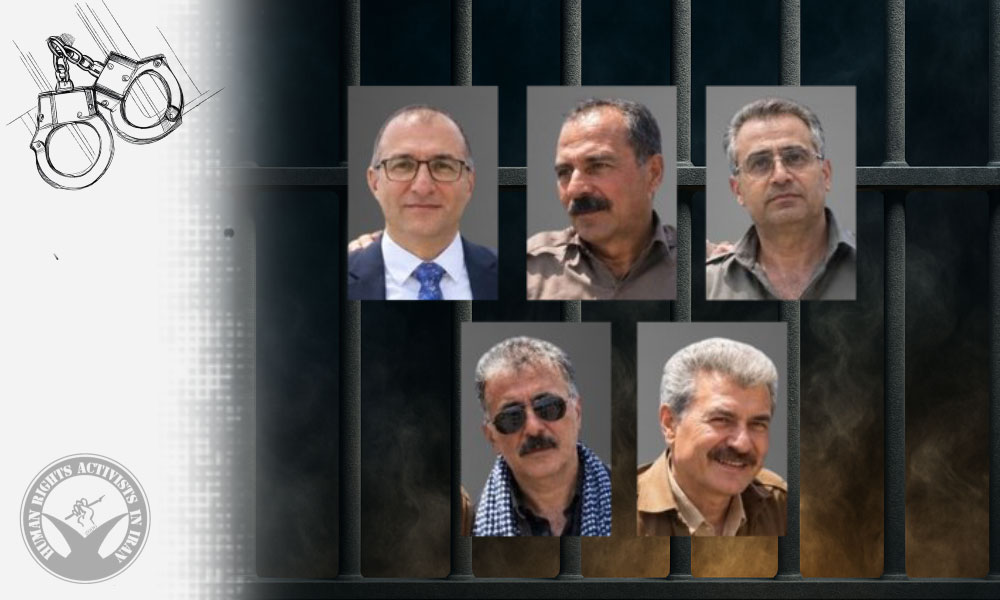
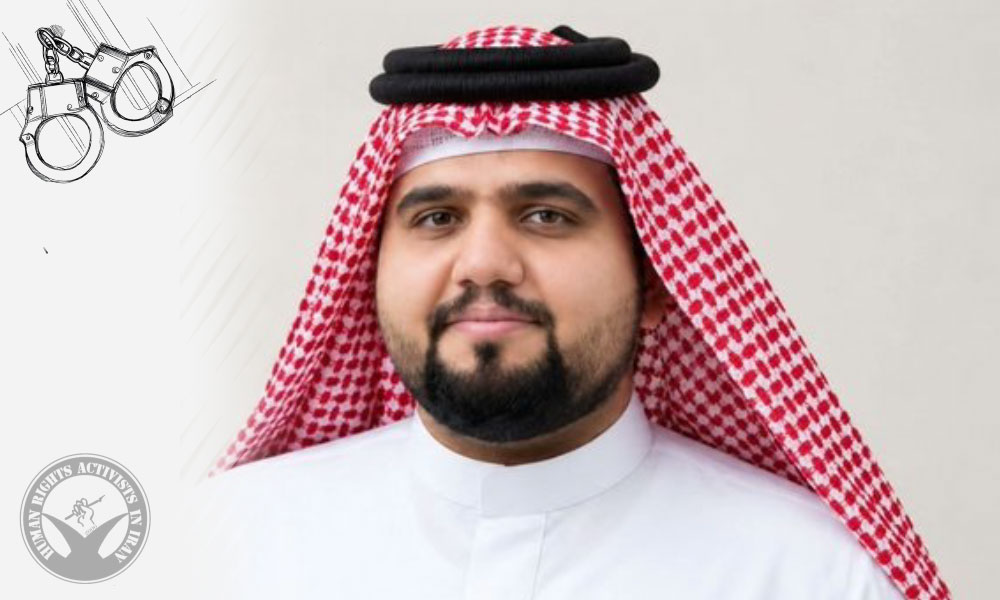
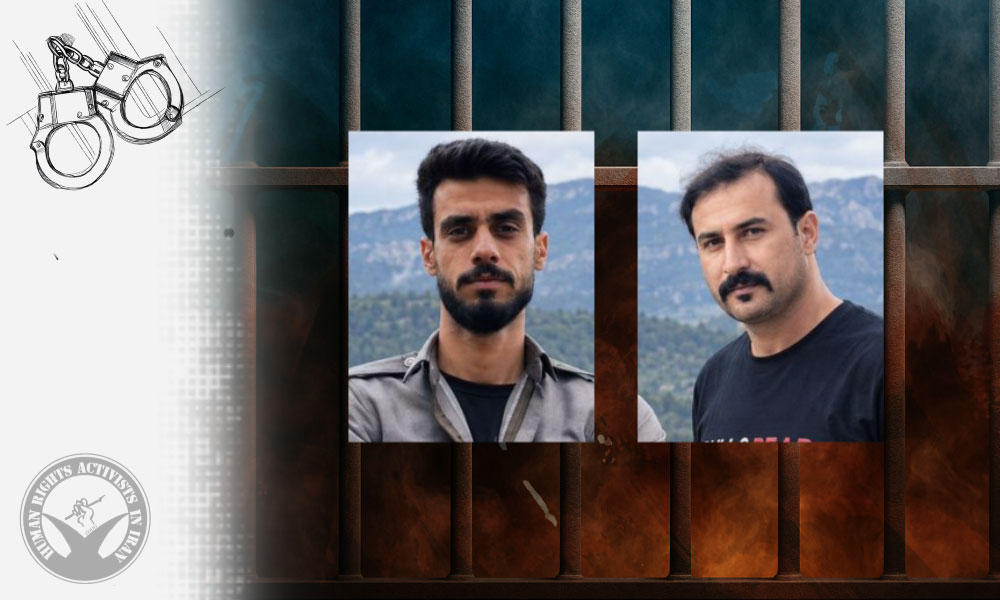
HRANA- Yesterday, December 4, security forces in Oshnavieh, West Azerbaijan province, detained two citizens, Hassan Shadi-Khah and Showaneh Ebrahimi, and transferred them to an undisclosed location.

According to Kurdpa, Mr. Ebrahimi was arrested at his family home without a judicial warrant.

As of the time of writing, no information has been obtained regarding the reasons for the arrests, the place of detention, or the charges brought against these individuals.

Arbitrary arrests, transferring detainees to undisclosed locations, and leaving families in the dark about the fate of their loved ones are routine practices of the Iranian regime’s security agencies, such as the Ministry of Intelligence and the IRGC Intelligence Unit. This pattern of behavior stands in clear violation of the United Nations Standard Minimum Rules for the Treatment of Prisoners, known as the Nelson Mandela Rules.

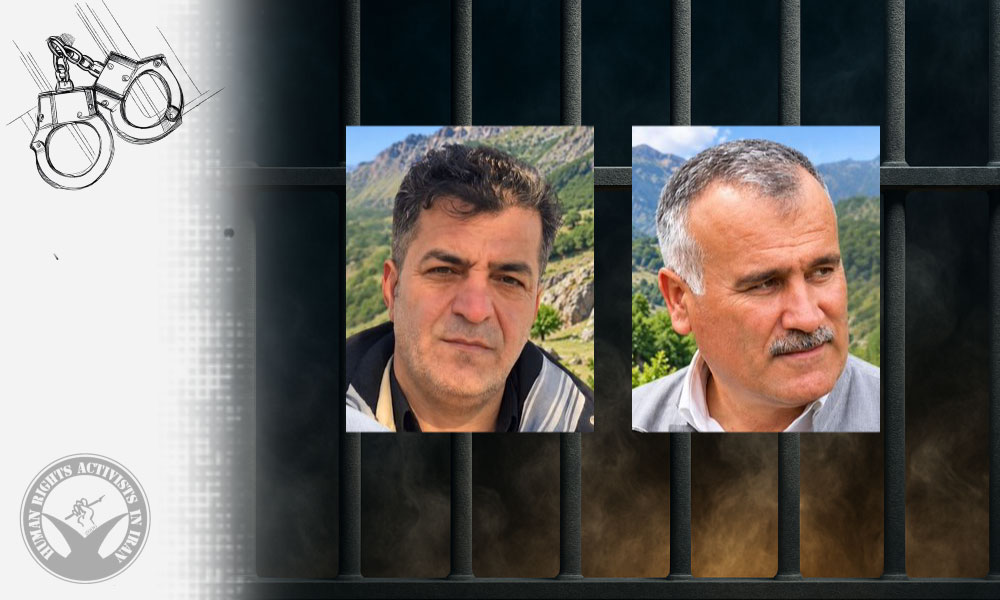
Two Citizens Arrested by Security Forces in Piranshahr

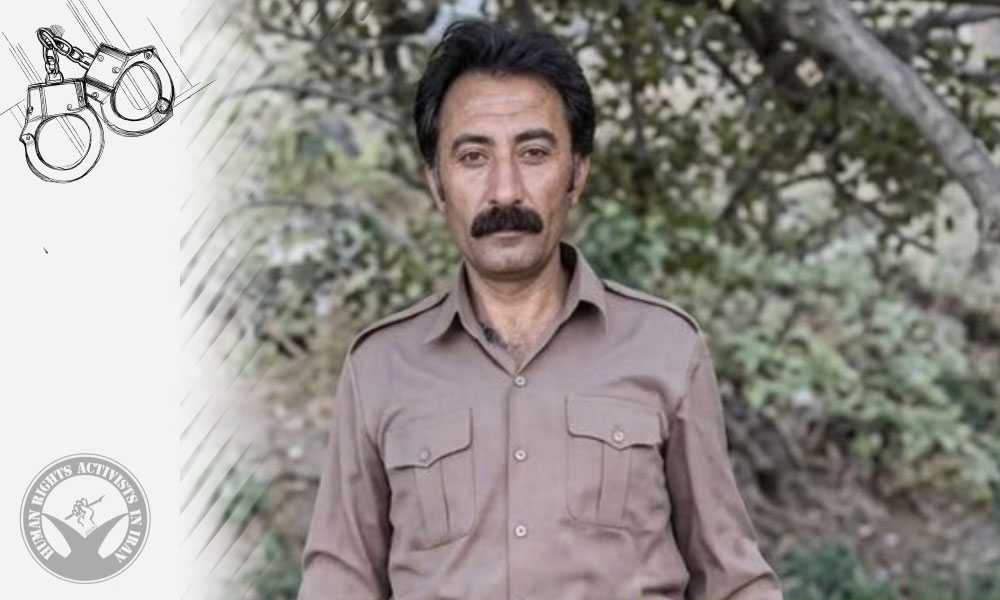
HRANA – Early this morning, two brothers from Piranshahr, Mohammad Oslub and Kamel Oslub, were arrested by security forces in the city and transferred to an unknown location.

Kurdpa haS identified them as Mohammad Oslub and Kamel Oslub, residents of Piranshahr.

According to this report, the arrest of the two brothers took place early this morning, Wednesday, 3 December 2025, without the presentation of a judicial warrant and with the use of violence by security forces.

As of the time of this report, no information is available regarding the reasons for their arrest, their place of detention, or the charges brought against them.

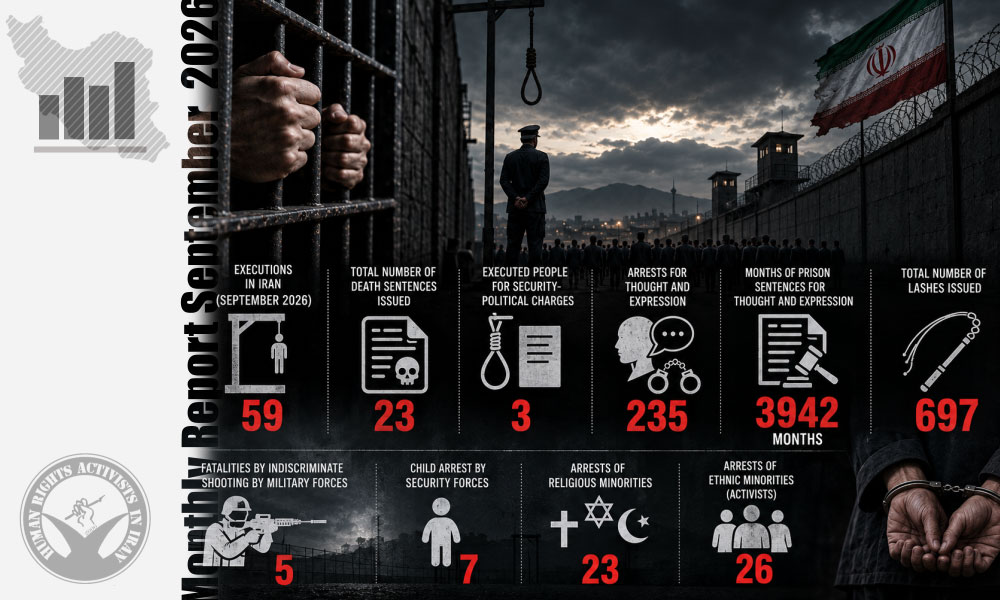
Monthly Report – November 2025: Human Rights Situation in Iran

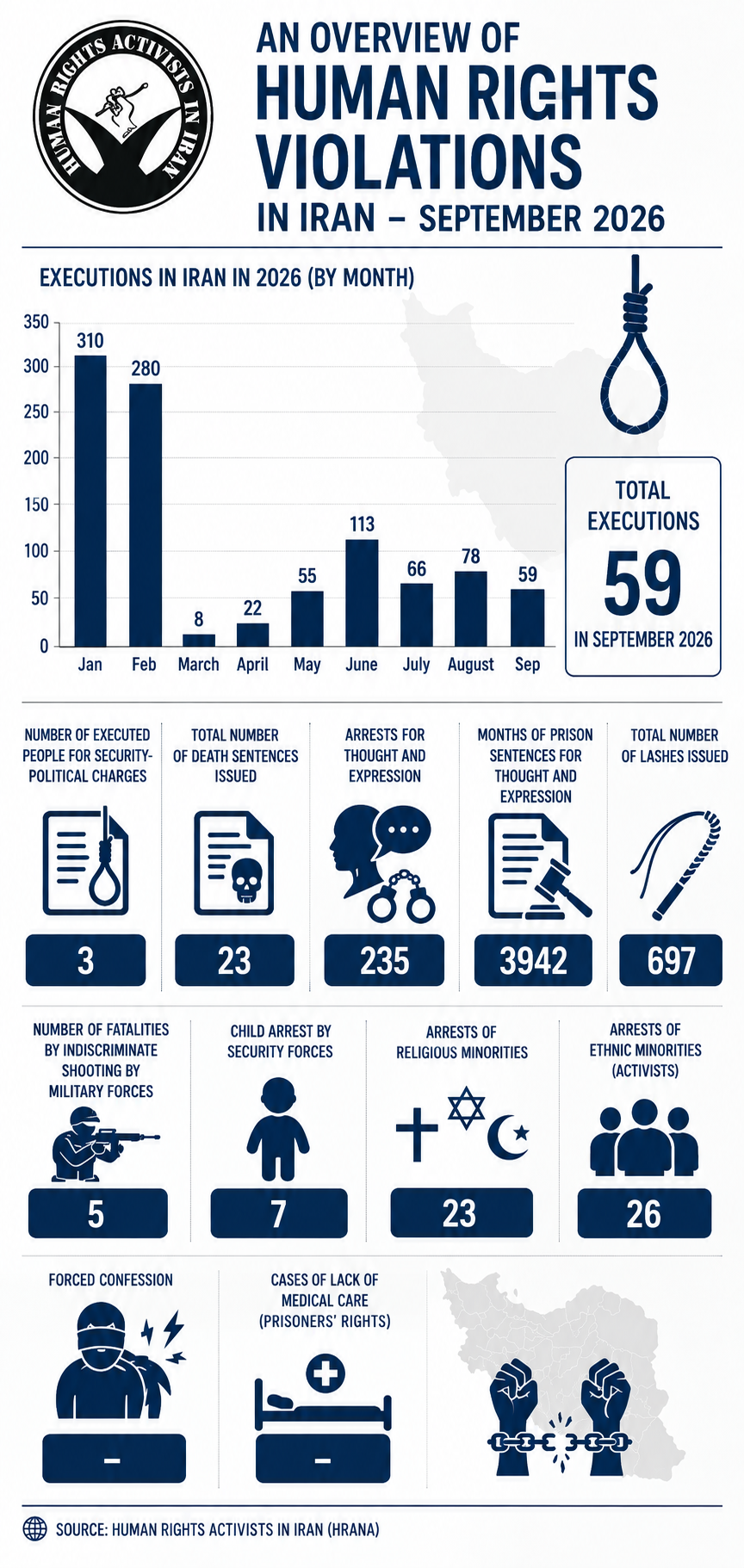
HRANA- This report provides a summary of numerous human rights violations in Iran during November 2025. An unprecedented surge in executions, a rise in the arrests of citizens for expressing opinion and belief, and the extraction of forced confessions from detainees and prisoners were among the most significant human rights violations of the past month.

Executions

In November, 308 individuals were hanged in Iranian prisons, mostly on drug-related and murder charges. This brought the number of executions this year to an unprecedented 1,594.
Among those executed were seven women. The gender of another 52 individuals remains unknown, reflecting the Iranian regime’s lack of transparency in releasing information.
Two executions were carried out in public, and seven of those executed were Afghan nationals.
The charges against 161 of those executed were murder, and 137 were related to drugs. Five individuals were executed on charges of rape, and the charges for another five remain unknown.

HRANA has also reported the issuance of nine death sentences on charges of murder. Two of those sentenced to death are women. Also, the death sentences of Masoud Jamaei, Alireza Mardasi, and Farshad Etemadifar, political prisoners held in Sheiban Prison in Ahvaz, were upheld by the Supreme Court.

Freedom of Thought and Expression

In the past month, the Iranian regime’s security agencies arrested 73 individuals for expressing their opinions and beliefs. In eleven of these arrests, security forces did not present an arrest warrant. The most prominent example was the detention of fourteen individuals for protest-related activities such as writing protest slogans. These citizens were subjected to forced confessions and accused of having connections abroad. Four people were summoned by security agencies, and eleven others were summoned by judicial authorities. The homes of seven citizens were searched by security forces.

This month, 16 individuals were also tried for expressing their opinions and beliefs. A total of 25 people were sentenced to 905 months of imprisonment. In addition, the Iranian judiciary issued a sentence of 159 lashes. The sentence of 38 lashes against Atash (Zahra) Shakarami, on the charge of “spreading falsehoods,” was also carried out. She is the aunt of Nika Shakarami, one of those killed during the 2022 nationwide protests.

Prisoners’ Rights

The rights of prisoners, especially political and ideological prisoners, are being violated in various ways. In this month alone, 21 cases of denial of adequate medical care for political and ideological prisoners, including Zeinab Jalalian, the only female political prisoner in Iran sentenced to life imprisonment, 25 cases of transferring prisoners to solitary confinement, and 5 cases of prolonged solitary confinement were recorded.
HRANA reported 67 cases of detainees being held in a state of uncertainty, 40 cases in which families of detainees were not informed of their status after their arrest, and 15 cases of forced confessions.
Due to harsh prison conditions, five cases of prisoner suicide, three deaths caused by illness, and ten hunger strikes were documented.
Additionally, six cases of denial of visitation rights and 20 cases of denial of access to legal counsel were recorded.

prisoners rights

Kolbars and Fuel Carriers

Each week, a number of citizens fall victim to the unregulated shootings carried out by military and law-enforcement forces. This month, these shootings claimed the lives of eight citizens and injured five others. Four fuel carriers (sookhtbar) were among those killed, and two fuel carriers and one kolbar were among the injured.
Additionally, due to the explosion of a landmine left over from the Iran–Iraq war, a 40-year-old kolbar named Ebrahim Abdollahi was maimed in the border areas of Nowsud.

Workers’ Rights

In November, 116 labor protests and nine labor strikes were reported, and two labor activists were arrested.
Workplace incidents also claimed the lives of 44 workers and injured 96 others. In addition, a firefighter in Sanandaj attempted self-immolation.
HRANA’s reports this month documented wage arrears affecting 7,886 workers.

Unions and professional guilds also held 100 protest gatherings. Another tragic case was the self-immolation and death of Ahmad Baladi, a 20-year-old student from Ahvaz, in protest against the municipality’s demolition of his family’s kiosk.
HRANA also reported the sealing of 18 commercial establishments, including cafés and traditional eateries.
Additionally, the Iranian judiciary issued eight rulings against union and guild activists, amounting in total to 43 months of imprisonment, sixty months of exile, and four cases of deprivation of social rights.

Women’s Rights

In the past month, HRANA recorded the murders of nine women, including a report about a man in Urmia County who shot and killed his mother, his sister, and his wife’s mother. After the killings, the suspect took his own life in the presence of his young child.

For further statistical details on violence against women over the past twelve months, refer to the HRANA report published in November.

Children’s Rights

Cases of violations against children this month included the murder of two children, one case of a victim of physical violence and abuse, the suicide of a fourteen-year-old teenager in Gachsaran, and one case of sexual assault and abuse. The death of a thirteen-year-old child laborer in Isfahan was also reported.
Additionally, the death of one child and injuries to 104 others due to official negligence were recorded, along with two abandoned newborns.

Religious Minorities

In this month, Iranian courts sentenced four members of religious minorities to a total of 160 months of imprisonment, including the conviction of Shahram Fallah, a Baha’i citizen, to nine and a half years in prison and one year of exile by the Court of Appeal. Three sentences involving social deprivations and two travel bans were also issued against members of religious minorities.
The prison sentences of twelve members of religious minorities, including seven individuals from the Baha’i community and two Christian converts, were carried out. The homes of six members of religious minorities were also searched this month and six people were arrested.

Ethnic Rights

In November, the Iranian regime’s security forces arrested thirteen ethnic rights activists and carried out one home search. In ten of these cases, the forces did not present an arrest warrant.

Inhuman Punishment

In this month, Iranian courts issued a total of 527 lashes against eighteen individuals.
Additionally, in a violation of citizens’ privacy, at least 20 people, including seven actors, were arrested for consuming alcoholic beverages at a mixed-gender gathering.


Annual Report on Violence Against Women in Iran: Orange the World

HRANA– On the eve of the Orange Week campaign, new one-year data shows that violence against women in Iran is not only a domestic problem but part of a broader, systemic machinery. From murder and sexual assault to judicial rulings and security-agency intervention, patterns of violence appear across the entire country. Women’s bodies, clothing, relationships, and public activism remain central targets of state control. This report summarizes documented cases recorded between November 24, 2024, and November 20, 2025.

Direct and Deadly Violence

Over the past year, more than 110 women and girls were killed in the context of domestic or family-related violence.
The victims included adult women as well as young girls aged 5, 9, 13, 18, and 23.

The main drivers of these killings were family disputes and long-standing tensions. Reported motives included so-called “honor” justifications, retaliation for refusing forced or child marriage, reactions to requests for divorce or separation, as well as suspicion, coercive control, and other forms of domination.

Methods of killing included stabbing, firearms, strangulation, severe beating, and burning.
In dozens of cases, the perpetrator attempted suicide after the murder.

At least 20 multi-victim family murders were recorded, including cases where women were killed alongside their young children or relatives in Golestan, Amol, Borujerd, Mahidasht (Kermanshah), Urmia, Maku, Khorramabad, Mahabad, Lahijan, and Tehran.

At least 25 honor killings were also reported. Victims included girls aged 17–18 and young women; in several cases, the perpetrator was a teenage boy within the family.

During this period, nine acid attacks against women were documented, from Tehran and Karaj to Khomam, Sanandaj, and Golestan.
Some victims lost sight in both eyes.

Additionally, at least six women were killed by their husbands or relatives through intentional burning in Sanandaj, Rezvanshahr, Bandar Abbas, Tehran, Mahabad, and Saqqez.

Sexual Violence and Assault

The documented cases include unprecedented and disturbing incidents, for example, rape inside an ambulance (in one case, the victim died), and the sexual harassment of 12 women seeking jobs in Tehran.

A gang rape in Yasuj led to the victim’s suicide. Serial cases of street harassment in Sanandaj, as well as staged sexual assaults by individuals posing as “employers,” “landlords,” or “ride-share drivers,” also appeared in the reporting.

One of the most shocking cases involved a woman and her young daughter who were imprisoned in a birdcage and assaulted over a period of six years.

Suicide and Self-Immolation Linked to Abuse

At least two women died by suicide following severe domestic violence or relationship breakdowns. One young woman in Mahabad died after self-immolation.

Structural and State-Driven Violence

Violence against women in public spheres also takes the form of security surveillance, judicial pressure, and cultural restrictions.

Arrests, Summonses, and Interrogations

During this period, at least 45 women were arrested, and more than 30 women were summoned to security agencies.
Targets included women’s rights activists, artists, female singers, content creators, women appearing in dance videos, protest participants, and women present in public without the mandatory hijab.

Closure of Businesses and Venues

At least 12 businesses, including cafés, galleries, clinics, and cultural centers, were sealed for alleged violations of “hijab” or “public decency.” One case involved a gynecology clinic in Yazd.

Cultural and Artistic Restrictions

Concerts were canceled due to the presence of female musicians or singers. Women participating in events faced fabricated legal charges, and seven female singers in Behbahan were summoned by authorities.

Security Crackdown on Clothing

Women were arrested over their clothing or for “dancing,” cases were opened against organizers of cultural events, and some women were barred from attending interrogation sessions due to their clothing—highlighting how intensely dress codes have been policed.

Judicial Penalties and Sentences

Over the past year, women collectively received more than 200 months of discretionary imprisonment, 74 to 178 lashes, bans on activity and travel, electronic ankle bracelets, and forced residence orders.

Examples include:

Hamideh Zeraei sentenced to 18 months in prison and 178 lashes
Hasti Amiri sentenced to 3 years in prison with supplementary penalties
Maryam Karimi given prison with an electronic monitoring bracelet
Nina Golestani and Rozita Rajai each sentenced to one year in prison
Fariba Hosseini and Elham Salehi receiving combined prison terms and activity bans

These rulings show that protesting women and civil activists face structured judicial violence.

Geography of Violence

Violence against women was recorded in most provinces, with the highest-risk areas including Tehran, Khorasan Razavi, Alborz, Kurdistan, Fars, West Azerbaijan, Ilam, and Kermanshah.
In these provinces, reports included a combination of family murders, acid attacks, sexual violence, and security-driven crackdowns.

Trends Over the Year

Analysis of the past year’s data shows distinct periods of intensified violence:

Winter and spring saw peaks in domestic and honor killings.
May was the deadliest month with 19 murders.
Summer brought increased security crackdowns, summonses, and business closures.
In the days leading up to March 8 (International Women’s Day), a wave of arrests and summonses targeted women’s rights activists.
Multi-victim family murders, killing a wife along with children or relatives, rose sharply in the final months of the year.
Sexual assaults using deceptive methods, job offers, rental arrangements, or promises of housing, also increased, alongside incidents in formal settings like emergency rooms and ambulances.

Meanwhile, state power structures continued to fuel violence through closures of venues, legal cases, arrests of women artists, and harsh sentences over dress or online content.

Violence as a Crime Against Humanity

The violence documented in this report cannot be understood without acknowledging the broader context of gender-based persecution as a crime against humanity. In 2023, after nine months of investigation, Human Rights Activists in Iran concluded that women and girls in Iran are deliberately and severely denied their fundamental rights because of their gender. These findings were later used as supporting evidence in UN determinations that gender-based persecution is occurring in Iran.

The cases presented here, from murder and sexual violence to punitive court rulings and systematic harassment, reflect patterns that are neither isolated nor accidental. They are part of a wider policy that, both in law and in practice, treats women and girls as lesser.

Recognizing this reality is essential, because the scale and persistence of these violations demand a response grounded in international law, justice, and accountability.

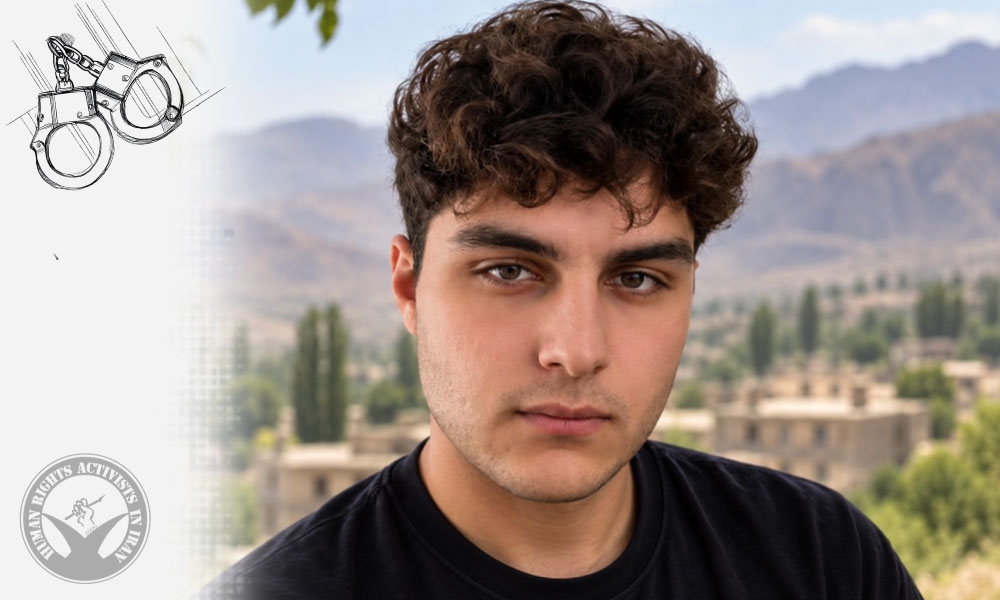
Moloud Afand Arrested in Miandoab

HRANA – Moloud Afand, a resident of Miandoab, was arrested by security forces at his home. Officers searched his residence and confiscated several of his digital devices.

According to Kolbar News, the individual has been identified as Moloud Afand, a resident of Hasanabad village in Miandoab County, West Azerbaijan province.

According to the report, yesterday, November 18, agents of the Urmia branch of the Ministry of Intelligence entered his home without presenting a judicial warrant. After conducting a thorough search and seizing Mr. Afand’s electronic devices, they placed him under arrest.

The report states that following his arrest, he was transferred to one of the security detention centers in Urmia.

No information is currently available regarding the reasons for his arrest or the charges brought against him.

Arbitrary arrests, transferring detainees to undisclosed locations, and leaving families in the dark about the fate of their loved ones are routine practices of the Iranian regime’s security agencies, such as the Ministry of Intelligence and the IRGC Intelligence Unit. This pattern of behavior stands in clear violation of the United Nations Standard Minimum Rules for the Treatment of Prisoners, known as the Nelson Mandela Rules.

Subscribe to Our Newsletter

Now is definitely not the time to stop reading!

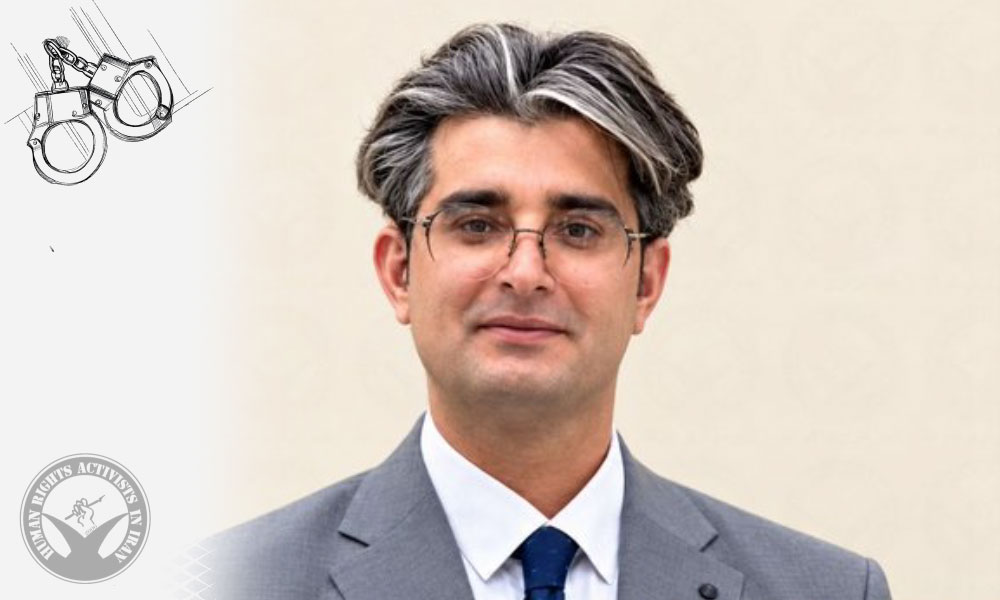
Abbas Peymani Arrested in Shahriar

HRANA – Yesterday, Abbas Peymani, a resident of Shahriar, was arrested by IRGC Intelligence agents and taken to an undisclosed location.

Based on information received by HRANA, Mr. Peymani was arrested on Sunday, November 16, by IRGC Intelligence agents.
So far, no information has been obtained regarding the reasons for his arrest or his place of detention.

Abbas Peymani is a traditional-music singer and instrumentalist from Shahriar, where he also resides.

Arbitrary arrests, transferring detainees to undisclosed locations, and leaving families in the dark about the fate of their loved ones are routine practices of the Iranian regime’s security agencies, such as the Ministry of Intelligence and the IRGC Intelligence Unit. This pattern of behavior stands in clear violation of the United Nations Standard Minimum Rules for the Treatment of Prisoners, known as the Nelson Mandela Rules

Several Individuals Arrested by IRGC Intelligence on Espionage Charges

HRANA – The IRGC Intelligence has announced the arrest of several individuals in various provinces of Iran on charges of spying for the United States and Israel.

According to Sepah News, the IRGC Intelligence accused the detainees of espionage activities on behalf of Israel and the United States. The IRGC claimed that these operations were carried out “in coordination with Israeli policies following its recent military failures” and took place simultaneously across several provinces.

The statement further alleged that the detainees had acted with the “intent to disrupt national security in the second half of autumn 2025.”

The organization has not disclosed the number of those arrested, their identities, or the exact locations of the arrests.

While combating espionage is not considered a human rights violation, given the Iranian government’s record of using espionage allegations as a pretext to suppress political dissent, such claims, particularly in the absence of clear details or transparent judicial procedures, are viewed with skepticism.

Kuhdasht: Reckless Shooting by Police Results in Death of a Citizen

HRANA – A 27-year-old man in Kuhdasht County was shot by police in a case of reckless gunfire. After being hospitalized for three days, he died on Tuesday, November 4, due to the severity of his injuries.

HRANA has identified the victim as Reza Adinvand, 27 years old, single, and a resident of Kuhdasht. A source close to the Adinvand family confirmed the incident to HRANA, stating:
“On Saturday, November 1, police forces opened fire on this young man while he was hiking in nature. He died yesterday in the hospital as a result of his injuries.”

As of this report, no information has been made available regarding the reasons behind the reckless shooting by the security forces.

In 2024 alone, indiscriminate gunfire by Iranian regime military forces claimed the lives of 163 civilians and left 321 others injured. Over the past five years, the number of victims of these unrestrained shootings has increased, more than doubling compared to five years ago.

Two Citizens Arrested by Security Forces in Mahabad

HRANA – Keyvan Seyed-Ahmadi and Sirvan Shaveleh, residents of Mahabad, were arrested by security forces in this city and taken to an undisclosed location.

According to Krudpa, Mr. Seyed-Ahmadi was arrested on Tuesday, October 28, and Ms. Shaveleh in the early hours of Wednesday, October 29, both at their homes by security agents.

As of the time of this report, no information is available regarding the reasons for their arrests, the charges against them, or their current whereabouts.

It is worth noting that Jalal Sadafi, Ms. Shaveleh’s husband, was arrested by security forces on December 15, 2024, and remains in Mahabad Prison under temporary detention without a verdict.

Pardon and Sentence Reduction Granted to 115 Security Prisoners

HRANA – The spokesperson for Iran’s Judiciary announced that the Supreme Leader has agreed to the conditional pardon and sentence reduction of 115 individuals convicted on security-related charges. According to the spokesperson, this process will continue until late December, when the final number of pardoned individuals will be officially announced.

According to HRANA, quoting IRIB (Islamic Republic of Iran Broadcasting), the Judiciary’s spokesperson provided details regarding the number of prisoners granted conditional pardon and sentence reductions.

On Tuesday, October 28, Asghar Jahangir stated that Ali Khamenei, the Supreme Leader, had so far approved the conditional pardon and commutation of sentences for 115 security prisoners on the occasion of the birth anniversaries of the Prophet of Islam and the sixth Shia Imam.

Mr. Jahangir added that this process will continue until the end of December, when the final figures will be made public. He also promised that with the inclusion of additional cases, a greater number of security prisoners will benefit from this pardon.

Earlier, in September 2025, state media reported that the Supreme Leader had approved the Judiciary Chief’s proposal for the pardon and reduction of sentences for certain convicts. Official news agencies clarified that this pardon only applies to prisoners in so-called “security” cases whose sentences were issued at least five years ago and who have not engaged in any “anti-security” activities or statements during that time. Furthermore, the person’s sentence must not yet have been fully executed, a condition that effectively excludes many political and ideological prisoners.

In addition, a wide range of offenses, including “security-related crimes,” espionage, and collaboration with hostile states,” were explicitly excluded from eligibility for the pardon.