Baha’is in Yazd Face Widespread Raids, Interrogations, and Prison Sentences

HRANA – From March to October 2026, dozens of Baha’i citizens in Yazd faced security and judicial actions, including home searches, confiscation of personal belongings, summonses for interrogation, and judicial prosecution. During this period, a gathering attended by approximately 50 people was dispersed, 18 summonses for interrogation were reported, and three citizens were sentenced to prison. Additionally, one citizen was transferred to prison to serve a sentence. During these operations, agents confiscated mobile phones and other personal belongings belonging to citizens, their guests, and family members, some of which have yet to be returned. This report examines the details of these incidents.

According to HRANA, between March 28 and October 15, 2026, security and judicial actions against Baha’i citizens in Yazd extended beyond those facing legal proceedings, affecting participants in private gatherings, guests, and family members. During this period, security agents searched numerous homes and confiscated mobile phones, electronic devices, books, photographs, and religious items associated with the Baha’i Faith. In one case, agents also seized a citizen’s private vehicle.

A review of the incidents indicates that Shahrivar (23 August–September 22) saw the highest number of security-related actions. During that month, six residential homes were searched, and six citizens were summoned to the Ministry of Intelligence for interrogation. In Mehr (23 September–October 15, 2026), four residential homes and a farm were also searched. One of these operations took place on the tenth anniversary of the murder of a Baha’i citizen and involved approximately 40 security agents.


Type of ActionRecorded Figures
Total Recorded IncidentsApproximately 34
Searches of Premises11
Dispersal of Private Gathering1 gathering, approximately 50 attendees
Summonses for Interrogation18
Prison Sentences Issued3 individuals
Enforcement of Prison Sentences1 individual
Total Prison Sentences Imposed20 years, 1 month, and 20 days


Of the 11 recorded searches, 10 involved residential homes, while one involved a farm belonging to a Baha’i family. The approximately 18 reported summonses included around 12 in Tir (22 June–22 July) and six in Shahrivar . These figures do not necessarily indicate that 18 different individuals were summoned. Similarly, the total of approximately 34 incidents represents the combined number of actions listed in the table, rather than the number of individuals affected or separate operations carried out by security agents.

Dispersal of a Private Gathering and Summonses of Participants

The first incident in this series of security actions was reported on March 28, 2026. On that day, approximately 50 Baha’i citizens in Yazd had gathered to share ash, a traditional Iranian soup, in keeping with a local custom. Agents from the Ministry of Intelligence arrived at the location, dispersed the gathering, and confiscated the attendees’ mobile phones.

According to information received, the agents did not present a judicial warrant when confiscating the phones. Although most attendees approached the relevant legal authorities to recover their belongings, the phones have yet to be returned to their owners.

In Tir, approximately 12 participants in the gathering were summoned to the Ministry of Intelligence for interrogation. No information is available regarding the official reasons for these summonses or any potential charges brought against them.

Searches of Baha’i Citizens’ Homes and Confiscation of Personal Belongings

In Shahrivar, security agents searched six residential homes belonging to Baha’i citizens in Yazd. During these operations, they confiscated not only the homeowners’ belongings but also the mobile phones of their guests.

On August 26, security agents searched the home of Shahrokh Nasiri. During the operation, they confiscated the mobile phones of six guests present at his home.

On September 2 and 3, six Baha’i citizens were summoned to the Ministry of Intelligence in Yazd for interrogation. No further information is available regarding the reasons for their summonses or the outcomes of their interrogations.

On September 12, security agents searched the homes of three Baha’i citizens. During these operations, mobile phones and books found in the homes were confiscated. The identities of these three citizens have not yet been established.

One day later, on September 13, the home of Majid Ghaneh was searched. Agents confiscated mobile phones, a laptop, books, photographs, and items associated with the Baha’i Faith. They also seized his personal vehicle.

Approximately eight guests were present at the home during the search, and their mobile phones were also confiscated. One of the guests, Parnia Basiri, who did not have a mobile phone with her, was taken by the agents to her own residence.

After entering her home, the agents searched the premises and confiscated all mobile phones belonging to her family members, along with items associated with the Baha’i Faith.

These incidents demonstrate that the security operations were not limited to the homeowners. At two private gatherings, the mobile phones of approximately 14 guests were confiscated, and in one instance, a guest’s home was also searched.

Searches of a Family’s Homes on the Anniversary of Their Father’s Murder

In Mehr, security operations continued with searches of four residential homes and a farm. Three of these homes belonged to members of the family of Farhang Amiri, a Baha’i citizen who was murdered in Yazd.

On September 27, 2026, coinciding with the tenth anniversary of Farhang Amiri’s murder, approximately 40 security agents arrived at his family’s home.

According to information received, the agents conducted a prolonged search of the residence and confiscated mobile phones, personal belongings, and items associated with the Baha’i Faith.

That same evening, the home of Payam Amiri, Farhang Amiri’s son, as well as the home of his daughter Neda Amiri and son-in-law Maziar Mottahed, were searched. Agents also confiscated a number of their personal belongings.

According to information received, the psychological distress caused by the agents’ presence and the search of the home led to a deterioration in Ms. Amiri’s health, requiring her to be taken to an emergency medical facility.

An informed source told HRANA that the agents had visited the family members’ homes under the assumption that they had organized a ceremony to commemorate the anniversary of Farhang Amiri’s murder.

Four days later, on October 1, security agents arrived at a farm belonging to the Amiri family. After searching the property, they confiscated mobile phones and several items found on the premises.

Farhang Amiri, a 63-year-old Baha’i citizen, was stabbed to death outside his home in Yazd on September 26, 2016. Following their arrest, the two suspects in the case stated that his religious beliefs had motivated the murder.

Ten years after the incident, members of the Amiri family faced searches of their homes and confiscation of their personal belongings on the anniversary of their father’s murder.

Subsequently, on October 15, security agents arrived at the home of Soheil Rouhanifard, another Baha’i citizen residing in Yazd. After searching his home, they confiscated a number of his personal belongings.

Prison Sentences Issued and Enforced Against Baha’i Citizens

In addition to home searches and the confiscation of personal belongings, three Baha’i citizens in Yazd have been sentenced to prison, while another citizen has been transferred to prison to serve a sentence.

Flora Samadani and Ahmad Naeimi, a Baha’i couple residing in Yazd, were sentenced by Branch 1 of the Yazd Revolutionary Court to a combined total of three years, six months, and two days in prison.

According to a verdict issued on October 12, Flora Samadani was sentenced to three years and one day in prison on charges of “deviant propaganda activities contrary to the sacred law of Islam through the promotion of the Baha’i Faith.” Her husband was also sentenced to six months and one day in prison for aiding and abetting the same offense.

Ms. Samadani had previously been arrested on May 3 and released on bail on June 20. Ahmad Naeimi was also arrested on June 13 and released on bail on July 4.

In a separate case, Moein Mohammadi-Dehj, a 39-year-old Baha’i citizen, was sentenced in August by Branch 1 of the Yazd Revolutionary Court to a total of 16 years, seven months, and 18 days of discretionary imprisonment. He was also sentenced to a 10-year deprivation of social rights and a permanent ban from employment in government and public services.

Under Article 134 of the Islamic Penal Code, the most severe sentence of 12 years, six months, and one day in prison will be enforceable against him.

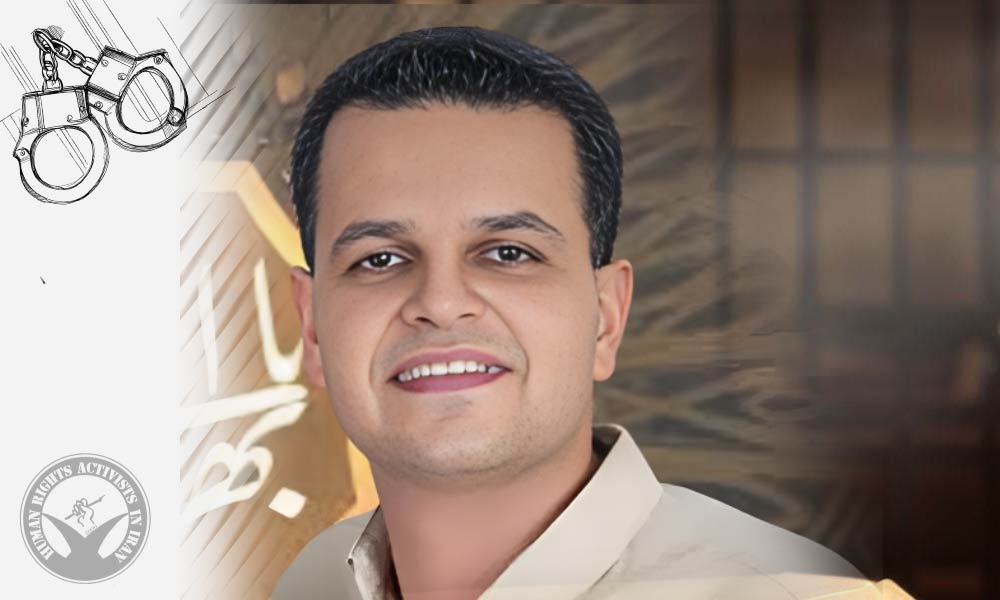
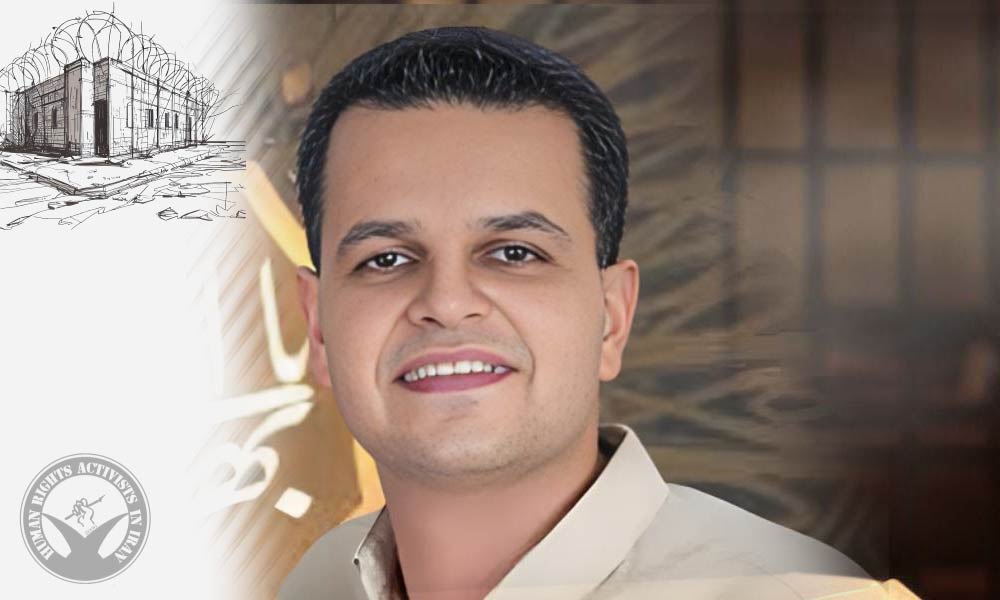
Additionally, Iman Rashidi, a Baha’i citizen residing in Yazd, was summoned to prison on August 23 to begin serving his sentence. After reporting to the judicial authorities, he was arrested and transferred to prison.

Mr. Rashidi had previously served a prison sentence and was released from Yazd Prison in February 2018 after completing his earlier sentence.

Confiscation of Personal Belongings and Failure to Return Seized Property

The confiscation of mobile phones and personal belongings has been a recurring practice in security operations targeting Baha’i citizens in Yazd.

During the gathering in Farvardin (21 Match-20 April, 2026), the mobile phones of approximately 50 people were confiscated. In Shahrivar, the mobile phones of approximately 14 guests at two separate homes were also seized. In other incidents, agents confiscated electronic devices, books, photographs, items associated with the Baha’i Faith, and a private vehicle.

According to information received, despite repeated visits and follow-up efforts by some citizens with the relevant legal authorities, a significant portion of the confiscated property has yet to be returned to its owners. Furthermore, no clear information is available regarding the legal grounds for retaining these belongings or when they might be returned.

The prolonged confiscation of mobile phones and electronic devices can disrupt family communications, professional activities, and citizens’ access to essential information and services, particularly in cases where the communication devices of all members of a household have been seized.

Over the past decade, the Baha’i community in Iran has been subjected to more security and judicial actions than any other religious minority. An examination of annual reports published by HRA’s Department of Statistics and Publications indicates that, during the past year, an average of 62.41% of reports concerning religious minorities involved violations of the civil rights of Baha’is.
Arrests of Baha’i Citizens and Seizure of Their Property in Seven Provinces

HRANA – Between August 22 and August 25, 2026, security forces searched a number of homes and businesses belonging to Baha’i citizens across seven provinces in Iran. During these operations, at least 11 citizens were arrested or sent to prison to serve previously imposed sentences, and significant amounts of their personal property, electronic devices, and work equipment were seized.

According to HRANA, a wave of arrests, searches of homes and businesses, and seizures of property belonging to Baha’i citizens has taken place in various parts of the country in recent days.

In this regard, on Thursday, August 27, the Baha’i International Community issued a statement announcing that these actions had taken place across seven provinces between August 22 and August 25, and that a total of 11 citizens had been arrested or sent to prison to serve previously imposed sentences. The organization also expressed concern over the extensive seizure of personal property and equipment used by these citizens to earn a living.

Simin Fahandej, the Baha’i International Community’s representative to the United Nations in Geneva, described the seizure of Baha’i citizens’ property in the report as “state theft in daylight” stating that government agents entering homes and confiscating jewelry, wedding rings, vehicles, and other personal belongings does not in itself make such actions lawful. She also pointed to the seizure of family savings, professional equipment, musical instruments, and even children’s toys, saying these actions have intensified economic pressure on Baha’i families.

Fahandej further called on Iranian authorities to end the practice of seizing property, assets, and equipment used by Baha’i citizens to support themselves, and to provide a means for confiscated property to be returned and for affected families to pursue effective legal remedies.

HRANA independently reported a number of these cases during the period in question.

On Saturday, August 22, Soraya Manouchehrzadeh, a Baha’i citizen residing in Sari, was arrested by Ministry of Intelligence agents. The agents climbed over the wall of her family home and entered without presenting a judicial warrant. They searched the residence and seized a number of books and electronic devices belonging to her and members of her family.

On the same day, four other Baha’i citizens, Maral Roshani, Negar Badiei, Shima Sanaei, and Fakhereh Zahedi, were arrested in Sari. Including Soraya Manouchehrzadeh, the number of Baha’i citizens arrested in the city at that time reached five. They were transferred to the Ministry of Intelligence’s detention facility in Sari, known as the “Keshouei” detention facility. A source close to the family of one of these citizens previously told HRANA that the warrants presented by the agents authorized only searches and did not include arrest orders. The Baha’i International Community also stated that approximately 14 agents, five vehicles, and a representative of the prosecutor’s office were involved in the arrests of Shima Sanaei and Fakhereh Zahedi.

Also on August 22, Arsalan Yazdani, a Baha’i citizen, was arrested by security forces in Tehran. At the time of his arrest, his mobile phone, laptop, and several personal belongings were also seized. The Baha’i International Community added in its report that he was arrested in the presence of his two children to begin serving his prison sentence.

On Sunday, August 23, Iman Rashidi, a Baha’i citizen residing in Yazd, was arrested after appearing at Branch 1 of the Enforcement of Judgments Office of the city’s Revolutionary Court and was sent to prison to serve his sentence. He had previously been sentenced to three years, six months, and one day of imprisonment, 15 years of deprivation of social rights, and a fine of 371 million rials.

On Monday, August 24, security agents searched the homes of Amin Tabianifard, Bahariyeh Askarinasab, and Nima Tabianifard, Baha’i citizens residing in Isfahan. At the same time, their family business was sealed, and a musical instrument-making workshop belonging to the family was completely emptied. Agents also seized several mobile phones, laptops, cash, foreign currency, a camera, musical equipment, gold, and jewelry. In additional details about the incident, the Baha’i International Community stated that more than 20 agents participated in the searches and that Nima Tabianifard’s two-year-old child was present during the search. The organization also reported the seizure of several handmade musical instruments and workshop machinery.

On the same date, the home of Keyhan Atefi and Fereshteh Atefi, a Baha’i couple in Isfahan, was also searched by Ministry of Intelligence agents. During the search, agents also seized a number of the couple’s personal belongings, their vehicle, and other property.

On Tuesday, August 25, Sarir Mowghen, a Baha’i citizen residing in Isfahan, was arrested by Ministry of Intelligence agents and transferred to Dowlatabad Prison in the city. At the same time, agents searched her family home and seized a number of personal and electronic items, cash, gold, and a piano. The Baha’i International Community added in its report that Mowghan had recently returned to Iran from abroad and that no explanation has yet been provided for the reason for her arrest.

Over the past decade, Iran’s Baha’i community has been subjected to security and judicial actions more frequently than any other religious minority in the country. A review of HRA’s annual report reveals that over the past year an average of 62.41% of reports concerning religious minorities involved violations of the civil rights of Baha’is.
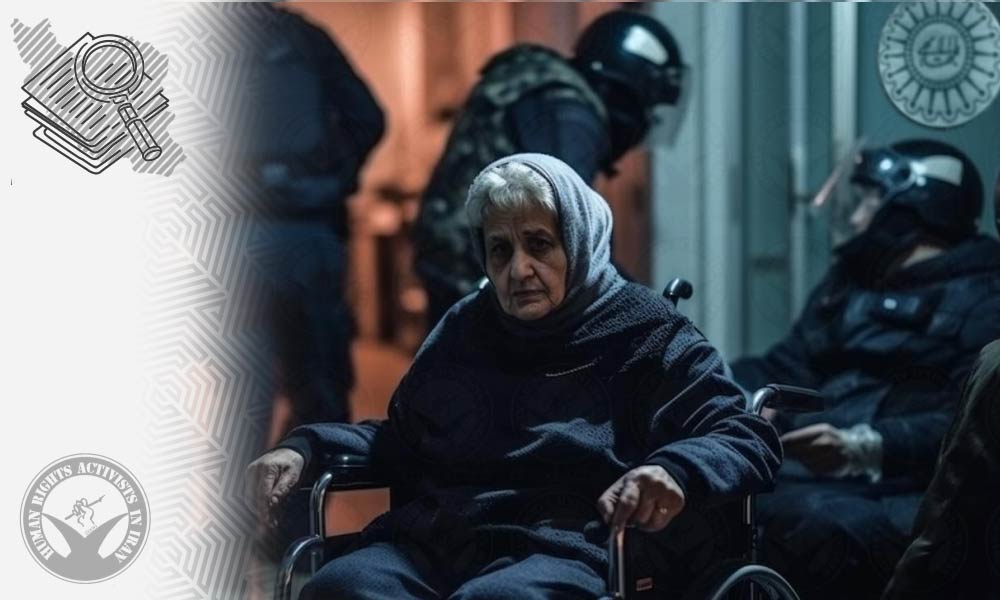
Baha’i Citizen Iman Rashidi Remains in Legal Limbo, Detained for Over 140 Days in Yazd Prison

Iman Rashidi, a Baha’i citizen, continues to face a prolonged period of uncertainty as he remains incarcerated in Yazd Prison for over 140 days, according to a source close to Rashidi’s family who spoke to HRANA. Despite the passage of time, authorities have yet to grant him temporary release.

Rashidi’s ordeal began on October 5, 2023, when agents from the Ministry of Intelligence arrested him at his residence in Yazd. The arrest was accompanied by a search of his home, during which the authorities confiscated both his and his wife’s cell phones. Subsequently, Rashidi was transferred from a detention facility to Yazd Prison.

In a concerning development, his latest court hearing in February 2024 proceeded without the presence of his legal representation. Rashidi faces charges of “propaganda against the regime” and “propagating against Islamic Sharia.”

This is not Rashidi’s first encounter with law enforcement, as he has previously experienced arrests and convictions. In February 2018, he was released after serving a sentence. The ongoing legal limbo raises concerns about due process and fairness of his current detention.

Baha’is are subjected to violations of their religious rights, comprising 82% of reports on infringements against religious minorities, according to HRA’s 2023 annual report.

The Baha’i faith is not recognized as a legitimate religion by Iranian authorities, leading to systematic and longstanding violations of the rights of Baha’is in the country. This includes the denial of their fundamental right to practice their religion, which constitutes a clear breach of both Article 18 of the Universal Declaration of Human Rights and Article 18 of the International Covenant on Civil and Political Rights. The United Nations covenant holds that every person has the right to freedom of religion, freedom of converting religion, as well as freedom of expression, individually or collectively; openly or secretly.


Bi-Monthly Statistical Report: Increased Pressure on the Baha’i Community with Dozens of Arrests and Convictions

HRANA News Agency – Over the last 60 days, at least 40 Baha’i citizens have been arrested by security forces, and the homes of at least 66 individuals have been searched by security forces. Additionally, during the mentioned period, 38 Baha’i citizens have been collectively sentenced to more than 133 years in prison by judicial authorities.

According to HRANA, the news agency of human rights activists in Iran, there has been a significant increase in actions against Baha’i citizens in Iran over the past 60 days.

During this period, at least 40 Baha’i citizens in six cities have been arrested by security forces. The homes of at least 66 Baha’i citizens in various cities of the country have been searched by security agents. Also, during the mentioned period, 38 Baha’i citizens have been collectively sentenced to 133 years and 9 months in prison by judicial authorities.

The identities of the forty arrested Baha’i citizens have been confirmed by HRANA as follows:

. Sahar Mohebpour, Roxana Vojdani, Setareh Ta’ami, and Bahareh Ghaderi in Shiraz;
. Vida Ahrari, Mozhgan Basiri, Shokoufeh Basiri, Jamal Ghadirzadeh, Iman Rashidi, and Ahmad Naeimi in Yazd;
. Neda Badkhsh, Arzoo Sobhanian, Yeganeh Roohbakhsh, Mozhgan Shahrezaei, Parasto Hakim, Yeganeh Aghahi, Bahareh Lotfi, Shana  Shouqi Far, Negin Khademi, and Neda Emadi in Esfahan;
. Ali Bagher Kashi, Sohba Taef, Shervin Shabrakh, Nika Esmaeilpour, Babak Zeinali (Zeynali), Iman Ehsani, Eiren Rahmani, Foad Taefi, Reza Yazdi and Fahimeh Yazdi in Karaj;
. Naeim Aghdasi, Neda Mahboobi, Zhaleh Rezaei, Zhenous Shadabi, Atofeh Zahedi, Masoud Azarnoush, Zarin Ahadzadeh, Farideh Ayoubi, Noura Ayoubi in Hamedan; and
. Masoud Mahmoudi in Shirvan.

HRANA has also identified the names of sixty-six Baha’i citizens whose homes have been searched by security forces from September 23 to November 21 (covering the period from the beginning of Mehr to the end of Aban month in the Hijri Calendar). The individuals affected include:

. Roya Sheikhi, Sahar Mohebpour, Roxana Vojdani, Setareh Ta’ami, and Bahareh Ghaderi in Shiraz;
. Vida Ahrari, Mozhgan Basiri, Shokoufeh Basiri, Jamal Ghadirzadeh, Iman Rashidi in Yazd;
. Soheil Haqdoust, Hossein Fanaian, Sohrab Loghaei, Ebrahim Loghaei, Favaed Loghaei in Ghaem Shahr;
. Neda Badkhsh, Arzoo Sobhanian, Yeganeh Roohbakhsh, Mozhgan Shahrezaei, Parasto Hakim, Yeganeh Aghahi, Bahareh Lotfi, Shana Shouqi Far, Negin Khademi, and Neda Emadi in Esfahan;
. Sohba Taef, Shervin Shabrakh, Nika Esmaeilpour, and Babak Zeinali in Karaj;
. Mehran Khandel, Pouran Habibi (Khandel), Zhenous Shadabi, Akhtar Kowsari (Naeimi), Aghdas Abrar Ahadi, Fatanah Moshtag, Behnam Ayoubi, Noghreh Ayoubi, Rozita Azarnoush, Masoud Azarnoush, Zhaleh Rezaei, Farideh Ayoubi, Parviz Ma’boodi, Afshin Rashedi, Hamid Rashedi, Kiumars Rashedi, Rouhiyeh Abdi, Hamid Azizi, Ramin Moghimi, Ata Rajabi, Mozaffar Ayoubi, Enayat Takapouyi, Farhang Ma’boodi, Shoogh Angir Soroushian, Pegah Mobin, Akbar Norani, Khoshgel Rezaei, Manouchehr Ayoubi, Hassan Rezaei, Amin Moghimi, Shouja Jahangiri, Saman Khodayari, Parviz Seifi, Ziba Jahangiri, Arzoo Jahangiri, and Kaveh Bayati in Hamedan; and
. Masoud Mahmoudi in Shirvan.

A Baha’i citizen residing in Hamedan, in an interview with HRANA, described the conduct of security forces during the search of homes as “violent,” stating, “Security forces lifted the ceramic tiles and floorings of houses, inspected the feathers of household birds, and even tore apart sofas. Confiscation of cash, gold, and valuable items including property and vehicle documents was another form of harassment by the security forces during these raids.”

The Baha’i International Community, headquartered in Geneva, has reacted to the recent developments and increased pressure on this community with a statement. In a section of this community’s news statement addressing the home searches, it is stated, “Houses of five elderly women aged between 70 to 90 years in Hamedan were raided.

One of these individuals suffers from Alzheimer’s disease, and another was quickly transferred to the hospital’s intensive care unit due to distress and anxiety following the attack on her home. In another case, the door of an 82-year-old woman’s house was broken, and her home was searched and ransacked in her absence. Husbands of two of these women were among the more than 200 Baha’is who were executed by the Iranian government after the Islamic Revolution of 1979.”

During this period, 38 Baha’i citizens named Sirus Zabihi Moghaddam, Shahdokht Khanjani, Noushin Misbah, Golnoosh Nasiri, Farideh Moradi, Saeedeh Khozouei, Saba Safidi, Iraj Shokouh, Samira Ebrahimi, Pedram Abhar, Arsalan Yazdani, Nasim Sabeti, Azita Foroughi, Roya Ghaane Azabadi, Soheila Ahmadi, Hassan Salehi, Vahid Dana, Saeed Abedi, Sanaz Tafazoli, Shadi Shahidzadeh, Mansour Amini, Ataollah Zafar, Velayat Ghadamian, Bita Haghighi, Sanaz Hekmat Shoar, Mani Gholinejad, Negar Darabi, Sam Samimi, Mahsa Fathi, Samieh Gholinejad, Mojir Samimi, Anis Sanaei, Afananeh Nematian, Basir Samimi, Hengameh Alipour, Golban Falah, Nazanin Goli, and Susan Badavam were sentenced by judicial authorities to a total of 133 years and 9 months in prison and to pay a fine of 786 million and two hundred thousand Tomans.

Additionally, some of these citizens faced supplementary punishments such as deprivation of social rights, prohibition of membership and activity in groups, political, social, and cultural parties, and prohibition of activity in cyberspace.

It is worth mentioning that in the past two months, in addition to the above, the enforcement of a five-year travel restriction for Hooshidar Zarei in Shiraz, an 8-month prison sentence for Sina Shahri in Tabriz, and a two-year prison sentence for Homayoun Khanlari in Rasht also took place.

The Baha’i community in Iran constitutes the largest unofficial religious minority in the country. However, since the change of regime in Iran in 1979, this community has been systematically marginalized and deprived of basic rights, including access to higher education and employment in public sectors. Followers of the Baha’i Faith in Iran are often subjected to arbitrary arrests, false imprisonment, property confiscation, and harassment. The Iranian government’s refusal to recognize the Baha’i Faith as a religion has led to a situation where Baha’is are deprived of many civil rights that are granted to officially recognized religious minorities, exacerbating their challenges and vulnerabilities in Iran.

Since the establishment of the Islamic Republic of Iran, hundreds of Baha’is have been executed or reported missing, while thousands have faced arrests and various penalties, including property confiscation and ongoing deprivations.

Baha’i Citizen Iman Rashidi Detained in Yazd

Iman Rashidi, a Baha’i citizen, was taken into custody on October 5, 2023, by agents from the Ministry of Intelligence in Yazd, and subsequently transported to an undisclosed detention facility.

According to a source close to his family, HRANA has learned that Rashidi’s wife was leaving their residence when she was confronted and encircled by intelligence agents. Under duress, she was compelled to lead the agents to Mr. Rashidi’s location, resulting in his arrest.

During the operation, the agents also conducted a search of his residence and confiscated some of his personal belongings.

As of now, the reasons behind Rashidi’s arrest and the specific allegations against him remain unknown.

The Baha’i faith is not recognized as a legitimate religion by Iranian authorities, leading to systematic and longstanding violations of the rights of Baha’is in the country. This includes the denial of their fundamental right to practice their religion, which constitutes a clear breach of both Article 18 of the Universal Declaration of Human Rights and Article 18 of the International Covenant on Civil and Political Rights. The United Nations covenant holds that every person has the right to freedom of religion, freedom of converting religion, as well as freedom of expression, individually or collectively; openly or secretly.

Subscribe to Our Newsletter

Now is definitely not the time to stop reading!

3 Bahais are sentenced to 10 years in prison

HRANA News Agency – Fariba Ashtari, Shabnam Motahhed and Iman Rashidi, the 3 Bahai citizens have been sentenced to in sum 10 years in prison by Yazd revolutionary court.


According to the report of Human Rights Activists News Agency (HRANA), each of Fariba Ashtari and Shabnam Motahhed are sentenced to 3 years in prison and Iman Rashidi is sentenced to 4 years of imprisonment. Continue reading “3 Bahais are sentenced to 10 years in prison”