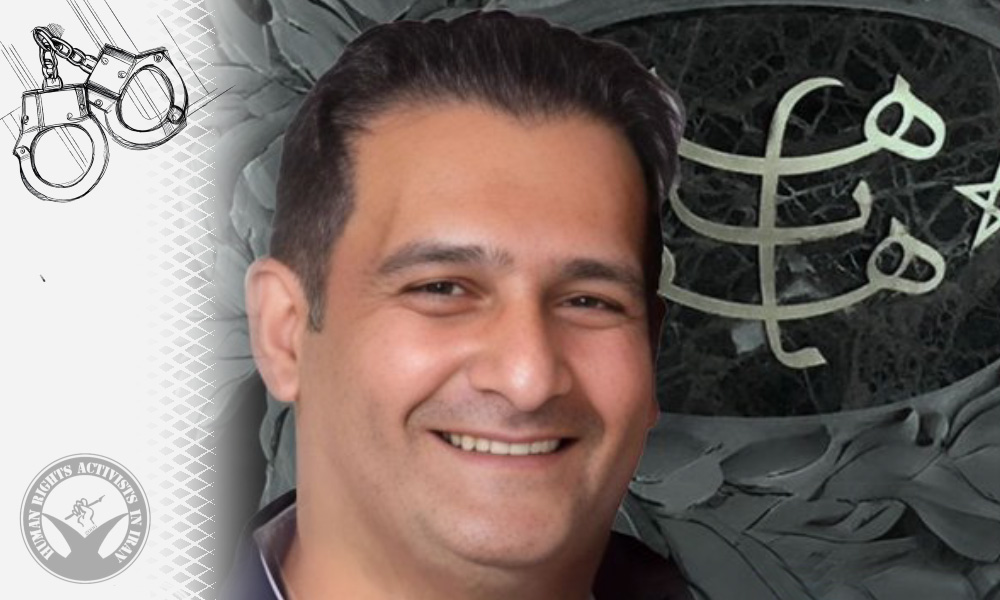
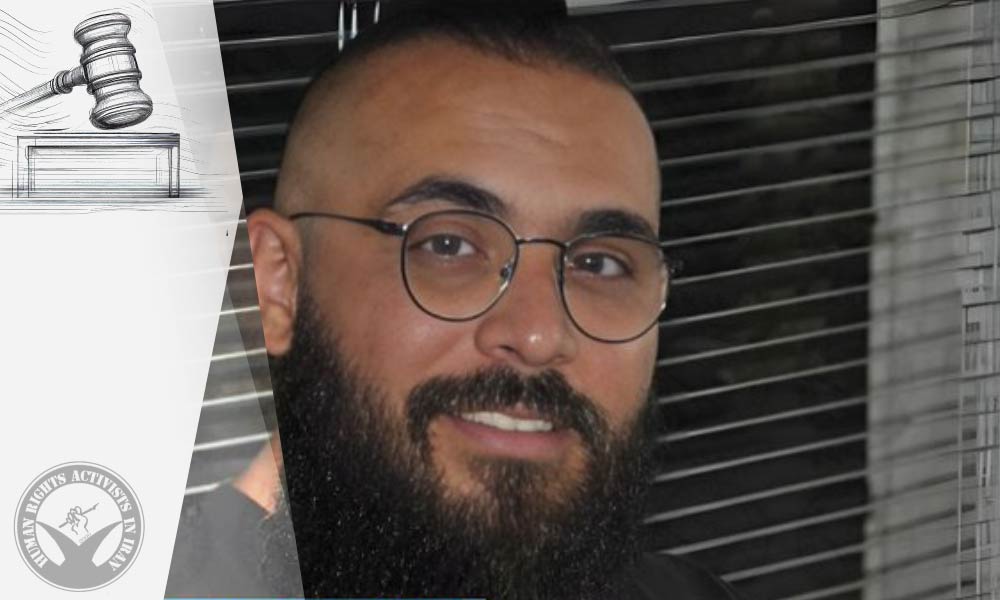
Mahboob Habibi, a Baha’i Citizen from Shiraz, Arrested and Charged

On Saturday, September 28, Mahboob Habibi, a Baha’i citizen residing in Shiraz, was arrested by security forces and transferred to the Ministry of Intelligence’s detention facility in the city, known as House No 100.

A source close to Habibi’s family confirmed to HRANA: “Mahboob Habibi was arrested in the presence of his two-year-old child by security forces and transferred to the Ministry of Intelligence’s detention facility in Shiraz.”

The following day, on Sunday, September 29, Habibi was formally charged during an interrogation at the Public and Revolutionary Prosecutor’s Office with accusations including “propaganda against the regime.”

Mahboob Habibi and his wife, Negar Misaghian, have previously been arrested and faced legal action due to their religious beliefs and activities.

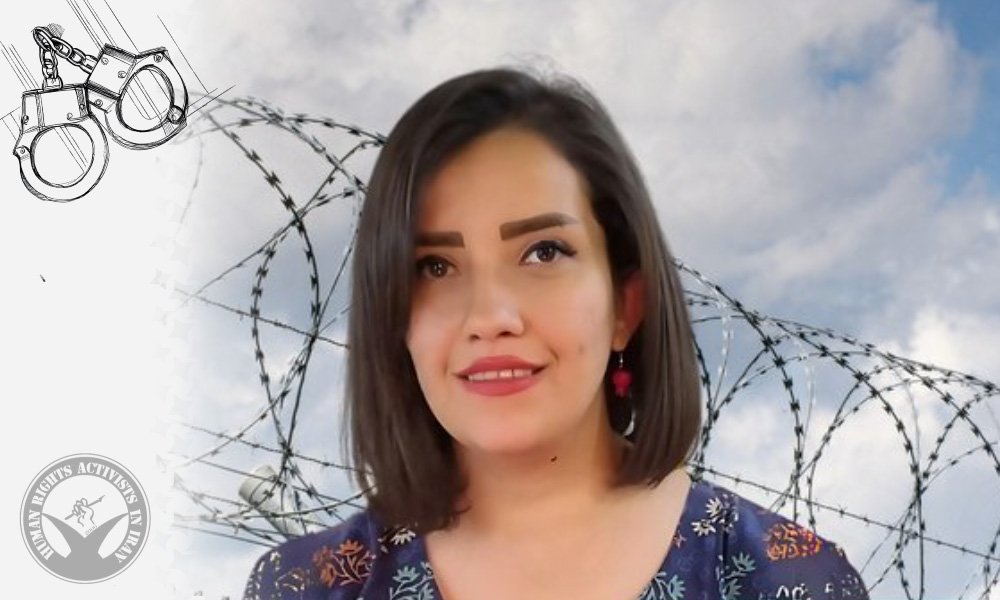
Baha’i Citizen Negar Misaghian Arrested by Security Forces in Shiraz

On Wednesday, September 18, Negar Misaghian, a Baha’i citizen residing in Shiraz, was arrested by security forces and transferred to the Ministry of Intelligence’s detention facility in Shiraz, known as House No 100.

A source close to Misaghian told HRANA, “At 1:00 p.m. today, Wednesday, September 18, several security agents came to Ms. Misaghian’s home, arrested her, and transferred her to the Ministry of Intelligence’s detention facility in Shiraz, known as House No 100. The agents also searched the premises and confiscated several personal items, including her mobile phone, laptop, and passport.”

According to information received by HRANA, Misaghian’s arrest took place while she is the mother of a two-year-old child, leaving her husband and child in a difficult situation. The reasons for Misaghian’s arrest and the charges against this Baha’i citizen remain unknown.

Negar Misaghian has previously been arrested and faced judicial actions due to her activities.

Baha’is are subjected to violations of their religious rights, comprising 82% of reports on infringements against religious minorities, according to HRA’s 2023 annual report.

The Baha’i faith is not recognized as a legitimate religion by Iranian authorities, leading to systematic and longstanding violations of the rights of Baha’is in the country. This includes the denial of their fundamental right to practice their religion, which constitutes a clear breach of both Article 18 of the Universal Declaration of Human Rights and Article 18 of the International Covenant on Civil and Political Rights. The United Nations covenant holds that every person has the right to freedom of religion, freedom of converting religion, as well as freedom of expression, individually or collectively; openly or secretly.


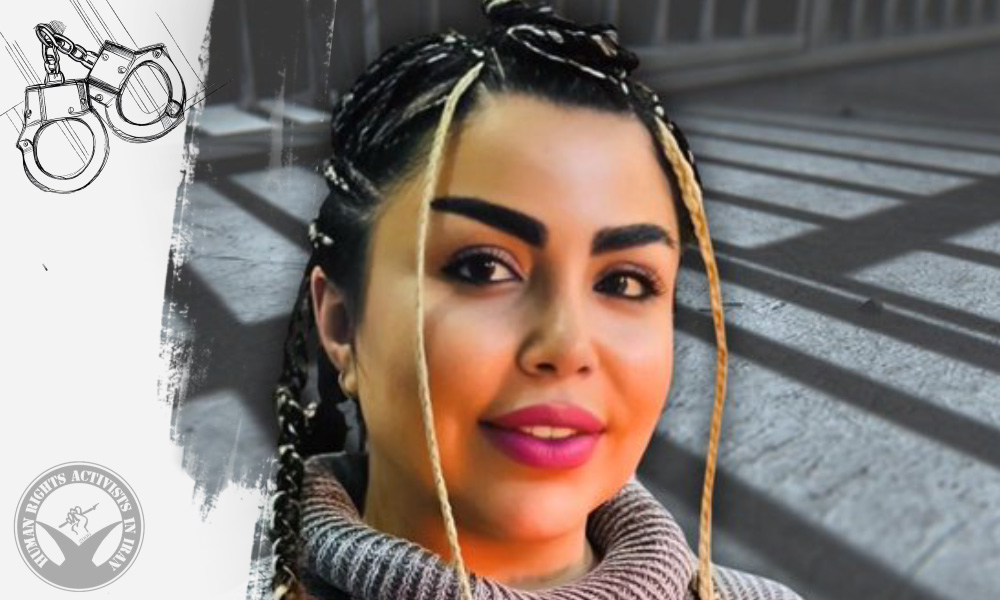
Report on the Arrest of Mozhdeh Fallahi, Christian Convert, in Shiraz

Mozhdeh (Mojdeh) Fallahi, a Christian convert, is currently detained at the Ministry of Intelligence’s facility in Shiraz, known as House No. 100, according to a report by Article 18. She was arrested on September 4 after visiting the Public and Revolutionary Prosecutor’s Office in Shiraz.

The report details that Fallahi had gone to the prosecutor’s office to submit necessary documents for the release of a Christian friend who had been arrested the previous day. However, upon her arrival, she was immediately taken into custody and transferred to House No. 100, the detention center operated by the Ministry of Intelligence.

Fallahi faces charges related to “Christianity” and “illegal Christian activity.” Furthermore, she has been denied the right to choose her own legal representation.

While Christians are officially recognized as a religious minority in Iran, the authorities closely scrutinize Muslims who convert to Christianity and often respond harshly to those involved in Christian activities.

This crackdown on Christian converts continues in Iran despite Article 18 of both the Universal Declaration of Human Rights and the International Covenant on Civil and Political Rights, which affirm everyone’s right to freedom of religion, including the right to change their religion and to express their beliefs individually or collectively, in public or private.

Three Prisoners Executed in Adelabad Prison in Shiraz

At dawn today, September 16, three prisoners convicted of charges related to drug offenses and murder were executed in Adelabad Prison in Shiraz, according to Haal Vsh.

The identities of these prisoners have been reported as: “Abdoljalil Ehsani, 33 years old, father of three, a native of Sarbaz and resident of Iranshahr; Yahya Zargari, 32 years old, resident of Iranshahr; and Mehdi Jahanpour, 21 years old, from Firouzabad, Fars Province.”

Mr. Ehsani and Mr. Zargari had previously been arrested in separate cases on charges related to drug offenses and were sentenced to death by the Shiraz court. Jahanpour was also arrested in 2022 on a murder charge and sentenced to death by the judiciary.

These prisoners were transferred to solitary confinement in this prison yesterday in preparation for the execution of their sentences.

As of the time of this report, the execution of these three prisoners has not been announced by prison authorities or relevant institutions.

According to data compiled by HRANA, Adelabad Prison carried out 49 executions in 2023, ranking five among prisons across Iran. For a comprehensive examination of the details and statistics surrounding the executions in Iran, refer to HRANA’s report.

Two Prisoners Executed in Adelabad Prison of Shiraz

On September 1, the death sentences of two prisoners, who had previously been convicted of murder in a joint case, were carried out in Adelabad Prison of Shiraz.

Iran Human Rights Organization identified them as Ali Danesh, approximately 35 years old, and Akbar Zandi, 40 years old, a father of two.

The report states that Mr. Danesh and Mr. Zandi had been arrested in a joint case on charges of murder and were ultimately sentenced to death.

As of the time of this report, the executions have not been officially announced by prison authorities or relevant institutions.

According to the Department of Statistics and Publication of Human Rights Activists in Iran, in 2023, at least 767 citizens, including 21 women and 2 juvenile offenders, were executed. Of these, the executions of 7 individuals were carried out in public. Additionally, during this period, 172 others were sentenced to death, with 5 of them sentenced to public execution. It is worth noting that during the same period, the initial death sentences of 49 other individuals were also upheld by the Supreme Court.

Subscribe to Our Newsletter

Now is definitely not the time to stop reading!

Mahmoud Sadeghi Attempts Suicide in Adelabad Prison, Shiraz

Mahmoud Sadeghi, a political prisoner held in Adelabad Prison in Shiraz, attempted suicide by cutting his wrist. After receiving medical treatment, he was punitively placed alongside inmates convicted of violent crimes, disregarding the principle of separating prisoners based on the nature of their offenses.

A source close to Sadeghi’s family told HRANA: “Mr. Sadeghi recently attempted suicide by cutting his wrist due to the harsh conditions in solitary confinement in the Education Ward. After receiving treatment, he was punitively transferred to one of the solitary cells in the Ershad Ward. Following his protest against the poor conditions there, he was moved, handcuffed and shackled by Mr. Shirvani, an Ershad Ward officer, to the area where prisoners convicted of violent crimes are held.”

The source added, “On the orders of the Ershad Ward officer in Adelabad Prison, this prisoner was beaten by inmates convicted of violent crimes.”

Mahmoud Sadeghi, a political prisoner, had previously been sentenced to imprisonment by the Revolutionary Court.

Three Prisoners Executed in Adelabad Prison for Drug Offenses

On Saturday, August 3, 2024, the execution of three prisoners, previously sentenced to death on separate drug-related charges, was carried out in Adelabad Prison, Shiraz.

The identities of these prisoners have been reported as Javad Amiri, 35, Naghai Ghorbani, approximately 40, both from Bandar Abbas, and Reza (Hamid) Rostami, 32, from Shiraz.

According to a source, Javad Amiri and Naghai Ghorbani were arrested about three years ago in Shiraz on a joint case involving drug trafficking and were sentenced to death. Reza Rostami was also arrested about four years ago on drug trafficking charges and sentenced to death.

According to this report, these prisoners were transferred from Pirbano Prison, Shiraz, to Adelabad Prison in the same city a few days before their execution.

As of the time of this report, the execution of these prisoners has not been announced by prison officials or responsible authorities.

The reports from the Department of Statistics and Publication of Human Rights Activists for the year 2023 reveal a concerning prevalence of executions for drug offenses in Iran, constituting 56.4% of the total executions. For a comprehensive examination of the details and statistics surrounding the executions in Iran, refer to HRANA’s report.

Four Prisoners Executed in Adelabad Prison in Shiraz

At dawn on Saturday, July 20th, the execution of four prisoners, including a woman, who had previously been sentenced to death in separate cases on charges of murder and rape, was carried out in Adelabad Prison in Shiraz, as reported by Iran Human Rights Organization.

The identities of the prisoners, Mansour Tavakoli and Hamed Shekasteh, both 40 years old, Mohsen Ostovari, and the woman executed with them, (first name unknown) Mahmoudinia, have been reported.

According to the report, Mr. Tavakoli and Mr. Shekasteh were arrested and sentenced to death about three years ago on charges of premeditated murder. Ostovari was sentenced to death on charges of rape.

The report states that Ms. Mahmoudinia was sentenced to death for the murder of her husband, whom she had been forcibly married to.

As of the time of this report, the execution of these four prisoners has not been announced by prison officials and responsible authorities.

According to data compiled by HRANA, Adelabad Prison carried out 49 executions, ranking five among prisons across Iran. For a comprehensive examination of the details and statistics surrounding the executions in Iran, refer to HRANA’s report.


Singer Vafa Ahmadpour Tried on Political Charges

On July 17, a trial session for Vafa Ahmadpour, a singer known as “Vafadar,” was held in the Revolutionary Court.

During this session, held today, Wednesday, July 17, 2024, in the Revolutionary Court, Mr. Ahmadpour defended himself against the charge of “assembly and collusion to commit crimes against national security through collaboration with regime opponents.”

Vafa Ahmadpour, a singer known as “Vafadar,” was arrested by security forces in Shiraz on May 9 and transferred to The Ministry of Intelligence’s detention facility in Shiraz, known as House No 100. He was later transferred to the central detention facility of this city, located in Adelabad Prison.

Ahmadpour was previously arrested on February 4, 2024, by security forces at his residence and was held in detention for over 15 days before being released on bail from Evin Prison. He was then sentenced by the Revolutionary Court to one year in prison on charges of propaganda against the regime.

Inmate Executed in Adelabad Prison for Drug Offenses

On Sunday, July 7, a death-row inmate convicted of drug-related charges was executed in Adelabad Prison, Shiraz, as reported by Kurdpa.

His identity has been reported as “Mojtaba Karami, 28 years old, from Harsin, a county in Kermanshah Province.”

The report states: “This prisoner was arrested about three and a half years ago on drug-related charges and was subsequently sentenced to death by the judiciary.”

No official sources or domestic media outlets within the country have provided coverage of these executions at the time of writing. In 2023, 66% of HRANA’s reports on executions lacked official announcements by judicial authorities and went unreported by media inside Iran, highlighting a troubling lack of transparency in due process.

According to data compiled by HRANA, in 2023, Adelabad Prison carried out 49 executions, ranking five among prisons across Iran. For a comprehensive examination of the details and statistics surrounding the executions in Iran, refer to HRANA’s report.