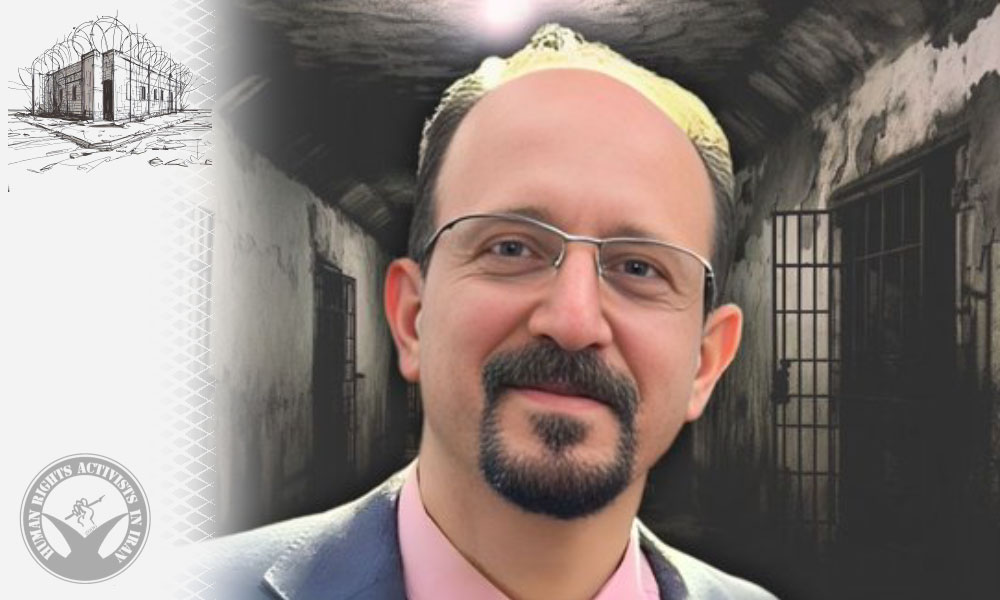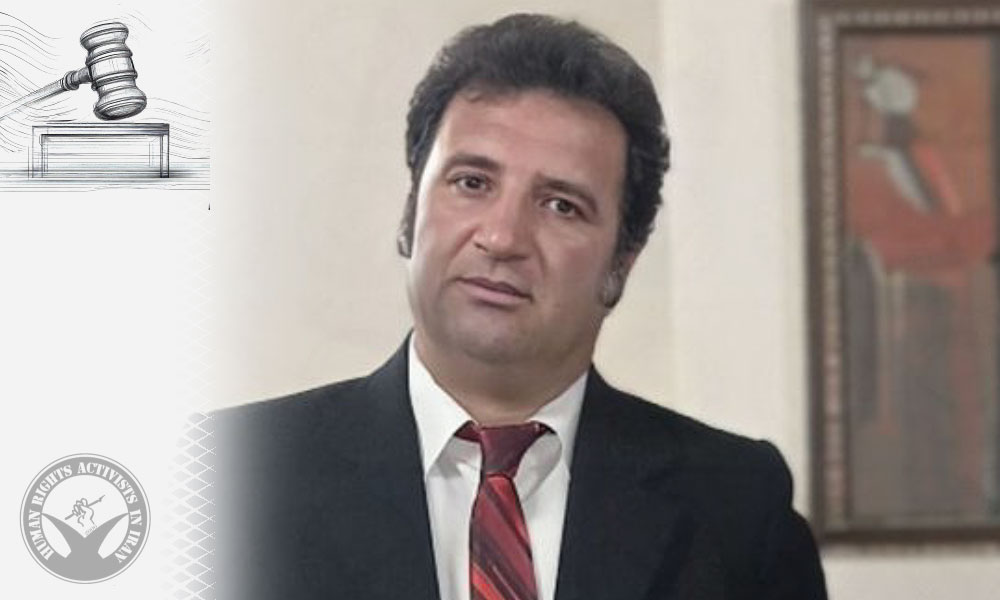
HRANA – Mohammad Najafi, an attorney imprisoned in Evin Prison, has been sentenced by the Tehran Revolutionary Court to three years in prison and additional penalties in connection with a case opened against him during his imprisonment.
This verdict was communicated to Mr. Najafi’s lawyers on November 19, 2025, by Branch 26 of the Tehran Revolutionary Court, presided over by Judge Iman Afshari. Under the ruling, he has been sentenced to one year in prison for “propaganda against the regime,” and two years in prison plus a 50-million-toman fine for “spreading falsehoods.” Additionally, as part of his supplementary punishment, this political prisoner has been barred from membership in political and social groups and prohibited from leaving the country for two years.
The ruling cites, among other examples, the publication of an audio file titled “Tasmim-e Kobra,” addressed to the Supreme Leader, as grounds for the charges brought against him.
The court session addressing Mr. Najafi’s charges was held on November 5, 2025, in Branch 26 of the Tehran Revolutionary Court; he did not attend the hearing.
Earlier this year, Branch 1 of the High Disciplinary Court for Judges issued a ruling permanently disbarring Mr. Najafi from practicing law.
Mohammad Najafi was transferred from Arak Prison to Evin Prison in April 2023. In 2019, he was released from prison in connection with a previous case, but four days later he was arrested again over another conviction and returned to Arak Prison.
Multiple cases have been opened against this attorney over the years, and he is currently serving his sentences in Evin Prison.
The longest sentence issued against this imprisoned lawyer relates to the charge of “collaboration with a hostile government through interviews with foreign media.” He was sentenced to 10 years in prison, which was later reduced to four years and six months.
In several separate cases, Mr. Najafi has faced fourteen charges and has been sentenced to more than 24 years in prison, with no consolidation of sentences carried out to date. At least six cases have been opened against him during his imprisonment. The “publication of audio files from Arak Prison” was cited as the grounds for one of these cases. Another case, opened following a complaint by the head of Arak Prison, resulted in a four-month prison sentence for Mr. Najafi.
Throughout his imprisonment, despite suffering from various health conditions, this attorney has consistently been denied specialized medical treatment and transfer to a hospital.