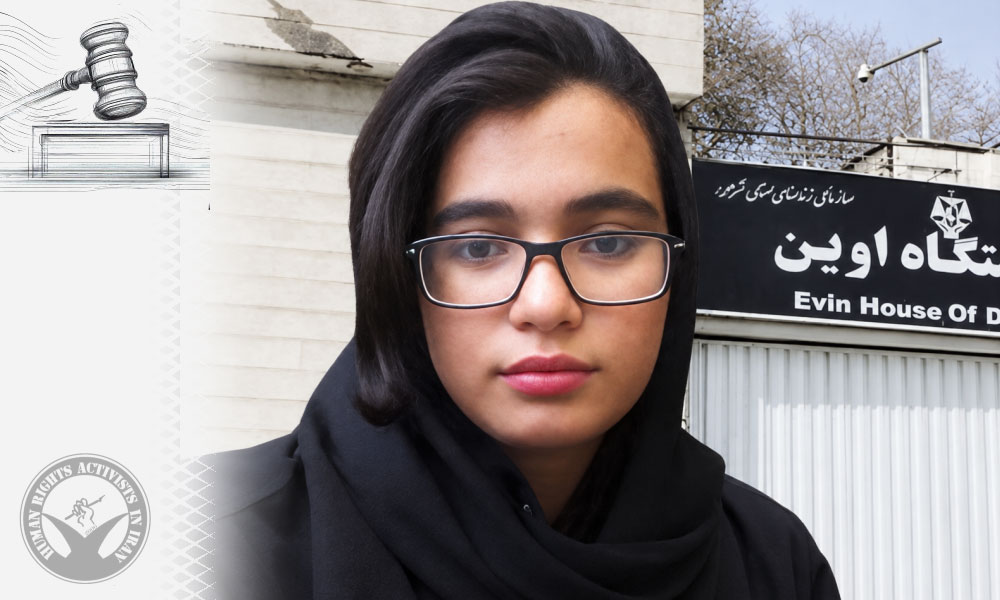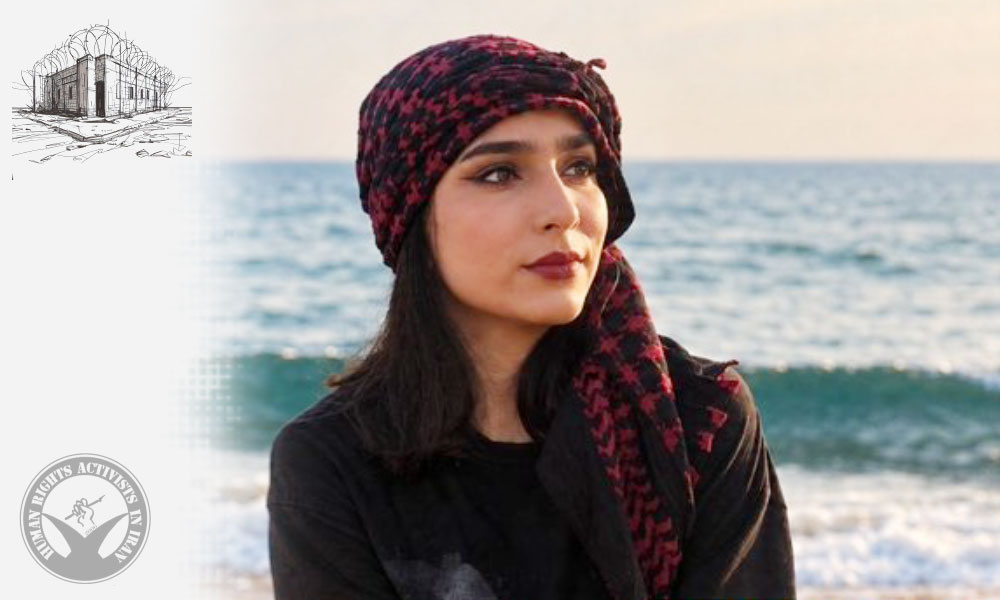
Homayra Sharifi Transferred to Hospital After Suicide Attempt in Evin Prison

HRANA – Homayra Sharifi, one of the individuals arrested during the 2026 nationwide protests and currently imprisoned in Evin Prison, was transferred to a hospital on the evening of Friday, July 10, 2026, after attempting suicide. She remains under medical treatment. The Afghan national has previously attempted suicide multiple times in prison, yet no effective action has been taken to address her condition.

Based on information received by HRANA, Homayra Sharifi attempted suicide on the evening of Friday, July 10, 2026, by drinking a corrosive cleaning liquid. After her condition rapidly deteriorated, she was first transferred to Loghman Hospital and later to Taleghani Hospital, where she continues to receive treatment.

An informed source told HRANA: “Other prisoners found her in the ward corridor while she was vomiting blood and a black-colored liquid. She was extremely frightened. Since her arrest, she has attempted suicide more than five times in prison.”

The source added: “Before her arrest, Homayra Sharifi worked at a restaurant. She has no political affiliation and does not have a clear understanding of the current circumstances. She has effectively become a victim of having no support or anyone to advocate for her.”

In June of this year, Ms. Sharifi, an Afghan national, was formally notified of her five-year prison sentence while in Evin Prison. She suffers from a skin condition and severe psychological distress. Nevertheless, she has not received adequate medical or mental health care.

Homayra Sharifi, 19, was arrested during the 2026 nationwide protests and transferred to Qarchak Prison in Varamin. On February 16, 2026, she was transferred from Qarchak Prison to Evin Prison, where she has remained ever since.

HRANA’s investigation into the charges brought against this prisoner and the judicial authority that issued her sentence is ongoing.

Overcrowding Sparks Protests in Evin Prison’s Women’s Ward

HRANA – The transfer of approximately 60 female prisoners from Qarchak Prison in Varamin to Evin Prison has sparked protests among inmates over the management of Evin Prison. The transfer took place despite the women’s ward already suffering from overcrowding and a lack of adequate space. The protests escalated into a tense situation after prison guards intervened and threatened the prisoners.

According to HRANA, Evin Prison’s women’s ward experienced unrest and protests following the arrival of new prisoners and the resulting overcrowding.

On Sunday, July 12, between 2:30 p.m. and 4:00 p.m., approximately 60 women convicted of financial offenses were transferred from Qarchak Prison in Varamin to Evin Prison. According to information received by HRANA, 49 of them had been admitted to the women’s ward by the time this report was prepared, while the remaining prisoners were being held in quarantine. The transfer occurred despite the women’s ward already facing severe shortages of space and overcrowding. In response to the worsening conditions, prisoners in the ward protested the increased congestion and deteriorating living conditions. Following the protest, prison guards entered the ward and threatened the women prisoners, including by warning that “prisoners sentenced to death would be separated from the other inmates.”

A knowledgeable source told HRANA that Mahsa (Masoumeh) Nouri, an inmate in the ward, was transferred to solitary confinement as a disciplinary measure after protesting the situation.

So far, promises made by prison officials to address the issue have yielded no results.

It should be noted that Evin Prison’s women’s ward currently holds approximately 60 political and security prisoners, along with two children, and had already been struggling with insufficient space before the recent transfers. The arrival of dozens of additional prisoners has heightened concerns over worsening overcrowding, reduced living space per inmate, and the further deterioration of prisoners’ living conditions.

Prison overcrowding has long been a chronic problem in Iran’s prisons. Holding inmates beyond a facility’s capacity not only reduces the standard living space available to prisoners but also restricts access to healthcare, sanitary services, welfare facilities, and adequate living conditions, while increasing the physical and psychological pressures associated with imprisonment. Ensuring prisons operate within their standard capacity and providing conditions consistent with human dignity are among the requirements emphasized by international human rights standards governing the treatment of individuals during detention and imprisonment.

Political Prisoner Mehran Raouf Released from Evin Prison Under Electronic Ankle Monitoring

HRANA – Mehran Raouf, a political prisoner, has been released from Evin Prison under electronic ankle monitor supervision.

According to HRANA News Agency, Mehran Raouf has been released. Based on information received by HRANA, Mehran Raouf was released yesterday from Evin Prison under electronic ankle monitor supervision.

Raouf was arrested in October 2020 by the intelligence unit of the IRGC Intelligence and transferred to the IRGC’s security detention ward, known as Ward 2-A of Evin Prison.

In April 2023, he wrote a letter from prison protesting the rights that had been denied to him due to his status as a dual national and a political prisoner.

In August 2021, Branch 26 of the Tehran Revolutionary Court, presided over by Judge Iman Afshari, sentenced him to 10 years and 8 months of discretionary imprisonment on charges of participating in the administration of an illegal group and propaganda against the regime. The sentence was ultimately reduced to 7 years and 6 months of imprisonment.

Fatemeh Sepehri Denied Adequate Medical Care in Vakilabad Prison, Mashhad

HRANA – Fatemeh Sepehri, a political prisoner held in Vakilabad Prison, has been denied adequate medical care and transfer to medical facilities outside the prison despite suffering from a heart condition and deteriorating health.

According to HRANA, Fatemeh Sepehri continues to be deprived of proper medical treatment.

According to his brother, Asghar Sepehri, despite a prison doctor’s recommendation in March 2026 that Fatemeh Sepehri be examined by a cardiologist, prison authorities failed to arrange the transfer. She was only taken to a heart specialist after her condition significantly worsened on April 22, 2026. He added that the specialist had scheduled a follow-up appointment for May 23, 2026, but that visit has yet to take place. In addition, most of her essential medications have run out, and continuing her treatment depends on another specialist examination and the renewal of her prescriptions.

In March 2025, in a joint case with her brother, Mohammad Hossein Sepehri, Branch 5 of the Revolutionary Court in Mashhad sentenced each of them to three years and nine months in prison. The case stemmed from a letter the two political prisoners published from Vakilabad Prison on December 26, 2024.

Previously, in June 2024, Fatemeh Sepehri was sentenced to 18 years and six months in prison in another joint case alongside her brothers, Mohammad Hossein Sepehri and Hossein Sepehri.

Earlier, in January 2023, the Criminal Court of Mashhad sentenced Fatemeh Sepehri to one year of discretionary imprisonment and a fine of 200 million rials on charges of spreading false information and disturbing public opinion.

In a separate case, Fatemeh Sepehri was sentenced to 10 years in prison on charges of cooperation with hostile states. She also received five years for “assembly and collusion against national security,” two years for “insulting the Supreme Leader,” and one year for propaganda against the state. These sentences were upheld on appeal. Under Article 134 of the Islamic Penal Code, 10 years of the combined sentence are enforceable.

Fatemeh Sepehri is also one of the signatories of the letter calling for the resignation of Ali Khamenei. In connection with that letter, Branch 4 of the Revolutionary Court in Mashhad initially sentenced her to five years of discretionary imprisonment. The sentence was later reduced on appeal to three years and six months. She was subsequently released in early 2020 under a five-year suspended sentence.

Denial of Phone Calls and Family Visits; Azar Yahu’s Detention Continues at Vakilabad Prison in Mashhad

HRANA – Azar Yahu remains in detention at Vakilabad Prison in Mashhad without a clear legal status, despite 125 days having passed since her arrest. Since Sunday, July 5, she has been subjected to a disciplinary ban on phone calls and family visits.

According to HRANA News Agency, Azar Yahu remains in detention at Vakilabad Prison in Mashhad without any judicial resolution to her case.

A source familiar with the matter and close to Yahu’s family confirmed the news to HRANA, stating: “Since Sunday, July 5, Azar Yahu has been deprived of phone calls and family visits as a disciplinary measure and has been transferred to Ward 6 of Vakilabad Prison in Mashhad. Prison officials have claimed that the disciplinary action was taken because she had published a statement about her conditions in prison. However, she has not published any such statement.”

The source added that although 125 days have passed since Ms. Yahu’s arrest, no verdict has yet been issued in her case, which remains under judicial review.

Azar Yahu, aged approximately 39, has been charged with “collaboration with Israel.” According to reports received by HRANA, the charge is based on her online activities, including the use of stickers on social media. Authorities have also cited her presence in the streets and dancing on the day of Ali Khamenei’s death as additional reasons for her arrest.

She was arrested in Mashhad by the IRGC Intelligence Organization on March 5, 2026.

Subscribe to Our Newsletter

Now is definitely not the time to stop reading!

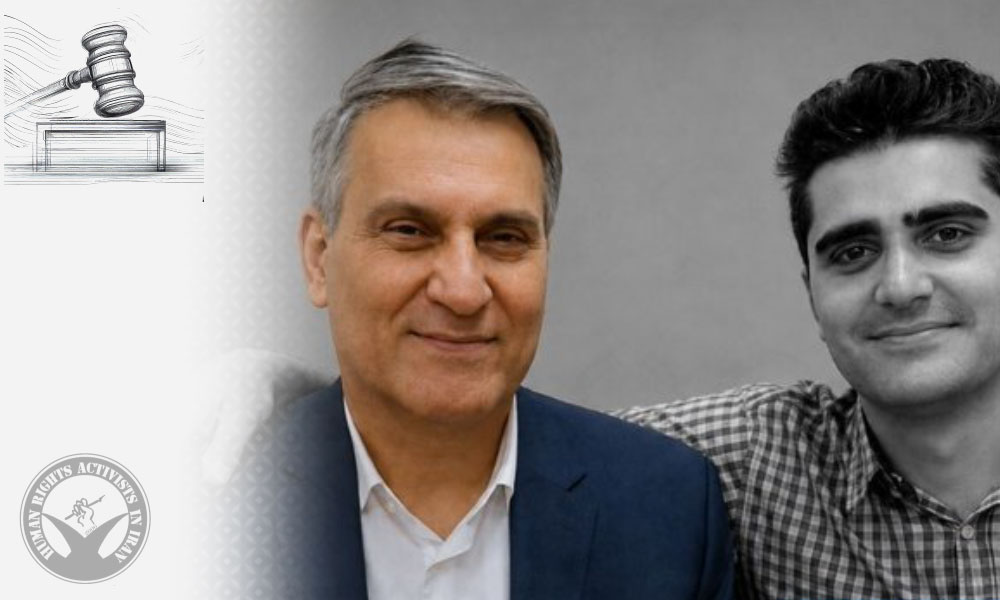
Ongoing Hunger Strike: Latest Update on British Couple Lindsay and Craig Foreman in Prison

HRANA – Craig Foreman and Lindsay Foreman, the British couple imprisoned in Evin Prison, remain on hunger strike in protest against the authorities’ continued disregard for their demands. They have been denied adequate medical care, access to essential medication, and the ability to make phone calls to each other or their family members.

According to HRANA, Craig and Lindsay Foreman continue their hunger strike.

Based on information received by HRANA, the two British nationals remain on hunger strike and have been denied access to on-site medical examinations and visits from a doctor or nurse. Lindsay Foreman must walk a considerable distance, including a long corridor and approximately 30 stairs, to reach the prison clinic. She has not received a medical check-up for about ten days. She is reportedly suffering from dizziness, body tremors, severe weakness, and has lost more than 14 kilograms. Craig Foreman has also lost approximately 16 kilograms.

A source familiar with the couple’s situation confirmed the information to HRANA, stating: “Craig and Lindsay Foreman have recently been allowed to speak with their lawyer by telephone, but they remain barred from contacting their family members, children, or even each other. In addition, essential medications, eyeglasses, books, and hygiene supplies sent by the British Embassy have still not been delivered to them, despite approval from the prison clinic physician and ward officials. According to the source, the prison’s Protection Unit and security team have refused to hand over these items, despite a previous promise made to the British ambassador.”

The same source said that pressure on the couple intensified after they gave interviews to BBC World News in which they referred to the number of executions in Iran. During his imprisonment in Evin and Greater Tehran prisons, Craig Foreman has lived alongside prisoners sentenced to death and witnessed prisoners being transferred for execution. He is currently housed with several prisoners facing imminent execution. In her interview from inside prison, Lindsay Foreman also spoke about executions in Iran. The couple stated: “In Iran, speaking about executions can result in people being deprived of their basic rights. The Iranian government has no problem carrying out executions, but when those executions are reported, it responds harshly against those who speak about them.”

According to reports received by HRANA, Lindsay Foreman has now been on hunger strike for 49 days, while Craig Foreman has been on hunger strike for 58 days. They began their protest in May 2026, objecting to their prison conditions and the suspension of phone contact with their families. As her hunger strike has continued, Lindsay Foreman has experienced serious physical deterioration, including significant weight loss, low blood sugar, and fluctuations in blood pressure.

Their prison sentences were upheld in full by the Court of Appeals in June 2026.

In February 2026, Branch 15 of the Tehran Revolutionary Court, presided over by Judge Abolghasem Salavati, sentenced the couple to 10 years in prison on charges of “espionage.”

According to the couple, “Although we appeared before the court, no evidence was presented, and we were given no opportunity to defend ourselves.”

Craig and Lindsay Foreman, who had entered Iran by motorcycle as part of a round-the-world journey, were arrested in January 2025 in Kerman by IRGC intelligence forces. Iranian judicial authorities accused them of “espionage,” alleging that they had gathered information in several provinces under the guise of tourism and research activities.

The then British ambassador to Iran met with the couple at the Kerman Prosecutor’s Office in February 2025.

In recent years, Iranian authorities have arrested several foreign nationals on charges such as espionage or cooperation with hostile governments. Some have later been released following political negotiations. Human rights organizations and several Western governments have accused Iran of using such arrests as a means of political leverage, allegations that Iranian authorities have consistently denied.

Evin Prison: Mohammad Moaidi Shakib Has Been on Hunger Strike for Nine Days

HRANA – Mohammad Moaidi Shakib, a political prisoner held in Evin Prison, who suffers from multiple medical conditions, has been on hunger strike since Sunday, June 28, in protest against the continued denial of transfer to medical facilities outside the prison.

According to HRANA, Mohammad Moaidi Shakib, a political prisoner imprisoned in Evin Prison, has now been on hunger strike for nine days.

Based on information received by HRANA, Mr. Moaidi Shakib continues to be denied transfer to medical facilities outside the prison to receive specialized treatment despite suffering from heart disease, a prostate condition, and cervical and lumbar disc disorders. He began his hunger strike on Sunday, June 28, in protest against this ongoing deprivation.

A source close to the prisoner’s family confirmed the news to HRANA and said: “After beginning his hunger strike, the prison warden threatened him that if he continued his protest, he would be transferred to Razi Psychiatric Hospital (Aminabad).”

Mr. Moaidi Shakib had previously also gone on hunger strike to protest the authorities’ failure to provide adequate medical care for his physical health conditions.

Mohammad Moaidi Shakib has been sentenced to a total of three years and nine months in prison on charges of “assembly and collusion against national security” and “propaganda against the regime.” He had previously been tried by Branch 26 of the Tehran Revolutionary Court, presided over by Judge Iman Afshari.

Mohammad Moaidi Shakib was arrested at his home on September 9, 2023. He is currently being held in Hall 12 of Ward 7 of Evin Prison.

Appeals Court Upholds Prison Sentences of Five Christian Converts

HRANA – The Tehran Province Court of Appeals has upheld the prison sentences of five Christian converts, four of whom have been identified as Aida Najaflou, Nasser Navard Gol-Tappeh, Joseph Shahbazian, and Lida Alexsani (Alek-Sani). The five had previously been sentenced by the Tehran Revolutionary Court to a combined total of 55 years in prison.

According to a report by Article 18, the Tehran Province Court of Appeals recently issued its ruling, fully affirming the original verdicts. The decision was officially communicated to the defendants on June 22, 2026.

In December 2025, the Tehran Revolutionary Court had sentenced the defendants. Under the ruling, Nasser Navard Gol-Tappeh, Joseph Shahbazian, and another Christian convert involved in the case were each sentenced to 10 years’ imprisonment, while Lida Alexsani received eight years in prison. Aida Najaflou was sentenced to a total of 17 years’ imprisonment. However, under Article 134 of the Islamic Penal Code, which provides for the enforcement of only the most severe sentence in cases involving multiple convictions, she will serve 10 years, the longest of her sentences.

The first hearing in the case against Aida Najaflou, Nasser Navard Gol-Tappeh, and Joseph Shahbazian was held on September 6, 2025, in Branch 15 of the Tehran Revolutionary Court, presided over by Abolghasem Salavati. They defended themselves against charges of “propaganda against the regime” and “acting against national security.”

The indictment was issued by the Evin Prosecutor’s Office on June 10, 2025. According to the final indictment, the charges were based on establishing, organizing, and leading a house church, conducting evangelical Christian house gatherings, and performing religious ceremonies such as baptism and Holy Communion.

Lida Alexsani was arrested at her home by agents of the Ministry of Intelligence on April 13, 2025. On May 13, 2025, she was released from Evin Prison after posting bail.

Aida Najaflou was also released from Evin Prison on bail on December 21, 2025. She had previously been transferred on April 13, 2025, from The Ministry of Intelligence’s detention facility, known as Ward 209 of Evin Prison, to the prison’s women’s ward. She had originally been arrested by security forces on February 6, 2025.

Nasser Navard Gol-Tappeh and Joseph Shahbazian, who were arrested on the same date and transferred to Evin Prison, remain in custody.

Both Nasser Navard Gol-Tappeh and Joseph Shahbazian, Christian converts residing in Tehran, have previously been arrested and imprisoned because of their religious activities.

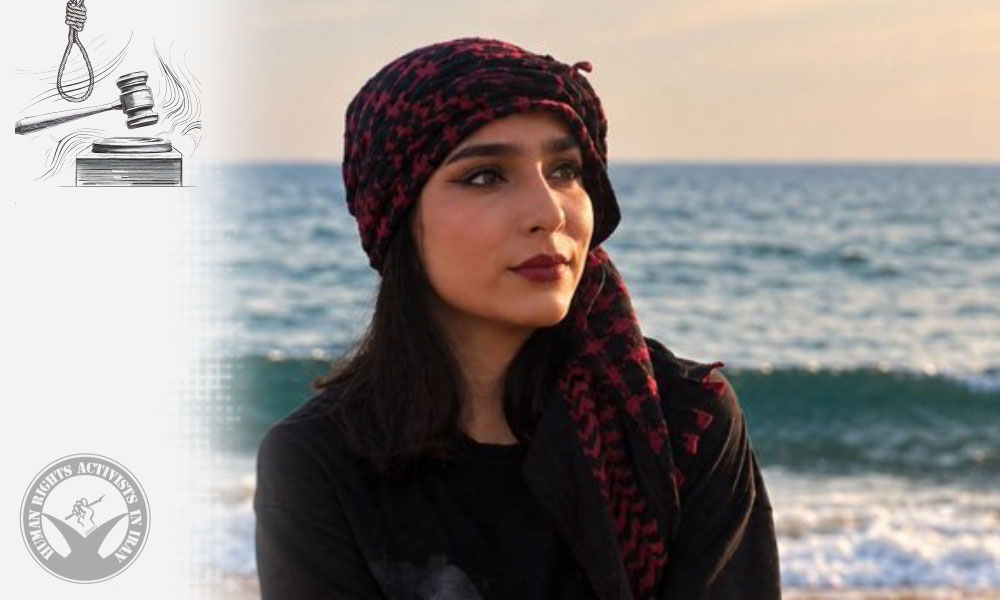
Political Prisoner Arghavan Fallahi Sentenced to Death

HRANA – Arghavan Fallahi, a 24-year-old political prisoner held in Evin Prison, has been sentenced to death by Judge Abolghasem Salavati on the charge of baghi (armed rebellion).

According to information received by HRANA, the sentence was issued by Branch 15 of the Tehran Revolutionary Court, presided over by Judge Abolghasem Salavati. Ms. Fallahi was sentenced to death under Article 287 of the Islamic Penal Code on the charge of baghi (armed rebellion), based on allegations of membership in anti-government groups and involvement in armed action.

Following the Israeli strike on Evin Prison in June 2025, Ms. Fallahi was initially transferred to Greater Tehran Penitentiary and subsequently to Qarchak Prison in Varamin. She was later returned to Evin Prison.

Previously, an informed source told HRANA regarding her case: “Following her arrest, Ms. Fallahi was held for a period in Wards 209 and 241 of Evin Prison under the supervision of the Judiciary’s Intelligence Protection Organization. During this time, she was subjected to severe psychological torture, and efforts were made to extract forced confessions from her in connection with the killings of judges Mohammad Moghiseh and Ali Razini.”

Arghavan Fallahi was arrested by security forces in early January 2025 and transferred to Ward 209 of Evin Prison, The Ministry of Intelligence’s detention facility.

Ms. Fallahi had previously been arrested along with her father in November 2022 by security forces and was later transferred to Evin Prison. She was subsequently sentenced by Branch 26 of the Tehran Revolutionary Court, presided over by Judge Iman Afshari, to two years in prison on charges of assembly and collusion and propaganda against the regime. She was released from Evin Prison after completing her sentence.

Lawyer Astareh Ansari Remains Detained Despite Urgent Medical Needs

HRANA – Astareh (Maryam) Ansari, a lawyer, has been held in a state of legal uncertainty for nearly two months in Adelabad Prison in Shiraz, without adherence to the principle of separation of prisoners based on the nature of their alleged offenses. She suffers from an autoimmune disease and requires regular treatment and urgent medical attention, raising growing concerns among her family and relatives about her physical condition.

According to information received by HRANA, Astareh Ansari, who suffers from an autoimmune disease, is currently being forced to sleep on the floor and is being held in Adelabad Prison in Shiraz without observance of the principle of separating prisoners according to the nature of their alleged offenses. She has also been denied access to adequate medical treatment and healthcare. Ms. Ansari’s detention order remains valid until July 5, and her family has expressed concern that it may be extended once again. Given her underlying medical condition and continued deprivation of specialized medical care, her ongoing detention has further intensified her family’s concerns about her health.

A source familiar with the matter confirmed the report to HRANA, stating: “This lawyer is facing the charge of ‘propaganda activity against the regime,’ based on Article 4 of the Law on Intensifying the Punishment for Espionage, and her case is currently under review by the judicial authorities in Fars Province.”

Ms. Ansari was arrested at her home in Shiraz by security forces on the evening of May 3, 2026.

Astareh (Maryam) Ansari, a lawyer, was previously arrested during the 2022 nationwide protests in Iran.