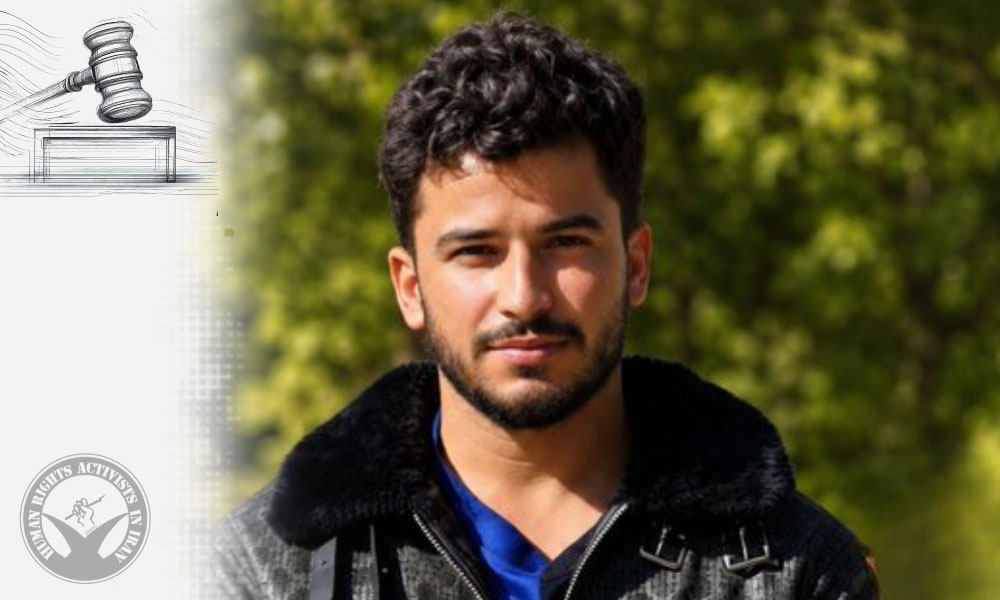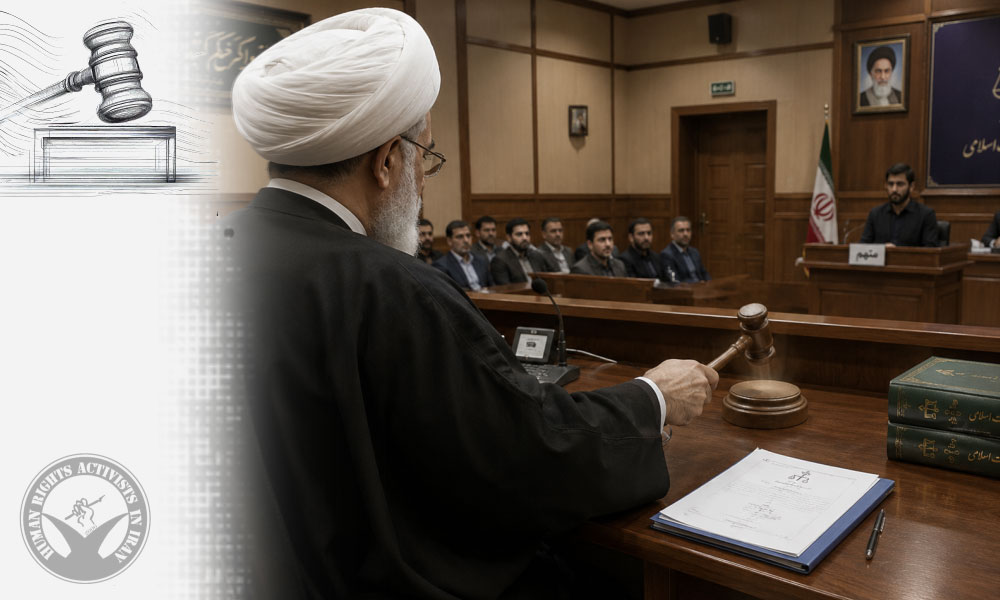
HRANA – Ahmad Lajam Ourak, one of the individuals arrested during the 2026 nationwide protests in Izeh, has been sentenced on appeal to two years and one day in prison. The Khuzestan Province Court of Appeals upheld the original verdict but suspended one year of the sentence for a period of two years.
Based on a ruling issued by Branch 14 of the Khuzestan Province Court of Appeals and communicated to Hossein Ali Hatami, the attorney representing this citizen, Mr. Lajam Ourak was sentenced to two years and one day in prison on the charge of “disrupting public order”, pursuant to the note appended to Article 286 of the Islamic Penal Code. The court also suspended one year of the sentence for two years.
Mr. Lajam Ourak had previously been sentenced by the Revolutionary Court of Izeh to the same prison term on the same charge at the trial stage.
In this case, the charge of “disrupting public order” was brought under the note to Article 286 of the Islamic Penal Code. Under Iranian law, Article 286 primarily concerns the offense of “spreading corruption on earth” (efsad-e fel-arz). However, according to its note, if a defendant’s actions are deemed to have caused disorder or insecurity but are not considered sufficiently extensive to constitute efsad-e fel-arz, the death penalty is not applicable, and the court may instead impose a discretionary prison sentence of Grade Five or Six (up to five years’ imprisonment).
The use of this note instead of Article 618 of the Islamic Penal Code, which addresses ordinary public-order offenses and carries a maximum sentence of one year in prison, suggests that the case was treated as a security-related matter and that the court relied on the heavier penalties provided under the note to Article 286.
Ahmad Lajam Ourak, a conscript soldier, was arrested by security forces on January 8, 2026, during the nationwide protests. He was later released on February 14, 2026, after posting bail of 1.5 billion tomans.
It should be noted that protests and strikes by shopkeepers and bazaar merchants began in Tehran on Sunday, December 28, 2025, and within two days spread beyond markets and commercial centers. With the participation of students, citizens, and various social groups, these protests became one of the largest protest movements of recent years. Following the crackdown by security and law enforcement forces, thousands were killed or injured, and tens of thousands were arrested or summoned by security agencies. For more information, readers may refer to HRANA’s comprehensive report titled “Crimson Winter,” documenting the first fifty days following the outbreak of Iran’s nationwide protests.