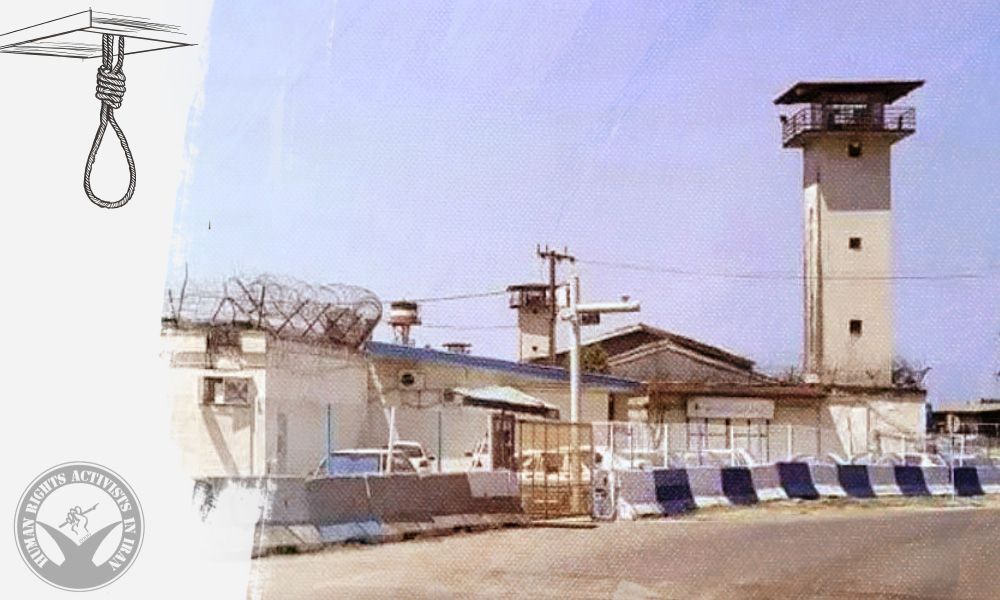
HRANA – At least 56 individuals facing political or security-related charges have been sentenced to death and are currently held in various prisons across Iran. HRANA’s investigations show that the death sentences of at least 22 of these individuals have been issued by judicial authorities in Tehran, accounting for a significant share of the total. This report provides a detailed list and the latest updates on their cases.
According to HRANA, the news agency of Human Rights Activists in Iran, many of these prisoners have been denied fair trial rights. These include limited or no access to legal counsel and a lack of transparency in judicial proceedings. Some were denied the right to legal counsel of one’s choosing, while others were prevented from meeting with their chosen legal representatives despite having them. A significant number of these individuals, while rejecting the charges against them, have been arbitrarily sentenced to death through opaque and unfair processes. Reports also indicate that some of these prisoners are currently being held in solitary confinement awaiting execution.
HRANA’s findings reveal that courts in Tehran have issued the highest number of death sentences in political and security-related cases. Among them, Branch 15 of the Tehran Revolutionary Court, presided over by Judge Abolghasem Salavati; Branch 26, led by Judge Iman Afshari; and Branch 28, headed by Judge Mohammadreza Amouzad, have played especially prominent roles. In northwestern Iran, the Revolutionary Court of Urmia has handed down the highest number of death sentences for political offenses. Additionally, courts in Ahvaz, Rasht, Mashhad, Mahshahr, and Zahedan have each sentenced multiple individuals mentioned in this report to death. The primary charges brought against these defendants include baghi (armed rebellion) and moharebeh (enmity against God).
In several instances, death sentences initially overturned by the Supreme Court were reinstated by parallel judicial branches. For example, Hatam Ozdemir, Mohammad-Javad Vafa’i Sani, Isa Eidmohammadi, Saman Mohammadi Kheyareh, and Sharifeh Mohammadi were all resentenced to death after the Supreme Court had annulled their original verdicts. Notably, Mohammad-Javad Vafa’i Sani was sentenced to death for a third time during retrial proceedings.
Defense attorneys have consistently raised concerns over the lack of fairness and due process in these cases. In one example, following the Supreme Court’s rejection of Mehdi Hasani’s fourth request for retrial, his lawyer revealed that the court had dismissed the petition without retrieving the original case file from the trial court—likely without even reviewing the submitted legal arguments.
In the cases of Pakhshan Azizi, Verisheh Moradi, and Sharifeh Mohammadi, more than 200 attorneys issued a public statement addressed to Iran’s Chief Justice, condemning the death sentences issued against the three women and calling for their immediate revocation. The statement described the verdicts as “a blatant violation of human rights” and pointed to “serious ambiguities and deficiencies in legal proceedings, access to legal counsel, evaluation of evidence, and judicial impartiality.”
This report, with a focus on the human cost, outlines the names and current legal statuses of 56 individuals sentenced to death on political and security-related charges.
1. Varisheh Moradi- Prison: Qarchak Prison, Varamin
- Main Charge: Baghi (armed rebellion)
- Court: Branch 15, Tehran Revolutionary Court
- Case Status: Initial death sentence issued
|  |
| Varisheh Moradi was arrested by security forces in the suburbs of Sanandaj on August 1, 2023. She was transferred to the women’s ward of Evin Prison on December 26. In November 2024, she was sentenced to death by Branch 15 of the Tehran Revolutionary Court, presided over by Judge Abolghasem Salavati, on charges including membership in an opposition group and Baghi (armed rebellion). |
2. Pakhshan Azizi- Prison: Qarchak Prison, Varamin
- Main Charge: Baghi
- Court: Branch 26, Tehran Revolutionary Court
- Case Status: Death sentence issued and upheld by the Supreme Court
|  |
| Pakhshan Azizi, a resident of Mahabad, was arrested in Tehran on August 4, 2023, and transferred to Ward 209 of Evin Prison. After four months of interrogation, she was moved to the women’s ward. On July 24, 2023, Branch 26 of the Tehran Revolutionary Court, presided over by Judge Iman Afshari, sentenced her to death and four years of imprisonment on charges of Baghi through membership in opposition groups. The Supreme Court has recently upheld her case. |
3. Akbar Daneshvar-Kar- Prison: Great Tehran Penitentiary
- Main Charge: Baghi (armed rebellion)
- Court: Branch 26, Tehran Revolutionary Court
- Case Status: Initial death sentence issued
|  |
4. Seyed Mohammad Taghavi Sangdehi- Prison: Great Tehran Penitentiary
- Main Charge: Baghi
- Court: Branch 26, Tehran Revolutionary Court
- Case Status: Initial death sentence issued
|  |
5. Babak Alipour- Prison: Great Tehran Penitentiary
- Main Charge: Baghi
- Court: Branch 26, Tehran Revolutionary Court
- Case Status: Initial death sentence issued
|  |
6. Pouya Ghobadi Bistoni- Prison: Great Tehran Penitentiary
- Main Charge: Baghi
- Court: Branch 26, Tehran Revolutionary Court
- Case Status: Initial death sentence issued
|  |
7. Vahid Bani-Amerian- Prison: Great Tehran Penitentiary
- Main Charge: Baghi
- Court: Branch 26, Tehran Revolutionary Court
- Case Status: Initial death sentence issued
|  |
8. Seyed Abolhasan Montazer- Prison: Great Tehran Penitentiary
- Main Charge: Baghi
- Court: Branch 26, Tehran Revolutionary Court
- Case Status: Initial death sentence issued
| |
| Vahid Bani-Amerian and Seyed Abolhasan Montazer were arrested in December 2022, and Babak Alipour was detained in autumn 2023 in Tehran. Pouya Ghobadi and Seyed Mohammad Taghavi were arrested in Chaldoran, and Akbar Daneshvar-Kar was detained on February 23, 2024, by security forces and transferred to Evin Prison. In December 2024, Branch 26 of the Tehran Revolutionary Court, presided over by Judge Iman Afshari, sentenced these six political prisoners to death on charges including Baghi (armed rebellion) through membership in opposition groups, assembly and collusion to disrupt national security, formation of illegal groups, destruction of public property, and illegal border crossing. Additionally, they received supplementary sentences: - Akbar Daneshvarkar and Seyed Mohammad Taghavi Sangdehi: 15 years imprisonment each.
- Babak Alipour: 5 years imprisonment and 20 years exile in Khash.
- Pouya Ghobadi Bistoni: 1 year imprisonment.
- Vahid Bani-Amerian: 5 years imprisonment.
- Seyed Abolhasan Montazer: 5 years imprisonment.
|
9. Eido Shah-Bakhsh- Prison: Ghezel Hesar Prison, Karaj
- Main Charge: Baghi (armed rebellion)
- Court: Branch 28, Tehran Revolutionary Court
- Case Status: Sentence upheld by the Supreme Court; referred to the execution branch
|  |
10. Abdolghani Shah-Bakhsh- Prison: Ghezel Hesar Prison, Karaj
- Main Charge: Baghi
- Court: Branch 28, Tehran Revolutionary Court
- Case Status: Sentence upheld by the Supreme Court; referred to the execution branch
|  |
11. Abdolrahim Ghanbarzahi Gorgij (Rahim Mirbaloch)- Prison: Ghezel Hesar Prison, Karaj
- Main Charge: Baghi
- Court: Branch 28, Tehran Revolutionary Court
- Case Status: Sentence upheld by the Supreme Court; referred to the execution branch
|  |
12. Soleiman Shah-Bakhsh- Prison: Ghezel Hesar Prison, Karaj
- Main Charge: Baghi
- Court: Branch 28, Tehran Revolutionary Court
- Case Status: Sentence upheld by the Supreme Court; referred to the execution branch
|  |
| These individuals were arrested in 2012. Many of their court sessions were irregular, and some defendants, such as Eido Shah-Bakhsh and Abdolghani Shah-Bakhsh, were acquitted by Branch 1 of the Zahedan Revolutionary Court but were rearrested in 2016 following objections from security agencies. On February 4, 2024, Branch 28 of the Tehran Revolutionary Court, presided over by Judge Mohammad Reza Amouzad Khalili, sentenced them to death for Baghi through membership in opposition groups and armed rebellion against the regime. The Supreme Court’s Branch 32 upheld their death sentences, and the cases were referred to the first branch of the Tehran Security Prosecutor’s Execution Office. |
13. Milad Armoun- Prison: Ghezel Hesar Prison, Karaj
- Main Charge: Participation in murder and intentional assault (in a case known as Ekbatan Town case)
- Court: Branch 13, Tehran Criminal Court One
- Case Status: Initial death sentence issued
|  |
14. Alireza Kafaei- Prison: Ghezel Hesar Prison, Karaj
- Main Charge: Participation in murder and intentional assault
- (in a case known as Ekbatan Town case)
- Court: Branch 13, Tehran Criminal Court One
- Case Status: Initial death sentence issued
|  |
15. Amir Mohammad Khosh-Eghbal- Prison: Ghezel Hesar Prison, Karaj
- Main Charge: Participation in murder and intentional assault
- (in a case known as Ekbatan Town case)
- Court: Branch 13, Tehran Criminal Court One
- Case Status: Initial death sentence issued
|  |
16. Navid Najaran- Prison: Ghezel Hesar Prison, Karaj
- Main Charge: Participation in murder and intentional assault
- (in a case known as Ekbatan Town case)
- Court: Branch 13, Tehran Criminal Court One
- Case Status: Initial death sentence issued
|  |
17. Hossein Nemati- Prison: Ghezel Hesar Prison, Karaj
- Main Charge: Participation in murder and intentional assault
- (in a case known as Ekbatan Town case)
- Court: Branch 13, Tehran Criminal Court One
- Case Status: Initial death sentence issued
|  |
18. Alireza Barmarz Pournak- Prison: Ghezel Hesar Prison, Karaj
- Main Charge: Participation in murder and intentional assault
- (in a case known as Ekbatan Town case)
- Court: Branch 13, Tehran Criminal Court One
- Case Status: Initial death sentence issued
|  |
| These individuals are defendants in the so-called “Ekbatan Town” case. They were arrested in 2022 during nationwide protests after the killing of a Basij militia member named Arman Ali Vardi in Ekbatan Town. In November 2024, Branch 13 of Tehran Criminal Court One sentenced each of them to death for “participation in murder and intentional assault.” |
19. Behrooz Ehsani- Prison: Ghezel Hesar Prison, Karaj
- Main Charge: Baghi (armed rebellion)
- Court: Branch 26, Tehran Revolutionary Court
- Case Status: death sentence upheld by the Supreme Court
|  |
20. Mehdi Hasani- Prison: Ghezel Hesar Prison, Karaj
- Main Charge: Baghi
- Court: Branch 26, Tehran Revolutionary Court
- Case Status: death sentence upheld by the Supreme Court
|  |
| Behrooz Ehsani was arrested on November 28, 2022, at his home in Tehran and transferred to Ward 209 of Evin Prison. Mehdi Hasani was arrested on September 9, 2022, while attempting to leave the country in Zanjan and later transferred to Evin Prison. In September 2024, Branch 26 of the Tehran Revolutionary Court, presided over by Judge Iman Afshari, sentenced them to death. The charges included “Baghi, Moharebeh (enmity against God), spreading corruption on earth, membership in opposition groups, gathering classified information, and collusion against national security.” In mid-July 2025, Mehdi Hasani’s request for retrial was rejected by the Supreme Court for the fourth time. |
21. Hatem Özdemir- Prison: Urmia Prison
- Main Charge: Moharebeh (enmity against God)
- Court: Branch 3, Urmia Revolutionary Court
- Case Status: Death sentence upheld by the Supreme Court
|  |
| Hatem Özdemir was arrested in Maku in early summer 2019 by security forces and transferred to the political ward of Urmia Prison after two months. Initially sentenced to death for Baghi by the Khoy Revolutionary Court in late winter 2021, his sentence was overturned by the Supreme Court and sent for retrial. In May 2024, he was resentenced to death for Moharebeh by Branch 3 of the Urmia Revolutionary Court, presided over by Judge Najafzadeh. The sentence was upheld by the Supreme Court in September 2023. In May of this year, Özdemir’s request for retrial was also rejected for the second time. |
22. Mehrab (Mehran) Abdollahzadeh- Prison: Urmia Prison
- Main Charge: Baghi
- Court: Urmia Revolutionary Court
- Case Status: Initial death sentence issued
|  |
| Mehrab (Mehran) Abdollahzadeh was arrested during the nationwide protests of 2022 and transferred to Urmia Prison. He was later sentenced to death by the Urmia Revolutionary Court, accused of killing a Basij militia member, leading to charges of Baghi and his death sentence. |
23. Farshid Hassan Zahi- Prison: Ward 9, Zahedan Prison
- Main Charge: Moharebeh (enmity against God)
- Court: Branch 1, Zahedan Criminal Court
- Case Status: Death sentence issued, referred to Branch 32 of the Supreme Court
|  |
| Farshid Hassan Zahi, was arrested on November 24, 2022, in the village of Cheshmeh Ziarat, Zahedan, by security forces. He was accused of “shooting at a police vehicle in Cheshmeh Ziarat, killing soldier Behzad Brahooie, and injuring lieutenant Mehdi Hashem Zahi.” He is currently held in Ward 9 of Zahedan Prison. The court session that led to his death sentence was conducted online, without the presence of his defense attorney. |
24. Mohammad Zeyneddini- Prison: Ward 9, Zahedan Prison
- Main Charge: Moharebeh (enmity against God)
- Court: Branch 1, Zahedan Criminal Court
- Case Status: Death sentence upheld by the Supreme Court
|  |
25. Adham Naroui- Prison: Ward 9, Zahedan Prison
- Main Charge: Moharebeh
- Court: Branch 1, Zahedan Criminal Court
- Case Status: Death sentence upheld by the Supreme Court
|  |
| Mohammad Zeyneddini was arrested in October 2020, and Adham Naroui was detained on May 25, 2021, in Lashar, Espakeh County, Sistan and Baluchestan province, by security forces. Their cases, initially investigated by Branch 6 of the Zahedan Prosecutor’s Office, were later referred to Branch 1 of Zahedan Criminal Court for the killing of three security forces. In early 2023, both were sentenced to death by the court for “Moharebeh through armed action.” Their sentences were upheld by the Supreme Court on November 20, 2023. |
26. Mohammad Javad Vafaei Thani- Prison: Vakilabad Prison, Mashhad
- Main Charge: Corruption on Earth through arson and deliberate destruction of specific sites
- Court: Branch 2, Mashhad Revolutionary Court
- Case Status: Initial death sentence issued following a retrial
|  |
| Mohammad Javad Vafaei Sani, a 28-year-old boxing coach, was arrested in March 2020 in Mashhad by security forces and transferred to Vakilabad Prison. In January 2022, he was sentenced to death by Branch 4 of Mashhad Revolutionary Court for “corruption on earth through arson and deliberate destruction of specific sites, including a government building.” The sentence was overturned by the Supreme Court, and the case was sent for retrial. In August 2023, Branch 2 of Mashhad Revolutionary Court reissued the death sentence. The case was once again overturned by the Supreme Court, but in September 2023, Branch 3 of Mashhad Revolutionary Court sentenced him to death for a third time. His lawyer, Babak Paknia, criticized the decision, stating the court ignored the Supreme Court’s reasoning. This verdict is subject to appeal. |
27. Abbas Deris- Prison: Mahshahr Prison
- Main Charge: Moharebeh (enmity against God)
- Court: Branch 1, Mahshahr Revolutionary Court
- Case Status: Death sentence upheld by the Supreme Court
|  |
| Abbas Deris was arrested on December 8, 2019, alongside his brother Mohsen by intelligence agents. In October 2022, he was sentenced to death for Moharebeh by Branch 1 of Mahshahr Revolutionary Court. The sentence was upheld by the Supreme Court in July 2023. After a retrial request in July 2023, the Supreme Court temporarily suspended the sentence but ultimately rejected the request in February 2024. His lawyer has filed for judicial review under Article 477. In another case, he was sentenced to 14 years for murder and weapons possession. |
28. Ahmadreza Jalali (Djalali) - Prison: Unknown
- Main Charge: Espionage
- Court: Not specified
- Case Status: Death sentence upheld by the Supreme Court
|  |
| Ahmadreza Jalali, a dual-national academic, was arrested in April 2016 during a visit to Iran upon the invitation of Tehran University. He was later sentenced to death for espionage. The Supreme Court upheld his sentence in December 2017. The judiciary spokesperson, Zabihollah Khodaian, confirmed on May 10, 2023, that the sentence is final and enforceable. |
29. Yousef Ahmadi- Prison: Sanandaj Prison
- Main Charge: Baghi (armed rebellion)
- Court: Branch 1, Sanandaj Revolutionary Court
- Case Status: Death sentence upheld by the Supreme Court
|  |
| Yousef Ahmadi, along with three co-defendants in a joint case, was arrested in April 2020 on suspicion of “collaborating with a Kurdish opposition party.” In September 2023, Branch 1 of the Sanandaj Revolutionary Court, presided over by Judge Saeedi, sentenced Ahmadi to death for Baghi and sentenced the other three co-defendants to long prison terms for complicity. The Supreme Court upheld Ahmadi’s death sentence in January 2024. |
30. Mohammad Mehdi Soleimani- Prison: Ward 1, Vakilabad Prison, Mashhad
- Main Charge: Killing a Basij member
- Court: Branch 5, Khorasan Razavi Criminal Court One
- Case Status: Initial death sentence issued
|  |
| State media reported that an individual identified as “Mohammad Mehdi-S” was sentenced to death by Branch 5 of the Khorasan Razavi Criminal Court for the killing of Basij member Rasoul Doost Mohammadi during the 2022 nationwide protests. He was also sentenced to flogging (74 lashes) and imprisonment for possession of explosives and incendiary materials. HRANA confirmed his identity as Mohammad Mehdi Soleimani, currently held in Ward 1 of Vakilabad Prison. |
31. Ali Mojaddam- Prison: Sepidar Prison, Ahvaz
- Main Charge: Leadership and membership in a rebellious group
- Court: Ahvaz Revolutionary Court
- Case Status: Initial death sentence issued
|  |
32. Mohammadreza Moghaddam- Prison: Sepidar Prison, Ahvaz
- Main Charge: Leadership and membership in a rebellious group
- Court: Ahvaz Revolutionary Court
- Case Status: Initial death sentence issued
|  |
33. Moein Khanfari- Prison: Sepidar Prison, Ahvaz
- Main Charge: Membership in a rebellious group
- Court: Ahvaz Revolutionary Court
- Case Status: Initial death sentence issued
|  |
34. Adnan Ghobeishavi- Prison: Sepidar Prison, Ahvaz
- Main Charge: Membership in a rebellious group
- Court: Ahvaz Revolutionary Court
- Case Status: Initial death sentence issued
|  |
35. Salem Mousavi- Prison: Sheiban Prison, Ahvaz
- Main Charge: Membership in a rebellious group
- Court: Ahvaz Revolutionary Court
- Case Status: Initial death sentence issued
|  |
36. Habib Deris- Prison: Sheiban Prison, Ahvaz
- Main Charge: Membership in a rebellious group
- Court: Ahvaz Revolutionary Court
- Case Status: Initial death sentence issued
|  |
They were arrested in February 2019 by security forces in Khuzestan. In March 2023, Mojaddam and Moghadam were sentenced to death for leadership and membership in the “armed branch of Harakat al-Nazal al-Arabi,” accused of armed opposition to the Islamic Republic. The others were sentenced to death for membership in the same group. Their cases are currently under review by the Supreme Court. In late October 2024, Mojdam, Moghadam, Khanfari, and Ghobeishavi were transferred from Sheiban Prison to Sepidar Prison in Ahvaz.
Meanwhile, Ali Mojadam, Moein Khonafari, and Mohammadreza Moghadam were transferred to solitary confinement in this prison on June 26, 2025. |
37. Isa Eidmohammadi- Prison: Vakilabad Prison, Mashhad
- Main Charge: Baghi through membership in a Salafi group
- Court: Branch 4, Mashhad Revolutionary Court
- Case Status: Death sentence upheld by the Supreme Court
|  |
In 2015, Isa Eidmohammadi and eleven others were arrested in a joint case by agents of the Ministry of Intelligence and were transferred a year later to Vakilabad Prison in Mashhad. Ultimately, in 2019, Branch 1 of the Mashhad Revolutionary Court, presided over by Judge Mahmoud Davoudabadi, sentenced Isa Eidmohammadi, Hamid Rast Bala, Farhad Shakeri, Kabir Sa’adat Jahani, Mohammad-Ali Arayesh, Hakim Azim Gorgij, Abdolrahman Gorgij, Taj Mohammad Khormali, and Malek Ali Fadaei Nasab to death on charges of baghi (armed rebellion) through membership in the Salafi group “Hizb al-Furqan” and membership in the “National Solidarity Front of Iranian Sunnis.” Mohammadreza Sheikh Ahmadi, Abdolbaset Oorsan, and Morteza Fakouri were each sentenced to 15 years in prison on charges of baghi through membership in the Takfiri-Salafi group ISIS. Among them, the death sentences of Hamid Rast Bala, Kabir Sa’adat Jahani, and Mohammad-Ali Arayesh were carried out on December 31, 2020, in Vakilabad Prison, Mashhad. The death sentences of the other six prisoners were later overturned by Branch 41 of the Supreme Court, presided over by Judge Ali Razini, and the case was referred to a parallel branch for retrial. In July 2023, Branch 4 of the Mashhad Revolutionary Court, presided over by Judge Ahmadian Salami, sentenced the six prisoners to death again following a retrial. In August 2023, their death sentences were upheld by Branch 39 of the Supreme Court. On April 7, 2025, Farhad Shakeri, Abdolhakim Azim Gorgij, Abdolrahman Gorgij, Taj Mohammad Khormali, and Malek Ali Fadaei Nasab were executed in Vakilabad Prison, Mashhad. |
38. Malek Davarshenas (Seyed Malek Mousavi)- Prison: Sheiban Prison, Ahvaz
- Main Charge: Baghi through setting fire to a Basij base
- Court: Branch 2, Dezful Revolutionary Court
- Case Status: Initial death sentence issued
|  |
| Malek Davarshenas (Seyed Malek Mousavi) was arrested in May 2021 along with another individual by security forces. Following interrogations, Branch 2 of Dezful Revolutionary Court sentenced Davarshenas to death for “Baghi,” while the co-defendant was sentenced to 10 years in prison for “participation in disrupting order.” The charges against Davarshenas include “attacking and setting fire to the Shavoor Basij Resistance Base.” |
39 Ali Obeidavi- Prison: Mahshahr Prison
- Main Charge: Attack on a Basij base
- Court: Mahshahr Revolutionary Court
- Case Status: Initial death sentence issued
|  |
| Ali Obeidavi was arrested in 2019 along with his brother, Hossein Obeidavi, on charges of “attacking a Basij base.” After four years, the Mahshahr Revolutionary Court sentenced Ali to death and his brother to 13 years in prison. |
40. Saman Mohammadi Kheyareh- Prison: Ghezel Hesar Prison, Karaj
- Main Charge: Moharebeh (enmity against God)
- Court: Branch 15, Tehran Revolutionary Court
- Case Status: Initial death sentence issued
|  |
| Saman Mohammadi Kheyareh, a 34-year-old from Sanandaj, was arrested in February 2010 on charges of Moharebeh. A few months later, he was sentenced to death by Branch 15 of the Tehran Revolutionary Court, presided over by Judge Abolghasem Salavati. Due to insufficient evidence, the Supreme Court overturned the sentence, and the case was referred for retrial, resulting in a 15-year prison sentence for membership in opposition groups. However, under pressure from security agencies, the previous ruling was annulled, and he was again sentenced to death on the same charges. |
41. Amir Rahimpour- Prison: Unknown
- Main Charge: Collaboration with a hostile government (the United States)
- Court: Unknown
- Case Status: Death sentence upheld by the Supreme Court
| |
| On February 4, 2020, Gholamhossein Esmaeili, former spokesperson for the judiciary, announced that the Supreme Court had upheld the death sentence of Amir Rahimpour, who holds a master’s degree in power engineering, on charges of “collaboration with the hostile government of the United States.” Esmaeili claimed that the defendant had “established ties with an intelligence agency, received large payments as compensation, and attempted to pass part of the Islamic Republic of Iran’s nuclear information to the U.S. intelligence service.” |
42. Amir Hossein Maghsoudloo (Tataloo)- Prison: Greater Tehran Penitentiary
- Main Charge: Sab al-Nabi (insulting the Prophet of Islam)
- Court: Branch 6 of the Tehran Criminal Court
- Case Status: Initial verdict issued
|  |
In December 2023, Amirhossein Maghsoudlou, known as “Tataloo,” was transferred to Iran at his request by Turkish police and was arrested in coordination with Iranian judicial authorities. In April 2025, the spokesperson for the judiciary announced that Branch 6 of Tehran Province Criminal Court had issued a death sentence for Maghsoudlou on the charge of Sab al-Nabi (insulting the Prophet of Islam). Tataloo was also sentenced to 10 years in prison in a separate case on charges of “encouraging immorality and immodesty.” That verdict was upheld by the court of appeals, and the case was forwarded to the sentence enforcement branch. In May 2025, his defense attorney announced that “a request under Article 477 was submitted, challenging the religious legality of the ruling, and the Chief Justice issued an order for the case to be reviewed.” The lawyer did not specify which of Mr. Maghsoudlou’s cases the request pertained to. |
48. Manouchehr Fallah- Prison: Lakan Prison, Rasht
- Main Charge: Moharebeh (enmity against God)
- Court: Branch 2 of the Rasht Revolutionary Court
- Case Status: Initial death sentence issued
|  |
| In June 2023, Fallah was arrested by security forces at Rasht Airport and transferred to Lakan Prison in the city. In February 2025, he was sentenced to death by Branch 2 of the Rasht Revolutionary Court on the charge of moharebeh. The court session reviewing his charges was held via video conference on December 11, 2024. |
49. Peyman (Amin) Farah-Avar- Prison: Lakan Prison, Rasht
- Main Charge: Baghi (armed rebellion) and Moharebeh (enmity against God)
- Court: Branch 1 of the Rasht Revolutionary Court
- Case Status: Initial death sentence issued
|  |
| In September 2024, Farah-Avar was arrested by security forces and transferred to The Ministry of Intelligence’s detention facility. After completing the interrogation process, he was moved to Lakan Prison in Rasht. In May 2025, Branch 1 of the Rasht Revolutionary Court sentenced him to death on charges of Baghi and Moharebeh. |
50. Sharifeh Mohammadi- Prison: Lakan Prison, Rasht
- Main Charge: Baghi (armed rebellion) and Moharebeh (enmity against God)
- Court: Branch 1 of the Rasht Revolutionary Court
- Case Status: Death sentence issued following a retrial
|  |
On December 5, 2023, Sharifeh Mohammadi was arrested at her home by agents of the Ministry of Intelligence. In July 2023, she was initially sentenced to death by Branch 2 of the Rasht Revolutionary Court on the charge of baghi. That sentence was later overturned by Branch 39 of the Supreme Court. In February 2025, she was retried and once again sentenced to death by Branch 2 of the Rasht Revolutionary Court on the same charge of baghi. |
54. Masoud Jamei- Prison: Sheiban Prison, Ahvaz
- Main Charge: Efsad fel-Arz (corruption on earth), membership in armed rebellious groups
- Court: Branch 1 of the Ahvaz Revolutionary Court
- Case Status: Initial death sentence issued
| |
55. Alireza Merdasi- Prison: Sheiban Prison, Ahvaz
- Main Charge: Efsad fel-Arz (corruption on earth), membership in armed rebellious groups
- Court: Branch 1 of the Ahvaz Revolutionary Court
- Case Status: Initial death sentence issued
| |
56. Farshad Etemadifar- Prison: Sheiban Prison, Ahvaz
- Main Charge: Efsad fel-Arz (corruption on earth), membership in armed rebellious groups
- Court: Branch 1 of the Ahvaz Revolutionary Court
- Case Status: Initial death sentence issued
|  |
Farshad Etemadi-Far was arrested by security forces on June 16, 2023, while Masoud Jamei and Alireza Mardasi were detained on August 1, 2023. Recently, Branch 1 of the Ahvaz Revolutionary Court sentenced all three political prisoners—Etemadi-Far, Mardasi, and Jamei—to two death sentences and one year in prison each on charges of efsad fel-arz (corruption on earth), membership in armed rebellious groups, and propaganda against the regime. They are currently held in Sheiban Prison in Ahvaz. |
This report offers a stark picture of the widespread human rights violations and systemic injustice in Iran. It documents the cases of individuals sentenced to death on political and security-related charges, including baghi (armed rebellion) and moharebeh (enmity against God)—charges often brought against people who were involved in non-violent activities or were arrested solely for their political beliefs or ideological affiliations. In many cases, defendants have been denied basic fair trial rights, such as access to independent legal counsel and a transparent judicial process leading to urgent dangers of arbitrary executions.
Human Rights Activists in Iran calls for a moratorium on the use of the death penalty in all circumstances. These patterns raise serious concerns about the use of the death penalty as a tool for silencing political and ideological dissent.
It is critical to recognize that the crisis of executions in Iran extends well beyond the political prisoner population. According to the annual report of the Statistics and Publications Center of Human Rights Activists in Iran, at least 930 individuals were executed in Iranian prisons between January 1 and December 31, 2024—including five juvenile offenders. This figure represents a 24.6% increase compared to the same period the year before. Of those executed, four were hanged in public, while another 214 people were newly sentenced to death. During the same period, the Supreme Court upheld the initial death sentences of 54 more individuals.
The international community, human rights organizations, and concerned members of the public must act with urgency—by closely monitoring these cases and applying pressure on the Iranian authorities to prevent the continuation of unjust and politically motivated executions.