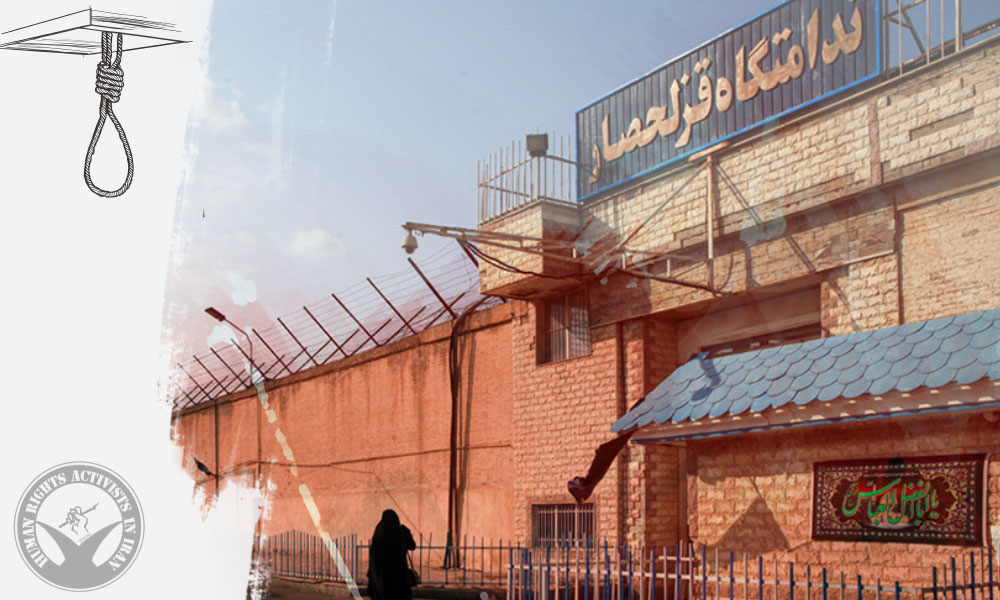
HRANA – The death sentences issued against Behrouz Zamaninejad and his son, Kourosh Zamaninejad, who were arrested during the January 2026 protests and are currently imprisoned in Greater Tehran Penitentiary, have been overturned by the Supreme Court. Their case has been referred to a parallel court branch for retrial. The two had previously been sentenced to death by Judge Iman Afshari.
According to HRANA, the Supreme Court has overturned the death sentences of two individuals arrested during the January 2026 protests.
Based on information received by HRANA, Branch 32 of the Supreme Court accepted the request for a retrial submitted by Behrouz Zamaninejad and his son, Kourosh Zamaninejad, overturned the death sentences issued against them, and referred the case to a parallel branch for renewed proceedings.
In April 2026, the two men, along with their co-defendants Mohammadreza Majidi-Asl and his wife, Bita Hemmati, were sentenced to death by Branch 26 of the Tehran Revolutionary Court, presided over by Judge Iman Afshari, on the charge of “conducting operational activities on behalf of the hostile government of the United States and hostile groups.” All four defendants were also sentenced to five years of discretionary imprisonment each on the charge of “assembly and collusion against national security.” The court additionally ordered the confiscation of all their assets as a supplementary punishment. In late May 2026, the Supreme Court overturned the death sentences of Mohammadreza Majidi-Asl and Bita Hemmati.
It should also be noted that another defendant in the same case, Amir Hemmati, was sentenced to five years of discretionary imprisonment on the charge of “assembly and collusion against national security,” as well as eight months in prison for “propaganda against the regime.”
According to the court’s ruling, the defendants were accused of participating in protest gatherings on January 8 and 9, 2026, chanting protest slogans, throwing objects including bottles, concrete blocks, and incendiary materials, and damaging public property. The ruling further alleged that these actions were intended to disrupt national security and were carried out in connection with hostile groups. Judge Afshari also referred to the alleged use of explosives and an unspecified weapon, injuries inflicted on deployed security forces, and the dissemination of content aimed at undermining national security. However, the ruling did not specify the details of these allegations or explain how each accusation was individually attributed to each defendant.
A source close to the families of the prisoners previously told HRANA: “Mohammadreza Majidi-Asl and Bita Hemmati are a married couple living in Tehran, and Amir Hemmati is a relative of theirs. Kourosh Zamaninejad and Behrouz Zamaninejad were also living in the same residential building, and they were arrested simultaneously.”
According to information obtained by HRANA, the defendants were subjected to pressure during interrogations, raising concerns that forced confessions may have been extracted during that period.
The death sentences issued by the trial court were based on a combination of legal provisions, including Articles 131 and 134 of the Islamic Penal Code, as well as Articles 500 and 610, which relate to “propaganda against the regime” and “assembly and collusion against national security.” The application of the death penalty in conjunction with these charges, particularly in cases stemming from public protests, has drawn increasing criticism from human rights organizations in recent years.
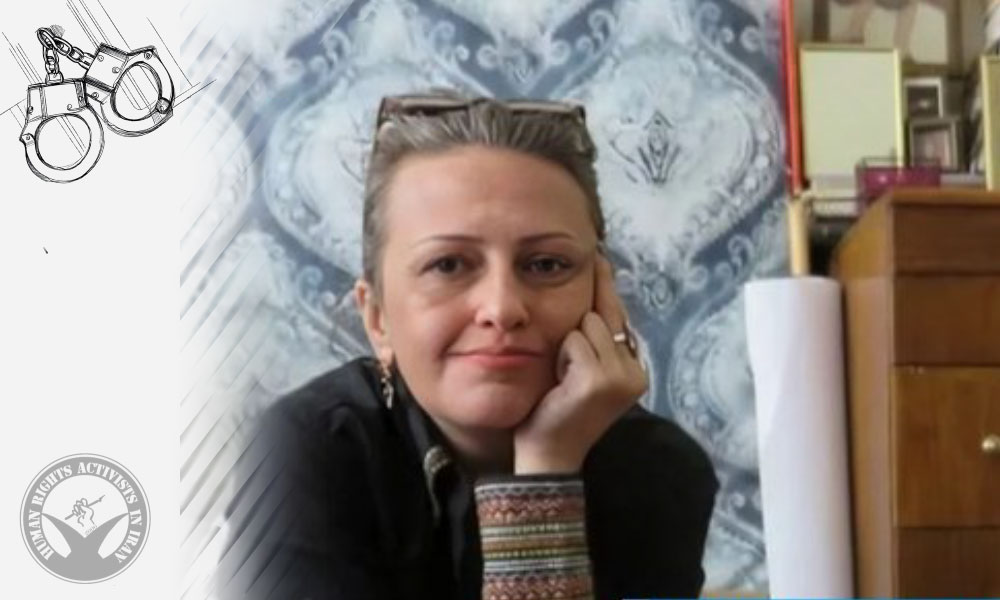
The defendants were arrested by security forces in Tehran on January 9, 2026. Behrouz Zamaninejad and his son, Kourosh Zamaninejad, are currently being held in Greater Tehran Penitentiary, while Bita Hemmati is detained in the women’s ward of Evin Prison. HRANA is still investigating the whereabouts of Mohammadreza Majidi-Asl.