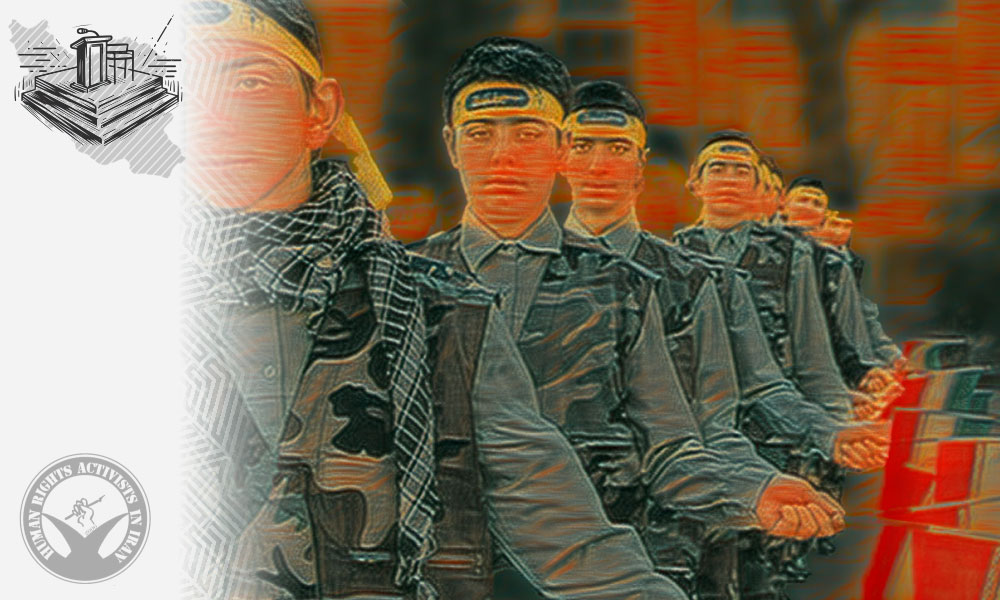
HRANA – Human Rights Activists in Iran today issued a statement expressing concern over the continued recruitment and use of children within military and security structures, particularly at Basij checkpoints, despite the establishment of a ceasefire. The organization described these actions as a serious violation of children’s rights and, in some cases, as constituting war crimes. The statement, citing field reports and eyewitness testimonies, addresses the lowering of recruitment age, the continued presence of children after the ceasefire, and the resulting humanitarian consequences.
Read the full text of this statement below:
On March 26, 2026, the Islamic Revolutionary Guard Corps (IRGC) announced a recruitment campaign to encourage children as young as 12 to join and ‘help the defenders of the homeland’. Advertised roles include checkpoint duties, cooking and medical support, logistics, and security patrols. Children and students have been asked to participate in human chains to protect infrastructure from airstrikes. Iranian parents have been called on to send their children to checkpoints at night, for them to feel they are ‘heroes on the battlefield’ and to ‘turn sons into men.’
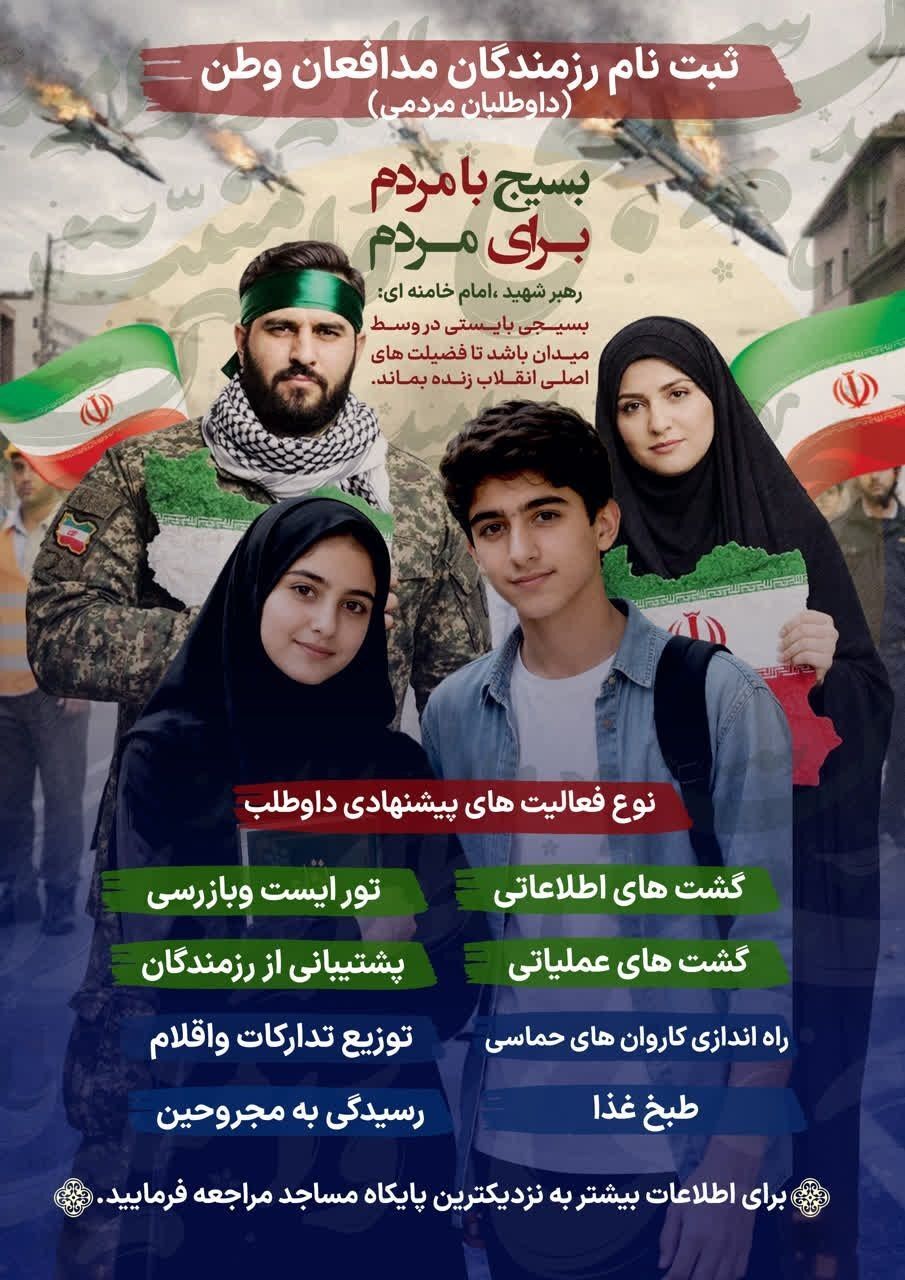
Despite a ceasefire, Basij checkpoints and security operations remain active. On April 9, images circulated showing children behind mounted machine guns on the backs of 4×4 trucks and dressed in IRGC uniforms. Eyewitness accounts collected through Human Rights Activists in Iran (HRA)’s network over the past 7 days indicate the widespread use of children at checkpoints across Tehran, as well as in Karaj, Mashhad, Isfahan, Ahvaz and Shiraz. Boys have been observed stopping and directing vehicles, transporting supplies, and generally supporting checkpoint operations. While HRA’s network confirms that girls are also supporting the Basij, they are mostly seen at government events and marches, handing out promotional flyers and supporting mobilization efforts.
“They go to the local mosque every day, and from there they get assigned a task— one day they’re at a checkpoint, another day they’re at a government march holding speakers, and sometimes they help with serving people. Their family encourages them to do this.”
Testimony indicates that child recruitment is largely driven by family influence and the social environment, rather than by financial incentives. The IRGC cited children’s enthusiasm and interest as justification for lowering the minimum age to 12. However, even where their involvement appears voluntary, the participation of children under the age of 18 is considered coercive under international law, given a child’s inherent inability to provide full, free, and informed consent. Their age makes them particularly susceptible to authority, ideological propaganda, and a desire for power and belonging.
“It’s the appeal of the uniform, the environment they’re in, the excitement and epic vibe created for them—even things like seeing weapons up close… they kind of feel like superheroes.”
“It’s mostly about social influence, encouragement from people around them, and a sense of feeling important, rather than money or direct coercion.”
The Iranian regime has a long and well-documented history of exploiting children to support armed groups and security structures, dating back to the Iran-Iraq war and through the establishment of the Basij organization. HRA has previously reported on IRGC coercion of Afghan immigrant children, some as young as 14, to fight in Syria in exchange for incentives such as residency rights.
While IRGC regulations set a minimum age of 16 years old for recruitment, this falls below international human rights standards, which define a child as any person under 18. Under customary international humanitarian law, the recruitment or use of children under 15 is a war crime. Legal gaps and ambiguity within Iran’s domestic law regarding the age of a child has enabled the historical involvement of children in security and military activities. The recent campaign lowering the recruitment age to 12 amplifies the urgency for the safety and protection of children in Iran.
In this context, the persistence of child recruitment over time, despite clear international prohibitions, supports the conclusion that it reflects a de facto state policy rather than isolated or unauthorized conduct.
The recruitment and use of children in armed forces and armed groups directly exposes them to a heightened risk of injury and death. This risk is particularly acute in Basij checkpoint operations, which have been repeatedly targeted in US and Israeli strikes, including during busy daytime hours when civilian presence is high. Since February 28, HRA has verified 43 attacks on checkpoints resulting in 44 casualties.
On 11 March, 11-year-old Alireza Jafari was killed by an IDF drone strike while volunteering at a Basij checkpoint in Tehran.
According to Jennifer Connet, HRA Legal Advisor, ‘the association of children with armed groups has lasting and profound consequences, including the potential for injury and long-term disability, psychological trauma, and the lifelong repercussions of a lost childhood. The exploitation of children by the IRGC further compromises the resilience and coping capacity of a generation of children living through the devastation of the current conflict.’
The recruitment or use of children in armed conflict is a war crime and a grave violation of children’s rights. The UN Security Council must consider expanding the children and armed conflict agenda to include Iran, and Iran should be listed in the UN Secretary-General’s Annual Report on Children and Armed Conflict. The establishment of a formal Monitoring and Reporting Mechanism would enable the systematic documentation of grave violations against children, including their association with armed forces and armed groups, and inform further action by the Security Council and relevant UN bodies.