





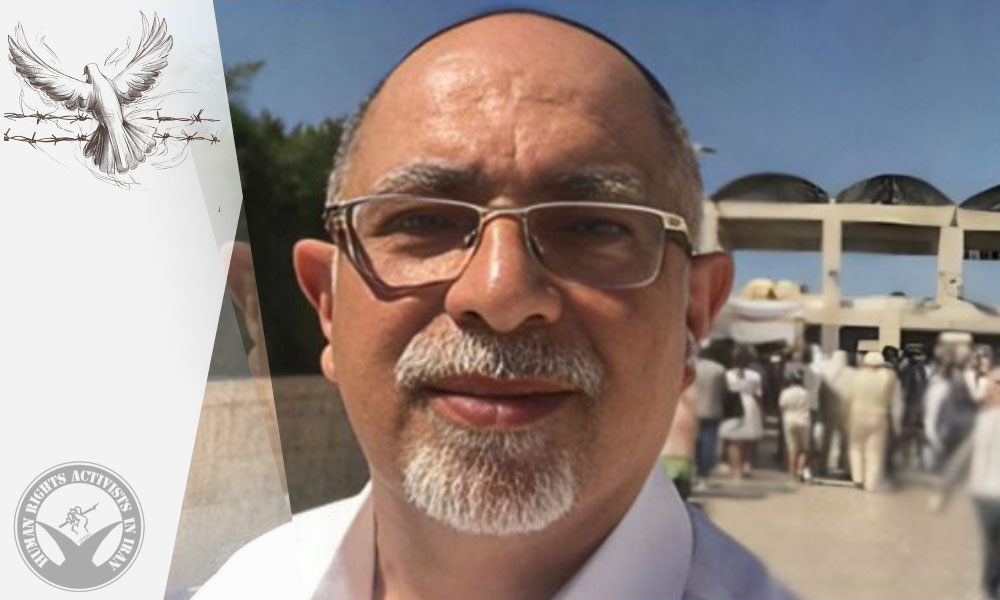
HRANA – Kamran (Yehuda) Hekmati, a 71-year-old Iranian-American dual-national Jewish citizen who has cancer, has been released from Evin Prison. Despite his release, he remains subject to a travel ban and is unable to leave Iran.
According to HRANA, citing Radio Farda, Kamran Hekmati was released from Evin Prison on the evening of Saturday, September 5, 2026.
According to the report, despite his release from prison, Mr. Hekmati remains subject to a ban on leaving the country and is currently in Iran.
No information has yet been released regarding the conditions of his release. However, it is believed that he may have been released after completing his prison sentence.
Mr. Hekmati has cancer. It was previously reported that he had been granted medical leave to pursue treatment. However, after approximately one month and before the end of his 45-day medical leave, he was returned to prison. His return took place before he could begin chemotherapy, raising concerns about his access to specialized medical care.
Kamran Hekmati, an Iranian-American dual-national Jewish citizen residing in New York, traveled to Iran last year to visit his family. He had previously traveled to Iran several times without incident. During this trip, however, security forces confiscated his passport and electronic devices. Over the following two months, he repeatedly sought the return of his passport, but a travel ban was imposed on him, preventing him from leaving Iran.
He was ultimately arrested in the summer of last year amid security developments related to the 12-day war between Iran and Israel. During the judicial proceedings in his case, Mr. Hekmati was initially sentenced by the Tehran Revolutionary Court to four years in prison. His sentence was subsequently reduced to two years and ultimately to one year in prison.
His family had previously stated that his court hearing was conducted in a very short period of time and without the presence of a defense attorney or witnesses. The charge against him was based on a law prohibiting Iranian nationals from traveling to Israel. However, Mr. Hekmati’s most recent trip to Israel had taken place 13 years before his entry into Iran and, according to available information, fell outside the 10-year period specified under the law cited in his case.
Despite the government’s official claims that it guarantees the rights of religious minorities, including Jews, human rights experts have warned that recent security pressures against this minority community may constitute discrimination based on religion and ethnicity and may be inconsistent with Iran’s international obligations.