





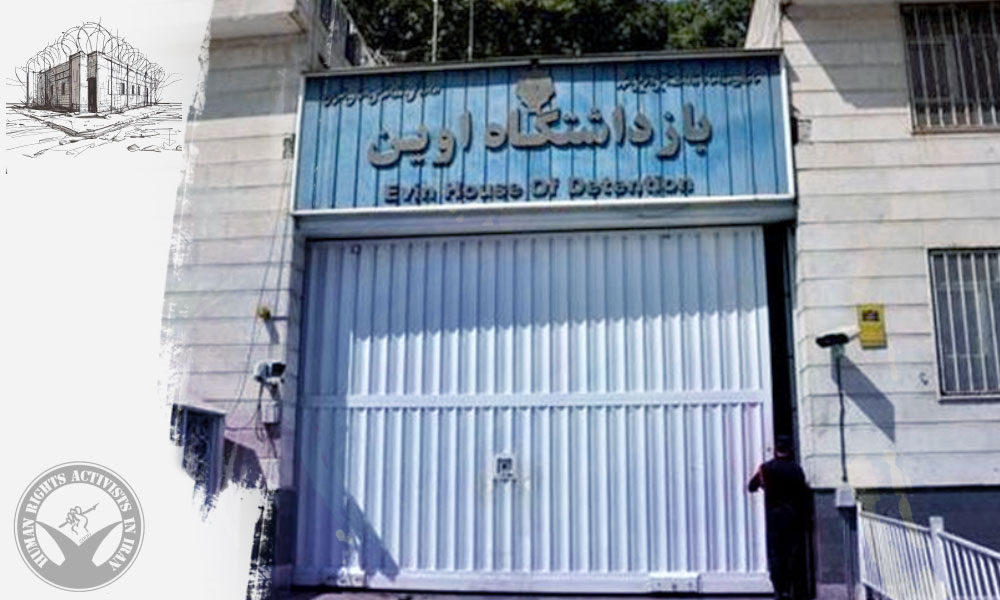
HRANA – The transfer of approximately 60 female prisoners from Qarchak Prison in Varamin to Evin Prison has sparked protests among inmates over the management of Evin Prison. The transfer took place despite the women’s ward already suffering from overcrowding and a lack of adequate space. The protests escalated into a tense situation after prison guards intervened and threatened the prisoners.
According to HRANA, Evin Prison’s women’s ward experienced unrest and protests following the arrival of new prisoners and the resulting overcrowding.
On Sunday, July 12, between 2:30 p.m. and 4:00 p.m., approximately 60 women convicted of financial offenses were transferred from Qarchak Prison in Varamin to Evin Prison. According to information received by HRANA, 49 of them had been admitted to the women’s ward by the time this report was prepared, while the remaining prisoners were being held in quarantine. The transfer occurred despite the women’s ward already facing severe shortages of space and overcrowding. In response to the worsening conditions, prisoners in the ward protested the increased congestion and deteriorating living conditions. Following the protest, prison guards entered the ward and threatened the women prisoners, including by warning that “prisoners sentenced to death would be separated from the other inmates.”
A knowledgeable source told HRANA that Mahsa (Masoumeh) Nouri, an inmate in the ward, was transferred to solitary confinement as a disciplinary measure after protesting the situation.
So far, promises made by prison officials to address the issue have yielded no results.
It should be noted that Evin Prison’s women’s ward currently holds approximately 60 political and security prisoners, along with two children, and had already been struggling with insufficient space before the recent transfers. The arrival of dozens of additional prisoners has heightened concerns over worsening overcrowding, reduced living space per inmate, and the further deterioration of prisoners’ living conditions.
Prison overcrowding has long been a chronic problem in Iran’s prisons. Holding inmates beyond a facility’s capacity not only reduces the standard living space available to prisoners but also restricts access to healthcare, sanitary services, welfare facilities, and adequate living conditions, while increasing the physical and psychological pressures associated with imprisonment. Ensuring prisons operate within their standard capacity and providing conditions consistent with human dignity are among the requirements emphasized by international human rights standards governing the treatment of individuals during detention and imprisonment.
