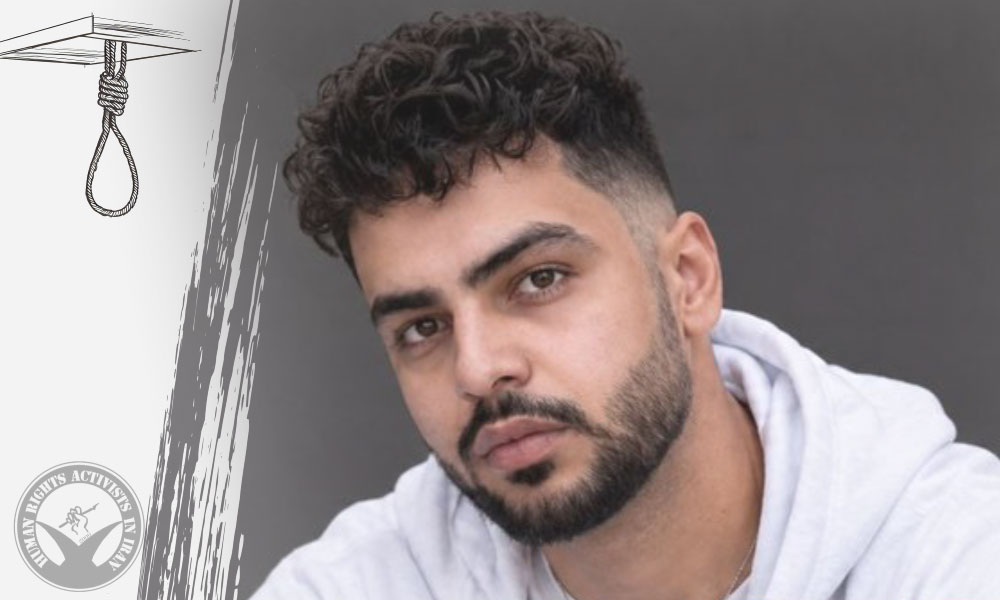
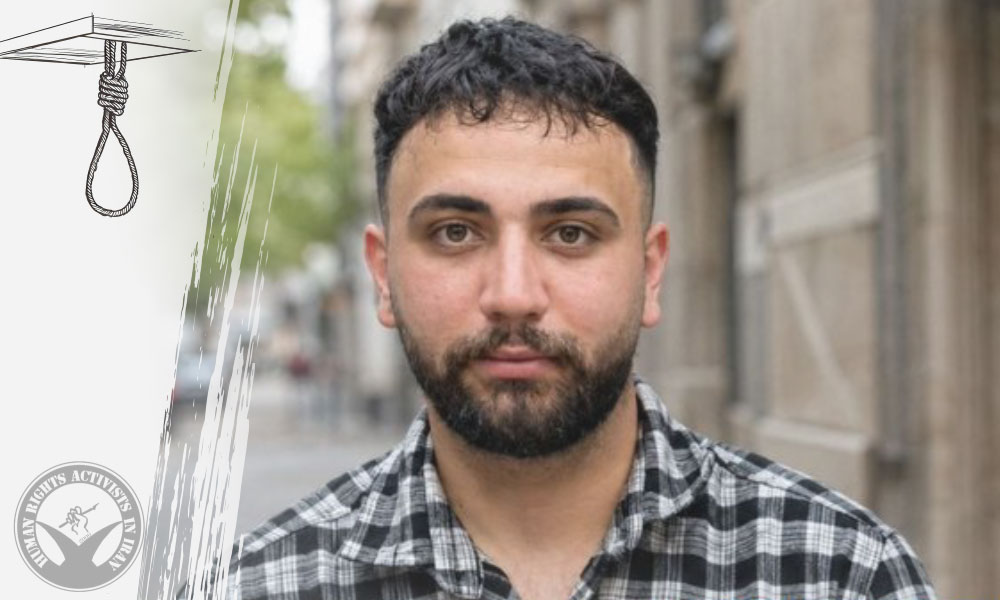
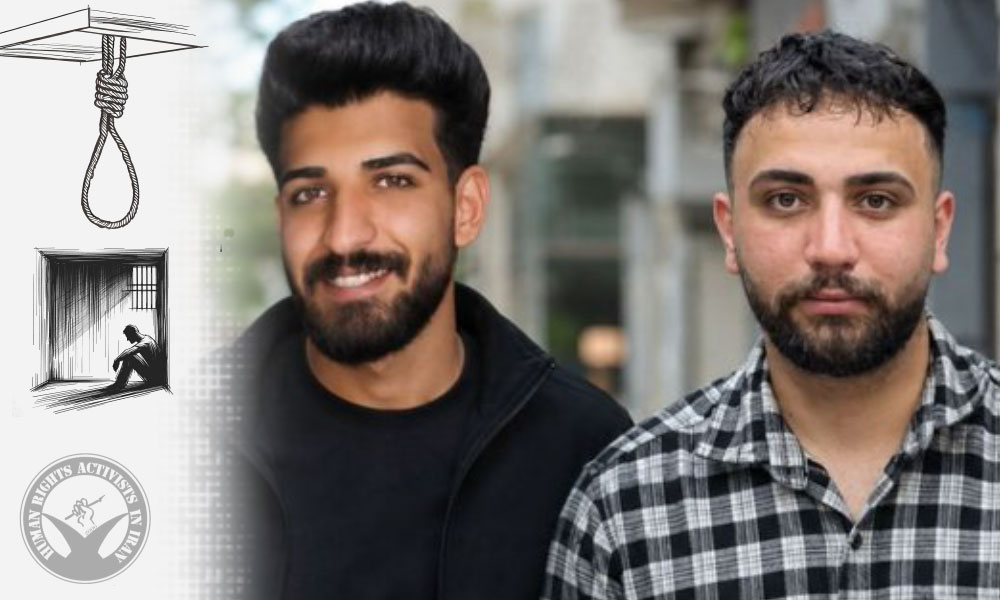
HRANA – Alireza Sepahi and Abolfazl Sepahi, two death row prisoners in the case known as the “Alikhani Square case” in Isfahan, have been held in solitary confinement at Dastgerd Prison since the early hours of Saturday. Their transfer to solitary confinement, a family visit that relatives believe was a “final visit,” and the execution of two other defendants in the same case at dawn today have intensified concerns that their death sentences may be carried out imminently. Information received by HRANA also indicates that the defendants and their lawyer were denied effective access to the case file, that the court failed to consider exculpatory evidence, and that allegations of coercion and torture during the investigation were never examined.
According to HRANA, Alireza Sepahi, aged approximately 25, and Abolfazl Sepahi, aged approximately 23, were taken from the general ward of Dastgerd Prison in Isfahan at 5:00 a.m. on Saturday, July 18, 2026, and transferred to solitary confinement.
The two prisoners are first cousins. One is married to the other’s sister, making them both cousins and brothers-in-law. They were arrested on January 10, 2026, in connection with the nationwide January protests.
According to information received by HRANA, the death sentences against Alireza and Abolfazl Sepahi were recently upheld by Iran’s highest judicial authority. However, their families remain unaware of the full details of the charges, the evidence in the case, and the judicial proceedings, while their lawyer has also been denied full access to the case file.
A source close to the families told HRANA:
“The lawyer said that after the death sentence was issued, an appeal was filed, and the verdict was later upheld by the Supreme Court. But even the lawyer was never given full access to the case file or a meaningful opportunity to pursue the case. Everywhere we go, no one provides any answers.”
According to the source, the lawyer was not permitted to photograph or obtain a copy of the verdict and was only allowed to take handwritten notes from portions of the ruling. As a result, the families remain unaware of the precise charges, the evidence relied upon by the court, and the details of the judgments issued against all defendants in the case.
The trial hearings for Alireza and Abolfazl Sepahi were held inside the prison via videoconference. According to the family source, the court failed to consider exculpatory evidence submitted by the defendants and their families during the proceedings.
The source said that CCTV footage and other evidence show that Alireza and Abolfazl Sepahi were not present at Alikhani Square at the time of the incident cited in the case and were elsewhere. Nevertheless, the presiding judge, Morteza Barati, issued death sentences against them, ordering Alireza to be executed four times and Abolfazl three times,without conducting an effective examination of this evidence.
The source added:
“There is video footage showing that they were somewhere else at that date and time, but Judge Morteza Barati ignored it. During family visits, Alireza repeatedly said, ‘We didn’t do anything. We weren’t there.'”
According to information received by HRANA, several other defendants in the same case have stated that they were subjected to pressure and torture during interrogations to force them to confirm that Alireza and Abolfazl Sepahi had been present at Alikhani Square.
The family source said that several defendants currently held in Dowlatabad Prison claimed investigators presented them with a pre-written statement and instructed them to confirm Alireza Sepahi’s presence at the scene. According to the source, they stated that they had been pressured to falsely identify both Alireza and Abolfazl Sepahi as being at the location of the incident.
Although these allegations were raised during the judicial proceedings, information received by HRANA indicates that no independent or effective investigation was conducted into the allegations of torture, ill-treatment, or coerced statements. The court also failed to conduct any transparent review of the reliability of the disputed statements or the circumstances under which they were obtained.
Under fair trial standards, any allegation of torture or ill-treatment must be investigated promptly, independently, and impartially, and any statement obtained through torture or coercion must not be admitted as evidence against a defendant. The lack of effective access to legal counsel and the case file, the court’s failure to consider exculpatory evidence, and the absence of any investigation into torture allegations have raised serious concerns regarding the defendants’ fundamental rights, particularly given that the sentences imposed carry the death penalty.
Meanwhile, according to information received by HRANA, Somayeh, the mother of one of the prisoners, who is herself serving a five-year prison sentence in the women’s ward of Isfahan Prison, was transferred to the men’s prison to visit her son and son-in-law. The circumstances of the visit, combined with the prisoners’ transfer to solitary confinement, have led their families to fear that it was arranged as a final visit before the executions.
The families’ last regular visit with Alireza and Abolfazl Sepahi took place approximately one month ago.
Unconfirmed reports received by HRANA also indicate that Alireza and Abolfazl Sepahi are among the first prisoners whose death sentences may be carried out. HRANA has not been able to independently verify these reports. However, their transfer to solitary confinement, together with the execution of two other defendants in the same case, has significantly heightened the families’ concerns.
At dawn today, Erfan Esfandiari and Gol-Mohammad Mohammadi, two other defendants sentenced to death in the Alikhani Square case, were executed in Isfahan. Their executions, carried out shortly after Alireza and Abolfazl Sepahi were transferred to solitary confinement, have intensified fears that the remaining death sentences in the case may soon be carried out.
At the trial court stage, 15 defendants in this case were sentenced to death. According to information provided by the defense lawyer, the death sentence of one defendant was overturned by the higher judicial authority, while the death sentences of the remaining 14 defendants were upheld.
In addition to Alireza Sepahi, Abolfazl Sepahi, Erfan Esfandiari, and Gol-Mohammad Mohammadi, HRANA has confirmed the identities of eight other individuals sentenced to death in this case: Ghaem Hosseini, Shervin Bagherian, Amirhossein Safari, Amirhossein Maleki, Ali Dashti, Abolfazl Ebrahimi, Alireza Raeisi, and Amirhossein Ebrahimi Analoucheh.
HRANA is continuing to investigate the case, including the identities of the remaining three defendants sentenced to death.
The family source also described the circumstances of Alireza Sepahi’s arrest, stating that security forces fired numerous rounds as they entered the family home, causing extensive damage to the building and its contents.
According to the source, bullet marks remain visible on the house, in the alley, and on the rooftop. Several months later, only the shattered windows have been replaced. Due to financial hardship, Alireza’s family has been unable to fully repair the home or replace the damaged belongings. Alireza’s father is a municipal employee.
It should be noted that protests and strikes by shopkeepers and bazaar merchants began in Tehran on Sunday, December 28, 2025, and within two days spread beyond markets and commercial centers. With the participation of students, citizens, and various social groups, these protests became one of the largest protest movements of recent years. Following the crackdown by security and law enforcement forces, thousands were killed or injured, and tens of thousands were arrested or summoned by security agencies. For more information, readers may refer to HRANA’s comprehensive report titled “Crimson Winter,” documenting the first fifty days following the outbreak of Iran’s nationwide protests.