Arrest of Four Followers of the “Yamani” Movement

HRANA – Seyed Hamed Miri, Hadi Gharadaghi, Mohammad-Reza Atoof, and Abbas Fathiyeh, followers of the “Yamani” movement, have been arrested by security forces and transferred to prison.

According to a report by Entekhab News, these individuals were serving prison sentences but had been released on furlough and failed to return to prison after their leave ended.

As of this report’s publication, no information has been obtained regarding their exact place of detention or the duration of their sentences.

Seyed Hamed Miri, Hadi Gharadaghi, and Abbas Fathiyeh have previously faced arrest and conviction in connection with their activities.

In Iran, individuals are frequently detained for claiming spiritual or religious connections to the Hidden Imam, a central figure in Shi’a Islam. The “Yamani” movement, led by Ahmad al-Hasan Yamani, promotes beliefs centered on Mahdism, a messianic doctrine within Shi’a Islam.

Iran’s security apparatus – particularly the Ministry of Intelligence – maintains specialized units tasked with suppressing religious, spiritual, and ideological groups that operate outside the state-sanctioned framework.
Two Prisoners Executed in Kerman Prison

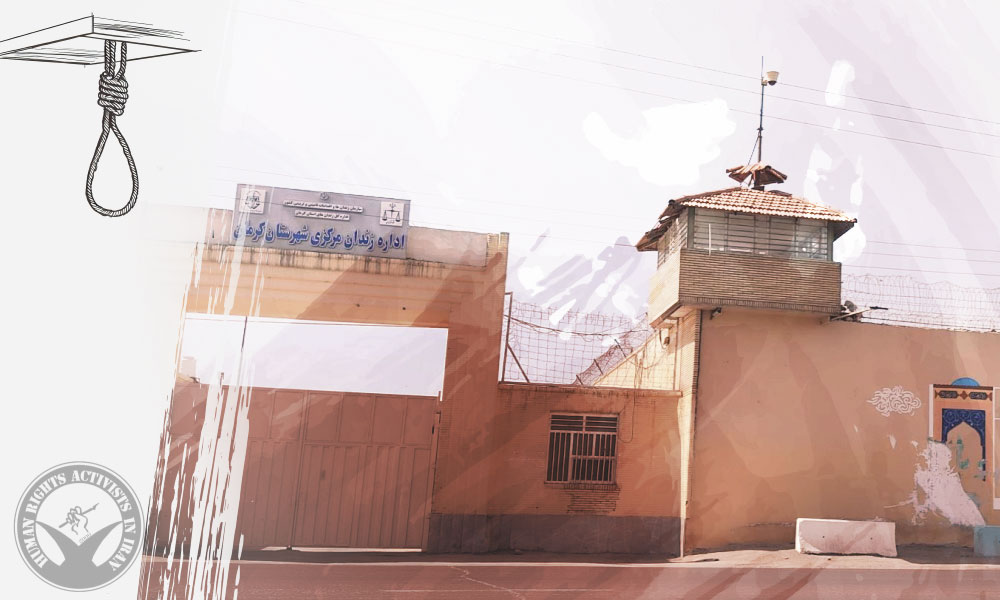
HRANA – At dawn on Thursday, October 16, 2025, the death sentences of two prisoners previously convicted on drug-related charges were carried out in Kerman Prison.

HRANA has identified one of the executed prisoners as Jaber Nadi. The identity of the other prisoner is still being verified.
Based on information obtained by HRANA, the prisoners had been arrested on drug-related charges and later sentenced to death by the Revolutionary Court.

As of the time of this report, prison authorities and responsible institutions have not yet officially announced the executions.

According to HRANA’s report, in 2024, over 52 percent of executed prisoners had been convicted on drug-related charges. Over the past ten years, individuals convicted of drug trafficking have accounted for 40 percent of all executions. Unfortunately, HRANA’s statistics show no progress in reducing executions for drug-related offenses.

Prisoner Executed in Taybad Prison

HRANA – On Wednesday morning, October 15, 2025, the death sentence of a prisoner previously convicted of murder was carried out in Taybad Prison.

HRANA has identified the individual as Maziar Fathi. Based on information obtained by HRANA, Mr. Fathi had previously been arrested on murder charges and later sentenced to death by the Criminal Court.

As of the time of this report, prison officials and responsible institutions have not yet announced the execution.

In 2024, according to 812 reports compiled by HRANA, the Iranian regime executed 930 individuals in its prisons—marking the highest number of executions in the past 12 years. Despite the scale of these executions, prison officials and other relevant authorities publicly acknowledged only 6% of them, highlighting the regime’s lack of transparency and accountability.

Atash Shakarami Summoned for Execution of Flogging Sentence

HRANA – Atash (Zahra) Shakarami has been summoned to the Second Branch of the Criminal Enforcement Office in Khorramabad to receive 38 lashes, following a notice issued for the execution of her sentence.

According to the summons, issued on October 16, Ms. Shakarami has been ordered to appear within ten days to carry out the sentence. She was previously convicted by Branch 106 of the Khorramabad Criminal Court (Category 2) on charges of “spreading falsehoods,” for which she received 38 lashes, and defamation, for which she was fined 51 million tomans. The verdict was later upheld in its entirety by the Court of Appeals. The case originated from a complaint filed by a private plaintiff.

Atash (Zahra) Shakarami, who has a prior record of arrest, is the aunt of Nika Shakarami, one of the victims killed during the nationwide protests of 2022.

The International Covenant on Civil and Political Rights (ICCPR) strictly prohibits cruel, inhuman, and degrading punishments such as flogging. Nonetheless, in 2024, HRANA documented at least three cases in which flogging sentences were carried out, totaling 106 lashes. In the same year, the Iranian judiciary sentenced at least 131 individuals to a combined total of 9,957 lashes.

Three Prisoners Executed in Yazd Prison

HRANA – At dawn on Monday, October 13, 2025, the death sentences of three prisoners previously convicted on drug-related charges were carried out in Yazd Prison.

HRANA has identified one of the executed prisoners as Karim Aslani.
Based on information obtained by HRANA, the prisoners had been arrested on drug-related charges and subsequently sentenced to death by the Revolutionary Court.

As of the time of this report, prison authorities and relevant institutions have not yet officially announced these executions.

According to HRANA’s report, in 2024, 25 prisoners were executed in Yazd Prison. Also, over 52 percent of executed prisoners across Iran had been convicted on drug-related charges. Over the past ten years, individuals convicted of drug trafficking have accounted for 40 percent of all executions. Unfortunately, HRANA’s statistics show no progress in reducing executions for drug-related offenses.

Subscribe to Our Newsletter

Now is definitely not the time to stop reading!

A Female Prisoner Executed in Nahavand Prison

HRANA – At dawn on Wednesday, October 15, 2025, the death sentence of a female prisoner previously convicted on drug-related charges was carried out in Nahavand Prison.

HRANA has identified her as Nahid Hemmati. Based on information obtained by HRANA, Ms. Hemmati had previously been arrested on drug-related charges and subsequently sentenced to death by the Revolutionary Court.

As of the time of this report, prison authorities and relevant institutions have not yet announced the execution.

In 2024, the Iranian regime sent 27 women to the gallows, the highest number recorded in the past decade.

In Protest Against Executions: Report on the Fourth Day of Prisoners’ Strike in Ghezel Hesar Prison

HRANA – Today, Thursday, October 16, the hunger strike by prisoners in Karaj’s Ghezel Hesar Prison entered its fourth consecutive day. Hundreds of inmates continue refusing their food rations in protest against the escalating wave of executions. Over the past few days, at least several prisoners have been executed in this prison.

Based on information obtained by HRANA, inmates in Ward 2 of Ghezel Hesar Prison, most of whom are detained on drug-related charges, began refusing their food rations on Monday as an act of protest.

A family member of one imprisoned individual told HRANA:

“It’s been four days since I last heard from my husband. The ward’s phones have been cut off, and we’ve only heard that several people were taken for execution. We are completely deprived of any contact or information and only learn from outside sources that several prisoners are executed each day.”

Alongside the ongoing strike, several families of prisoners sentenced to death have gathered in front of the prison in recent days, calling for a halt to the executions. These gatherings have faced restrictions and pressure from security forces.

The prisoners’ protest began when 16 inmates were transferred to solitary confinement for execution. In the early days of the protest, inmates in at least Wards 1 and 2 refused their food rations and held sit-ins in the ward halls.

Since the start of these protests, at least five prisoners have been executed in Ghezel Hesar Prison.

Between October 10, 2024, and October 8, 2025, HRANA’s Statistics and Publication Department has recorded 1,537 executions in Iran. According to this data, Ghezel Hesar Prison in Karaj has accounted for the highest number of executions during this period.

The same report compares ten years of execution data in Iran, showing that 6,399 prisoners have been executed over the past decade. Execution rates in 2024 and 2025 have reached their peak, with at least 1,537 recorded cases—the highest figure in the past ten years. This represents an over 86% increase compared to the previous year (823 cases) and surpasses the ten-year annual average.

Urmia: Baha’i Citizen Zhinus Mohammad-Nezhad Arrested

HRANA – On Tuesday, October 14, Zhinus Mohammad-Nezhad, a Baha’i citizen residing in Urmia, was arrested by agents of the Ministry of Intelligence and transferred to an undisclosed location. At the same time, her home and her parents’ residence were searched by the agents.

Based on information obtained by HRANA, her arrest took place on Tuesday, October 14, at her home on in Urmia, when Ministry of Intelligence agents detained her. Simultaneously, both her home and her elderly parents’ nearby residence were searched. During the searches, several personal belongings of the Mohammad-Nezhad family were confiscated.

So far, no information has been made available regarding the reasons for her arrest, her place of detention, or the charges brought against this Baha’i citizen.

Over the past decade, the Iranian Bahá’í community has been disproportionately targeted by Iran’s security forces and judiciary, more than any other minority group. In the past three years, an average of 72 percent of the reports on religious rights violations collected by HRANA have documented the Iranian regime’s repression of the Bahá’í community.

Three Prisoners Executed in Adelabad Prison of Shiraz

Yesterday, Wednesday, October 15, the death sentences of three prisoners were carried out in Adelabad Prison in Shiraz.

HRANA has confirmed the identities of two of those executed as Milad Jahani and Sajjad Shahriari Golmakani. Jahani had previously been arrested on charges related to drug offenses and later sentenced to death by the Revolutionary Court.

According to information obtained by HRANA, Mr. Shahriari was arrested about nine years ago on charges of killing his wife and was subsequently sentenced to death by a criminal court.

A source close to Shahriari’s family confirmed the news to HRANA, stating:
“The victim’s family had announced they were willing to grant forgiveness in exchange for diya (blood money). The requested amount was initially 3 billion tomans, which was later increased to 5, 8, and finally 12 billion tomans. Due to the family’s inability to raise the amount, his execution was ultimately carried out this morning.”

The third prisoner was also executed on drug-related charges, but HRANA is still investigating his identity.

According to HRANA’s statistics, in 2024, Adelabad Prison in Shiraz witnessed the execution of 92 inmates, an 88% increase compared to the previous year. This sharp rise places Adelabad as the second deadliest prison in Iran after Ghezel Hesar Prison in Karaj.

Afshin Haghighat, a Baha’i Citizen, Arrested

HRANA – On October 14, Afshin Haghighat, a Baha’i citizen residing in Shiraz, was arrested by security forces in the city and transferred to an undisclosed location. At the same time, his home was searched by agents, who confiscated several digital devices and religious books belonging to Mr. Haghighat and his family.

A source close to Haghighat’s family confirmed the arrest to HRANA, stating:
“On Tuesday, security agents came to the home of this Baha’i citizen in Shiraz and arrested him. His residence was simultaneously searched, and during the search, a number of digital devices and religious books belonging to him and his family were confiscated.”

As of this report, no information is available regarding the reasons for the arrest, his place of detention, or the charges brought against this Baha’i citizen.

Over the past decade, the Iranian Bahá’í community has been disproportionately targeted by Iran’s security forces and judiciary, more than any other minority group. In the past three years, an average of 72 percent of the reports on religious rights violations collected by HRANA have documented the Iranian regime’s repression of the Bahá’í community.