Annual Statistical Report of Human Rights Conditions in Iran 2025

Human Rights Activists in Iran (HRA), through the dedicated efforts of its Department of Statistics and Publications, publishes its annual Gregorian calendar-based analytical and statistical report on the human rights situation in Iran for the one-year period (January 1, 2025, to December 20, 2025). This report is the culmination of the organization’s daily endeavors in recent years, forming part of a daily statistical project that began in 2009. It provides an analytical-statistical overview of human rights in Iran.

This annual report on human rights violations in Iran represents a synthesis of 10,826 human rights reports, gathered from 122 legal and news sources within the past calendar year. HRANA (Human Rights Activists News Agency) contributed 50.58% of the reports utilized in this publication, with 23.98% originating from official or government-affiliated Iranian sources, and the remaining 25.44% from other news or human rights sources.
Download the full version of the report in PDF format

In this 83-page report, various aspects such as women’s rights, workers’ rights, children’s rights, prisoners’ rights, etc., are briefly examined and statistically analyzed, accompanied by relevant charts for enhanced reader comprehension. According to this report, the focus of human rights monitoring in Iran, in comparison between the capital and other areas, remains unequal. This long-standing inequality shows that in the last year, reporting from non-central areas has decreased by 17.7% compared to the capital. This situation continues to indicate the lack of adequate monitoring of other areas of the country relative to the center by civil society.

Although this report predominantly reflects the extensive efforts of courageous human rights defenders in Iran, who bear significant costs in pursuit of their humanitarian ideals, it inevitably has limitations. These include restrictions on the activities of human rights organizations by the Iranian government and governmental impediments to the free flow of information. Consequently, while this report strives for accuracy, it cannot be considered entirely error-free or a complete reflection of the human rights situation in Iran. Nevertheless, it stands as one of the most precise, comprehensive, and well-documented reports on human rights violations in Iran, offering valuable insights for organizations and defenders of human rights to better understand the human rights situation in Iran, its challenges, and potential opportunities.

Monitoring Overview

The following information reflects the scope, geographic distribution, and sources of human rights reporting in Iran during the reporting period. These findings illustrate the relationship between reporting volume and civil society capacity across provinces.

Reporting Volume and Sources

  • The highest number of reports was published in May
  • The lowest number of reports was published in April


Sources of Reports

  • 50.58 percent of reports were produced by Human Rights Activists News Agency (HRANA)
  • 23.98 percent originated from official Iranian government sources or sources close to the government
  • 25.44 percent were collected from other human rights news agencies


Protests, Gatherings, and Collective Action

  • At least 2,174 protest gatherings were held across all 31 provinces
    • 940 professional union protests
    • 813 labor-related gatherings
    • 255 protests by victims of financial or investment fraud
    • 67 protests related to freedom of thought and expression
    • 47 student union protests
    • 50 environmental protests
    • 1 women’s rights protest
    • 1 children’s rights protest
  • In addition:
    • 407 labor strikes were recorded
    • 25 professional strikes were documented
    • 22 protest attempts were prevented by authorities


Geographic Distribution of Reporting

  • A significant disparity exists between Tehran and the rest of the country in terms of reporting volume
  • According to the 2024 census:
    • Tehran population: 14,425,000
    • Population outside Tehran: 71,536,000
  • Reporting distribution indicates:
    • 16.78 percent of reporting focused on Tehran
    • 83.22 percent of reporting originated from other parts of the country


Ethnic Rights Overview

The following statistics reflect documented rights violations assessed by HRA as having occurred on the basis of ethnic or national minority status. These figures are drawn from 262 verified reports collected throughout the reporting period.

Key Findings

Arrests and Detention

  • 302 individuals were arrested on the basis of ethnic or national minority status
  • 186 arrests were carried out without a judicial warrant
  • 273 individuals were arrested on charges that remain unknown or undisclosed
  • 2 instances of imprisonment sentences were carried out during the reporting period
  • 7 interrogations took place inside security or judicial institutions
  • 47 individuals were summoned by security or judicial authorities for questioning


Judicial Proceedings

  • 20 cases went to trial
    • 4 individuals were sentenced to imprisonment
    • Sentences issued to these individuals totaled 134 months of discretionary imprisonment, as follows:
      • 36 months issued by preliminary courts
      • 74 months issued by appellate courts
      • 24 months upheld by the Supreme Court


Searches and Other Violations

  • 29 home searches were reported
  • 1 case of physical assault was documented


Trends and Comparative Analysis

  • Arrests of ethnic minority citizens increased by 15.2 percent compared to 2024
  • Prison sentences issued relative to the number of individuals tried decreased by 80 percent
  • The overall issuance of prison sentences declined by 71.5 percent compared to 2024


Monthly Trends

  • The highest number of reported violations occurred in January
  • The steepest decline in reported violations occurred in April


Tolerance and Religious Freedoms Overview

The following statistics reflect documented rights violations assessed by HRA as having occurred on the basis of religious belief or affiliation. These figures are based on 204 verified reports collected during the reporting period.

Key Findings

Arrests and Detention

  • 183 individuals were arrested on the basis of religious belief or affiliation
  • 7 arrests were carried out without a judicial warrant
  • 134 individuals were summoned to security or judicial institutions for questioning
  • 50 interrogations took place inside security or judicial institutions
  • 45 instances of sentence enforcement were carried out
  • 33 travel bans were imposed


Judicial Proceedings

  • 47 cases went to trial
  • 87 individuals were sentenced to imprisonment
    • Sentences issued to these individuals totaled 8,015 months of imprisonment, as follows:
      • 7,217 months of discretionary imprisonment
      • 798 months of suspended imprisonment
      • 3,876 months of imprisonment were issued by the appellate courts
  • 14 individuals were fined a total of 5.27 billion tomans
  • 35 individuals were sentenced to deprivation of social rights
  • 5 individuals were sentenced to 96 months of exile


Searches, Property Violations, and Other Abuses

  • 127 home searches were reported
  • 32 cases of property or home confiscation were documented
  • 5 cases of obstruction of economic activity were recorded
  • 1 case involving the destruction of a cemetery was documented
  • 4 cases of physical assault were reported


Trends and Comparative Analysis

  • Arrests related to religious minority rights increased by 101 percent compared to the previous year
  • Prison sentences issued relative to the number of individuals tried increased by 7.4 percent
  • The total length of prison sentences increased by 67.4 percent compared to the previous year


Monthly Trends

  • The highest number of reported violations occurred in June
  • The lowest number of reported violations occurred in December


Distribution by Religious Group

  • Baha’is accounted for 61.96 percent of all reported violations
  • Christians accounted for 17.93 percent
  • Jews accounted for 7.61 percent
  • Other religious groups accounted for 6.34 percent
  • Sunni Muslims accounted for 6.16 percent


Freedom of Thought and Expression Overview

The following statistics reflect documented rights violations assessed by HRA as having occurred in relation to freedom of thought and expression. These figures are based on 1,469 verified reports collected during the reporting period.

Key Findings

Arrests and Detention

  • 22,028 individuals were arrested in connection with freedom of thought and expression
  • At least 179 arrests were carried out without a judicial warrant
  • 389 individuals were summoned to security or judicial authorities for questioning
  • 60 interrogations were conducted by security agencies
  • 92 instances of sentence enforcement were carried out
  • 24 travel bans were imposed


Judicial Proceedings

  • 172 individuals were tried in judicial institutions
  • 398 individuals were sentenced to imprisonment
    • Sentences issued to these individuals totaled 14,751 months of imprisonment, as follows:
      • 13,883 months of discretionary imprisonment
      • 868 months of suspended imprisonment
      • 3,005 months were issued by appellate courts
      • 816 months were issued by the Supreme Court
  • 61 individuals were fined a total of 2,823,600,000 tomans
  • 19 individuals were sentenced to 938 lashes
  • At least 3 individuals had corporal punishment sentences of 142 lashes carried out
  • 12 individuals were sentenced to a total of 444 months of exile
  • 42 individuals were sentenced to deprivation of social rights


Censorship, Searches, and Other Violations

  • 15 publications were declared criminal
  • 61 home searches were reported
  • 2 cases of property confiscation were documented
  • 27 cases of internet filtering were recorded
  • 1 case of communication disruption was documented
  • 38 cases of physical assault against citizens were reported
  • 1 instance of forced retirement was recorded
  • 3 cases of dismissal or downsizing were documented
  • 7 incidents of preventing speeches or public events were reported
  • 67 gatherings were held
  • 2 gatherings were obstructed by authorities


Trends and Comparative Analysis

  • Arrests related to freedom of thought and expression increased by 1284.5 percent compared to the previous year
  • Prison sentences issued relative to the number of individuals tried decreased by 34.7 percent
  • The total length of prison sentences declined by 44.8 percent compared to the previous year


Monthly Trends

  • The highest number of reported violations occurred in June
  • The lowest number of reported violations occurred in September


Rights of Trade Unions and Associations Overview

The following statistics reflect documented rights violations assessed by HRA as having occurred in relation to labor, trade union, and professional association rights. These figures are based on 1,134 verified reports collected during the reporting period.

Key Findings

Arrests and Detention

  • 39 labor and union activists were arrested
  • 55 individuals were summoned to security or judicial authorities for questioning
  • 4 interrogations were conducted by security agencies
  • 6 instances of sentence enforcement were carried out
  • 3 travel bans were imposed


Judicial Proceedings

  • 19 cases went to trial
  • 30 individuals were sentenced to imprisonment
    • Sentences issued to these individuals totaled 743 months of imprisonment, as follows:
      • 740 months of discretionary imprisonment
      • 3 months of suspended imprisonment
      • 61 months were issued by appellate courts
  • 2 individuals were sentenced to 120 months of exile
  • 2 individuals were sentenced to 148 lashes
  • 9 individuals were fined a total of 679,100,000 tomans


Workplace and Economic Rights Violations

  • 216 cases of workplace closures were documented
  • 21 cases of dismissal or layoffs were reported
  • 7 cases of forced retirement were documented
  • At least 60 months of delayed wage payments were reported
  • 1 case of license revocation was documented
  • 1 case of physical assault was reported
  • 1 case of self-immolation was documented
  • 4 home searches were carried out


Protests and Collective Action

  • At least 940 labor or professional protests were recorded
  • 25 strikes were documented
  • 5 cases of protest obstruction were reported


Trends and Comparative Analysis

  • Arrests of labor and union activists increased by 69.5 percent compared to 2024
  • The total issuance of prison sentences decreased by 16.5 percent
  • Prison sentencing relative to the number of individuals tried declined by 60 percent compared to 2024


Monthly Trends

  • The highest number of reported violations occurred in May
  • The lowest number of reported violations occurred in July


Right to Education Overview

The following statistics reflect documented rights violations assessed by HRA as having occurred in relation to the right to education. These figures are based on 127 verified reports collected during the reporting period.

Key Findings

Arrests, Discipline, and Institutional Actions

  • 15 individuals were arrested in connection with education-related activities
  • 1 student was denied admission to postgraduate studies
  • 1 case of expulsion from university was documented
  • 47 protest gatherings related to educational issues were recorded
  • 4 protests were obstructed by authorities


Violence, Abuse, and Health-Related Violations

  • 3 cases of physical assault were documented
  • 32 cases of corporal punishment against students were reported
  • At least 9 male elementary school students were subjected to physical and sexual abuse by a teacher
  • 141 cases of food poisoning were documented
  • Over 161 cases of student poisoning were reported


Systemic Deprivation of Education

  • At least one million students were deprived of continuing their education
  • The highest school dropout rates were reported in:
    • Sistan and Baluchestan Province
    • Golestan Province
    • Razavi Khorasan Province


Monthly Trends

  • The highest number of reported violations occurred in October
  • The lowest number of reported violations occurred in July


Right to Life (Death Penalty) Overview

The following statistics reflect documented violations of the right to life assessed by HRA as having occurred through the issuance and implementation of the death penalty. These figures are based on 1,619 verified reports collected during the reporting period.

Key Findings

Death Sentences and Executions

  • 168 individuals were sentenced to death
  • 1,922 individuals were executed
  • 10 executions were carried out in public
  • 56 death sentences were upheld by the Supreme Court


Demographic Breakdown

  • Of those executed whose gender was identified:
    • 1,681 men
    • 59 women
  • 2 individuals were under the age of 18 at the time of the alleged offense
  • Of the recorded death sentences:
    • 151 were issued against men
    • 14 were issued against women
    • 5 death sentences were issued for public execution
    • 2 death sentences were issued against child offenders


Charges Leading to Execution

  • 47.55% for murder
  • 46.10% for drug-related offenses
  • 1.66% for sexual offenses
  • 1.66% for unspecified charges
  • 1.35% for moharebeh–baghi (political–security charges)
  • 0.73% for security-related charges (including espionage, terrorism, or bombing)
  • 0.68% for moharebeh (non-political)
  • 0.50% for economic crimes
  • 0.50% for armed robbery
  • 0.16% for corruption on earth


Trends and Comparative Analysis

  • The implementation of death sentences increased by 106.6 percent compared to 2024
  • The issuance of death sentences decreased by 21.4 percent compared to 2024


Monthly Trends

  • The highest number of reported violations occurred in November
  • The lowest number of reported violations occurred in March


Geographic and Institutional Distribution

  • Alborz Province accounted for 10.87 percent of executions
  • Razavi Khorasan Province accounted for 8.22 percent of executions
  • Qezel Hesar Prison (Karaj) and Dastgerd Prison (Isfahan) recorded the highest number of executions


Transparency of Executions

  • 95 percent of executions were carried out in secret or without public announcement


Long-Term Trends

  • After a relative decline between 2018 and 2020, executions have shown a sustained upward trend since 2021
  • In 2025, 1,922 executions were recorded, marking the highest annual figure over the past eleven years


Cultural Rights Overview

The following statistics reflect documented rights violations assessed by HRA as having occurred in relation to cultural rights. These figures are drawn from 19 verified reports collected throughout the reporting period.

Key Findings


Censorship, Restrictions, and Administrative Actions

  • 7 cases of obstruction of cultural programs or public speeches were documented
  • 2 individuals were summoned to judicial authorities
  • 2 cases of censorship or prevention of publication were recorded
  • 7 professional bans were imposed
  • 1 case of neglect was documented
  • 1 case involving the destruction of a historical site was recorded


Judicial Proceedings

  • 6 cases went to trial
  • 4 individuals were sentenced to suspended imprisonment
    • Sentences issued to these individuals totaled 131 months of suspended imprisonment, of which:
      • 64 months were issued by appellate courts
  • 6 individuals were fined a total of 515 million tomans


Trends and Comparative Analysis

  • Verdicts issued relative to the number of individuals tried increased by 20 percent compared to the previous year
  • The issuance of imprisonment sentences decreased by 31.7 percent compared to the previous year


Monthly Trends

  • The highest number of reported violations occurred in April and December
  • The lowest number of reported violations occurred in June, August, and September


Labor Rights Overview

The following statistics reflect documented rights violations assessed by HRA as having occurred in relation to labor rights. These figures are based on 1,921 verified reports collected during the reporting period.

Key Findings

Arrests, Detention, and Judicial Actions

  • 18 individuals were arrested in connection with labor-related activities
  • 6 individuals were summoned to judicial or security institutions
  • 3 cases went to trial
  • 2 interrogations were conducted by judicial or security entities
  • 1 instance of imprisonment enforcement was recorded
  • 2 travel bans were imposed
  • 3 cases of self-immolation were documented
  • 1 case of a worker being physically assaulted was reported


Judicial Proceedings

  • 2 individuals were sentenced to imprisonment
    • Sentences issued to these individuals totaled 75 months of imprisonment, of which:
      • 72 months were issued by appellate courts
  • 1 individual was fined 30 million tomans


Employment, Wages, and Social Protection

  • At least 623 months of delayed wage payments were reported across 178 industrial and service units
  • 2,453 cases of dismissal or downsizing were documented
  • 550 cases of unemployment were reported
  • 663 months of lack of insurance coverage were recorded
  • 10 factory closures were documented
  • 3,411 workers were reported as being in limbo


Workplace Safety and Accidents

  • At least 1,202 worker deaths were recorded due to workplace incidents
  • 7,316 cases of physical injury to workers were documented


Protests and Collective Action

  • At least 813 labor protests were recorded
  • 407 labor strikes were documented
  • 4 cases of protest obstruction were reported


Trends and Comparative Analysis

  • Arrests of workers increased by 63.6 percent compared to the previous year
  • Verdicts issued relative to the number of individuals tried decreased by 77.7 percent
  • The issuance of imprisonment sentences declined by 75 percent compared to the previous year


Monthly Trends

  • The highest number of reported violations occurred in May
  • The most significant decline in reports occurred in April


Children’s Rights Overview

The following statistics reflect documented rights violations assessed by HRA as having occurred in relation to children’s rights. These figures are based on 590 verified reports collected during the reporting period.

Key Findings

Violence, Abuse, and Loss of Life

  • At least 38 cases of child rape or sexual abuse were documented
  • 45 child murders were reported
  • 4 cases of so-called honor killings involving children were recorded
  • 18 child suicides were documented
  • At least 23,000 cases of child abuse were reported
  • 5 abandoned infants were documented
  • 5 deaths and 10 injuries among child laborers were recorded
  • 21 deaths and 385 injuries due to official negligence were documented


Child Labor and Exploitation

  • Over 70,000 cases of child labor were reported


Child Marriage and Early Motherhood

  • At least 27,448 girls under the age of 15 were married between winter 2021 and fall 2022
  • 31,646 girls under 15 were married in 2020
  • 32,655 girls under 15 were married in 2021
  • In fall 2022, marriages of girls under 15 increased by 933 cases compared to the previous season
  • In fall 2022, over 5,500 girls aged 15 to 19 were married compared to summer 2022
  • 69,103 babies were born in 2021 to mothers aged 10 to 19
  • 1,474 babies were born to mothers aged 10 to 14


Deprivation of Education

  • At least one million students were deprived of continuing their education
  • Contributing factors included poverty, early marriage, lack of access to virtual education, geographic dispersion, and cultural barriers


Use of Children in State-Organized Activities

  • At least 104,655 children under 18 were sent to “Rahian-e Noor” camps in former war zones
  • The highest participation was recorded in Isfahan, Bushehr, Qom, Markazi, and Razavi Khorasan provinces


Arrests and Executions of Children

  • At least 35 individuals under 18 were detained by security institutions
  • At least 2 juvenile offenders were executed during the reporting period


Monthly Trends

  • The highest number of reported violations occurred in November
  • The lowest number of reported violations occurred in June


Women’s Rights Overview

The following statistics reflect documented rights violations assessed by HRA as having occurred in relation to women’s rights. These figures are based on 187 verified reports collected during the reporting period.

Key Findings

Violence, Abuse, and Gender-Based Killings

  • At least 63 cases of rape or sexual abuse were documented
  • 115 cases of femicide were reported
  • 11 cases of so-called honor killings were recorded, including the killing of 5 men
  • 1 case of self-immolation was documented
  • 11 cases of physical assault were reported
  • At least 179 instances of domestic violence were documented
  • 8 acid attacks were reported


Arrests, Judicial Actions, and Punishments

  • 13 women were arrested for non-compliance with mandatory hijab laws
  • 11 individuals were summoned to judicial or security bodies
  • 7 interrogations were conducted by security agencies
  • 4 individuals were sentenced to imprisonment
    • Sentences issued to these individuals totaled 80 months of imprisonment, of which:
      • 31 months were issued by appellate courts
  • 1 individual was sentenced to 178 lashes
  • 7 million tomans in fines were imposed


Enforcement of Mandatory Hijab and Discrimination

  • 24 cases of enforcement actions were carried out under the pretext of “improper hijab”
  • 193 commercial establishments were shut down for failure to enforce mandatory hijab regulations
  • 1 case of discrimination in a public setting was documented


Monthly Trends

  • The highest number of reported violations occurred in April
  • The lowest number of reported violations occurred in October


Prisoners’ Rights Overview

The following statistics reflect documented rights violations assessed by HRA as having occurred in relation to the treatment of prisoners and detainees. These figures are based on 1,076 verified reports collected during the reporting period.

Key Findings

Physical Abuse, Health, and Conditions of Detention

  • 30 cases of physical assault against prisoners were documented
  • 215 cases of denial of or failure to provide medical care to prisoners and detainees were recorded
  • 2,513 cases of prisoners being held in inappropriate conditions were reported
  • 9 cases of psychological or physical torture were documented
  • 18 deaths of prisoners due to illness were recorded
  • 23 suicides among prisoners were documented
  • 5 cases of prisoners being killed were reported


Solitary Confinement, Transfers, and Coercion

  • 368 cases of unlawful transfer to solitary confinement were recorded
  • 43 forced transfers of prisoners were documented
  • 224 cases of threats or pressure exerted on prisoners were reported
  • 30 cases of forced confessions were documented
  • 3 cases involving the use of handcuffs or shackles were recorded


Due Process and Legal Rights

  • 97 cases of denial of access to legal counsel were documented
  • 55 cases of denial of visitation rights were reported
  • 263 cases of denial of the right to make phone calls were recorded
  • 19 cases of denial of medical leave were documented
  • 18 cases of failure to separate prisoners based on the nature of their crimes were recorded
  • 7 cases of failure to separate defendants from convicted prisoners were documented


Protests, Hunger Strikes, and Collective Actions

  • 187 hunger strikes by prisoners or detainees were reported
  • 5 sit-ins by prisoners were documented


Detainee-Specific Violations

  • 19 cases of failure to address detainee complaints were recorded
  • 675 cases of enforced disappearance or lack of information regarding detainees were documented
  • 1,099 cases of detainees being held in legal limbo were reported


Monthly Trends

  • The highest number of reported violations occurred in July
  • The lowest number of reported violations occurred in June
Environmental Rights Overview

The following statistics reflect documented rights violations assessed by HRA as having occurred in relation to environmental rights. These figures are drawn from 1,700 verified reports collected throughout the reporting period.

Key Findings

Environmental Damage and Mismanagement

  • 1,596 reports of environmental pollution were documented, including air pollution and contamination of surface and groundwater
  • 13 cases of failure to protect natural resources were recorded
  • 17 cases of improper exploitation of natural resources were documented
  • 9 cases of animal abuse were reported

Protests and Collective Action

  • 50 environmental protest gatherings were recorded
  • 2 protest gatherings were obstructed

Harm to Environmental Protection Personnel

  • 49 environmental protection officers were involved in reported incidents, including:
    • 7 park rangers killed
    • 31 park rangers injured
    • 1 wildlife warden injured
    • 10 forest rangers injured


Monthly Trends

  • The highest number of reported violations occurred in May
  • The lowest number of reported violations occurred in June


Sexual and Gender Minorities Overview

The following information reflects documented violations and structural conditions affecting the rights of sexual and gender minorities in Iran. Due to severe underreporting, cultural taboos, and legal barriers, available data represents only a limited portion of actual violations.

Key Findings

Structural and Legal Discrimination

  • Same-sex relationships are criminalized under Iranian law
  • Gender identity is not legally recognized for transgender individuals prior to gender reassignment surgery
  • State policies and legal frameworks blur the distinction between sexual or gender identity and so-called “moral corruption”
  • Hate speech and incitement against sexual and gender minorities occur openly and with impunity
  • Civil society monitoring of violations against sexual and gender minorities remains severely limited due to fear, stigma, and repression

Harassment and Abuse by Authorities

  • Security and law enforcement agencies have, in some instances, acknowledged the detention and harassment of individuals based on sexual orientation or gender identity

Lethal Violence

  • In 2025, Sogand Pakdel, a transgender woman approximately 25 years old, was shot and killed by her uncle in Kavar, Fars Province
  • The killing occurred during a family wedding and was reportedly carried out under a so-called “honor” motive


Unlawful Use of Force and Lethal Force Overview

The following statistics reflect documented rights violations assessed by HRA as having occurred through the unlawful or excessive use of force by military or security forces, as well as related state actions affecting civilian safety. These figures are drawn from verified reports collected throughout the reporting period.

Key Findings

Death and Injury of Civilians by Security Forces

  • 185 civilians were shot by military or security forces
    • 90 individuals were killed, including:
      • 18 kolbars
      • 21 fuel carriers
      • 51 other civilians
    • 95 individuals were injured, including:
      • 25 kolbars
      • 13 fuel carriers
      • 57 other civilians


Kolbar-Related Incidents

  • 8 kolbars were harmed due to harsh geographical or climatic conditions
    • 3 deaths
    • 5 injuries

Fuel Carrier Incidents

  • 82 fuel carriers were involved in incidents related to military chases or road accidents
    • 74 deaths
    • 8 injuries

Victims of Landmines and Explosions

  • 20 civilians were killed by landmines in border areas
  • 22 civilians were injured due to landmine explosions

Floggings, Amputation, and Corporal Punishment

  • 96 individuals were sentenced to a total of 5,041 lashes
  • 6 individuals had amputation sentences carried out
  • 5 individuals were sentenced to limb retribution (qisas)
  • At least 3 individuals had corporal punishment sentences of 142 lashes carried out


Intervention in Personal Affairs

  • 76 individuals were arrested for organizing or attending private gatherings


Protests by Victims of Financial and Investment Loss

  • 255 protest actions were organized by victims of financial or investment fraud
  • In 5 cases, their attempts to hold a gathering were prevented.
  • Protests took place across 31 provinces
  • The highest number of protests occurred in Tehran, Khuzestan, and Qazvin


Monthly Trends

  • The highest number of reported violations occurred in August
  • The lowest number of reported violations occurred in June


Judicial Sentences Overview

The following statistics reflect publicly documented judicial sentences issued by Iranian courts, including primary and appellate courts, across multiple rights categories. These figures are based solely on cases in which specific details of verdicts were made public.

Key Findings

Imprisonment Sentences by Category

  • 23,929 total months of imprisonment were issued across all documented categories, including:
    • 134 months related to ethnic minority cases
    • 8,015 months related to religious minority cases
    • 14,751 months related to freedom of thought and expression
    • 743 months related to trade unions and associations
    • 75 months related to labor rights
    • 80 months related to women’s rights
    • 131 months related to cultural rights

Corporal Punishment and Financial Penalties

  • 5,041 lashes were issued by judicial authorities
  • 5 sentences of limb retribution (qisas) were issued
  • 932.47 million tomans in fines were imposed


Trends and Comparative Analysis

  • Overall convictions of activists and citizens decreased by 28.7 percent compared to the previous year
  • Convictions related to religious minorities increased by 67.4 percent
  • Convictions related to ethnic minorities decreased by 71.5 percent
  • Convictions related to freedom of thought and expression declined by 44.8 percent
  • Convictions related to trade unions decreased by 16.5 percent
  • Convictions in the labor sector declined by 75 percent
  • Convictions related to cultural rights declined by 31.7 percent
  • Convictions related to women’s rights increased by 40.35 percent


Monthly Trends

  • The highest number of reported convictions occurred in January
  • The lowest number of reported convictions occurred in June
  • December data is not included in this comparison


Arrests Overview

The following statistics reflect documented arrests of citizens in connection with civil, ideological, political, or rights-related activities. These figures are drawn from verified reports collected throughout the reporting period.

Key Findings

Arrests by Category

  • 22,709 individuals were arrested during the reporting period
    • 22,028 arrests related to freedom of thought and expression
    • 302 arrests involving ethnic and national minorities
    • 183 arrests related to religious minorities
    • 39 arrests related to trade unions and professional associations
    • 18 arrests related to labor rights
    • 15 arrests related to student activities
    • 35 arrests involving children

Arrests Related to Lifestyle and Personal Activities

  • 13 women were subjected to judicial prosecution due to their activities or lifestyle
  • 76 individuals were arrested for organizing or participating in private gatherings


Trends and Comparative Analysis

  • Arrests of activists and citizens increased by 715.9 percent compared to the previous year
  • Category-specific changes compared to 2024 include:
    • Ethnic minority arrests increased by 15.2 percent
    • Religious minority arrests increased by 101 percent
    • Trade and professional sector arrests increased by 69.5 percent
    • Women’s rights–related arrests decreased by 97.9 percent
    • Lifestyle-related arrests decreased by 33.3 percent
    • Children’s rights–related arrests increased by 2.9 percent
    • Labor rights–related arrests increased by 63.6 percent
    • Freedom of thought and expression–related arrests increased by 1284.5 percent

Monthly Trends

  • The highest number of reported arrests occurred in June
  • The sharpest decline in reported arrests occurred in April


Individuals Involved in Human Rights Violations Overview

The following information reflects documented cases in which identifiable individuals or institutions were implicated in human rights violations in Iran. These findings are based on reports jointly compiled by Spreading Justice and HRA’s Statistics Department and cover the period from January 1, 2025, to December 20, 2025.

Key Findings

Distribution by Branch of Power

  • Out of 2,847 reports in which perpetrators were identifiable:
    • 2,253 cases were attributed to the Judiciary
    • 430 cases were attributed to the Executive branch
    • 164 cases were attributed to the Leadership Authority

Human Rights Violating Entities

In reports containing information on responsible institutions, 480 legal entities were identified. The ten institutions with the highest number of documented violations were:

Individuals Involved in Human Rights Violations

A total of 106 individuals were identified as being directly involved in human rights violations. The ten individuals with the highest number of documented cases—all affiliated with the Judiciary as judges—are listed below:

Institutional Patterns

  • Revolutionary courts accounted for a significant share of judicially attributed violations
  • Intelligence and security bodies, including the Ministry of Intelligence and IRGC Intelligence Organization, were repeatedly identified across multiple categories
  • Prison authorities, particularly in facilities such as Evin Prison, were implicated in a substantial number of reported violations


Reflection on the year

In 2025, HRA continued to advance strategic international advocacy aimed at securing accountability for serious human rights violations and violations of international law in Iran through a wide range of legal, diplomatic, and policy tools. While HRA sustained its advocacy for targeted human rights sanctions, it also emphasized that sanctions are only one component of a broader accountability ecosystem. Throughout the year, HRA identified more than twenty judicial and quasi-judicial pathways to accountability and worked with international partners and policymakers to elevate these mechanisms as viable and complementary routes to justice.

HRA engaged directly with member states and policymakers across Europe, Asia, and North and South America, emphasizing the need for coordinated, evidence-based approaches to accountability. These engagements focused on addressing jurisdictional gaps, strengthening cooperation between states, and ensuring that accountability efforts are informed by rigorous documentation and legal analysis in collaboration with civil society. HRA consistently underscored the critical role of civil society in supporting these processes, particularly in providing verified information, contextual analysis, and victim-centered perspectives.

As part of this effort, HRA met with members of prosecution teams in multiple jurisdictions, providing evidence, analysis, and information to support ongoing and prospective accountability efforts. These engagements aimed to facilitate the use of existing legal frameworks, including universal jurisdiction and other domestic and international mechanisms, to advance investigations into crimes under international law.

HRA’s contributions were grounded in its extensive documentation work and long-term analysis of patterns of abuse and chains of responsibility that, while took place in 2025, are a product of more than 20 years of organizational expertise.

Advocacy on behalf of victims remained central to HRA’s international engagement in 2025, including sustained efforts to amplify the experiences of women and others disproportionately impacted by state repression at the United Nations, in the United States, the United Kingdom, and in the European Parliament.

During the twelve-day Israel-Iran conflict, HRA was the first organization to document the impacts on civilians and civilian infrastructure. In the immediate aftermath, HRA was present with European policymakers, providing expert insights and concrete recommendations on civilian harm, legal implications, and accountability considerations at a critical moment when reliable information was limited. This engagement reinforced HRA’s role as a trusted interlocutor during periods of heightened regional escalation.

HRA continued to work closely with international partners to strengthen accountability efforts across jurisdictions, contributing to more coherent and strategic responses to human rights violations. Through collaboration with NGOs, legal experts, and policymakers, HRA supported approaches that move beyond symbolic measures and toward concrete, enforceable outcomes grounded in documentation.

Download the full version of the report in PDF format

HRA’s Spreading Justice initiative continued to document individuals and institutions responsible for human rights violations, supporting advocacy for targeted accountability measures and informing international policy discussions. In parallel, the Pasdaran Documentation Project (PDP) continued to document transnational repression perpetrated by the IRGC, while regularly updating its analysis of the IRGC’s chain of command. This work further strengthened the evidentiary foundation for sanctions, judicial proceedings, and other accountability pathways, efforts that remain ongoing.

Through sustained international engagement, comprehensive documentation, and strategic collaboration, HRA continued in 2025 to advance realistic and impactful pathways to accountability for human rights violations in Iran.



Human Rights Activists in Iran
Department of Statistics and Publications
26 December 2025
info @ hra-iran.org

Annual Analytical and Statistical Report on Human Rights in Iran for the year 2024

HRANA – The following report is the result of collecting, analyzing, and documenting 9,487 reports on the state of human rights published by news sources over the past calendar year (January 1, 2024, to December 31, 2024). The initial version of this report was released on December 20, 2024. In this updated report, which is being published in two versions —concise and comprehensive (accompanied by charts and graphs)—provides analyses, including the issuance of more than 33,574 months of prison sentences for critics and the sentencing of citizens to 9957 lashes, despite the inhumane nature of this punishment. Additionally, at least 883 citizens have been executed. This report, reflecting a summary of published information on the state of human rights in Iran, along with its extensive statistical data, can be read in full below.

Human Rights Activists in Iran (HRA), through the dedicated efforts of its Department of Statistics and Publications, publishes its annual Gregorian calendar-based analytical and statistical report on the human rights situation in Iran for the one-year period (January 1, 2024, to January 1, 2025). This report is the culmination of the organization’s daily endeavors in recent years, forming part of a daily statistical project that began in 2009. It provides an analytical-statistical overview of human rights in Iran.

This annual report on human rights violations in Iran represents a synthesis of 9,487 human rights reports, gathered from 116 NGOs and news sources within the past calendar year. HRANA (Human Rights Activists News Agency) contributed 38.91% of the reports utilized in this publication, with 26.63% originating from official or government-affiliated Iranian sources, and the remaining 34.47% from other news or human rights sources.

In this 86-page report, various aspects such as women’s rights, workers’ rights, children’s rights, prisoners’ rights, etc., are briefly examined and statistically analyzed, accompanied by relevant charts for enhanced reader comprehension. According to this report, the focus of human rights monitoring in Iran, in comparison between the capital and other areas, remains unequal. This long-standing inequality shows that in the last year, reporting from non-central areas has decreased by 8.8% compared to the capital. This situation continues to indicate the lack of adequate monitoring of other areas of the country relative to the center by civil society.

Although this report predominantly reflects the extensive efforts of courageous human rights defenders in Iran, who bear significant costs in pursuit of their humanitarian ideals, it inevitably has limitations. These include restrictions on the activities of human rights organizations by the Iranian government and governmental impediments to the free flow of information. Consequently, while this report strives for accuracy, it cannot be considered entirely error-free or a complete reflection of the human rights situation in Iran. Nevertheless, it stands as one of the most precise, comprehensive, and well-documented reports on human rights violations in Iran, offering valuable insights for organizations and defenders of human rights to better understand the human rights situation in Iran, its challenges, and potential opportunities.

Click on the image to download the full version of the report.

TABLE OF CONTENTS

▪️ MONITORING 
▪️ ETHNIC RIGHTS 
▪️ RELIGIOUS RIGHTS
▪️ FREEDOM OF EXPRESSION
▪️ TRADE UNIONS AND ASSOCIATIONS
▪️ ACADEMIA/ RIGHT TO EDUCATION 
▪️ RIGHT TO LIFE (DEATH PENALTY) 
▪️ CULTURAL RIGHTS 
▪️ WORKERS’ RIGHTS
▪️ CHILDREN’S RIGHTS
▪️ WOMEN’S RIGHTS
▪️ PRISONERS’ RIGHTS
▪️ SECURITY FORCES’ VIOLENCE AND CITIZENS’ SAFETY
▪️ SENTENCES
▪️ ARRESTS
▪️ ENVIRONMENTAL RIGHTS
▪️ SEXUAL AND GENDER MINORITIES
▪️ HUMAN RIGHTS VIOLATORS
▪️ HUMAN RIGHTS VIOLATING ENTITIES
▪️ INDIVIDUAL HUMAN RIGHTS VIOLATORS 
▪️ REFLECTION ON THE YEAR
▪️ UNITED NATIONS ADVOCACY
▪️ TWO-YEAR AFTER “WOMAN, LIFE, FREEDOM” PROTESTS
▪️ MEMBER STATES AND TARGETED HUMAN RIGHTS SANCTIONS
▪️ INTERNATIONAL ADVOCACY
▪️ THE PASDARAN DOCUMENTATION PROJECT (PDP)

MONITORING

To observe the extent of reporting by human rights organizations and media from different provinces of the country, which directly correlates with the capabilities of civil society, refer to the map below.

The highest number of reports were published in January, while the lowest number of reports published occurred in December.

38.91% of reports analyzed came from sources gathered and reported by Human Rights Activists News Agency (HRANA), while 26.63% came from official Iranian government sources or sources close to the government. 34.47% of reports came from other human rights news agencies.

In 2024, there were at least 2,298 instances of protest gatherings organized by citizen groups across all 31 provinces due to unmet demands and claims. Of these, 1,260 were union gatherings, 725 were workers’ rallies, 145 times involved citizens primarily known as market or stock market losers, 94 were related to the realm of thought and expression, 36 were student union gatherings, 1 was in the cultural field, 1 were religious minority gatherings, and 36 were environmental gatherings. In addition to these gatherings, there were also 1378 labor strikes, and 62 union strikes. It is worth noting that in 23 cases, gatherings have been prevented.

As indicated in the distribution map, there exists a major discrepancy between the capital Tehran, and other parts of the country in terms of the number of published reports. This is while the census of 2023 reported a population of 14,425,000 in Tehran, compared to a population of 69,075,000 in the rest of the country.

Statistics indicate that the focus or ability to report of the human rights reporters has been 19.2% in Tehran and 81.8% in the other parts of the country.

Categories of human rights violations based on the number of reports in 2024

To study categories of human rights violations in Iran, it is important to initially compare the categories based on the number of reports made in each category in the past year.

ETHNIC RIGHTS

In the category of ethnic and national rights in 2024, a total of 255 reports were recorded by the Department of Statistics and Publications of the Human Rights Activists in Iran (HRA). According to these reports, 262 citizens were documented as being arrested, with 109 of these arrests occurring without a judicial warrant. Although the charges against 208 of the arrested individuals remain unclear, signs and past actions of the security institutions in the referred areas suggest that these arrests fall under the classification of ethnic rights violations. Furthermore, 20 individuals were sentenced to a total of 471 months of imprisonment, comprising 465 months of actual imprisonment and 6 months of suspended imprisonment. Additionally, 5 individuals were fined Seven hundred and fifty-six million Iranian Rials. Also, 32 people were summoned to security-judicial institutions.
Apart from these, there were 22 court trials and 13 interrogations in security-judicial institutions, 43 cases of assault, 28 house searches, 5 instances of civil registry offices opposing the naming and identity registration of children, and 4 instances of imprisonment sentences being carried out.
In the area of national minorities, the arrest of citizens decreased by 19.1%, sentences of imprisonment based on the number of people tried by the judiciary increased by 5.2%, and the issuance of prison sentences compared to 2023 decreased by 53%.

The monthly comparison of violations of ethnic-national rights shows that the highest number of violations reports in this category were published in January, with the most significant decline in the number of reports observed in December.

TOLERANCE AND RELIGIOUS RIGHTS

In this category, in the past year, 162 reports were registered by the Department of Statistics of the Human Rights Activists in Iran (HRA). According to these reports, 91 citizens were arrested, of which 16 arrests were made without a judicial warrant. Additionally, there were 66 summonses to security and judicial institutions. Also, there were 36 instances of house raids, 10 cases of economic activity obstruction, 2 cases of destruction of cemeteries, 1 case of house and property confiscation, 1 case of withholding a body. 2 instances of prevention of body burial, 8 cases of imprisonment execution, 41 travel bans, 3 instances of assault, 1 gathering, 84 trials, and 23 interrogations in security-judicial institutions recorded.

Notably, 82 individuals from religious minorities were sentenced by judicial institutions to a total of 4,786 months of imprisonment. This includes 4,270 months of actual imprisonment and 516 months of suspended imprisonment, with 1,061 months of these sentences being issued by appellate courts. Furthermore, 52 individuals were fined Twenty-six billion, seven hundred six million and sixty thousand Iranian Rials, and 54 individuals were deprived of social rights. In addition, 1 person was sentenced to 60 months of exile.

In the realm of religious minorities, the arrest of citizens decreased by 35.9%, the issuance of prison sentences by the judiciary dropped by 29.5%, and there was an overall 6.6% decrease in prison sentences compared to the previous year.

FREEDOM OF THOUGHT AND EXPRESSION

In the category of freedom of thought and expression in 2024, a total of 1,505 reports were registered by the Department of Statistics. Based on the analysis of these reports, 1,591 individuals were arrested, with at least 143 of these arrests made without a judicial warrant. There were 646 summonses to judiciary and security authorities, 1 instance of publication bans, and 30 publications being declared criminal. Additionally, reports of trials of a total of 316 individuals in judicial institutions were published. Also, there were 42 instances of interrogations in security institutions, 58 travel bans, 181 imprisonment sentence executions, 39 house searches, 1 instance of communication disruption, 2 cases of social media filtering, 56 citizen beatings, 1 case of forced retirements, 9 dismissals and layoffs, 4 sealings of organizations and offices, 6 instances of speech or event disruptions, 94 gatherings, and 5 instances of gathering prevention in the area of thought and expression.

In 2024, for this domain, at least 26,769 months of prison sentences were issued for 610 individuals by judicial bodies. This includes 24,833 months of actual imprisonment and 1,936 months of suspended imprisonment. It is noteworthy that 5,215 months of these sentences were issued by appellate courts and 444 months by the Supreme Court. Moreover, 94 individuals were fined Sixty-five billion two hundred forty million seven hundred thirty thousand Iranian Rials, 63 individuals received 6,901 lashes, 32 individuals were sentenced to 1,728 months of exile, and 104 individuals were deprived of social rights.

In the realm of thought and expression, reports of citizen arrests decreased by 41.9%, while the issuance of prison sentences by the judiciary increased by 6.5%, and the number of people tried rose by 9.7% compared to the previous year.

TRADE UNIONS AND ASSOCIATIONS

In 2024, a total of 1,523 reports were registered by the Department of Statistics and Publications concerning the rights of trade unions and associations. From these reports, 23 trade union activists were arrested. Additionally, there were 124 summonses to judiciary-security institutions, 639 cases of closures of facilities, 5 cases of assault,1 instance of Sealing of business premises, 1 revocation of business licenses, 27 trials in judicial institutions, 19 interrogations in security-judicial institutions, 15 dismissals and layoffs, 3 forced retirements, at least 362 months of deferred wages for 3,309 people, 16 suicide, 2 house searches, and 5 instances of imprisonment.

Furthermore, 75 individuals were sentenced to 890 months of imprisonment, including 780 months of actual imprisonment and 110 months of suspended imprisonment., 267 months of these sentences were issued by appellate courts. Additionally, two individuals were sentenced to 48 months of exile, one person to 29 lashes, and 27 individuals to a total fine of Three billion fifty-four million Iranian Rials.

In 2024, there were at least 1,260 trade union protests, 8 instances of protest suppression, and 62 union strikes. These protests are primarily related to wage demands, poor economic conditions, and ineffective management of government institutions. Reports in this domain showed an 25.08% decrease in arrests and a 47.05% increase in sentences issued by the judiciary compared to the previous year, with a 60% decrease in prison sentences.

The accompanying graph illustrates that the highest number of rights violations in this area occurred in January, while the lowest was in December.

ACADEMIA/ RIGHT TO EDUCATION

In 2024, the Department of Statistics and Publications of Human Rights Activists in Iran registered 108 reports related to academic rights violations. This total includes 3 instances of prevention of higher education. Additionally, at least 31 individuals were sentenced to 54 terms of suspension from studies. There were 3 cases of expulsion from universities, 1 summons to university disciplinary committees, 2 cases of gender discrimination in universities, 110 cases of food poisoning, 1 student exiles and 36 student gatherings.

Regarding student rights, there were 10 cases of physical punishment and over 80 cases of poisoning. Last year, at least 2,000,000 students were unable to continue their education. It should be noted that the three provinces of Sistan and Baluchistan, Golestan and Khorasan Razavi have the highest dropout rates in the country.

Specifically, in the province of Sistan and Baluchistan, 47.6% of students do not receive a certificate of completion of secondary education.

The monthly comparison of violations of basic rights in academic environments, as shown in the graph below, indicates that the highest number of rights violations in this area occurred in October, while the lowest number of reports was observed in June.

RIGHT TO LIFE (DEATH PENALTY)

In 2024, the Department of Statistics and Publication of Human Rights Activists in Iran registered 812 reports concerning the right to life. This encompassed the sentencing of 214 individuals to death, and the execution of 930 individuals. Out of these, 4 were carried out in public. Among the executed individuals whose genders were identified, 818 were male and 27 were female. Additionally, 5 juvenile offenders, defined as individuals under the age of 18 at the time of their alleged crimes, were also executed. Additionally, the verdicts of 54 individuals who had previously been sentenced to the death penalty were confirmed by the Supreme Court.

According to these reports, 52.69% of the executions were related to drug-related charges. Furthermore, 40% of the executions were for murder charges, 2.37% for sexual crimes, and 1.72% were executed with unknown charges. Additionally, 0.75% were executed on charges of Moharebeh (non-political), another 0.75% for Corruption on Earth,0.65% on charges of armed robbery, 0.54% for security-related offenses (espionage, terrorism, bombing) and another 0.54% were executed on charges of Moharebeh-Baghi (political-security).

The execution of death sentences across Iran’s provinces in 2024, Alborz province with 20.54% of all the cases that is due to its two populated and important prisons., followed by Fars ranking with 10.22% of all the death sentences issued,

Of those executed in 2024, 3% were female, and 88% were male, while the gender of the other 9% is unknown.

The following diagram is directly related to the secret executions of prisoners. These executions are reported by independent sources and human rights associations, indicating that 94% of executions are carried out in secret or without any public notice.

Executions carried out in 2024 compared to 2023 increased by 24.06%. The number of death sentences issued increased by 38%.

CULTURAL RIGHTS

In 2024, the Department of Statistics and Publication of Human Rights Activists in Iran recorded 12 reports related to violations of cultural rights. These reports included the arrest of 2 individuals. Additionally, there were 2 instances of preventing the execution of a program or speech, 2 travel ban, 1 case of house and property confiscation, 1 summon to judicial institutions, 1 gathering and 2 cases of judicial sentences being carried out. Moreover, 5 individuals were sentenced to 192 months of suspended imprisonment, with 144 months of these sentences issued by appellate courts.

In the realm of cultural rights, there was an 86.06% decrease in citizen arrests compared to the previous year.

The monthly comparison of cultural rights violations, as illustrated in the graph below, shows that the highest number of violations reports in this category occurred in January, September and November. The lowest number of reports was observed in June, July and December.

WORKERS’ RIGHTS

In 2024, a total of 1,650 reports were collected in the field of workers’ rights, according to statistical analyses by the Department of Statistics of Human Rights Activists in Iran. Based on these reports, a total of 11 individuals were arrested. Additionally, 9 labor activists or defenders of workers’ rights were sentenced to 301 months of actual imprisonment, with 8 months of these sentences being issued by appellate courts. Moreover, 1 person has been deprived of social rights and one person was also sentenced to 24 months of exile.

Furthermore, there were 28 summonses to judicial and security authorities, along with 10 court trials and 10 interrogations in security-judicial institutions, 8 worker suicides and 4 cases of self-immolation by workers have been recorded. There was also 1 case of confiscation of property and homes, 1 travel ban, 2 house searches and 5 imprisonment executions.

In the fiscal year 2024, reports of delayed or unpaid wages to workers amounted to at least 263 months for 33619 person, 4,562 layoffs or dismissals, 605 instances of unemployment, 399 months of lack of work-related insurance for 600027 workers, 11 factory closures, and 1,720 workers left in limbo regarding their employment status. Additionally, at least 721 individuals were killed in work-related accidents, and 4,830 cases of physical injuries to workers on the job were reported. Iran ranks 102nd globally in terms of workplace safety standards, which is considered a very low ranking.

The monthly comparison of violations of workers’ rights, as observed in the forthcoming chart, shows that the highest number of rights violations reports in this domain were published in October, with the most significant decrease in reports occurring in December.

According to the reports gathered by the Department of Statistics of Human Rights Activists in Iran, in 2024, 15.42% of work-related accidents were due to traffic accidents, 15.36% were fire incidents, 14.99% were poisonings, 14.25% occurred in factories, 10.37% were falls from heights, 8.56% happened in mines, 4.57% were construction accidents, 4.47% were gas poisonings, 3.88% were caused by hard object impacts, 2.76% were drilling (well) accidents, 2.39% were due to electrocution, 1.38% occurred in petrochemical and refinery industries, 0.53% were explosions, 0.37% were drownings, 0.32% were agricultural accidents, 0.21% were beating and 0.16% were heat strokes.

In 2024, there were at least 725 worker protests, 3 instances of suppression of assembly, and 1378 worker strikes. Most of these protests were related to wage demands. The reports indicate 82.08% decrease in the arrest of workers and a 68.09% decrease in the issuance of judicial sentences based on the number of people tried, compared to the previous year. Additionally, the issuance of prison sentences decreased by 53.09% compared to the previous year.

CHILDREN’S RIGHTS

In 2024, the Department of Statistics gathered 482 reports related to children’s rights violations. Due to the silence of families and governmental institutions, accurate statistics on child abuse cases are not available. However, at least 5 cases of rape and sexual abuse of children, 39 child murders, 2 cases of honor killings, 1 cases of child self-immolation, 63 child suicides, at least 577 cases of child abuse, 4 cases of abandoned infants, 11 cases of death, and 18 cases of injuries to child laborers, 10 cases of death, and 135 cases of injuries due to negligence by officials, as well as over 70,000 instances of economic activity were

In 2024, the Department of Statistics gathered 490 reports related to children’s rights violations. Due to the silence of families and governmental institutions, accurate statistics on child abuse cases are not available. However, at least 5 cases of rape and sexual abuse of children, 40 child murders, 2 cases of honor killings, 1 cases of child self-immolation, 64 child suicides, at least 577 cases of child abuse, 4 cases of abandoned infants, 11 cases of death, and 18 cases of injuries to child laborers, 10 cases of death, and 135 cases of injuries due to negligence by officials, as well as over 70,000 instances of economic activity were reported.

Additionally, 4 individuals under the age of 18 have been sentenced to a total of 96 months of imprisonment. Of this, 48 months were issued by the Appellate Courts. Furthermore, 2 cases of summons to security agencies, 1 case of house search, and 2 imprisonment executions were recorded.

In recent years, the publication of statistics and reports on the rise of child marriage in Iran has raised significant concerns about this issue and its harmful consequences. According to official statistics from the Iranian Statistical Center in 2019, about 16.8% of girls aged 15 to 19 in Iran were married. Among the limited government data available on this matter, a report from the Iranian Statistical Center indicated that from the winter of 2021 to the end of the fall of 2022, at least 27,448 girls under the age of 15 were married in Iran.

Despite the downward trend in the marriage of girls under 15 observed from 2017, the numbers returned to previous levels in 2019 and began to rise again. Reports indicate that in 2020 and 2021, respectively, 31,646 and 32,655 girls under 15 were married in Iran. The number of marriages involving girls under 15 increased by 933 cases in the fall of 2022 compared to the summer of the same year.

Additionally, in the fall of 2022, more than 5,500 girls aged 15 to 19 were married compared to the previous season (summer 2022). According to the report, most child brides become mothers at a young age. For example, based on data from the Civil Registry Organization in May 2022, at least 69,103 babies were born in 2021 to mothers aged 10 to 19, and 1,474 babies were born to mothers aged 10 to 14.

In September 2024, the Etemad newspaper reported on the cessation of publishing statistics and information regarding child marriage and the number of children born to underage mothers in Iran. According to the newspaper, an official from the Civil Registry Organization stated that “an order has been issued” prohibiting the release of these statistics.

More than two million children were documented as being deprived of education during this year, according to collected reports. It is noteworthy that the provinces of Sistan and Baluchestan, Golestan, and Razavi Khorasan have the highest dropout rates in the country. Specifically, in Sistan and Baluchestan, 47.6% of students do not receive a high school diploma. Many students in the country are deprived of their right to education due to a lack of access to virtual learning resources, early marriages, poverty, cultural issues, population dispersion, and other factors.

Last year, contrary to Iran’s international commitments under the Convention on the Rights of the Child, specifically the section prohibiting the use of children in military activities, at least 115,859 individuals under the age of 18 were sent to camps known as “Rahian-e Noor” in the country’s operational zones. The provinces of Kermanshah, Razavi Khorasan, Bushehr, Alborz, and Khuzestan recorded the highest number of participants in these camps.

Additionally, at least 20,500 individuals under the age of 18 were sent to shooting ranges for firearms training and weapons use instruction.

It’s noteworthy that this year, the Welfare Organization or relevant statistical authorities have not published data on child abuse. As mentioned in the execution section of this report, at least 5 juvenile offenders were executed in Iran last year. Precise statistics on the arrest of children are not available, but according to accessible reports, at least 34 individuals under 18 years old were detained by security institutions.

The monthly comparison of violations of children’s rights shows the highest number of violations reports in November and the lowest in June.

WOMEN’S RIGHTS

In 2024, a total of 238 reports were collected in the category of women’s rights, as per the Department of Statistics of Human Rights Activists in Iran. These reports included at least 26 cases of rape and sexual assault, 114 instances of women’s murders, 37 cases of honor killings including 23 men, 1 case of self-immolation, 3 suicides, at least 16,264 cases of domestic violence, 10 cases of assault, 4 acid attacks, 14 summonses to judicial and security institutions, 30,629 instances of improper hijab, 3 travel bans, 2 court trials and 5 instances of discrimination in social settings. It is worth mentioning that at least 365 business units were sealed by the Public Places Supervision Office due to non-compliance with the mandatory hijab.

According to the report, 644 women were arrested for improper veiling. Of these, 618 cases were related to the so-called “Noor” operation, which was started in the spring of 2024 by the Iranian police. Additionally, at least 10 activists were sentenced to a total of 57 months of imprisonment and fined One hundred and forty million Iranian Rials. This includes 43 months of actual imprisonment and 14 months of suspended imprisonment, with 7 months of these sentences issued by appellate courts. Furthermore, 2 individuals were sentenced to 148 lashes.

The monthly comparison of violations of women’s rights shows that the highest number of rights violations reports in this domain were published in January and April, with the most significant decrease in reports observed in December.

PRISONERS’ RIGHTS

In 2024, a total of 1,290 reports of violations of prisoners’ rights were registered. These included 15 cases of physical assault on prisoners, 412 instances of denial or neglect of medical care, 284 illegal transfers to solitary confinement, 66 attempted hunger strikes, 31 cases of forced transfer or exile of prisoners, 435 instances of threats and pressure on prisoners, 141 cases of denying prisoner visitation rights, 18 cases of psychological and physical torture, 4 deaths due to illness, 21 suicides, 2 case of self-immolation, 7 murders of prisoners, 155 instances of lack of access to legal counsel, 777 reports of prisoners being kept in unsuitable conditions, 28 cases of forced confession, 8 instances of denial of outdoor time, 3 cases of deprivation of access to media and books, 79 instances of non-segregation of crimes, 3 cases of ailure to segregate pre-trial detainees from convicted prisoners, 4 instances of using handcuffs or shackles on prisoners, 129 denials of medical leave, and 124 denials of the right to contact.

Additionally, in the realm of detainee rights, 81 cases of failure to process the lawsuit, 309 cases of uncertainty and 938 cases of indefinite detention were reported. Furthermore, a sentence of 26 lashes was executed on 2 individuals in prison.

The monthly comparison of violations of prisoners’ rights, as shown in the graph below, indicates that the highest number of reports occurred in February, while the lowest number of reports was observed in December.

SECURITY FORCES’ VIOLENCE AND CITIZENS’ SAFETY

Death of civilians

In 2024, there were a total of 484 incidents involving civilians being shot by military forces. Out of these incidents, 163 civilians lost their lives, including 40 Kolbars (border carriers), 43 fuel carriers, and 80 other civilians. Additionally, 321 people were injured due to indiscriminate military fire, which comprised 222 Kolbars, 50 ordinary civilians, and 49 fuel carriers.
Furthermore, 30 Kolbars were affected by environmental factors such as extreme cold and falls from heights, resulting in 21 injuries and 9 deaths. Also, 20 fuel carriers were involved in accidents following pursuits by military forces, leading to 7 deaths and 13 injuries.
Furthermore, in the past year, two deadly explosions occurred during the fourth anniversary ceremony of Qassem Soleimani in Kerman, resulting in 103 deaths and 211 injuries.

Victims of landmines and explosions

The landmines left from the war threaten the lives of civilians living in border cities each year. The Iranian government continues to manufacture and plant anti-personnel mines against international agreements, arguing that the use of these type of landmines is the only effective way to keep its vast borders safe.

Based on reports, at least 14 civilians in the past year have lost their lives to landmines in border areas, while 33 other civilians have been injured

Floggings

The International Covenant on Civil and Political Rights (ICCPR) strictly prohibits inhuman or degrading punishments, such as flogging and amputation. However, in 2024, flogging sentences were executed for at least 3 accused, amounting to a total of 106 lashes. Additionally, at least 131 individuals were sentenced to a total of 9,957 lashes by the Iranian judiciary. Moreover, the hand amputation sentences of 4 defendants were executed, and 4 more individuals were sentenced to amputation.

Intervention in personal affairs of civilians

In 2024, at least 114 citizens in Semnan and Qazvin provinces were arrested on the night of the traditional national celebration “Chaharshanbeh Souri” under the title of “norm breaker”.

Financial Loser Protests

In 2024, groups of citizens organized protests on at least 144 occasions. These individuals, primarily victims of financial and investment frauds, held protests in 31 provinces due to unmet demands and claims. The provinces of Tehran, Qazvin, and Chaharmahal and Bakhtiari saw the highest number of these protests.

The monthly comparison of reports related to violence from security forces and citizens’ safety, as depicted in the graph below, indicates that the highest number of reports occurred in March, while the lowest number was in December.

JUDICIAL SENTENCES IN VARIOUS CATEGORIES

In the past year, the Iranian judiciary, encompassing both primary and appellate courts, issued a total of 33,574 months of imprisonment. The breakdown of these sentences across various categories is as follows: 471 months for ethnic minorities, 4786 months for religious minorities, 26,769 months for freedom of expression, 890 months for trade unions, 301 months for workers, 57 months for women’s rights, 96 months for children’s rights, 12 months for environmental rights and 192 months for cultural rights. (It is important to note that these statistics only include sentences where specific details or information about the verdicts were made public.)

Additionally, these citizens were collectively fined Ninety-five billion eight hundred ninety-six million seven hundred ninety thousand Iranian Rials and sentenced to a total of 9,957 lashes.

The monthly comparison of these convictions, as shown in the graph above, indicates that the highest number of reports was published in June, while the lowest number was observed in December.

In 2024, the number of convictions of citizens and activists increase by 0.7%. Accordingly, there was a 6.6% decrease in the religious minority category, 52.6% decrease in the ethnic minority, 6.5% increase in thought and expression, 27.6% decrease in of trade unions and associations, a 53.6% decrease in the labor, 300% increase in the children’s category, 700% increase in the cultural and a 68.6% decrease in the women’s category.

ARRESTS

In the past year, security forces in Iran arrested 2,783 citizens due to their engagement in civil, ideological, or political activities. The breakdown of these arrests across various categories is as follows: 23 arrests in trade unions, 262 in ethnic minorities, 91 in religious minorities, 1,591 in freedom of expression, 34 in children’s rights, 11 in environmental rights, 2 in cultural rights, and 11 in labor rights.

Additionally, 644 women were subjected to legal prosecution due to their activities and the promotion of their lifestyle choices. Furthermore, 114 citizens were arrested for organizing or participating in private gatherings.

The monthly comparison of these arrests, as depicted in the graph below, indicates that the highest number of reports occurred in May, while the lowest number was in December.

In 2024, there was an overall decrease of 38.5% in the number of arrests related to civil activities compared to the previous year. However, the pattern varied significantly across different categories:

  • ▫️Ethnic Minorities: Arrests decreased by 19.1%
  • ▫️Cultural Sector: Arrests decreased by 25.9%
  • ▫️Religious Minorities: Arrests decreased by 35.9%
  • ▫️Trade Unions: Arrests decreased by 25.8%.
  • ▫️Women’s Rights Arrests: A significant increase of 1363.6%
  • ▫️Lifestyle-related: Arrests decreased by 74.1%
  • ▫️Environmental Rights: Arrests decreased by 67.6%
  • ▫️Children’s Rights: Arrests decreased by 73.8%
  • ▫️Workers’ Rights: Arrests decreased by 82.8%
  • ▫️Freedom of Expression: Arrests decreased by 41.9%.

.

ENVIRONMENTAL RIGHTS

In 2024, 765 reports were gathered related to environmental rights, leading to the arrest of 11 activists in this field. Additionally, there was 3 summonses to security institutions, 1 house search, 1 court trial, 95 instances of failure to protect natural resources, at least 551 reports of various types of environmental pollution including air, surface water, and groundwater pollution, 10 cases of improper exploitation of natural resources, 411 instances of animal abuse, 36 protests and 3 instances of Preventing protest gatherings recorded.

In addition, two activists in this field have been sentenced to a total of 12 months of actual imprisonment

It is also noteworthy that in the past year, 563 officers from the Natural Resources Protection Unit were involved in accidents.

This includes 151 death and 408 injuries of park rangers, as well as injuries to 1 forest warden and 3 forest rangers.

In the environmental sector, there was a 67.6% decrease in the arrest of citizens compared to the previous year.

Based on the number of reports per month, the highest number of reports in the environmental sector occurred in November, and the lowest in March.

SEXUAL AND GENDER MINORITIES

Prior to 2021, reports concerning the rights of sexual and gender minorities in Iran were processed under other categories in the annual reports of Human Rights Activists in Iran. The primary reason for this was the limited number of reports available in this area, which did not facilitate detailed analysis.

Creating an independent category, despite the small number of reports, signifies an effort to enhance the monitoring of the status of these community members. The rights of sexual and gender minorities in the country are systematically violated in various ways.

Criminalization of same-sex relationships and non-recognition of transgender individuals’ gender identity prior to gender reassignment surgery are two examples. These violations occur irrespective of the blatant spreading of hatred against members of this community.

Cultural taboos, legal barriers, and the weakness of civil institutions in monitoring and reporting violations against them have become serious problems. The government’s policy towards sexual minorities in Iran has blurred the line between being a sexual minority and moral corruption, exacerbating the vulnerability and oppressive atmosphere for these individuals.

In some instances, security and law enforcement agencies themselves admit to detaining and harassing members of this community. For example, in March this year (March 2024), a transgender citizen in Gonbad-e Kavus was arrested by the city’s police commander, who described the reason as “promoting immorality and indecency.” Additionally, a 17-year-old transgender teenager in Tabriz was murdered by their father. Upon arrest, the accused stated that his son’s same-sex relationships were among the reasons for the killing.

Contrary to popular belief, transgender citizens face legal issues in addition to cultural ones when changing their identification documents or obtaining exemption from mandatory military service. This situation arises from the pathologization of transgender identity in the laws of the National Conscription Organization, at a time when the World Health Organization, in its latest 2019 guidelines (ICD-11), classified transgender status under sexual health conditions, moving away from its previous classification as a disorder.

HUMAN RIGHTS VIOLATORS

In a detailed and alarming report prepared by the Spreading Justice and the Human Rights Activists Statistics Center in Iran, a widespread pattern of human rights violations in Iran has been documented over a one-year period (from January 1, 2024, to January 1, 2025). The data, carefully categorized, emphasize the severity and extent of these violations across various sectors of the government.

From the perspective of their position in the power structure and the direct chain of command, the reports are divided among three main actors based on the available information: the Judiciary, the Executive, and the Leadership Authority.

Out of a total of 1,885 reported cases gathered, there were identifiable officials or entities involved in the human rights violations related to the report. Among these reports, the Judiciary leads with 1,318 cases, followed by the Executive with 441 cases, and the Leadership with 126 cases.

For a better understanding, refer to the adjacent pie chart, which represents the distribution of human rights violations based on the number of reports in the last year

HUMAN RIGHTS VIOLATING ENTITIES

In the collected reports that contained information about human rights violators, 498 legal entities (institutions) from various branches of the government were identified. The following list names the top ten institutions with the most human rights violation reports in the past year:

1- Ministry of Intelligence: 238 cases of human rights violation reports

2- FARAJA Intelligence Organization: 165 cases

3- Islamic Revolutionary Guard Corps: 120 cases

4- Branch 26 of the Tehran Revolutionary Court: 84 cases

5- Branch 15 of the Tehran Revolutionary Court: 55 cases

6- Branch 10 of the Criminal Court 1 of Tehran: 30 cases

7- Branch 36 of the Tehran Appeals Court: 26 cases

8- Cyber Police (FATA): 21 cases

9- Branch 15 of the Karaj Revolutionary Court: 15 cases

10- Branch 11 of the Criminal Court 1 of Tehran: 15 cases

INDIVIDUAL HUMAN RIGHTS VIOLATORS 

Furthermore, 108 individuals have demonstrated behavior considered as direct human rights violations.

The top ten individuals, all affiliated with the Judiciary, had the most human rights violation cases based on individual performance. 9 judges and a prosecutor are main individuals responsible for human rights violations, as detailed below:

1Iman Afshari– Position: Judge -Institution: Branch 26 of the Revolutionary Court – Affiliation: Judiciary – Place of Activity: Tehran – Number of Reported Cases: 81 cases
2Abolghasem Salavati Position: Judge -Institution: Branch 15 of the Revolutionary Court – Affiliation: Judiciary – Place of Activity: Tehran – Number of Reported Cases: 55 cases
3Abbasali Houzan – Position: Judge -Institution: Branch 36 of the Court of Appeals – Affiliation: Judiciary – Place of Activity: Tehran – Number of Reported Cases: 22 cases
4Seyed Musa Asef-Alhosseini – Position: Judge -Institution: Branch 1 of the Revolutionary Court – Affiliation: Judiciary – Place of Activity: Karaj – Number of Reported Cases: 15 cases
5Mehdi Rasekhi – Position: Judge -Institution: Branch 3 of the Revolutionary Court – Affiliation: Judiciary – Place of Activity: Rasht – Number of Reported Cases: 15 cases
6Mohammad-Reza Tavakoli – Position: Judge -Institution: Branch 1 of the Revolutionary Court – Affiliation: Judiciary – Place of Activity: Isfahan – Number of Reported Cases: 14 cases
7Ali Salehi – Position: Prosecutor -Institution: Prosecutor’s Office – Affiliation: Judiciary – Place of Activity: Tehran – Number of Reported Cases: 14 cases
8Mehdi Rasekhi – Position: Judge -Institution: Branch 1 of the Revolutionary Court – Affiliation: Judiciary – Place of Activity: Sanandaj – Number of Reported Cases: 13 cases
9Mohammadreza Amouzad– Position: Judge -Institution: Branch 28 of the Revolutionary Court – Affiliation: Judiciary – Place of Activity: Tehran – Number of Reported Cases: 11 cases
10Seyed Ali Mozloom– Position: Judge -Institution: Branch 29 of the Revolutionary Court – Affiliation: Judiciary – Place of Activity: Tehran – Number of Reported Cases: 43 cases

The legal and human rights implications of the documented cases indicate a systematic pattern of human rights violations at different levels of the Iranian government. The high number of cases attributed to judicial authorities, especially in revolutionary courts, raises serious concerns about justice and impartiality in the judicial process. Extensive intervention by intelligence and security organizations, including the Ministry of Intelligence and IRGC Intelligence Organization, reflects a coordinated approach to suppress opposition and control the population.

Prison management, especially in prominent centers like Evin and Rajai Shahr, shows disregard for the rights and welfare of prisoners. Individual accountability of high-ranking judicial officials like Iman Afshari questions the role of specific actors in perpetuating these violations.

For a better understanding of the published reports on human rights violations, refer to the following chart which categorizes them according to their affiliation in the division of powers.

Reflection on the year

As evidenced by the alarming statistics outlined in this report, the year 2024 underscored the gravity of Iran’s escalating human rights crisis. The country witnessed its highest number of executions in a decade, with over 883 cases reported—amounting to a staggering 75% of all executions globally.

In the face of these challenges, HRA has remained unwavering in its commitment to exposing injustices, documenting abuses, preserving critical evidence, and advocating for meaningful change. Through direct engagement with policymakers and ongoing support to victims and their families, we continue to shine a light on these pressing issues. Below is a concise overview of our key efforts over the past year.

United Nations Advocacy

In December 2023, HRA, alongside UpRights, submitted evidence and legal analysis on the crimes against humanity of gender and political persecution to the Independent International Fact-Finding Mission on the Islamic Republic of Iran (FFMI), urging the mission to recognize such crimes. HRA documented violations, including extrajudicial killings, torture, rape, enforced disappearances, and gender-based persecution, underscoring the urgent need for accountability and justice for victims and survivors. In March 2024, HRA welcomed the FFMI’s findings, which recognized the crime against humanity of gender persecution in their final report. This comprehensive report emphasized the need for immediate action to address the systemic impunity enjoyed by perpetrators of human rights violations and crimes under international law. HRA continues to encourage member States to act on these findings and investigate perpetrators directly involved.

This year, HRA also participated in the 55th session of the United Nations Human Rights Council. HRA was proud to stand in solidarity with Iranians and amplify their voices on the international stage. During this session, Dr. Javaid Rehman, former United Nations Special Rapporteur on the situation of human rights in the Islamic Republic of Iran, presented his final report as mandate holder. HRA welcomed his analysis, particularly his focus on the alarming prevalence of death penalty charges, including those for drug-related offenses and juvenile offenders. His report also highlighted the mistreatment of women and girls, human rights defenders, lawyers, and minorities, detailing instances of forced confessions, unfair trials, and discriminatory practices. These are themes HRA has diligently documented and shared with the mandate throughout the reporting period. HRA continues to share valuable information with the United Nations on human rights violations in Iran, particularly on the number of executions taking place.

Additionally, On 16 July 2024, HRA submitted a comprehensive report to the Universal Public Review on the Islamic Republic of Iran. The information contained within the report covers five key thematic areas. The submission contains information drawn from investigations, interviews, and reports published by HRA.

1- LGBTQ+ Rights Violations

2- Prohibition of Torture and Prison Conditions

3- Right to Life and the Death Penalty

4- Labor Rights Violations

5- The Right to Health with special attention to Sexual and Reproductive Rights of Women

The Two-Year Anniversary of the Death of Mahsa Zhina Amini and the Outbreak of the “Woman, Life, Freedom” Protests

On September 16, 2022, Mahsa Zhina Amini died in detention following her encounter with the morality police over alleged hijab non-compliance. Her death triggered nationwide protests that lasted 82 consecutive days in many areas. This year marked the second anniversary of her death and the subsequent outbreak of the “Woman, Life, Freedom” protests. HRA examined the surge in women’s activism in Iran and the government’s increasingly repressive responses. Despite efforts to suppress their voices, women in Iran remain resilient. This resilience has led to severe repercussions, including death sentences, harsh prison terms, and violent arrests for non-compliance with hijab laws.

Through conversations with women in Iran, including those imprisoned, HRA gained valuable insights into their conditions. One prisoner recounted, “They tried to break us with isolation and deprivation, but our resolve only grew stronger.” In facilities like Evin Prison, women are subjected to solitary confinement, cut off from the outside world, denied basic rights such as medical care, and prevented from contacting their families.

Additionally, this year, HRA published a report on sexual and reproductive rights. Women in Iran face severe restrictions on their reproductive autonomy, largely influenced by Supreme Leader Ayatollah Khamenei’s push for population growth. Measures such as the 2015 Bill 446 and the 2021 Population Rejuvenation and Family Support Act have limited access to contraception and abortion while reinforcing traditional gender roles. Recent legislation, like the 2023-2024 Population Youth Bill, has further criminalized abortion, imposed discriminatory workplace practices, and restricted prenatal screenings, disproportionately affecting rural and marginalized women. These systemic violations endanger women’s health, autonomy, and human rights, prompting calls for international intervention to address Iran’s deepening gender inequality.

In collaboration with 15 other human rights organizations, HRA released a joint statement urging the international community and human rights activists to condemn Iran’s restrictive policies on sexual and reproductive rights. The statement called for diplomatic efforts to demand the abolition of discriminatory laws and the reinstatement of comprehensive family planning programs, including access to contraception and abortion.

Member States and Targeted Human Rights Sanctions

HRA continued its advocacy for targeted human rights sanctions, emphasizing the effectiveness of Magnitsky-style sanctions as a tool for addressing human rights violations. These sanctions publicly identify perpetrators of abuses in Iran, acknowledging victims and raising global awareness of such actions. They also impose tangible consequences, such as freezing assets and enforcing travel bans.

This year HRA cross-referenced around 400 names across five jurisdictions—the USA, EU, Canada, Australia, and the UK over the past 5 years. This allowed HRA to effectively recommend individuals who should be sanctioned and to continue to encourage coordinated efforts between states.

In August, HRA submitted recommendations to the Dutch Government regarding its new sanctions legislation. The submission emphasized the strategic implementation of human rights sanctions through collaboration with NGOs and coordinated efforts with international allies. It highlighted discrepancies in sanctions across jurisdictions and advocated for targeting “Low-Level High-Impact Individuals” (LLHI) who play critical roles in human rights abuses. HRA underscored the importance of coordination among EU member states and allies like the USA, UK, and Canada, as well as the inclusion of NGOs in consultation processes to enhance the effectiveness of sanctions.

In November, HRA’s Deputy Director traveled to London for discussions with key members of parliament, including Sir William Browder, a leading figure behind the Global Magnitsky Justice Campaign. These discussions centered on the continued application of targeted human rights sanctions. The Deputy Director also engaged with members of the UK Foreign Affairs Select Committee, emphasizing the importance of prioritizing accountability for human rights violations and breaches of international law in Iran. Furthermore, in collaboration with REDRESS, HRA briefed the All-Party Parliamentary Group (APPG) on Magnitsky Sanctions and Reparations, chaired by Rt Hon Sir Iain Duncan Smith. This briefing explored strategic and coordinated approaches for implementing Magnitsky-style sanctions to address human rights violations in Iran.

HRA’s Spreading Justice continues to extensively review human rights violations. In September, HRA welcomed the coordinated actions taken by the United States and its allies to impose targeted sanctions on Iranian officials implicated in human rights violations. These sanctions also specifically target officials in Iranian prison systems who are responsible for human right abuses in prison, including the use of torture and sexual assaults against prisoners, the denial of medical care to political prisoners, the violent suppression of protesters protesting their conditions, and the kidnapping of regime critics abroad.

International Advocacy

This year HRA joined two new coalitions. The Coalition for the International Criminal Court (CICC), a global civil society network focused on the fight for global justice through the framework of the Rome Statute and the ICC. HRA also joined CIVICUS, a global alliance of civil society organisations and activists working to strengthen citizen action and civil society throughout the world.

23rd Assembly of States Parties (ASP23) 

Together with the CICC, HRA participated in the ASP23 of the International Criminal Court (ICC) in The Hague. HRA observed the general debate among state parties, civil society organizations (CSOs), and other stakeholders on the future of the Court. While Iran is not a state party to the Rome Statute, attending such events also allows for discussions and potential avenues for other international legal mechanisms that can hold perpetrators accountable, such as pursuing cases through national courts or states invoking universal jurisdiction.

Throughout the week, HRA observed several side events, including:

1- Gender Persecution: Co-hosted by the United Kingdom and the Office of the Prosecutor, this event explored the principles of gender persecution, strategies to enhance prevention, and the importance of ensuring the protection and participation of survivors.

2- Universal Jurisdiction and Complementarity at the ICC: Collaborating to End Impunity: Hosted by the Clooney Foundation for Justice and Legal Action Worldwide (LAW) and sponsored by the Kingdom of the Netherlands, this session highlighted the role of domestic investigations in complementing international criminal investigations to achieve accountability for atrocities

3- Financial Accountability of the Court: Organized by Redress and the International Bar Association’s Human Rights Institute (IBAHRI), this event examined the ICC’s powers to seize perpetrators’ assets and deliver reparations for survivors.

These discussions underscored the importance of collective efforts in advancing justice and accountability on a global scale.

Additionally, in December, HRA went to Berlin to discuss the human rights situation in Iran with Parliamentarians and EU member states. During this session, HRA advocated for a renewed commitment to targeted human rights sanctions and continued involvement with CSO’s on their Iran human rights policy to ensure Do No Harm principles are applied.

The Pasdaran Documentation Project (PDP)

This year, HRA launched its PDP database—an unparalleled resource aimed at bringing transparency to the IRGC’s activities. This project marks the culmination of extensive work involving thousands of documents and the identification of key IRGC units and personnel alongside a legal analysis of incidents attributed to them. The project’s core objective is to identify the IRGC’s personnel, units, and key players as a step toward dismantling the regime’s power structure. By exposing the individuals and entities involved in abuses across decades, the project helps create a roadmap for judicial and quasi-judicial accountability, including international targeted sanctions and state-led prosecution under international law.

One of the incidents explored in the PDP Database is Bloody Friday, on Friday, 30 September 2022, Zahedan, a city in Sistan and Baluchistan province, witnessed the deadliest incident of the Woman, Life, Freedom protests, which came to be known as “Bloody Friday.” The database has identified several violations, including some of which could trigger individual criminal accountability.

This is the brief version and the full report is available for download in PDF format.

Woman Arrested in Iran After Being Assaulted by Motorcyclist

HRANA is closely following reports of increased street violence. Iranian women face not only legal repercussions when it comes to mandatory hijab in Iran but also mounting personal safety risks, as incidents of harassment and intimidation by private individuals have surged.

Reports received by HRANA detail disturbing trends in harassment aimed at women who reject hijab mandates in favor of personal choice, suggesting a coordinated campaign to enforce compliance through fear. This report examines critical incidents, revealing the full scope of pressure exerted on Iranian women in the name of enforcing hijab and societal norms.

In recent months, Iran’s streets have become an even more dangerous environment for women resisting the country’s mandatory hijab laws. HRANA reports indicate a troubling trend: women who choose not to wear the hijab now face increased hostility and threats from individuals on the street, often on motorcycles.

Government campaigns, including the enactment of the “Noor” plan, the new so-called Hijab and Chastity bill and penalties for those opposing mandatory hijab, and the organization of street monitors under names like “Hijab Watchs,” together appear to have emboldened harassers, turning public spaces into areas of fear for women who dare to defy the dress code.

In recent months, HRANA has documented numerous cases of women narrowly escaping what seem to be premeditated, organized scare tactics aimed at enforcing hijab compliance. One young woman recounted her encounter with a motorcyclist who sped toward her on the sidewalk, swerving away only at the last moment. In another case, taxi drivers advised a harassed woman to wear a hijab “for her safety.”

These incidents are not isolated. They represent a broader, systematic effort to instill fear and deter resistance to hijab within the framework of government-led campaigns for mandatory hijab enforcement. While those committing these acts may not be government officials, the timing of these attacks with the recent wave of hijab enforcement raises serious questions about the State’s complicity.

The brazen harassment climaxed on October 31, when a woman on Africa Street in Tehran became the victim of unwelcome sexual harassment by a motorcyclist.

Despite her clear distress, authorities opted to treat her not as a victim, but as a criminal. Tehran’s police swiftly announced charges against both the motorcyclist and the woman herself—for “failing to observe mandatory hijab” and for the motorcyclist’s “driving on the sidewalk,” downplaying his harassment and refusing to highlight her suffering.

This response underscores the judiciary’s priorities: enforcing dress codes over addressing gender-based violence, signaling that women’s safety is secondary to their compliance.

By framing the victim of intimidation as a criminal, the Iranian justice system reveals its allegiance to repressive standards that disregard basic principles of safety and dignity. Such actions not only degrade women

but also reinforce a culture of impunity, where abusers—be they state officials or civilians—operate with confidence, knowing that the law is on their side.

The pattern is unmistakable: when the state’s agenda prioritizes control over compassion, women bear the brunt, and society is deprived of a basic measure of justice.

Monthly Report – March 2024: Human Rights Situation in Iran

HRANA – HRA’s Statistics Department has released its monthly report for March 2024, uncovering a concerning array of human rights violations across Iran. The document highlights an alarming number of 19 executions, including a rare instance of a woman being put to death, with many cases falling short of international legal standards for the death penalty.

Notably, the report points to significant suppression of freedom of expression, detailing arrests and convictions of journalists and activists. This includes a transgender individual arrested under dubious charges and a teacher’s union advocate fined for purportedly destabilizing public perception.

In addition to freedom of speech violations, the crackdown on women’s rights activists and harsh sentences handed down to 11 women in Gilan Province for allegedly acting against national security are emphasized. The plight of Iranian workers is also underlined, with instances of unpaid wages, unsafe work conditions, and the tragic suicide of a worker following the demolition of his livelihood.

This comprehensive report sheds light on the depth of human rights abuses in Iran, offering a sobering reminder of the ongoing challenges within the country.

Executions

This month Iran executed 19 individuals of whom 18 were men and 1 woman. A total of 11 individuals were sentenced to death. Additionally, Iran continues to execute individuals for crimes that do not meet the threshold set by the International Covenant on Civil and Political Rights, on March 18th, 2024, a couple was executed for drug-related crimes.

Similarly, on March 25, 2024, Abbas Aghaie was also executed for drug-related crimes, however, no official sources confirmed his death. Iran continues to execute prisoners in secret, often without the family even knowing.
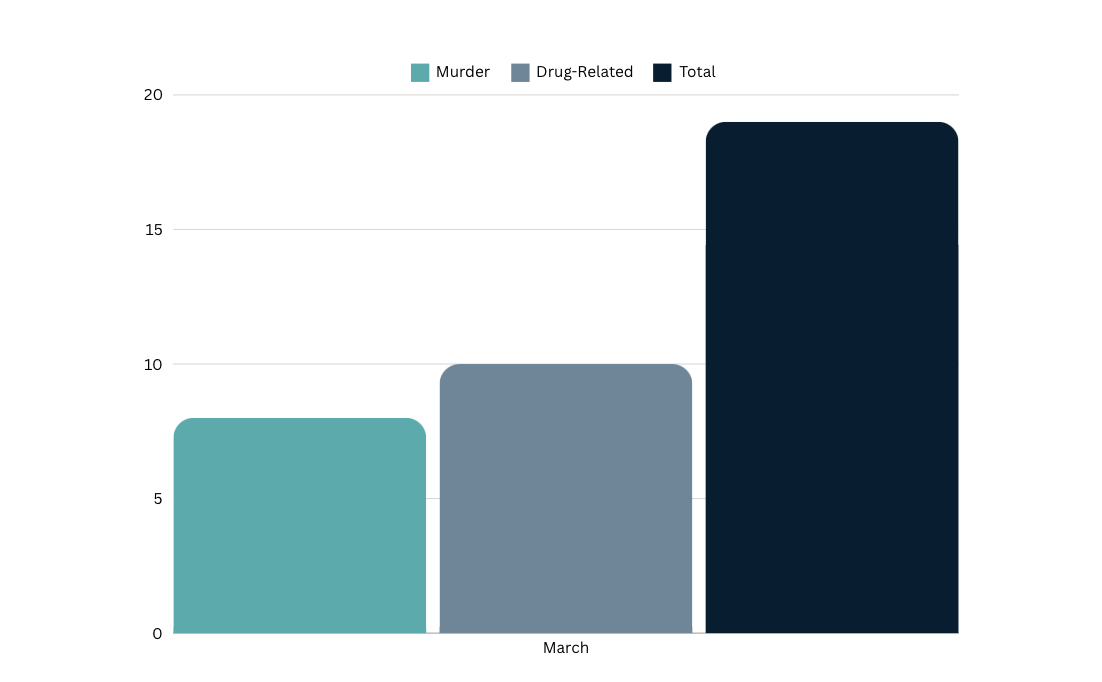
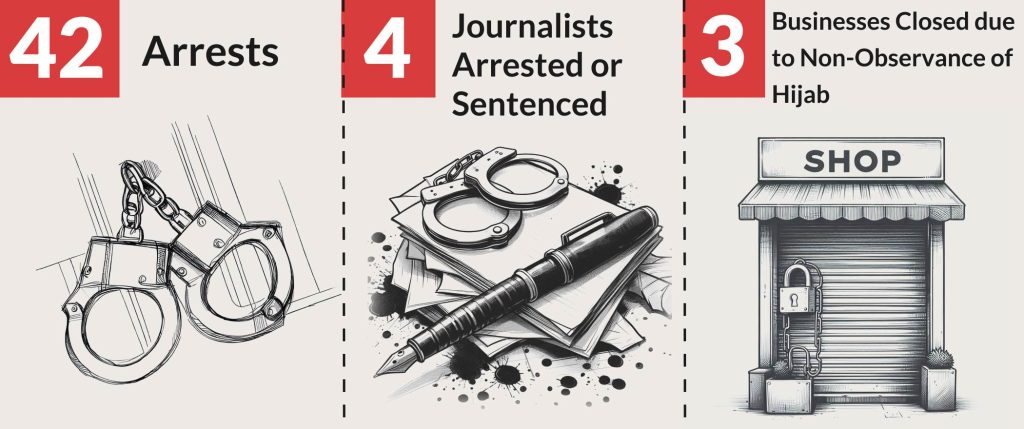
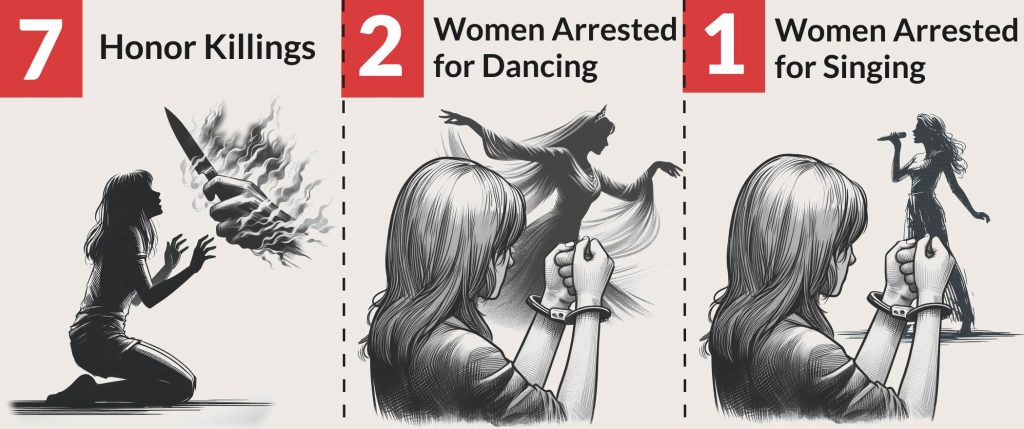
This month only 4 of the 19 prisoners executed were confirmed by official reports It’s concerning that over 75% of executions in Iran occur without government or judicial notification, deemed “secret” executions by human rights organizations.


Freedom of Expression and Thought

Iran persists in its suppression of freedom of expression and thought, as evidenced by recent events. This month, authorities arrested a transgender individual under the pretext of allegedly orchestrating traffic disruptions in Gonbad-e Kavus to promote indecency and promiscuity by gathering young motorcyclists. While the specifics of these purported actions remain undisclosed, the police chief suggested the individual’s motive was to impress friends and seek thrills.

Furthermore, in a concerning development, four journalists faced convictions this month. Among them, Ali Moslehi received a severe sentence of six years and two months, while Omid Pahdi, known for publishing politically sensitive material, was handed a two-year jail term for his critical publications.

The relentless crackdown on dissent extends to activists like Mahmoud Safdari, a teacher’s union advocate, who was fined for allegedly spreading falsehoods aimed at destabilizing the public perception and undermining the regime. These incidents highlight a worrying trend of censorship and repression, underscoring the urgent need for greater respect for fundamental freedoms in Iran.

Women

A continuing crackdown on women’s rights activists persists. On February 29, 2024, the trial of 11 women commenced, all of whom were detained during a mass arrest of citizens in Gilan Province on August 16 and 17, 2023. Their trial concluded this month with Judge Mehdi Rasekhi issuing severe sentences. Zohreh Dadras received a nine-year, six-month, and two-day sentence for her alleged involvement in “forming a group to act against national security,” while Forough Saminia, Sara Jahani, Yasamin Hashdari, Shiva Shah Sia, Negin Rezaie, Azadeh Chavoshian, and Matin Yazdani each received six years and 47 days for charges of “assembly and collusion to act against national security.” Additionally, Hooman Taheri and Jelveh Javaheri were sentenced to one year in prison for “propaganda against the regime.”

Furthermore, Iran continues its surveillance of social media activity, exemplified by the sentencing of Zainab Khaniabpour to two years in prison for sharing pictures without hijab online. Another case of repression emerged when Bita Rasouli, a female singer from Lahijan, Iran, was arrested by security forces on March 18th, only to be released on bail the next day. Rasouli, who had traveled from Turkey to participate in a private ceremony, was detained for reasons including dancing, singing, and accompanying a male musician in a women’s club. Allegations of physical and verbal abuse during her 24-hour detention surfaced, and her case is currently under review by the FATA Police and Security Department.

Workers

Workers in Iran continue to face dire conditions and perilous work environments. This month alone, 13 fatalities tragically occurred due to work-related accidents, with an additional 27 workers sustaining injuries. Furthermore, a staggering 1,600 workers reported unpaid wages spanning 63 months, while 270 workers were denied their insurance rights. Moreover, a total of 169 businesses were sealed. Additionally, one distressing case involved the confiscation of a worker’s house and property. Lastly, a tragic incident occurred when 38-year-old Bapir Khalidi committed suicide after his shoe shed was destroyed and confiscated by officials of the municipal highway barrier.

These distressing statistics underscore the profound challenges confronting workers and emphasize the urgent necessity for enhanced labor protections and enforcement mechanisms. In an effort to bring to light these injustices, workers and trade unions often protest, this month there were 89 trade union gatherings and 2 strikes.

International News

This month, significant attention was directed towards the human rights situation in Iran as the Human Rights Council convened multiple sessions. Dr. Javaid Rehman, the United Nations Special Rapporteur on the human rights situation in the Islamic Republic of Iran, delivered his conclusive report to the United Nations Human Rights Council. During this session, he shed light on the alarming frequency of death penalty sentences, notably for drug-related offenses and involving juvenile offenders. Moreover, he highlighted violations of the right to a fair trial and the mistreatment of human rights defenders.

In addition, the Independent International Fact-Finding Mission on Iran presented its comprehensive findings to the Human Rights Council. Meticulously documenting various incidents and recurring patterns of rights violations, the report offers a distressing glimpse into systemic abuses. From the tragic case of Mahsa Amini to the use of violence against peaceful protesters resulting in unlawful killings, the report illustrates a concerning trend. Furthermore, the documented violations, which include extrajudicial killings, torture, rape, enforced disappearances, and gender persecution, underscore the pressing need for accountability and justice for the victims and survivors.