Gold Mine Security Forces Open Fire on Villagers: One Dead, Three Injured

HRANA – Following clashes between security guards of the Qolqoleh Gold Mine and a group of protesting residents of Pir-Amran village in Saqqez County, one villager was killed and three others were injured. Two of the shooters have been identified and arrested.

According to HRANA, citing ILNA, the confrontation took place yesterday evening, Monday, September 15. Four villagers were shot and transferred to medical centers. One of them died due to the severity of his injuries.

The Mukerian News Agency identified the deceased as Mohammad Rashidi, 22 years old.

The head of the Kurdistan Province Judiciary announced that a case has been opened in Saqqez County Prosecutor’s Office, adding that the shooters have been identified and arrested. Preliminary investigations by the case investigator have already begun, and the weapons used have been confiscated and handed over to law enforcement authorities.

The police commander of Saqqez County also confirmed the incident, citing disputes between villagers and mine officials as the cause of the clash.

The Qolqoleh Gold Mine, located near Pir-Emran village in Saqqez County, has previously been the scene of tensions between locals and mine authorities. Villagers have long raised concerns over environmental damage, land ownership, and lack of transparency in the exploitation of natural resources.

Indictment Issued for Four Accused of “Spying for Israel”

HRANA – The head of the West Azerbaijan Province Judiciary has announced that indictments have been issued against four individuals accused of “spying for Israel.”

According to Mizan, the indictments were handed down following proceedings in the Revolutionary Prosecutor’s Office, under Article 6 of the Law on Combating the Actions of the Zionist Regime.

Naser Atabati, head of the provincial judiciary, claimed that the defendants were involved in identifying military facilities and other sensitive sites across Iran. He further alleged that they operated in Tehran, Urmia, Shahroud, and Isfahan, where they photographed and filmed locations for transfer to Mossad agents, procured SIM cards and specialized phones for secure communications, and carried out explosions and acts of arson. In return, he said, they received payments from the Israeli military in the form of cryptocurrency and other digital assets.

The report did not specify the date of the indictments or which judicial branch issued them.

Article 6 of the Law on Combating the Actions of Israel equates any intelligence cooperation or espionage on behalf of Israel with moharebeh (enmity against God) and corruption on earth, both of which carry the maximum penalty under Iranian law.

While espionage in itself is not considered a human rights violation, the Iranian government has a documented history of using such charges to target political opponents. As a result, claims of this nature- particularly when lacking transparency about evidence, legal proceedings, or due process – are widely regarded with skepticism.

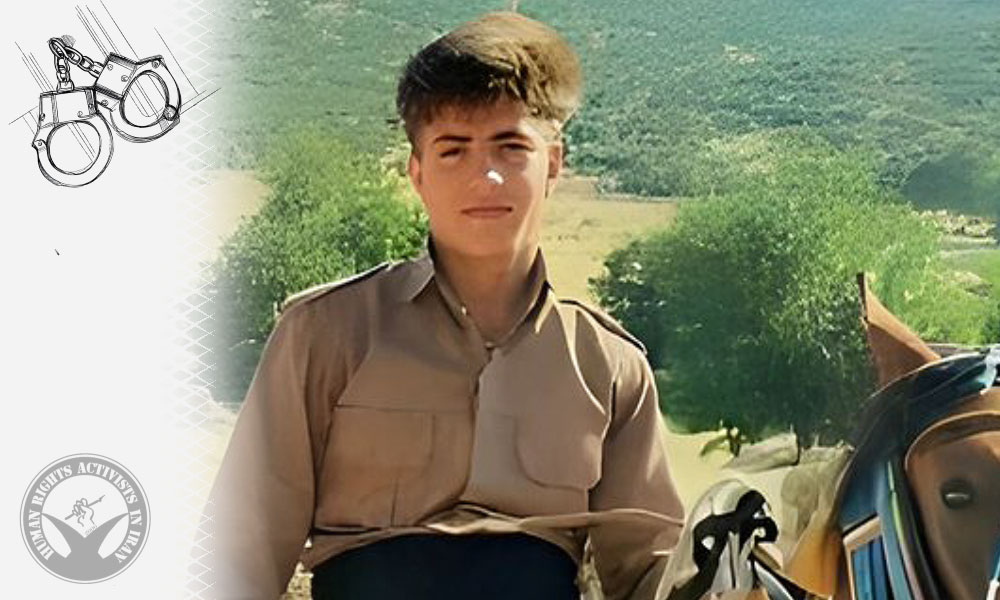
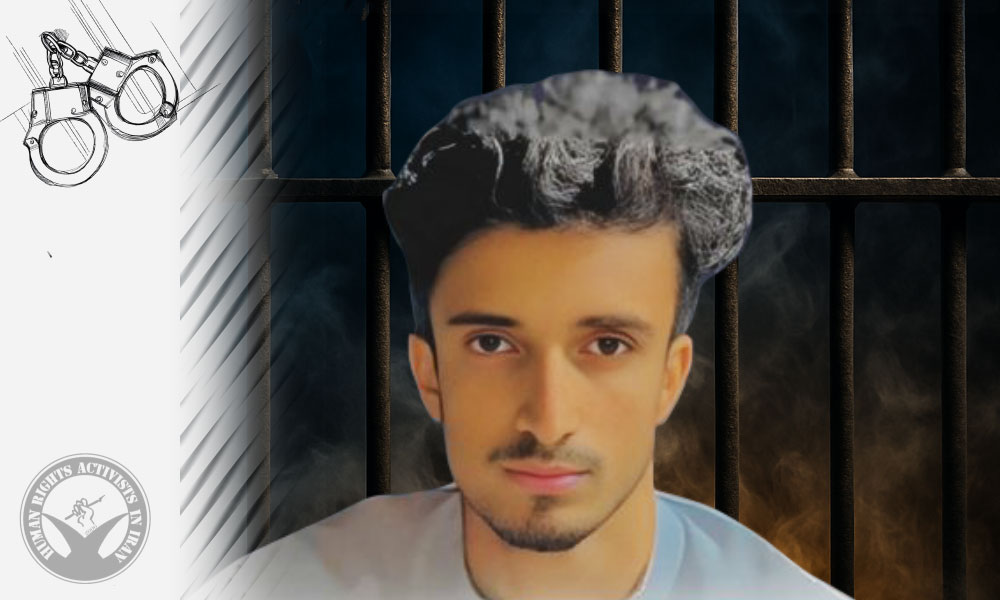
Two Teenagers Arrested by Security Forces in Kamyaran

HRANA – On Monday, September 8, Uraz Zamani and Behrouz Rashidi, two teenagers from Kamyaran, were arrested by security forces in this county and taken to an undisclosed location.

According to Kolbar News, their arrests took place on Monday, September 8, without the presentation of a judicial warrant, carried out by security forces at their family homes.

As of the time of this report, no information is available regarding their whereabouts, the reasons for their arrest, or the charges against them.

Arbitrary arrests, transferring detainees to undisclosed locations, and leaving families in the dark about the fate of their loved ones are routine practices of the Iranian regime’s security agencies, such as the Ministry of Intelligence and the IRGC Intelligence Unit. This pattern of behavior stands in clear violation of the United Nations Standard Minimum Rules for the Treatment of Prisoners, known as the Nelson Mandela Rules

17-Year-Old Teenager Arrested by Security Forces

HRANA – Yesterday, September 10, 17-year-old teenager Abdollah Azizi, a resident of Qasr-e Qand, Sistan and Baluchestan province, was arrested by security forces in this county and transferred to an undisclosed location.

According to Rasank News, his identity has been reported as Abdollah Azizi, 17,  and a resident of Azizabad village, a district of Qasr-e Qand County. According to the report, Mr. Azizi was arrested without the presentation of a judicial warrant, with the use of violence by security forces, and taken to an undisclosed location.

As of the time of this report, no information is available regarding the reasons for his arrest or the charges against him.

Sina Rostami and Erfan Azizi Arrested in Ilam

HRANA – Yesterday, September 9, Sina Rostami and Erfan Azizi, residents of Ilam, were arrested by security forces and taken to an undisclosed location.

According to Kolbar News, the identities of those arrested have been confirmed as Sina Rostami and Erfan Azizi. Their arrest reportedly took place by security forces without the presentation of a judicial warrant.

No information is available regarding the reasons for their arrest, the charges against them, or their place of detention.

Arbitrary arrests, transferring detainees to undisclosed locations, and leaving families in the dark about the fate of their loved ones are routine practices of the Iranian regime’s security agencies, such as the Ministry of Intelligence and the IRGC Intelligence Unit. This pattern of behavior stands in clear violation of the United Nations Standard Minimum Rules for the Treatment of Prisoners, known as the Nelson Mandela Rules.

Subscribe to Our Newsletter

Now is definitely not the time to stop reading!

Two Citizens Arrested by Security Forces in Marivan

HRANA – On Saturday, September 6, security forces arrested two residents of Marivan, Kiumars Adwaie and Mostafa Adwaie, and transferred them to an undisclosed location.

According to Kolbar News, the two men are residents of Selin village, a district of Marivan County. Their arrests took place at their home, without the presentation of a judicial warrant.

As of this writing, no information has been made available regarding the reasons for their detention, their current whereabouts, or the charges against them.

Arbitrary arrests, transferring detainees to undisclosed locations, and leaving families in the dark about the fate of their loved ones are routine practices of the Iranian regime’s security agencies, such as the Ministry of Intelligence and the IRGC Intelligence Unit. This pattern of behavior stands in clear violation of the United Nations Standard Minimum Rules for the Treatment of Prisoners, known as the Nelson Mandela Rules.

Monthly Report – August 2025: Human Rights Situation in Iran

HRANA- This report offers a brief overview of human rights violations in Iran during August. Key concerns this month include a sharp rise in executions compared to the previous two months, the continuation of public executions, the extraction of forced confessions, and heavy prison sentences handed down to Teacher union activists and members of religious minorities.

Executions

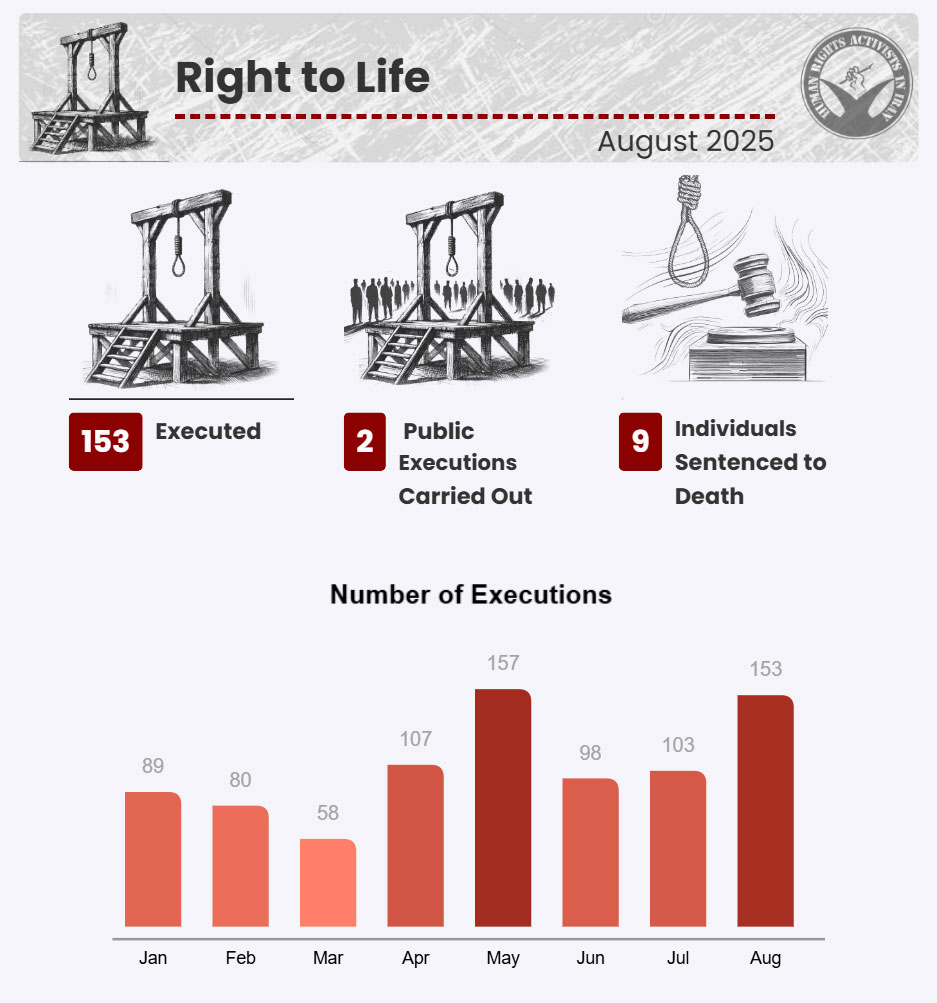
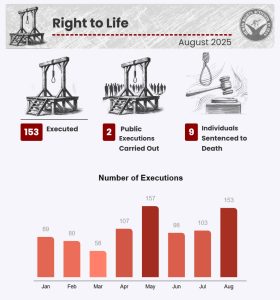
During the month of August, prisons in Iran witnessed the execution of 153 individuals, including 5 women—an increase of 40 percent compared to the previous month. With eight months having passed in the current year, the number of executions has reached 837, which, compared to 930 executions in the entire previous year, reflects a concerning rise.

The gender of 8 of these executed prisoners remains unknown, highlighting the lack of transparency in Iran’s judicial system. Two individuals were executed in public, and 8 Afghan nationals are among those executed.

The number of those executed, broken down by charges, is as follows: 87 individuals were executed on drug-related charges, 60 for murder, 2 for rape, 1 for “corruption on earth,” 1 on security-related charges, and the charge of 1 individual remains unknown.

In addition, Iran’s judiciary sentenced 9 individuals to death. The Supreme Court’s upholding of the death sentences for Sharifeh Mohammadi and Babak Shahbazi was also among the alarming developments concerning political prisoners this month.
right to life

Prisoners’ Rights

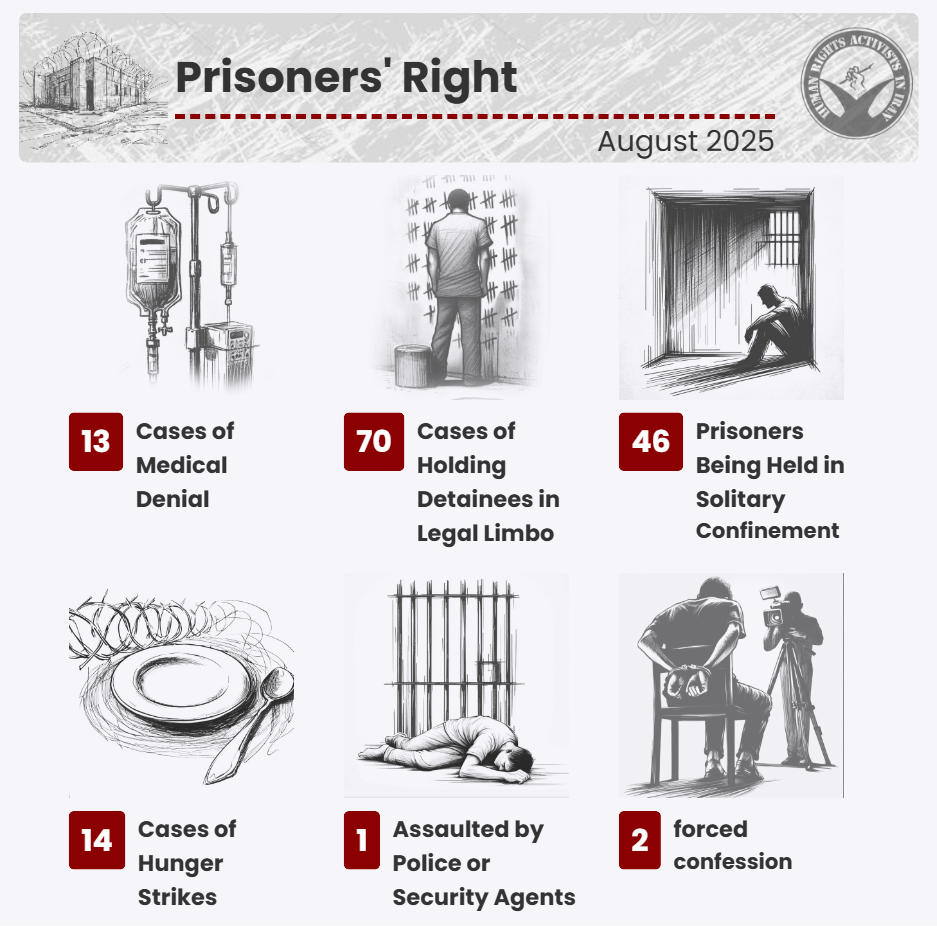
This month, HRANA received numerous reports of violations of prisoners’ rights, particularly those of political and ideological prisoners. The recorded instances of violations are as follows: 46 cases of punitive transfers to solitary confinement, including 14 cases of prolonged solitary confinement; 70 cases of holding detainees and prisoners in limbo regarding judicial proceedings; 38 cases of families not being informed about the prisoner’s situation; 13 cases of denial of adequate medical treatment; 9 cases of preventing prisoners from accessing a lawyer; 26 cases of threats and pressure against prisoners; and 2 reports of the broadcasting of forced confessions of defendants. One case of death in prison and one case of suicide were also reported.

As a result of this pressure, fourteen prisoners went on hunger strike.

Extracting forced confessions from political and ideological defendants, followed by broadcasting them on state television, is one of the regime’s routine practices against its opponents. In 2024, HRANA documented 28 cases of forced confessions. This month as well, Iran’s state television aired the forced confessions of a group of Christian converts.
prisoners' rights

Kolbars and Fuel Carriers

This month, indiscriminate shootings by military and security forces left five people dead and seven others injured. The fatalities included three kolbars and two fuel carriers—impoverished individuals who transport goods or small amounts of fuel to make a living. Among the injured were five kolbars and one fuel carrier.
Additionally, landmine explosions left 15 people dead and injured.

Freedom of Thought and Expression

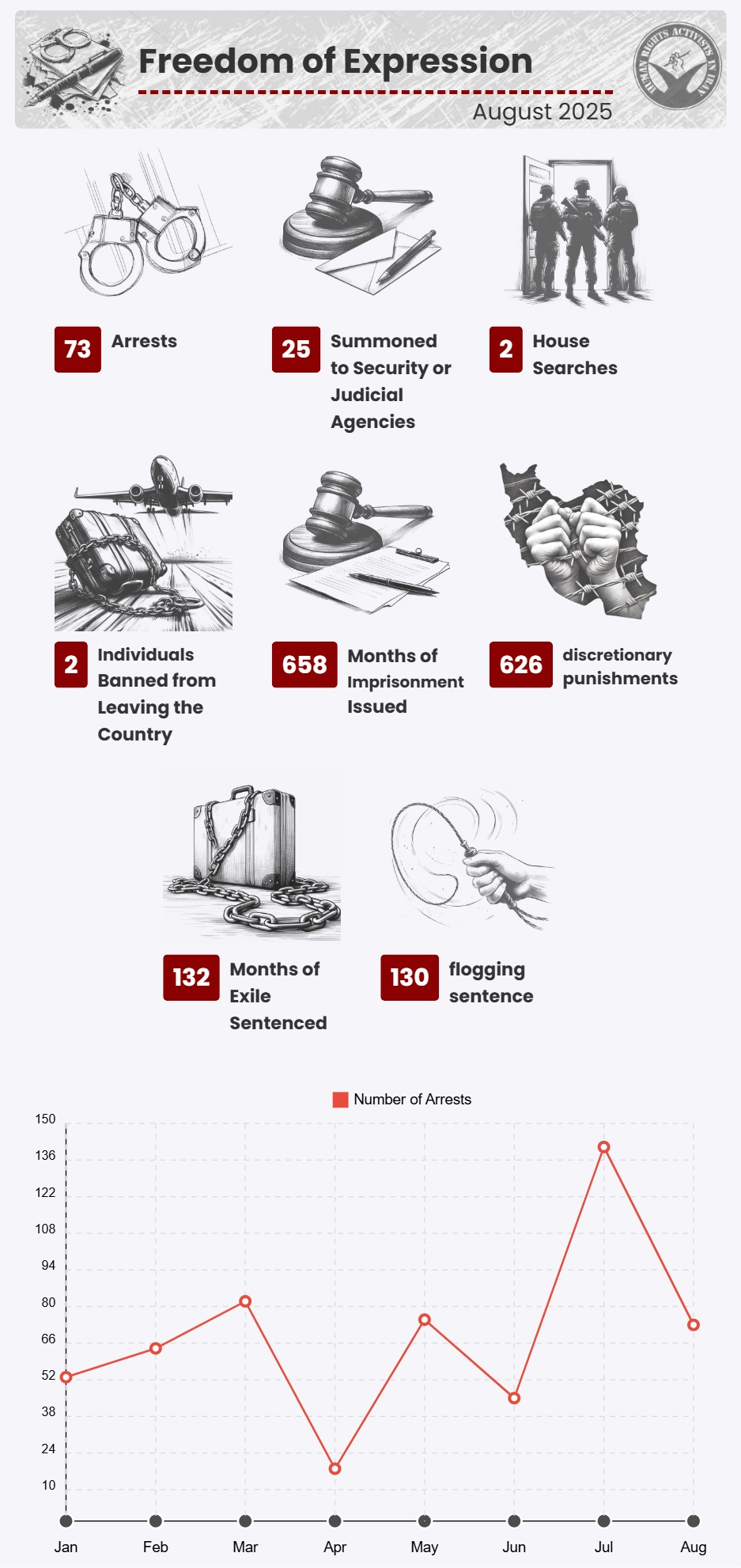
During August, 73 citizens were arrested by security forces for expressing their opinions and beliefs. Among these were the arrest of Ehsan Rostami, a cultural activist in Tehran, and the arrest of Morteza Damour, the father of Vahid Damour, one of those killed during the November 2019 protests, in Karaj.

In connection with the same charges, 14 people were summoned to intelligence agencies, and 11 were summoned to court.

Additionally, 27 individuals were collectively sentenced to a total of 658 months in prison, 132 months of exile, and 130 lashes for expressing their beliefs and opinions.

HRANA also documented two reports of home searches, 8 trials, 12 interrogations, and 11 arrests carried out without a warrant.

Finally, six protest gatherings were held in this regard.

Workers’ Rights

This month, security agencies arrested three workers, including two employed at Razi Petrochemical. There was also a report of one worker being beaten by security forces.

Workplace accidents during this month claimed the lives of 33 workers and injured 66 others, including the poisoning of 16 petrochemical workers in Asaluyeh.

In August, guilds and unions held 57 protest gatherings, along with one reported strike.

Additionally, 25 prison sentences were issued against labor activists, including eight teacher union activists in Kerman Province. Another case concerns teachers’ union activist Abolfazl Khoran, who was sentenced to one year in prison and 74 lashes in a new case while already serving his sentence.
These sentences amounted to a total of 163 months in prison, 60 months of exile, 74 lashes, and 14 cases of social rights deprivations.

Women’s Rights

HRANA’s reports show that in August, seven women were murdered, one woman was the victim of an acid attack carried out by her brother, and 12 cases of rape were recorded.

Harassment of women in relation to compulsory hijab also continued. In one case, two teenage girls were arrested following an altercation with a hijab enforcer.

Children’s Rights

This month, HRANA reported six cases of child homicide, including the murder of a nine-year-old child in Shaft, Gilan Province. One case of sexual abuse was also recorded, along with four child deaths and 19 injuries resulting from government officials’ negligence.

Security forces arrested three teenagers this month, including Voria Amiri, a 16-year-old from Sarpol-e Zahab.

Religious Minorities

This month, judicial and security pressures on religious minorities showed an increase. Through seven sentencing cases, religious minorities received a total of 504 months in prison, with two sentences carried out.

The most notable example was the confirmation by the Hamedan Province Court of Appeals of more than 38 years of prison sentences against six Baháʼí women.

Additionally, 17 cases of home searches were reported, including raids on the homes and businesses of 10 Baháʼí citizens in Isfahan by IRGC intelligence.

Three members of religious minorities were also arrested this month, and one case of physical assault was reported.

Ethnic Rights

This month, 11 ethnic activists were arrested, with security forces presenting an arrest warrant in only one case. In addition, one individual was sentenced to nine months in prison.

Inhuman Punishment

This month, the judiciary issued a sentence of 204 lashes, and in Hamedan, police forces publicly humiliated and paraded a defendant. Additionally, 19 people were arrested for attending a private party.

Ehsan Rostami Arrested by Security Forces in Tehran

HRANA – On Wednesday, August 19, Ehsan Rostami, a Tehran resident, was arrested by security forces in the city and transferred to an undisclosed location.

Based on information received by HRANA, Mr. Rostami was arrested at his private residence in Tehran on Wednesday, August 20, by security forces and taken to an undisclosed location. So far, no information has been obtained regarding his whereabouts, the reasons for his arrest, or the charges against him.

Ehsan Rostami is a cultural activist in the field of publishing and books.

Four Citizens Arrested by Security Forces in Saqqez

HRANA– On Monday, August 18, 2025, four citizens from Saqqez, Zakaria Moradi, Mehdi Kamali, Omid Rahimzadeh, and Mohammad Aminpour, were arrested by security forces in this city and transferred to an undisclosed location.

According to Kolbar News, the arrests reportedly took place at their private residences without the presentation of a judicial warrant.

As of the time of this report, no information has been obtained regarding the reasons for their arrest, their whereabouts, or the charges brought against them.

Arbitrary arrests, transferring detainees to undisclosed locations, and leaving families in the dark about the fate of their loved ones are routine practices of the Iranian regime’s security agencies, such as the Ministry of Intelligence and the IRGC Intelligence Unit. This pattern of behavior stands in clear violation of the United Nations Standard Minimum Rules for the Treatment of Prisoners, known as the Nelson Mandela Rules.

Taftan County: Three Citizens Arrested by Security Forces

HRANA– On Wednesday, August 13, 2025, three residents of Taftan County were arrested by agents of the Ministry of Intelligence and taken to an undisclosed location.

The detainees have been identified by Haal Vsh as Abdolvahed Pirdadi Rigi, 29, Younes Delavari, 22, Rahmatollah Aramoun, 29. All three are residents of Bidaster village in Taftan County, Sistan and Baluchestan province.

The arrests reportedly took place while they were on duty as security guards at the Taftan County gold mine, and were carried out by Ministry of Intelligence agents without prior notice. Efforts by their families and relatives to obtain information from security and judicial authorities about their fate have so far yielded no results, heightening their concerns.

As of the time of this report, no information is available regarding the reasons for their arrest, their place of detention, or the charges against them.

Arbitrary arrests, transferring detainees to undisclosed locations, and leaving families in the dark about the fate of their loved ones are routine practices of the Iranian regime’s security agencies, such as the Ministry of Intelligence and the IRGC Intelligence Unit. This pattern of behavior stands in clear violation of the United Nations Standard Minimum Rules for the Treatment of Prisoners, known as the Nelson Mandela Rules.