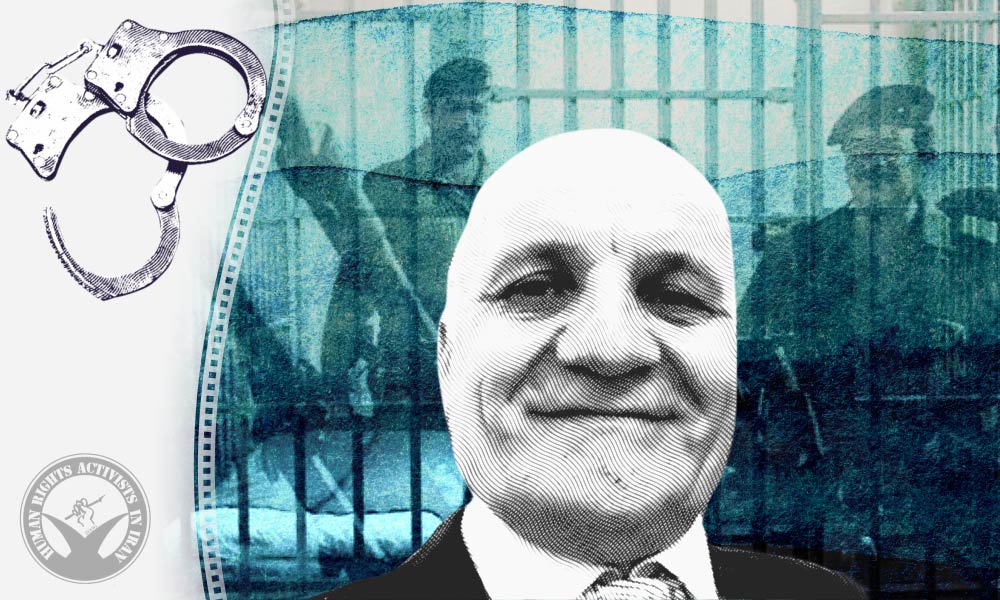
Khaled Freidooni Granted Furlough After 21 Years In Prison

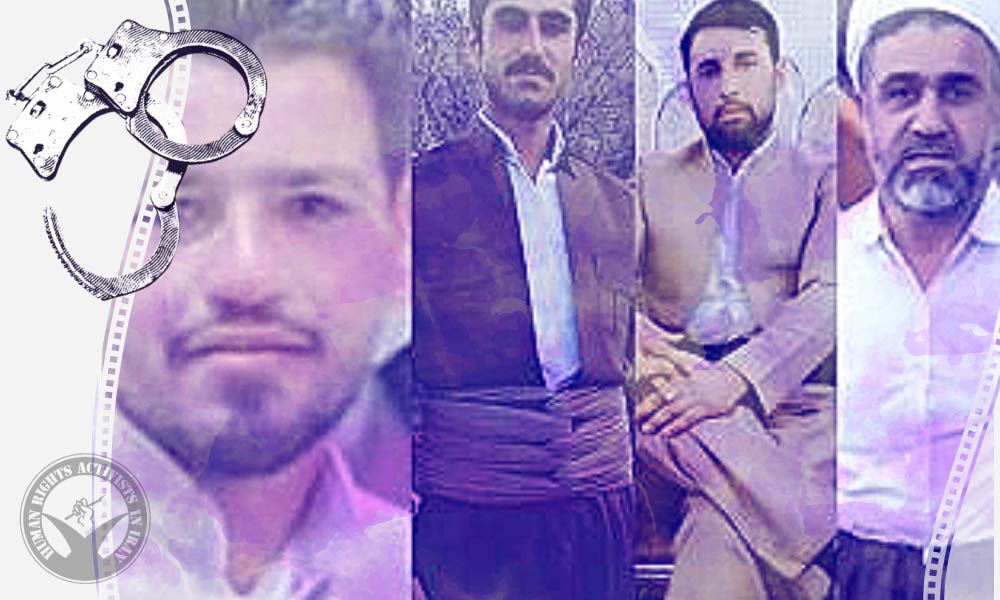
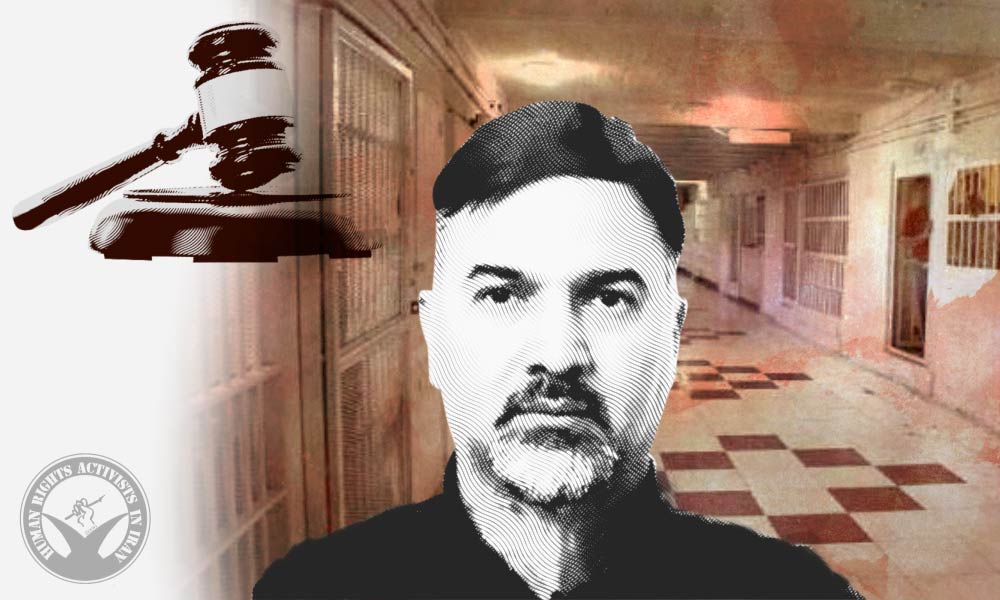
On January 16, political prisoner Khaled Freidooni was granted furlough for the first time after spending 21 years in prison.

According to HRANA, the news agency of Human Rights Activists, Freidooni was dispatched to furlough from Urmia Prison.

On August 31, 2000, Freidooni was arrested and charged with “acting against national security” and “enmity against God (Moharebeh) through association with an anti-regime political party”. The Revolutionary Court of Mahabad sentenced him to death. After three and half years, this verdict was reduced to live imprisonment on appeal.

During this period, Freidooni has been jailed in Piranshahr, Mahabad and Urmia prisons. In 2007, he went into exile in Rajai Shahr Prison. After ten years, he was sent back to Urmia Prison.

Two Inmates Executed in Adel-Abad and Khorramabad Prisons

On January 18, an inmate previously convicted for murder was executed in Adel-Abad Prison in Shiraz City. Yesterday, he had been relocated to a solitary confinement cell as procedure for carrying out the execution. Also last Sunday, an inmate who was convicted for murder was executed in Khorramabad Prison.

According to HRANA, the news agency of Human Rights Activists, the inmate executed in Adel-Abad Prison was identified as Sajjad (surname unknown). Three and a half years ago, he was accused of and arrested for murder.

“In a group fight, where the police agents were also involved, one man was killed. They accused him of murder despite the fact that Sajjad had a rifle and the victim was shot dead by a colt. He never accepted this accusation,” according to an informed source.

According to Iran Human Rights Organization, last Sunday, another inmate was executed in Khorramabad Prison. He has been identified as Moslem Aghamirzai, 30 years old.

“Moslem was a building painter who two years ago killed a man in a fight to protect his friend’s sister.”

Neither of these executions have announced by judicial authorities or reported by media inside Iran.

Baha’i Citizen Sina Shahri Arrested By Agents of Ministry of Intelligence

Baha’i citizen Sina Shahri, resident of Tabriz, was arrested by intelligence agents and transferred to an unidentified location. Agents arrested him at his home, searched his house and confiscated some of his personal belongings including documents and books about the Baha’i faith.

According to HRANA, the news agency of Human Rights Activists, the reasons for his arrest and his whereabouts are still unknown at the time of writing.

According to unofficial sources, it is estimated that more than 300,000 Baha’is live in Iran, but the Iranian constitution recognizes only Islam, Christianity, Judaism, and Zoroastrianism. Because their faith is not considered legitimate by authorities, the rights of Baha’is in Iran have been systematically violated for years.

The deprivation of the freedom to practice their religion is a breach of Article 18 of the Universal Declaration of Human Rights and Article 18 of the International Covenant on Civil and Political Rights. The United Nations covenant holds that every person has the right to freedom of religion, freedom of converting religion, as well as freedom of expression, individually or collectively; openly or secretly.

Armin Esperlous Sentenced to One Year In Prison

On January 15, Branch 1 of the Revolutionary Court of Sanandaj sentenced Armin Esperlous, resident of Sanandaj City, to one year in prison.

According to HRANA, the news agency of Human Rights Activists, quoting Kurdpa, Esperlous, an environmental activist, was sentenced on the charge of “collaboration with an anti-regime political party”.

On September 29, 2021, Esperlous was arrested by security forces and transferred to a detention centre at the disposal of the Ministry of Intelligence. After 20 days of interrogation, he was released on bail of 150 million tomans (35,700 USD) pending further legal proceedings.

His first trial was held on December 12, 2021.

On March 17, 2020, in another legal case, he was charged with “propaganda against the regime” and sentenced to three months in prison.

His wife, Faranak Jamshidi, was also jailed in Sanandaj’s correctional prison. After two months, she was released on bail.

Three Inmates Executed in Isfahan Central Prison

On January 13, three inmates were executed in Isfahan Central Prison. Two prisoners have previously been convicted for drug-related crimes and one for murder.

According to HRANA, the news agency of Human Rights Activists, quoting the Iran Human Rights Organization, three inmates on death row, identified as Abolrahim Sargolzai, Mohammad-Jafar Salehi and Shahin Khosravi, were executed in Isfahan Central Prison.

Reportedly, Salehi had been in jail for four year after being convicted for murder.

None of these executions have been announced by judicial authorities or reported by media inside Iran.

The most recent report from the Statistics and Publication Center of the Human Rights Activists in Iran (HRA) states that between January 1 of 2021 and December 20 of 2021, at least 299 citizens, including four juvenile offenders, were executed. In addition, 85 citizens were sentenced to death in this period.

As the report points out, Iran’s judicial authorities do not publicly announce over 88% of executions. These unreported executions are known as “secret executions” by human rights organizations.

Subscribe to Our Newsletter

Now is definitely not the time to stop reading!

Poet Ghasem Bahrami Arrested

Ghasem Bahrami, a critic, poet and resident of Mashhad City, was arrested while leaving the country. On September 15, 2021, security forces arrested him. He was released on bail in October.

According to HRANA, the news agency of Human Rights Activists, quoting Student News Network, a security institution-affiliated media outlet, Bahrami was arrested while attempting to leave from the northwest border of the country.

The report did not mention any reason for this arrest.

Bahrami is known for expressing political views through his poetry.

The Court of Appeals Upheld the Order of Seizure of Fatemeh Mosanna and Hassan Sadeghi’s House

The Court of Appeals of Tehran Province upheld the initial order to seize the personal property of two political prisoners, Fatemeh Mosanna and Hassan Sadeghi. Recently, agents of Execution of Imam Khomeini’s Order seized the couple’s house. The two prisoners have been sentenced by the Revolutionary Court to a combined 30 years in prison, seizure of personal properties, namely their shop and house. In March 2019, their place of business was seized by court order.

According to HRANA, the news agency of Human Rights Activists, the Court of Appeals of Tehran Province upheld the order to seize the house of Mosanna and Sadeghi, who are currently serving time in Rajai Shahr. Currently, their children and Mosanna’s mother are residing in the house. It is their only shelter. Mosanna’s 90 year mother, Ferdos Mahboobi, was operated on three times in recent years and suffers from dementia and osteoporosis.

“The agents went to their house with an eviction order. They told the agents: “this house is the last thing you have left for us, and if you want eviction, you have to throw our stuff into the street,” an informed source told HRANA.

The whole family was arrested, on January 28, 2013, following the funeral of Sadehgi’s father, a dissident against the regime. Their daughter and son, who was underage, were also arrested and interrogated. They were released after three days and 45 days respectively.

Branch 26 of Tehran’s Revolutionary Court sentenced each member of the couple to 15 years in prison and the seizure of personal property (both shop and house). This verdict was upheld on appeal.

On September 30, 2015, Mosanna was arrested and sent to Evin Prison to endure her sentence. On February 7, 2016, Sadeghi was arrested and sent to Rajai Shahr Prison after he went to Evin Prison to visit his wife.

Currently, Sadeghi is spending the ninth year of his sentence. His request for a retrial, for both him and his wife, has been dismissed twice by the Branch 33 of the Supreme Court of Iran.

In May of 2021, Mosanna was dispatched to a hospital from prison due to intestinal bleeding.

In 1980, while Mosanna was only 13 years old, she was arrested along with her mother and jailed for three years. During this period, her three brothers Ali, Mostafa and Morteza as well as the wife of one of her brothers were executed in prison for the charge of “enmity against God” and “advocating for The People’s Mujahedin Organization of Iran”.

Sadeghi was arrested in 1981 and jailed for six years. He was beaten harshly in prison by prison agents. He still suffers from the effects. Despite currently suffering from glaucoma, heel bone fracture in both feet, and ulcer, he has been denied adequate medical treatment and hospitalization outside the prison for no compelling reason.

French-Iranian Academic Fariba Adelkhah Arrested and Sent Back to Evin Prison

Kazem Gharib-Abadi, Deputy Minister for International Affairs of the Judiciary, announced that French-Iranian academic Fariba Adelkhah was sent back to Evin Prison from house arrest due a breach of electronic tag rules.

According to HRANA, the news agency of Human Rights Activists, quoting ISNA, Adelkhah was arrested by security forces at her home in Tehran on June 7, 2019. Her colleague Roland Marchal, who had travelled to Iran in order to visit Adelkhah, was also arrested upon arrival at the Tehran Airport. On March 20, 2020, in a prisoner swap agreement, Marshal was released from jail and returned Paris in exchange for Jalal Ruhollah-Nejad, who was jailed in France.

In May 2020, Branch 15 of the Revolutionary Court of Tehran sentenced Adelkhah to six and a half years in prison on the charge of “propaganda against the regime” and “assembly and collusion against national security”. The verdict was upheld on appeal. Five years of imprisonment is enforceable per Article 134 of the Islamic Penal Code, which states that  from several verdicts, only the severest is enforceable.

She was transferred from Evin Prison to Ward 209, at the disposal of the Ministry of Intelligence, on September 17, 2020, for unknown reasons and despite being already convicted. On October 3, 2020, she was released from jail to spend the rest of her sentence on house arrest with an electronic tag.

Fariba Adelkhah is a French-Iranian anthropologist who graduated from University Marc Bloch in Strasbourg and the School for Advanced Studies in the Social Sciences. She has been working for years as a researcher at the Centre for International Research of the Paris Institute of Political Studies (Sciences Po). She has authored several books.

The Latest Report on Reza Mazaheri in Evin Prison

On January 11, political prisoner Reza Mazaheri was summoned by Evin Courthouse to face another legal case, while already serving a two year sentence in Evin Prison.

According to HRANA, the news agency of Human Rights Activists, Mazaheri has been charged with “spreading lies” in a new legal case and summoned by Branch 3 of the Evin Prosecutor’s Office. The resident of Tehran has been serving his sentence in Evin Prison since December 5, 2021.

On December 29, 2018, the security forces arrested Mazaheri. After being indicted by Branch 2 of Evin Prosecutor’s Office, he was jailed in Ward 4 of Evin Prison. On April 15, 2019, he was released from jail on bail of 2 billion tomans (475,910 USD)  pending further legal proceedings.

On March 15, 2020, the Branch 28 of the Revolutionary Court of Tehran sentenced him to two years in prison on the charges of “propaganda against the regime” and “spreading lies”. This verdict was upheld by Branch 36 of Tehran’s court of appeals.

On December 5, 2021, he was arrested and transferred to the Quarantine Ward 4 of Evin Prison. Last Tuesday, he was relocated to Ward 8 of the prison.

Ebrahim Seddigh Hamedani Transferred to Solitary Confinement While Still on Hunger Strike

Political prisoner Ebrahim Seddigh Hamedani was transferred to a solitary confinement cell in Marivan Prison while still on hunger strike.

According to HRANA, the news agency of Human Rights Activists, Hamedani and his son Salar Seddigh Hamedani have been on hunger strike for more than 11 days in protest against the housing of political prisoners in the same ward as prisoners of violent crime, which is in violation of prison regulations.

Hamdeani and his son were earlier transferred from Urmia Prison to Marivan and Kamyaran prisons, respectively.

An informed source HRANA that his health has been affected by the ward and by the hunger strike: “Considering that he suffers from diabetes, his health condition was exacerbated due to the continuation of the hunger strike. He has told to his family that most of his fellow prisoners in his ward use drugs which makes him exposed to drug pollution”.

On February 23, 2019, Hamedani was arrested alongside along his son Salar and daughter Maryam Seddigh. He was transferred to Urmia Central Prison on April 23, 2019.

Maryam Seddigh Hamedani was released from prison on April 25, 2019.

Branch 2 of the Revolutionary Court of Urmia sentenced both to 16 years imprisonment on the charges such as “acting against national security through membership in one of the anti-regime organizations” and “propaganda against the regime.”

In August of 2020, while they were spending their sentence terms, they were relocated to the detention centre of the Ministry of intelligence in Urmia city and interrogated for allegedly “propaganda against the regime inside prison.” Subsequently, a new legal case was opened against them.

In 2005, Ebrahim Seddigh Hamedani had earlier been sentenced to six years imprisonment for the same charges. He was released after serving two and a half years of his sentence on probation.