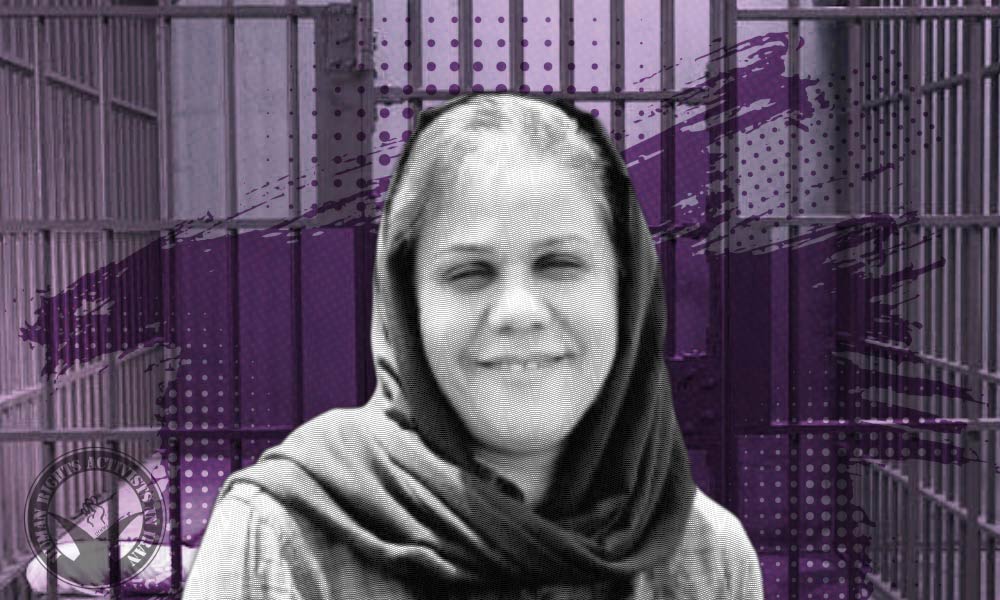
Shadi Gilak Sent to Evin Prison to Serve One Year Sentence

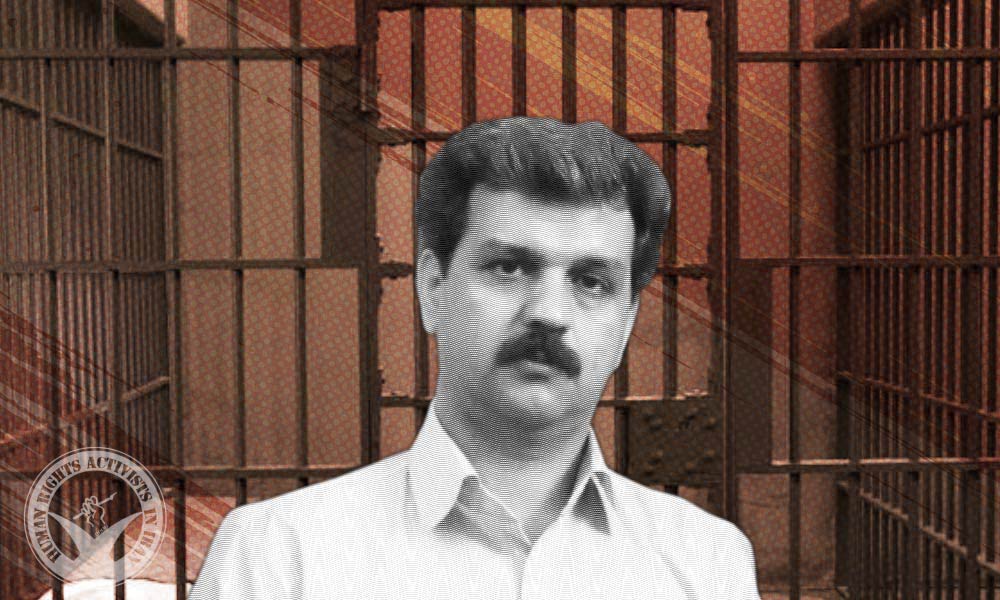
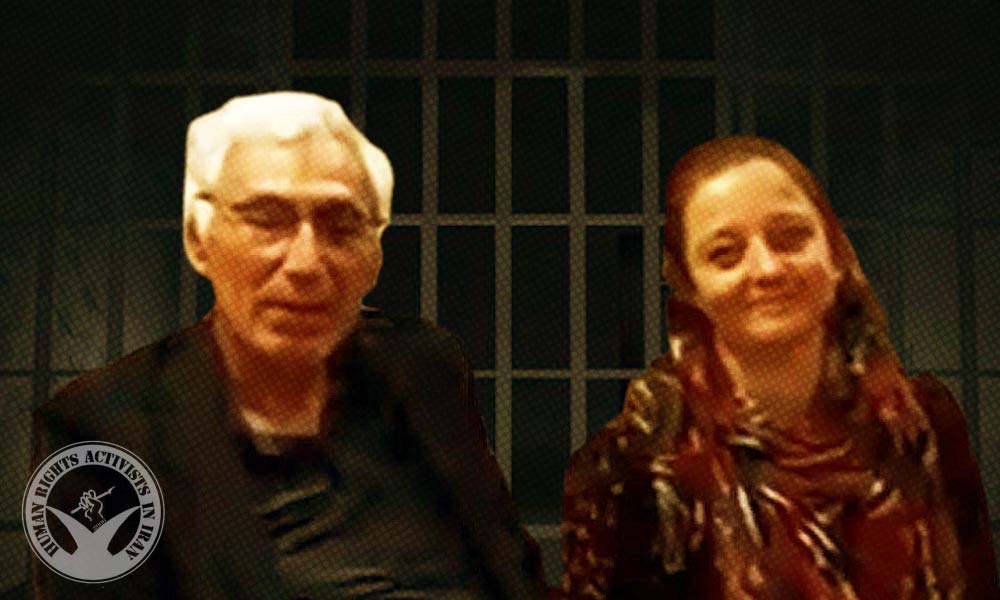
On January 8, Shadi Gilak, wife of imprisoned worker’s rights activist Arash Johari, was sent to Evin Prison to serve a one year sentence.

According to HRANA, the news agency of Human Rights Activists, on January 8, Shadi Gilak, a resident of Tehran, was jailed in Evin Prison. He had been sentenced to one year in prison by Branch 26 of Tehran’s Revolutionary Court on the charge of “propaganda against the regime”.

She had been summoned to appear at the Executive Unit of Moghaddas Courthouse to be arrested and serve her conviction.

Gilak is the wife of Arash Johari, the worker’s rights activist who is currently spending his conviction in Evin Prison.

Civil Activist Yashar Tabrizi Arrested By Security Forces in Tehran

On January 8, civil activist Yashar Tabrizi was arrested by security police agents and transferred to Robat-Karim Detention Center. Earlier on that day, he had published a post on social media from his visit to the Ukraine plane crash site in memorial of the victims.

According to HRANA, the news agency of Human Rights Activists, Tabrizi has faced other arrests by security forces. On April 7, 2021, he was arrested for one day in Isfahan along with some victims’ families of the crashed Ukrainian plane as well as other civil activists.

An informed source told HRANA that, “at 7 A.M., Mr Tabrizi called his family and told them that he was detained in the detention centre in Robat-Karim. He was arrested by the order of the prosecutor and would be released after a few hours. At 11 a.m., his wife went to Robat-Karim Detention Center and they confirmed that he was there”.

On 8 January 2020, Ukrainian International Airlines Flight 752 was shot down by IRGC’s missile shortly after takeoff from Tehran Imam Khomeini International Airport. After a few days of covering up the cause of this incident, the regime admitted that the plane was hit by a missile shot from an anti-missile defense base. Since then, the victims’ families have been demanding the trial of perpetrators of this incident.

Mohammad Javad Vafaei Sentenced to Death Penalty By the Revolutionary Court

Political activist, Mohammad Javad Vafaei was sentenced to death by Mashhad’s Revolutionary Court on the charge of “spreading corruption on earth”.

According to HRANA, the news agency of Human Rights Activists, Branch 4 of the Revolutionary Court of Mashhad sentenced Vafaei to death.

His lawyer Babak Paknia stated that according to the indictment letter, his client has been charged with “spreading corruption on earth through destruction of government property.”

Vafaei, 26 years old and a boxing coach was arrested in March of 2020 by security forces in Mashhad city.

Earlier, he was granted a high bail which he could not afford to provide and hence has been in jail since the arrest.

Zahra Mohammadi Sent to Jail to Serve Five Year Sentence

On January 8, civil activist Zahra Mohammadi was sent to the women’s ward of the Correctional Center of Sanandaj City to endure her five year imprisonment.

According to HRANA, the news agency of Human Rights Activists, quoting Kurdpa, Mohammadi was arrested by security forces on May 23, 2019. After more than six months in detention, she was released on a bail of 700 million tomans (166,600 USD) on December 2 of that year.

In July 2020, Branch 1 of Sanandaj’s Revolutionary Court sentenced her to 10 years in prison on the charge of “organizing people with intention to disturb national security”. In February of 2021, this verdict was reduced to 5 years on appeal. Her request for a retrial was rejected by the Supreme Court of Iran.

Mohammadi, 29 years old, is a member of the cultural association Nojin which is engaged in environmental activities, forest protection and Kurdish language teaching.

Baktash Abtin, Jailed Writer and Poet, Dies of COVID-19

On January 8, Baktash Abtin, a prisoner of conscience, writer and member of the Iranian Writers Association (IWA), died of COVID-19 in the hospital. On December 6, 2021, after showing severe COVID-19 symptoms, he was dispatched from Evin Prison to a hospital in Tehran. After a few days, he was sent to the Intensive Care Unit (ICU) as his condition deteriorated and his life was threatened.

In an open statement, IWA called the regime responsible for Abtin’s critical health condition by denying him adequate and on-time medical treatment and hospitalization.

According to HRANA, the news agency of Human Rights Activists, Abtin was a poet, filmmaker and writer. The IWA expressed grave concern for his wellbeing, stating that “the regime is responsible for whatever happens to the imprisoned writers, especially Baktash Abtin. The regime has deliberately endangered the life of political prisoners. They have to be set free before it is too late, especially that we all know that they are innocent of any wrongdoing and deserve no punishment whatsoever”.

In reaction to his death, in a new statement, IWA called it a murder committed by the regime and stated:

“On December 3, with the onset of clear COVID-19 symptoms, Baktash Abtin went to Evin [Prison’s] healthcare. However, he did not receive any treatment. After three days, when his health condition worsened, prison officials had to dispatch him to a hospital overnight without informing his family.”

Abtin’s death prompted a wave of reactions from social media, news outlets and human rights organizations. Reporters Without Borders (RSF) stated: “The writer and journalist had been unjustly sentenced to 6 years in prison and was in detention in hospital, ill with COVID-19 & deprived of the necessary care. RSF blames the high regime’s authorities for his death.”

Abtin was in Evin Prison where he contracted COVID-19. On May 15, 2019, Branch 28 of the Revolutionary Court of Tehran sentenced him to one year in prison on the charge of “propaganda against the regime” and 5 years on the charge of “assembly and collusion to act against the national security”. On September 26, 2020, along with two other IWA members, he was sent to Evin Prison to serve his sentence.

The IWA is an independent group of authors, poets, editors and translators based in Iran which was formed in May 1968 to fight against state censorship. The government has continuously persecuted members of the IWA after the 1979 revolution. In 1998, several IWA members, including opposition politicians Dariush Forouhar and his wife Parvaneh Eskandari, and writers Mohammad Mokhtari and Mohammad Jafar Pouyandeh, were murdered.

Subscribe to Our Newsletter

Now is definitely not the time to stop reading!

HRANA Recap: This Week’s Protests in Iran

According to HRANA, the news agency of Human Rights Activists, a number of protests took place this week in Iran, many of which were continuations of ongoing movements.  Read our recap below for details, photos, and videos from the demonstrations.

Friday, December 31

About 250 workers of the tile manufacturing company Kashi Tabriz went on strike and assembled at the workplace to ask for a wage raise.

Residents of the village Omar, located in Sistan and Baluchestan Province, assembled to ask the governor to employ more native workers in the nearby copper mine. The governor was visiting the mine at the time.

A number of citizens in Galikesh County, located in Golestan Province, assembled and marched to show their support from Sunni Imam Mohammad Hossein Gorgij and to protest against his removal as Imam. Reportedly, many security and law enforcement agents surveilled the protest.

Saturday, January 1

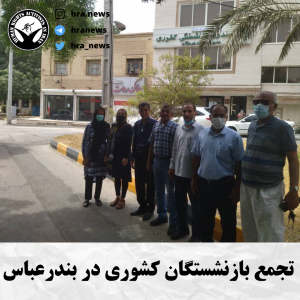
A number of retirees of the Shiraz Telecommunication Company assembled before the Worker House office (a semi-governmental national trade union center) to ask for their pension demands. According to these protesters, the government has made the payments conditional to the reopening of the company, which does not seem likely to take place.

Residents of the village Zardin in Yazd Province assembled before the governorate building to protest against a water transfer project, which by digging ten wells, threatens the village with drought.

A group of contracted teachers in Mashhad assembled before the building of the Ministry of Education to ask for their demands.

Sunday, January 2

A group of retired workers of the mining company Sangrud assembled before Parliament in Tehran to protest against unpaid pensions. They said that although the Article 90 Commission of the Parliament has obliged the Social Security Organization to compensate the retirees, they have not received anything.

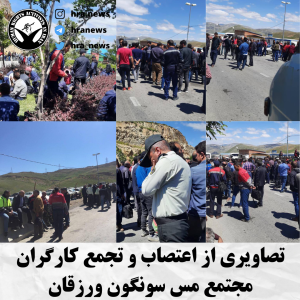
About 70 workers working on the Shafa-Rud Dam project in Gilan Province held protests on the work premises. They asked that 7 months of delayed payments and 4 months of unpaid employers’ contribution for insurance be paid. 800 workers have lost their jobs as a result of halting construction on the dam.

A number of pensioners of the Social Security Organization in Rasht City assembled in front of the governorate building to demand the freedom of  detained worker activist Ismail Gerami.

For several consecutive days, workers of the petrochemical company Regal assembled on company premises to ask for implementation of the “Job Classification Plan.”

Retirees and pensioners of Fulad Steel Company assembled before the company’s pension fund departments in Isfahan, Ahvaz and Tehran cities. They demanded that the company take steps towards raising wages to above the poverty line, closing the disparity in wages, and addressing supplementary insurance issues.

A group of mining workers in Ahar City assembled at their workplace to ask for their demands.

The workers of the Zinc Production Factory of Bandar Abbas assembled before the Hormozgan governorate building to protest against the shortening of their contracts.

In Yazd and Isfahan cities, a number of contracted teachers along with some students and their parents, assembled before the governorate building of Yazd as well as the office of one of the parliament members in Isfahan. They protested against a new regulation whereby their salary will be halved compared to last year and their insurance to reduced to 21 days in a month.

Personnel of the Post Office assembled in front of the Ministry of Information and Communications Technology to protest against low wages.

The workers of Rangin Nakh Company held protests before Semnan’s governorate building to demand unpaid wages that have accumulated since 2014. “We are about 50 workers who have been asking for our demands, about which, unfortunately, nobody has done anything after eight years,” one of the protestors commented.

Monday, January 3

A group of students protested before the entrance of the University of Tehran to protest against the surging price of textbooks and other educational self-help books mandated for the National Entrance Exam.

Tuesday, January 4

More than 100 shareholders of a shopping mall construction project known as the Commercial and Cultural Complex Adineh assembled first before the Justice Building in Gilan Province and then the building of the company. They protested against an eight year delay in completing the project. After 12 years, this complex is still half-completed.

Residents of the villages Nasr-Abad and Ali-Abad assembled and marched before a cattle breeding center to protest against pollution caused by the center. The protesters claimed that animal wastes from the cattle breeding center have polluted water wells in these villages.

A group of citizens who have pre-purchased cars from Rigan-Khodro held protests before the office of the President. According to these protesters, they have not received their cars after three years.

A group of injured veterans of the Iran-Iraq war assembled in front of the Foundation of Martyrs and Veterans Affairs to protest against and unfinished housing project known as Safir. The project is unfinished after 10 years.

Wednesday, January 5

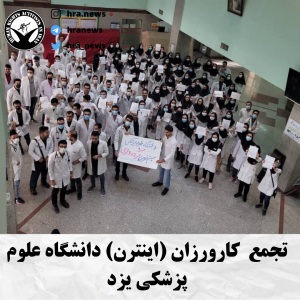
A number of students of medical sciences and pharmacy protested before the Ministry of Health building in Tehran against unhealthy conditions in student dormitories where COVID-related protocols are not in compliance. They also protested against holding in-person exams, which increase the risk of contracting COVID-19.

A group of applicants for the housing project “Meli Maskan” held protests before the building of Ministry of Roads & Urban Development. According to these protesters, they have been asked to pay 50 million tomans (11900 USD) as the second payment installment, despite the construction project remaining in its initial phase a year and a half after the launch date. According to the road map of plan, they should have completed the foundation.

A number of famers from Falavarjan County, located in Isfahan Province, assembled before the office building of Ministry of Agriculture Jihad to ask for their demands. According to these farmers, no one from the ministry has responded to them after several days.

Three and Five Years Imprisonment Against Tamuli Torfi and Childawi Upheld by the Court of Appeals

Branch 13 of the Court of Appeals of Khuzestan Province upheld the verdict of Saleh Tamuli Torfi (Munabi) and Abdullah Childawi. These citizens were previously sentenced to a combined eight years in prison. The three years for Karim Torfi and 5 years for Childawi is enforceable according to Article 134 of the Islamic Penal Code.

According to HRANA, the news agency of Human Rights Activists, Torfi was sentenced in the initial trial to three years in prison on charges of “propaganda against the regime”. and “assembly and collusion to act against national security” Childawi was sentenced to 5 years on charges of “propaganda against the regime” and “membership in anti-regime groups.” The case was delivered to the executive unit of the Public and Revolutionary Court of Ahvaz City for enforcement.

According to political activist and human rights defender focused on Iran’s Arab communities, Karim Dahimi, the conviction is due to the defendent’s participation in a protest held in 2017 against the illegal confiscation of farmlands by the government.

“They also have to face another legal case in which there has not yet been a verdict,” he told HRANA.

On November 6, 2018, Torfi and Childawi were arrested by security forces in Ahvaz City and transferred to Sheyban Prison after interrogation. Ultimately, Torfi and Childawi were released on bail on September 7, 2019 and October 6, 2020, respectively.

Childawi is 43 years old, married and the father of four children. Torfi has other arrests and convictions due to his civil activities.

One Kolbar Killed, Another Injured in Direct Shooting by Regime Military Forces

On January 6, at a border area in Nosud, Kermanshah Province, two Kolbars (cross-border carriers) were killed and injured in a direct shooting by regime military forces.

According to HRANA, the news agency of Human Rights Activists, quoting Kurdpa, military forces killed one Kolbar and injured the other. The Kolbars were identified by the first names Freydun and Sirius. The injured Kolbar’s condition is still unknown.

Many poor people living in border areas work as Kolbars to make ends meet. This work is illegal and involves carrying loads on foot across national borders. Yearly, dozens of Kolbars are injured and killed from accidents, dangerous conditions, and border guard shootings.

According to HRANA’s annual report, in 2021, 242 citizens were targeted by unruly shootings by regime military forces, of which 94 were killed. This includes 23 Kolbars (cross border carriers) and 31 Sukhtbar (cross-border fuel porters). 148 people have been injured, including 81 Kolbars and 51 Sukhtbars.

Four Children From Nomadic Communities Severely Injured in a Landmine Accident

On January 6, four children in Mehran County, Ilam Province were severely injured due to a landmine explosion. Each year, explosive remnants of landmines from the Iraq-Iran War cause the death or injury of many people at border areas.

According to HRANA, the news agency of Human Rights Activists, quoting Mehr News Agency, four children from a nomadic community aged 13 to 14 years old were severely injured due to a landmine blast. They all were hospitalized in Mehran County.

There are about 42,000 square kilometers of war zones in Iran that have not been fully demined from the Iran-Iraq war.

In flagrant violation of international conventions, the regime is still using landmines to secure its borders.

Accordingly, there are still thousands of landmines planted in Iran in the border areas with Afghanistan, Pakistan, and Iraq. The regime also planted many landmines in Kurdistan during the conflicts of the 1980s.

Majid Mousavi Muhammerah and Abdoljalil Doraghi Sentenced to a Combined Ten Years in Prison

Branch 16 of the Court of Appeals in Khuzestan Province upheld the initial verdict against Majid Mousavi Muhammerah and Abdoljalil Doraghi. Each had been sentenced to five years in prison by the Revolutionary Court of Ahvaz City.

According to HRANA, the news agency of Human Rights Activists, the court, headed by Judge Koosha, notified Muhammerah and Doraghi’s lawyer that the initial verdict was upheld. The defendants has were charged with “promoting Wahhabism (a fundamentalist movement within Sunni Islam)” and propaganda against the regime”.

“As the attorney of the defendants, I have not received a verdict letter and hence have not been able to ask for a retrial. The Court of Appeals held a session without the attendance of defendants and the attorney, which is in violation of a fair trial. Also, the issued verdict was upheld regardless of newly invoked pieces of evidence and was merely based on what was presented in the initial trial,” their lawyer, Iman Soleymani, told HRANA.

“They did not even let me make a copy of the documents. They hardly even let me review it,” he added.

Muhammerah and Doraghi were arrested by security forces and held in solitary confinement for six months in the detention centre at disposal of the Ministry of Intelligence in Ahvaz City.

They are residents of Ahvaz and worked at a bike repair and falafel shop, respectively.