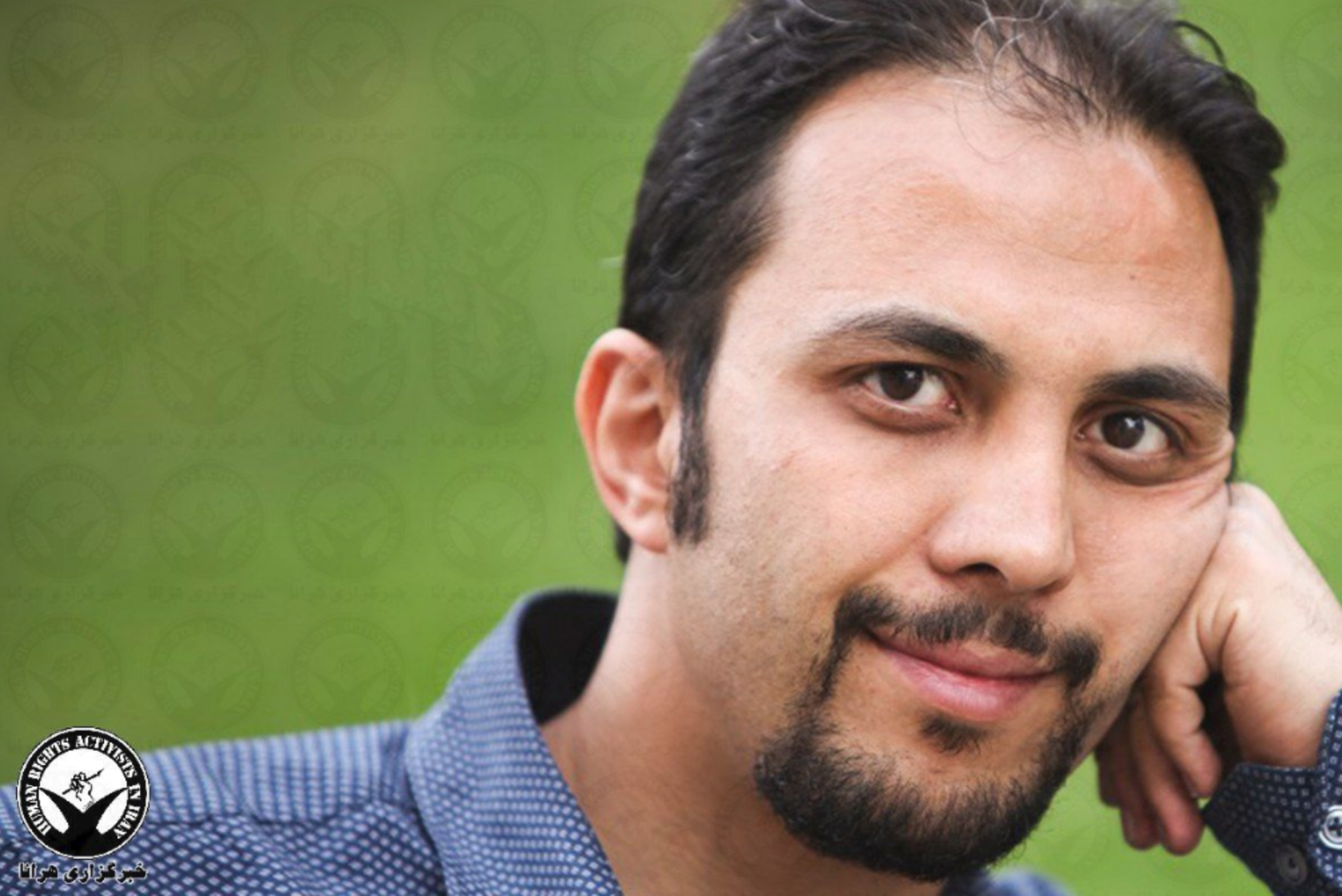
Detained Political Activist Hamed Ayinehvand Spends 3 Months in Legal Limbo

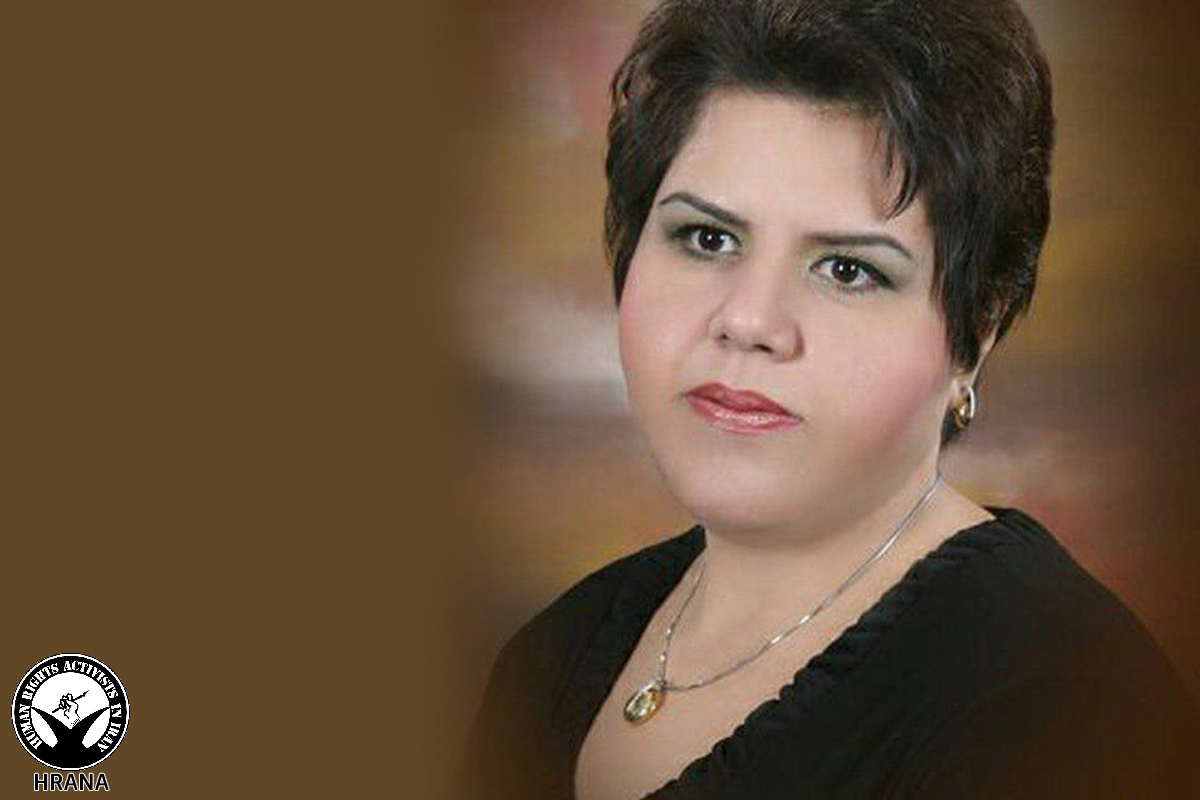
Human Rights Activists News Agency (HRANA) – Hamed Ayinehvand, a detained journalist and political activist who was arrested June 28, 2018 by security forces from the Intelligence unit of Tehran’s Islamic Revolutionary Guard Corps (IRGC) and transferred to the general ward (Ward 4, Hall 3) of Evin Prison, has been in a state of legal limbo for the past three months.

Despite the completion of both the investigation process and the judicial proceedings, the Prosecutor of Branch 7 of the Evin Prosecutor’s office has denied Ayinehvand bail. He has been charged with “propaganda against the regime through cyberspace activities.” He reportedly spent 44 days in solitary confinement between his arrest and his transfer to Evin’s general ward.

Hamed Ayinehvand is a political activist, journalist, and Ph.D. student of international relations at Islamic Azad University’s science and research department. He was disqualified as a candidate in Iran’s most recent Parliamentary election [via the controversial vetting process of Iran’s Guardian Council].

Open Letter: Zahedan Political Prisoners Ask UN General Assembly to Convey Message to Iran’s President

Human Rights Activists News Agency (HRANA) – A group of political prisoners in Zahedan Central Prison have written an open letter to the UN General Assembly, asking them to lift the voice of Iran’s prisoners.

The full text of their letter, translated into English by HRANA, is below:

Dear Members of Iranian Delegates,

Sitting next to each other in the UN General Assembly, you are looking for a way to guarantee human rights among peoples, and to resolve issues, such as scarcity of resources and climate change, which have had a grave impact on human beings’ lives.

There is a group of your fellow human beings who are forgotten behind bars, their voices choked out and their rights quashed. These “domestic charity cases*” look to you for a solution. [*A translation of a saying often used in protests, with the approximate literal meaning, “A light that could burn at home is unholy if burned in the mosque.” It is an outcry against misappropriated resources, or excessive attention being placed beyond the borders when the country’s own needs are great].

Why is it that Iranian officials don’t spend as much time addressing prisoners’ rights as they do for the rights of free people? It would be nice if they could be as vocal on this topic as they have been in their discussions of global issues.

Is the reality what they’re telling us it is? How close to reality are the movies and documentaries produced to further their arguments?

To answer these questions it would suffice to briefly point out some of the sufferings of the prisoners being held across Iran, particularly in Zahedan central prison:

1. Legal Limbo: The number of individuals trapped in legal limbo has reached a crisis level. There are prisoners who have spent two, even ten years behind bars on a pending case. Their requests for clemency, conditional release, or sentence reduction go unanswered. The delay can be attributed both to a high backlog of cases and to hefty bail amounts. Bails typically exceed 5 billion tomans (approximately $300,000 USD) but can even peak as high as 12 billion tomans (approximately $7,000,000 USD) or 300 billion tomans (approximately $18,000,000 USD). Judiciaries stack multiple charges onto defendants so that even when a prisoner’s case is resolved, the next charge against them is only beginning. Even in cases where a defendant is acquitted, the judiciary will hit them with new charges, hitting reset on the cycle of legal limbo.

2. Prison Population: Heavy caseloads (or deliberate delay in trying cases), paired with defendants’ economic [inability to post bail], have led to a burgeoning prison population. The prisoners are so cramped that they have to contort themselves into alternate sleeping arrangements, some laying in front of the washrooms, other on staircases. In prisons like those in Esfahan and Mashhad [the 3rd and 2nd largest cities in Iran, respectively], prisoners even sleep on the roof of the bathrooms and showers. Scant space has devolved into additional problems: a tiny prayer room, a shortage of washroom facilities, cramped outdoor recreation space, lack of amenities, and low-quality, small-portioned meals after which many a prisoner goes to bed hungry.

3. Political Prisoner Legal Limbo: Political prisoners spend several years in limbo prior to their trials, and after conviction spend even more time in suspense on various judicial pretexts. Despite having spent 5 or 10 years of their sentences and being eligible for furlough and conditional release, they are denied such privileges. Political prisoners are neglected deliberately. They even face additional restrictions on their rights to family visitation.

4. Prisoners on the Death Row: The prisoners on death row spend years and even decades waiting for their cases to be resolved. Somehow, they fall through the cracks. While a memorandum has been issued commuting the death sentences of a number of prisoners convicted on drug-related charges, many of the eligible prisoners’ names have been left off the list due to prison overcrowding. Many of these prisoners are routinely given the run-around by authorities who refuse to provide any answers about their fate.

5. Torture: In all institutions, and at the Intelligence Ministry and Intelligence Unit of the IRGC in particular, torture remains a common practice. Prisoners–especially political prisoners–are subject to the most severe and cruel forms of torment. Even if a defendant is innocent, they will confess under duress and torture. Various torture techniques are used in Iran, but no authorities will speak of them. Despite speaking out against the torture and its widespread use, we have yet to see change.

6. Obstruction of Defendants’ Rights: Interference from individuals who are not officials of the Judiciary is a challenge hindering many defendants. Families of prisoners receive threats from people calling themselves “interrogator,” “expert,” and “prosecution representative,” who heckle and dissuade them from inquiring into their loved ones’ cases. Even lawyers are a target. Families are insulted and barred from entering the courtroom.

When a lawyer is not allowed in the courtroom, how is he to protect the defendant’s interests? The defendants have no opportunity to defend themselves, their lawyers are strong-armed from doing their jobs, and the lawyers already blocked from case inquiries receive threats of their own.

So how is a prisoner convicted?

Nobody sees or recognizes the supervisor judges. The supervisor judge visits the prison twice, during which he spends a total of only four hours. Families of prisoners who have been lining up along the prison wall to meet the judge since 3 a.m. bring to mind lines of families waiting on their allotment of bread and gas. Despite the long wait, 90% will not obtain an audience with the supervisor judge.

The director general of Sistan & Baluchestan prisons visits penitentiaries perhaps once a year, during which most prisoners do not even recognize him. These problems are not specific to Zahedan prison: they are mirrored in Birjan, Esfahan, Yazd, Mashhad, Kerman, Ahwaz, etc.

7. Courts: The problems cited above have their root in the courts. Each passing mention of our courts is tinged with despair and disappointment. They beget a panoply of problems, from excessively long temporary detentions and the growing list of legal limbo hostages to the harsh sentences doled out to defendants.

Other points of note are the slow pace of the legal process in which an appeal can last more than five years; the gaps in subsequent appeals which can be as long as three years; and authorities’ disregard of the torturous conditions under which confessions and comments are extracted from defendants.

For those who conduct trials, defense lawyers are an afterthought, especially for political and security-related cases. Guilty and innocent are sent to the gallows. Then they will publish false and misleading statistics, portraying themselves as watchdogs of human rights.

8. Furlough and Open-Sentence Hurdles: The prisoners who are eligible for furlough have to endure a long, laborious process, investing time and money to obtain the right to an open sentence [in which they can leave prison at designated intervals while continuing their sentence]. Their situation is deplorable. We outlined some of their problems in an earlier letter, but the fact is that these prisoners are a source of income for authorities.

These prisoners, especially those from impoverished and neglected areas such as Kurdistan or Sistan and Baluchestan, perform all sorts of drudgeries for authorities. There are more than a thousand of them indentured to these circumstances for anywhere between five and 20 years. They are not eligible for privileges like clemency or conditional release. Their remuneration is trivial, although they work full-time and have to return to prison by 6 PM. Imagine a prisoner who works in the village but is incarcerated in the city: the commute costs 20,000 tomans (approximately $1.10 USD) each way, but is paid at 200 to 300,000 tomans (approximately 15 dollars USD). Their salary will barely cover 10 days of roundtrip commuting, let alone other expenses. You may refer to our previous letters on the matter.

The points discussed in this letter are real violations of prisoner rights. Prisoners have no way of voicing their grievances to top-ranking authorities and have no hope that their concerns will be paid any mind.

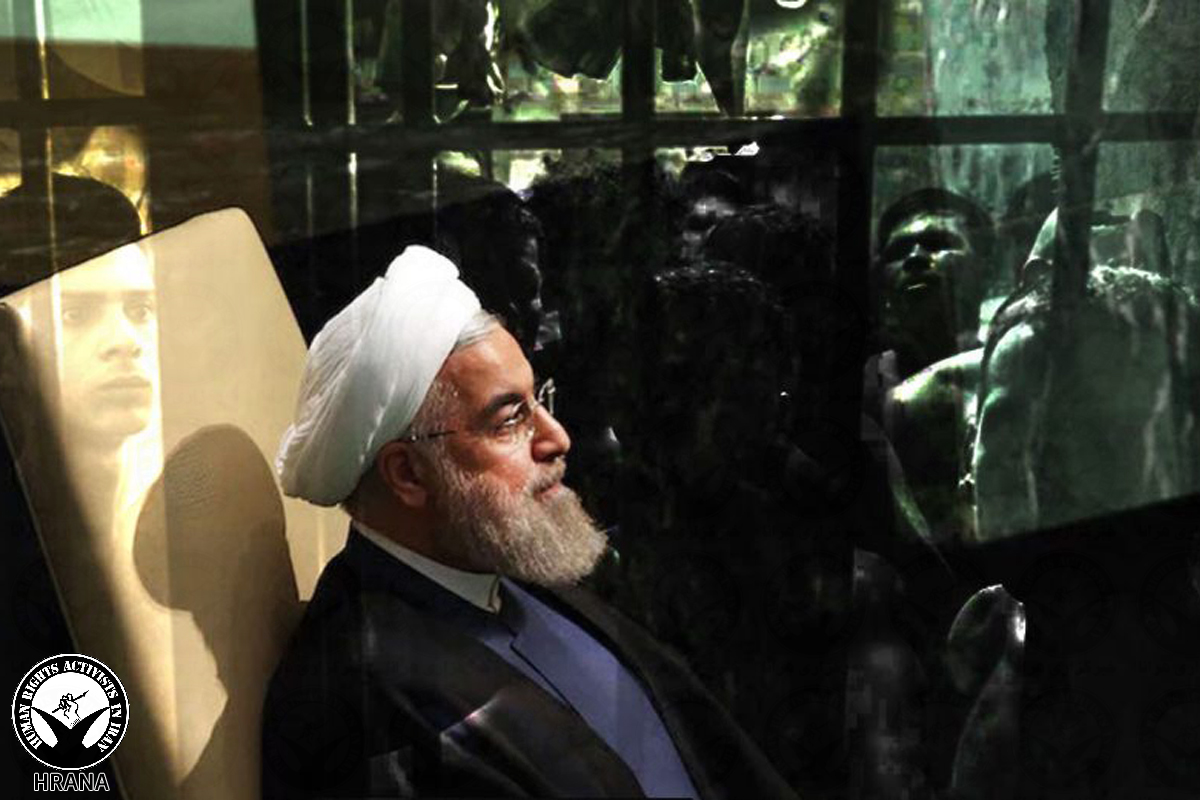
We ask the United Nations and international associations to help lift our voice–which echoes the voice of all prisoners across Iran–to Mr. Rouhani [Iranian president], Zarif [Foreign Affairs minister], and all Iranian authorities who are so occupied with the current conflicts of the world, the middle east tensions, the oil, the nuclear proliferation, the sanctions and the pressure tactics.

Please ask this of Messrs. Rouhani and Zarif: “You speak of human rights and proclaim to be defenders of human rights. You claim that Iran doesn’t have any human rights problems. Do you not consider these afflicted prisoners as human beings? What rights do you envision for them? Why don’t you send an independent investigator to the prisons, to speak directly to prisoners and corroborate our written claims?”

Political Prisoners of Zahedan, on behalf of all Iranian prisoners
Nour al-Din Kashani, Abdul Rashid Kuhi, Mohammad Saleh Shabadzadeh, Abdol Wahid Hut, Abed Bampouri, Ishaq Kolkli, Abdolkhaleq J Affadar Shahussei, Bashir Ahmad Hossein Zahi, Zubir Hoot, Ata Allah Hoot, Abdol Amir Kayazi, Abdolsam Hoot, Abu Bakr Rostami, Sajjad Baluch, Hamzeh Chakri.
September 26th, 2018

Open Letter: the Lesson of Imprisoned Teachers

Human Rights Activists News Agency (HRANA) – The September 23rd kickoff to this new Iranian school year underlines the absence of a number of Iranian teachers from the classroom, who instead of welcoming a new cohort of students are waiting for their judicial reckoning in prison.

Teachers across the country are serving long sentences or getting lashings for their political and union activism, case developments of which were previously reported by HRANA.

In an open letter titled “The Sound of Freedom,” political prisoner Majid Asadi of Ward 10 in Rajai Shahr Prison, located in Karaj, a northwest suburb of Tehran, pays tribute to these educators, taking from their plight a lesson for the country at large.

The full text of Asadi’s letter is below, translated into English by HRANA:

The Sound of Freedom

The bell rings on September 23rd, announcing the first day of classes. It resonates over empty classroom benches. Sara and Fatemeh are selling flowers at the crossroads. A week ago, they saw Ali and Kamran selling fortunes at the park. The class is quiet. No word from the teacher. The teacher is absent.

“Where is Narges?” somebody asks.

“Her father is in prison, so she won’t come to school this year,” a friend responds.

What proper class can go on without its teacher and students?

“Kids belong in the classroom; nothing should stop them from attending school,” the teacher used to say. When those kids couldn’t afford books and supplies: “They didn’t decide to stop coming one day. No, they didn’t choose poverty and misfortune.” That’s what the teachers would say, back then.

The bell rings on September 24th, the second day of classes. The bell summons kids to a class with no teacher. He has not yet returned. He never will. He won’t be teaching a single class period, because this year, the school bell rings in prison. The teacher transforms his cell into a classroom. He did not want the classroom benches to be empty. He will despair when he learns that Narges, Sara, and Fatemeh aren’t coming to school this year. He will be tormented when he understands that Ali and Kamran can no longer attend.

He will be upset to hear that his colleague nods off in his classes each day, because he stays up late working as the night janitor. Talk of his imprisoned fellow teachers upsets him even further.

“With the teacher in prison and the students wandering the streets, what of learning, of lessons, of school?”

The teachers and students ask these questions of each other.

A third bell rings. The sound of freedom: its reverberations bring the classroom to a frenzy.

Why is the teacher in prison? Why aren’t the students at school? Who put the teacher in jail? Could it be that they imprisoned the teacher so that the students wouldn’t come to school?

If that’s the case, maybe they should imprison the students too; or convert the school into a prison so that the students are not left without a teacher, and so they won’t have to fret over the cost of school supplies.

Neither the teacher nor the student chose poverty; neither the teacher nor the student chose prison.

The hand that wants to erect a prison in the place of a school — the one ready to exchange education and happiness for poverty — must be cut. And the teacher who set out to do so never returned. In that moment, he gave us a lesson.

The teacher told the students, “We shouldn’t have to live in fear all the time. Once we set about our mission, our fear will leave us.”

And so the teacher set about his mission — so that his fear would leave him, he left to put an end to poverty and prison, to set the school free. The homework for all classes this year is freedom.

This is the lesson the teacher has taught.

Majid Asadi
Gohardasht [Rajai Shahr] Prison
Wednesday, September 26, 2018

Political Prisoner Kourosh Porsetareh Released after Completing Prison Sentence

Human Rights Activists News Agency (HRANA) – Kourosh Porsetareh, a political prisoner held in Bushehr on Iran’s Persian Gulf coast, was released after completing his prison sentence on Wednesday, September 26, 2018.

Porsetareh spent three months in prison on a charge of “membership in groups aimed at disrupting national security.” He began his sentence in Bushehr Prison on August 4, 2018.

Despite the principle of separating prisoners based on the nature of their crimes, Porsetareh was held in Ward 3, typically reserved for those convicted of financial crimes. Bushehr Prison does not have a designated ward for political prisoners.

An informed source previously told HRANA that “prison authorities ignored his pleas and the urging of his family to transfer him to another ward.”

Political Prisoner Enters 18th Year of Imprisonment on Obsolete Sentencing Law

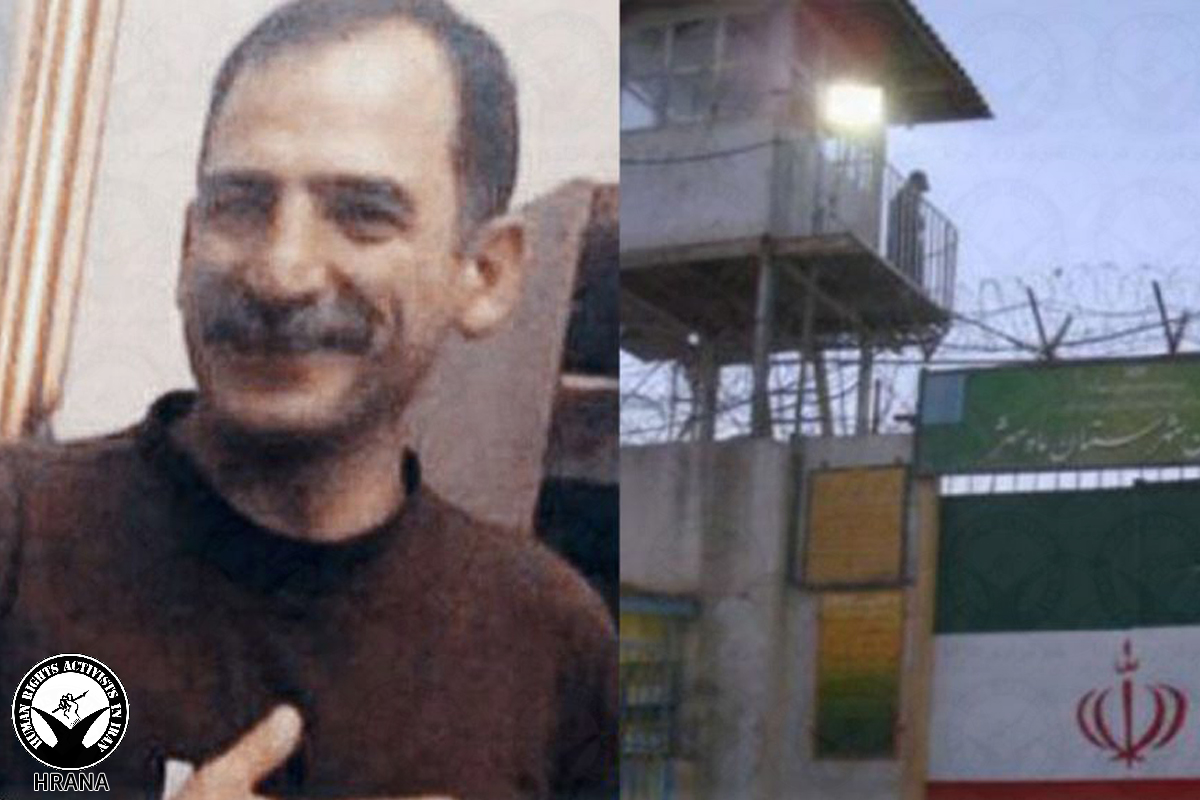
Human Rights Activists News Agency (HRANA) – Political prisoner Saeed Shah Ghaleh, who was convicted of Moharebeh (enmity against God) through cooperation with the People’s Mujahedin of Iran (MEK), enters his 18th year of incarceration in Mahshahr prison, located on the border of the southwestern province of Khuzestan.

After Shah Ghaleh’s arrest in 2000, he was initially tried, convicted, and sentenced to death in a criminal court. The death sentence was later commuted to life imprisonment. On April 17, 2015, he was among the group of prisoners assaulted by prison guards in Section 350 of Tehran’s Evin Prison in an attack that came to be known as “Black Thursday.” Following the Black Thursday raid, he was transferred to a solitary confinement cell in Section 240.

After spending some time in solitary confinement, he was exiled to Mahshahr Prison (Khuzestan province). Having never been released on furlough, he has remained there to this day.

Iran’s Islamic Penal Code was amended in 2013. [According to section 10, subsection B of the new law], those convicted of crimes for which the sentences have been reduced in the new law are eligible to apply to have their sentences reduced. Ghaleh is on a list of 26 prisoners —published by HRANA in 2016 — who are currently serving life sentences for Moharebeh and are now eligible to act on this amendment.

Life imprisonment, like the death penalty, is used commonly by Iranian court to punish defendants accused of political or security-related offences. The conditions of prisoners serving life imprisonment are reportedly very poor, and their rights, such as access to medical care, are rarely observed.

Subscribe to Our Newsletter

Now is definitely not the time to stop reading!

Harassed by Authorities, Christian Former Prisoner Stages Sit-in Across From Evin

Human Rights Activists News Agency (HRANA) – Fatemeh Mohammadi, a Christian convert who was released from Evin Prison earlier this year, has staged a sit-in across from her former prison to protest what she referred to as the prison authorities’ “campaign of verbal harassment” against her.

Mohammadi was initially detained last November, and sentenced to six months in prison by Branch 26 of the Revolutionary Court of Tehran. She was released from Evin Prison’s women’s ward after completing her sentence. Now, she claims authorities are contacting her family to insult and harass them.

“After I was released from Evin Prison, I was contacted by the prison’s interrogation team,” Mohammadi told HRANA. “They called me all sorts of vulgar words. Last night, September 26th, 2018, Evin Prison again called my home. The person on the phone said [unpleasant] things to my family and told them, ‘It is best that you stop your daughter from her activities as the path she is on leads to corruption.’”

She said she was prompted to begin her protest when her home was contacted once again on Thursday, September 27th, 2018.

“They repeated their words,” Mohammadi said. “Afterwards, I went to Evin to find out what was wrong, but no one offered an explanation. For this reason, I am protesting and staging a sit-in across from Evin Prison, and will continue to do so until they process my complaint.”

Mohammadi previously published a letter in which she spoke of the anguish she endured during her interrogation.

Last November, Mohammadi was detained in Tehran and transferred to Evin prison along with Majid Reza Suzanchi Kashani, another recent Christian convert. On April 7th, 2018, Mohammadi, who was 19 years old at the time, was sentenced by Branch 26 of the Revolutionary Court of Tehran, presided by Judge Ahmadzadeh, to six months’ imprisonment on charges of “membership in proselytizing groups,” “christian activity,” and “acting against national security through propaganda against the regime.”

Per Iranian law, Mohammadi’s sentence should have been reduced by a quarter when she consented to the verdict; however, she served a month and a half longer than anticipated per the law. She was released May 14th, 2018.

Civil Rights Activist Mehrnaz Haghighi Heads to Judiciary to Begin Prison Sentence

Human Rights Activists News Agency (HRANA) – Mehrnaz Haghighi, a civil rights activist and doctor from Bandar Abbas on the Persian Gulf coast, presented herself to the enforcement department of the Hormozgan Judiciary on Saturday, September 22nd, in order to serve her sentence. She was transferred to Bandar Abbas Prison later that day.

Haghighi was previously sentenced to six months in prison on a charge of “propaganda against the regime.” She was first arrested by intelligence agents in her home on February 19, 2017.

After being held in solitary confinement for a week, she was transferred to the women’s ward of Bandar Abbas Prison, located in the detention center of the city’s intelligence office. Haghighi was then transferred to Ward 209 of Evin Prison on April 12, 2017, before finally being released on bail from Evin on May 28th, 2017.

As of the date of this report, no further details were available on her case.

A Dismal Prison: a Brief Report on Conditions at Dezful

Human Rights Activists News Agency (HRANA) – The gnawing pang of hunger, the festering of dirty sores, and the dread of what might happen if you look at the warden sideways. For the 1,300 people currently detained in Dezful Prison, these are private, everyday torments to which authorities there are less than sympathetic.

Indeed, one of Dezful’s most darkly effective forms of punishment, a former prison functionary told HRANA, is an administration seemingly devoid of humanity. “A while ago, Mr. Postchi, the general manager of the Khuzestan Province Prison system, came in for inspection,” the functionary said. His response to the complaints of malnourished prisoners about the deplorable sleeping conditions? “He told the prisoners, ‘You’re wearing out the beds with how much you eat and sleep.’”

The cruel irony of the system manager’s comments could not be lost on prisoners’ family members, who expressed distress at the nutritional deficits of the Dezful canteen. “For a period of one week, rice was omitted from their diet, and during that time they didn’t even have bread to eat,” one family member said. A former Dezful prisoner elaborated, “the prison food is very low-quality, and the prison store doesn’t even stock bread that the prisoners can buy themselves to stave off their hunger.”

Currently populated at a few hundred inmates above its maximum capacity, Dezful lacks more than adequate food stores. Without a medical professional on site, it packs the medical consultations of its 1300 prisoners into half-hour windows every two days in which medical professionals swing by the prison. Hygienically, conditions are ripe for disease: each ward houses 300 people for every five showers and six toilets, and when night falls ward floors are crowded with the sleeping bodies of those who weren’t lucky enough to get a bed.

According to eyewitness reports, one rare vestige of prisoner autonomy is their power to appease, as best they can, those who have authority to make their bad conditions worse. “No one dares complain in this prison,” the former Dezful prisoner related to HRANA, revealing that the sense of humanity in Ward 6 was particularly tenuous. “If a prisoner disagrees with Ward’s internal administrator [Mr. Daneshyar], he will be beaten by prisoners, who are goaded by the administrator […] then the prisoner will be moved, on Daneshyar’s orders, to another Ward.”

Still, prisoner’s control over their day-to-day fate is ultimately limited: beatings ordered on prisoners because of their legal charges, or even their general disposition, are reportedly routine.

These conditions have driven so many to self-harm that authorities have removed the bathroom mirrors, making shaving difficult, the former inmate said; one more mundane task of self-care that from within the walls of Dezful seems a faraway luxury.

Dezful Prison has nine wards. It is located in Khuzestan Province on the outskirts of Dezful. The current head of the prison is Mr. Azadeh, and his deputy is Mr. Noghrehchi.

Authorities Raid Home of Detained Baha’i Citizen Noora Pourmoradian, Arrest her Parents

Human Rights Activist News Agency (HRANA) – The aggression against Baha’is in Iran was still palpable Thursday, September 27th when Shiraz-based Security forces raided the home of Shirazi Baha’i prisoner of conscience Noora Pourmoradian, seizing her personal belongings and temporarily detaining her mother and father.

Claiming that the search was necessary to the completion of Noora’s case, security forces threatened the Pourmoradian family with “severe consequences” if they leaked photo evidence or publicly disclosed information about the incident.

“To intimidate them, they handcuffed Mr. Saeid Pourmoradian (Noora’s father) and took him into the car, menacing him [about what would happen] if he didn’t keep quiet,” a close source told HRANA.

On Sunday, September 16, 2018, HRANA reported on Noora Pourmoradian’s arrest and transfer to a Shiraz Intelligence Detention Center known as Plaque 100. Four other Shirazi Baha’is were arrested the same day: Elaheh Samizadeh, Ehsan Mahbub-Rahvafa, and married couple Navid Bazmandegan and Bahareh Ghaderi.
 
In recent weeks, HRANA reported on the arrest of several Baha’i citizens by security forces in the cities of Shiraz and Karaj, so many instances of increasing pressures on this religious minority community from judicial and security institutions. In recent weeks, HRANA reported on the arrest of eight Baha’i residents of Baharestan, a newly-built city about 18 miles south of Isfahan: Saham Armin, Afshin Bolbolan, Anush Rayneh, Milad Davardan, Farhang Sahba, Bahareh Zeini (Sobhanian), Sepideh Rouhani and Fuzhan Rashidi. Meanwhile, six Baha’i residents of Karaj were arrested and transferred to Evin Prison: Hooman Khoshnam, Payam Shabani, Peyman Maanavi, Maryam Ghaffaramanesh, Jamileh Pakrou, and Kianoush Salmanzadeh.

Iranian Baha’i citizens are systematically deprived of religious freedoms, while according to Article 18 of the Universal Declaration of Human Rights and Article 18 of the International Covenant on Civil and Political Rights, everyone is entitled to freedom of religion and belief, and the right to adopt and manifest the religion of their choice, be it individually, in groups, in public, or in private.
 
Based on unofficial sources, more than 300,000 Baha’is live in Iran. Iran’s Constitution, however, only recognizes Islam, Christianity, Judaism, and Zoroastrianism, and does not acknowledge the Baha’i faith as an official religion. Consequently, the rights of Baha’is are systematically violated in Iran.

Zahedan Court Considers Case File Deficiencies of 3 Death Row Prisoners

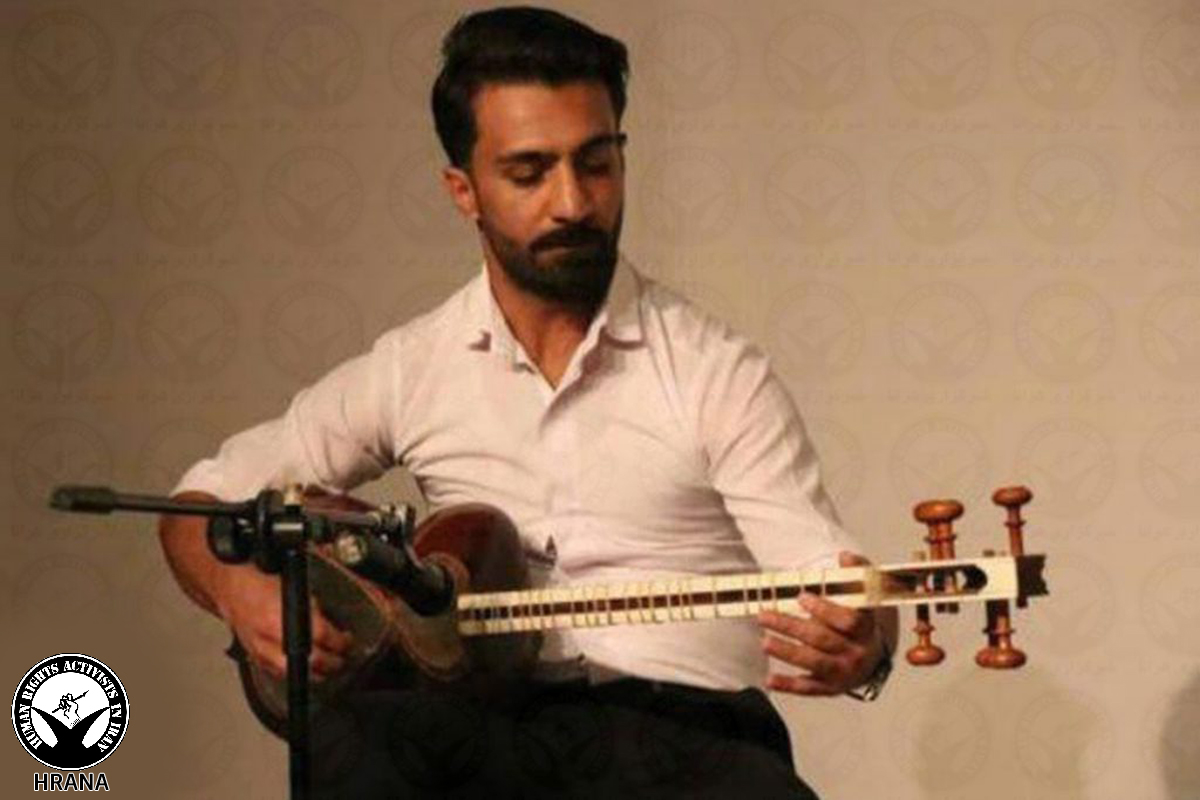
Human Rights Activists News Agency (HRANA) – Judge Mashhadi presided over two lengthy court sessions September 24th and 25th in order to resolve deficiencies in the case files of Zahedan prisoners Abubakr Rostami, Sajjad Baloch and Bandeh Chakerzehi (Chakeri), who were issued death sentences in August 2017 from Branch One of Zahedan’s Revolutionary Court.
In the initial trial, all three were charged with “acting against national security by collaborating with anti-regime groups” and “Moharebeh” (enmity against God).
An informed source told HRANA that authorities at the court sessions, which lasted more than five hours each, pored over evidence submitted against the prisoners by the Islamic Revolutionary Guard Corps (IRGC). So far, the evidence submitted is not anticipated to adequately support their convictions. “Barring any more reliable documentation to substantiate the claims of the IRGC representative, including documentation of the location of their arrest, it is looking more likely that they could be acquitted of the Moharebeh charge,” the source said.
When the last court session drew to a close, the three prisoners were transferred back to Zahedan Prison and told that the court’s decision–or request for further information–would be forwarded to them in the prison.
On August 30, 2018, HRANA reported on the transfer of death row prisoner Abubakr Rostami back to the general ward. He had been sent August 28th from Zahedan’s Ward 4 to the Detention Center of the Intelligence Office of the IRGC for unknown reasons.
Earlier, Baluch, Chakerzehi, and Rostami proclaimed their innocence in an open letter, saying that the accusations against them were baseless, and relating physical and psychological tortures they had experienced at the hands of the IRGC. All three were arrested December 13, 2017, in Pakistan.
In the aforementioned letter, Rostami wrote of his trip to Pakistan, which was planned amid arrangements for a study abroad: “Due to border limitations, I was forced to travel through Pakistan to get to [another] foreign country, but I was arrested midway and handed over to the IRGC,” he wrote.
A second-year medical student at Zabol University of Medical Sciences, Rostami has spent the past three years in prison.