Three Baha’is were sentenced to 23 years imprisonment

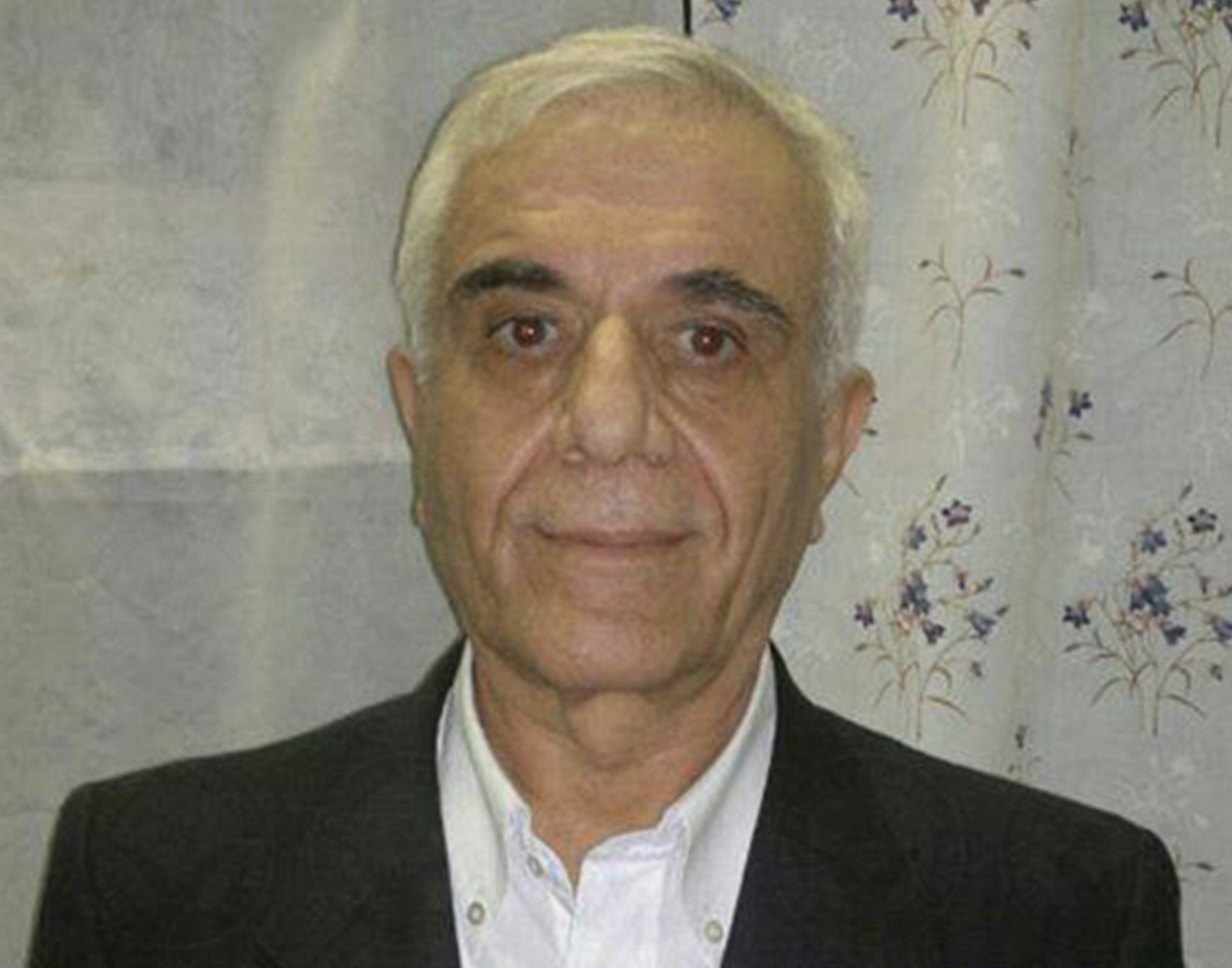
Behnam Eskandari, Yalda Firouzian, and Ardeshir Fanaiyan, three Baha’i citizens residing in Semnan, were sentenced to 23 years in prison and live in exile.

They were arrested on April 30, 2019 by the security forces, their personal belongings were confiscated, and they were transferred to Semnan Prison. The Revolutionary Court of Semnan put hold on their temporary releases. They are banned from having any visitor and contact with outside of prison. Behnam Eskandari was under pressure in the course of his interrogation for forced confession. He was resilient and was transferred to the quarantine ward where he was beaten by two other prisoners.

According to the verdict issued by the Semnan Revolutionary Court headed by judge Mohammad Ali Rostami, Ardeshir Fanaiyan was sentenced to 10 years imprisonment and one year live in exile in Khash on the charge of “cooperation in establishing an illegal group inside the country with the aim of acting against the national security”. Yalda Firouzian and Behnam Eskandarian were sentenced to five years imprisonment and two years ban from living in Semnan, each on the charge of “membership in establishing an illegal group inside the country with the aim of acting against national security”. Also, each of them were sentenced to a one-year prison term for the charge of “cooperation in acting against national security in favor of opposition groups”. Based on the Article 134 of Iran’s Islamic Penal Code, the charge with the highest penalty will be considered; this means that Ardeshir Fanaiyan should spend 10 years in prison, Yalda Firouzian, and Behnam Eskandaian should spend five years in prison, each.

Ardeshir Fanaiyan’s first arrest was on January 8, 2019 and was sentenced to an eight-month prison term. Although the law of arresting the eligible ones for military service has been cancelled.

Baha’i citizens of Iran are systematically deprived of religious freedoms, while according to Article 18 of the Universal Declaration of Human Rights and Article 18 of the International Covenant on Civil and Political Rights, all people are entitled to freedom of religion, belief, and changes thereof, as well as the right to express and practice those beliefs as individuals or collectives, in public or in private. Though unofficial sources estimate the Baha’i population of Iran at more than 300,000, Iran’s Constitution officially recognizes only Islam, Christianity, Judaism, and Zoroastrianism, and does not acknowledge the Baha’i faith as an official religion. As a result, the rights of Baha’is in Iran are systematically violated.

The trial of seven civil rights activists was held in the Revolutionary Court of Tehran

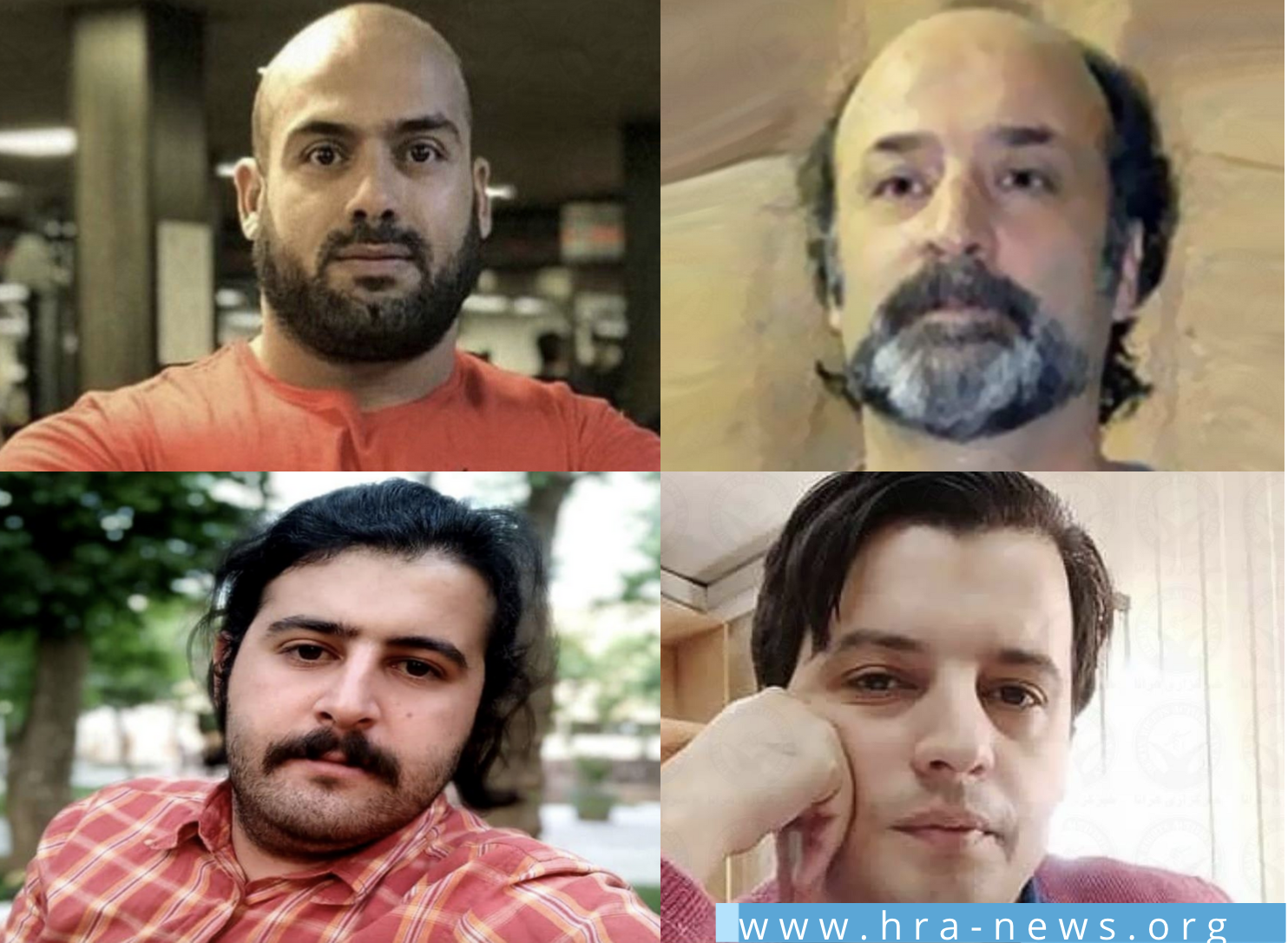
On November 10, 2019, Moin Hajizadeh, Raha Ahmadi, Leila Mirghafari, Armin Sourani, Mohammad Abolhasani, Saman Zandian, and Vahid Ghadirzadeh were tried at the Branch 15 of Tehran’s Revolutionary Court headed by judge Abolghasem Salavati. They were charged with “propaganda against the state” and “assembly and collusion”.

Moin Hajizadeh was arrested on August 8, 2019 by security forces and was transferred to an unknown location. He is now in the Ward 4 of Evin Prison. Raha Ahmadi was arrested on August 4, 2019 by the security forces and was transferred to Qarchak Prison in Varamin in Late August. She was initially charged with “propaganda against the state” , “assembly and collusion”, “cooperation with enemy states”, and “promoting corruption and prostitution” in her incitement at the prosecution office of the Evin Prison. Although her bail was set after two months, her 600 million Toman [approximately 55 thousand dollars] bail has never been accepted.

Leila Mirghafari was arrested in September 2019 by security forces and was transferred to Qarchak Prison. Mohammad Abolhasani was arrested on August 14, 2019 based on a verdict of the Branch 28 of the Revolutionary Court.

Saman Zandian was arrested amid the demonstrations against the economic hardship in August 2018. He completed his sentence in prison but was notified about his new charges in August 2019. Vahid Ghadirzadeh was arrested in August 1, 2019 by security forces in Ardabil and is still in a limbo state.

At Least Two Prisoners Were Prepared for Execution in Urmia Prison

On November 11, 2019, at least two prisoners of Urmia Prison were transferred to solidarity confinement cells to get prepared for execution. They were sentenced to death earlier due to their murder felonies. One of them was identified as Mehdi Mostafazadeh. If they fail to get the victims’ family’s consent, they will be executed in few days.

According to the international organizations, Iran ranks first in the world in executions per capita. From October 10, 2018, to October 8, 2019, the Iranian authorities issued death penalty sentence to 134 individuals and have already carried out 242 executions including 16 public executions.  At least five of the executed were juvenile offenders who were under the age of 18 at the time of committing the crime. Secret executions of prisoners reported by the independent sources and the human rights association indicate that 72% of executions are carried out in secret or without any public notice.

A Prisoner Died in Custody Due to the Prison Medical Malpractice

On November 10, 2019, a prisoner died in Urmia Prison due to lack of medical treatment and negligence of the prison authorities. He was in prison since 2015 on the charge of murder. Maran Khamoui was a prisoner of the public ward 15 of Urmia Prison. According to a close source, he was sick for a week, but prison authorities rejected his transfer to the hospital, and he was only treated with pain killers. On November 10, he was transferred to the health wad because of his deteriorating health condition. He was still waiting to be transferred to the hospital when he died on 9 pm.

Death in custody due to similar causes is precedent but state prisons and the Security and Corrective Measures Organization’s authorities did not take any action on it.

Three People were Sentenced to Death and Lashes in Tehran and Isfahan

Iranian authorities sentenced three prisoners to death and lashes on the charge of drug felony and sexual assault. Two prisoners were sentenced to death in Najafabad Prison in Isfahan in the past few days. 33-year-old Majid Rezaipour, and 37-year-old Afshin Rezaipour, are in prison for drug felony. Moreover, according to Khorasan newspaper, a 25-year-old man was sentenced to death and lashes in Tehran. He assaulted six women while presenting himself as a taxi driver.

It should be noted that media inside Iran use “assault” when referencing to rape and various sexual harassment cases.

According to the international organizations, Iran ranks first in the world in executions per capita. From October 10, 2018, to October 8, 2019, the Iranian authorities issued death penalty sentence to 134 individuals and have already carried out 242 executions including 16 public executions.  At least five of the executed were juvenile offenders who were under the age of 18 at the time of committing the crime. Secret executions of prisoners reported by the independent sources and the human rights association indicate that 72% of executions are carried out in secret or without any public notice.

Subscribe to Our Newsletter

Now is definitely not the time to stop reading!

Atefeh Rangriz Went on Hunger Strike

On October 16, 2019, Atefeh Rangriz, a political prisoner of Qarchak Prison, went on hunger strike.

Her trial was on August 5, 2019 and was led by judge Moghiseh who set a bail of two billion Tomans (approx. 180 thousand dollars)  for her temporary release, but she could not afford it and was returned to prison. On August 31 she was sentenced to 11 years and six months in prison and 74 lashes by the Branch 28 of Tehran’s Revolutionary Court.

She was arrested along with several others in the protests of the International Labor Day in front of the parliament in Tehran on May 1, 2019. A few of the protesters were released but Neda Naji, Atefeh Rangriz, and Marzieh Amiri are still in prison.

Appeals Court upholds Kiumars Marzban’s Sentence of 23-year and 9 Months Prison Term

On October 13, 2019, appeals court upheld Kiumars Marzban’s sentence of 23 years and nine months imprisonment. On August 24, 2019, Kiumars Marzban, a detained 26-year-old writer and satirist, was sentenced to 23 years and nine months in prison by the preliminary court in Tehran. Based on the Article 134 of Iran’s Islamic Penal Code, the charge with the highest penalty will be considered; this means that Kiumars Marzban should serve 11 years in prison.

His lawyer, Mohammad Hossein Aghasi, confirmed the appeals court’s verdict and added that the appeals court hearing was convened without Marzban or his lawyer presence and without hearing his defense. Aghasi said: “We did not receive any response to our appeal statement. For instance, he was charged with “cooperating with a hostile state” while even Iranian authorities consider the organization that he wrote for as a nonprofit organization.”

Kiumars Marzban began his career making short films. He directed eight short film between 2005-2009. He left Iran in 2010 and while living in Malaysia, he hosted a comedy podcast called “Sangtab Radio”. He published few books such as short stories titled “kham bodam, pokhteh shodam, balk eh pasandideh shodam” (I was Raw, I Became Ripe and Pleasant) and “aziz jan” (My Dear).

Kioomars Marzban returned to Iran in 2017. On August 26, 2018, Islamic Revolutionary Guards Corps officers raided Marzban’s residence, arrested him, and confiscated his several personal items included laptop and cellphone. He is a prisoner at Evin Prison for a year now. His trial was scheduled for March 3, 2020 but it was held in late July 2019 at the Branch 15 of the Revolutionary Court. He was sentenced to 11 years imprisonment for “cooperating with a hostile state”, seven years and six months in prison for blasphemy, a year and half imprisonment for “propaganda against the state”, three years in prison for “insulting the Supreme Leader and the Founder of the Revolution”, and nine months imprisonment for “insulting authorities”.

Seyed Aram Aminzadeh Was Sentenced to 11-year Prison Term by Appeals Court

On October 11,2019, West Azerbaijan appeals court upheld Seyed Aram Aminzadeh’s sentence of 11 years imprisonment. He was sentenced to an 11-year prison term by the preliminary court of the Branch 1 of Urmia Prison.

Seyed Aram Aminzadeh, prisoner of Urmia Prison, was sentenced to 10 years imprisonment for the charge of “propaganda against the state through establishing Salafi groups in cyber space” and one-year imprisonment for the charge of “propaganda against the state”. According to the article 134 of Iran’s Islamic Penal Code, he should serve the sentence for the charge with the highest penalty which is 10 years.

A Prisoner Was Found Dead in a Prison in Mashhad

On September 29, 2019, a prisoner who was diagnosed with Tuberculosis (TB) died in Vakilabad Prison in Mashhad due to the lack of medical treatment and negligence of the prison authorities.

Asghar Samani was serving time for murder in the ward five of Vakilabad Prison. He was found dead in prison’s restroom at 6 am.  According to an informed source, Asghar Samani was diagnosed with TB and prison’s authorities were negligent toward his condition. The source also added that there are at least 600 prisoners in this ward and they were frequently treated with pain killers and psychedelic drugs.

HRANA published a report in February 2019 about the prevalence of TB, lice and bed bugs in Ghezel Hesar Prison after the arrival of new prisoners. They were mostly drug addicts and were transferred to this prison’s general wards without spending some time in the quarantine ward. The prisoners and their families are concerned about the epidemic of contiguous diseases such as TB among the prisoners.

 At least Eight Prisoners Were Executed in Karaj

In the morning of September 25, at least eight prisoners who were sentenced to death earlier, were executed in Rajai Shahr prison in Karaj. Few days earlier, these prisoners alongside few others were transferred to solidarity confinement cells in Rajai Shahr prison to get prepared for execution for drug-related or murder felonies. 29-year old Davoud Samkar and 33-year old Mostafa Bakhti who were sentenced to death on the charge of murder were executed alongside six other prisoners. They were transferred to solidarity confinement with Ali Daravari (Delavari) and Mojtaba Soleimani. Daravari was returned to his ward after getting more time from victim’s next of kin. The status of Mojtaba Soleimani, the prisoner of the ward 7 of Rajai Shahr prison, is still unknown. According to Iran Human Rights (IHR), four prisoners who were transferred from Ghezel Hesar Prison to Rjai Shahr Prison on September 23, 2019, were executed on September 25. Their names are still unknown.

The news of these executions has not been published by the Iranian media yet.

According to the international organizations, Iran ranks first in the world in executions per capita. Based on 256 reports that have been registered by the Department of Statistics and Publication of Human Rights Activists Association in Iran, 195 death sentences and 236 people with death sentences were executed (including 13 executions in public) in Iran between January 1, 2018 and December 20, 2018. Six of them were juvenile offenders who were under the age of 18 at the time of committing the crime. Secret executions of prisoners reported by the independent sources and the human rights association indicate that 72% of executions are carried out in secret or without any public notice.

Mojtaba Bakhti was among the prisoners who were executed.