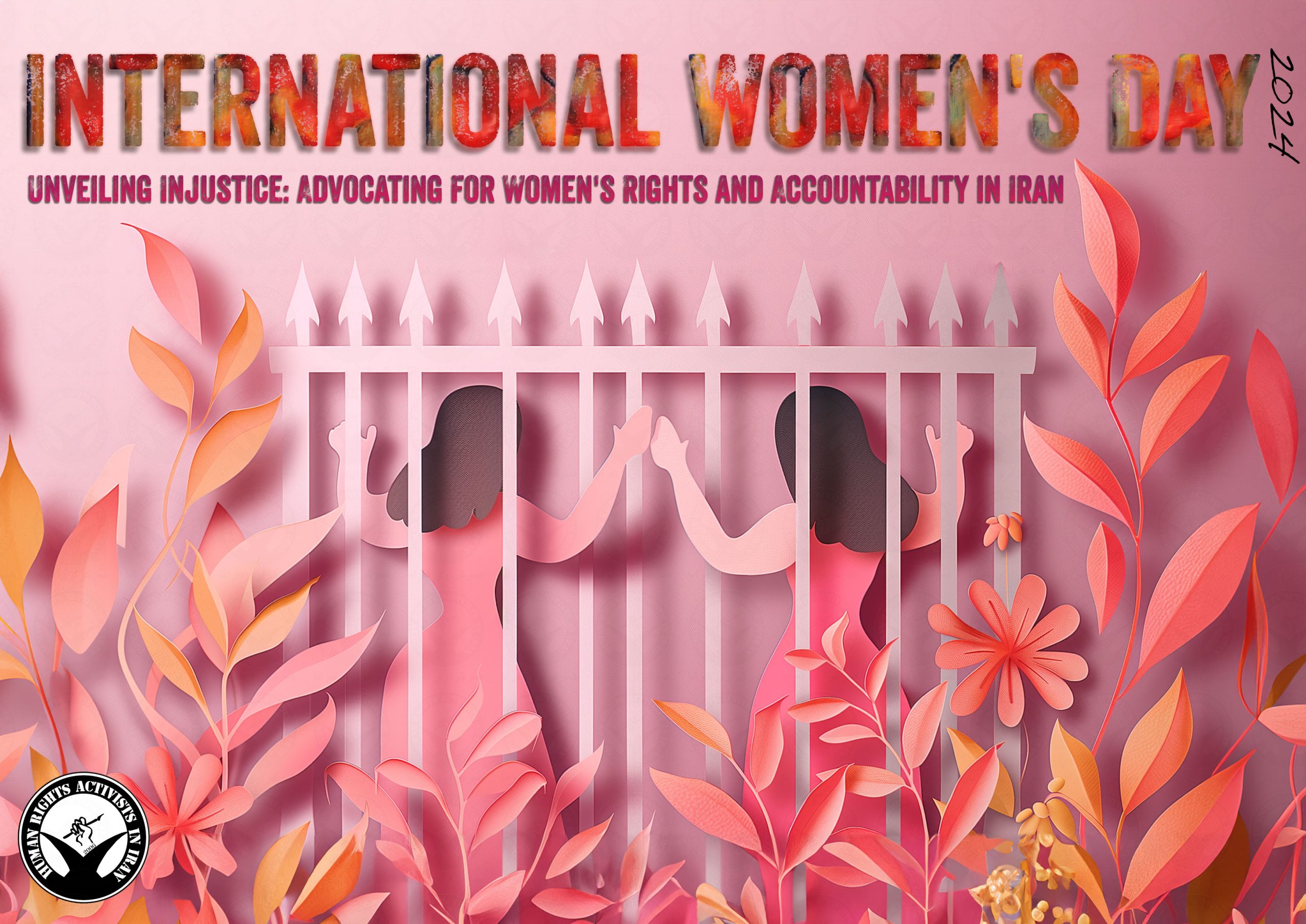
HRANA – In a powerful call to action on International Women’s Day, Human Rights Activists demand an immediate expansion of the International Fact Finding Mission on Iran’s mandate, spotlighting systemic gender discrimination and human rights abuses. Amidst the backdrop of the United Nations Human Rights Council’s 55th session, this plea emphasizes the dire situation of Iranian women, facing executions, forced hijab regulations, and violent oppression. Urging global attention, the activists seek to unveil the layers of injustice and push for accountability within the Islamic Republic of Iran, aiming for a future where women’s rights are unequivocally respected.
Read the full statement of Human Rights Activists in Iran below
Introduction
March 8th marks International Women’s Day, a global observance dedicated to envisioning a world free from bias, stereotypes, and discrimination, where diversity, equity, and inclusivity thrive. Unfortunately, in Iran, women continue to grapple with entrenched gender disparities amidst persistent abuse, violence, and legal obstacles. Despite nationwide protests engaging all segments of society and the courageous defiance of Iranian women against fear, the ruling elite persists in enforcing draconian sentences and oppressive legislation.
Human Rights Council 55th Session:
The fifty-fifth regular session of the United Nations Human Rights Council commenced on February 26, 2024. On March 18, the International Fact Finding Mission on Iran (FFMI) is scheduled to present its findings to the HRC regarding allegations of human rights violations by Iran after September 16, 2022. Human Rights Activists (HRA), with legal support from UpRights, in the submission to the FFMI, have concluded that there are reasonable grounds to believe that crimes against humanity, including gender and political persecution, have occurred in the Islamic Republic of Iran since at least September 16, 2022.
Current Human Rights Situation:
The ongoing state of women’s rights in Iran remains deeply concerning. On the 31st of January, Zahra Nazarian, a 27-year-old inmate was executed, marking her as the first known woman to be executed in 2024. Iran has the highest rate of female executions globally, with many cases being intertwined with broader societal issues, including instances of domestic violence and other forms of gender-based violence. Additionally, over the past 10 months at least 100 girls were killed by their male relatives, often related to issues of family disputes or so called ‘honor-killings.
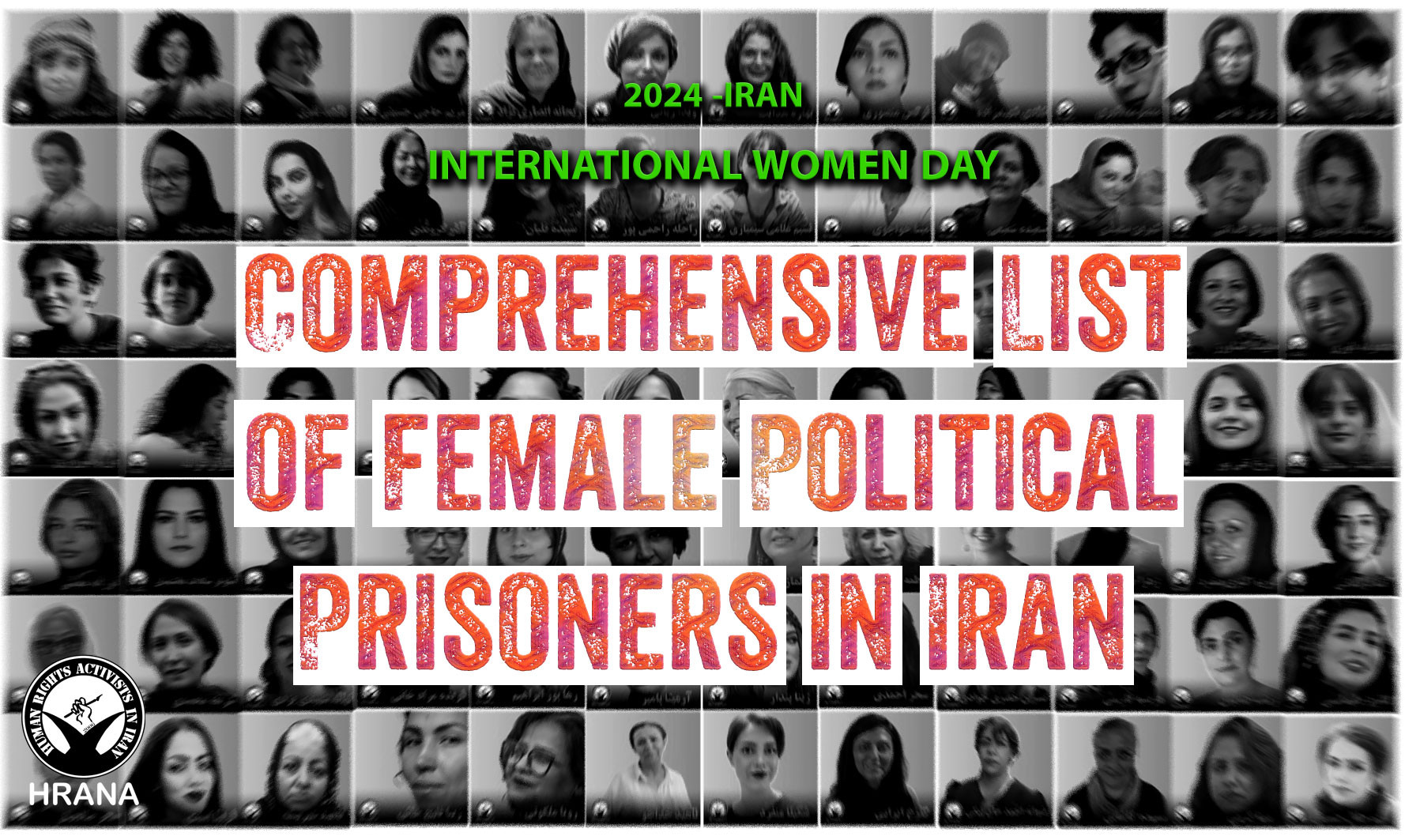
Since the commencement of the 2022 protests, in a significant number of cases, the Iranian judiciary has been using defendant’s online activity in their trials. Recently, Leila Nakhdi Pari, a member of the Board of Directors of the Iranian Cinema Designers Association, was sentenced by Tehran Criminal Court No. 2 to pay a fine, cancel her passport and be banned from leaving the country for eighteen months. She was at the funeral of Daryush Mehrjui, a prominent filmmaker, where an image of her was uploaded with her not wearing a hijab while at the funeral. For an in-depth look at the situation of imprisoned women in Iran, reference the HRANA Report: Comprehensive List of Female Political Prisoners in Iran
The enforcement of mandatory hijab regulations persists, resulting in numerous arrests, imprisonments, and severe sentences being imported by authorities, exacerbating human rights violations.
Roya Heshmati, a Kurdish woman, faced a distressing ordeal recently when she received a sentence of 74 lashes. Her arrest stemmed from posting pictures online without a hijab, an act of protest by Heshmati. The sentence was executed on January 3rd, and she later shared her harrowing experience:
“The judge said, ‘Don’t hit too hard.’ The man started hitting me hard. My shoulders, my back, my buttocks, my face, my legs. I lost count of the number of lashes. Under my breath, I was reciting in the name of woman, in the name of life, the garment of slavery was torn, our dark night turns into dawn, all the shackles break”
The United Nations has previously regarded forms of corporal punishment as a violation of the absolute prohibition of torture and cruel, inhuman, or degrading treatment or punishment, which is enshrined as a fundamental right under international law.
The contentious “Hijab and Chastity Bill,” resubmitted to the Guardian Council by the Iranian Parliament, follows President Ebrahim Raisi’s commitment to allocate necessary implementation funds. Parliament’s scrutiny of the bill, fraught with disputes and delays due to numerous inconsistencies and errors, reflects its contentious nature. Despite criticism from certain members, the bill advances with President Raisi’s approval and budget allocation. Introduced by Raisi’s government in May, the bill advocates severe penalties for violating mandatory hijab regulations, classifying non-compliance as “nudity.” Offenders risk substantial fines, job loss, social media bans, and imprisonment. Despite intensified enforcement efforts by the Ministry of Interior, a growing number of Iranian women assert their agency by appearing in public without head coverings.
Conclusion
The situation of women in Iran remains deeply concerning, as the Iranian government systematically targets them based on gender. This systematic discrimination is evident through the use of derogatory language, degrading sentences, and heinous acts such as sexual violence and rape.
HRA strongly urges for the renewal and expansion of the FFMI mandate. Enlarging the mandate is crucial for conducting a thorough analysis of the structural issues underlying both current and historical violations against women. Moreover, an expanded mandate would empower investigators to scrutinize individual accountability for serious violations, effectively bridging the widening accountability gap within the Islamic Republic of Iran, aligning with international legal frameworks.
For more information please contact Skylar Thompson, Director of Global Advocacy and Accountability at Human Rights Activists in Iran (HRA) skylar[at]hramail.com
HRANA – The state of women’s rights in the Islamic Republic of Iran is a critical concern, marked by systemic and pervasive violations deeply rooted in both the legal and societal frameworks. This report seeks to unpack the complex landscape of gender-based discrimination, highlighting the institutional and individual practices that significantly undermine the autonomy, dignity, and freedoms of Iranian women. At the heart of these violations lies a legal system marred by gender inequality, with laws that span from the constitutional to the civil and penal codes, all of which collectively disadvantage women in critical areas of life such as marriage, divorce, inheritance, and parental rights.
Further extending its scope which published by Spreading Justice, this investigation not only examines the legal codifications but also ventures into the public domain, where regulations on modesty, public conduct, and the mandatory hijab further restrict women’s rights. By exposing the specific roles and actions of key actors within the judiciary, law enforcement, and legislative arenas, this report aims to shed light on the systemic entrenchment of gender disparities. Through detailed analysis and case studies, it underscores the urgency of addressing these profound inequities.
The Judiciary Fails to Guarantee Women’s Rights
In the intricate landscape of Iran’s human rights challenges, the judiciary plays a pivotal role, oscillating between neglect and active suppression of women’s rights. This dynamic is glaringly apparent in the treatment of female prisoners, journalists, activists, and those defying the mandatory hijab regulations. Through both action and inaction, the judiciary not only deepens the suffering of these individuals but also signals a systemic incapacity to safeguard fundamental freedoms.
The Revolutionary Court of Rasht’s recent trial initiation against twelve women’s rights advocates is a testament to this ongoing repression. On February 29, 2024, the court began proceedings against Forough Saminia, Sara Jahani, Zahra Dadras, Yasamin Hashdari, Shiva Shah Sia, Negin Rezaie, Vahedeh Khoshsirat, Azadeh Chavoshian, Zohreh Dadras, Matin Yazdani, Hooman Taheri, and Jelveh Javaheri. Charged with “membership in a group, assembly, and collusion to act against national security” and similar accusations, these individuals’ experiences reflect the broader pattern of targeting activists to quell dissent. Their arrest during a mass detainment in Gilan Province and subsequent conditional release from Lakan Prison in Rasht underline the systematic approach to intimidating and silencing voices advocating for gender equality and human rights.
The case of Roya Heshmati, penalized for her protest against the compulsory hijab with seventy-four lashes, is a harrowing example of the judiciary’s overreach. This incident, dated January 3, 2024, is a grim marker of the severe penalties imposed for perceived non-compliance with state mandates, reflecting a profound disregard for human dignity and freedom. In a text circulating social media, Roya Heshmati recalls the harrowing ordeal, “The judge said not to hit too hard. The man began to hit. My shoulders. My upper arms. My back. My buttocks. My thighs. My calves. Again, from the beginning. I didn’t count the number of strikes. Under my breath, I was chanting for the name of woman, for the name of life, the garment of servitude was torn, our dark night shall turn into dawn, all the whips shall turn into axes.”
Adding to this narrative of repression is the collective sentencing of Maryam Bani-Razi Motlagh, Abdolbagher Amani, Reza Rashidi, and Mohammadreza Rostami by Branch 116 of the Criminal Court in Qom. Their conviction to over 17 months in prison, 148 lashes, and additional penalties for not adhering to the “mandatory hijab” and allegedly hindering the state’s moral policing further exemplifies the judiciary’s stringent enforcement of conservative norms. Presided over by Judge Hossein Soltani, these sentences manifest the judiciary’s commitment to maintaining strict social control through corporal punishment and incarceration, actions that clearly violate international human rights norms.
This oppressive environment extends to the realm of journalism, where female journalists are increasingly targeted, pressured, and arrested. Among them, Niloufar Hamedi and Elaheh Mohammadi, sentenced by infamous Judge Salavati to 13 and 12 years respectively, and Vida Rabani, who received a 6-year and 15-month sentence from Judge Iman Afshari, showcase the severe repercussions for their reporting. Additionally, Saba Azarpeik faced a sentence of 2 years in prison and a 2-year ban from social media activities. The cases of Saeedeh Shafiee and Nasim Soltanbeigi further illuminate the judiciary’s harsh stance, as both were sentenced by Branch 26 of the Tehran Revolutionary Court, led by Judge Iman Afshari, to four years and three months in prison. Their sentences included charges of “propaganda against the system” and “assembly and collusion,” with additional restrictions on their freedom to engage in political and social groups and to travel abroad. These instances reflect a broader pattern of the judiciary targeting female journalists, intending to suppress dissent and control the flow of information within Iran.
The above examples highlight the judiciary’s complicity in fostering a climate of fear and repression, particularly against women challenging compulsory hijab laws and advocating for broader freedoms. The actions of judges like Iman Afshari, Abolqasem Salavati, Hossein Soltani, and others, who have imposed heavy sentences on female journalists, activists, and protestors, actively suppress dissent, limit freedom of expression, and encroach on civil liberties, reflecting a pattern of judicial conduct in Iran marked by indifference to prison abuses and a concerted crackdown on female dissent. This underscores a disturbing erosion of basic human rights and freedoms, highlighting a clear contradiction with the Executive Regulations of the Prisons Organization.
List of violators related to this section:
▪️Abolqasem Salavati:the head of Branch 15 of the Revolutionary Court of Tehran ▪️Iman Afshari:head of Branch 26 of the Revolutionary Court of Tehran ▪️Hossein Soltani:The head of the 116th branch of the criminal court NO.2 of Qom ▪️Mohammad-Reza Amouzad:the head and judge of 28th Branch of the Tehran Islamic Revolution Court
Violation of Women’s Rights within Iranian Prisons
1- Deplorable Conditions in Women’s Prisons
One illustration of the erosion of women’s rights in Iran is the conditions within the women’s prisons. Officials at the Amol prison have obstructed the delivery of many donated books to inmates, depriving them of educational and recreational resources. This situation is exacerbated by lacking amenities like libraries and entertainment facilities, such as movie players, which have not been made available to the inmates despite donations and repeated requests. This deprivation seems to stem from the behavior of prison officials and actions contrary to the directives of the Prison Organization.
2-Physical Abuse and Medical Neglect
The experience of female political prisoners in Iran paints a distressing picture of widespread abuse and neglect. Instances like that of Narges Mohammadi, who was reportedly assaulted by an official at Evin Prison‘s infirmary in September 2023 for not wearing the mandatory hijab, are not isolated. Such incidents reveal the harsh realities faced by women behind bars, especially those imprisoned for their political beliefs. Mohammadi’s ordeal began simply because she was assisting a sick fellow inmate, yet it escalated into a physical confrontation over her non-compliance with the hijab rule, as reported by HRANA. This is emblematic of the broader challenges and risks women encounter in Iran’s prisons, where adherence to strict dress codes is enforced with little regard for personal dignity or safety.
Similarly, a year prior, in the women’s ward of the Kermanshah Rehabilitation Center, the situation was no less grim. Prisoners, including Ms. Soheila Hijab, endured severe beatings at the hands of prison guards. Beyond physical abuse, these women often face medical neglect, exacerbating health complications that arise during their detention or because of prolonged incarceration. This neglect starkly violates basic human rights, underscoring a systemic disregard for the welfare of female prisoners.
Such incidents are indicative of the broader issues within Iranian penal institutions, particularly in the treatment of political detainees and the rigid enforcement of dress codes. They also highlight the ongoing struggle against compulsory hijab laws, reflecting the broader societal challenges women face, including those incarcerated, in resisting oppressive mandates.
3- Punitive Measures Against Protesting Inmates
Female prisoners, especially those who dare to protest the inhumane conditions, face punitive measures. These include but are not limited to, solitary confinement, false allegations resulting in new cases, denial of family visits, and even exile to other prisons. For example, following protests in Evin Prison, restrictions on a group of people, have been imposed, severely limiting prisoners involved the rights to make phone calls or receive family visits.
4- An increasing number of executions including of female prisoners
According To the Annual Report of Human Rights Activists (HRA), In 2023, at least 20 women were executed in Iran. One of the cases that caught media attention was the execution of Samira Sabzian Fard. Samira, a woman whose entire life was marred by the inexcusable discrimination faced simply for being a woman in Iran was a victim of child marriage, and domestic brutality, and ultimately, she was sentenced to death, and her life was taken by the state.
5- Transgender and Queer Women’s Experiences in Prison
Transgender women often experience segregation in prisons and despite legally changing their identification to align with their gender identity, transgender women face unique challenges and discrimination within the prison system. Additionally, queer women are scrutinized and stigmatized because of their sexuality. The experiences of transgender and queer women in facilities such as Qarchak and Lakan women’s wards highlight the urgent need for prison reforms to address these injustices and ensure the protection of all inmates’ rights, regardless of their gender identity or sexual orientation. These practices not only violate the principles of dignity and equality enshrined in international human rights treaties but also highlight the critical gaps in protection and respect for LGBTQ+ rights within the Iranian judicial and penal systems.
Recent legislation in Iran, ostensibly designed to boost the country’s population, cast a long shadow over the rights and autonomy of women. At the heart of these measures is a draft revision of the Penal Code that significantly escalates the penalties associated with abortion, revealing a concerted effort by the government to exert control over women’s reproductive rights and bodily autonomy. This proposed legislation not only seeks to criminalize abortion under a broader range of circumstances but also extends its punitive reach to encompass a wide array of individuals and activities related to the provision of abortion services.
Under the new draft Penal Code, the act of performing an abortion, facilitating the process, or even disseminating information about how to obtain one could result in severe legal consequences. Healthcare professionals, including doctors, midwives, and pharmacists, who are found to assist in the abortion process, could face not only imprisonment but also the revocation of their professional licenses. This aspect of the legislation places a significant burden on medical practitioners, forcing them to navigate the perilous waters between upholding their ethical obligations to provide care and avoiding legal prosecution.
Moreover, the legislation introduces penalties for those who engage in the dissemination of abortion information, targeting educators, activists, and possibly even individuals who share such information in private communications. This move effectively seeks to erase abortion from the public discourse, stifling debate and denying women access to critical information about their reproductive health options.
The implications of this legislative push are profound. By criminalizing abortion and penalizing those who support women’s reproductive choices, the government is not only infringing on women’s rights to make decisions about their bodies but also potentially endangering their health. Women seeking to avoid legal repercussions may turn to unsafe methods to terminate unwanted pregnancies, increasing the risk of complications, injury, or death.
Furthermore, this legislative approach reflects a broader attempt to control and dictate the terms of women’s existence and roles within society, reinforcing traditional gender norms and expectations. It disregards the complex realities of women’s lives, their health, socio-economic conditions, and their right to choose whether and when to have children.
The draft Penal Code’s severe restrictions on abortion in Iran implicate a wide array of governmental bodies and officials in the systemic violation of women’s rights, spanning from the legislative branches responsible for drafting and passing such repressive laws to the judiciary that enforces them through punitive measures against women and healthcare providers.
Lawmakers and legislators are directly accountable for creating laws that infringe on women’s autonomy, while judges and the judiciary uphold these laws, effectively sanctioning the suppression of women’s reproductive rights. The executive branch, including various government officials and policymakers, oversees the implementation and enforcement of these restrictions, further embedding the control over women’s bodies within the state’s legal and social fabric. Law enforcement agencies are the operational arms that execute these policies, arresting and detaining those who seek or provide abortions. Additionally, healthcare regulatory bodies exert control by penalizing medical professionals involved in abortion care, thereby restricting access to safe medical procedures. Together, these entities form a comprehensive network of control that not only restricts women’s rights to make decisions regarding their bodies but also places them at greater risk, underscoring a deep-seated violation of human rights and dignity within the framework of Iranian law and governance.
List of violators related to this section:
▪️ Amir-Hossein Bankipour Fard:the representative of the people of Isfahan in the 11th Islamic Consultative ▪️ Zohre Elahian:the representative of the people of Tehran in the 11th Islamic Consultative ▪️ Hossein Mirzaei:the representative of the people of Isfahan in the 11th Islamic Consultative
Violation of Women’s Rights by the Police and IRGC
The Morality Police, alongside the police forces and the Islamic Revolutionary Guard Corps (IRGC), tasked with upholding Islamic dress codes and moral standards, have employed measures that often escalate into rights violations, including harassment, arbitrary detention, and physical abuse against women.
A notable example of this enforcement is the action taken by Hojjatollah Salari, the commander of the Seyyed al-Shohada IRGC of Hormuz. On May 3, 2023, Salar announced the confiscation of 20 electric motorcycles due to hijab violations as part of the chastity and hijab plan. This operation, aimed at addressing what was described as “the unveiling of drivers and passengers,” underscores the lengths to which the IRGC will go to enforce dress code violations, extending its reach to the confiscation of personal property.
Further exemplifying the aggressive stance on dress code enforcement, the IRGC of Hormuz Island, under Salar’s command, initiated the “Hijab and Chastity” exercise on May 8, 2023. This exercise, conducted in collaboration with local religious and Basij resistance bases, was explicitly designed to combat perceived instances of “improper hijab,” highlighting the comprehensive nature of these campaigns to regulate women’s attire and behavior in public spaces.
The repercussions of these enforcement actions were further amplified on December 24, 2023, when the a security order led to the arrest of 90 people and the issuance of verbal warnings to 380 women for “unveiling” on the beaches of Hormuz Island. The operation also resulted in confiscating personal items and sealing commercial units, illustrating the extensive measures employed to enforce moral codes.
The rights of transgender individuals in Iran face severe compromises, as evidenced by reported incidents that highlight the broader pattern of human rights abuses against the LGBTQ+ community. There have been reports of coerced confessions, where individuals are pressured into admitting guilt or making statements against their will, as example Suspicious Telegram channels such as Saberian News published forced confessions of Transgender arrestees, SJ is investigating such channels close to the security apparatus. Such practices, often carried out under duress, undermine the justice system’s integrity, and blatantly violate the rights of those involved, casting a long shadow over their dignity, and exposing them to unwarranted public scrutiny and further discrimination.
Interactions with Morality Police frequently lead to the arrest or violent confrontations for transgender individuals, targeted for their appearance or identity in the enforcement of strict moral and dress codes. This aggressive oversight not only infringes upon their rights to self-expression and identity but also subjects them to potential violence and legal consequences, underscoring a punitive approach to moral regulation.
Moreover, the reluctance or outright refusal of law enforcement to file complaints from transgender victims of violence represents a significant barrier to justice. This denial not only exacerbates the victims’ plight but also signals a troubling indifference towards the safety and rights of transgender individuals, perpetuating a cycle of violence and impunity for aggressors.
Adding to this complexity, LGBTQ+ women, in particular, face added pressure following their arrest by security forces. Their sexual orientation is exploited as a tool to coerce confessions, with threats of legal prosecution and the exposure of their sexuality to their families. This unwanted and involuntary outing not only intensifies the pressure on them but also poses risks to their health and lives. The situation was particularly evident during the protests of 2022, highlighting the extreme dangers faced by those whose identities intersect with multiple marginalized statuses. Such practices paint a stark picture of a legal and social environment marked by discrimination, where the basic human rights and protections that should be universally afforded are systematically denied to the transgender community.
Conclusion
This report illuminates the profound and systemic nature of gender inequality in Iran, highlighting how a combination of legal and institutional frameworks, reinforced by specific actors across judiciary, legislative, and law enforcement domains, systematically undermines women’s rights. These entities have been identified as key contributors to a pervasive culture of discrimination and suppression against women.
For more information please contact Skylar Thompson, Director of Global Advocacy and Accountability at Human Rights Activists in Iran (HRA) skylar[at]hramail.com
Ahead of 55th Session of the United Nations Human Rights Council, HRA urges the United Nations Fact Finding Mission on Iran (FFMI) to recognize the potential commission of crimes against humanity in its comprehensive report, tentatively set to be delivered on March 18. Today, before the official opening of the session, HRA releases a redacted version of its submission to the FFMI on the crime against humanity of gender and political persecution in Iran since at least 16 September 2022.
HRANA, Washington. D.C., As the 55th session of the United Nations Human Rights Council is set to commence next week, HRA remains dedicated to shedding light on the situation of human rights in Iran among Member States and the international community. The session will address various pressing matters, including the situation of human rights in the Islamic Republic of Iran, and notably it will include the presentation of findings by the United Nations Fact-Finding Mission on the Islamic Republic of Iran (FFMI) tentatively scheduled for March 18th.
Click here to download full report in PDF
Human Rights Activists (HRA) with the legal support of Uprights, on the 8th of December 2023, filed a joint 60-page submission on the crime against humanity of gender and political persecution. The following publication includes a redacted version of the submission presented to the FFMI. The redacted version omits several sensitive cases and protects the privacy of the regime’s victims.
The submission argues that the facts provided to the FFMI by HRA, and two trusted partner organizations should lead the FFMI to conclude that crimes against humanity, and in particular persecution on political and gender grounds, have taken place in the Islamic Republic of Iran since at least 16 September 2022. The submission has been presented in five parts: 1.) Methodology on the collection and verification of the information presented. 2.) The background against which the “Woman, Life, Freedom” protests took place, highlighting the existence of a discriminatory legal framework against women, girls and LGBTQI+ individuals, as well as relevant structural issues in the relationship between the Iranian State and its population 3.) The facts surrounding the protests, shedding light on the increased restrictions imposed on women and girls, and the violent response of Iranian authorities to these otherwise peaceful protests 4.) A legal analysis of the facts focusing on the crime against humanity of persecution on gender and political grounds 5.) Recommendations in light of the facts presented.
Given the legal analysis of the facts presented in this submission, HRA urges the FFMI to recognize the potential commission of crimes against humanity, specifically that the crime of persecution on political and gender grounds has taken place in the Islamic Republic of Iran since at least 16 September 2022, in relation to the “Woman, Life, Freedom” protests. HRA suggests that based on the information and analysis submitted, these findings should be an integral part of the FFMI’s report set to be delivered on March 18th. The FFMI’s conclusions should emphasize that women, girls and LGBTQI+ individuals perceived as not conforming with or opposing the established gender norms and discriminatory policies have been specifically targeted by the Iranian authorities, their agents and security forces.
For more information please contact Skylar Thompson, Director of Global Advocacy and Accountability at Human Rights Activists in Iran (HRA) skylar[at]hramail.com
“Critical Preconditions must be met before travel to safeguard accountability and protect human rights”
February 26, 2024 Mister High Commissioner, Madame Deputy High Commissioner
We are writing today to express profound concerns regarding the planned visit of the Office of the High Commissioner for Human Rights (OHCHR) to Iran, scheduled to take place from 2 to 5 February 2024.
While we recognize the importance of engaging with national authorities to address human rights issues, and encourage such engagement, we also recall that, until now, Iran has only engaged with UN mechanisms when such engagement suits their needs–notably to sway public opinion through misinformation at home and abroad. We believe due to evidenced past practice to instrumentalize UN mechanisms, several critical factors must be taken into consideration before proceeding with the visit.
The timing of the proposed visit is highly problematic, given its proximity to the upcoming session of the Human Rights Council (HRC). There is a considerable risk that Iranian authorities will exploit the visit to undermine support for the renewal of the crucial accountability mechanisms in place–Using this instance of engagement to debunk the factual and evidence based reports set to be delivered in the coming months. Past instances underscore the need for caution and provide for a need to reconsider the visits timing.
Given the trip goes forward, HRA has set forth critical issues and preconditions that must be addressed given the trip has been scheduled ahead of any consultation with civil society.
HRA urges the OHCHR to highlight Iran’s complete lack of cooperation with the FFMI to date.
HRA urges the OHCHR to insist on visiting detention centers as a precondition to their visit. The DHC cannot adequately conduct a visit on the situation of executions without a thorough site visit of Iran’s detention centers. The startling numbers: 798 in 2023, and more than 55 since the start of the year alone warrant a clear directive in this regard.
HRA urges the OHCHR to insist on meetings with following groups of individuals as a precondition to their visit: dual-national prisoners, including those on death row such as Jamshid Sharmahd and Ahmadreza Jalali, political prisoners from prominent cases of the “Woman, Life, Freedom” movement that remain held after trials lacking any semblance of due process, imprisoned political and civil activists, and importantly, the lawyers handling cases despite having been restricted by rules and regulations that fly in the face of international standards of the free and independent exercise of the legal profession and the right to fair trial, most recently observed by Ms. Margaret Satterthwaite and Dr. Javaid Rehran, UN Special Procedures mandate holders.
HRA urges the OHCHR to conduct meetings taking steps to ensure the safety and security of all participants and their families throughout.
We appreciate your attention to these concerns and trust that the OHCHR will approach this matter with the utmost diligence and commitment to upholding human rights principles.
For more information please contact Skylar Thompson, Director of Global Advocacy and Accountability at Human Rights Activists in Iran (HRA) skylar[at]hramail.com
Reflecting on 2023, Iran has faced significant human rights challenges. Despite these difficulties, it has also been a year marked by unwavering determination and resilience in the pursuit of justice and accountability. The year began with the country – from North to South, East to West – embroiled in protest over the death in detention of Mahsa Zhina Amini. Throughout the year, grave human rights issues persisted, encompassing restrictions on freedom of speech, continued and grave violations of women’s rights, limitations on political participation, arbitrary arrests, unfair trials, and the ongoing mistreatment of prisoners. Various minority groups, including ethnic, religious, sexual, and gender minorities, continued to endure harassment and discrimination at the hands of Iranian authories. Despite these challenges, the efforts of local human rights activists, civil society organizations, and individuals dedicated to upholding human rights in Iran were remarkable. Notably, just this week, Sweden upheld a groundbreaking sentence against Hamid Noury, a landmark case against a former Iranian official complicit in the 1988 prison massacre. The week before that, the Nobel Peace Prize was awarded to activist, Nagres Mohammadi. These notable successes highlight a larger global trend towards a dedication to closing the accountability gap in Iran. HRA remains steadfast in aiding in that effort while shedding light on injustices through continually documenting and preserving evidence and publishing our findings, advocating for change through direct engagement with policymakers, and providing support to victims and their families on a daily basis. The following is a brief, in no way exhaustive, overview of our efforts in that regard.
United Nations Advocacy
HRA’s continued engagement with a vast array of United Nations human rights mechanisms demonstrates a committed effort to document human rights violations and provide expert guidance crucial to aiding UN experts in their assessments and recommendations to address violations.
HRA participated in all regular sessions of the Human Rights Council in Geneva, briefed Member States on the situation of human rights in Iran, participated in side events on the situation of women’s rights in Iran, continually provided information to special procedures mandate holders via bilateral consultations virtually and in Geneva and through official submissions, prepared several submissions for the Human Rights Committee (HRC) review of Iran under the ICCPR, held regular consultation with United Nations Fact Finding Mission investigators, provided oral interventions at the 139th Session of the Human Rights Committee’s review of Iran, and co-sponsored a side event on the anniversary of the death of Mahsa Zhina Amini in the margins of the UN General Assembly in New York. In addition, HRA filed official findings of crimes against humanity to the United Nations Fact Finding Mission on Iran. We continue to advocate for the renewal and expansion of this mandate with Member States given the ongoing and widespread, systematic nature of crimes taking place in Iran with absolute impunity.
HRA’s engagement at the United Nations in both New York and Geneva continues to play a pivotal role as a platform for advocacy, fostering substantive dialogues with policymakers, politicians, and all relevant global stakeholders.
Making the case for the continued use of targeted human rights sanctions
Magnitsky-style sanctions regimes continued to be effective in targeting human rights abuses and corruption in Iran. These sanctions focus on freezing assets and imposing travel restrictions on individuals involved in serious human rights violations. HRA has monitored over 135 designations of Iranian perpetrators across the EU, UK, USA, Canada, New Zealand and Australia. A number of these individuals were investigated and documented by HRA’s Spreading Justice initiative. HRA finds it crucial to maintain an ongoing focus on those who violate human rights, holding them responsible for their actions. Coordinated action across diverse jurisdictions remains an essential strategy in ensuring accountability for these violations. By uniting their efforts and leveraging the strength of multilateral collaboration, a clear message is sent that impunity will not be tolerated.
HRA also participated in discussions with victims about how Iranians perceive the targeted human rights sanctions handed down by western states. In a Conversation with HRA, one political prisoner expressed what the sanctions met for them ‘It’s a ray of hope for people like me who suffer under their reign. It may not change things overnight, but it shows us that the world hasn’t turned a blind eye’ and ‘It’s like a breath of fresh air, knowing that these violations are seen and acted upon, even if it’s not from within our own country’
HRA maintains an active role in collaboration and information sharing with various State, multinational, and civil society organizations. The organization contributes valuable insights including but not limited to, shedding light on Iran’s morality police, law enforcement forces, and key figures within the security, judicial, diplomatic, and government spheres. This information exchange extends beyond direct exchanges to encompass other organizations and governments, demonstrating a commitment to collective efforts in addressing human rights concerns. HRA welcomes the achievements made in this regard over the past year and looks forward to the continued use of these tools in the years to come.
Member States
The European Union and its Member States played a leading role in 2023 shedding light on the widespread and systematic abuse taking place in the Islamic Republic. Indeed, in Brussels just this past month, the EU awarded Mahsa Zhina Amini the honorable Sakharov Prize.
HRA engaged with the EU on numerous occasions meeting and speaking in Parliament to discuss the European Union’s policy on Iran and how changes in policy can help to protect victims of abuse, and sustain pressure on perpetrators. HRA continued to stress the importance of accountability and the role the EU can play in that regard.
In Berlin, HRA met with Parliamentarians to advocate for the renewal of the FFMI and to encourage continued pressure on perpetrators through the use of targeted human rights sanctions regimes, stressing the impact those regimes have on the ground through first-hand accounts.
Similarly, in the United States, Canada and the United Kingdom, HRA welcomed consistent pressure throughout the year against perpetrators of abuse , most recently for those involved with the drafting of the highly contentious Hijab Bill. HRA is thankful to all of the named jurisdictions for consistently seeking out information to hold perpetrators accountable and for taking on civil society recommendations that signal greater impact when packages are implemented in a coordinated manner.
The Anniversary of the Death of Mahsa Zhina Amini and the outbreak of the “Woman, Life, Freedom” Protests
In October 2023, marking a year since the Woman, Life, Freedom protests, HRA and Outright International co-hosted a side event during the 78th United Nations General Assembly titled “One Year of ‘Woman, Life, Freedom’: The Ongoing Persecution of Minorities in the Islamic Republic of Iran.” The event addressed the ongoing human rights situation in Iran. The Director of Global Advocacy and Accountability presented key areas for urgent international action, emphasizing the need for continued support for UN-led investigations, international pathways to justice, and united condemnation against human rights violations and breaches of international law.
In parallel, HRA published a report focusing on the Humiliating and Disproportionate Sentences against Iranian Women. This report highlighted the extreme measures taken by the Iranian judiciary, including sentencing women to psychiatric treatments and compelling them to perform demeaning tasks in a morgue for non-compliance with Hijab laws.
HRA published a comprehensive report on Iran’s controversial so-called Hijab bill or the “Bill to Support the Family by Promoting the Culture of Chastity and Hijab.” This report highlighted draconian measures primarily affecting women, coinciding with the one-year anniversary of Mahsa Amini’s death. It also explored the roles of the Basij and Student Basij, emphasizing their central role in suppressing women’s freedoms under the hijab law.
The Basij and Student Basij, paramilitary forces in Iran, actively suppressed protests in 2022 and 2023. The Basij, under the control of the Islamic Revolutionary Guards Corps (IRGC), played a significant role in suppressing the Woman, Life, Freedom protests. The Student Basij, officially under the IRGC’s command, were involved in espionage and state-sanctioned repressive actions against student movements. HRA closely monitored 2,500 active Basij members and 650 student Basij members and published a comprehensive analysis of activities while sharing those names with our trusted partners recommending action. HRA’s Director of Global Advocacy and Accountability finally took part in a side event titled “A Year of the Woman, Life, Freedom Movement,” hosted by IHRDC at the 54th session of the United Nations Human Rights Council. During this event, she explored the wide-ranging implications of Iran’s new Hijab and Chastity Bill, with particular emphasis on the grave concerns surrounding the expanded authority granted to the Basij forces throughout the country.
Crimes Against Humanity: Gender and Political Persecution
On December 12, 2023, HRA with the legal support of Uprights, submitted a joint 60-page submission to the United Nations Fact Finding Mission on Iran (FFMI). The submission argued that the facts provided by HRA and two partner organizations should lead the FFMI to conclude that crimes against humanity, and in particular persecution on political and gender grounds have been committed by Iran since at least September 16, 2022. In addition to the submission, HRA provided a set of recommendations outlining the basis of the argument and the need for renewal and expansion of the mandate. HRA strongly recommended that the FFMI acknowledges the potential commission of crimes against humanity, specifically persecution on political and gender grounds, in the Islamic Republic of Iran since at least 16 September 2022, particularly concerning the “Woman, Life, Freedom” protests. HRA suggested incorporating these findings as a crucial part of the FFMI’s report to the HRC in March 2024, emphasizing the targeted persecution of women, girls, and LGBTQI+ individuals by Iranian authorities and security forces. Additionally, HRA encouraged the FFMI to conduct in-depth analysis on the involvement of men and boys in the protests, considering the intent of perpetrators and applying a gender lens to this investigation. Despite challenges in documenting violations, HRA urged an ongoing investigation into alleged violations against LGBTQI+ individuals, emphasizing their existence and contributing to the discriminatory intent.
Regarding documentation and accountability, HRA highlighted that international crimes committed by Iranian authorities extend beyond state responsibility under human rights law. While not focusing on individual conduct, HRA suggested that the FFMI’s March 2024 report should include a section addressing the lack of accountability for widespread violations since 16 September 2022. It emphasized the need for redress and justice, particularly for women, girls, and LGBTQI+ victims. Given the FFMI’s mandate to collect and preserve potential evidence, HRA recommended cooperation with legal proceedings, investigators, prosecutors, and relevant jurisdictions to build cases against alleged Iranian perpetrators globally, closing the accountability gap. Considering uncertainty about the FFMI’s mandate beyond March 2024, HRA advised ongoing information submissions and communication with civil society documenting violations to maintain the FFMI’s mandate relevance.
In light of the sustained human rights violations during the “Woman, Life, Freedom” protests in Iran until the end of 2023, it is crucial for Member States to commit to extending the FFMI mandate beyond March 2024, providing the necessary time and resources for comprehensive documentation. Additionally, at the Human Rights Council, consideration should be given to broadening the FFMI’s mandate to encompass violations predating the current temporal scope. This expansion would facilitate a thorough analysis of structural issues and historical contexts, addressing not only current violations but also the widening accountability gap. It would empower investigators to examine individual responsibility for serious violations within the framework of international law.
Looking AheadAs we conclude this significant year, HRA remains dedicated to advancing human rights in Iran. HRA is grateful to our partners for ensuring the work is as impactful as possible–we anticipate continued collaboration, heightened awareness, and sustained advocacy to promote justice and equality for every Iranian in the years to come.
For more information please contact Skylar Thompson, Director of Global Advocacy and Accountability at Human Rights Activists in Iran (HRA) skylar[at]hramail.com
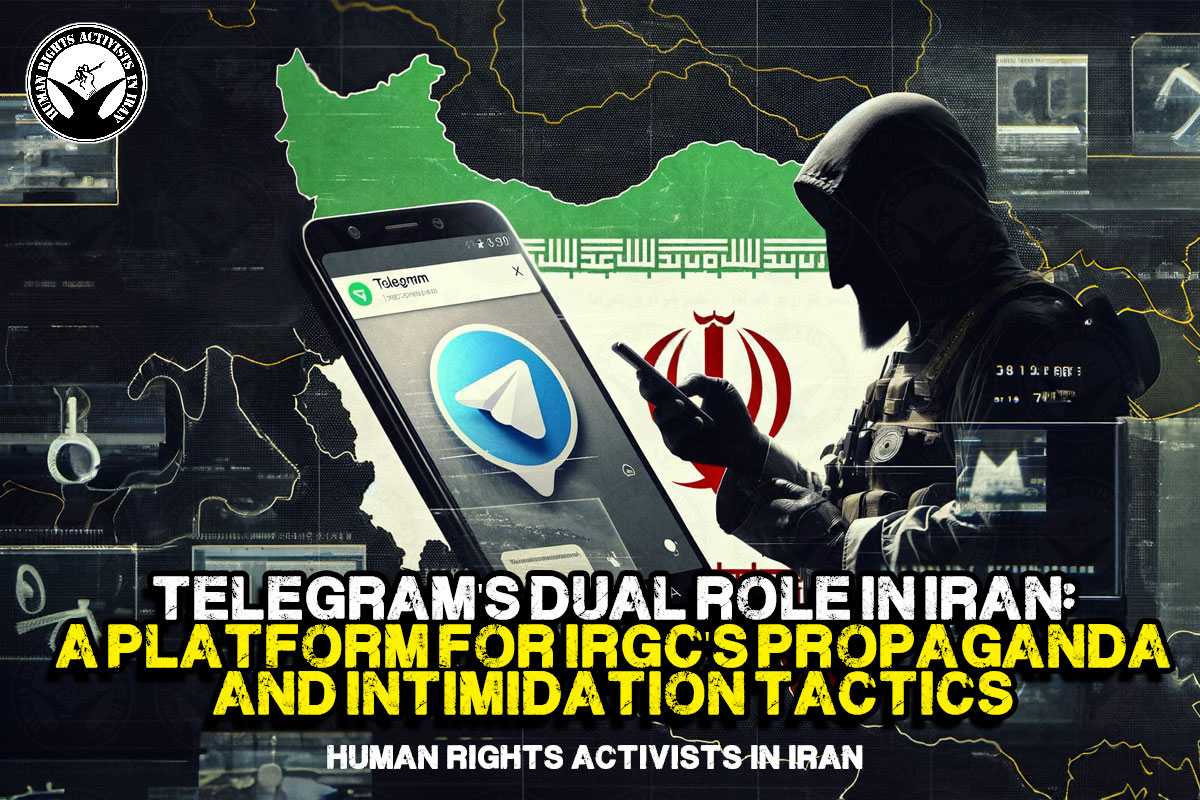
First they banned Telegram now Iran’s IRGC is using it to spread misinformation and intimidate victims
Telegram, founded in 2013, is an encrypted, cloud-based, and cross platform instant messaging service. It allows for the exchange of messages, both privately and in groups. Furthermore, it allows for voice and video calls and live streaming. It also contains some social networking features, allowings its users to post stories, create groups of 200,000 members and create channels. According to official sources Telegram has 55.2 million daily active users and 700 million active users per month. It is the most widely used messaging application in Iran.
HRA has monitored the official activity of the Islamic Revolutionary Guard Corps (IRGC) on the Telegram platform between October and December 2023. HRA’s investigation into the IRGC’s use of Telegram has revealed a disturbing trend of the widespread dissemination of misinformation, the harassment of victims, namely of human rights defenders, journalists, political activists, and their families. There is additionally an alarming pattern of the broadcasting of coerced forced confessions that amount to torture under international law.
Alarmingly, there is no comprehensive set of community guidelines banning the use of the platform by groups known to engage in said behaviors. Telegram’s terms of service lack explicit and detailed provisions pertaining to hate speech. Within its rather vague terms users are not permitted to ‘Promote violence on publicly viewable Telegram channels, bots, etc.’ Durov, the CEO and founder of Telegram, has provided additional clarification on the matter, affirming that the guidelines of Telegram forbid the promotion of violence and the use of hate speech. He further clarified that the platform relies on its users to report content that violates the rule. Telegram terms additionally assert that when content is posted in private groups and channels they do engage in the removal of content whatsoever. When Telegram refuses to engage in content removal, the IRGC channels, which can yield viewership in the three millions are broadcasting the coerced forced confessions of innocent victims of serious human rights violations. The broadcasting of these forced confessions, which notably amount to torture under international law, not only heavily influence public opinion, but directly interfere with a defendants right to due process. Rather than relying on users to report content that violates the vague standards Telegram sets out, the platform should adhere to an ethical practice of its own. The influence on public opinion reaches far beyond the broadcasting of forced confessions and includes the dissemination of misinformation related to intimidation of victims’ families and justifications for abuse.
HRA has compiled a table of the most notable Telegram channels being used by the IRGC at this time (24 active channels with a total of over 1,362,000 members.). The following table includes 1.) Names and descriptions of the channels known to run by the IRGC 2.) Recent channel activity that should be investigated for removal by the Telegram platform 3.) Spreading Justice profiles associated with a given organization running a given channel.
Interestingly, this is all against the backdrop of a 2018 ban of Telegram in Iran citing the application had become “a safe haven for committing different types of crimes.” The move was accompanied by a ban against the use of all foreign messaging applications by government bodies, including Telegram.
More than five years later, government bodies are seemingly the ones with the so-called safe haven to commit those crimes. Allowing the IRGC to continue to use Telegram as a tool to intimidate victims, spread misinformation, and consistently interfere with the right to fair trial is a mere extension of the impunity already enjoyed in the context of Iran. Telegram must immediately address these observations; a failure to do so can be seen as nothing short of complicity.
*To prevent the promotion of channels, names and information related to these activities are provided non-publicly upon the request of governments, institutions, and media.
For more information please contact Skylar Thompson, Director of Global Advocacy and Accountability at Human Rights Activists in Iran (HRA) skylar[at]hramail.com
PRESS RELEASE: Human Rights Activists (HRA) with the legal support of UpRights conclude there are reasonable grounds to believe the crime against humanity of gender and political persecution has taken place in the Islamic Republic of Iran since at least 16 September 2022.
Washington D.C., – 12/11/2023 – Human Rights Activists (HRA) with the legal support of Uprights, has filed a joint 60-page submission to the United Nations Fact-Finding Mission on the Islamic Republic of Iran (FFMI). The submission argues that the facts provided to the FFMI by HRA and two partner organizations should lead the FFMI to conclude that crimes against humanity, and in particular persecution on political and gender grounds, have taken place in the Islamic Republic of Iran since at least 16 September 2022. The submission has been presented in five parts: 1.) Methodology on the collection and verification of the information presented. 2.) The background against which the “Woman, Life, Freedom” protests took place, highlighting the existence of a discriminatory legal framework against women, girls and LGBTQI+ individuals, as well as relevant structural issues in the relationship between the Iranian State and its population 3.) The facts surrounding the protests, shedding light on the increased restrictions imposed on women and girls, and the violent response of Iranian authorities to these otherwise peaceful protests 4.) A legal analysis of the facts focussing on the crime against humanity of persecution on gender and political grounds 5.) Recommendations in light of the facts presented.
The submission demonstrates that there are reasonable grounds to believe that the crackdown by the Iranian authorities on the peaceful protests that followed the death of Mahsa Zhina Amini, and other violations related to the protests since September 2022, constitute a widespread and systematic attack against the civilian population. The submission delves into specific acts of violence by the Iranian government’s repression of the “Woman, Life, Freedom” protests, such as arbitrary arrest and detention, sexual violence, and murder, qualifying them as underlying acts of crimes against humanity and severe deprivations of fundamental rights. The submission then shows that agents of the Iranian government intended to discriminate against women and girls especially on the basis of gender, having been singled out for persecutory treatment such as the use of derogatory language, and acts of sexual violence including rape. At the same time, the submission recognizes that others have been targeted on political grounds.
The entirety of the submission has not been made public at this time however an executive summary of the facts and analysis are available here. The full set of recommendations are available below.
Recommendations to the FFMI:
On the crime against humanity of gender and political persecution:
Given the legal analysis of the facts presented, HRA urges the FFMI to recognize the potential commission of crimes against humanity, specifically that the crime of persecution on political and gender grounds has taken place in the Islamic Republic of Iran since at least 16 September 2022, in relation to the “Woman, Life, Freedom” protests. HRA suggests that based on the information and analysis submitted, these findings should be an integral part of the FFMI’s report to the HRC in March 2024. The FFMI’s conclusions should emphasize that women, girls and LGBTQI+ individuals perceived as not conforming with or opposing the established gender norms and discriminatory policies have been specifically targeted by the Iranian authorities, their agents and security forces.
Recognizing the political and gender dimension of the persecutory acts that have taken place in the context of the 2022-2023 protests, HRA encourages the FFMI to conduct further analysis on the participation of men and boys in the protests, and the perception and intent of the perpetrators for targeting them. HRA emphasizes the importance of applying a gender lens to such analysis.
Acknowledging the inherent challenges and security constraints in documenting violations taking place in Iran, HRA urges the FFMI to continue investigating alleged violations against LGBTQI+ individuals in the context of the “Woman, Life, Freedom” protests. These instances, while more difficult to document extensively, do exist, and lend to the discriminatory intent on the part of the perpetrators.
On documentation and accountability:
The commission of international crimes by the Iranian authorities triggers individual criminal responsibility going beyond State responsibility under the international human rights law framework. While the present submission does not focus on the conduct of specific individuals, HRA submits that the FFMI should ensure that its March 2024 report includes a section on the lack of accountability for widespread and systematic violations that have taken place in Iran since at least 16 September 2022, as well as the need for redress and ensuring that justice is achieved for women, girls and LGBTQI+ victims.
Given the FFMI’s mandate to collect and preserve potential evidence with a view to cooperate with legal proceedings, the FFMI should ensure that, following its March 2024 report, where possible, and where consent has been given, it cooperates with investigators, prosecutors, and relevant national jurisdictions building case files against alleged Iranian perpetrators across the globe with a view to closing the accountability gap.
Given the current uncertainty surrounding the renewal of the mandate of the FFMI mandate beyond March 2024, the FFMI should, while finalizing and preparing its March report, continue to receive submissions of information and maintain open lines of communication with those individuals and members of civil society documenting ongoing violations in relation to its mandate.
Recommendations to the international community: On the mandate of the FFMI beyond March 2024
In light of the vast violations that have occurred in the context of the “Woman, Life, Freedom” protests in Iran, and continuing through the end of 2023, Member States must vow to vote in favor of a renewal of the mandate of the FFMI beyond March 2024 to ensure that the FFMI has sufficient time and resources to document the ongoing human rights violations and potential violations of international law that have and continue to occur.
Further, Member States at the HRC should consider expanding the mandate of the FFMI to include violations that have occurred prior to the current temporal scope. Expansion of the current mandate will allow the proper analysis needed to understand the structural issues and the backdrop against not only current violations that are taking place, but also those dating back decades. An expanded mandate could also allow investigators to delve into individual responsibility for serious violations with a view to closing the expanding accountability gap in the Islamic Republic of Iran within the framework of international law.
For more information please contact Skylar Thompson, Director of Global Advocacy and Accountability at Human Rights Activists in Iran (HRA) [email protected]
“Growing up in Iran, amidst the complexities of a society deeply entrenched in patriarchy and religious conservatism, I saw the stark disparities and injustices faced by women and other marginalized groups. It was the quiet resilience of the women in my community, facing systemic discrimination yet persisting, that lit a fire in me.”
On the 29th of November, the United Nations commemorates and pays homage to women human rights defenders. It is imperative to acknowledge that all individuals engaged in the cause of human rights confront inherent risks and threats to their lives as they endeavor to combat various societal injustices. On the 18th of December 2013, the United Nations General Assembly (UNGA) passed a resolutionpertaining to Women Human Rights Defenders. This resolution underscores not only the pivotal role these women play in championing human rights but, crucially, sheds light on the perilous threats and dangers they confront, particularly in the form of rape and sexual violence. These egregious acts may be perpetrated by state actors, law enforcement personnel, security forces, and non-state actors within their vicinity.
The prevailing unequal power dynamics based on gender have rendered women vulnerable to abuse and victimization as a consequence of their unwavering commitment as defenders of human rights. Furthermore, it is essential to recognize the lack of reporting on these atrocities, primarily stemming from limited access to justice and the pervasive stigmatization of sexual violence. In conclusion, the resolution emphasizes the imperative of adopting a gender-based approach to safeguard women human rights defenders, addressing the distinct risks and security challenges that women encounter in their pursuit of justice.
Human rights defenders in the Islamic Republic of Iran, who advocate for an end to systematic discrimination against them, as well as socio-economic and legal reforms to ensure their rights and justice, face numerous challenges in their efforts. Journalists, activists, writers, and various other individuals striving to promote and safeguard human rights confront various forms of abuse, violence, and legal challenges.
Over the years, the Iranian government has implemented more restrictive measures, particularly affecting women, leading to a harsh crackdown on human rights defenders. Following the death of Mahsa Jina Amini, there was a brutal crackdown on protesters and activists. Human Rights Activists (HRA) has identified 26 women human rights defenders currently imprisoned with judicial convictions, with sentences ranging from one to ten years.
Additionally, HRA has identified 5 individuals awaiting sentencing. Notably, a significant number of lawyers are either currently detained or have already received substantial imprisonment sentences. In May 2023, 394 lawyers condemned the intimidation and issuance of arrest warrants for four public defenders in Shiraz. The intimidation of public defenders and human rights lawyers has been a longstanding issue in Iran. This was evident in the case of Saleh Nikbakht, the family lawyer for Mahsa Amini, who was sentenced to one year in prison for “propaganda activities against the regime” due to his interviews with foreign media outlets. In these interviews, he discussed the plight of kolbars in Iran and criticized the treatment of political (security) prisoners, among other topics. Furthermore, Saleh Nikbakht’s objection to the “forensic medical expert opinion” in the Mahsa Amini case was deemed an instance of the charge of “propaganda activities against the regime.”
There exists a pronounced peril for women’s rights advocates who defy the hijab law by choosing not to adhere to it in order to exercise their freedoms. Since the inception of the 2022 protests, these defenders have been systematically targeted, yet they persist in their struggle against gender-based discrimination. Despite the continuous implementation of new measures by authorities to penalize women who defy the prescribed dress code and other discriminatory laws, these advocates tenaciously continue their pursuit of rights.
Among the eminent human rights defenders is Narges Mohammadi, the laureate of the Nobel Peace Prize 2023, who has a substantial history of recurrent arrests due to her activism. Her most recent apprehension transpired on November 16, 2021, during a commemorative event honoring Ebrahim Ketabdar, a casualty of the November 2019 protests in Karaj. Mohammadi received an eight-year prison sentence, seventy-four lashes, two years of exile, and various social restrictions. Furthermore, her time in prison was marked by physical assaults for non-compliance with hijab laws. A letter authored by Mohammadi from within the confines of the prison was presented as evidence, wherein she detailed instances of female detainees experiencing sexual harassment by security forces during the arrest and interrogation process.
In a conversation with HRA, a women’s rights activist stated, “My journey into human rights advocacy began not from a place of choice, but necessity. Growing up in Iran, amidst the complexities of a society deeply entrenched in patriarchy and religious conservatism, I saw the stark disparities and injustices faced by women and other marginalized groups. It was the quiet resilience of the women in my community, facing systemic discrimination yet persisting, that lit a fire in me. But as a woman in this field, my challenges are doubled. Not only do I confront the usual risks of a human rights defender – surveillance, legal harassment, and public vilification – but I also navigate the added layer of gender discrimination. In a society where my voice is often dismissed or subdued, speaking out for others’ rights becomes an act of defiance against the very fabric of our traditional norms. My greatest fear? That one day, the cost of this defiance might not just be my freedom, but my life.”
In a recent development, two prominent female journalists receiveda cumulative sentence of 25 years of imprisonment. Niloofar Hamedi, a correspondent for Shargh, was arrested on September 22, 2022, for publishing a photograph of Mahsa Amini in a comatose state, thus gaining notoriety as the first to do so. Subsequently, Elahe Mohammadi was apprehended on September 29, 2022, following her journey to Saqqez and coverage of the funeral of Mahsa Amini.
Within detention facilities, encompassing alleys, streets, and temporary detention centers during interrogation, women often find themselves subjected to crude sexual harassment and verbal abuse of a sexual nature. Notably, the transfer of women from Qarchak Prison to the Shapour Detention Center has been identified as a significant factor contributing to the prevalence of such abuse. Shapour Detention Center stands out as one of the most notorious and intimidating detention centers in Tehran, renowned for its “technical interrogations” characterized by physical beatings, hanging, and torture to extract confessions—practices that have resulted in a substantial number of reported deaths during interrogations.
In the course of talking with HRA, a of women’s rights voiced; “I was drawn to human rights work out of a sense of profound injustice. In Iran, where the legal and cultural tapestry is woven with threads of gender inequality, being a woman and a human rights defender is like walking a tightrope. Every step is measured, every word weighed for its potential repercussions. Unlike my male counterparts, my activism is often seen not just as a political stance, but a betrayal of my ‘inherent’ feminine nature and societal role. My family fears for my safety, and they have every reason to. I’ve been threatened, harassed, and I live under the constant shadow of possible arrest. But it’s the small victories, the incremental changes, and the hope of a more equitable future that keep me going. The hardest part? Knowing that despite our efforts, the system is designed to be against us, and the road to equality and justice is steep and perilous.”
Underscoring the urgent need for concerted action to address the grave risks and intimidation faced by women human rights defenders in Iran. It is imperative that Iran signs and ratifies the Convention on the Elimination of All Forms of Discrimination Against Women (CEDAW), signaling a commitment to gender equality. The government must prioritize the protection of women human rights defenders, recognizing their invaluable contributions to society. Additionally, we urge Iran to expeditiously implement the General Assembly resolution on safeguarding women human rights defenders, aligning itself with the global pursuit of justice and human rights.
Below is a list of individuals who are currently imprisoned with judicial convictions as of the time this report was written
1. Narges Mohammadi – Human Rights Activist – A total of ten years in prison – Evin Prison
2. Fatemeh Sepehri – Civil Activist – A total of nineteen years of penal imprisonment, the severest being eleven years – Vakilabad Prison, Mashhad
3. Sepideh Qolian – Civil Activist – Three years and three months in prison – Evin Prison
4. Farideh Moradkhani – Civil Activist – Three years of penal imprisonment – Tehran Rehabilitation Center
5. Anisha Asadollahi – Labor Activist – Five years of penal imprisonment – Evin Prison
6. Nasrin Javadi – Labor Activist – Five years in prison – Evin Prison
7. Raha (Rahleh) Askarizadeh – Women’s Rights Activist – Two years in prison – Evin Prison
8. Sarvnaz Ahmadi – Child Rights Activist – Three years and six months in prison – Evin Prison
9. Zahra Sayyadi – Child Rights Activist – One year in prison – Evin Prison (currently on medical leave)
10. Nasim Sultan Beigi – Journalist and Activist – Three years and six months of penal imprisonment – Evin Prison
11. Saeedeh Shafiei – Journalist and Activist – Three years and six months of penal imprisonment – Evin Prison
12. Golrokh Iraee – Civil Activist – Five years in prison – Evin Prison
13. Maryam Akbari Monfared – Civil Activist/Justice Seeker – Fifteen years in prison – Semnan Prison
14. Niloufar Hamedi – Journalist – Thirteen years in prison – Evin Prison
15. Elahe Mohammadi – Journalist – Twelve years in prison – Evin Prison
16. Nahid Shirpisheh – Civil Activist/Justice Seeker – Five years in prison – Zanjan Prison
17. Vida Rabbani – Journalist – Six years and fifteen months in prison – Evin Prison (currently on medical leave)
18. Zahra Tohidi – Journalist – One year in prison – Evin Prison
19. Hoda (Zahra) Tohidi – Journalist – One year in prison – Evin Prison
20. Zeynab Hamrang Seyed Baglou – Union/Civil Activist – Five years in prison – Evin Prison
21. Reyhaneh Ansari Nejad – Labor Activist – Four years in prison – Evin Prison
22. Atikeh Rajabi – Union/Civil Activist – Two months – Vakilabad Prison, Mashhad
23. Hajar Saeidi – Labor Activists – One year in prison – Sanandaj Correction and Rehabilitation Center
24. Soha Mortezaei – Union/Civil Activist – Six years in prison – Evin Prison
25. Maryam Darysi – Union/Civil Activist – One year and three months – Currently free under electronic surveillance
26. Rahleh Rahemipour – Civil Activist/Justice Seeker – Five years of enforceable imprisonment – Evin Prison
The following is a list of individuals who are in custody at the time this report was written, and who have not yet received a verdict.
1. Nahaleh Shahidi Yazdi – Child Rights Activist – Kerman Prison
2. Razvaneh Ahmad Khan Beigi – Civil Activist – Qarchak Prison, Varamin
3. Lili Sadat – Women’s Rights Activist – Arrested in Mashhad in November 2022, no information about her release has been found.
4. Ovin Rasti – Women’s Rights Activist – Arrested in Marivan in September 2022, no information about her release has been found.
5. Armita Pavir – Union/Civil Activist – Tabriz Prison
——————
For further inquiries please contact Skylar Thompson, the Director of Global Advocacy and Accountability at Human Rights Activists in Iran (HRA) at skylar[@]hramail.com
GENEVA, SWITZERLAND, 15 September 2023—Human Rights Activists (HRA) is at the 54th session of the United Nations Human Rights Council in commemoration of Mahsa Jina Amini and the historic “Woman, Life, Freedom” protests that followed her death in detention just one year ago.
On Friday, Skylar Thompson, HRA’s Director of Global Advocacy and Accountability, participated in a side event “A Year of the Woman, Life, Freedom Movement” hosted by the IHRDC where she discussed the wide-ranging implications of Iran’s new Hijab and Chasity bill, namely the grave concerns of the newly vested authority handed to the Basij forces throughout the country. Thompson stated, “The expanded power of the Basij under the new bill is particularly concerning. Historically the Basij have played a significant role as a volunteer force under the IRGC. The bill upon implementation would grant a significantly enhanced law enforcement role, essentially allowing the group to act as moral police touching every facet of society and even in online platforms. This translates to an unprecedented authority.” She went on to note that, “While the bill itself is alarming, it is coupled with the fact that [we] are dealing with grave due process concerns, meaning that should a woman tried in connection to these violations will likely not receive a fair trial. This development must be closely monitored.”
Throughout the week, HRA has met with key Member States, partners in civil society, the United Nations Independent International Fact Finding Mission on Iran (FFMI) and other relevant United Nations human rights mechanisms to highlight the worsening human rights conditions in Iran and call for the widespread condemnation of the recently passed Hijab Bill in solidarity with Iranian women, girls, and men who support them.
In preparation for the upcoming review of Iran, HRA, alongside partners, has provided a formal written update to submissions to the Human Rights Committee which is due to review Iran in early October. HRA has provided an update specific the situation of the right to freedom of expression and peaceful assembly, media freedom and the safety of journalists, the freedom of expression online, the right to privacy, the situation of human rights lawyers and defenders, and the access to information.
HRA remains dedicated to pursuing justice and accountability for all Iranians, advocating for domestic judicial reform that is in line with Iran’s obligations under international human rights law. HRA continues its mission to amplify Iranian voices on the global stage, ensuring that despite the regime’s efforts, the voices of Iranians taking to the streets will not be silenced.
This new report by Human Rights Activists (HRA) provides a comprehensive assessment of Iran’s controversial “Bill to Support the Family by Promoting the Culture of Chastity and Hijab.” The bill has sparked international concern over increased restrictions on women’s rights and personal freedoms.
HRA’s investigation reveals over 180 individuals and entities connected to the bill’s approval, including parliamentary members, government officials, and religious institutions. The report analyzes the bill’s far-reaching impact across Iranian society, its punitive measures for non-compliance, and the key role of the Basij paramilitary force in enforcing the legislation. HRA argues the bill violates Iran’s obligations under international human rights law and represents a systematic crackdown on women’s autonomy and freedom of expression.
Background
Human Rights Activists (HRA) has worked to diligently monitor the escalating human rights issues in Iran over the past 12 months. The commemoration of Mahsa Amini’s tragic passing and the subsequent widespread protests have prompted Iran to intensify its
crackdown on activists. This has resulted in the arrests of prominent figures, campaigners, and numerous individuals, including family members of protestors. Furthermore, recent legislative developments in Iran have raised significant alarms, drawing attention not only nationally but also internationally, particularly in light of the recently passed hijab bill. This report aims to delve into the ramifications of such legislation on the daily lives of Iranian citizens, with a particular focus on its impact on women.
In addition to our apprehensions about the enforcement of the Hijab Bill, we have closely observed the disconcerting actions of 2,500 active Basij members and 650 student Basij members over the past year. These individuals have played an alarming role in suppressing civil protests and stifling voices of dissent within universities. Moreover, this report seeks to address the broader context of discrimination against women in Iran, examining how this oppressive environment affects their rights and freedoms. By doing so, we aim to provide a comprehensive overview of the systematic human rights abuses occurring at various levels of society.
Objectives
The primary objective of this report is to conduct a comprehensive human rights assessment of the hijab bill and to document its wide-ranging impact on various facets of Iranian society. Equally important is our objective to unveil the repressive actions of specific Basij members, thereby elucidating the intricate connection between legislative measures and their enforcement through suppressive tactics.
Methodology
In order to maintain the highest level of precision and credibility HRA employed meticulous methodologies. These included an in-depth examination of parliamentary debates, analysis of media reports, interviews with individuals directly impacted, and a thorough review of leaked documents and internal memos. Additionally, we conducted a comprehensive audit of 2,500 active Basij members and 650 student Basij members to meticulously document their roles in quelling protest and assess their alignment with the principles outlined in the hijab bill
Data Collection and Sources
To gain a comprehensive understanding of the extensive reach of the hijab law and the actions of Basij members, HRA engaged in consultations with a diverse group of sources. This inclusive approach encompassed government publications, articles, reports issued by international organizations, and first-hand testimonies from Iranian citizens. We are committed to transparency, and as such, the annex contains the list in its entirety. It includes the 180 names encompassing members of parliament and institutions that played a role in the approval of the bill. The names of Basij members are held confidentially and have been shared with partners alongside the requested action.
Bill to Support the Family by Promoting the Culture of Chastity and Hijab
Just shy of the anniversary of the death of Mahsa Zhina Amini, which ignited widespread protests throughout Iran, the Iranian Judiciary has approved a new, more stringent Hijab and Chastity bill. The original bill contained 15 clauses; however, following a rigorous amendment process by the Parliamentary Judiciary Committee, the bill has expanded from 15 articles to 70 and has been rebranded as the ‘Bill to Support the Family by Promoting the Culture of Chastity and Hijab.’ Human Rights Activists (HRA) has conducted an in-depth investigation uncovering more than 180 individuals and institutions connected to the endorsement of the bill in some form from its inception to present day. Additionally, through a thorough analysis of the available articles HRA has identified those responsible for the implementation of the bill across society once final approval has been obtained.
Where does the bill stand today?
The recent revisions to Iran’s hijab laws have led to stricter penalties for those who fail to adhere to them. These amendments encompass various aspects of public life, particularly concerning gender segregation. This is notably applicable to institutions such as universities, public offices, parks, and specific sections of hospitals. The bill, which has recently been approved by the Judicial Committee of the Parliament, now awaits a vote by the Internal Committee to determine its experimental implementation. However, before setting the date for the implementation of The Guardian Council; this unelected power council of 12 men, that recently re-elected a 97-year-old cleric, will be deciding the fate of 85 million Iranians. They are tasked with reviewing the bill’s provisions, ensuring their alignment with Islamic Law. Once endorsed, the bill will return to the parliament for the determination of its commencement date. The bill is likely to come into force early October 2023.
The vote by the Internal Committee is occurring because the Islamic Consultative Assembly of Iran convened an open session where representatives collectively decided to propose the review of the contentious “Chastity and Hijab Bill” within the internal commission, thus removing it from the public discussion arena. This step, guided by Article 85 of the constitution, led to the transfer of the bill’s examination to a dedicated group of representatives.
However, critics raised concerns about the lack of transparency, asserting that the public is being excluded from crucial discussions that significantly impact their lives. A similar approach was used for the highly contentious and draconian internet bill, Iranians are too often kept in the dark about processes containing their vital rights. Consequently, discussions surrounding the bill’s approval will not be broadcast through mass media platforms, including the radio, television, and newspapers. Among the assembly’s 238 representatives, a majority of 175 voted in favor of this decision, while 49 expressed opposition, and five abstained.
What does the bill seek to achieve?
The issue of mandatory hijab remains a focal point, with conservative elements closely monitoring its development. In recent years, a significant number of Iranian women have vocally expressed their dissent against the imposition of compulsory hijab. Notably, the tragic death of Mahsa Zhina Amini during an arrest by the morality police triggered widespread protests across the nation. Amid the discussion of the proposal, one of its architects officially acknowledged that if debated in the public assembly session, the bill’s “non-approval” was likely due to over 1,600 amendments registered by 59 representatives. Consequently, the bill’s approval by the commission was presented as a prudent solution to address its “urgent” implementation. Earlier, a member of the Assembly’s Legal and Judicial Commission emphasized the urgency of addressing the matter, given the worsening situation, to avert an irreversible crisis that could potentially engulf the nation.
The enforcement of these laws involves a significant technological dimension, with cyberspace playing a pivotal role. The sharing of videos and photos underscores the importance of adhering to hijab regulations. To ensure widespread adherence, the Basij organization has been tasked with educating its members, referred to as Basijis, to instill the principles of encouraging good behavior and discouraging wrongdoing. This preparation empowers them to address situations involving individuals who do not adhere to hijab requirements, both in physical and virtual environments.
In addition to this alarming technological emphasis, an invasive system has been imposed, enabling citizens to denounce cases of women deviating from the mandated veil standards by submitting visual proof. This regressive approach exploits technology to expedite the enforcement of hijab laws, intensifying the severity of control mechanisms.
Scruntinity about the use of AI and other forms of technology is significant. There are serious right-to-privacy concerns woven into many layers of the bill itself. In scenarios involving the public application of AI, the likelihood of misuse becomes all but inevitable. The utilization of AI technology also raises concerns about its potential to impede the principle of free speech, potentially enabling control over Iranians’ online experiences. This concern is amplified by the absence of well-defined data privacy laws in Iran, potentially granting the Iranian government access to individuals’ private lives.
Evidently, the Iranian government prioritizes censorship and surveillance, demonstrating a willingness to employ extensive measures to monitor citizens, particularly targeting women. The internet stands as a vital sanctuary for many, offering a space where they can openly share and articulate their thoughts. An Iranian journalist conveyed to HRA: “Technology could potentially become a tool of oppression. Surveillance cameras, drones, and AI systems might monitor our every move, further limiting our freedoms.”
The amendments also detail penalties for businesses that fail to comply with these regulations. Article 41 outlines that a third-degree cash penalty or an amount equivalent to three months of profits from the business’s income may be imposed. This includes online activists who may run afoul of the rules. Furthermore, Article 45 pertains to the import, production, distribution, or sale of prohibited clothing items. The penalty outlined here consists of a fourth-degree cash penalty or an amount twice the customary value of the involved property. For repeat violations, the penalty can escalate up to a third-degree cash penalty or four times the customary value of the property.
Gender segregation has taken a central role in the new law, encompassing various aspects. The law advocates for the expansion of women’s universities and campuses. Moreover, hospitals and health centers are directed to uphold Sharia privacy boundaries between male and female employees and establish distinct environments for medical services. A female doctor expressed to HRA her viewpoints on the bill stating, ‘Medicine is about healing, without bias. This bill introduces a bias, evaluating us not for our skills but our attire’ and ‘Every day, as I don my white coat, the bill reminds me that I’m judged not for my competence but compliance’ Article 18 further mandates municipalities and village administrators not only to promote hijab awareness but also to enforce gender segregation within parks, reserving a minimum of twenty percent of such areas for women’s use. In coastal cities, these entities are additionally required to construct segregated swimming areas and address environmental health concerns along the shorelines.
Speaking with HRA, a university student remarked ‘The recent hijab bill leaves me deeply dismayed and heartbroken. Our prolonged and passionate protests seemed to have fallen on deaf ears. A progressive future I had envisioned for our country feels farther away now.’’
In summary, the recent amendments to Iran’s hijab laws signify more severe penalties for noncompliance, extending to various facets of public life, supported by technological initiatives and specific punitive measures for businesses. These amendments underscore the government’s resolve to enforce stricter adherence to the hijab regulations in both physical and virtual domains.
Public Opinion of Officials
Despite the stringent nature of the bill, there are parliamentary members and other government officials who perceive it as insufficiently robust. For instance, Javad Mojtahed Shabestari, a Member of the Assembly of Experts, emphasized the need to consider the perspectives of clerics and academic elites. He also called for the inclusion of viewpoints from hijab and cultural activists. Ali Moalemi, the Representative of Mazandaran Province in the Assembly of Leadership Experts and Friday Imam of Qaim Shahr deemed the penalties to be inadequate. He advocated for corporal punishment, specifically whipping, instead of fines. Hasan Norouzi, the Vice Chairman of the Judicial and Legal Committee of the Parliament, opined that, in general, the bill demonstrated a lack of strength and favored individuals who do not adhere to the principles of Hijab.
Conversely, several parliamentary members firmly endorse the bill and are eager for its swift implementation. Mohammad Hossein Farhandi, a parliament member, expressed, “Our concern lies in anticipating the approval and subsequent enactment of this bill.” Mohammad Rashidi, another parliament member, asserted, “We should aim to promote observance of hijab, especially among the youth, by generating content that emphasizes modesty and hijab.” A comprehensive list of such endorsements can be found in the annex to this report.
Entities Responsible for Implementing the Legislation
HRA, through careful examination of the bill, has successfully identified several ministries that will be responsible for carrying out crucial executive functions. These ministries cover various aspects of society, such as Education, Industries and Mines, Interior, Science, Research, and Technology, among others that are listed below. According to Chapter 2, Article 4 of the newly introduced bill, all the aforementioned institutions have a mandate to incorporate Islamic values into their educational efforts, particularly emphasizing the significance of marital commitment and cultivating a culture of modesty and hijab. Collaboration with Islamic Propaganda Organizations is expected in order to develop and implement programs aimed at promoting a ‘family-oriented Islamic Lifestyle’ and fostering the values of modesty and hijab.
With the bill now soon to be enacted, each institution will be required to formulate operational benchmarks and evaluations within a three-month timeframe. These evaluations will then be submitted to the Supreme Council of Cultural Revolution for approval. This chapter also delineates specific objectives that each Ministry must adhere to.
For instance, the Ministry of Science, Research, and Technology is tasked with integrating the principles of modesty and hijab within the general courses offered by universities. The Ministry is also charged with establishing and expanding dedicated university campuses for women while advancing the concept of a family-centered Islamic lifestyle.
A teacher, in a conversation with HRA said ‘I worry for my students, especially the girls. They’re at an impressionable age, and this bill sends them a message that their choices are secondary.’. He is worried that the morality police’s influence can introduce biases in the place of learning.
Furthermore, the Ministry of Industry, Mines, and Trade is responsible for overseeing clothing production units, especially during the design and manufacturing phases. It is obligatory for them to support the establishment of permanent stores specializing in hijab essentials, with associated discounts on company fees. The Ministry is also mandated to ensure adherence to modesty principles and to arrange training sessions and workshops on family-oriented Islamic lifestyles and the culture of modesty and hijab for guilds seeking licensure.
Evidently, the comprehensive scope of the new bill encompasses various sectors of society. Numerous ministries are compelled to take proactive steps as outlined by the bill, and are deeply involved in promoting its principles within their respective domains of operation.
Unmasking Basij Members
Alongside government entities, the Basij has also been given new responsibilities with the hijab law. The Basij is a paramilitary force of men and women under the control of the Islamic Revolutionary Guards Corps (IRGC). They play a central role in the suppression of protests. In November 2021, for example, the Basij was deployed to the streets of Tehran to crack down on protests against the government’s economic policies. The Basij reportedly used tear gas, batons, and live ammunition to disperse the protesters, and several people were killed. The Basij has been accused of numerous human rights abuses, including torture, forced disappearances, and extrajudicial killings. It has also been accused of using excessive force against protesters, including women and children.
Given the assertive character of the Basij’s conduct, the authority conferred upon them in the Hijab bill is deeply disconcerting. The Basij serves as an instrument of the IRGC to uphold law and order, prosecute dissidents, control media censorship, and suppress protests. Without effective oversight, they possess the unchecked capacity to employ excessive force against the populace and persist in receiving commendation from the Iranian government.
The Student Basij
In addition to the Basij, the Human Rights Activists (HRA) also perceive the Student Basij as a highly influential instrument in suppressing democratic movements in Iran. This influence primarily stems from the deeply ingrained ideological indoctrination they receive during their training, which instills unwavering loyalty to the Supreme leaders and prepares them for future roles within the government and security apparatus.
Notably, the Student Basij operates officially under the command of the Islamic Revolutionary Guard Corps (IRGC), a formidable entity with considerable power and sway in Iran. This university-based organization was established by the directive of Iran’s founding figure, Ayatollah Khomeini, with its central mission being the defense of the revolutionary principles and the prevailing political system. Over time, the Student Basij has gained notoriety for its involvement in violent clashes with protesters, engaging in espionage activities, and facilitating state-sanctioned repressive actions against student movements. A significant number of its members transition into prominent governmental and security positions after completing their academic tenure.
The aftermath of Mahsa Amini’s tragic death sparked widespread protests within Iranian universities, prompting the active participation of the Student Basij on campuses. Their involvement encompassed physical altercations with demonstrators, collecting student information for security forces, and aiding in the detention of students deemed dissenters. The Student Basij’s history of suppression dates back at least to 1999, marking a long-standing pattern of quelling dissenting voices.
It is important to note that a substantial number of young Iranians have been actively engaged in protesting, often using the act of not wearing hijabs as a symbol of rebellion and defiance. When examining the individuals facing death sentences as a result of these protests, a significant majority fall below the age of 30. Given the substantial involvement of young Iranians in these protests, the role played by the Student Basij becomes increasingly pivotal for the IRGC in intensifying their crackdown on these demonstrations and identifying individuals who do not adhere to new laws and regulations.
Consequences
The consequences of the expanded role of the Basij, both in the context of the hijab law and broader societal control, are deeply troubling. The authority granted to the Basij in enforcing the hijab law exacerbates concerns about unchecked power. The Basij and Student Basij have become crucial for the IRGC in intensifying their crackdown on these demonstrations. This paints a troubling picture of systemic repression and the suppression of freedom of expression in Iran, where the Basij and Student Basij play pivotal roles in maintaining the status quo.
Obligation under International Human Rights Law
Iran, as a signatory to various international human rights treaties, like the International Covenant on Civil and Political Rights (ICCPR) and International Covenant on Economic, Social and Cultural Rights (ICESCR), holds an obligation to uphold and protect the fundamental rights and freedoms of its citizens. These obligations encompass the right to freedom of expression, religion, privacy, and personal choice. According to Article 19(2) of the ICCPR, every individual holds the right to express themselves freely, which encompasses the freedom to choose their attire. Furthermore, Article 19 safeguards the freedom of thought, conscience, and religion. The freedom of religion is a deeply personal entitlement, permitting individuals to practice, exhibit, and embrace their chosen faith without intrusion, as long as it doesn’t infringe upon the fundamental rights of others. In the context of the discussion, the act of wearing a hijab, or not, must always be up to the discretion of the woman herself.
The longstanding need for reform
The introduction of Iran’s new hijab law has ignited concern for women’s rights and personal freedoms worldwide. This newly introduced bill extends its reach across all segments of society, mandating educational institutions, workplaces, businesses, and numerous other establishments to enforce its provisions, including the obligation to file regular reports. The bill infringes upon individual rights by imposing dress codes on individuals and has forced every sector of society to involve itself, specifically in the lives of Iranian women. Any legislation pertaining to personal attire should be crafted with a careful balance between cultural considerations and the preservation of individual rights. Moreover, the implementation of Artificial Intelligence (AI) displays a significantly more invasive method of monitoring hijab adherence. Additionally, this approach fosters an environment characterized by apprehension and seclusion.
The financial burden of non-compliance with hijab regulations falls squarely upon businesses. The all-encompassing nature of this bill ensures that women who opt to voice their dissent are systematically marginalized, rendering them unwelcome in schools, workplaces, and even healthcare facilities.
This situation, particularly as we see it play out before us, underscores the longstanding and critical need for legal reform. Civil society’s active engagement in this reform process is pivotal, giving voice to those affected and advocating for progressive changes.
The new hijab law in Iran compels women to adhere to strict dress codes, infringing upon their personal choices and freedom of expression despite the widespread calls against such enforcements. This legislation not only suppresses women’s agency but also perpetuates a culture of inequality, limiting opportunities for women in education, employment, and public life. HRA firmly believes that everyone has the right to make decisions about their own bodies, clothing, and personal beliefs.
The bill further symbolizes a broader pattern of limited gender equality within the legal framework, reinforcing discriminatory practices against women. By institutionalizing the enforcement of a specific dress code, the law reinforces harmful stereotypes and reinforces societal norms that prioritize control over personal choice. This not only disregards the diverse cultural expressions and beliefs of Iranian women but also sends a detrimental message that their autonomy is secondary to conforming to state-imposed standards.
It is of paramount importance the international community widely condemns the implementation of Iran’s new Hijab bill as its mere existence highlights the regime’s alarmingly intensified position related to the persecution of women in both law and practice.
ANNEX OF NAMES and ENTITIES
1 – Full Name: Ali babai Karnami- Entity Classification: Individual- Role or Position in Power Structure: Member of Parliament (Babolsar)- Government Branch or Hierarchical Structure: Legislature- Key Contribution to Bill Approval: Support this plan in parliament
2 – Full Name: Abdolsamad Khorramabadi- Entity Classification: Individual- Role or Position in Power Structure: Deputy Supervisor of the Attorney General’s Office- Government Branch or Hierarchical Structure: Judiciary- Key Contribution to Bill Approval: Media promoter for this bill
3 – Full Name: Hossein Shariatmadari- Entity Classification: Individual- Role or Position in Power Structure: The Supreme Leader’s representative at Keyhan Institute- Government Branch or Hierarchical Structure: Supreme Leader- Key Contribution to Bill Approval: Media promoter for this bill
4 – Full Name: Abbas Ali-Abadi- Entity Classification: Individual- Role or Position in Power Structure: Minister of Industry, Mining and Trade- Government Branch or Hierarchical Structure: Executive branch- Key Contribution to Bill Approval: Endorsed or approved this plan in government (executive branch)
5 – Full Name: Abbas Moghtadaei- Entity Classification: Individual- Role or Position in Power Structure: Member of Parliament- Government Branch or Hierarchical Structure: Legislature- Key Contribution to Bill Approval: Support this plan in parliament
6 – Full Name: Gholam-Hossein Mohseni Ejei- Entity Classification: Individual- Role or Position in Power Structure: Chief Justice of Iran- Government Branch or Hierarchical Structure: Judiciary- Key Contribution to Bill Approval: Media promoter for this bill
7 – Full Name: Abdol-Hossein Khosrow Panah- Entity Classification: Individual- Role or Position in Power Structure: Chairman and Secretary of the Supreme Council of Cultural Revolution- Government Branch or Hierarchical Structure: Supreme Leader- Key Contribution to Bill Approval: Media promoter for this bill
8 – Full Name: Abdolkarim Jomeiri- Entity Classification: Individual- Role or Position in Power Structure: Member of Parliament- Government Branch or Hierarchical Structure: Legislature- Key Contribution to Bill Approval: Support this plan in parliament
9 – Full Name: Abolfazl Amoui- Entity Classification: Individual- Role or Position in Power Structure: Member of Parliament- Government Branch or Hierarchical Structure: Legislature- Key Contribution to Bill Approval: Support this plan in parliament
10 – Full Name: Sayyid Ebrahim Raisolsadati- Entity Classification: Individual- Role or Position in Power Structure: President- Government Branch or Hierarchical Structure: Executive branch- Key Contribution to Bill Approval: Endorsed or approved this plan in government
11 – Full Name: Ahamd Vahidi- Entity Classification: Individual- Role or Position in Power Structure: Interior Minister- Government Branch or Hierarchical Structure: Executive branch- Key Contribution to Bill Approval: Endorsed or approved this plan in government (executive branch)
12 – Full Name: Ahmad Hossein Fallahi- Entity Classification: Individual- Role or Position in Power Structure: Member of Parliament- Government Branch or Hierarchical Structure: Legislature- Key Contribution to Bill Approval: Media promoter for this bill
13 – Full Name: Ahmad Rastineh- Entity Classification: Individual- Role or Position in Power Structure: Spokesperson of the Cultural Commission of the Islamic Council- Government Branch or Hierarchical Structure: Legislature- Key Contribution to Bill Approval: Media promoter for this bill
14 – Full Name: Ahmad Salek- Entity Classification: Individual- Role or Position in Power Structure: Member of the Combatant Clergy Association- Government Branch or Hierarchical Structure: None- Key Contribution to Bill Approval: Media promoter for this bill
15 – Full Name: Ali Babai- Entity Classification: Individual- Role or Position in Power Structure: Member of Parliament- Government Branch or Hierarchical Structure: Legislature- Key Contribution to Bill Approval: Support this plan in parliament
16 – Full Name: Seyed-Ahmad Alamolhoda- Entity Classification: Individual- Role or Position in Power Structure: Representative of the supreme leader in khorasan province, and the Friday Imam of Mashhad- Government Branch or Hierarchical Structure: Supreme Leader- Key Contribution to Bill Approval: Deemed this bill to be weak and advocated for its fortification
17 – Full Name: Ali Bahadori Jahromi- Entity Classification: Individual- Role or Position in Power Structure: Spokesman and Secretary of the Government Board- Government Branch or Hierarchical Structure: Executive branch- Key Contribution to Bill Approval: Media promoter for this bill
18 – Full Name: Ali Keshvari- Entity Classification: Individual- Role or Position in Power Structure: Member of Social Sciences Department of Imam Sadegh Research Institute- Government Branch or Hierarchical Structure: Supreme Leader- Key Contribution to Bill Approval: Media promoter for this bill
19 – Full Name: Ali Khazrian- Entity Classification: Individual- Role or Position in Power Structure: Member of Parliament- Government Branch or Hierarchical Structure: Legislature- Key Contribution to Bill Approval: Support this plan in parliament
20 – Full Name: Mohammad-Bagher Ghalibaf- Entity Classification: Individual- Role or Position in Power Structure: Head of the Parliament of Iran- Government Branch or Hierarchical Structure: Legislature- Key Contribution to Bill Approval: Support this plan in parliament
21 – Full Name: Ali Moalemi- Entity Classification: Individual- Role or Position in Power Structure: Representative of Mazandaran Province in the Assembly of Leadership Experts and Friday Imam of Qaim Shahr- Government Branch or Hierarchical Structure: Legislature- Key Contribution to Bill Approval: Deemed this bill to be weak and advocated for its fortification
22 – Full Name: Ali-Akbar Mehrabian- Entity Classification: Individual- Role or Position in Power Structure: Minister of Energy- Government Branch or Hierarchical Structure: Executive branch- Key Contribution to Bill Approval: Endorsed or approved this plan in government (executive branch)
23 – Full Name: Ali-Morad Heydari- Entity Classification: Individual- Role or Position in Power Structure: Member of the faculty of the Department of Criminal Law and Criminology- Government Branch or Hierarchical Structure: Executive branch- Key Contribution to Bill Approval: Media promoter for this bill
24 – Full Name: Mousa Ghazanfar-Abadi- Entity Classification: Individual- Role or Position in Power Structure: MP in 11th Islamic Consultative Assembly- Government Branch or Hierarchical Structure: Legislature- Key Contribution to Bill Approval: Media promoter for this bill
25 – Full Name: Alireza Abedi Sar Asia- Entity Classification: Individual- Role or Position in Power Structure: Member of the academic staff of the Department of Fiqh and Fundamentals of Islamic Law, Ferdowsi University of Mashhad- Government Branch or Hierarchical Structure: Executive branch- Key Contribution to Bill Approval: Media promoter for this bill
26 – Full Name: Alireza Arafi- Entity Classification: Individual- Role or Position in Power Structure: Director of seminaries across the country- Government Branch or Hierarchical Structure: Supreme Leader- Key Contribution to Bill Approval: Media promoter for this bill
27 – Full Name: Alireza Monadi Sefidan- Entity Classification: Individual- Role or Position in Power Structure: Member of Parliament- Government Branch or Hierarchical Structure: Legislature- Key Contribution to Bill Approval: Support this plan in parliament
28 – Full Name: Kazem Sedighi- Entity Classification: Individual- Role or Position in Power Structure: Chief of headquarter for enjoining good and forbidding wrong- Government Branch or Hierarchical Structure: Executive branch- Key Contribution to Bill Approval: Media promoter for this bill
29 – Full Name: Alireza Pakfetrat- Entity Classification: Individual- Role or Position in Power Structure: Member of Parliament- Government Branch or Hierarchical Structure: Legislature- Key Contribution to Bill Approval: Support this plan in parliament
30 – Full Name: Amin Hossein Rahimi- Entity Classification: Individual- Role or Position in Power Structure: Minister of Justice of Iran- Government Branch or Hierarchical Structure: Legislature- Key Contribution to Bill Approval: Endorsed or approved this plan in government (executive branch)
31 – Full Name: Amir Hossein Bankipour- Entity Classification: Individual- Role or Position in Power Structure: Parliament Member Representing Isfahan- Government Branch or Hierarchical Structure: Legislature- Key Contribution to Bill Approval: Support this plan in parliament
32 – Full Name: Amir Hossein Yazdanpanah- Entity Classification: Individual- Role or Position in Power Structure: Head of the news department of the Islamic Council- Government Branch or Hierarchical Structure: Legislature- Key Contribution to Bill Approval: Media promoter for this bill
33 – Full Name: Bahram Eynollahi- Entity Classification: Individual- Role or Position in Power Structure: Minister of Health and Medical Education of the Islamic Republic of Iran- Government Branch or Hierarchical Structure: Executive branch- Key Contribution to Bill Approval: Endorsed or approved this plan in government (executive branch)
34 – Full Name: Behrouz Mohebi Najm-Abadi- Entity Classification: Individual- Role or Position in Power Structure: Representative of Sabzevar people in the Islamic Council- Government Branch or Hierarchical Structure: Legislature- Key Contribution to Bill Approval: Media promoter for this bill
35 – Full Name: Behzad Khalili- Entity Classification: Individual- Role or Position in Power Structure: Director of Beh-Ayandeh Policy Research and Strategic Studies Think Tank- Government Branch or Hierarchical Structure: None- Key Contribution to Bill Approval: Media promoter for this bill
36 – Full Name: Behzad pourseyed- Entity Classification: Individual- Role or Position in Power Structure: Legal deputy of the judiciary- Government Branch or Hierarchical Structure: Judiciary- Key Contribution to Bill Approval: Media promoter for this bill
37 – Full Name: Seyed-Yousef Tabatabaei Nejad- Entity Classification: Individual- Role or Position in Power Structure: Member of Assembly of Experts, and Isfahan Friday Imam- Government Branch or Hierarchical Structure: Supreme Leader- Key Contribution to Bill Approval: Deemed this bill to be weak and advocated for its fortification
38 – Full Name: Bijan Nobaveh-Vatan- Entity Classification: Individual- Role or Position in Power Structure: Deputy Chairman of the Cultural Commission of the Islamic Council- Government Branch or Hierarchical Structure: Legislature- Key Contribution to Bill Approval: Support this plan in parliament
39 – Full Name: Davood Manzour- Entity Classification: Individual- Role or Position in Power Structure: Head of the country’s program and budget organization- Government Branch or Hierarchical Structure: Executive branch- Key Contribution to Bill Approval: Media promoter for this bill
40 – Full Name: Eghbal Shakeri- Entity Classification: Individual- Role or Position in Power Structure: Member of Parliament- Government Branch or Hierarchical Structure: Legislature- Key Contribution to Bill Approval: Support this plan in parliament
41 – Full Name: Ehsan Arkani- Entity Classification: Individual- Role or Position in Power Structure: Member of Parliament- Government Branch or Hierarchical Structure: Legislature- Key Contribution to Bill Approval: Support this plan in parliament
42 – Full Name: Ensiyeh Khazali- Entity Classification: Individual- Role or Position in Power Structure: Vice President for Women and Family Affairs of the President of Iran- Government Branch or Hierarchical Structure: Executive branch- Key Contribution to Bill Approval: Media promoter for this bill
43 – Full Name: Farajollah Hedayat-Nia- Entity Classification: Individual- Role or Position in Power Structure: Member of the scientific faculty of the Research Institute of Islamic Culture and Thought- Government Branch or Hierarchical Structure: None- Key Contribution to Bill Approval: Media promoter for this bill
44 – Full Name: Fatemeh Ghasempour- Entity Classification: Individual- Role or Position in Power Structure: Parliament Member Representing Tehran and Ray- Government Branch or Hierarchical Structure: Legislature- Key Contribution to Bill Approval: Support this plan in parliament
45 – Full Name: Fatemeh Mohammad-beigi- Entity Classification: Individual- Role or Position in Power Structure: Representative of the Islamic Council- Government Branch or Hierarchical Structure: Legislature- Key Contribution to Bill Approval: Deemed this bill to be weak and advocated for its fortification
46 – Full Name: Fatemeh Rahmani- Entity Classification: Individual- Role or Position in Power Structure: Member of Parliament- Government Branch or Hierarchical Structure: Legislature- Key Contribution to Bill Approval: Support this plan in parliament
47 – Full Name: Gholam-Hossein Rezvani- Entity Classification: Individual- Role or Position in Power Structure: Member of Parliament- Government Branch or Hierarchical Structure: Legislature- Key Contribution to Bill Approval: Support this plan in parliament
48 – Full Name: Gholam-Reza Montazeri- Entity Classification: Individual- Role or Position in Power Structure: Member of Parliament- Government Branch or Hierarchical Structure: Legislature- Key Contribution to Bill Approval: Support this plan in parliament
49 – Full Name: Habibollah Sayyari- Entity Classification: Individual- Role or Position in Power Structure: Coordinating Deputy of the Islamic Republic of Iran Army and the former Commander of the Islamic Republic of Iran Navy- Government Branch or Hierarchical Structure: Executive branch- Key Contribution to Bill Approval: Media promoter for this bill
50 – Full Name: Hadi Beigi Nejad- Entity Classification: Individual- Role or Position in Power Structure: Member of Parliament- Government Branch or Hierarchical Structure: Legislature- Key Contribution to Bill Approval: Support this plan in parliament
51 – Full Name: Hadi Saheb Qarani- Entity Classification: Individual- Role or Position in Power Structure: Director General of Islamic Propaganda of Khorasan Razavi Province- Government Branch or Hierarchical Structure: Executive branch- Key Contribution to Bill Approval: Media promoter for this bill
52 – Full Name: Hasan Norouzi- Entity Classification: Individual- Role or Position in Power Structure: Vice Chairman of the Judicial and Legal Committee of the Parliament- Government Branch or Hierarchical Structure: Legislature- Key Contribution to Bill Approval: Deemed this bill to be weak and advocated for its fortification
53 – Full Name: Hojjatollah Firouzi- Entity Classification: Individual- Role or Position in Power Structure: Member of Parliament- Government Branch or Hierarchical Structure: Legislature- Key Contribution to Bill Approval: Support this plan in parliament
54 – Full Name: Hossein Amir-Abdollahian- Entity Classification: Individual- Role or Position in Power Structure: Minister of Foreign Affairs of Iran- Government Branch or Hierarchical Structure: Executive branch- Key Contribution to Bill Approval: Endorsed or approved this plan in government (executive branch)
55 – Full Name: Hossein Bostan (Najafi)- Entity Classification: Individual- Role or Position in Power Structure: Member of the faculty of the research institute of the Seminary and University- Government Branch or Hierarchical Structure: None- Key Contribution to Bill Approval: Media promoter for this bill
56 – Full Name: Seyed Mohammad Mehdi Hosseini Hamedani- Entity Classification: Individual- Role or Position in Power Structure: Supreme Leader Representative in Alborz Province- Government Branch or Hierarchical Structure: Supreme Leader- Key Contribution to Bill Approval: Media promoter for this bill
57 – Full Name: Hossein Jalali- Entity Classification: Individual- Role or Position in Power Structure: Member of Parliament- Government Branch or Hierarchical Structure: Legislature- Key Contribution to Bill Approval: Media promoter for this bill
58 – Full Name: Hossein Mirzaei- Entity Classification: Individual- Role or Position in Power Structure: Member of Parliament- Government Branch or Hierarchical Structure: Legislature- Key Contribution to Bill Approval: Support this plan in parliament
59 – Full Name: Hossein Salami- Entity Classification: Individual- Role or Position in Power Structure: Commander in Chief of the Revolutionary Guards Corps- Government Branch or Hierarchical Structure: Supreme Leader- Key Contribution to Bill Approval: Media promoter for this bill
60 – Full Name: Hossein-Ali Haji-Deligani- Entity Classification: Individual- Role or Position in Power Structure: Parliament Member (Member of Judiciary and Legal Commission of the Islamic Consultative Assembly)- Government Branch or Hierarchical Structure: Legislature- Key Contribution to Bill Approval: Support this plan in parliament
61 – Full Name: Jafar Rasti- Entity Classification: Individual- Role or Position in Power Structure: Member of Parliament- Government Branch or Hierarchical Structure: Legislature- Key Contribution to Bill Approval: Support this plan in parliament
62 – Full Name: Jalil Mohebi- Entity Classification: Individual- Role or Position in Power Structure: Expert of Majlis Research Center- Government Branch or Hierarchical Structure: Legislature- Key Contribution to Bill Approval: Media promoter for this bill
63 – Full Name: Jalil Rahimi Jahan-Abadi- Entity Classification: Individual- Role or Position in Power Structure: Parliament Member- Government Branch or Hierarchical Structure: Legislature- Key Contribution to Bill Approval: Deemed this bill to be weak and advocated for its fortification
64 – Full Name: Javad Karimi-Ghodousi- Entity Classification: Individual- Role or Position in Power Structure: Member of the National Security and Foreign Policy Commission of the Islamic Council- Government Branch or Hierarchical Structure: Legislature- Key Contribution to Bill Approval: Support this plan in parliament
65 – Full Name: Javad Mojtahed Shabestari- Entity Classification: Individual- Role or Position in Power Structure: Member of the Assembly of Experts- Government Branch or Hierarchical Structure: Legislature- Key Contribution to Bill Approval: Media promoter for this bill
66 – Full Name: Javad Naeini- Entity Classification: Individual- Role or Position in Power Structure: Member of Parliament- Government Branch or Hierarchical Structure: Legislature- Key Contribution to Bill Approval: Support this plan in parliament
67 – Full Name: Javad Nikbin- Entity Classification: Individual- Role or Position in Power Structure: Member of the Parliament’s Cultural Commission- Government Branch or Hierarchical Structure: Legislature- Key Contribution to Bill Approval: Media promoter for this bill
68 – Full Name: Javad Oji- Entity Classification: Individual- Role or Position in Power Structure: Minister of Oil- Government Branch or Hierarchical Structure: Executive branch- Key Contribution to Bill Approval: Endorsed or approved this plan in government (executive branch)
69 – Full Name: Kioumars Hashemi- Entity Classification: Individual- Role or Position in Power Structure: Minister of Sports and Youth- Government Branch or Hierarchical Structure: Executive branch- Key Contribution to Bill Approval: Endorsed or approved this plan in government (executive branch)
70 – Full Name: Kobra Khazali- Entity Classification: Individual- Role or Position in Power Structure: Representative of Supreme Council of the Cultural Revolution- Government Branch or Hierarchical Structure: Executive branch – Key Contribution to Bill Approval: Deemed this bill to be weak and advocated for its fortification
71 – Full Name: Majid Dehghan- Entity Classification: Individual- Role or Position in Power Structure: Member of the faculty of Women’s Studies Research Institute- Government Branch or Hierarchical Structure: Supreme Leader- Key Contribution to Bill Approval: Media promoter for this bill
72 – Full Name: Mansour Arami- Entity Classification: Individual- Role or Position in Power Structure: Member of Parliament- Government Branch or Hierarchical Structure: Legislature- Key Contribution to Bill Approval: Support this plan in parliament
73 – Full Name: Mansour Shokrollahi- Entity Classification: Individual- Role or Position in Power Structure: Member of Parliament- Government Branch or Hierarchical Structure: Legislature- Key Contribution to Bill Approval: Support this plan in parliament
74 – Full Name: Mehdi Bagheri- Entity Classification: Individual- Role or Position in Power Structure: Member of Parliament- Government Branch or Hierarchical Structure: Legislature- Key Contribution to Bill Approval: Support this plan in parliament
75 – Full Name: Mehdi Bayati- Entity Classification: Individual- Role or Position in Power Structure: Chaste Life Working Group of the Council of Public Culture- Government Branch or Hierarchical Structure: Executive branch- Key Contribution to Bill Approval: Deemed this bill to be weak and advocated for its fortification
76 – Full Name: Mehdi Jamshidi- Entity Classification: Individual- Role or Position in Power Structure: Member of the academic board of the Research Institute of Islamic Culture and Thought- Government Branch or Hierarchical Structure: Supreme Leader- Key Contribution to Bill Approval: Deemed this bill to be weak and advocated for its fortification
77 – Full Name: Mehdi Saadati- Entity Classification: Individual- Role or Position in Power Structure: Member of Parliament- Government Branch or Hierarchical Structure: Legislature- Key Contribution to Bill Approval: Support this plan in parliament
78 – Full Name: Mehrdad Bazrpash- Entity Classification: Individual- Role or Position in Power Structure: Minister of Roads and Urban Development- Government Branch or Hierarchical Structure: Executive branch- Key Contribution to Bill Approval: Endorsed or approved this plan in government (executive branch)
79 – Full Name: Mehrdad Veiskarami- Entity Classification: Individual- Role or Position in Power Structure: Member of Parliament- Government Branch or Hierarchical Structure: Legislature- Key Contribution to Bill Approval: Support this plan in parliament
80 – Full Name: Mohammad Ali Nikbakht- Entity Classification: Individual- Role or Position in Power Structure: Minister of Agriculture- Government Branch or Hierarchical Structure: Executive branch- Key Contribution to Bill Approval: Endorsed or approved this plan in government (executive branch)
81 – Full Name: Mohammad Elahi Khorasani- Entity Classification: Individual- Role or Position in Power Structure: Manager of the strategic analysis project for the organization of the state of hijab- Government Branch or Hierarchical Structure: None- Key Contribution to Bill Approval: Media promoter for this bill
82 – Full Name: Mohammad Hassan Vakili- Entity Classification: Individual- Role or Position in Power Structure: High-level professor of Holy Mashhad Seminary- Government Branch or Hierarchical Structure: Supreme Leader- Key Contribution to Bill Approval: Media promoter for this bill
83 – Full Name: Mohammad Hossein Farhandi- Entity Classification: Individual- Role or Position in Power Structure: Member of Parliament- Government Branch or Hierarchical Structure: Legislature- Key Contribution to Bill Approval: Support this plan in parliament
84 – Full Name: Mohammad Hossein Tahei Akardi- Entity Classification: Individual- Role or Position in Power Structure: Secretary of the Headquarters of Enjoining Good and Forbidding Evil- Government Branch or Hierarchical Structure: Supreme Leader- Key Contribution to Bill Approval: Deemed this bill to be weak and advocated for its fortification
85 – Full Name: Mohammad Javad Nezafat- Entity Classification: Individual- Role or Position in Power Structure: Member of the Supreme Council of Khorasan Seminary- Government Branch or Hierarchical Structure: Supreme Leader- Key Contribution to Bill Approval: Media promoter for this bill
86 – Full Name: Mohammad Mahdi Esmaeili- Entity Classification: Individual- Role or Position in Power Structure: Minister of Culture and Islamic Guidance- Government Branch or Hierarchical Structure: Executive branch- Key Contribution to Bill Approval: Media promoter for this bill
87 – Full Name: Mohammad Mokhber- Entity Classification: Individual- Role or Position in Power Structure: First Vice President of Islamic Republic- Government Branch or Hierarchical Structure: Executive branch- Key Contribution to Bill Approval: Endorsed or approved this plan in government (executive branch)
88 – Full Name: Mohammad Morvarid- Entity Classification: Individual- Role or Position in Power Structure: Teaching at the Seminary- Government Branch or Hierarchical Structure: Supreme Leader- Key Contribution to Bill Approval: Media promoter for this bill
89 – Full Name: Mohammad Mosadegh Kahnamouyi- Entity Classification: Individual- Role or Position in Power Structure: First Deputy of the Judiciary- Government Branch or Hierarchical Structure: Judiciary- Key Contribution to Bill Approval: Involved in conceptualizing and drafting the initial plan
90 – Full Name: Mohammad Rashidi- Entity Classification: Individual- Role or Position in Power Structure: Member of Parliament- Government Branch or Hierarchical Structure: Legislature- Key Contribution to Bill Approval: Support this plan in parliament
91 – Full Name: Mohammad Reza Gharaei Ashtiani- Entity Classification: Individual- Role or Position in Power Structure: Minister of Defense and Armed Forces Logistics of Iran- Government Branch or Hierarchical Structure: Executive branch- Key Contribution to Bill Approval: Endorsed or approved this plan in government (executive branch)
92 – Full Name: Mohammad Saeid Ahadian- Entity Classification: Individual- Role or Position in Power Structure: Advisor to the Speaker of the Parliament- Government Branch or Hierarchical Structure: Legislature- Key Contribution to Bill Approval: Support this plan in parliament
93 – Full Name: Mohammad Taghi Naghd Ali- Entity Classification: Individual- Role or Position in Power Structure: Member of the Legal and Judicial Committee of the Parliament- Government Branch or Hierarchical Structure: Executive branch- Key Contribution to Bill Approval: Media promoter for this bill
94 – Full Name: Mohammad-Ali Zolfigol- Entity Classification: Individual- Role or Position in Power Structure: Minister of Science, Research and Technology- Government Branch or Hierarchical Structure: Executive branch- Key Contribution to Bill Approval: Endorsed or approved this plan in government (executive branch)
95 – Full Name: Mohammad-Kazem Movahedi Azad- Entity Classification: Individual- Role or Position in Power Structure: The Attorney General of the country – Government Branch or Hierarchical Structure: Judiciary- Key Contribution to Bill Approval: Involved in conceptualizing and drafting the initial plan
96 – Full Name: Mohammad-Saleh Jokar- Entity Classification: Individual- Role or Position in Power Structure: Member of Parliament- Government Branch or Hierarchical Structure: Legislature- Key Contribution to Bill Approval: Support this plan in parliament
97 – Full Name: Mohammadreza Ahmadi- Entity Classification: Individual- Role or Position in Power Structure: Member of Parliament- Government Branch or Hierarchical Structure: Legislature- Key Contribution to Bill Approval: Support this plan in parliament
98 – Full Name: Mohsen Abbasi-Valadi- Entity Classification: Individual- Role or Position in Power Structure: Member of the scientific faculty of the Research Institute of Science and Culture- Government Branch or Hierarchical Structure: None- Key Contribution to Bill Approval: Media promoter for this bill
99 – Full Name: Mohsen Pirhadi- Entity Classification: Individual- Role or Position in Power Structure: Member of the Presidium of the Islamic Council- Government Branch or Hierarchical Structure: Legislature- Key Contribution to Bill Approval: Media promoter for this bill
100 – Full Name: Mojtaba Tavangar- Entity Classification: Individual- Role or Position in Power Structure: Member of Parliament- Government Branch or Hierarchical Structure: Legislature- Key Contribution to Bill Approval: Media promoter for this bill
101 – Full Name: Mojtaba Zolnouri- Entity Classification: Individual- Role or Position in Power Structure: Member of Parliament- Government Branch or Hierarchical Structure: Legislature- Key Contribution to Bill Approval: Support this plan in parliament
102 – Full Name: Monovar Shayestekhoo- Entity Classification: Individual- Role or Position in Power Structure: Director of Narjes Seminary and Cultural Activist- Government Branch or Hierarchical Structure: Supreme Leader- Key Contribution to Bill Approval: Media promoter for this bill
103 – Full Name: Morteza Aghatehrnai- Entity Classification: Individual- Role or Position in Power Structure: Chairman of the Cultural Committee of the Parliament- Government Branch or Hierarchical Structure: Legislature- Key Contribution to Bill Approval: Media promoter for this bill
104 – Full Name: Parvin Salehi Mobarake- Entity Classification: Individual- Role or Position in Power Structure: Member of Parliament- Government Branch or Hierarchical Structure: Legislature- Key Contribution to Bill Approval: Support this plan in parliament
105 – Full Name: Razieh Khodaivi- Entity Classification: Individual- Role or Position in Power Structure: Promoter of Hijab and Modesty- Government Branch or Hierarchical Structure: None- Key Contribution to Bill Approval: Media promoter for this bill
106 – Full Name: Reza Daneshvar Sani- Entity Classification: Individual- Role or Position in Power Structure: Member of the faculty of Razavi University of Islamic Sciences- Government Branch or Hierarchical Structure: Executive branch- Key Contribution to Bill Approval: Media promoter for this bill
107 – Full Name: Reza Gholami- Entity Classification: Individual- Role or Position in Power Structure: Member of the faculty of Bagher Alolum University- Government Branch or Hierarchical Structure: Executive branch- Key Contribution to Bill Approval: Media promoter for this bill
108 – Full Name: Reza Morad Sahrai- Entity Classification: Individual- Role or Position in Power Structure: Minister of Education- Government Branch or Hierarchical Structure: Executive branch- Key Contribution to Bill Approval: Endorsed or approved this plan in government (executive branch)
109 – Full Name: Issa Zarepour- Entity Classification: Individual- Role or Position in Power Structure: Minister of Information and Communications Technology of Iran- Government Branch or Hierarchical Structure: Executive branch- Key Contribution to Bill Approval: Endorsed or approved this plan in government (executive branch)
110 – Full Name: Seyed Esmaeil Khatib- Entity Classification: Individual- Role or Position in Power Structure: Minister of Ministry of Intelligence- Government Branch or Hierarchical Structure: Executive branch- Key Contribution to Bill Approval: Endorsed or approved this plan in government (executive branch)
111 – Full Name: Ruhollah Motefakerzadeh- Entity Classification: Individual- Role or Position in Power Structure: Member of Parliament- Government Branch or Hierarchical Structure: Legislature- Key Contribution to Bill Approval: Support this plan in parliament
112 – Full Name: Saeid Montazer almahdi- Entity Classification: Individual- Role or Position in Power Structure: FARAJA’s Spokesperson- Government Branch or Hierarchical Structure: Executive branch- Key Contribution to Bill Approval: Entities required to implement this bill
113 – Full Name: Salman Eshaghi- Entity Classification: Individual- Role or Position in Power Structure: Member of Parliament- Government Branch or Hierarchical Structure: Legislature- Key Contribution to Bill Approval: Support this plan in parliament
114 – Full Name: Seyed Abolhassan Mahdavi- Entity Classification: Individual- Role or Position in Power Structure: Temporary Friday Imam of Isfahan- Government Branch or Hierarchical Structure: Supreme Leader- Key Contribution to Bill Approval: Media promoter for this bill
115 – Full Name: Seyed Ali Mousavi- Entity Classification: Individual- Role or Position in Power Structure: Head of Promoting and Islamic Studies of Bagher Alolum Research Institute- Government Branch or Hierarchical Structure: Executive branch- Key Contribution to Bill Approval: Deemed this bill to be weak and advocated for its fortification
116 – Full Name: Seyed Ali Yazdikhah- Entity Classification: Individual- Role or Position in Power Structure: Member of Parliament- Government Branch or Hierarchical Structure: Legislature- Key Contribution to Bill Approval: Support this plan in parliament
117 – Full Name: Seyed Ehsan Khandouzi- Entity Classification: Individual- Role or Position in Power Structure: Minister of Economic Affairs and Finance- Government Branch or Hierarchical Structure: Executive branch- Key Contribution to Bill Approval: Endorsed or approved this plan in government (executive branch)
118 – Full Name: Seyed-Ezatollah Zarghami- Entity Classification: Individual- Role or Position in Power Structure: Minister of Ministry of Cultural Heritage, Handicrafts and Tourism- Government Branch or Hierarchical Structure: Executive branch- Key Contribution to Bill Approval: Endorsed or approved this plan in government (executive branch)
119 – Full Name: Seyed Jalil Mirmohammad Meybodi- Entity Classification: Individual- Role or Position in Power Structure: Member of Parliament- Government Branch or Hierarchical Structure: Legislature- Key Contribution to Bill Approval: Support this plan in parliament
120 – Full Name: Seyed Mohammad Hossein Hashemian- Entity Classification: Individual- Role or Position in Power Structure: Member of the Board of Directors of Bagher Alolum University and Secretary of the Specialized Council of the Seminary of the Supreme Council of Cultural Revolution and Islamic Research Center of Qom Majlis- Government Branch or Hierarchical Structure: Executive branch- Key Contribution to Bill Approval: Media promoter for this bill
121 – Full Name: Seyed Mohammad Hosseini- Entity Classification: Individual- Role or Position in Power Structure: Deputy of Parliament Affairs- Government Branch or Hierarchical Structure: Legislature- Key Contribution to Bill Approval: Endorsed or approved this plan in government (executive branch)
122 – Full Name: Ahmad-Reza Radan- Entity Classification: Individual- Role or Position in Power Structure: Commander-in-Chief of Iran Police (Faraja) – Government Branch or Hierarchical Structure: Executive branch- Key Contribution to Bill Approval: Media promoter for this bill
123 – Full Name: Seyed Mohammad Mohsen Doai- Entity Classification: Individual- Role or Position in Power Structure: Professor at the Seminary and University- Government Branch or Hierarchical Structure: Supreme Leader- Key Contribution to Bill Approval: Deemed this bill to be weak and advocated for its fortification
124 – Full Name: Seyed Mohammad Saeidi Golpayegani- Entity Classification: Individual- Role or Position in Power Structure: Qom Friday Imam- Government Branch or Hierarchical Structure: Supreme Leader- Key Contribution to Bill Approval: Deemed this bill to be weak and advocated for its fortification
125 – Full Name: Seyed Mohammad-Reza Mirtaj-Aldini- Entity Classification: Individual- Role or Position in Power Structure: Member of Parliament- Government Branch or Hierarchical Structure: Legislature- Key Contribution to Bill Approval: Support this plan in parliament
126 – Full Name: Mohammad-Jafar Montazeri- Entity Classification: Individual- Role or Position in Power Structure: Head of Special Clerical Court, Prosecutor-General of Iran- Government Branch or Hierarchical Structure: Judiciary- Key Contribution to Bill Approval: Involved in conceptualizing and drafting the initial plan
127 – Full Name: Seyed Morteza Hosseini- Entity Classification: Individual- Role or Position in Power Structure: Member of Parliament- Government Branch or Hierarchical Structure: Legislature- Key Contribution to Bill Approval: Support this plan in parliament
128 – Full Name: Seyed Mostafa Mirsalim- Entity Classification: Individual- Role or Position in Power Structure: Member of Parliament- Government Branch or Hierarchical Structure: Legislature- Key Contribution to Bill Approval: Support this plan in parliament
129 – Full Name: Seyed Reza Taghavi- Entity Classification: Individual- Role or Position in Power Structure: Member of the Parliament’s Cultural Commission- Government Branch or Hierarchical Structure: Legislature- Key Contribution to Bill Approval: Support this plan in parliament
130 – Full Name: Mohammad Reza Jan Nesari- Entity Classification: Individual- Role or Position in Power Structure: Deputy Governor of Isfahan – Government Branch or Hierarchical Structure: Executive branch- Key Contribution to Bill Approval: Media promoter for this bill
131 – Full Name: Seyed Solat Mortazavi Babaheidari- Entity Classification: Individual- Role or Position in Power Structure: Minister of Cooperation, Labor and Social Welfare- Government Branch or Hierarchical Structure: Executive branch- Key Contribution to Bill Approval: Endorsed or approved this plan in government (executive branch)
132 – Full Name: Ahmad Beheshti- Entity Classification: Individual- Role or Position in Power Structure: Member of the Assembly of Experts- Government Branch or Hierarchical Structure: Legislature- Key Contribution to Bill Approval: Deemed this bill to be weak and advocated for its fortification
133 – Full Name: Shiva Ghasemipour- Entity Classification: Individual- Role or Position in Power Structure: Parliament Member Representing Marivan- Government Branch or Hierarchical Structure: Legislature- Key Contribution to Bill Approval: Deemed this bill to be weak and advocated for its fortification
134 – Full Name: Somayeh Rafie- Entity Classification: Individual- Role or Position in Power Structure: Member of Parliament- Government Branch or Hierarchical Structure: Legislature- Key Contribution to Bill Approval: Support this plan in parliament
135 – Full Name: Zohre Elahian- Entity Classification: Individual- Role or Position in Power Structure: Member of Parliament- Government Branch or Hierarchical Structure: Legislature- Key Contribution to Bill Approval: Support this plan in parliament
136 – Full Name: Zohre Sadat Lajevardi- Entity Classification: Individual- Role or Position in Power Structure: Representative of the Islamic Council- Government Branch or Hierarchical Structure: Legislature- Key Contribution to Bill Approval: Media promoter for this bill
137 – Full Name: Administrative and employment organization of the country- Entity Classification: Institute- Government Branch or Hierarchical Structure: Executive branch- Key Contribution to Bill Approval: Entities required to implement this bill
138 – Full Name: The Headquarters to Revive Enjoying Good and Forbidding Evil- Entity Classification: Institute- Government Branch or Hierarchical Structure: Supreme Leader- Key Contribution to Bill Approval: Involved in conceptualizing and drafting the initial plan
139 – Full Name: Central bank- Entity Classification: Institute- Government Branch or Hierarchical Structure: Executive branch- Key Contribution to Bill Approval: Entities required to implement this bill
140 – Full Name: Chamber of Guilds of Iran- Entity Classification: Institute- Government Branch or Hierarchical Structure: Executive branch- Key Contribution to Bill Approval: Entities required to implement this bill
141 – Full Name: Coordination and leadership headquarters for the implementation of the decree on modesty and hijab of the Ministry of Interior- Entity Classification: Institute- Government Branch or Hierarchical Structure: Executive branch- Key Contribution to Bill Approval: Entities required to implement this bill
142 – Full Name: Cultural Commission of the Islamic Council- Entity Classification: Institute- Government Branch or Hierarchical Structure: Legislature- Key Contribution to Bill Approval: Entities required to implement this bill
143 – Full Name: Intelligence Organization of the Police Command of the Islamic Republic of Iran- Entity Classification: Institute- Government Branch or Hierarchical Structure: Executive branch- Key Contribution to Bill Approval: Entities required to implement this bill
144 – Full Name: Islamic Azad university- Entity Classification: Institute- Government Branch or Hierarchical Structure: Executive branch- Key Contribution to Bill Approval: Entities required to implement this bill
145 – Full Name: Islamic Consultative Assembly- Entity Classification: Institute- Government Branch or Hierarchical Structure: Legislature- Key Contribution to Bill Approval: Support this plan in parliament
146 – Full Name: Islamic Council of Cities- Entity Classification: Institute- Government Branch or Hierarchical Structure: Legislature- Key Contribution to Bill Approval: Entities required to implement this bill
147 – Full Name: Islamic council of Village- Entity Classification: Institute- Government Branch or Hierarchical Structure: Legislature- Key Contribution to Bill Approval: Entities required to implement this bill
148 – Full Name: Islamic Development Organization- Entity Classification: Institute- Government Branch or Hierarchical Structure: Supreme Leader- Key Contribution to Bill Approval: Entities required to implement this bill
149 – Full Name: Judiciary- Entity Classification: Institute- Government Branch or Hierarchical Structure: Legislature- Key Contribution to Bill Approval: Entities required to implement this bill
150 – Full Name: Judiciary and Legal Commission of the Islamic Consultative Assembly- Entity Classification: Institute- Government Branch or Hierarchical Structure: Legislature- Key Contribution to Bill Approval: Support this plan in parliament
151 – Full Name: The Islamic Republic of Iran Broadcasting (IRIB)- Entity Classification: Institute- Government Branch or Hierarchical Structure: Supreme Leader- Key Contribution to Bill Approval: Entities required to implement this bill
152 – Full Name: Ministry of Commerce- Entity Classification: Institute- Government Branch or Hierarchical Structure: Executive branch- Key Contribution to Bill Approval: Entities required to implement this bill
153 – Full Name: Ministry of Communications and Information Technology- Entity Classification: Institute- Government Branch or Hierarchical Structure: Executive branch- Key Contribution to Bill Approval: Entities required to implement this bill
154 – Full Name: Ministry of Cultural Heritage, Tourism and Handicrafts- Entity Classification: Institute- Government Branch or Hierarchical Structure: Executive branch- Key Contribution to Bill Approval: Entities required to implement this bill
155 – Full Name: Ministry of Culture and Islamic Guidance- Entity Classification: Institute- Government Branch or Hierarchical Structure: Executive branch- Key Contribution to Bill Approval: Entities required to implement this bill
156 – Full Name: Ministry of Economy and Finance- Entity Classification: Institute- Government Branch or Hierarchical Structure: Executive branch- Key Contribution to Bill Approval: Entities required to implement this bill
157 – Full Name: Ministry of Education- Entity Classification: Institute- Government Branch or Hierarchical Structure: Executive branch- Key Contribution to Bill Approval: Entities required to implement this bill
158 – Full Name: Ministry of Foreign Affairs- Entity Classification: Institute- Government Branch or Hierarchical Structure: Executive branch- Key Contribution to Bill Approval: Entities required to implement this bill
159 – Full Name: Ministry of Health and Medical Education- Entity Classification: Institute- Government Branch or Hierarchical Structure: Executive branch- Key Contribution to Bill Approval: Entities required to implement this bill
160 – Full Name: Ministry of intelligence of the Islamic Republic of Iran- Entity Classification: Institute- Government Branch or Hierarchical Structure: Executive branch- Key Contribution to Bill Approval: Entities required to implement this bill
161 – Full Name: Intelligence Organization of the Islamic Revolutionary Guard Corps- Entity Classification: Institute- Government Branch or Hierarchical Structure: Supreme Leader- Key Contribution to Bill Approval: Entities required to implement this bill
162 – Full Name: Ministry of Industry, Mine and Trade- Entity Classification: Institute- Government Branch or Hierarchical Structure: Executive branch- Key Contribution to Bill Approval: Entities required to implement this bill
163 – Full Name: Ministry of Interior- Entity Classification: Institute- Government Branch or Hierarchical Structure: Executive branch- Key Contribution to Bill Approval: Entities required to implement this bill
164 – Full Name: Ministry of Roads and City Planning- Entity Classification: Institute- Government Branch or Hierarchical Structure: Executive branch- Key Contribution to Bill Approval: Entities required to implement this bill
165 – Full Name: Ministry of Science, Research and Technology- Entity Classification: Institute- Government Branch or Hierarchical Structure: Executive branch- Key Contribution to Bill Approval: Entities required to implement this bill
166 – Full Name: Ministry of Sport and Youth- Entity Classification: Institute- Government Branch or Hierarchical Structure: Executive branch- Key Contribution to Bill Approval: Entities required to implement this bill
167 – Full Name: Municipalities- Entity Classification: Institute- Government Branch or Hierarchical Structure: Executive branch- Key Contribution to Bill Approval: Entities required to implement this bill
168 – Full Name: Police Command of the Islamic Republic of Iran- Entity Classification: Institute- Government Branch or Hierarchical Structure: Executive branch- Key Contribution to Bill Approval: Entities required to implement this bill
169 – Full Name: Presidential Office of Women and Family Affairs- Entity Classification: Institute- Government Branch or Hierarchical Structure: Executive branch- Key Contribution to Bill Approval: Entities required to implement this bill
170 – Full Name: Program and budget organization of the country- Entity Classification: Institute- Government Branch or Hierarchical Structure: Executive branch- Key Contribution to Bill Approval: Entities required to implement this bill
171 – Full Name: Scientific, technology and knowledge-based economy deputy of the presidency- Entity Classification: Institute- Government Branch or Hierarchical Structure: Executive branch- Key Contribution to Bill Approval: Entities required to implement this bill
172 – Full Name: Secretariat of the Supreme Council of Cultural Revolution- Entity Classification: Institute- Government Branch or Hierarchical Structure: Executive branch- Key Contribution to Bill Approval: Entities required to implement this bill
173 – Full Name: Seminaries Management Center- Entity Classification: Institute- Government Branch or Hierarchical Structure: Supreme Leader- Key Contribution to Bill Approval: Entities required to implement this bill
174 – Full Name: The country’s welfare organization- Entity Classification: Institute- Government Branch or Hierarchical Structure: Executive branch- Key Contribution to Bill Approval: Entities required to implement this bill
175 – Full Name: The Judicial and Legal Commission of the Islamic Council- Entity Classification: Institute- Government Branch or Hierarchical Structure: Judiciary- Key Contribution to Bill Approval: Entities required to implement this bill
176 – Full Name: The Organization for Mobilization of the Oppressed (Basij)- Entity Classification: Institute- Government Branch or Hierarchical Structure: Supreme Leader- Key Contribution to Bill Approval: Entities required to implement this bill
177 – Full Name: The Organization for the Regulation of Universal Audio and Video Media in Virtual Space (Satra)- Entity Classification: Institute- Government Branch or Hierarchical Structure: Supreme Leader- Key Contribution to Bill Approval: Entities required to implement this bill
178 – Full Name: Trade unions- Entity Classification: Institute- Government Branch or Hierarchical Structure: Executive branch- Key Contribution to Bill Approval: Entities required to implement this bill
179 – Full Name: Working group for organizing fashion and clothing- Entity Classification: Institute- Government Branch or Hierarchical Structure: Executive branch- Key Contribution to Bill Approval: Entities required to implement this bill
180 – Full Name: Village administrators- Entity Classification: Institute- Government Branch or Hierarchical Structure: Executive branch- Key Contribution to Bill Approval: Entities required to implement this bill
For media inquiries please contact, Skylar Thompson at [email protected]