
Report on the Fourth Day of Protests: Expansion of Gatherings and Intensification of the Security Atmosphere

HRANA – Economic protests and strikes in Iran continued for a fourth consecutive day, marked by a heavy security presence in Tehran and protest gatherings by citizens in other cities, including Isfahan, Fasa, Kuhdasht, Hamedan, Aligudarz, Genaveh, Dorud, Baghmalek, and Kermanshah. Reports indicate the continued widespread deployment of law enforcement and security forces in urban areas, ongoing arrests of citizens, an intensified security atmosphere, gunfire, and violent confrontation in some locations.

Protests that began on the first day with gatherings and strikes by bazaar merchants in Tehran were reported yesterday, December 31, on their fourth day, accompanied by a security clampdown in some Tehran neighborhoods and protest gatherings in several provinces.

Background of the Protests

The ongoing protests have taken shape amid a deepening and multifaceted economic crisis in Iran, marked by an unprecedented surge in foreign exchange rates, the sharp devaluation of the national currency, persistent inflation, prolonged market stagnation, declining purchasing power, the growing inability of tradespeople to sustain economic activity, and widespread uncertainty over future livelihoods.

According to official data, the U.S. dollar has surpassed 140,000 tomans in recent days, alongside reports of massive capital flight from the stock market. A sharp decline in market indices and the movement of capital toward parallel markets such as currency and gold are cited as signs of growing distrust in economic stability. This situation has led to widespread shop closures, market strikes, and the formation of protest gatherings across the country.

Geography of the Protests

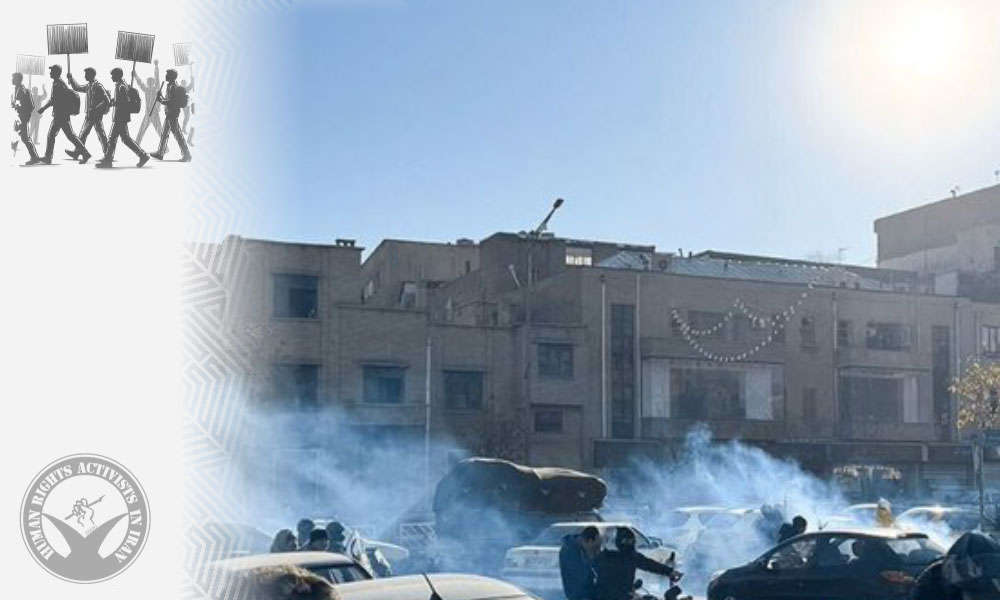
Based on collected information, videos published on the fourth day show the deployment of riot control forces and equipment and crowd-control measures on Valiasr Street, the intersection of Imam Khomeini Street in Tehran, and streets in the city of Qods.

In the provinces, protests continued to spread. Reports indicate gatherings in front of the Fasa County Governor’s Office on Jomhouri Street, at Naqsh-e Jahan Square in Isfahan, as well as in Kuhdasht, Nobahar Street in Kermanshah, Aligudarz, Dorud, Genaveh, Baghmalek, and Hamedan. A video published from Kuhdasht shows confrontations between protesters and law enforcement and security forces. Additionally, shopkeepers in Ahmadabad Square and Yakhchal Street in Isfahan refused to carry out their activities and went on strike.

Universities Join In and Student Protests

On the fourth day of protests, published videos showed the continuation of student protests at Isfahan University of Technology for a second consecutive day. The footage shows a group of students marching and chanting slogans on the university campus.

Methods of Protest and Slogans

The fourth day of protests featured a combination of labor strikes, gatherings, and street marches. Bazaar merchants played a central role in sustaining the protests by closing their shops and calling on other tradespeople to strike. According to verified videos, slogans such as “Death to the dictator,” “Honorable bazaar merchants, support, support,” “Woman, Life, Freedom,” and “Man, Homeland, Prosperity” were heard in various locations.

Actions by Law Enforcement and Details of Violence

Reports indicate that in several areas, law enforcement and security forces used tear gas to disperse protesters. In Fasa County, citizens’ protests escalated into violence following the intervention of law enforcement and security forces. Published images show officers firing toward protesters. The head of the Fasa judiciary stated that three law enforcement officers were injured.

Arrests and Security Pressure

During last night’s protests and yesterday’s demonstrations, at least 16 citizens were arrested. HRANA reported the arrests of Sultan Emamkhah, Amir Mehdi Razm, Abolfazl Jafsh, and Abolfazl Ashnoud in Behbahan County for issuing a call for citizens to participate in protests. Among them, Sultan Emamkhah has been released. Tasnim News Agency also quoted an informed source at the Ministry of Intelligence as saying that seven citizens had been arrested, claiming that “these individuals were affiliated with opposition groups and intended to turn the protests violent.”

Additionally, the head of the Fasa judiciary stated that during clashes between law enforcement and security forces and protesters in front of the county governor’s office, four protesting citizens were arrested. Some channels close to security institutions reported that one of those arrested was a 27-year-old woman.

Separately, a video circulating on social media shows the person filming reporting the arrest of a citizen by plainclothes security forces in Tehran’s bazaar and calling on others to intervene to prevent the arrest. No information is available regarding when the video was recorded.

Reactions of Officials and State Media

In response to the protests, Mehr News Agency described the gathering of citizens in Fasa County as a “riot” and claimed in a report that no military weapons were used in suppressing the protesters, declaring the situation in Fasa to be calm. The official Sabrin News channel also claimed that officers used launcher weapons with plastic pellet ammunition to disperse individuals near the governor’s office.

Meanwhile, the Governor of Tehran Province claimed that the police’s policy had been one of restraint and that citizens had not been arrested for protesting. Mohammad Sadegh Motamedian asserted that police actions were taken only in limited cases following road blockages and minor clashes, and that no precise assessment of the number of detainees had yet been compiled.

In Conclusion

Protests that began in Tehran’s bazaar, on their fourth day, have been marked by geographic expansion, increased citizen participation, and an intensified presence of security forces. The combination of livelihood and political demands, rising arrests, and officials’ efforts to simultaneously manage the crisis through economic and security measures underscore the authorities’ heightened sensitivity to the continuation of these protests.

HRANA continues to collect, verify, and complete information related to these protests and will publish follow-up reports should the gatherings continue or expand.
Detailed Report on the Third Day of Protests

HRANA – On the third day of economic protests and strikes in Iran, the scope of demonstrations expanded beyond bazaars and commercial centers. With students, citizens, and various social groups joining in, the protests turned into one of the most widespread movements seen in recent years. Incoming reports indicate the spread of protests to numerous cities, an increased presence of law enforcement and security forces, the use of tear gas, the arrest of a number of protesters, and extensive securitization of urban spaces.

Protests that initially began with gatherings and strikes by Tehran’s bazaar merchants entered a new and more expansive phase on their third day, yesterday, Tuesday, December 30. With universities, urban neighborhoods, and markets across multiple provinces joining in, the movement evolved into a convergence of labor, student, and street protests, significantly broadening both its scope and social base.

Background of the Protests

The ongoing protests have taken shape amid a deepening and multifaceted economic crisis in Iran, marked by an unprecedented surge in foreign exchange rates, the sharp devaluation of the national currency, persistent inflation, prolonged market stagnation, declining purchasing power, the growing inability of tradespeople to sustain economic activity, and widespread uncertainty over future livelihoods.

According to official data, the U.S. dollar has surpassed 140,000 tomans in recent days, alongside reports of massive capital flight from the stock market. A sharp decline in market indices and the movement of capital toward parallel markets such as currency and gold are cited as signs of growing distrust in economic stability. This situation has led to widespread shop closures, market strikes, and the formation of protest gatherings across the country.

Geography of the Protests

Based on collected information, demonstrations and strikes on the third day were reported in numerous locations in Tehran and other cities. In Tehran, streets including Jomhouri, Mollasadra, Bani Hashem, Khayyam, Sabounian, Enghelab Avenue, and Shoosh Square were among the areas where citizens gathered to protest. Reports also describe gatherings and marches by bazaar merchants and citizens in the Shadabad iron market and various parts of Tehran’s Grand Bazaar, including the alleys of Seyed Esmail, Hammam-Chal, and Mohammad Sarraf.

In the provinces, the protests continued to expand. Reports came from Nourabad Mamasani in Fars Province; Hamedan; Fuladshahr and Najafabad in Isfahan Province; Kermanshah; Arak; and Shiraz. In Shiraz, strikes by bazaar merchants and protest gatherings were reported in several locations, including an area known as “Sar-e Dozak,” while a noticeable security presence was observed on major city thoroughfares.

Universities Join In and Student Protests

On the third day of the protests, students at numerous universities across the country joined the movement by holding protest gatherings in solidarity with the demands of shopkeepers and bazaar merchants. Student demonstrations were reported at universities in Tehran, Yazd, Zanjan, Shahid Beheshti, Khajeh Nasir al-Din Tusi, Sharif University of Technology, Iran University of Science and Technology, Amirkabir University of Technology, Elm-o Farhang University, Isfahan University of Technology, and Allameh Tabataba’i University, underscoring the growing alignment between student activism and broader social and economic grievances.

During these gatherings, students raised not only demands related to livelihoods but also their own labor and political demands. According to verified videos, students chanted slogans such as: “The student may die, but will not accept humiliation,” “Neither headscarf nor beating, freedom and equality,” “All these years of crimes, death to this guardianship,” “Poverty, corruption, oppression, death to this despotism,” “Woman, Life, Freedom,” “Neither barracks nor enterprise, hail the university,” and “Political prisoners must be freed.”

Methods of Protest and Slogans

The third day of protests featured a combination of labor strikes, street gatherings, marches, and university protests. Bazaar merchants played a central role by closing their shops and calling on other tradespeople to strike.

Verified videos show chants including: “Close them, close them,” “Bazaar merchants closed, those without honor stayed seated,” “Honorable bazaar merchants, support, support,” “Death to the dictator,” “Neither Gaza nor Lebanon, my life for Iran,” “Don’t be afraid, don’t be afraid, we are all together,” and “Khamenei is a murderer; his rule is illegitimate,” heard in various locations.

Actions by Law Enforcement and Details of Violence

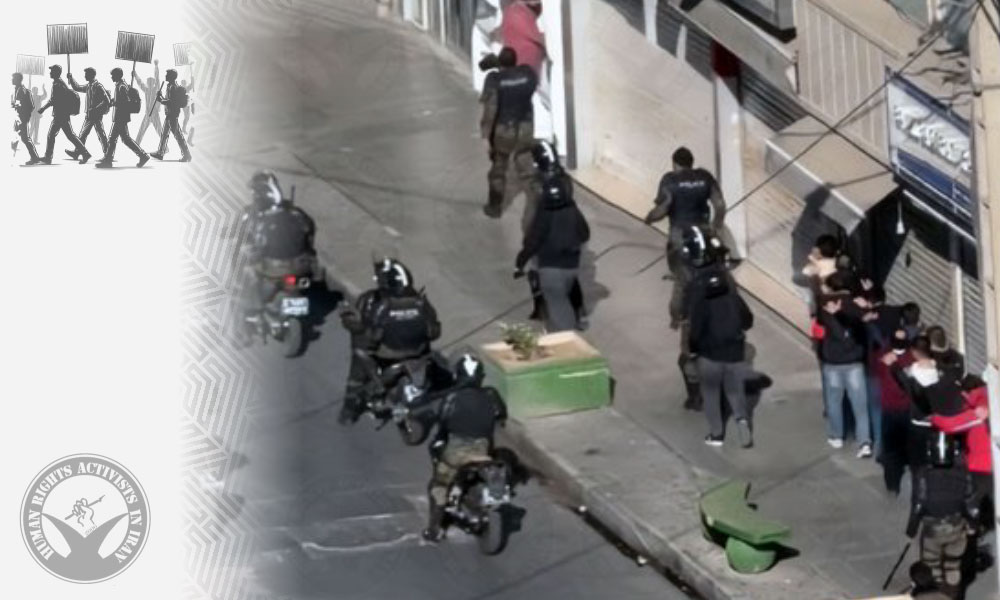
Reports indicate that in several areas of Tehran, special units and riot police moved in to disperse protesters. According to published images and videos, law enforcement and security forces used tear gas to scatter demonstrators on Khayyam Street in Tehran.

In Kermanshah, reports were received of tear gas being fired and clashes between security forces and protesters. In Hamedan, security forces reportedly confronted protesters in some central areas of the city and beat them.

Student sources reported clashes between security forces and protesting students at Shahid Beheshti University. In addition, there were reports of a heavy deployment of riot police around Tehran’s bazaar, several central streets of the capital, and outside the exit gates of Sharif University of Technology. In Shiraz, the creation of a security atmosphere on Hazrati Street was reported.

Images from Jomhouri Street in Tehran show that the large gathering of protesters in the area forced law enforcement and security forces to retreat.

Arrests and Security Pressure

During the third day of protests, a number of citizens and students were arrested. According to student sources, Abolfazl Moravati, a 2024 master’s student in computer engineering at Sharif University of Technology, was arrested with beatings by security forces in front of the university gate.

Additionally, four students from the University of Tehran, Shahin Shokouhi, Aref Hadi-Nejad, Mobin Aminian, and Mani Eydi, were arrested during yesterday’s protest gatherings and transferred to undisclosed locations. They were reportedly released earlier today.

Earlier this evening, a video was published showing that at least 11 citizens were arrested by law enforcement and security forces on Sabounian Street near Shoosh Square in Tehran. The identities of these individuals have not yet been confirmed.

At the same time, Zahra Soleimani, the wife of Mehdi Beik, political editor of Etemad newspaper, announced that her husband had been arrested after going to Tehran’s bazaar to cover the protests. Hours later, Etemad reported his release. Mehdi Beik has previously been arrested as well.

In addition, a relative of Fariba Fereydouni, a civil activist, told HRANA that she had been summoned to the Khomein Intelligence Department after publishing content about the popular protests but refused to appear at the security agency.

Reactions of Officials and State Media

In response to the protests, the head of the Supreme Court pointed to the role of officials’ performance in creating economic problems and described livelihood conditions and rising prices as among society’s main challenges. At the same time, he emphasized that those described as “disruptors of the economic system” would be dealt with.

The government spokesperson also commented on the protests, saying: “When the people’s voice is raised, it means the pressures have been heavy, and it is the government’s duty to listen to these voices.” He claimed that the right to peaceful assembly is recognized in the Constitution.

By contrast, media outlets such as Mashregh News and Tasnim News Agency described the protests as “limited” and claimed an external origin or “media exploitation” of the gatherings.

Meanwhile, the head of the Tax Affairs Organization announced an agreement among the heads of the three branches of government to apply discounts and tax reductions for tradespeople, an announcement made as protests in recent days have gone beyond purely labor-related issues and increasingly highlighted political demands.

In Conclusion

Protests that began in Tehran’s bazaar, on their third day, have been marked by geographic expansion, the joining of universities, increased citizen participation, and an intensified presence of security forces. The combination of livelihood and political demands, rising arrests, and officials’ attempts to simultaneously manage the crisis through economic and security measures underscore the authorities’ heightened sensitivity to the continuation of these protests.

HRANA continues to collect, verify, and complete information related to these protests and will publish follow-up reports should the gatherings continue or expand.

Report on the Second Day of Protests; Expansion of Bazaar Gatherings and Security Forces’ Confrontation

HRANA – On the second day of protests and strikes by bazaar merchants and shopkeepers in Iran, the scope of these gatherings extended beyond Tehran’s Grand Bazaar and spread to several other cities. These protests, formed in response to severe currency market fluctuations, devaluation of national currency, and economic instability, were met in some areas with the presence of law enforcement, security forces and the use of tear gas.

Beginning two days ago, protest gatherings initially started in Tehran’s Grand Bazaar. Subsequently, bazaar merchants and shopkeepers in various parts of the capital joined the protests by closing their shops and halting business activities. Reports received indicate that yesterday, on the second day, the geographic scope of these protests has expanded and taken on a more public and visible form.

Background of the Protests

The recent protests have emerged amid multiple simultaneous crises facing Iran’s economy, including devaluation of national currency, rising inflation, declining purchasing power of citizens, and the continuation of international sanctions. Sharp fluctuations in the currency market in recent days have seriously disrupted pricing, supply of goods, and the ability of many trades to continue operating.

According to reports from official news agencies, a number of exchange offices have either refrained from conducting currency transactions by posting notices or have completely suspended their activities. This situation has led to market stagnation, widespread shop closures, and the formation of protest gatherings in commercial centers.

Geography of the Protests

Based on collected information, protests and strikes by bazaar merchants on the second day were reported in numerous locations across Tehran. These areas include Jomhouri, Saadi, Molavi, Amir Kabir, Taleghani, Nejatollahi, Enghelab, Kargar, and Lalehzar streets. Reports have also been received of gatherings at Tehran’s Grand Bazaar, Chaharsouq, the Gold Bazaar, Alaeddin Shopping Center, Charsu Shopping Complex, Bagh-e Sepahsalar, Shoush Bazaar, Amin Hozour Bazaar, and Hassan Abad Square.

Some reports indicate that the protests have expanded to other cities, including Malard in Tehran Province, Hamedan in Hamedan Province, and Qeshm Island in Hormozgan Province. In these areas, shopkeepers expressed their protest to the economic situation by closing their shops and calling on others to join the strike.

Additionally, reports have been published about a protest gathering by students residing in the University of Tehran dormitory complex, where they chanted slogans to voice their demands.

Methods of Protest and Chants

Bazaar merchants and protesting citizens expressed their opposition by closing shop shutters, gathering in main thoroughfares, and marching in some areas. The slogans chanted during these gatherings, beyond trade-related demands, in some cases took on a political character.

According to verified videos, chants heard in various locations included: “High prices and inflation are a plague on people’s lives,” “The bazaar merchant may die but will not accept humiliation,” “Close them, close them,” “Death to the dictator,” and “Neither Gaza nor Lebanon, my life for Iran.”

Confrontation by Law Enforcement–Security Forces and Details of Violence

Field reports indicate that in several areas of Tehran, special units and riot police intervened to disperse protesters. According to published images and videos, tear gas was used to disperse gatherings on Jomhouri Street, around Alaeddin Shopping Center, Bagh-e Sepahsalar, Kargar Street, and other locations.

Videos have also circulated showing the beating of a protester by security forces; the individual is seen sitting in the middle of the street, without attempting to flee, facing motorcycle-mounted forces.

A heavy presence of riot police and their deployment along main routes, including Hafez Bridge and around City Theater, has also been reported.

Reactions of Officials and State-Affiliated Media

In response to these protests, officials and media outlets close to security institutions have warned about the “politicization” of the gatherings. Fars and Tasnim news agencies, in published reports, have claimed the presence of “small organized cells” among the protesters and described the trade-related protests as vulnerable to “security exploitation.”

The Interior Ministry’s deputy for security affairs described the currency market fluctuations as the result of a “psychological atmosphere” and urged citizens not to be influenced by “enemy instigations.” The head of the judiciary also warned that actions which, according to him, cause “disruption of the economic system” could face severe judicial prosecution.

Conclusion

The recent economic protests, which began in Tehran’s Grand Bazaar, on their second day were accompanied by geographic expansion, increased participation by various trades, and an intensified presence of security forces. The combination of economic demands with political slogans, the harsh reactions of officials, and the use of suppressive measures indicate the high sensitivity of the authorities toward these developments.

HRANA continues to collect, verify, and complete information related to these protests and will publish follow-up reports should the gatherings continue.