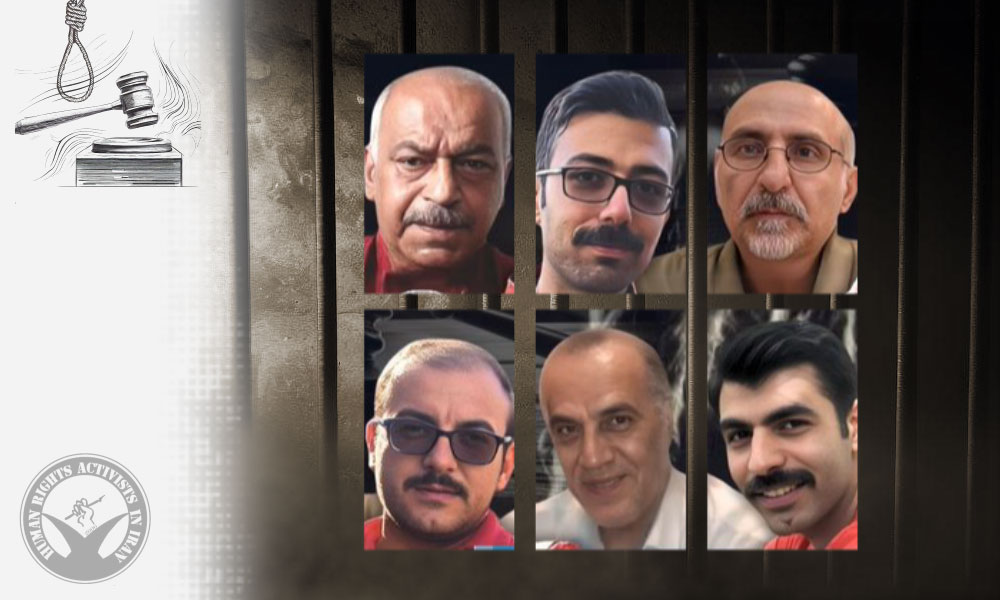
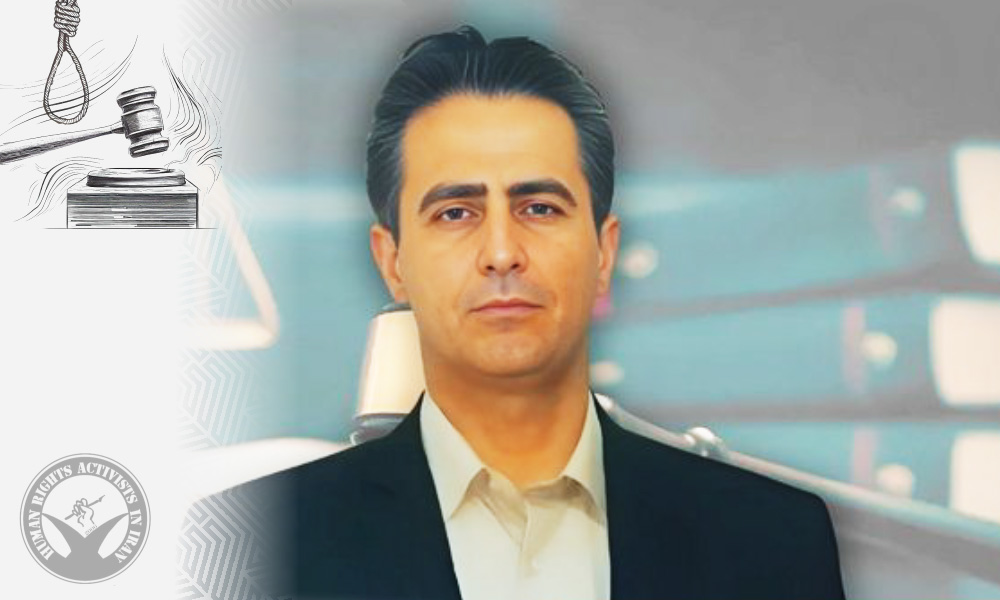
Political Prisoners Akbar Daneshvar-Kar and Mohammad Taghavi Sang-Dehi Executed

HRANA – The Judiciary Media Center announced that the death sentences of Akbar Daneshvar-Kar and Seyed Mohammad Taghavi Sang-Dehi, political prisoners, were carried out at dawn today, Monday, 30 March 2026.

According to Mizan, the Judiciary’s Media Center, the sentences were implemented this morning after being upheld by the Supreme Court. The death sentences against Daneshvar-Kar, Taghavi Sang-Dehi, and four others had previously been issued on the charge of baghi (armed rebellion against the state) through membership in opposition groups. In July 2025, the Supreme Court overturned the ruling and referred their case to a parallel branch for retrial.

In November 2025, they were retried in Branch 26 of the Tehran Revolutionary Court, presided over by Judge Iman Afshari. Ultimately, on December 7, 2025, the same branch reissued the death sentence for these political prisoners and formally notified their lawyers.

The Judiciary claimed that “Akbar Daneshvar-Kar and Mohammad Taghavi Sang-Dehi, through membership in the Mojahedin-e Khalq Organization (MEK) and direct contact with its coordinators, formed operational cells and participated in planning and carrying out disruptive and sabotage actions against various national institutions. With the aim of undermining internal security and overthrowing the Islamic Republic, they allegedly procured explosive equipment and delivered it to the group’s operational units.”

The statement further alleged that their activities included “collecting intelligence, building and transferring launchers and mortars, participating in protests and disruptive operations, and using safe houses, all under the direction and coordination of the MEK.” It added that, based on case documents, CCTV footage, and the defendants’ statements, the Judiciary confirmed the death sentence for both men.

On February 23, 2024, Seyed Mohammad Taghavi was arrested in Chaldoran County and transferred to Maku Prison. He was later moved to Evin Prison on March 1, 2024. Akbar Daneshvar-Kar had also previously been arrested by security forces and transferred to Evin Prison. In May, 2024, the prisoners were formally charged in Branch 5 of the Tehran Public and Revolutionary Prosecutor’s Office, and later that summer were transferred to Ghezel Hesar Prison in Karaj.

Taghavi, a former political prisoner from the 1980s, had previously served prison sentences for his activism.

According to HRA’s annual report, at least 2,063 people were executed in Iran during 2025. This marks a 119% increase in executions compared to 2024.

Day 33 of the Protests: EU Designates IRGC as a Terrorist Organization as Repression Persists

HRANA – According to the latest aggregated data compiled by HRANA on the thirty-third day since the start of the protests, the total number of confirmed deaths has reached 6,479. Of these, 6,092 were protesters, 118 were children under the age of 18, 214 were government-affiliated forces, and 55 were non-protester civilians. In addition, 17,091 cases remain under investigation. The number of injured civilians has been reported at 11,020, along with 281 cases of forced confessions and 11,027 summonses to security institutions. Furthermore, a total of 660 protest-related incidents have been recorded across 203 cities in 31 provinces.

Today, two parallel developments unfolded. On the one hand, external reactions and pressure, particularly in Europe, intensified, with a focus on designating the Islamic Revolutionary Guard Corps as a terrorist organization and imposing human rights sanctions. On the other hand, repression continued domestically following the street phase of the protests, taking the form of ongoing arrests, the presence of security institutions in schools, and increased pressure in detention centers and medical facilities.

Designating the IRGC as a Terrorist Organization and Sanctions Packages

In recent days, the European Union has pursued pressure on Iran’s repressive apparatus through two parallel tools: placing the Islamic Revolutionary Guard Corps (IRGC) on the list of terrorist organizations and expanding targeted human rights sanctions against individuals and entities involved in the crackdown. Kaja Kallas, the European Union’s High Representative for Foreign Affairs, announced that EU foreign ministers had taken a “decisive” step by designating the Islamic Revolutionary Guard Corps as a terrorist organization, stressing that the repression of protesters would not go unanswered.

Simultaneously, the European Union sanctioned 15 individuals and 6 Iranian entities for their “involvement in or responsibility for human rights violations and the repression of protesters.” According to HRANA, these sanctions include asset freezes, travel bans to the European Union, and prohibitions on providing any financial or economic resources to the listed individuals and entities.

Among the announced cases are the names of several key figures and institutions. These include Eskandar Momeni (Minister of Interior), Mohammad Movahedi Azad (Prosecutor General), and Iman Afshari (judge of Branch 26 of Tehran’s Revolutionary Court), whom the Council of Europe has linked to roles in the “violent suppression of protests” and “arbitrary arrests.”

In the supplementary sanctions packages tied to digital repression, the Organization for the Regulation of Audio and Visual Media (SATRA), the IRGC’s Center for the Examination of Organized Crimes (Seraj Center), and the Working Group for Determining Criminal Content have also been named as entities playing a direct role in the “control, censorship, and suppression of communications and cyberspace.”

Experts believe that at the political level these measures go beyond mere “sanctions.” The formal redefinition of the IRGC as a terrorist actor in Europe carries broader implications: increasing the risks of financial and legal engagement with affiliated structures, strengthening the legal basis for accountability efforts, and at the same time raising the political cost of normalizing relations with institutions responsible for repression.

Reactions indicate that this process in Europe has moved beyond a purely “symbolic” or media-driven stance. Roberta Metsola, President of the European Parliament, voiced support for the EU’s move to designate the IRGC as a terrorist organization, calling it “the right decision” and emphasizing the need to “stand firm.” Meanwhile, Hadja Lahbib (EU Commissioner) referred to the decision to impose new sanctions on individuals involved in the crackdown and spoke of the European Union’s support for investigations and fact-finding mechanisms into the killing of protesters.

Repression and Arrests: Security Agents’ Presence in Schools and Harsh Situation at Mashhad Detention Centers

Despite the subsiding of the street phase of the protests, field reports indicate that arrests and prosecution continue, and in some areas have been accompanied by new waves of mass arrests. According to HRANA, at least 706 citizens were arrested over the past 24 hours in the cities of Dezful, Yazd, Borujen, Borujerd, and Nur. In addition, the Public Security Police of FARAJA reported the arrest of 327 protesters nationwide since December 28, while the General Directorate of Intelligence of Hormozgan Province announced the arrest of 65 citizens in connection with the protests.

Individual arrests by security forces follow the street-level crackdown. HRANA has reported the detention and continued lack of information regarding several detained individuals: Maedeh Dowlatabadi (21) in Urmia, who is being held in a security detention facility; as well as Farhad Jangi-Zehi (Minab) and Ehsan Nedaei-Hour (Ramsar), who were arrested on different dates and remain in custody.

At the same time, arrests among students have also continued. HRANA has reported the detention of Amin Norouzi and Ilya Bakhshaie (two students in Yazd), as well as Yousef Yousefi, a student at Kharazmi University of Technology in Tehran, during the protests.

One indicator of the continuation of repression is the transfer of security pressure into schools. Reports indicate that security agents have been dispatched to schools and have spoken with students in an effort to impose the official narrative of the protests. An 18-year-old student from Bandar Abbas stated that in recent days, agents have been sent to schools and are attempting to promote the government’s official account.

Taken together, these data suggest that the policy of control has shifted from the “street” to universities, schools, and detention centers, aiming to prevent the re-emergence of protests through sustained pressure and the cultivation of lasting fear.

Crackdowns in Medical Facilities and Arrests in Hospitals

Reports related to the treatment of the injured most clearly reflect the intensity of pressure and repression, where seeking medical care can turn into a risk of arrest. According to an account from a source in Tehran, a large number of citizens with pellet-gun injuries to the eyes sought treatment at a specialized ophthalmology hospital in the city. After the protests ended, representatives from the medical sciences university and security institutions visited the hospital, extracted the names of all individuals hospitalized between January 8 and January 12, and took the information with them.

the Deputy for Nursing Affairs at Iran’s Ministry of Health said that if individuals seek treatment and provide a different name, “no one conducts an inspection,” and that identity verification is only required if insurance is used, a claim that effectively acknowledges the presence of fear and the issue of identity checks, even though it does not directly reference security forces entering hospitals. Abbas Abadi, the Ministry’s Deputy for Nursing Affairs, also warned about the consequences of delayed treatment, stating that postponement can lead to wound infections and the need for complex surgeries.

At the international level, the World Health Organization announced that amid the widespread crackdown on protesters, it has confirmed an attack on a hospital in Iran and emphasized the necessity of protecting healthcare facilities and ensuring unhindered access to medical services.

Taken together, these reports indicate that the “space of medical care” has also become part of the security arena, from extracting the names of the injured to heightened fear of seeking treatment, and multiple reports of the abduction or arrest of wounded individuals.

Teachers’ Statement and the Killing of Several Educators

The Coordination Council of Teachers’ Trade Associations of Iran stated in a communiqué that, alongside references to mounting security pressures, several teachers were killed during the protests: Kamran Akbari, Karamali A‘laei, and Reza Karimi-Far (Ansari-Far).

Updated (Aggregated) Statistics Through the End of Day 33 of the Protests

• Total protest locations/incidents in cities: 660
• Number of cities (non-duplicative): 203
• Number of provinces (non-duplicative): 31

• Injured civilians: 11,020
• Arrested children, adolescents, and students: 326
• Arrested students: 70
• Forced confessions: 281
• Summonses: 11,027

• Total protesters killed: 6,092

▪️ Including children: 118
▪️ Military/government-affiliated forces: 214
▪️ Non-protester civilians: 55

• Total deaths: 6,479

• Cases under review: 17,091 cases

Summary

Day 33 of the protests was marked by the continuation of post-crackdown repression, including ongoing arrests, an expanded security presence in schools, and sustained pressure on detention centers and medical facilities. At the same time, international developments, most notably the designation of the IRGC as a terrorist organization and the imposition of targeted European sanctions, underscore that the repression file remains active and is entering a phase of intensified diplomatic and human rights pressure.

Six Political Prisoners Re-Sentenced to Death after Retrial

HRANA – Political prisoners Akbar Daneshvar Kar, Seyed Mohammad Taghavi Sang-Dehi, Babak Alipour, Pouya Ghobadi Bistouni, Vahid Bani-Amerian, and Seyed Abolhassan Montazer have once again been sentenced to death by Judge Iman Afshari.

The initial death sentences for Daneshvar Kar, Taghavi Sang-Dehi, Alipour, Ghobadi Bistouni, Bani-Amrian, and Montazer had been issued on the charge of baghi (armed rebellion) through alleged membership in anti-government groups. These sentences were overturned by the Supreme Court in August this year, and the case was sent back for reconsideration.

In November, the six prisoners were retried in Branch 26 of the Tehran Revolutionary Court, presided over by Judge Iman Afshari. Ultimately, on Sunday, December 7, their death sentences were issued once more and formally communicated to their lawyers.

In addition to the charge of baghi, the prisoners were also sentenced to prison terms and internal exile on charges including assembly and collusion to disrupt national security, property destruction, forming unlawful groups, and illegal border crossing.

Babak Alipour was arrested by security forces in Tehran in the fall of 2023, and Vahid Bani-Amerian was arrested in December 2023. On February 23, 2024, Pouya Ghobadi and Seyed Mohammad Taghavi were arrested in Chaldoran County and transferred to Maku Prison, before being moved to Evin Prison on March 1, 2024. Akbar Daneshvar had also been previously arrested by security forces and transferred to Evin Prison. These individuals were formally charged in May 2024 in Branch 5 of the Tehran Prosecutor’s Office and were subsequently transferred to Ghezel Hesar Prison in the summer of that year.

Seyed Mohammad Taghavi, a political prisoner from the 1980s, as well as Vahid Bani-Amerian, Pouya Ghobadi, and Babak Alipour, all have prior records of arrest and imprisonment related to their activities.

Appeals Court Ruling: Donya Hosseini Sentenced to Prison

HRANA – The prison sentence of Donya Hosseini has been upheld in full by Branch 36 of the Tehran Province Court of Appeals. Ms. Hosseini had previously been sentenced by Branch 26 of the Tehran Revolutionary Court to three years and six months of imprisonment.

Based on information received by HRANA, Ms. Hosseini was sentenced by Branch 36 of the Tehran Court of Appeals, presided over by Judge Khojasteh, to three years and six months in prison on the charge of “propaganda against the regime in support of strengthening the Israeli government.” This sentence had originally been issued at the preliminary stage by Branch 26 of the Tehran Revolutionary Court, presided over by Judge Iman Afshari.

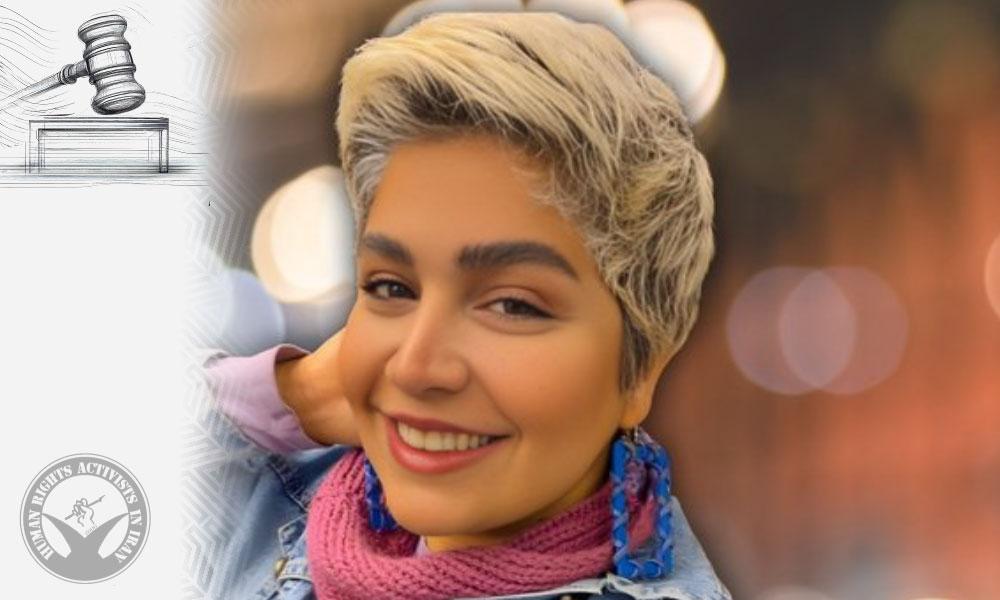
Donya Hosseini, also known by the alias “Donya Azad,” aged 36, was arrested in Tehran by security forces on June 16 of this year and released from Qarchak Varamin Prison on Sunday, August 3, after posting bail of 3 billion tomans.

In 2023, Ms. Hosseini was also sentenced in a separate case to five years of suspended imprisonment and a monetary fine.

Neda Fotoohi and Zohreh Sarv Face Fresh Charges in Prison

HRANA – Political prisoners Zohreh Sarv and Neda Fotoohi, held in Qarchak Varamin Prison, are now facing a new case filed against them at the Tehran Public and Revolutionary Prosecutor’s Office.

According to information received by HRANA, a recent power outage in Qarchak Prison led some inmates to chant protest slogans. In the aftermath, Branch 39 of the Tehran Public and Revolutionary Prosecutor’s Office opened a new case against Sarv and Fotoohi, accusing them of “insulting the Supreme Leader.”

In July of this year, Sarv’s six-year prison sentence was upheld in full after the Supreme Court approved her retrial request and the case was re-examined by another branch of the Revolutionary Court. Earlier, Branch 26 of the Revolutionary Court had sentenced her to a total of seven years in prison on charges of “assembly and collusion” and “propaganda against the regime.” Under Article 134 of the Islamic Penal Code, six years of that sentence remain enforceable.

In October last year, Sarv’s request for conditional release was once again denied, despite the fact that, including her pre-trial detention, she had already served more than one-third of her sentence.

Zohreh Sarv, 39, and active on social media under the name “Mah Far”, was arrested by security forces in August 2022. She has previously faced arrest and conviction.

Neda Fotoohi was also tried by Branch 26 of the Tehran Revolutionary Court, presided over by Iman Afshari. She was sentenced to a total of six years and eight months in prison on charges including “propaganda against the regime,” “membership in the Erfan-e Halgheh group,” and “assembly and collusion against national security” through attending and encouraging others to attend protests related to Mahsa Amini and her anniversary. This political prisoner, a resident of Tehran, was arrested by security forces in October 2023.

Subscribe to Our Newsletter

Now is definitely not the time to stop reading!

Journalist Omid Faraghat Sentenced to 3 Months in Prison

HRANA – Omid Faraghat, a journalist, has been sentenced to three months in prison by Branch 26 of the Tehran Revolutionary Court. In a separate ruling, Branch 3 of the Karaj Revolutionary Court acquitted him of other charges.

According to HRANA, Mr. Faraghat reported that Branch 26 of the Tehran Revolutionary Court, presided over by Judge Iman Afshari, convicted him on the charge of propaganda against the regime and sentenced him to three months in prison. The charge was based on allegations of interviews with Persian-language media outlets based abroad, a claim he has denied.

At the same time, Branch 3 of the Karaj Revolutionary Court acquitted him of additional charges of propaganda against the regime and spreading falsehoods to disturb public opinion. The trial concerning these accusations took place on Monday, August 18.

The conviction that resulted in his prison sentence was issued following a separate hearing held on Sunday, July 13, in Branch 26 of the Tehran Revolutionary Court.

Omid Faraghat, a journalist and political media activist residing in Karaj, has previously faced judicial proceedings in connection with his professional activities.

Singer Danial Moghaddam Sentenced to Prison and Additional Penalties

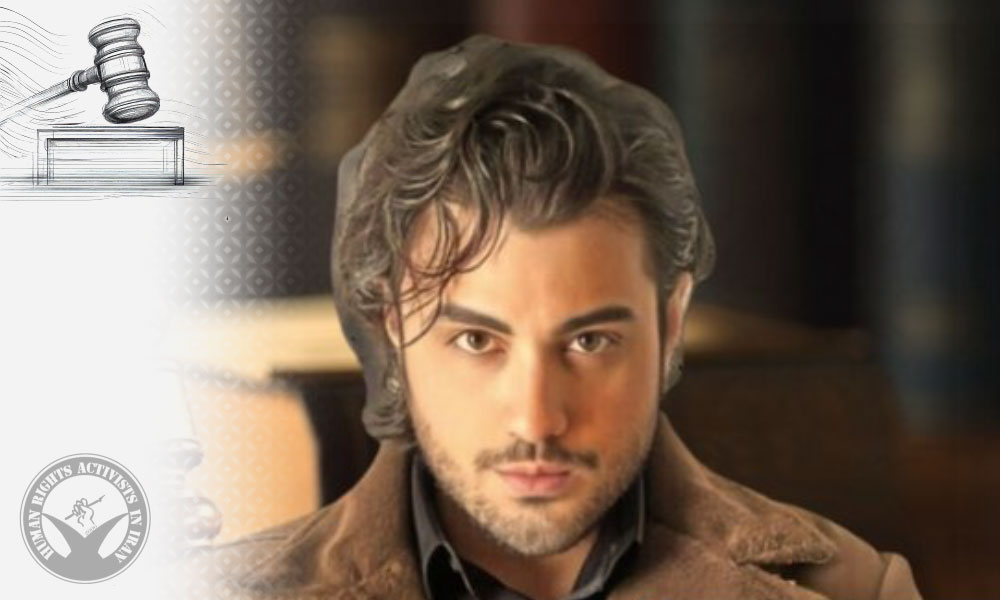
HRANA – Danial Moghaddam, a dissident singer held in Evin Prison, has been sentenced by Branch 26 of the Tehran Revolutionary Court to eight months in prison along with additional penalties.

According to HRANA, the news agency of Human Rights Activists in Iran, Judge Iman Afshari of Branch 26 of the Tehran Revolutionary Court issued the verdict against Moghaddam.

Based on information received by HRANA, the ruling was issued on August 9 and was recently delivered to Moghaddam. He has been sentenced to eight months in prison on the charge of “propaganda against the regime” and banned for two years from residing in Tehran Province and neighboring provinces, as well as from leaving the country.

A source familiar with the case told HRANA that Moghaddam’s charges stemmed from publishing posts on social media and sending photos to Persian-language media outlets abroad.

Earlier in late June, his lawyer, Mohammad Hadi Jafarpoor, announced that Moghaddam had been arrested after failing to post bail, following a detention order issued by Branch 3 of the Revolutionary Prosecutor’s Office. Shortly afterward, Moghaddam published a video on his personal page referring to the dire conditions in Evin Prison during Israel’s airstrikes. In the video, he stated that due to the shockwaves and emergency situation, he unintentionally left the prison while in a state of confusion and lack of full awareness, and did not return. Moghaddam also cited reasons for his arrest, including support for the families of those killed in protests, calls for the release of political prisoners, and his presence outside Evin Prison to oppose executions.

On Tuesday, July 29, he was rearrested by security forces in Shiraz, transferred to the Greater Tehran Prison, and later returned to Evin.

Danial Moghaddam has previously been arrested and convicted due to his activism.

Hasti Amiri Sentenced to Prison, Fine, and Additional Punishments

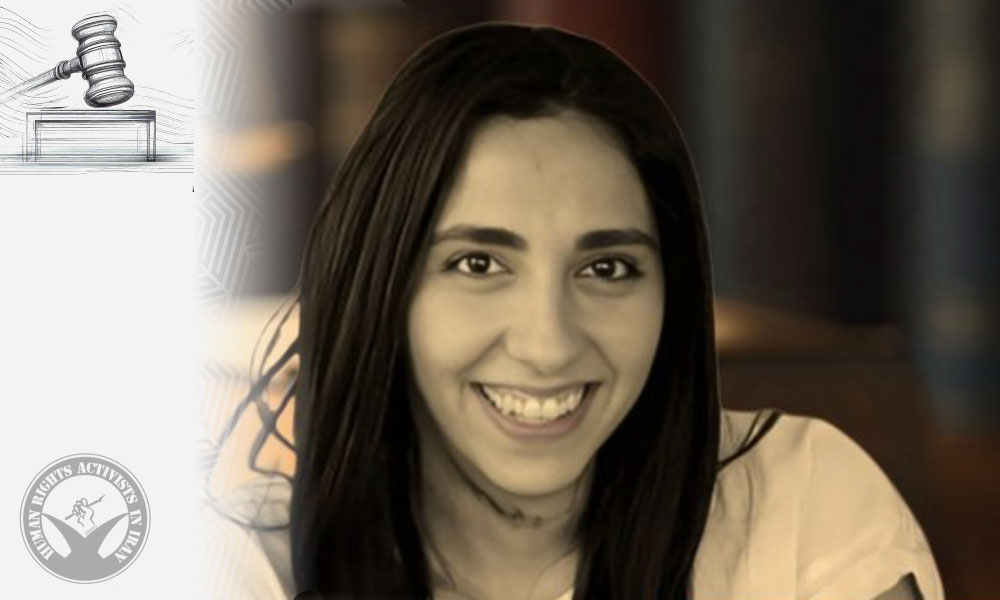
HRANA – Hasti Amiri, a student at Allameh Tabataba’i University in Tehran, has been sentenced by Branch 26 of the Tehran Revolutionary Court to three years in prison, fines, and supplementary punishments.

This verdict was issued in absentia by Branch 26 of the Tehran Revolutionary Court and was notified to Amiri yesterday. Based on the ruling, she was sentenced to one year in prison for “propaganda against the regime,” and fined 3.3 million tomans for “appearing in public without mandatory hijab.” She was also sentenced to two years in prison and fined 50 million tomans for “spreading falsehoods with the intent to disturb public opinion.”

Judge Iman Afshari also imposed supplementary punishments, banning Amiri for two years from leaving the country and from membership in political and social groups.

On Saturday, April 26, 2025, Amiri was arrested after appearing at the Evin Courthouse and transferred to Evin Prison. She was released the following day after posting bail.

Hasti Amiri has previously been arrested and served prison time due to her activism.

New Case Filed in Prison: Mehdi Mahmoudian Summoned to Tehran Prosecutor’s Office

HRANA – Mehdi Mahmoudian, a civil activist imprisoned in the Greater Tehran Prison, is facing a new legal case. He has been summoned to the Public and Revolutionary Prosecutor’s Office in Tehran after receiving a notice to defend himself against new charges.

A recent summons, issued by Branch 5 of the Public and Revolutionary Prosecutor’s Office of District 31 (Media and Cyber Crimes) in Tehran, was delivered to Mr. Mahmoudian’s family. He has been asked to appear and respond to the charge of “spreading false information.”

Earlier this month, following Israel’s attack on Evin Prison, Mr. Mahmoudian was transferred to Greater Tehran Prison along with several other prisoners.

On February 3, 2025, he was arrested at the Enforcement Branch and sent to prison to serve his sentence.

Previously, Mahmoudian had been tried in Branch 26 of the Tehran Revolutionary Court, presided over by Judge Iman Afshari. He was sentenced to 8 months in prison on the charge of “propaganda against the regime,” along with two-year bans on party membership, smartphone use, and foreign travel.

Commenting on his sentence, Mahmoudian had written that “all of these punishments were imposed solely because I responded to a false report by a news outlet about the ‘eradication of bedbugs in prison,’ and wrote that they are ‘addicted to lying.’”

He had also previously faced prosecution for giving an interview about the difficulties Baha’is face in burying their deceased. In May of last year, he was arrested after appearing at the Prosecutor’s Office for Culture and Media and released a day later on bail.

Supreme Court Rejects Death-Row Political Prisoner Mehdi Hasani’s Retrial Request for the Fourth Time

HRANA — The Supreme Court has, for the fourth time, rejected the retrial request of Mehdi Hasani, a political prisoner on death row currently held in Ghezel Hesar Prison in Karaj.

Amin Adel Ahmadian, Hasani’s defense attorney, announced the decision in a public statement, saying: “The Supreme Court rejected the retrial request without retrieving the original case file from the lower court and likely without reviewing the legal brief I submitted. I have also not yet been granted access to examine Mr. Hasani’s case file.”

This marks the fourth rejection of a retrial request for Hasani. The third was denied in April 2025, and the second earlier that same month. The first request was dismissed on February 24, 2024, by Branch 39 of the Supreme Court.

On January 26, 2025, Mehdi Hasani and fellow death row political prisoner Behrooz Ehsani Eslamlou were transferred from Evin Prison to Ghezel Hesar under the pretense of receiving medical care. The execution of their death sentences was subsequently paused after their retrial requests were registered and initially accepted by the Supreme Court.

In September 2024, both men were tried by Branch 26 of Tehran’s Revolutionary Court, presided over by Judge Iman Afshari. They were sentenced to death on charges including baghi (armed rebellion), moharebeh (waging war against God), efsad-e fel arz (corruption on earth), gathering classified information, and assembly and collusion against national security.

Alleged membership in the People’s Mojahedin Organization of Iran (PMOI/MEK) is among the central charges brought against them.

Mehdi Hasani, approximately 49 years old, is married and the father of two. He was arrested on September 9, 2022, while attempting to leave the country through Zanjan and was subsequently transferred to Evin Prison.