Appeals Court Upholds Prison Sentence and Political Ban for Former Isfahan City Council Member

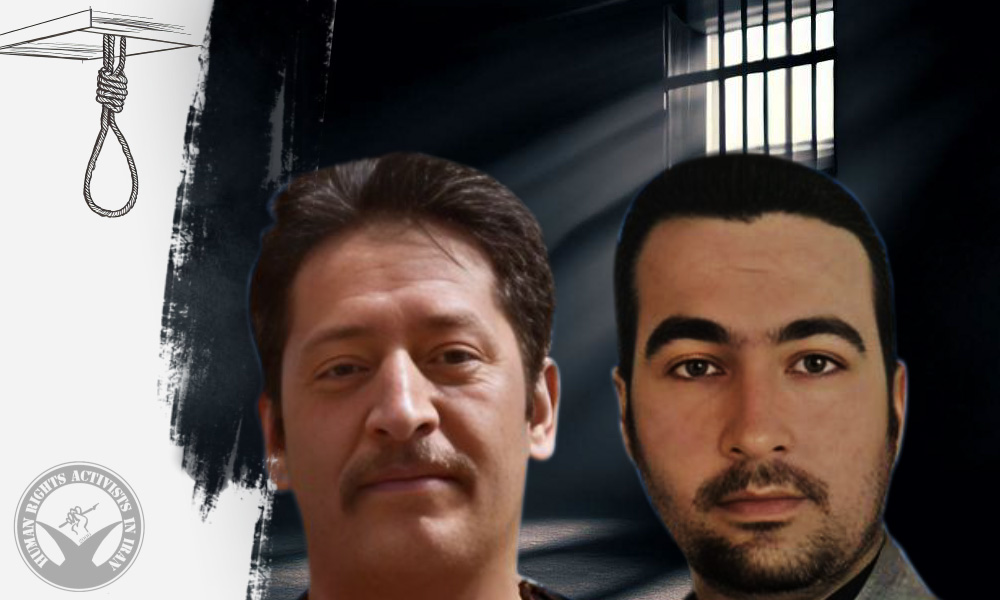
The Appeals Court of Isfahan Province has upheld the prison sentence and additional penalties imposed on Mehdi Moghadari, a former member of Isfahan’s City Council.

In its recent ruling, the court confirmed a one-year prison sentence for “propaganda against the regime.” Additionally, it upheld a set of complementary penalties, including a travel ban, a prohibition on social media activity, and a two-year ban on participation in political groups, parties, and organizations.

The initial trial for Mr. Moghadari took place in Branch 1 of the Isfahan Revolutionary Court. In August 2024, the court sentenced him to these penalties.

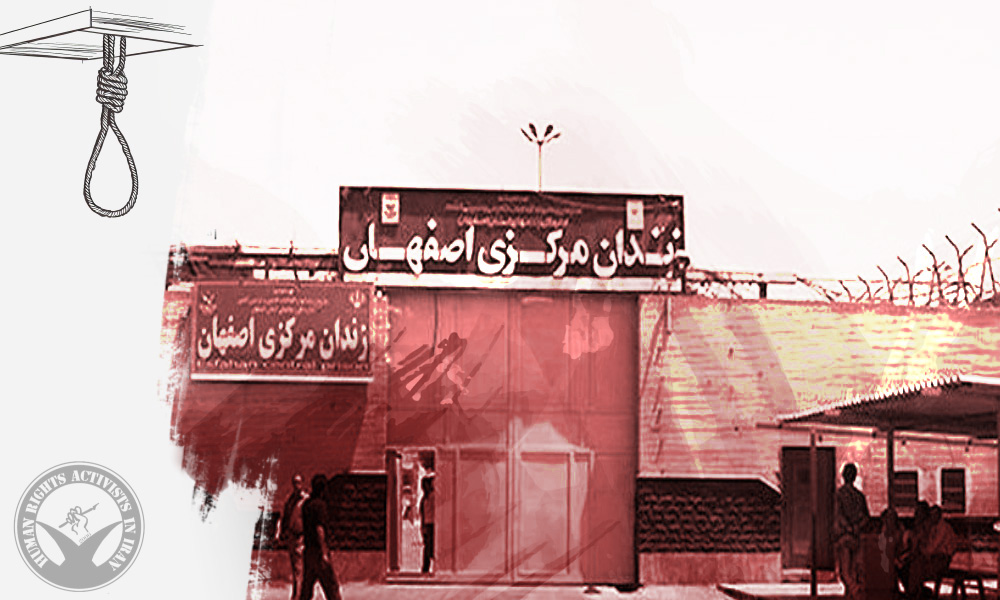
Mr. Moghadari was first arrested by security forces in late November 2022 in Isfahan. He was released from Dastgerd Prison in February 2023 under a general “pardon” directive. The former city council member has a history of previous arrests and convictions related to his activities.

Two Brothers Executed in Dastgerd Prison, Isfahan

On December 24, 2024, two prisoners, who had been sentenced to death on murder charges in a joint case, were executed in Dastgerd Prison, Isfahan.

According to HRANA, citing the Iranian Human Rights Organization, the executed individuals were identified as brothers: Ali Manian, 27, and Jasem Manian, 31.

The report reveals that the brothers were arrested two years ago on allegations of murdering a friend. They were subsequently tried and sentenced to death in a joint case.

At the time of writing, neither prison officials nor relevant authorities have formally confirmed the execution.

According to latest HRANA’s annual report over between October 10, 2023, and October 8, 2024, at least 811 individuals were executed by hanging in Iran, rising to 23.06% compared to the same period last year. Of these executions, four were carried out in public. Many of the defendants were denied a fair trial.

Execution of Two Prisoners in Dastgerd Prison, Isfahan, on Drug-Related Charges

On December 22, two prisoners convicted of drug-related offenses were executed in Dastgerd Prison, Isfahan.

The Iran Human Rights Organization has identified one of the prisoners as Arman Samadi, approximately 30 years old, whose conviction dates back four years. HRANA identified the second prisoner as Ashkan Parseh, a 29-year-old resident of Aligudarz.

Both individuals were arrested on charges related to drug offenses and subsequently sentenced to death by the Revolutionary Court.

As of the time of this report, prison authorities and relevant officials have not publicly confirmed these executions.

The reports from the Department of Statistics and Publication of Human Rights Activists for the year 2023 reveal a concerning prevalence of executions for drug offenses in Iran, constituting 56.4% of the total executions. For a comprehensive examination of the details and statistics surrounding the executions in Iran, refer to HRANA’s report.

Three Executions Carried Out in Isfahan and Mashhad Prisons

Yesterday, December 12, the death sentences of three prisoners, previously convicted on charges related to drug offenses and murder, were carried out in Dastgerd Prison in Isfahan and Vakilabad Prison in Mashhad.

According to HRANA, quoting the Iranian Human Rights Organization, on Thursday, December 12, 2024, one prisoner was executed in Dastgerd Prison, Isfahan.

According to the Iranian Human Rights Organization, Majid Esmaeili, 30 years old and a resident of Isfahan, was executed in Isfahan Prison. Based on this report, Mr. Esmaeili was arrested three years ago on charges of murder during a street altercation. He was subsequently sentenced to death by the judiciary.

According to Haal Vsh, two prisoners were executed yesterday in Vakilabad Prison, Mashhad.

The prisoners were identified as Mohammad Shah Achakzahi, 22, and Rahim Achakzehi, 24, both Afghan nationals residing in Mashhad.

The report states that the two individuals were arrested in 2022 on drug-related charges in Mashhad and later sentenced to death by the Revolutionary Court of the city.

At the time of this report’s publication, prison authorities and responsible institutions had not officially announced the executions.

According to latest HRANA’s annual report over between October 10, 2023, and October 8, 2024, at least 811 individuals were executed by hanging in Iran, rising to 23.06% compared to the same period last year. Of these executions, four were carried out in public. Many of the defendants were denied a fair trial.

Court of Appeals Issues Sentences for 15 Baháʼí Citizens in Isfahan Province

The Court of Appeals of Isfahan Province has issued the sentences of 15 Baháʼí citizens residing in Baharestan, Isfahan Province.

The original sentences, which included imprisonment and monetary fines, were confirmed for Mojgan Pourshafe Ardestani, Nasrin Khademi Ghaqarakhi, Azita Rezvani Khah, Sholeh Ashouri, Boshra Motahar, Sara Shakib, Roya Azadkhosh, Nooshin Hemmat, Shurangiz Bahamin, Sanaz Rasteh, Maryam Khorsandi, Farkhandeh Rezvan Pey, and Firoozeh Rastinejad. However, Samira Shakib and Mojdeh Bahamin were only fined, with their prison sentences revoked.

Branch 37 of the Court of Appeals issued its decision on November 20. The final ruling, recently communicated to their attorneys, confirmed the original sentences for 13 individuals while modifying those of two others.

Previously, these individuals were each sentenced by the Revolutionary Court of Isfahan to 5 years in prison, a fine of 50 million tomans, 5 years of social service restrictions, and a 2-year travel ban in May 2024. The charges stem from allegations of “propaganda against the Islamic Republic” and “participation in promotional and educational activities contrary to Islamic law.”

Among the defendants, 11 individuals were detained in 2021 and later released on bail. Security forces had also raided the homes of Mojdeh Bahamin, Farkhandeh Rezvan Pey, Boshra Motahar, and Samira Shakib during the investigation.

Baha’is are subjected to violations of their religious rights, comprising 82% of reports on infringements against religious minorities, according to HRA’s 2023 annual report.

The Baha’i faith is not recognized as a legitimate religion by Iranian authorities, leading to systematic and longstanding violations of the rights of Baha’is in the country. This includes the denial of their fundamental right to practice their religion, which constitutes a clear breach of both Article 18 of the Universal Declaration of Human Rights and Article 18 of the International Covenant on Civil and Political Rights. The United Nations covenant holds that every person has the right to freedom of religion, freedom of converting religion, as well as freedom of expression, individually or collectively; openly or secretly.

Subscribe to Our Newsletter

Now is definitely not the time to stop reading!

Baha’i Citizen Arshia Behin-Ayin Arrested in Isfahan

On December 6, 2024, Arshia Behin-Ayin, a 36-year-old Baha’i citizen from Isfahan, was arrested by security forces and transferred to Dastgerd Prison.

According to a source who spoke to HRANA, the arrest occurred violently during a Baha’i ceremony on the outskirts of Isfahan. Agents from the Isfahan Intelligence Department, equipped with cameras and microphones, disrupted the gathering, used intimidation and physical force, and confiscated the mobile phones of attendees.

The source also reported that before being removed from the scene, Mr. Behin-Ayin was tied to a pole in an open area by the agents, further escalating the intimidation.

This incident marks another instance of the systemic targeting of Baha’i citizens in Iran for their religious beliefs. Baha’is are subjected to violations of their religious rights, comprising 82% of reports on infringements against religious minorities, according to HRA’s 2023 annual report.

The Baha’i faith is not recognized as a legitimate religion by Iranian authorities, leading to systematic and longstanding violations of the rights of Baha’is in the country. This includes the denial of their fundamental right to practice their religion, which constitutes a clear breach of both Article 18 of the Universal Declaration of Human Rights and Article 18 of the International Covenant on Civil and Political Rights. The United Nations covenant holds that every person has the right to freedom of religion, freedom of converting religion, as well as freedom of expression, individually or collectively; openly or secretly.

Toomaj Salehi Released from Prison After Serving Sentence

The public relations office of Isfahan’s Judiciary has announced that Toomaj Salehi, a protest rapper, was released from prison on Sunday, December 1, 2024, after completing a one-year sentence for “propaganda against the regime.”

The Judiciary’s media center, citing the Isfahan Judiciary’s public relations office, confirmed that Mr. Salehi’s release marked the end of his imprisonment on these charges.

Recently, Mostafa Nili, one of Salehi’s lawyers, revealed that Branch 5 of the Revolutionary Court of Isfahan had closed his 2022 case, issuing a decision to discontinue prosecution.

Earlier, another of Salehi’s lawyers, Amir Raisian, had disclosed that the same court had dismissed the charge of “spreading corruption on earth” (efsad-e-fel-arz), which had initially resulted in a death sentence, and instead acquitted him of that charge.

In April of this year, Salehi was sentenced to death by Branch 1 of the Revolutionary Court of Isfahan on the charge of “corruption on earth.” However, following an appeal, Branch 39 of the Supreme Court overturned the death sentence in early July and referred the case to Branch 5 of the Revolutionary Court for further review.

Salehi’s release concludes a complex legal ordeal that included facing and ultimately overcoming charges that carried the death penalty.

Salehi was arrested in late October 2022 in connection with the nationwide protests by security forces. Official news agencies claimed that he was attempting to illegally leave the country through the western borders, a claim denied by his associates. In July last year, he was sentenced by Branch 1 of the Revolutionary Court in Isfahan to six years and three months in prison, a travel ban, a ban on producing music and singing, and two years of mandatory behavior management and skills training. After this sentence was overturned by Branch 39 of the Supreme Court, he was released on bail on November 18, 2023.

Nevertheless, Salehi’s freedom was short-lived as he was re-arrested in Babol on November 30, just twelve days after being bailed out from Dastgerd Prison in Isfahan. The Judiciary spokesperson cited Salehi’s post-release statement as grounds for this subsequent arrest.

In January of 2024, in another part of his case, the Revolutionary Court of Isfahan sentenced him to one year in prison, two years of passport invalidation, and participation in behavior management courses on the charge of ‘propaganda against the regime.’ This sentence was upheld by the Isfahan Provincial Court of Appeals in late February. Late last year, Branch 117 of Criminal Court 2 in Isfahan acquitted him of the charges of ‘spreading falsehoods’ and ‘inciting violence.’

Toomaj Salehi, a protest rapper from Shahin Shahr, Isfahan, had previously been sentenced to six months in prison and a fine in 2021 for ‘insulting the Supreme Leader’ and ‘propaganda against the regime.’

Mahmoud Mehrabi Acquitted of “Corruption on Earth” Charges

Mahmoud Mehrabi, a political prisoner held in Dastgerd Prison in Isfahan, has been acquitted by the Revolutionary Court of Isfahan of the charge of “corruption on earth,” which had previously led to a death sentence against him.

Earlier, his death sentence was overturned by the Supreme Court following an appeal and referred back to a parallel branch of the Revolutionary Court in Isfahan for a retrial.

Babak Farsani, Mehrabi’s lawyer, shared the news, stating: “My client, Mahmoud Mehrabi, was acquitted of the charge of corruption on earth by the verdict issued by the parallel branch of the Revolutionary Court of Isfahan. As per the ruling, the examination of other charges against him has been referred to the Criminal Court II and the Revolutionary Court in Mobarakeh County.”

In October this year, Mehrabi’s death sentence was annulled by the Supreme Court, which ordered a retrial in the parallel branch of the Revolutionary Court in Isfahan.

In May, Branch 5 of the Revolutionary Court in Isfahan had sentenced Mehrabi to death for “corruption on earth,” citing “the extensive dissemination of false information” on his Instagram account as a primary offense.

Mehrabi was first arrested by security forces in Isfahan on February 1, 2023. He was released on bail from Dastgerd Prison on March 16, 2023, but was re-arrested at his home in Isfahan only hours after his release, and subsequently returned to the same prison.

In September 2023, the Public and Revolutionary Prosecutor’s Office in Mobarakeh County indicted Mehrabi on several charges, including “corruption on earth through spreading false information, anti-regime propaganda on social media, inciting military and police forces to disobey orders and surrender online, inciting violence and unrest to disrupt security, and insulting the Supreme Leader and Ruhollah Khomeini on social media.”

In January 2024, Mehrabi faced additional charges, including “publishing criminal content in the media and insulting religious figures and sacred entities.”

Mahmood Mehrabi, 35, a resident of Isfahan, worked as an electrical engineer prior to his arrest.

Ali Moeini and Ava Nasiri Sentenced to Prison

Political activist Ali Moeini and his wife Ava Nasiri have been sentenced to six years and one year in prison, respectively, along with additional penalties, by Branch 1 of the Isfahan Revolutionary Court. Of these sentences, six months of Mr. Moeini’s term and three months and one day of Ms. Nasiri’s term are enforceable, with the remaining portions suspended for five years.

According to HRANA, citing Emtedad, Mr. Moeini recevied five year for  “inciting people to wage war” and one year for “propaganda against the Islamic Republic”. Ms. Nasiri was sentenced to one year for “propaganda against the Islamic Republic.” Both have also been banned from leaving the country for two years as part of their additional penalties.

The verdict specifies that beyond the enforceable sentences, the remaining penalties for Mr. Moeini and Ms. Nasiri are suspended for five years. In effect, Mr. Moeini faces six months of prison time, while Ms. Nasiri faces three months and one day of imprisonment.

Additionally, Mr. Moeini was acquitted of the charge of “collaborating with hostile countries.” However, their confiscated mobile phones and digital devices were permanently seized by authorities.

Mr. Moeini was arrested in Isfahan on August 10, 2023. Following his arrest, some of his and Ms. Nasiri’s personal belongings were confiscated. He was released on bail on October 9, 2023.

Ali Moeini, father of a three-year-old child, has a history of judicial confrontations due to his activism.

Three Baha’i Citizens Arrested in Isfahan

On Saturday, November 2, security forces arrested three Baha’i citizens—Rashid Dehghani, Pedram Dehghani, and Parsa Dehghani—in the city of Tiran, Isfahan, and transferred them to an undisclosed location, according to Radio Farda. Rashid and Pedram are residents of Tehran, while Parsa resides in Karaj.

The three had traveled to Tiran in Isfahan to attend a Baha’i religious celebration, during which security forces detained them along with eight other Baha’i attendees. While the eight others have since been released, there is still no information on the whereabouts or condition of Rashid, Pedram, and Parsa Dehghani.

Baha’is are subjected to violations of their religious rights, comprising 82% of reports on infringements against religious minorities, according to HRA’s 2023 annual report.

The Baha’i faith is not recognized as a legitimate religion by Iranian authorities, leading to systematic and longstanding violations of the rights of Baha’is in the country. This includes the denial of their fundamental right to practice their religion, which constitutes a clear breach of both Article 18 of the Universal Declaration of Human Rights and Article 18 of the International Covenant on Civil and Political Rights. The United Nations covenant holds that every person has the right to freedom of religion, freedom of converting religion, as well as freedom of expression, individually or collectively; openly or secretly.