
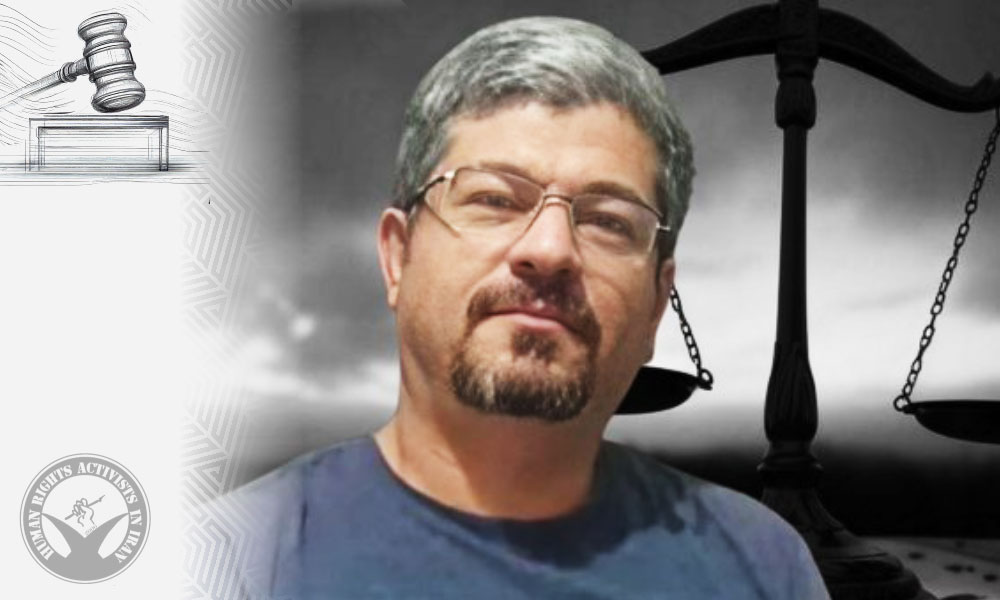
Following Sentence Consolidation, Vadood Asadi Sentenced to Eight Years and One Month in Prison

HRANA – Following the acceptance of a request to consolidate sentences, the Gilan Province Court of Appeals revoked the previous convictions of Vadood Asadi, an Azerbaijani-Turk activist imprisoned in Evin Prison, and sentenced him in a new ruling to eight years and one month in prison. He had previously been sentenced to a total of six years and three months of imprisonment in two separate cases.

According to HRANA, after accepting the request for sentence consolidation, Branch 11 of the Gilan Province Court of Appeals, presided over by Mohammad Sadegh Iran-Aghideh and Esmaeil Rostami Taromsari, annulled Mr. Asadi’s previous sentences and issued a new verdict.

Under this ruling, Mr. Asadi was sentenced to:

• Six years and one month in prison on charges of “assembly and collusion against national security”;
• Eight months in prison for “propaganda against the regime in favor of anti-regime and opposition groups”;
• Sixteen months in prison for “insulting the Supreme Leader”.

Additionally, a hearing concerning charges brought against Mr. Asadi in a case opened against him during his imprisonment was held on April 25, 2026. Mr. Asadi, along with Morteza Parvin, Taher Naghavi, Mahmoud Ojaghlou, and three other defendants in the case, refused to attend the court session.

In March 2026, an interrogation session for Taher Naghavi, a lawyer, and imprisoned Azerbaijani-Turk activists Morteza Parvin-Joda, Vadood Asadi, Ayaz Seifkhah, Karam Mardaneh, and Araz Aman was held via videoconference. During the session, investigator Nasser Jalayi formally charged the prisoners with propaganda against the regime. Their hunger strike, publication of protest statements, and support for the nationwide protests of December 2025 were cited as the reasons for opening the case.

In May 2025, Vadood Asadi, an Azerbaijani-Turk activist, was sentenced by Branch 11 of the Gilan Province Court of Appeals to a total of five years and six months in prison on charges of propaganda against the regime, membership in anti-regime groups, and insulting the Supreme Leader.

Earlier, in late October 2024, in a separate case, Branch 15 of the Tehran Revolutionary Court, presided over by Judge Abolghasem Salavati, sentenced Mr. Asadi to four years of discretionary imprisonment on charges of assembly and collusion with the intent to disrupt national security. This prison sentence was later covered by an amnesty and reduced to one year of imprisonment. After he accepted the verdict, one-fourth of his remaining sentence was further reduced, and he was ultimately sentenced to nine months in prison.
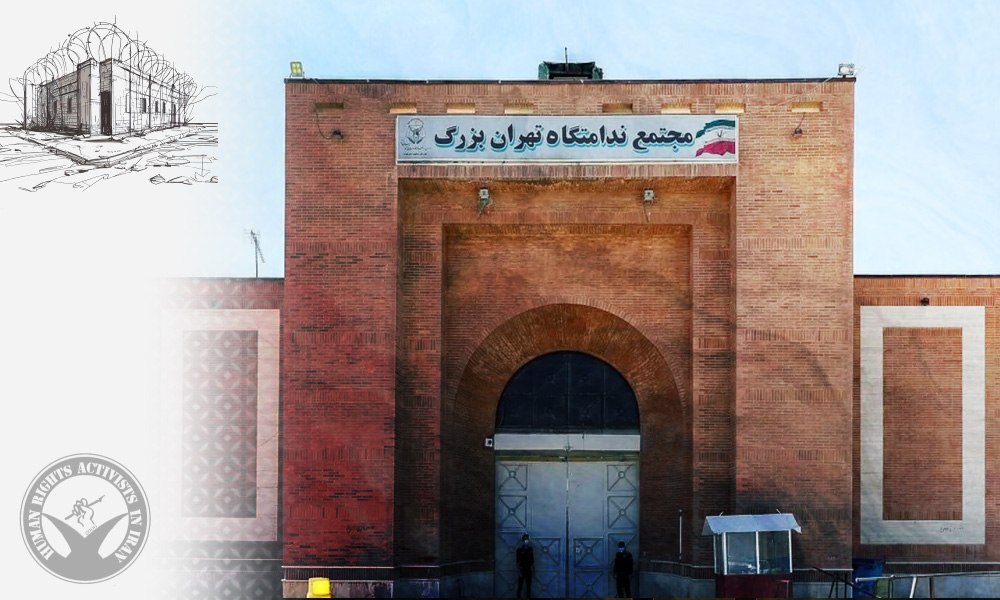
Political Prisoners Face Overcrowding and Unsafe Conditions After Transfer from Evin to Greater Tehran Penitentiary

HRANA News Agency – Following Israeli airstrikes on June 23 that directly targeted Evin Prison, Iranian authorities have initiated the mass transfer of inmates to other prisons across Tehran Province. Most political prisoners from Ward 4 of Evin have been moved to the Greater Tehran Penitentiary, where they now face harsh and deteriorating conditions, including extreme overcrowding, lack of access to clean drinking water, and the absence of separation between inmates by the nature of their charges.

HRANA has learned that political prisoners including Morteza Parvin, Abdolaziz Azimi Ghadim, Mahmoud Ojaghlou, Taher Naghavi, Mehdi Mahmoudian, Abolfazl Ghadiani, Mohammad Bagher Bakhtiar, and Hossein Shanbehzadeh are among those transferred.

A source close to Taher Naghavi reported that he is being held in a hall with at least 120 inmates—despite the space being designed for no more than 40 people—and is not separated from those convicted of non-political offenses.

Additional reports highlight the facility’s inadequate water supply. Inmates have described the available water as too salty to drink. According to a source close to Morteza Parvin, he and Mahmoud Ojaghlou were moved late Monday night without being allowed to bring any of their personal belongings.

Family members have also confirmed these developments. Ahmad Ghadiani and Alireza Bakhtiar, sons of Abolfazl Ghadiani and Mohammad Bagher Bakhtiar, respectively, shared on social media that their fathers had been transferred. Alireza noted that many inmates now sleep on the floor and that only one bottle of mineral water is provided for every four political prisoners.

Fatemeh Alvandi, the mother of Mehdi Mahmoudian, told Emtedad News Agency that the detention conditions are extremely poor. She reported overcrowded quarters, unsanitary facilities, and a lack of basic necessities. According to her, her son and others lacked even food containers upon arrival, and the lack of hygiene products is now threatening inmates’ health.

Abbas Shanbehzadeh confirmed that his brother, Hossein, was also among those moved from Ward 4 of Evin to the Greater Tehran Penitentiary.

UN Special Rapporteur on the situation of human rights in Iran, Mai Sato, has expressed concern about the treatment of these transferred inmates. She also noted receiving reports of arbitrary arrests and expedited trials lacking due process, particularly since the onset of the Israeli strikes.

The June 23 airstrikes struck Evin’s entrance gate and the judiciary building within the prison compound. Several conscripted soldiers were reportedly killed or injured, along with some prison staff and inmate workers who were gardening at the time. Following the attack, Iran’s Prisons Organization confirmed the transfer of Evin inmates to other facilities in the province.