HRANA – At least 135 attorneys across Iran were subjected to judicial and security measures between September 2025 and September 2026, including arrests, summonses, prison sentences, bans from practicing law, and travel restrictions. HRANA identified 60 of the lawyers across 14 provinces and documented at least 75 additional cases in which the individuals’ names were not made public. The findings point to a marked escalation in pressure on the legal profession, particularly since January 2026. This report details the arrests, prison sentences, cases of lawyers currently behind bars, collective actions, and other restrictions imposed during the period.
According to HRANA, a review of cases documented between September 2025 and September 2026 shows that actions against attorneys during this period ranged from summonses and the opening of judicial cases to arrests, prison sentences, bans from practicing law, travel bans, and other judicial restrictions.
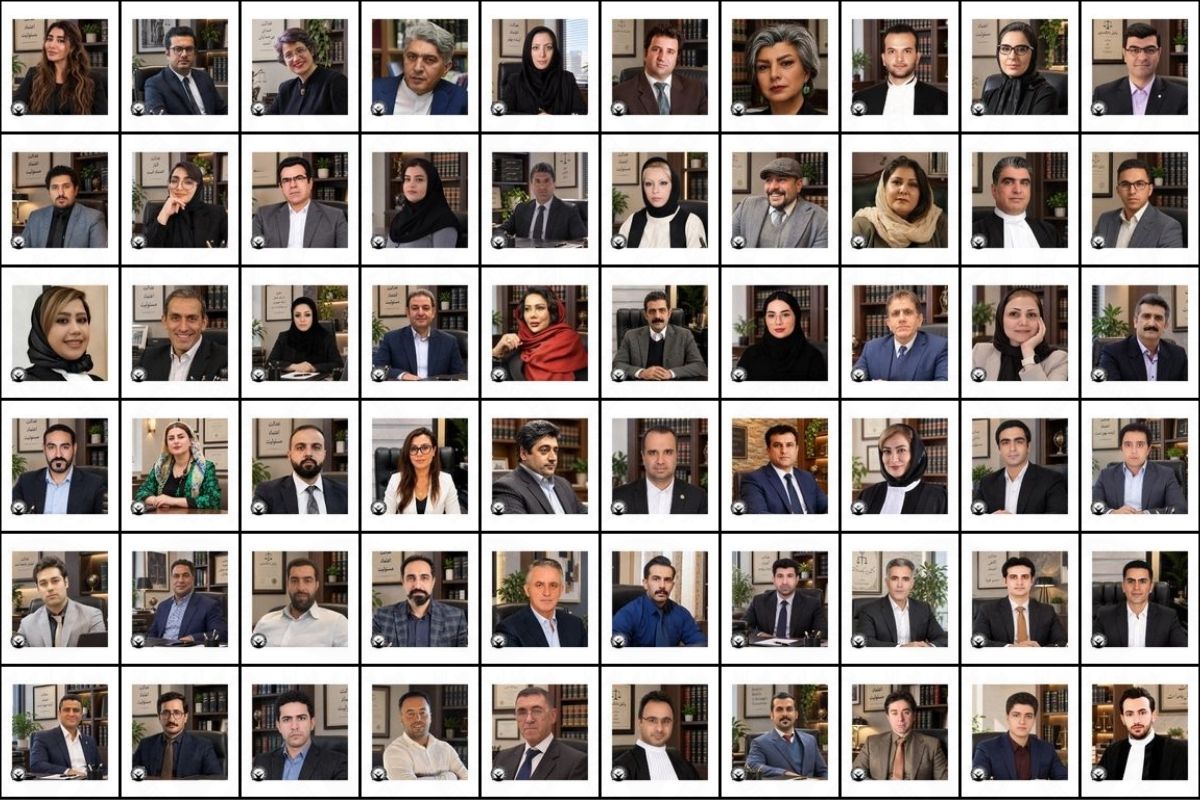
Among the cases compiled, HRANA verified the identities of 60 lawyers across 14 provinces. In addition, information concerning at least 75 other lawyers whose names have not been made public was documented. A significant portion of these cases involved collective actions against lawyers in East Azerbaijan, Fars, and Gilan provinces.
According to the latest available information, at least five lawyers are currently serving prison sentences, at least 11 others have received prison sentences, and the arrests of at least 34 identified lawyers were documented during the period under review. A number of others have faced summonses, the opening of judicial cases, suspension or revocation of their licenses to practice law, travel bans, and other restrictions.
Report at a Glance
| Indicator | Number / Status |
|---|---|
| Total number of lawyers documented in the report | At least 135 |
| Lawyers whose identities have been confirmed | 60 |
| Lawyers whose identities have not been made public | At least 75 |
| Geographic scope of identified lawyers | 14 provinces |
| Lawyers currently serving prison sentences | At least 5 |
| Lawyers who have received prison sentences | At least 11 |
| Identified lawyers whose arrests were documented | At least 34 |
January 2026: Peak of the Arrests
A review of the chronological sequence of documented cases shows that following an increase in actions against lawyers in Gilan Province in September 2025, January 2026 marked one of the most significant periods during the year under review.
In January alone, at least 16 identified lawyers were arrested or subjected to judicial and security-related actions. A significant number of these arrests took place amid the nationwide protests in January.
Shima Ghosheh, Mohammad-Hadi Jafarpour, Jafar Zarei, Jafar Keshavarz, Nazanin Baradaran, Enayatollah Keramati, Omid Darabi, Hossein Shokri, Zohreh Javani, Sepideh Taheri, Teymour Salari, Alireza Farzaneh Jajromi, Fatemeh Rouhandeh, Mohsen Darginejad, Amir Bahadorifar, and Masoud Shirmardi Shah-Ghasemi were among the lawyers whose arrests were reported during January 2026.
Some of these individuals were released after a period of detention upon posting bail or other forms of security. However, actions against lawyers continued in the following months, with new cases of arrests, summonses, and the opening of judicial cases documented in February and March.
At Least Five Lawyers Are Currently Serving Prison Sentences
According to the latest available information, Mohammad Najafi, Javad Alikordi, Taher Naghavi, Seyed Mehdi Karimi Farsi, and Golaleh Vatandoust are currently serving prison sentences.
Mohammad Najafi, an attorney imprisoned in Evin Prison, was sentenced by Branch 26 of the Tehran Revolutionary Court to three years in prison, a fine, and a two-year ban on leaving the country and membership in political and social groups in a case opened against him while he was incarcerated. This case is separate from the sentences he was already serving. In April 2025, the Supreme Disciplinary Court for Judges also permanently barred him from practicing law.
Javad Alikordi, an attorney in Mashhad, was arrested on December 12, 2025. Branch 1 of the Mashhad Revolutionary Court sentenced him to a total of 18 years in prison, permanent disbarment from the legal profession, exile, and additional penalties. According to the latest published information, after approximately four months in solitary confinement, he was transferred to Ward 6.1 of Vakilabad Prison in Mashhad.
Taher Naghavi has been imprisoned in Evin Prison since February 2024. His sentence of four years in prison, a two-year travel ban, and two years of deprivation of social rights was upheld on appeal. In October 2025, Branch 6 of the Disciplinary Court of the Center for Lawyers suspended his license to practice law. Another case was opened against him while he was imprisoned in March 2026.
Seyed Mehdi Karimi Farsi was taken to Evin Prison on January 4, 2026, to begin serving his one-year prison sentence. The sentence had previously been issued by Branch 29 of the Tehran Revolutionary Court and was upheld in full by Branch 36 of the Tehran Province Court of Appeals.
Golaleh Vatandoust, an attorney from Marivan, was arrested on May 2, 2026, to begin serving her sentence and was transferred to Sanandaj Prison. She had previously been sentenced to six years, seven months, and 20 days in prison.
Prison Sentences Issued to at Least 11 Other Lawyers
During the period under review, at least 11 attorneys, Nazanin Salari, Mahmoud Taravat-Rouy, Masoud Ahmadian, Elham Zeraatpisheh, Mehdi Ansari, Mehran Ansari, Babak Eslami Farsani, Mohammadreza Faghihi, Saeed Sheikh, Seyed Mohammadreza Razavifard, and Mohammad Tarighat Esfanjani, received prison sentences and, in some cases, additional penalties. Details of the sentences and the latest status of each lawyer are provided below.
In Fars Province, Nazanin Salari, Mahmoud Taravat-Rouy, and Masoud Ahmadian were each sentenced by Branch 1 of the Shiraz Revolutionary Court to three years in prison and a two-year travel ban. The case against the three lawyers had been ongoing since 2020 and resulted in these sentences in June 2026.
Elham Zeraatpisheh was also arrested in May 2026. In July of the same year, Branch 1 of the Shiraz Revolutionary Court sentenced her to five years in prison on the charge of “assembly and collusion against national security” and one year in prison on the charge of “propaganda against the regime.” She was also sentenced to a two-year travel ban and revocation of her passport for two years. In early August, she was released from Adelabad Prison in Shiraz after posting bail.
Mehdi Ansari was also sentenced to imprisonment and a travel ban as proceedings in his case continued. Mehran Ansari, another lawyer arrested during the January protests, was sentenced in late May 2026 by the Shiraz Revolutionary Court to one year in prison on the charge of “propaganda against the regime.”
Babak Eslami Farsani was sentenced in August 2026 by Branch 23 of the Tehran Revolutionary Court to nine months in prison on the charge of “propaganda against the regime.”
Mohammadreza Faghihi had previously received a prison sentence and additional penalties. He was released from Evin Prison in June 2026 after his request for a retrial was granted.
Saeed Sheikh was sentenced in Tehran to one year and six months in prison, a fine, and a one-year ban from practicing law. In November 2025, he announced that 12 months of his prison sentence had been suspended.
Seyed Mohammadreza Razavifard was also sentenced in late June 2026 by Branch 1 of the Qom Revolutionary Court to 10 years in prison on the charge of “propaganda activity against the country’s national security.”
Mohammad Tarighat Esfanjani, a member of the East Azerbaijan Bar Association, was sentenced in June 2026 by the Osku Revolutionary Court to one year in prison on the charge of “propaganda against the regime” and two years in prison on the charge of “insulting the Supreme Leader and the founder of the Islamic Republic.”
Arrests of Lawyers Across Several Provinces
During the period under review, Zahra Naghshineh, Abolfazl Ranjbari, Yilmaz Mehrali Beiglou, Shahrzad Sharbiani, Shadi Falahati, Hesam Pourahmadi, Tahereh Pour Esmaeili, Mohammadreza Tak, Masoumeh Pourshahrani, Hamid Norouzi, Hadi Sharifzadeh, Dariush Ganjehpour Qashqai, Astareh (Maryam) Ansari, Bahar Sahraian, Ebrahim Parsamehr, Nasrin Sotoudeh, Shahab Soleimani, and Bahareh Aghaei were arrested in various provinces. Some of these lawyers were released after a period of detention upon posting bail or other forms of security, while in some cases legal proceedings against them remain ongoing. Details regarding the arrests and the latest status of each individual are provided below.
In East Azerbaijan Province, Zahra Naghshineh was arrested on September 9 after appearing before Branch 15 of the Investigation Office of the Tabriz Public and Revolutionary Prosecutor’s Office. Her case was opened following a report by the Tabriz Intelligence Department concerning her activities and her legal and critical writings.
Abolfazl Ranjbari was arrested in May 2025 and, after approximately one year, was released from Tabriz Prison in May 2026 after posting bail of 50 billion tomans.
Yilmaz Mehrali Beiglou was arrested in Jolfa in July 2025. He was initially transferred to the Ministry of Intelligence’s detention facility in Tabriz and later to Jolfa Prison. He was released after a period of detention upon posting bail. In December of the same year, an interrogation session concerning the charge of “disturbing public opinion” was held at Branch 1 of the Investigation Office of the Jolfa Public and Revolutionary Prosecutor’s Office.
In Gilan Province, Shahrzad Sharbiani, Shadi Falahati, and Hesam Pourahmadi were arrested in September 2025. During the same month, Tahereh Pour-Esmaeili, Mohammadreza Tak, and Masoumeh Pourshahrani were also arrested in Rasht. The three lawyers were released after a period of detention upon posting bail or other forms of security.
In Fars Province, Hamid Norouzi was arrested in Shiraz on February 14, 2026. He was released from Adelabad Prison on February 24 after posting bail.
Hadi Sharifzadeh and Dariush Ganjehpour Qashqai were also arrested in Shiraz during the winter of 2025–2026 and were subsequently released.
Astareh (Maryam) Ansari and Bahar Sahraian were separately arrested in May 2026 and transferred to Adelabad Prison in Shiraz. The two lawyers were released from prison in late July of the same year after posting bail.
In Khuzestan Province, Ebrahim Parsamehr was arrested in June 2025 and transferred to Sheiban Prison in Ahvaz. An indictment was subsequently issued in his case, which was referred to the Ahvaz Revolutionary Court. HRANA continues to investigate his latest status.
Nasrin Sotoudeh was also arrested in Tehran in April 2026 and was later released from the Greater Tehran Prison on a surety bond.
In Kermanshah Province, Shahab Soleimani was arrested by IRGC Intelligence forces in Ravansar County on July 17. According to information received, he was released after a period of detention upon posting bail or other forms of security.
Bahareh Aghaei was also arrested by security forces in January 2026 and transferred to Qarchak Prison in Varamin. According to the latest available information, she has remained in detention for more than seven months without resolution of her legal status.
Collective Actions Against Lawyers in East Azerbaijan, Fars, and Gilan
A significant portion of the 135 cases documented in this report relates to actions taken collectively against groups of lawyers, not all of whose identities have necessarily been made public.
The largest number of collective summonses during the period under review was recorded in East Azerbaijan Province. According to available reports, more than 40 lawyers who are members of the province’s Bar Association were summoned by the Judiciary’s Intelligence Protection Office, and cases were opened against some of them. Charges in some of these cases included “propaganda against the regime” and “spreading false information.”
In Fars Province, Mostafa Ansari, head of the Lawyers’ Support Commission of the Fars and Kohgiluyeh and Boyer-Ahmad Regional Bar Association, stated that following the January 2026 protests, judicial cases were opened against approximately 20 lawyers, 12 of whom were arrested.
In Gilan Province, at least 10 lawyers were summoned by judicial and security authorities, without their names being made public.
An attorney who asked not to be named for security reasons told HRANA that around November 2025, IRGC Intelligence forces went to the offices or homes of a number of lawyers in Gilan Province, including the president and several officials of the province’s Bar Association, and confiscated their mobile phones and other belongings.
According to the source, cases were also opened against two other lawyers. However, no information is available regarding their identities or the details of their cases.
Because the exact number of individuals subjected to these actions during the visits by security forces in Gilan is unclear, these cases were not included in the final total of 135 lawyers.
Summonses, Judicial Cases, and Restrictions on Lawyers’ Professional Activities
In addition to arrests and prison sentences, a number of lawyers during this period faced summonses, the opening of judicial cases, judicial and disciplinary proceedings, and restrictions on their ability to continue practicing law. Reza Tayyebnia, Amir Raisian, Milad Panahipour, Reza Shafakhah, Reza Gharloghi, Iman Soleimani, Hassan Younesi, Khosrow Alikordi, Nasser Rezaei Ahangarani, and Behnam Nezadi were among them. Details of the documented cases involving each of these lawyers are provided below.
Reza Tayyebnia was summoned in August 2026 to Branch 6 of the Assistant Prosecutor’s Office of the Kohgiluyeh County Public and Revolutionary Prosecutor’s Office.
Amir Raisian and Milad Panahipour had judicial cases opened against them in May 2026 at Branch 3 of the Tehran Security Prosecutor’s Office. The charges brought against them were “spreading false information” and “propaganda against the regime.”
Reza Shafakhah received a summons in December 2025 ordering him to appear before District 16 of the Tehran Prosecutor’s Office to defend himself against the charge of “spreading false information.”
Reza Gharloghi, an attorney residing in Karaj, faced disciplinary proceedings in October 2025 following comments he made online. The indictment in his case was referred to Branch 1 of the Disciplinary Court of the Bar Association.
Iman Soleimani, an attorney in Khuzestan, faced a request for the revocation of his license to practice law and renewed disciplinary proceedings in September 2025. He had previously faced charges including “propaganda against the regime,” “insulting religious sanctities,” and “insulting the Supreme Leader,” but the case had been declared closed. Nevertheless, the same evidence was once again referred to the Lawyers’ Disciplinary Court along with a request to revoke his license to practice law. The court acquitted him, but the disciplinary prosecutor appealed the ruling, and the case was referred to the Supreme Disciplinary Court for Judges.
Hassan Younesi was also interrogated at the Culture and Media Prosecutor’s Office in August 2025 and, by judicial order, was prohibited from engaging in online activity for three months.
Khosrow Alikordi, an attorney in Razavi Khorasan Province, was barred from pursuing further education in September 2025. He died on December 5, 2025. Because the action against him occurred within the period covered by this report, his name has been included among the identified lawyers documented in the report.
Nasser Rezaei Ahangarani was assaulted by security forces on the evening of January 3, 2026, during protests in Khorramabad.
Behnam Nezadi also faced judicial proceedings in connection with his work as a lawyer, but was ultimately acquitted by Branch 31 of the Tehran Province Court of Appeals.
Additionally, according to information received by HRANA, since January 2026 at least three other lawyers have received warnings in connection with content published on their personal social media accounts, and their pages were made inaccessible for at least two months. HRANA has not yet verified the identities of these individuals; therefore, these three cases were not included in the report’s final total.
Impact on Access to Legal Representation
The continuation of this trend, in addition to its direct impact on the lawyers involved in these cases, may also affect citizens’ ability to access legal counsel and receive an effective defense. Attorneys play an essential role in safeguarding defendants’ right to a defense in many judicial cases, particularly those involving civil rights and security-related charges.
Conclusion
The data compiled in this report indicate that over the past year, a number of lawyers have faced judicial and security-related actions not merely because of the circumstances of their clients, but also in connection with their own legal activities, public statements, and conduct in their professional capacity as attorneys. Continued monitoring of this trend is essential for assessing the extent to which citizens have independent and unrestricted access to legal services.