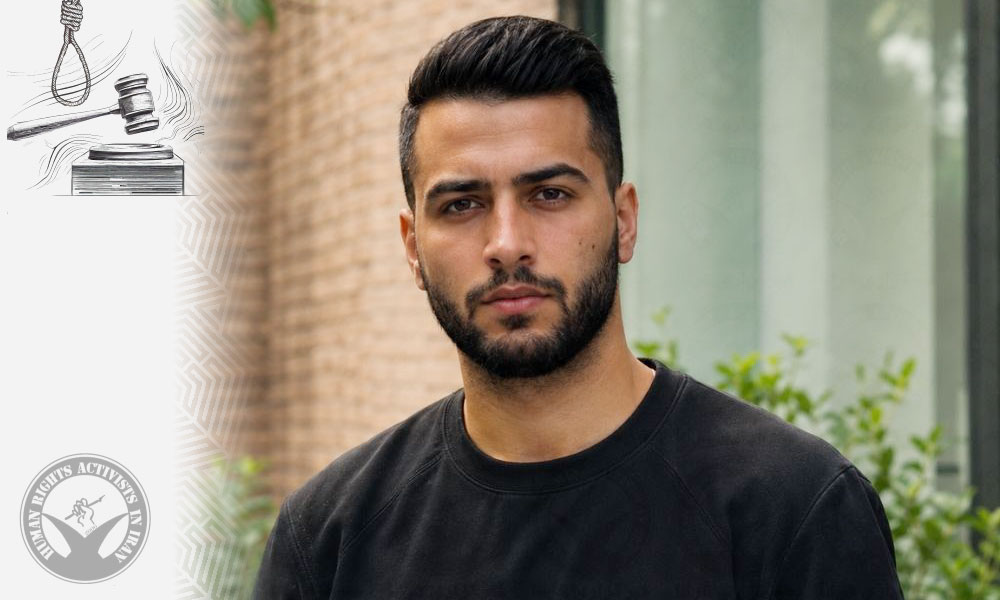



HRANA – The death sentence of Hossein Rasouli-Nasab, who was arrested during the January 2026 protests and is currently held in Vakilabad Prison in Mashhad, has been commuted to a prison term following the application of a pardon and a one-degree reduction in his sentence.
According to HRANA, Hossein Rasouli-Nasab’s death sentence has been commuted to imprisonment. Relatives of Mr. Rasouli-Nasab announced on social media that his death sentence had been commuted to a prison term following the application of a pardon and a one-degree reduction in his punishment.
HRANA is working to verify the exact length of his new prison sentence.
His death sentence had previously been upheld by the Supreme Court, and his case had been referred to the Sentence Enforcement Unit.
Hossein Rasouli-Nasab was sentenced to death in a joint case alongside Mehdi Zarif, Matin Shabani, Hassan Golshan-Nejad, Ali Zaghi, and Iliya Akbari by Branch 5 of the Mashhad Revolutionary Court, presided over by Judge Hossein Yazdankhah, with Seyed Reza Javad Mousavi serving as an advisory judge.
The charges brought against the defendants in this case included “moharebeh (enmity against God) through participation in the destruction of public property and the setting fire to religious centers” and “assembly and collusion against national security.”
Mr. Rasouli-Nasab, who is married and the father of two children, was arrested in Shandiz during the January 2026 protests. Following interrogation, he was transferred to Vakilabad Prison in Mashhad.
The case stems from protests held on January 8 and 9, 2026, in Shandiz. A source familiar with the matter previously told HRANA that a mosque and a Quranic education center were set on fire during these protests, and judicial cases were opened against several citizens in connection with these incidents.
Background: The January 2026 Protests
It should be noted that protests and strikes by shopkeepers and bazaar merchants began in Tehran on Sunday, December 28, 2025, and within two days spread beyond markets and commercial centers. With the participation of students, citizens, and various social groups, these protests became one of the largest protest movements of recent years. Following the crackdown by security and law enforcement forces, thousands were killed or injured, and tens of thousands were arrested or summoned by security agencies. For more information, readers may refer to HRANA’s comprehensive report titled “Crimson Winter,” documenting the first fifty days following the outbreak of Iran’s nationwide protests.