
12 Prisoners Executed in Multiple Prisons on Drug-Related and Murder Charges

HRANA – Amid nationwide protests in Iran, along with widespread internet shutdowns and severe restrictions on the flow of information, at least 12 prisoners were executed today, Wednesday, January 21, 2026, in multiple prisons. These prisoners had previously been sentenced to death on charges related to drug-related crimes and murder.

Based on information received by HRANA, Musa Sadri was executed in Shiraz Prison and Kiarash Dinari in Malayer Prison on charges related to drug offenses.

Also, Vali Karam Souri in Khorramabad Prison, Avat Amiri in Mahabad Prison, Sultan Morad Sharafinia in Sabzevar Prison, Siavash Arabi in Kashmar Prison, Nabiollah Kaabi in Bushehr Prison, Jabbar Ganji in Chabahar Prison, Jamshid Khanzadeh in Shahrekord Prison, Saeed Javan in Damghan Prison, and two other prisoners, one of whom has been identified by HRANA as Afshin Mohammadi, in Shiraz Prison were executed on murder charges.

As of the time of writing this report, these executions have not been officially announced by prison authorities or relevant institutions.

The continued large-scale implementation of death sentences under conditions of internet shutdowns and severe restrictions on information has intensified concerns about the lack of judicial transparency, prisoners’ denial of access to fair trials, and the increased risk of violations of the right to life. Human rights organizations have repeatedly warned that carrying out such punishments in a securitized and opaque environment increases the likelihood of serious human rights violations.

According to HRA’s annual report on the human rights situation in Iran, at least 2,063 people were executed in Iran during the one-year period from January 1, 2025, to January 1, 2026. Based on this report, executions increased by 119% compared to 2024. In many of these cases, due to secrecy, prisoners were even denied the right to a final visit with their families.
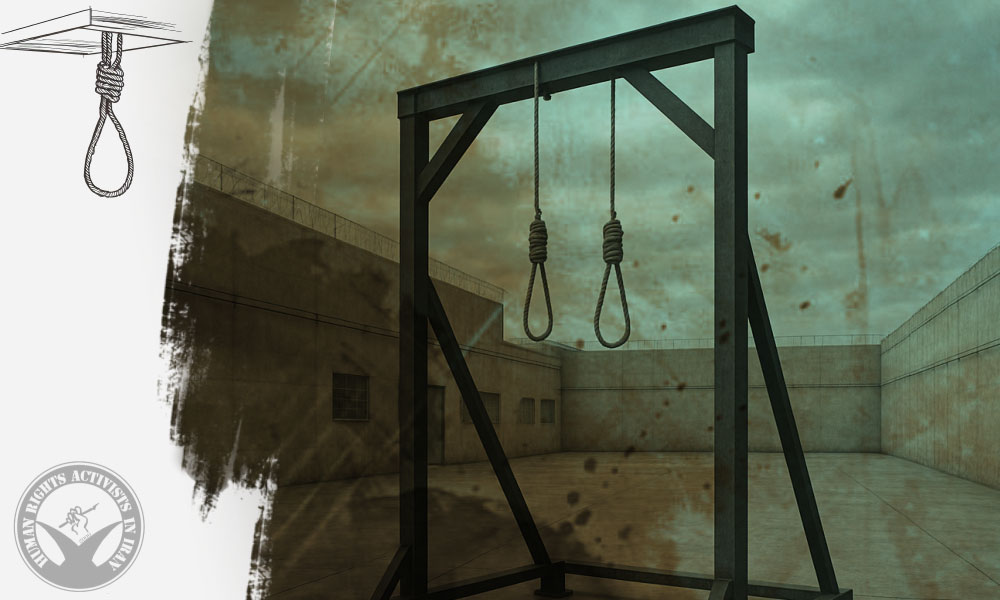
Two Prisoners, Including a Woman, Executed in Sabzevar Prison

HRANA – At dawn on Wednesday, September 17, the death sentences of two prisoners, including a woman, previously convicted of murder in a joint case, were carried out in Sabzevar Prison.

HRANA has identified the executed man as Peyman Khani.

According to information obtained by HRANA, the two prisoners were arrested in 2020 in connection with the murder of a middle-aged man and later sentenced to death by the Criminal Court.

As of the time of this report, the executions have not been announced by prison authorities or official institutions.

In 2024, according to 812 reports compiled by HRANA, the Iranian regime executed 930 individuals in its prisons—marking the highest number of executions in the past 12 years. Despite the scale of these executions, prison officials and other relevant authorities publicly acknowledged only 6% of them, highlighting the regime’s lack of transparency and accountability.

Execution of a Prisoner Carried Out in Sabzevar Prison

On Tuesday, January 7, 2025, the execution of a prisoner previously sentenced to death on charges of murder was carried out in Sabzevar Prison.

HRANA has identified the hanged prisoner as Alireza Mehrabadi, 25, a resident of Sabzevar.

HRANA’s information indicates that Mr. Mehrabadi was arrested approximately seven years ago following a fatal altercation and was subsequently sentenced to death by the judiciary.

It is worth noting that another prisoner involved in the same case, identified as Ali Rabati, 24, also from Sabzevar, had also been sentenced to death. However, on the day of the execution, he was spared after the victim’s family granted forgiveness, allowing him to escape the death penalty.

As of the time of this report, the execution has not been publicly announced by prison officials or relevant authorities.

In 2024, the Department of Statistics and Publication of Human Rights Activists in Iran documented 812 cases related to the right to life, including the sentencing of 214 individuals to death and the execution of 930 individuals. Among these, 4 executions were carried out in public. Of those executed, 818 were male, 26 were female, and 5 were juvenile offenders—individuals under 18 years old at the time of their alleged crimes.