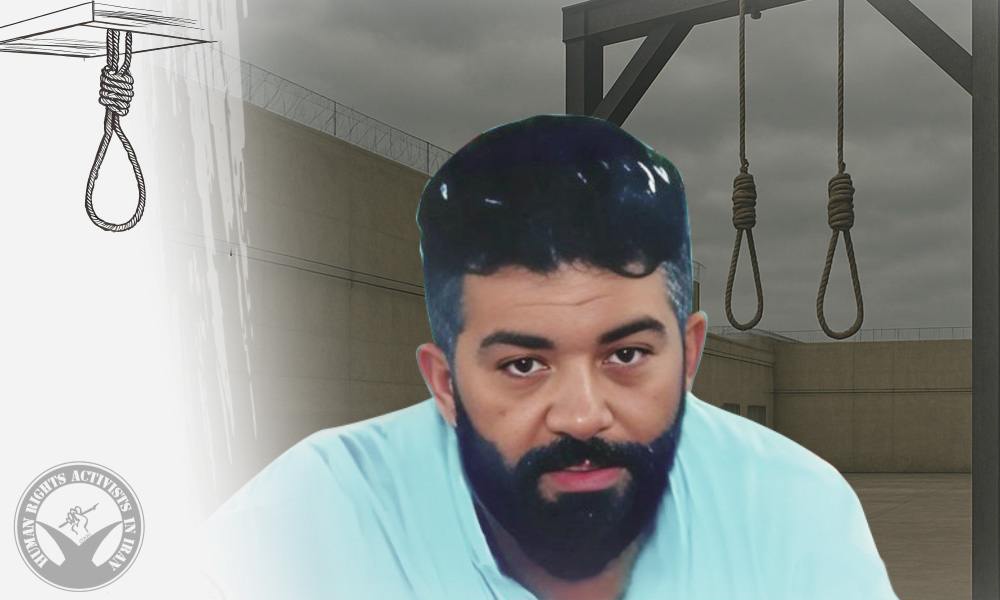
Prisoner Executed in Taybad Prison on Drug Charges

HRANA News Agency – At dawn on Monday, June 30, a prisoner previously sentenced to death for drug-related offenses was executed in Taybad Prison.

According to HRANA, the news agency of Human Rights Activists in Iran, the executed individual was an Afghan national. His identity is currently being verified by HRANA. Sources indicate that the prisoner had been arrested on drug-related charges and was later sentenced to death by the Revolutionary Court.

As of the time of this report, the execution has not been officially announced by prison authorities or relevant institutions.

In 2024, Iranian prisons witnessed the execution of 930 inmates. According to HRANA’s data, the number of executions carried out by the Iranian regime’s judiciary has risen steadily over the past five years. The percentage of executions related to drug charges has also increased year after year.

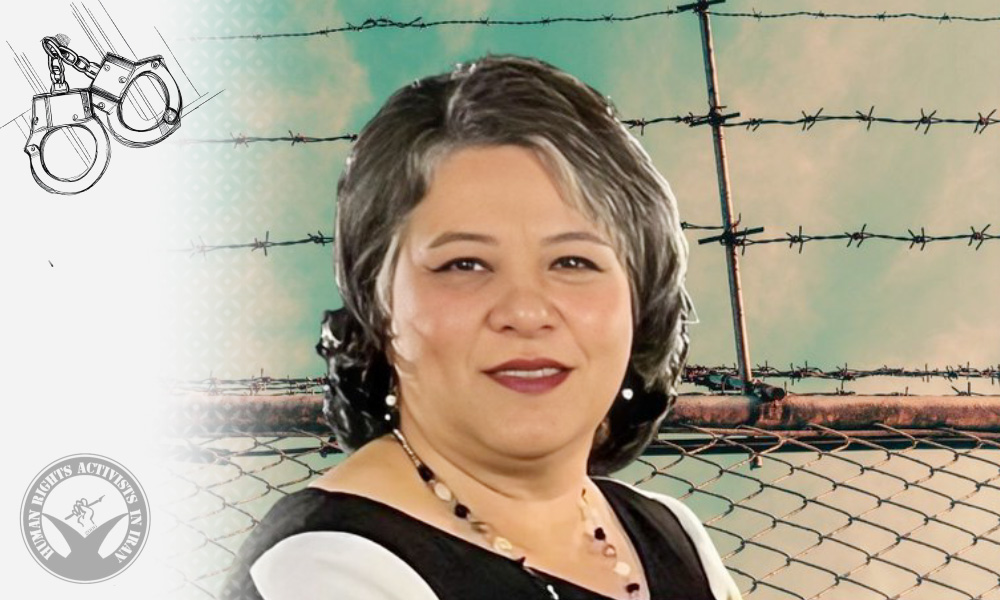
Raquel Ataeian, Baha’i Citizen, Arrested by Security Forces

HRANA News Agency – On Tuesday, July 1, Raquel Ataeian, a Baha’i citizen residing in Qaemshahr, was arrested at her home by security forces and taken to an undisclosed location. Agents also confiscated several personal items belonging to her and her family.

The arrest was carried out by seven IRGC Intelligence agents who presented a judicial warrant before detaining Ms. Ataeian and searching her home.

A source close to the family confirmed the incident, telling HRANA: “This morning, seven IRGC Intelligence agents arrived at Ms. Ataeian’s residence with a judicial warrant. During the search, they seized religious books, mobile phones, and laptops belonging to her and her family.”

As of the time of this report, no information has been released about the charges against Ms. Ataeian, the reasons for her arrest, or her whereabouts.

Raquel Ataeian has previously faced security-related harassment due to her Baha’i faith.

Over the past decade, the Iranian Bahá’í community has been disproportionately targeted by Iran’s security forces and judiciary—more than any other minority group. In the past three years, an average of 72 percent of the reports on religious rights violations collected by HRANA have documented the Iranian regime’s repression of the Bahá’í community.

Prisoner Executed in Adelabad Prison, Shiraz on Drug-Related Charges

HRANA News Agency – On Monday, June 30, a prisoner previously sentenced to death for drug-related charges was executed in Adelabad Prison in Shiraz.

According to HRANA, the news agency of Human Rights Activists in Iran, the executed prisoner has been identified as Ahmadreza Didban. HRANA’s sources report that Didban had been arrested on charges related to drug offenses and later sentenced to death by the Revolutionary Court.

As of the time of this report, prison authorities and relevant institutions have not officially announced the execution.

In 2024, Iranian prisons witnessed the execution of 930 inmates. According to HRANA’s data, the number of executions carried out by the Iranian regime’s judiciary has risen steadily over the past five years. The percentage of executions related to drug charges has also increased year after year.

No Contact Six Days After Arrest of Theater Director Ali Qebchaq-Shahi

HRANA News Agency – Ali Qebchaq-Shahi, a writer and theater director from Naqadeh, was arrested by security forces in the city on Wednesday, June 26, and has since been held incommunicado.

Based on information received by HRANA, Qabchaq-Shahi was arrested by security forces in Naqadeh on June 25, and taken to an undisclosed location.

Despite six days having passed since his arrest, there is still no information regarding the reasons for his detention, the charges against him, or where he is being held.

Ali Qebchaq-Shahi is a writer and theater director from Naqadeh.

Arrest of Nine Citizens by Security Forces in Various Cities

HRANA News Agency – Over the past several days, nine citizens—Kamyar (Kamal) Oghabi, Ahsan Othmani, Hamzeh Othmani, Ramyar Rezaei, Omid Bakhah, Abdollah Bakhah, Askar Najafi, Hassan Falaeian, and Abdul Rasouli—have been arrested by security forces in the cities of Oshnavieh, Marivan, Qasr-e Shirin, Divandarreh, and Piranshahr, and transferred to undisclosed locations.

According to a report by Kordpa, on Sunday, June 29, Kamyar Oghabi was arrested at his home in the village of Balagir, a district of Oshnavieh, without a judicial warrant. Security agents reportedly used violence during the arrest and took him to an unknown location. Oghabi, 33, is a married environmental activist with a prior record of arrest and conviction.

Kordpa also reported that in recent days, Askar Najafi, a resident of Sarpol-e Zahab, was detained by security forces at his workplace in the Qasr-e Shirin market and taken to an undisclosed location. No warrant was presented at the time of his arrest.

Additionally, according to KolbarNews, five residents of the village of Dareh-Nakhi, a district of Marivan, were arrested by security forces on Sunday and taken to unknown locations. The individuals were identified as Ahsan Othmani (22), Hamzeh Othmani (24), Ramyar Rezaei (25), Omid Bakhah (30), and Abdollah Bakhah (35). The arrests were reportedly carried out without judicial warrants, and the individuals’ homes were searched.

Separately, KolbarNews reported that Hassan Falaeian—also known as “Hawar Rojhelatî”—a poet and cultural activist from Piranshahr, was arrested on Sunday, June 21, and transferred to an undisclosed location. He remains in custody.

Furthermore, on Wednesday, June 18, security forces arrested a citizen in Divandarreh. KolbarNews identified the individual as Abdul Rasouli, 37, from the village of Tazabad Doleh Rash, a district of Divandarreh.

At the time of this report, the reasons for the arrests, the charges, and the whereabouts of the detainees remain unknown.

Subscribe to Our Newsletter

Now is definitely not the time to stop reading!

Three Prisoners Executed in Isfahan Prison

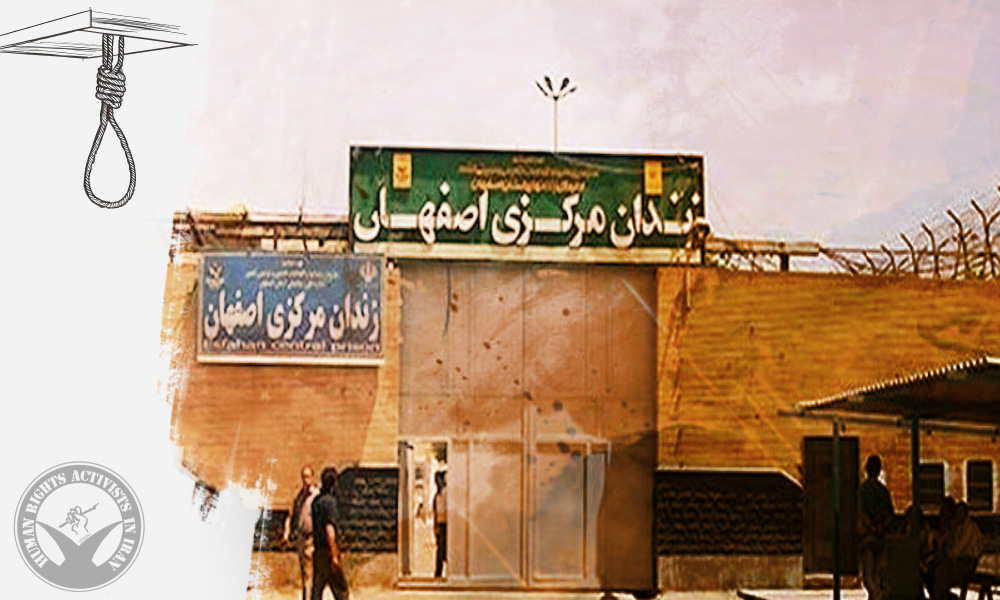
HRANA News Agency – At dawn on Wednesday, June 25, the death sentences of three prisoners previously convicted of murder in separate cases were carried out in Isfahan Prison.

According to HRANA, the news agency of Human Rights Activists in Iran, the identities of two of the executed individuals—Masoud Jafari and Mahan Mahini—have been confirmed. The identity of the third prisoner, an Afghan national, remains unknown.

These individuals had been arrested and sentenced to death by criminal courts in separate murder cases.

As of the time of this report, prison authorities and relevant institutions have not officially announced the executions.

In 2024, according to 812 reports compiled by HRANA, the Iranian regime executed 930 individuals in its prisons—marking the highest number of executions in the past 12 years. Despite the scale of these executions, prison officials and other relevant authorities publicly acknowledged only 6% of them, highlighting the regime’s lack of transparency and accountability.

Evin Prison: Fate of Prisoners in Security Wards Remains Unknown

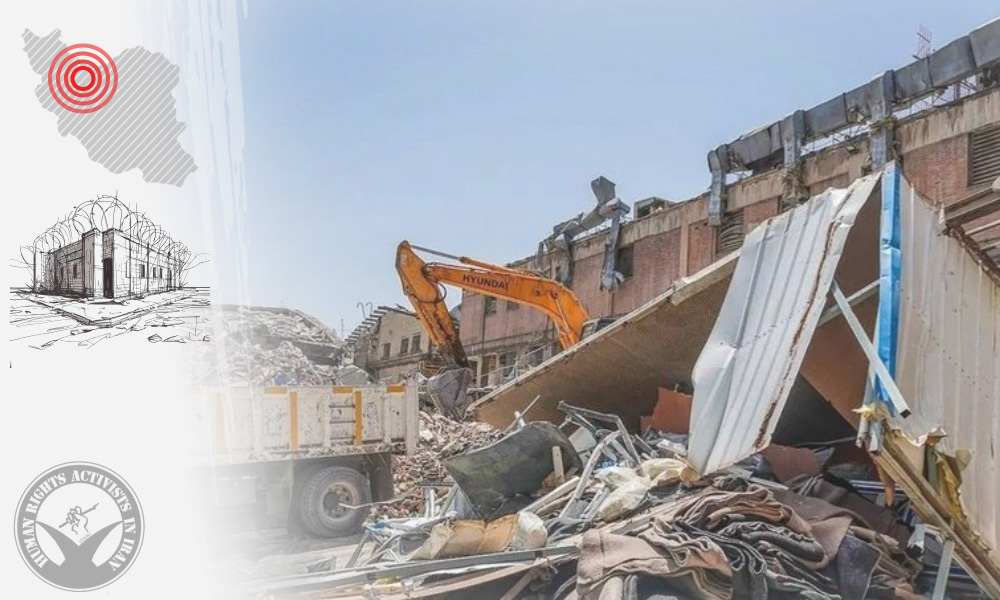
HRANA News Agency – On June 23, Israeli military strikes targeted multiple locations in Tehran, including Evin Prison, which sustained several direct hits. A week after the attack, the fate of prisoners held in the facility’s high-security wards remains unknown, fueling growing alarm among their families.

On June 29, without addressing the condition or whereabouts of these detainees, the judiciary spokesperson announced that at least 71 people were killed in the attacks. HRANA has so far verified the identities of 47 of the deceased.

Following the strike, approximately 120 political prisoners were transferred from Evin to other prisons in Tehran Province. However, no information has emerged regarding those held in the prison’s high-security sections—Ward 209 (The Ministry of Intelligence’s detention facility), Ward 2-A (IRGC Intelligence detention facility), and units operated by the Judiciary’s security apparatus. Neither government officials nor state-affiliated media have offered any transparent updates, intensifying the anxiety of families.

Human rights organizations have little to no information about the identities and status of detainees in these high-security wards, where the total population is estimated to exceed 300. These wards operate outside the oversight of Iran’s prison organization, and the lack of accessible records has made it nearly impossible to trace the fate of those detained there.

Footage released by judiciary-affiliated media shows extensive damage to Ward 209 but provides no details regarding its detainees.

Most post-strike reports have focused on the prison’s general wards. According to accounts from those areas, heavily armed special forces stormed the prison in the early hours following the attack. Using force, they removed political prisoners without explaining the reason or destination. Detainees were violently and inhumanely restrained—handcuffed, shackled, and marched into the prison yard in groups—before being loaded onto buses, some of which were damaged and barely operable due to the blasts. As the sounds of missile strikes and air defense continued, prisoners were held for hours under the sun before being transferred under tight security later that night to Greater Tehran Prison. Several detainees likened the transfer to being used as “human shields.”

Beyond structural damage, the attack on Evin Prison resulted in the deaths of multiple inmates and staff. The judiciary spokesperson confirmed that at least 71 people were killed but did not disclose the number of wounded. Among the dead, he said, were prison personnel, military conscripts, detainees, and civilians—family members who had come to visit or follow up on cases at the Evin courthouse.

Below is a list of 47 individuals confirmed dead by HRANA so far:

Evin Prison Staff:

1. Ali Ghanatkar, head of the Evin Prosecutor’s Office and Deputy Security Prosecutor of Tehran;
2. Davood Shirvani Boroujeni, a prison physician;
3. Atefeh Ba’ajzadeh, a counselor and social worker;
4, 5. Zahra Ebadi, an employee of the Evin Prosecutor’s Office enforcement division, along with her 9-year-old child.

Fourteen additional staff members whose identities have been verified include:
6. Mehrad Kheiri
7. Vahid Vahidpour
8. Hassan Shojaei
9. Bahareh Lotfi
10. Hamid Saeedi
11. Hassan Salehi
12. Hassan Nazari Kalur
13. Hossein Ali Ahmadi
14. Rouhollah Tavassoli
15. Pourandokht Sa’adatnejad
16. Mohammad Mir
17. Akram Mohammad Salimi
18. Mahnaz Khosh Kerdar
19. Zohrehsadat (surname unknown).

Military Conscripts:

Confirmed fatalities among conscript soldiers include:
20. Amirali Fazeli
21. Mahan Setareh.
22. Ilya Nobakht

Other confirmed fatalities whose identities have been verified by HRANA, but whose classifications (such as prisoner, staff member, conscript, or visitor) are still under investigation:

23. Fatemeh Siahpush
24. Fatemeh Ghanbari
25. Hossein Zolfaghari
26. Ahmad Morad Arasteh
27. Hossein Yavaryar
28. Hassan Yousefkani
29. Mehdi Shahmoradi
30. Abbas Shafiei
31. Mojtaba Agha Babaei
32. Farhad Fallahi
33. Omid Molashahri
34. Javad Saeedi
35. Mehdi Sarempour
36. Masoud Sabzi
37. Kourosh Molayousefi
38. Hamid Ranjbar
39. Mohammad Hemmati
40. Masoud Karami
41. Seyed Amirhossein Khademi
42. Shirin Esmaeili
43. Zohreh Hosseini
44. Mojtaba Omidi
45. Leila Jafarzadeh
46. Hasti (surname unknown)
47. Hajar Mohammadi

Hajar Mohammadi, the niece of Azizollah Mohammadi, former head of Iran’s Soccer Premier League Organization, and Mehrangiz Imanpour, a painter and former wife of Reza Khandan Mahabadi, a member of the Iranian Writers Association, were also killed.

Mr. Khandan Mahabadi stated: “On Tuesday, June 23, Mehrangiz left her home on Evin Street for a walk. About 40 minutes later, she died in the explosion caused by the attack on Evin Prison. When she didn’t return, we assumed she was injured and began searching for her. Despite visiting several hospitals, we received no information. Other families were also searching for their loved ones. Eventually, on Tuesday, June 24, we discovered at Behesht Zahra Cemetery and the Kahrizak Forensic Center that Mehrangiz had died.”

Read HRANA’s report on the plight of prisoners transferred to other prisons here.

Execution of Six Prisoners, Including One Woman, in Iranian Prisons

HRANA News Agency – The death sentences of six prisoners, including one woman, were recently carried out in the prisons of Tabriz, Qom, and Neyshabur. These individuals had been previously convicted on charges related to drug offenses, murder, and armed robbery.

According to Iran Human Rights, at dawn on Saturday, June 28, authorities executed a prisoner in Neyshabur Prison. The individual was identified as Babak Mostafavi, 27, a resident of Neyshabur. He had been sentenced to death by the judiciary on drug-related charges. Prior to his arrest, he worked as a forklift driver.

Additionally, on Tuesday, June 24, two prisoners, including a woman, were executed in Qom Prison. They were identified as Hassan Rostamnejad and Tal’at Sabzi, 47. Rostamnejad had been arrested four years ago on murder charges and later sentenced to death. Sabzi had been arrested five years ago for allegedly killing her husband and was also sentenced to death.

Earlier, at dawn on Sunday, June 18, authorities executed three prisoners in Tabriz Prison. The executed individuals were identified as Hadi Ahmadian, 37, Abbas Partovi, and Mohammad Shokri, 42, all from Tabriz.

According to the report, Shokri and Ahmadian were arrested three years ago in a joint case involving the possession of 80 kilograms of narcotics and were later sentenced to death. Partovi had been arrested around the same time on charges of armed robbery and was also handed a death sentence.

As of the time of this report, prison authorities and official institutions have not publicly announced these executions.

In 2024, according to 812 reports compiled by HRANA, the Iranian regime executed 930 individuals in its prisons—marking the highest number of executions in the past 12 years. Despite the scale of these executions, prison officials and other relevant authorities publicly acknowledged only 6% of them, highlighting the regime’s lack of transparency and accountability.

Widespread Arrests: 13 Citizens Detained Across Four Cities in Iran

HRANA News Agency – In recent days, security and law enforcement forces have arrested 13 citizens in the cities of Astara, Urmia, Mahabad, and Rudsar, with some transferred to undisclosed locations.

According to Mehr News Agency, Jalaleddin Javanmardi, the police chief of Rudsar, announced today the arrest of five individuals in the city. He stated that the arrests were made over allegations of “collaborating with Israel on social media,” “insulting religious sanctities,” and “disturbing public opinion.”

Javanmardi, detailing the case, said that the police acted in response to online posts insulting religious sanctities and deceased IRGC commanders, sharing pro-Israel clips, and publishing offensive content against Iranian officials.

He added that the detainees include a 52-year-old woman and four men aged 31, 39, 40, and 41, who were arrested in Rahimabad, Kelachay, and the central district of Rudsar County. All were transferred to a police station and referred to the judiciary after case files were opened.

ILNA also reported the arrest of four citizens in Astara, quoting the city’s police chief, Morteza Ahadi. Ahadi said the arrests took place on Friday, June 27, on charges such as “espionage” and “propaganda against the regime.”

He added that the detainees, two men and two women from western provinces, were arrested along with digital evidence. Their phones allegedly contained photos and videos from Astara and other cities, which were reportedly sent to opposition networks. They had also applied for asylum in European countries.

On June 25, 2025, security forces arrested a citizen in Urmia. Kurdpa identified the individual as Alireza Khaledi, 22, a resident of Hasanabad village in the Sumay Baradost region. Security agents reportedly detained Mr. Khaledi without presenting a judicial warrant and transferred him to an undisclosed location.

Reports also indicate that on June 24, another citizen was arrested in Urmia by security forces. Kolbar News identified him as Bakhtiar Azizi, a resident of the Dizaj area. According to the report, security agents also arrested him without a court order. On the same day, two more individuals—Afshin Azizi and Kako Azizi—were also detained in Urmia.

Kolbar News further reported the arrests of two additional citizens about ten days ago. Authorities transferred both to an undisclosed location. They were identified as Hazhar Asadpour, 27, an employee of the Red Crescent, and Keyvan Ashtab, 29, an emergency medical technician at Mahabad Hospital.

As of now, there is no information regarding the whereabouts or charges against these individuals.

Baha’i Citizen Sahba Mohammadi Arrested in Birjand

HRANA News Agency – On Saturday, June 28, security agents from the Ministry of Intelligence arrested Sahba Mohammadi, a Baha’i citizen residing in Birjand, at her home and transferred her to an undisclosed location. Authorities also confiscated some of her personal and electronic belongings.

According to information received by HRANA, agents arrested Ms. Mohammadi around 7 a.m. on Saturday at her residence. During the raid, they searched her home and seized several personal items, including her mobile phone, laptop, and Baha’i literature.

As of the time of this report, the reasons for her arrest, her whereabouts, and the charges against her remain unknown.

Sahba Mohammadi is 25 years old and resides in Birjand.

Over the past decade, the Iranian Bahá’í community has been disproportionately targeted by Iran’s security forces and judiciary—more than any other minority group. In the past three years, an average of 72 percent of the reports on religious rights violations collected by HRANA have documented the Iranian regime’s repression of the Bahá’í community.