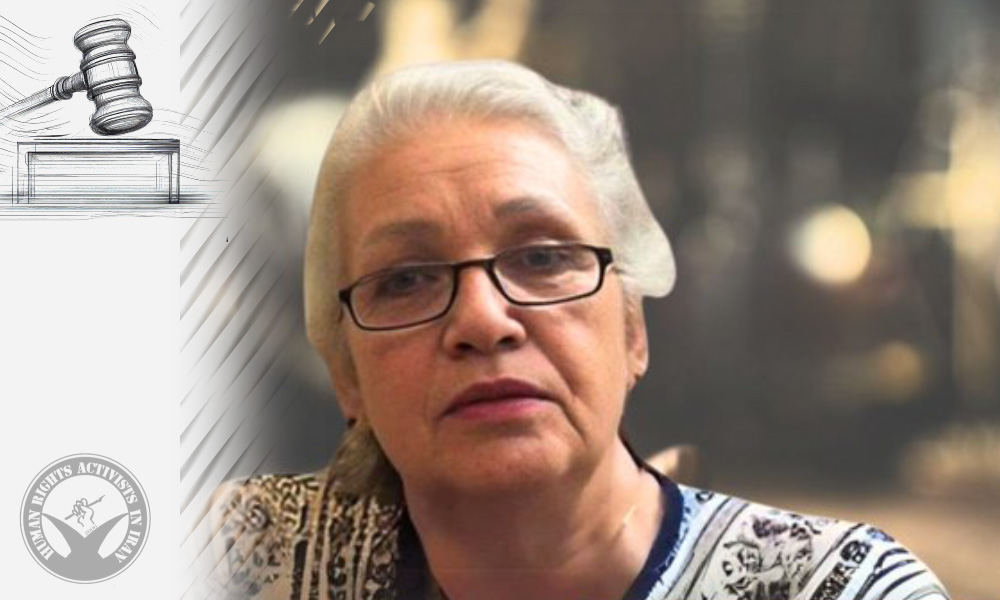
Political Activist Mohsen Ghashghaei-Zadeh Sentenced to Two Years in Prison

HRANA News Agency – Branch 23 of the Tehran Revolutionary Court sentenced Mohsen Ghashghaei-Zadeh, a political activist currently imprisoned in Evin Prison, to two years in prison.

According to HRANA, the news agency of the Human Rights Activists in Iran, the sentence was recently issued by Judge Mohammad Taghi Taghizadeh and formally communicated to Ghashghaei-Zadeh. He has been convicted of “assembly and collusion against national security.”

Ghashghaei-Zadeh was arrested on February 13 during a gathering in front of the University of Tehran, where protesters had assembled to demand an end to the house arrest of Mir Hossein Mousavi, Zahra Rahnavard, and Mehdi Karroubi. He was detained by security forces and transferred to Evin Prison.

Despite tight security measures, the protest took place, resulting in the arrest of several participants.

It is worth noting that Ghashghaei-Zadeh has a history of previous arrests and convictions related to his political activism.

Civil Rights Activist Raheleh Rahemipour Sentenced to Over Four Years in Prison Following Retrial

HRANA News Agency – The prison sentence of Raheleh Rahemipour, a 72-year-old civil activist currently imprisoned in Evin Prison, has been reduced to four years and two months following the acceptance of her retrial request. The revised verdict was issued by Branch 21 of the Tehran Court of Appeals, lowering her initial sentence of five years and ten months.

According to HRANA, the news agency of the Human Rights Activists in Iran, the updated ruling was recently issued by Branch 21 of the Tehran Court of Appeals and formally communicated to her defense attorney yesterday. Under the new sentence, Rahemipour has been convicted of:

“Assembly and collusion against national security” – three years, six months, and ten days in prison
“Propaganda against the regime” – seven months and twenty days in prison

Based on Article 134 of the Islamic Penal Code, which mandates the enforcement of the most severe sentence in cases involving multiple charges, Rahemipour will serve three years, six months, and ten days behind bars.

Legal Background and Arrest History

Earlier, attorney Payam Dorfeshan had announced that Branch 9 of the Supreme Court had accepted Rahemipour’s request for a retrial and referred the case to an equivalent court for reconsideration.

Rahemipour was arrested in late November 2023 after appearing at the Evin Prosecutor’s Office and was subsequently transferred to Evin Prison to serve her sentence.

Her original conviction was handed down by Branch 15 of the Tehran Revolutionary Court, which sentenced her to five years in prison for “assembly and collusion” and ten months in prison for “propaganda against the regime.” This ruling was issued following a trial held on June 16, 2020.

Rahemipour was previously arrested on November 12, 2019, by security forces in Tehran. She was subsequently transferred to the Islamic Revolutionary Guard Corps (IRGC) Intelligence Detention Center, known as Ward 2A of Evin Prison, before being temporarily released.

Given her advanced age, Rahemipour suffers from multiple health conditions and has been consistently denied access to essential medical care.

Christian Convert Narges Nasri Sentenced to 16 Years in Prison and Additional Penalties

HRANA News Agency – Narges Nasri, a Christian convert, has been sentenced by Branch 26 of the Tehran Revolutionary Court to 16 years in prison, 15 years of social rights deprivation, and a fine. She was arrested by Ministry of Intelligence agents on November 1nd, while in the first month of pregnancy, and was later released on bail from Evin Prison on December 1st.

According to the verdict issued by Judge Iman Afshari, Nasri has been sentenced to:

10 years in prison for “propaganda activity contrary to Islamic law” due to her alleged “influential connections abroad” and the broad impact of her activities, with an increased degree of severity.
5 years in prison for “membership in anti-regime groups.”
1 year in prison for “propaganda against the regime.”
15 years of social rights deprivation and a fine of 3.3 billion rials.

In addition to her prison sentence, Nasri, now in her fourth month of pregnancy, has been subjected to further restrictions, including a two-year ban on leaving the country, residing in Tehran and neighboring provinces, and joining any social or political groups.

A source familiar with the case told HRANA that her one-year sentence for “propaganda against the regime” was issued due to her online activities, including posts critical of the country’s situation.

Nasri’s trial was held on February 13th at Branch 26 of the Tehran Revolutionary Court, while her initial interrogation sessions took place in January at Branch 3 of the Tehran Public and Revolutionary Prosecutor’s Office.

Nasri, a 37-year-old Christian convert and resident of Tehran, was arrested on November 1nd alongside two other Christian converts by Ministry of Intelligence agents for forming a house church in Tehran. She was transferred to Ward 209 of Evin Prison, a detention facility under the control of the Ministry of Intelligence, where she was subjected to daily interrogations. She was eventually released on December 1st after posting bail set at 2.5 billion tomans.

Christian Converts Mehran Shamlooei and Abbas Soori Sentenced to Over 25 Years in Prison

HRANA News Agency – Mehran Shamlooei and Abbas Soori, Christian converts residing in Tehran, have been sentenced by Branch 26 of the Tehran Revolutionary Court to a total of 25 years and eight months in prison, 30 years of social deprivation, fines, and additional penalties.

Based on the verdict issued yesterday by Branch 26 of the Tehran Revolutionary Court, presided over by Judge Iman Afshari, Shamlooei and Soori were found guilty of “propaganda activities contrary to Islamic law due to their connections abroad and the extensive depth of their criminal acts” (with an increased degree of severity) and “membership in groups opposing the state.” Their sentences include:

A total of 25 years and 8 months in prison
30 years of deprivation of social rights
A fine of 580 million tomans (approximately 7,250 USD)

Sentences in Detail:

Abbas Soori was sentenced to:

10 years in prison for “propaganda activities contrary to Islamic law”
5 years in prison for “membership in groups opposing the state”
15 years of social deprivation
A fine of 330 million tomans (approximately 6,500 USD)
Additional penalties, including a travel ban, a ban on residing in Tehran and neighboring provinces, and a ban on membership in social groups for two years.

Mehran Shamlooei was sentenced to:

8 years in prison for “propaganda activities contrary to Islamic law”
2 years and 8 months in prison for “membership in groups opposing the state”
15 years of social deprivation
A fine of 250 million tomans (approximately 4,120 USD)

The trial took place on February 13, 2025, and the interrogation sessions were held in December at Branch 3 of the Public and Revolutionary Prosecutor’s Office in Tehran.

Shamlooei and Soori were arrested on November 1 by Ministry of Intelligence agents for organizing a house church in Tehran. They were transferred to Ward 209 of Evin Prison, a detention facility run by the Ministry of Intelligence, where they were interrogated daily. On December 2, they were released on bail of 2 billion tomans (approximately 25,000 USD) each.

Mehran Shamlooei is a 43-year-old Christian convert, and Abbas Soori is also a Christian convert residing in Tehran.

Civil Rights Activist Baran Saedi Arrested in Sanandaj

HRANA News Agency – Today, Monday, March 10, Baran Saedi, a resident of Sanandaj, was arrested by security forces in the city and taken to an undisclosed location.

According to HRANA, quoting Kurdpa, Saedi’s arrest took place at her home by security forces without a judicial warrant. The report further mentions that the civil rights activist was detained following her participation in an event commemorating International Women’s Day in Sanandaj.

Baran Saedi had previously been arrested during the nationwide protests of 2022 and was released on bail after about two months.

As of the time of this report, there is no information on her whereabouts or the charges against her.

Subscribe to Our Newsletter

Now is definitely not the time to stop reading!

Report on the Arrest of Three Citizens in Qasreqand County

HRANA News Agency – On Saturday, March 8, security forces arrested three citizens, Alam Azizi, Saeed Azizi, and Javid Kadkhodaei, in Qasreqand County. Among them, Saeed Azizi and Javid Kadkhodaei were released after a few hours of interrogation.

According to HRANA, the news agency of Human Rights Activists in Iran, three citizens were arrested in Qasr-e Qand County.

HRANA has identified the individuals as:

  • Alam Azizi, approximately 36 years old, a resident of Azizabad village.
  • Saeed Azizi, approximately 40 years old, a resident of Gehjan village.
  • Javid Kadkhodaei, approximately 33 years old, a resident of Beg village.

All three individuals are from villages in Qasreqand County, Sistan and Baluchestan province.

According to information received by HRANA, the arrests took place at noon on Saturday, March 8, at the home of Alam Azizi, carried out by security forces.

A source close to the family of one of the detainees confirmed the news to HRANA, stating: “Saeed and Javid were transferred to Nikshahr County after their arrest. They were released after three hours of interrogation. Alam Azizi was transferred to Zahedan following his arrest, but there is no information available about his whereabouts.”

As of the time of this report, the reasons for the arrests and the charges against these individuals remain unknown.

Alam Azizi has previously been arrested due to his activities.

Iran Reduces Prison Sentences for Political Prisoners Ali Younesi and Amirhossein Moradi

HRANA News Agency – Attorney Mostafa Nili has announced a reduction in the prison sentences of Ali Younesi and Amirhossein Moradi, two political prisoners. Following the Supreme Court’s approval of their retrial, a parallel judicial branch lowered their maximum sentences from 10 years to 6 years and 8 months. Previously, they had been sentenced to a combined total of 32 years in prison.

According to Nili, this reduction was first applied to Amirhossein Moradi and has now been extended to Ali Younesi as well.

On June 25, 2022, more than two years after their arrest, Younesi and Moradi were transferred from The Ministry of Intelligence’s detention facility (Ward 209 of Evin Prison) to the prison’s general ward.

In May 2022, Branch 36 of the Tehran Court of Appeals upheld their original convictions. The two Sharif University of Technology students had been sentenced to 10 years in prison for destruction and arson of public property as their most serious charge. They also received 5 years for conspiracy against national security and 1 year for propaganda against the regime.

Arrest and Allegations

Ali Younesi, a computer engineering student, and Amirhossein Moradi, a physics student, were arrested on April 10, 2020, by Ministry of Intelligence agents. The arrest, conducted by plainclothes officers without a judicial warrant and involving physical violence, sparked widespread condemnation.

On May 5, 2020, Gholamhossein Esmaeili, spokesperson for Iran’s Judiciary, accused them of collaborating with an opposition group (MEK). Shortly after, Aida Younesi, Ali Younesi’s sister, publicly rejected these allegations, attributing them to their parents’ history as former political prisoners in the 1980s.

Academic Achievements

Amirhossein Moradi won the silver medal in Iran’s 2017 National Astronomy Olympiad, while Ali Younesi won the silver medal in 2016 and the gold medal in 2017. Younesi also won gold in the 12th International Olympiad on Astronomy and Astrophysics, held in China, securing first place in the competition.

Their arrests and heavy sentences have drawn international criticism, with human rights organizations calling for their immediate release.

Azerbaijani-Turk Activist Alireza Farshi Sentenced to 8 Months in Prison

HRANA News Agency – Azerbaijani-Turk activist Alireza Farshi has been sentenced to eight months in prison by the Tehran Revolutionary Court.

Branch 23 of the Tehran Revolutionary Court sentenced this Azerbaijani-Turk activist to eight months in prison on charges of “propaganda against the regime.” The verdict was issued on March 2, 2025, by Judge Mohammad-Taghi Taghizadeh and was officially communicated to Mr. Farshi today.

The charges against Mr. Farshi include publishing content on social media. The ruling is subject to appeal in the Tehran Court of Appeals within 20 days of its issuance.
The court session addressing Ali Reza Farshi’s charges was held on March 1, 2025, in his absence.

Ali Reza Farshi Yekanli, a resident of Marand, has a history of previous arrests and legal confrontations due to his activism.

Armed Clash and Security Tensions in Izeh

HRANA News Agency – Yesterday, March 8, 2025, security forces surrounded a house in Izeh where Abol Korkor, a protester from the 2022 nationwide protests, had been in hiding. Korkor, who had lived covertly for over two years, broadcasted a live video on Instagram while under siege. As security forces fired at the house, Korkor repeatedly shouted, “We surrender!” However, the gunfire continued. In the final moments of the live stream, he shot himself in the head and is presumed to have died.

Three others were in the house with him: Reza Abdollahzadeh, known as “Adol”, Sohrab Ahmadi, a relative of Kamar Tahmasebi (a protester killed on August 22, 2023), and Hossein Mehri.

According to a knowledgeable source, as these three attempted to surrender, security forces opened fire on them and then detonated a grenade, destroying the house. However, there is no confirmed information on their fate—whether they survived, were injured, or were killed.

Following this incident, Izeh has been placed under heightened security, with security forces deployed across different areas.

Channels close to security institutions reported the use of tear gas and smoke grenades by security forces, as well as the arrest of the three individuals who were with Korkor. Additionally, Fars News Agency confirmed the death of Esfandiar Oraki and suggested that the detained individuals were likely wounded.

International Women’s Day; Key Figures in Violations of Women’s Rights Over the Past Year

HRANA News Agency – While March 8, International Women’s Day, is a time to honor women’s struggles for equality worldwide, in Iran, it serves as a stark reminder of systematic oppression and ongoing violations of women’s rights. Instead of progress, Iranian women continue to face state-imposed restrictions, harsh punishments, and widespread repression, enforced by officials who use their power to limit freedoms, enforce discriminatory laws, and suppress dissent.

This report sheds light on 18 individuals who, over the past year, have played a key role in the oppression of women in Iran. From judges issuing death sentences and long-term imprisonments to officials implementing repressive policies like the “Noor Plan”, these individuals have been instrumental in violating women’s rights and enforcing systemic gender discrimination.

Women’s Rights Under Attack in Iran

While women in many parts of the world have made strides toward gender equality, in Iran, their fundamental rights continue to be systematically violated. The state’s grip on women’s personal and public lives extends across various domains, including:

  • Legal and social restrictions on marriage, child custody, employment, and personal freedoms
  • The violent suppression of protests and civil activism
  • Compulsory hijab laws, enforced through harsh crackdowns
  • Targeted arrests and severe sentencing of women advocating for change

One of the most blatant aspects of this repression is the direct role of judges, legislators, and government officials in depriving women of their rights, freedoms, and human dignity. These individuals not only enforce restrictive laws but also suppress protesters, issue heavy sentences, and use violence to crush any efforts toward change.

The 18 Officials Behind the Repression of Women

This report, compiled using data from Spreading Justice (SJ), a database of human rights violators, identifies 18 individuals who have played a direct role in enforcing discriminatory policies and punishing women who resist oppression. These include:

  • Judges who have sentenced female protesters to death and lengthy prison terms
  • Officials involved in oppressive programs like the “Noor Plan,” aimed at enforcing compulsory hijab and restricting women’s freedoms
  • Security forces and judicial authorities responsible for violent crackdowns, intimidation, and human rights abuses

This list is not just a collection of names—it serves as evidence of the systematic persecution of women in Iran. Whether through prison sentences, executions, or street-level repression, these officials have weaponized the law to silence women and enforce state control through fear, intimidation, and punishment.

A Call for Global Action

HRANA urges the international community, human rights organizations, and governments committed to human rights principles to treat this report as documented proof of widespread violations of women’s rights in Iran. Targeted sanctions against these individuals, diplomatic pressure, and legal action in international courts are crucial steps in holding them accountable for their role in state-sponsored oppression.

As Iranian women continue to resist and defend their rights, global silence would amount to complicity in their oppression. The international community must stand in solidarity and take concrete action against human rights violators to confront this systematic repression of women.

Publishing this report is a step toward raising awareness and mobilizing global attention to the widespread human rights abuses Iranian women endure—a call to action that cannot be ignored.

1. Abolghasem Salavati

Example of actions taken: Issuance of a death sentence for Varishe Moradi on the charge of “moharebeh” (waging war against God) by Branch 15 of the Tehran Revolutionary Court, presided over by Judge Abolghasem Salavati.

2. Iman Afshari

Example of actions taken: Issuance of a death sentence for Pakhshan Azizi on the charge of “moharebeh” by Branch 26 of the Tehran Revolutionary Court, presided over by Judge Iman Afshari.

3. Ali Razini

Example of actions taken: Approval of Pakhshan Azizi’s death sentence by Branch 39 of the Supreme Court. Razini, who presided over this branch, was shot and killed at his workplace on January 18.

4. Ghasem Mazinani

Example of actions taken: Rejection of Pakhshan Azizi’s request for a retrial by Branch 9 of the Supreme Court, presided over by Ghasem Mazinani.

5. Ahmad Darvish Goftar

Example of actions taken: Issuance of a death sentence for Sharifeh Mohammadi on the charge of “moharebeh” by Branch 1 of the Rasht Revolutionary Court, presided over by him.

6. Darvish Goftar (son of Ahmad Darvish Goftar)

Example of actions taken: After the Supreme Court overturned the death sentence of Sharifeh Mohammadi, Darvish Goftar, as the head of Branch 2 of the Rasht Revolutionary Court, reissued the death sentence.

7. Seyed Mousa Asaf al-Hosseini

Example of actions taken: Issuance of a one-year prison sentence, two years of exile to Rasht, a two-year travel ban, and a two-year ban on using social media for Hamideh Zarei, one of the detainees of the 2022 nationwide protests, by Branch 1 of the Karaj Revolutionary Court, presided over by Seyed Mousa Asaf al-Hosseini.

8. Amirhossein Bankpour Fard

Example of actions taken: One of the architects and supporters of the “Family Protection Bill through the Promotion of Chastity and Hijab” during his tenure in the Cultural Commission of the Islamic Consultative Assembly (Parliament).

9. Hossein Mirzaei

Example of actions taken: One of the drafters, supporters, and voters of laws violating human rights, including the “Family Protection Bill through the Promotion of Chastity and Hijab.” He also supported the “Family Protection and Population Growth Law.”

10. Zohreh Elahian

Example of actions taken: Participated in drafting, supporting, and voting for human rights-violating laws, including the “Family Protection and Population Growth Law.” As a member of the 11th Parliament, she supported the police operation known as “Project Noor” (a campaign initiated by the Islamic Republic’s Law Enforcement Command on April 13, 2024, to enforce mandatory hijab laws) and urged other responsible institutions to fulfill their legal duties in imposing mandatory hijab.

11. Hajar Chenarani

Example of actions taken: As one of the members and the first secretary of the Judicial and Legal Commission of the Parliament, she played a role in drafting and supporting the “Family Protection Bill through the Promotion of Chastity and Hijab.”

12. Hassan Mofakhemi Shahrestani

Example of actions taken: As the law enforcement commander of Mazandaran province, he was responsible for violations of women’s rights during his tenure. In one instance, in early June 2024, law enforcement officers in Noor County, Mazandaran province, fired at a vehicle that was on the impound list due to hijab violations. According to reports, contrary to the police’s claim of shooting at the vehicle’s tires, officers fired at least once “at the driver’s door,” hitting a young woman named Arezou Badri.

13. Heydar Susani

Example of actions taken: As the law enforcement commander of Bushehr province, he was responsible for the arrest of women over their attire and for sending warning messages about non-compliance with mandatory hijab in vehicles in the province.

14. Mahmoud Hafezi

Example of actions taken: As a mid-ranking commander in the Islamic Republic’s Law Enforcement Force, he played a role in violating women’s rights in Rasht. In one instance, a video was published showing a violent altercation between morality police officers and a young woman, highlighting the police’s enforcement of hijab laws in the city.

15. Mohammad Movahedi Azad

Example of actions taken: As the Attorney General, he was one of the key figures in supporting and enforcing “Project Noor” and mandatory hijab policies nationwide. In addition to repeated endorsements of “Project Noor,” the Attorney General’s Office announced that a draft directive had been prepared for the Islamic Republic’s Law Enforcement Command to implement this plan.

16. Ahmadreza Radan

Example of actions taken: As the Chief Commander of the Islamic Republic’s Law Enforcement Force, he was directly responsible for enforcing mandatory hijab policies, including “Project Noor,” across Iran.

17. Gholamhossein Mohseni Eje’i

Example of actions taken: As the head of the Judiciary, he was directly responsible for imposing restrictions, crackdowns, and enforcement measures related to mandatory hijab, the drafting of the “Hijab and Chastity Bill,” and the implementation of “Project Noor.”

18. Ghasem Rezaei

Example of actions taken: As the Deputy Commander-in-Chief of the Law Enforcement Force, he was responsible for implementing mandatory hijab policies. In one instance, two teenage girls on Vatanpour Shomali Street in Tehran were severely beaten by officers enforcing “Project Noor” due to their lack of hijab. In a published video, officers were seen violently dragging one of the girls to the ground and forcing her into a white police van. The Morality Police later claimed that one of the female officers had broken her finger in the altercation and threatened the girls against filing a complaint.

The individuals named in this report represent only a small fraction of the vast network of officials responsible for the repression, discrimination, and systematic violations of women’s rights in Iran. Through their decisions, policies, and actions, these figures have trampled on fundamental freedoms, reinforcing a system that seeks to control, silence, and punish women for demanding their basic rights.

Yet, despite this relentless oppression, Iranian women continue to resist. Their unwavering fight for justice, freedom, and equality is a testament to their courage and determination in the face of state-imposed restrictions and brutality.

Documenting these violations is not just about bearing witness—it is a crucial step toward accountability. Raising international awareness and applying legal, diplomatic, and economic pressure—including targeted sanctions against those responsible—can play a key role in challenging the Iranian government’s systematic oppression of women.

In addition to this report, HRANA has published a list of female political and ideological prisoners in Iran, detailing the names and cases of women imprisoned for their beliefs and civil activism. Readers are encouraged to refer to that report for a broader understanding of the deep-rooted gender-based persecution Iranian women endure.

The fight for women’s rights in Iran is far from over—but neither is the resolve of those who continue to stand against injustice. Global solidarity and concrete action are imperative to ensure that these violations do not go unanswered.