Baha’i Citizen Shahdokht Khanjani Faces Eleven-Year Sentence Upheld on Appeal

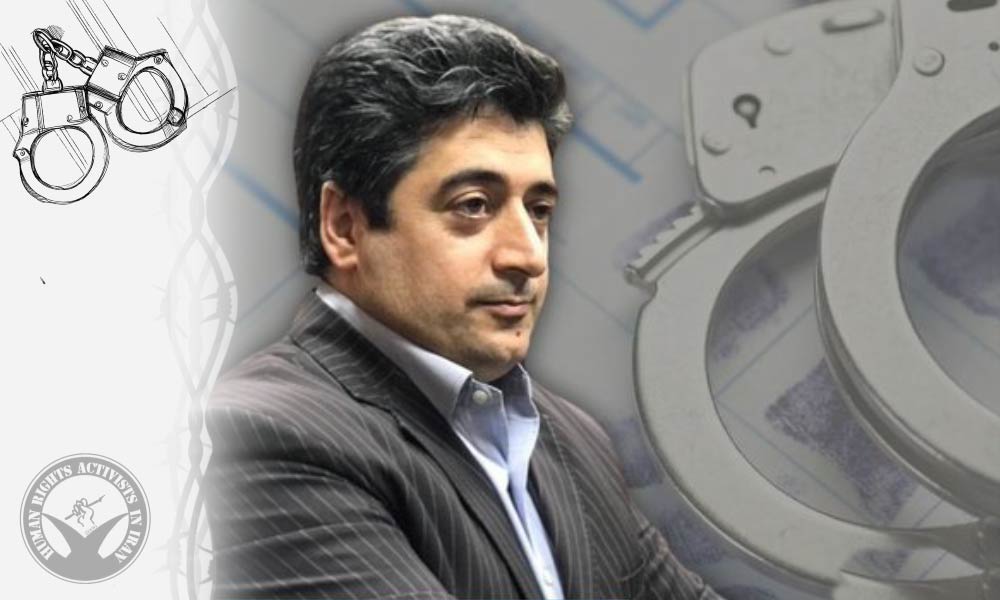
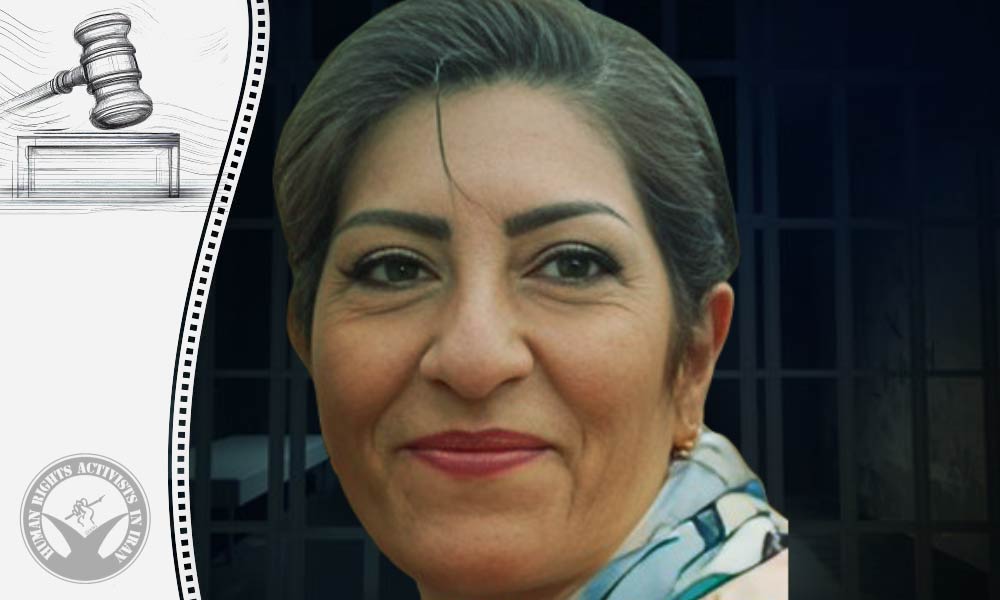
The Semnan Court of Appeal has affirmed an eleven-year sentence and additional penalties for Baha’i citizen Shahdokht Khanjani.

In the ruling issued on January 27, 2024, Khanjani was sentenced to ten years for “forming groups to act against national security” and one year for “propaganda against the regime.” She is also prohibited from joining political/civil/cultural groups and parties, with restrictions on social media activities for two years.

According to Article 134 of the Islamic Penal Code, the ten-year term for the first charge is enforceable.

Initially, the Revolutionary Court of Semnan had sentenced Khanjani to 11 years for the mentioned charges, along with five years for “propagating the Baha’i sect.” On appeal, the latter charge was dropped, as it was deemed inseparable from the charge of “forming groups to act against national security.” Additionally, a fine and a 15-year deprivation of social rights were annulled.

On May 29, 2023, security forces apprehended Khanjani at her Semnan residence. Following a search and confiscation of some belongings, she was later released on bond.

At the age of around 47, Khanjani is a Semnan resident and a mother of two.

Baha’is are subjected to violations of their religious rights, comprising 82% of reports on infringements against religious minorities, according to HRA’s 2023 annual report.

The Baha’i faith is not recognized as a legitimate religion by Iranian authorities, leading to systematic and longstanding violations of the rights of Baha’is in the country. This includes the denial of their fundamental right to practice their religion, which constitutes a clear breach of both Article 18 of the Universal Declaration of Human Rights and Article 18 of the International Covenant on Civil and Political Rights. The United Nations covenant holds that every person has the right to freedom of religion, freedom of converting religion, as well as freedom of expression, individually or collectively; openly or secretly.

HRA records highest number of death sentences imposed by the Islamic Republic in more than 12 months

The Human Rights Activists News Agency (HRANA) – HRA has reported a concerning increase in the number of death sentences in the Islamic Republic, reaching a 12-month peak with 35 individuals sentenced to death in January 2024 alone.

According to documentation recorded by the Human Rights Activists in Iran (HRA) statistics team, the Islamic Republic witnessed a significant uptick in the issuance of death sentences in January 2024, with 35 individuals sentenced to capital punishment—the highest recorded in more than 12 months, and a total of 86 individuals executed.

January 2024 was also marked by the heinous execution of Mohammad Ghobadlou. Ghobadlou was executed in connection with the “Women, Life, Freedom” protests. His case gained international attention due to reports of mental illness and trials lacking any semblance of due process.

In Iran, the death penalty is routinely imposed following trials that fall short of due process guarantees, in a judicial system that lacks transparency and impartiality, and for crimes that do not amount to the most serious crimes under international law. The continued use of the death penalty in this manner amounts to a grave violation of the right to life under article 6 of the ICCPR.

Additionally, and noteworthy in the case of Mohammad Ghobadlou, the imposition of the death penalty on individuals with mental disorders is strictly prohibited under international law, as reiterated by Section 3(e) of the UN Commission on Human Rights Resolution (2000/85).

An examination of the execution of death sentences and the issuance of death sentences spanning from January 2023 to January 2024 demonstrates that the number of executions consistently surpasses the number of new death sentences issued. This disparity is evident and suggests an apparent backlog.

Iran continually ranks among the highest in the world in terms of capital punishment despite international calls for the abolishment of the death penalty, in particular for crimes that do not amount to the most serious crimes under international law. It is evident that the Islamic Republic refuses to head the calls of the international community. Members of Iran’s judiciary, complicit in its utter lack of compliance with international human rights standards, must continue to be held accountable through various international accountability mechanisms such global Magnitsky style sanctions regimes that designate judges, interrogators, and members of law enforcement for their involvement in the continued use of capital punishment as a means to victimize and silence.

DateExecution of the death sentenceDeath sentence
Jan-236323
Feb-234615
Mar-233520
Apr-231911
May-2313614
Jun-23499
Jul-236411
Aug-23675
Sep-232412
Oct-237816
Nov-2310811
Dec-2310716
Jan-248635

Lawyer Taher Naghavi Arrested in Karaj

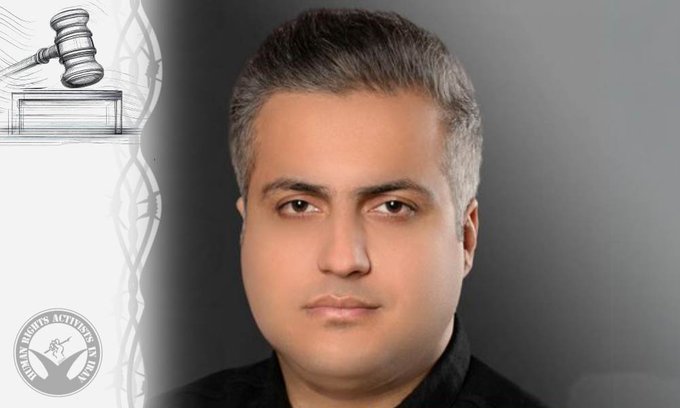
On February 6, attorney-at-law Taher Naghavi was arrested by security forces in Karaj and subsequently transferred to an undisclosed location.

A reliable source close to Naghavi’s family confirmed to HRANA that the arrest took place at one of his friends’ residences in Karaj. The reasons behind his arrest, the location of his confinement, and the charges against him are currently unknown.

Update on Six Death-Row Prisoners in Vakilabad Prison

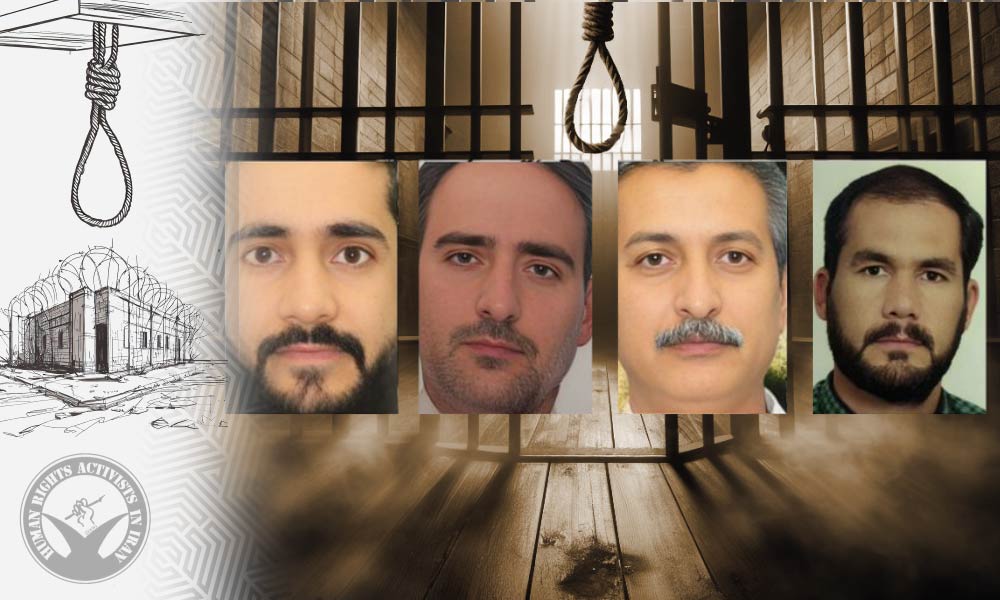
Malek Ali Fadaie-Nasab, Farhad Shakeri, Isa Eyd-Mohammadi, Abdolhakim Azim Gorgij, Abdolrahman Gorgij, and Taj-Mohammad Khormali, currently incarcerated in Ward 1/6 of Vakilabad Prison in Mashhad, face imminent execution. In late July 2023, the Mashhad Revolutionary Court sentenced these defendants, part of the same legal case, to death in a retrial.

These six individuals, along with six others—Abdolbaset Avarsan, Mohammad-Reza Sheikh Ahmadi, Morteza Fakoori, Hamid Rast Bala, Kabir Saadat Jahani, and Mohammad-Ali Arayesh—were detained by the Ministry of Intelligence in 2015 and imprisoned in Vakilabad Prison after one year. Except for Fadaie-Nasab, all these prisoners are members of the Sunni minority in Iran.

In 2019, the Mashhad Revolutionary Court sentenced Ahmadi, Avarsan, and Fakoori to 15 years in prison for “armed rebellion (Baghi) through membership in a Salafi-ISIS group.” The remaining 9 defendants were sentenced to death for “armed rebellion through membership in the Salafi group known as Al-Furqan and the Iranian Sunni front known as Hambastegi Melli.”

Rast-Bala, Saadat Jahani, and Arayesh were executed in this prison on December 31, 2020. The case of the six other defendants was overturned by the Supreme Court, and it was forwarded to another court branch for a retrial. In July 2023, Branch 4 of the Mashhad Revolutionary Court, presided over by Judge Ahmadian Salami, sentenced these six prisoners to death again. The verdict is currently under review by branch 39 of the Supreme Court.

A source close to one of their families informed HRANA that after the issuance of the death sentence, Shakeri and Abdolrahman Gorgij initiated a hunger strike that lasted for a while.

“The case has many flaws, and there is no substantial evidence to support the charges,” the source clarified. The source also confirmed that the prisoners have been subjected to torture during their detention.

Hossein Fathi Initiates His Ten-Year Prison Term at Behbahan Correctional Facility

On February 7, 2024, Hossein Fathi, arrested during the nationwide protests in 2019, commenced serving his ten-year sentence at Behbahan Correctional Facility.

In October 2020, Branch 102 of the Criminal Court of Behbahan, under the jurisdiction of Judge Rasoul Asadpour, sentenced Fathi to ten years for “destruction and arson of banks and public property.” He also received an additional one-year prison term and 74 lashes for “disturbing public order.” The verdict, featuring a ten-year enforceable prison term, was affirmed on appeal by the Khuzestan Court of Appeal.

The November 2019 protests were triggered by a surge in fuel prices, leading to demonstrations in numerous cities across the country. Seyed Hossein Taghavi, the spokesperson for the Parliamentary National Security and Foreign Policy Commission, stated that approximately 7,000 individuals were arrested during these protests. Reports from human rights organizations indicate that hundreds of people lost their lives as a result of the actions carried out by the security apparatus.

Subscribe to Our Newsletter

Now is definitely not the time to stop reading!

Siamak Ebrahimi and Shahrokh Ahmadi Commence Prison Sentences

Residents of Tehran, Siamak Ebrahimi and Shahrokh Ahmadi, have begun serving their sentences in Evin Prison.

Both Ebrahimi and Ahmadi were arrested by security forces on February 7, 2023, and subsequently released on a 700 million tomans bail (approximately 14,000 dollars) from Evin Prison.

In August 2023, under the jurisdiction of Iman Afshari, Branch 26 of the Tehran Revolutionary Court sentenced Ebrahimi to five years for “assembly and collusion against national security” and eight months for “spreading propaganda against the regime.” Ahmadi received a four-year sentence for “assembly and collusion against national security.” These sentences were upheld on appeal.

Reports from the Department of Statistics and Publication of HRA in 2023 indicate a total of 193 cases in which Branch 26 of the Tehran Revolutionary Court, presided over by Judge Iman Afshari, has been involved in issuing verdicts that infringe upon the human rights of defendants. For a comprehensive examination of the details and statistics, refer to HRANA’s report.

Prison Sentence Upheld on Appeal for Couple Facing Political Charges

Branch 36 of the Tehran Court of Appeal has affirmed a combined eight-year sentence for Asadollah Fakhimi and his wife Hoorieh (Hoori) Khanpour.

On February 7, the couple was officially informed of the verdict, which mandates four years for Fakhimi and two years for Khanpour on charges of “assembly and collusion against national security,” in addition to one year each for “propaganda against the regime.” This totals eight years of imprisonment for the couple.

The Ministry of Intelligence conducted a raid on their residence on July 11, 2023, seizing belongings during an extensive search. Subsequently, Fakhimi and Khanpour were summoned to Evin Courthouse to face legal proceedings.

After the second inquiry session at Evin Courthouse on November 5, 2023, the couple was released on bail amounting to one billion tomans, approximately 20,000 dollars.

Five Azerbaijani-Turk Activists Arrested by Security Forces

Security forces have apprehended five Azerbaijani-Turk activists in various locations, including Vadod Asadi and Saeed Minaie in Rasht, Ayaz Seyfkhah and Bagher Hajizadeh in Tabriz, and Kamal Nouri in Eslamshahr. These individuals have been transferred to undisclosed facilities.

Sources close to their families have informed HRANA that the agents employed violence during the arrest of these individuals.

Notably, Asadi and Minaie have a history of previous judicial confrontations related to their activism.

As of now, the reasons for their arrest, their current whereabouts, and the charges filed against them remain unknown.

In 2023, the Department of Statistics and Publications of the Human Rights Activists in Iran (HRA) documented 324 cases of citizens being arrested by security forces for advocating ethnic rights.

Mohsen Hooshmand Receives One-Year Prison Term on Alleged Political Charges

The Rasht Revolutionary Court has handed down a one-year sentence to Mohsen Hooshmand.

According to the verdict, Hooshmand has been convicted of “acting against national security.” During the court session held on November 14, 2023, Hooshmand’s social media and internet posts were cited as evidence supporting the charge.

Sources close to his family revealed to HRANA that the case has now been forwarded to the Executive Unit.

Having been arrested on October 25, 2023, Hooshmand spent 16 days in detention before being released on bail.

This isn’t Hooshmand’s first encounter with legal troubles, as the 29-year-old activist had previously faced arrest and conviction for his involvement in activism.

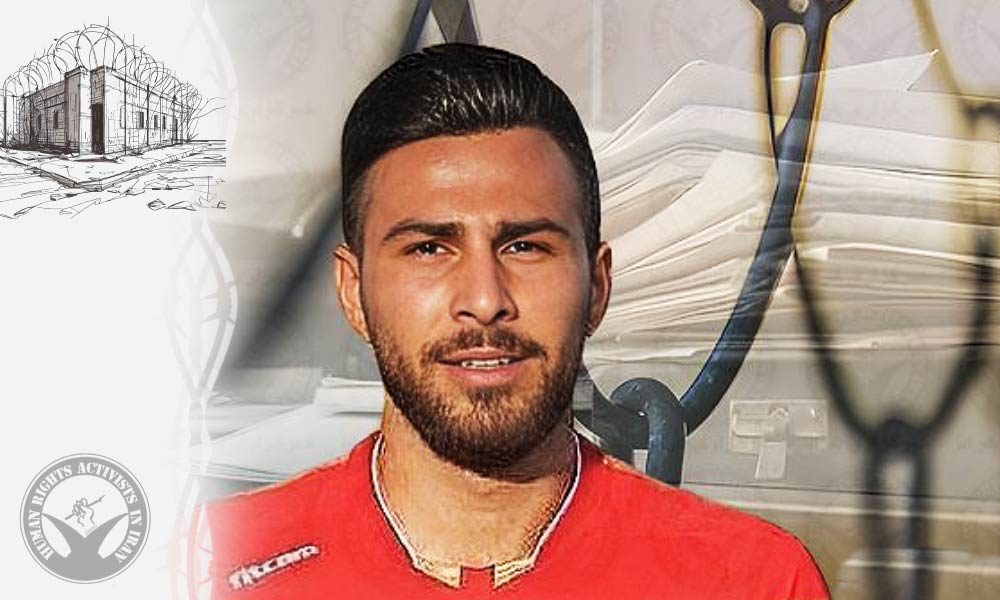
Amir-Nasr Azadani’s Legal Case: 16-Year Imprisonment Upheld on Appeal

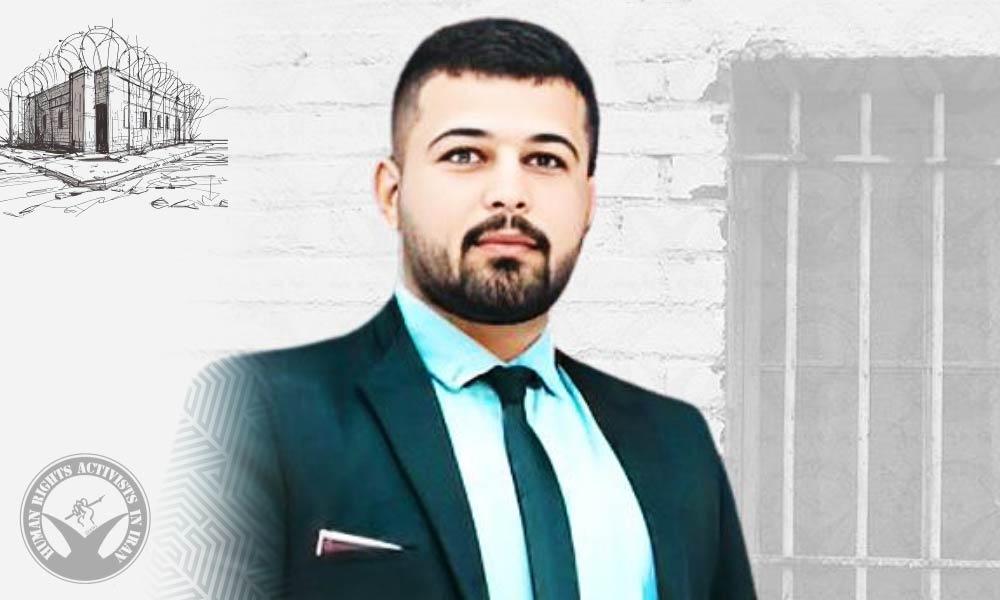
Amir-Nasr Azadani, a former soccer player embroiled in the “Khaneh e Isfahan (Isfahan House)” legal case, is currently serving his sentence in Dastgerd Prison, Isfahan. The Supreme Court recently confirmed his sixteen-year sentence, and the verdict has been forwarded to the executive unit of the Isfahan Revolutionary Court.

According to a source close to Azadani’s family, the Supreme Court, on January 24, 2024, upheld the 16-year prison term following an appeal for “assisting in enmity against God (Moharebeh).” Subsequently, the executive unit of the Isfahan Revolutionary Court executed the verdict.

In January 2023, the Revolutionary Court of Isfahan initially sentenced Azadani to five years for “membership in illegal groups to act against national security,” another five years for “assembly and collusion against national security,” and sixteen years for “enmity against God (Moharebeh).” Upon appeal to the Supreme Court, he was acquitted of the first two charges, leaving the prison term for the third charge intact.

During nationwide protests on November 17, 2022, security forces arrested Azadani in connection to the “Khaneh e Isfahan” case. Notably, three co-defendants in the same case, Saleh Mir Hashemi (36), Majid Kazemi (30), and Saeed Yaghoubi (37), were executed on May 19, 2023, on charges of enmity against God (Moharebeh).