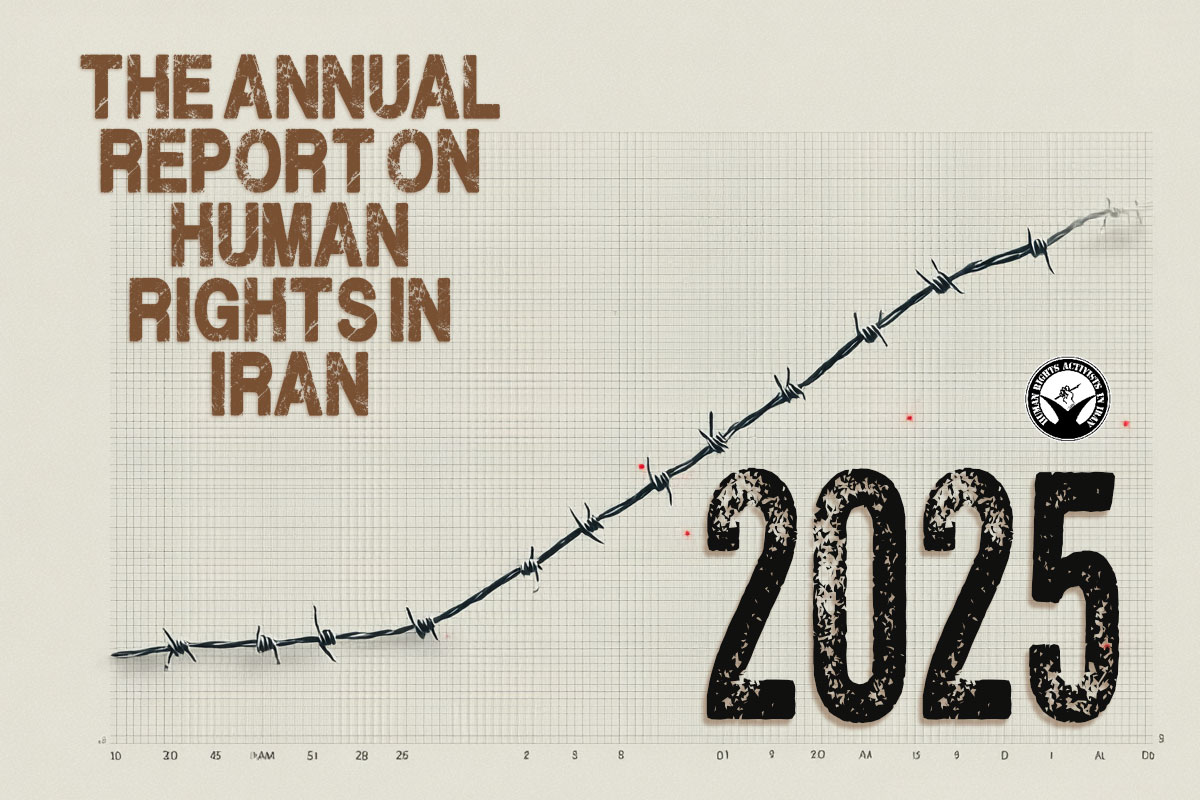
Human Rights Activists in Iran (HRA), through the dedicated efforts of its Department of Statistics and Publications, publishes its annual Gregorian calendar-based analytical and statistical report on the human rights situation in Iran for the one-year period (January 1, 2025, to December 20, 2025). This report is the culmination of the organization’s daily endeavors in recent years, forming part of a daily statistical project that began in 2009. It provides an analytical-statistical overview of human rights in Iran.
This annual report on human rights violations in Iran represents a synthesis of 10,826 human rights reports, gathered from 122 legal and news sources within the past calendar year. HRANA (Human Rights Activists News Agency) contributed 50.58% of the reports utilized in this publication, with 23.98% originating from official or government-affiliated Iranian sources, and the remaining 25.44% from other news or human rights sources.
In this 83-page report, various aspects such as women’s rights, workers’ rights, children’s rights, prisoners’ rights, etc., are briefly examined and statistically analyzed, accompanied by relevant charts for enhanced reader comprehension. According to this report, the focus of human rights monitoring in Iran, in comparison between the capital and other areas, remains unequal. This long-standing inequality shows that in the last year, reporting from non-central areas has decreased by 17.7% compared to the capital. This situation continues to indicate the lack of adequate monitoring of other areas of the country relative to the center by civil society.
Although this report predominantly reflects the extensive efforts of courageous human rights defenders in Iran, who bear significant costs in pursuit of their humanitarian ideals, it inevitably has limitations. These include restrictions on the activities of human rights organizations by the Iranian government and governmental impediments to the free flow of information. Consequently, while this report strives for accuracy, it cannot be considered entirely error-free or a complete reflection of the human rights situation in Iran. Nevertheless, it stands as one of the most precise, comprehensive, and well-documented reports on human rights violations in Iran, offering valuable insights for organizations and defenders of human rights to better understand the human rights situation in Iran, its challenges, and potential opportunities.
Monitoring Overview
The following information reflects the scope, geographic distribution, and sources of human rights reporting in Iran during the reporting period. These findings illustrate the relationship between reporting volume and civil society capacity across provinces.
Reporting Volume and Sources
- The highest number of reports was published in May
- The lowest number of reports was published in April
Sources of Reports
- • 50.58 percent of reports were produced by Human Rights Activists News Agency (HRANA)
- • 23.98 percent originated from official Iranian government sources or sources close to the government
- • 25.44 percent were collected from other human rights news agencies
Protests, Gatherings, and Collective Action
- • At least 2,174 protest gatherings were held across all 31 provinces
- • 940 professional union protests
- • 813 labor-related gatherings
- • 255 protests by victims of financial or investment fraud
- • 67 protests related to freedom of thought and expression
- • 47 student union protests
- • 50 environmental protests
- • 1 women’s rights protest
- • 1 children’s rights protest
- In addition:
- • 407 labor strikes were recorded
- • 25 professional strikes were documented
- • 22 protest attempts were prevented by authorities
Geographic Distribution of Reporting
- A significant disparity exists between Tehran and the rest of the country in terms of reporting volume
- According to the 2024 census:
- • Tehran population: 14,425,000
- • Population outside Tehran: 71,536,000
- Reporting distribution indicates:
- • 16.78 percent of reporting focused on Tehran
- • 83.22 percent of reporting originated from other parts of the country
Ethnic Rights Overview
The following statistics reflect documented rights violations assessed by HRA as having occurred on the basis of ethnic or national minority status. These figures are drawn from 262 verified reports collected throughout the reporting period.
Key Findings
Arrests and Detention
- • 302 individuals were arrested on the basis of ethnic or national minority status
- • 186 arrests were carried out without a judicial warrant
- • 273 individuals were arrested on charges that remain unknown or undisclosed
- • 2 instances of imprisonment sentences were carried out during the reporting period
- • 7 interrogations took place inside security or judicial institutions
- • 47 individuals were summoned by security or judicial authorities for questioning
Judicial Proceedings
- • 20 cases went to trial
- • 4 individuals were sentenced to imprisonment
- Sentences issued to these individuals totaled 134 months of discretionary imprisonment, as follows:
- 36 months issued by preliminary courts
- 74 months issued by appellate courts
- 24 months upheld by the Supreme Court
Searches and Other Violations
- • 29 home searches were reported
- • 1 case of physical assault was documented
Trends and Comparative Analysis
- Arrests of ethnic minority citizens increased by 15.2 percent compared to 2024
- Prison sentences issued relative to the number of individuals tried decreased by 80 percent
- The overall issuance of prison sentences declined by 71.5 percent compared to 2024
Monthly Trends
- The highest number of reported violations occurred in January
- The steepest decline in reported violations occurred in April
Tolerance and Religious Freedoms Overview
The following statistics reflect documented rights violations assessed by HRA as having occurred on the basis of religious belief or affiliation. These figures are based on 204 verified reports collected during the reporting period.
Key Findings
Arrests and Detention
- • 183 individuals were arrested on the basis of religious belief or affiliation
- • 7 arrests were carried out without a judicial warrant
- • 134 individuals were summoned to security or judicial institutions for questioning
- • 50 interrogations took place inside security or judicial institutions
- • 45 instances of sentence enforcement were carried out
- • 33 travel bans were imposed
Judicial Proceedings
- • 47 cases went to trial
- • 87 individuals were sentenced to imprisonment
- Sentences issued to these individuals totaled 8,015 months of imprisonment, as follows:
- 7,217 months of discretionary imprisonment
- 798 months of suspended imprisonment
- 3,876 months of imprisonment were issued by the appellate courts
- Sentences issued to these individuals totaled 8,015 months of imprisonment, as follows:
- • 14 individuals were fined a total of 5.27 billion tomans
- • 35 individuals were sentenced to deprivation of social rights
- • 5 individuals were sentenced to 96 months of exile
Searches, Property Violations, and Other Abuses
- • 127 home searches were reported
- • 32 cases of property or home confiscation were documented
- • 5 cases of obstruction of economic activity were recorded
- • 1 case involving the destruction of a cemetery was documented
- • 4 cases of physical assault were reported
Trends and Comparative Analysis
- Arrests related to religious minority rights increased by 101 percent compared to the previous year
- Prison sentences issued relative to the number of individuals tried increased by 7.4 percent
- The total length of prison sentences increased by 67.4 percent compared to the previous year
Monthly Trends
- The highest number of reported violations occurred in June
- The lowest number of reported violations occurred in December
Distribution by Religious Group
- • Baha’is accounted for 61.96 percent of all reported violations
- • Christians accounted for 17.93 percent
- • Jews accounted for 7.61 percent
- • Other religious groups accounted for 6.34 percent
- • Sunni Muslims accounted for 6.16 percent
Freedom of Thought and Expression Overview
The following statistics reflect documented rights violations assessed by HRA as having occurred in relation to freedom of thought and expression. These figures are based on 1,469 verified reports collected during the reporting period.
Key Findings
Arrests and Detention
- • 22,028 individuals were arrested in connection with freedom of thought and expression
- • At least 179 arrests were carried out without a judicial warrant
- • 389 individuals were summoned to security or judicial authorities for questioning
- • 60 interrogations were conducted by security agencies
- • 92 instances of sentence enforcement were carried out
- • 24 travel bans were imposed
Judicial Proceedings
- • 172 individuals were tried in judicial institutions
- • 398 individuals were sentenced to imprisonment
- Sentences issued to these individuals totaled 14,751 months of imprisonment, as follows:
- 13,883 months of discretionary imprisonment
- 868 months of suspended imprisonment
- 3,005 months were issued by appellate courts
- 816 months were issued by the Supreme Court
- Sentences issued to these individuals totaled 14,751 months of imprisonment, as follows:
- • 61 individuals were fined a total of 2,823,600,000 tomans
- • 19 individuals were sentenced to 938 lashes
- • At least 3 individuals had corporal punishment sentences of 142 lashes carried out
- • 12 individuals were sentenced to a total of 444 months of exile
- • 42 individuals were sentenced to deprivation of social rights
Censorship, Searches, and Other Violations
- • 15 publications were declared criminal
- • 61 home searches were reported
- • 2 cases of property confiscation were documented
- • 27 cases of internet filtering were recorded
- • 1 case of communication disruption was documented
- • 38 cases of physical assault against citizens were reported
- • 1 instance of forced retirement was recorded
- • 3 cases of dismissal or downsizing were documented
- • 7 incidents of preventing speeches or public events were reported
- • 67 gatherings were held
- • 2 gatherings were obstructed by authorities
Trends and Comparative Analysis
- Arrests related to freedom of thought and expression increased by 1284.5 percent compared to the previous year
- Prison sentences issued relative to the number of individuals tried decreased by 34.7 percent
- The total length of prison sentences declined by 44.8 percent compared to the previous year
Monthly Trends
- The highest number of reported violations occurred in June
- The lowest number of reported violations occurred in September
Rights of Trade Unions and Associations Overview
The following statistics reflect documented rights violations assessed by HRA as having occurred in relation to labor, trade union, and professional association rights. These figures are based on 1,134 verified reports collected during the reporting period.
Key Findings
Arrests and Detention
- • 39 labor and union activists were arrested
- • 55 individuals were summoned to security or judicial authorities for questioning
- • 4 interrogations were conducted by security agencies
- • 6 instances of sentence enforcement were carried out
- • 3 travel bans were imposed
Judicial Proceedings
- • 19 cases went to trial
- • 30 individuals were sentenced to imprisonment
- Sentences issued to these individuals totaled 743 months of imprisonment, as follows:
- 740 months of discretionary imprisonment
- 3 months of suspended imprisonment
- 61 months were issued by appellate courts
- Sentences issued to these individuals totaled 743 months of imprisonment, as follows:
- • 2 individuals were sentenced to 120 months of exile
- • 2 individuals were sentenced to 148 lashes
- • 9 individuals were fined a total of 679,100,000 tomans
Workplace and Economic Rights Violations
- • 216 cases of workplace closures were documented
- • 21 cases of dismissal or layoffs were reported
- • 7 cases of forced retirement were documented
- • At least 60 months of delayed wage payments were reported
- • 1 case of license revocation was documented
- • 1 case of physical assault was reported
- • 1 case of self-immolation was documented
- • 4 home searches were carried out
Protests and Collective Action
- • At least 940 labor or professional protests were recorded
- • 25 strikes were documented
- • 5 cases of protest obstruction were reported
Trends and Comparative Analysis
- Arrests of labor and union activists increased by 69.5 percent compared to 2024
- The total issuance of prison sentences decreased by 16.5 percent
- Prison sentencing relative to the number of individuals tried declined by 60 percent compared to 2024
Monthly Trends
- The highest number of reported violations occurred in May
- The lowest number of reported violations occurred in July
Right to Education Overview
The following statistics reflect documented rights violations assessed by HRA as having occurred in relation to the right to education. These figures are based on 127 verified reports collected during the reporting period.
Key Findings
Arrests, Discipline, and Institutional Actions
- • 15 individuals were arrested in connection with education-related activities
- • 1 student was denied admission to postgraduate studies
- • 1 case of expulsion from university was documented
- • 47 protest gatherings related to educational issues were recorded
- • 4 protests were obstructed by authorities
Violence, Abuse, and Health-Related Violations
- • 3 cases of physical assault were documented
- • 32 cases of corporal punishment against students were reported
- • At least 9 male elementary school students were subjected to physical and sexual abuse by a teacher
- • 141 cases of food poisoning were documented
- • Over 161 cases of student poisoning were reported
Systemic Deprivation of Education
- • At least one million students were deprived of continuing their education
- The highest school dropout rates were reported in:
- • Sistan and Baluchestan Province
- • Golestan Province
- • Razavi Khorasan Province
Monthly Trends
- The highest number of reported violations occurred in October
- The lowest number of reported violations occurred in July
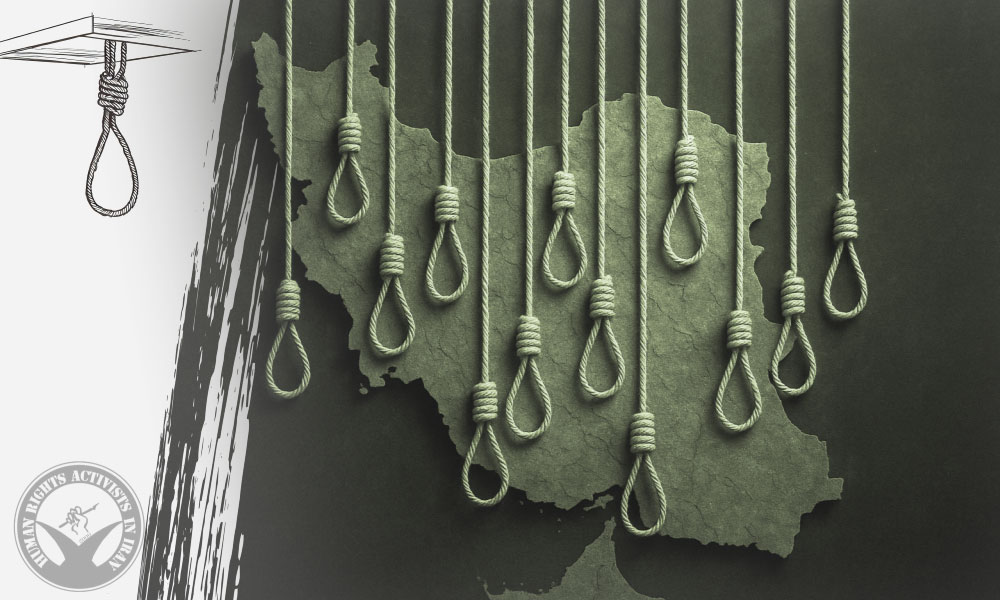
Right to Life (Death Penalty) Overview
The following statistics reflect documented violations of the right to life assessed by HRA as having occurred through the issuance and implementation of the death penalty. These figures are based on 1,619 verified reports collected during the reporting period.
Key Findings
Death Sentences and Executions
- • 168 individuals were sentenced to death
- • 1,922 individuals were executed
- • 10 executions were carried out in public
- • 56 death sentences were upheld by the Supreme Court
Demographic Breakdown
- Of those executed whose gender was identified:
- • 1,681 men
- • 59 women
- • 2 individuals were under the age of 18 at the time of the alleged offense
- Of the recorded death sentences:
- • 151 were issued against men
- • 14 were issued against women
- • 5 death sentences were issued for public execution
- • 2 death sentences were issued against child offenders
Charges Leading to Execution
- • 47.55% for murder
- • 46.10% for drug-related offenses
- • 1.66% for sexual offenses
- • 1.66% for unspecified charges
- • 1.35% for moharebeh–baghi (political–security charges)
- • 0.73% for security-related charges (including espionage, terrorism, or bombing)
- • 0.68% for moharebeh (non-political)
- • 0.50% for economic crimes
- • 0.50% for armed robbery
- • 0.16% for corruption on earth
Trends and Comparative Analysis
- The implementation of death sentences increased by 106.6 percent compared to 2024
- The issuance of death sentences decreased by 21.4 percent compared to 2024
Monthly Trends
- The highest number of reported violations occurred in November
- The lowest number of reported violations occurred in March
Geographic and Institutional Distribution
- • Alborz Province accounted for 10.87 percent of executions
- • Razavi Khorasan Province accounted for 8.22 percent of executions
- • Qezel Hesar Prison (Karaj) and Dastgerd Prison (Isfahan) recorded the highest number of executions
Transparency of Executions
- • 95 percent of executions were carried out in secret or without public announcement
Long-Term Trends
- After a relative decline between 2018 and 2020, executions have shown a sustained upward trend since 2021
- In 2025, 1,922 executions were recorded, marking the highest annual figure over the past eleven years
Cultural Rights Overview
The following statistics reflect documented rights violations assessed by HRA as having occurred in relation to cultural rights. These figures are drawn from 19 verified reports collected throughout the reporting period.
Key Findings
Censorship, Restrictions, and Administrative Actions
- • 7 cases of obstruction of cultural programs or public speeches were documented
- • 2 individuals were summoned to judicial authorities
- • 2 cases of censorship or prevention of publication were recorded
- • 7 professional bans were imposed
- • 1 case of neglect was documented
- • 1 case involving the destruction of a historical site was recorded
Judicial Proceedings
- • 6 cases went to trial
- • 4 individuals were sentenced to suspended imprisonment
- Sentences issued to these individuals totaled 131 months of suspended imprisonment, of which:
- • 64 months were issued by appellate courts
- Sentences issued to these individuals totaled 131 months of suspended imprisonment, of which:
- • 6 individuals were fined a total of 515 million tomans
Trends and Comparative Analysis
- Verdicts issued relative to the number of individuals tried increased by 20 percent compared to the previous year
- The issuance of imprisonment sentences decreased by 31.7 percent compared to the previous year
Monthly Trends
- The highest number of reported violations occurred in April and December
- The lowest number of reported violations occurred in June, August, and September
Labor Rights Overview
The following statistics reflect documented rights violations assessed by HRA as having occurred in relation to labor rights. These figures are based on 1,921 verified reports collected during the reporting period.
Key Findings
Arrests, Detention, and Judicial Actions
- • 18 individuals were arrested in connection with labor-related activities
- • 6 individuals were summoned to judicial or security institutions
- • 3 cases went to trial
- • 2 interrogations were conducted by judicial or security entities
- • 1 instance of imprisonment enforcement was recorded
- • 2 travel bans were imposed
- • 3 cases of self-immolation were documented
- • 1 case of a worker being physically assaulted was reported
Judicial Proceedings
- • 2 individuals were sentenced to imprisonment
- Sentences issued to these individuals totaled 75 months of imprisonment, of which:
- • 72 months were issued by appellate courts
- Sentences issued to these individuals totaled 75 months of imprisonment, of which:
- • 1 individual was fined 30 million tomans
Employment, Wages, and Social Protection
- • At least 623 months of delayed wage payments were reported across 178 industrial and service units
- • 2,453 cases of dismissal or downsizing were documented
- • 550 cases of unemployment were reported
- • 663 months of lack of insurance coverage were recorded
- • 10 factory closures were documented
- • 3,411 workers were reported as being in limbo
Workplace Safety and Accidents
- • At least 1,202 worker deaths were recorded due to workplace incidents
- • 7,316 cases of physical injury to workers were documented
Protests and Collective Action
- • At least 813 labor protests were recorded
- • 407 labor strikes were documented
- • 4 cases of protest obstruction were reported
Trends and Comparative Analysis
- Arrests of workers increased by 63.6 percent compared to the previous year
- Verdicts issued relative to the number of individuals tried decreased by 77.7 percent
- The issuance of imprisonment sentences declined by 75 percent compared to the previous year
Monthly Trends
- The highest number of reported violations occurred in May
- The most significant decline in reports occurred in April
Children’s Rights Overview
The following statistics reflect documented rights violations assessed by HRA as having occurred in relation to children’s rights. These figures are based on 590 verified reports collected during the reporting period.
Key Findings
Violence, Abuse, and Loss of Life
- • At least 38 cases of child rape or sexual abuse were documented
- • 45 child murders were reported
- • 4 cases of so-called honor killings involving children were recorded
- • 18 child suicides were documented
- • At least 23,000 cases of child abuse were reported
- • 5 abandoned infants were documented
- • 5 deaths and 10 injuries among child laborers were recorded
- • 21 deaths and 385 injuries due to official negligence were documented
Child Labor and Exploitation
- • Over 70,000 cases of child labor were reported
Child Marriage and Early Motherhood
- • At least 27,448 girls under the age of 15 were married between winter 2021 and fall 2022
- • 31,646 girls under 15 were married in 2020
- • 32,655 girls under 15 were married in 2021
- In fall 2022, marriages of girls under 15 increased by 933 cases compared to the previous season
- In fall 2022, over 5,500 girls aged 15 to 19 were married compared to summer 2022
- • 69,103 babies were born in 2021 to mothers aged 10 to 19
- • 1,474 babies were born to mothers aged 10 to 14
Deprivation of Education
- • At least one million students were deprived of continuing their education
- Contributing factors included poverty, early marriage, lack of access to virtual education, geographic dispersion, and cultural barriers
Use of Children in State-Organized Activities
- • At least 104,655 children under 18 were sent to “Rahian-e Noor” camps in former war zones
- The highest participation was recorded in Isfahan, Bushehr, Qom, Markazi, and Razavi Khorasan provinces
Arrests and Executions of Children
- • At least 35 individuals under 18 were detained by security institutions
- • At least 2 juvenile offenders were executed during the reporting period
Monthly Trends
- The highest number of reported violations occurred in November
- The lowest number of reported violations occurred in June
Women’s Rights Overview
The following statistics reflect documented rights violations assessed by HRA as having occurred in relation to women’s rights. These figures are based on 187 verified reports collected during the reporting period.
Key Findings
Violence, Abuse, and Gender-Based Killings
- • At least 63 cases of rape or sexual abuse were documented
- • 115 cases of femicide were reported
- • 11 cases of so-called honor killings were recorded, including the killing of 5 men
- • 1 case of self-immolation was documented
- • 11 cases of physical assault were reported
- • At least 179 instances of domestic violence were documented
- • 8 acid attacks were reported
Arrests, Judicial Actions, and Punishments
- • 13 women were arrested for non-compliance with mandatory hijab laws
- • 11 individuals were summoned to judicial or security bodies
- • 7 interrogations were conducted by security agencies
- • 4 individuals were sentenced to imprisonment
- Sentences issued to these individuals totaled 80 months of imprisonment, of which:
- • 31 months were issued by appellate courts
- Sentences issued to these individuals totaled 80 months of imprisonment, of which:
- • 1 individual was sentenced to 178 lashes
- • 7 million tomans in fines were imposed
Enforcement of Mandatory Hijab and Discrimination
- • 24 cases of enforcement actions were carried out under the pretext of “improper hijab”
- • 193 commercial establishments were shut down for failure to enforce mandatory hijab regulations
- • 1 case of discrimination in a public setting was documented
Monthly Trends
- The highest number of reported violations occurred in April
- The lowest number of reported violations occurred in October
Prisoners’ Rights Overview
The following statistics reflect documented rights violations assessed by HRA as having occurred in relation to the treatment of prisoners and detainees. These figures are based on 1,076 verified reports collected during the reporting period.
Key Findings
Physical Abuse, Health, and Conditions of Detention
- • 30 cases of physical assault against prisoners were documented
- • 215 cases of denial of or failure to provide medical care to prisoners and detainees were recorded
- • 2,513 cases of prisoners being held in inappropriate conditions were reported
- • 9 cases of psychological or physical torture were documented
- • 18 deaths of prisoners due to illness were recorded
- • 23 suicides among prisoners were documented
- • 5 cases of prisoners being killed were reported
Solitary Confinement, Transfers, and Coercion
- • 368 cases of unlawful transfer to solitary confinement were recorded
- • 43 forced transfers of prisoners were documented
- • 224 cases of threats or pressure exerted on prisoners were reported
- • 30 cases of forced confessions were documented
- • 3 cases involving the use of handcuffs or shackles were recorded
Due Process and Legal Rights
- • 97 cases of denial of access to legal counsel were documented
- • 55 cases of denial of visitation rights were reported
- • 263 cases of denial of the right to make phone calls were recorded
- • 19 cases of denial of medical leave were documented
- • 18 cases of failure to separate prisoners based on the nature of their crimes were recorded
- • 7 cases of failure to separate defendants from convicted prisoners were documented
Protests, Hunger Strikes, and Collective Actions
- • 187 hunger strikes by prisoners or detainees were reported
- • 5 sit-ins by prisoners were documented
Detainee-Specific Violations
- • 19 cases of failure to address detainee complaints were recorded
- • 675 cases of enforced disappearance or lack of information regarding detainees were documented
- • 1,099 cases of detainees being held in legal limbo were reported
Monthly Trends
- The highest number of reported violations occurred in July
- The lowest number of reported violations occurred in June
Environmental Rights Overview
The following statistics reflect documented rights violations assessed by HRA as having occurred in relation to environmental rights. These figures are drawn from 1,700 verified reports collected throughout the reporting period.
Key Findings
Environmental Damage and Mismanagement
- • 1,596 reports of environmental pollution were documented, including air pollution and contamination of surface and groundwater
- • 13 cases of failure to protect natural resources were recorded
- • 17 cases of improper exploitation of natural resources were documented
- • 9 cases of animal abuse were reported
Protests and Collective Action
- • 50 environmental protest gatherings were recorded
- • 2 protest gatherings were obstructed
Harm to Environmental Protection Personnel
- • 49 environmental protection officers were involved in reported incidents, including:
- • 7 park rangers killed
- • 31 park rangers injured
- • 1 wildlife warden injured
- • 10 forest rangers injured
Monthly Trends
- The highest number of reported violations occurred in May
- The lowest number of reported violations occurred in June
Sexual and Gender Minorities Overview
The following information reflects documented violations and structural conditions affecting the rights of sexual and gender minorities in Iran. Due to severe underreporting, cultural taboos, and legal barriers, available data represents only a limited portion of actual violations.
Key Findings
Structural and Legal Discrimination
- Same-sex relationships are criminalized under Iranian law
- Gender identity is not legally recognized for transgender individuals prior to gender reassignment surgery
- State policies and legal frameworks blur the distinction between sexual or gender identity and so-called “moral corruption”
- Hate speech and incitement against sexual and gender minorities occur openly and with impunity
- Civil society monitoring of violations against sexual and gender minorities remains severely limited due to fear, stigma, and repression
Harassment and Abuse by Authorities
- Security and law enforcement agencies have, in some instances, acknowledged the detention and harassment of individuals based on sexual orientation or gender identity
Lethal Violence
- In 2025, Sogand Pakdel, a transgender woman approximately 25 years old, was shot and killed by her uncle in Kavar, Fars Province
- The killing occurred during a family wedding and was reportedly carried out under a so-called “honor” motive
Unlawful Use of Force and Lethal Force Overview
The following statistics reflect documented rights violations assessed by HRA as having occurred through the unlawful or excessive use of force by military or security forces, as well as related state actions affecting civilian safety. These figures are drawn from verified reports collected throughout the reporting period.
Key Findings
Death and Injury of Civilians by Security Forces
- • 185 civilians were shot by military or security forces
- • 90 individuals were killed, including:
- • 18 kolbars
- • 21 fuel carriers
- • 51 other civilians
- • 95 individuals were injured, including:
- • 25 kolbars
- • 13 fuel carriers
- • 57 other civilians
- • 90 individuals were killed, including:
Kolbar-Related Incidents
- • 8 kolbars were harmed due to harsh geographical or climatic conditions
- • 3 deaths
- • 5 injuries
Fuel Carrier Incidents
- • 82 fuel carriers were involved in incidents related to military chases or road accidents
- • 74 deaths
- • 8 injuries
Victims of Landmines and Explosions
- • 20 civilians were killed by landmines in border areas
- • 22 civilians were injured due to landmine explosions
Floggings, Amputation, and Corporal Punishment
- • 96 individuals were sentenced to a total of 5,041 lashes
- • 6 individuals had amputation sentences carried out
- • 5 individuals were sentenced to limb retribution (qisas)
- • At least 3 individuals had corporal punishment sentences of 142 lashes carried out
Intervention in Personal Affairs
- • 76 individuals were arrested for organizing or attending private gatherings
Protests by Victims of Financial and Investment Loss
- • 255 protest actions were organized by victims of financial or investment fraud
- In 5 cases, their attempts to hold a gathering were prevented.
- Protests took place across 31 provinces
- The highest number of protests occurred in Tehran, Khuzestan, and Qazvin
Monthly Trends
- The highest number of reported violations occurred in August
- The lowest number of reported violations occurred in June
Judicial Sentences Overview
The following statistics reflect publicly documented judicial sentences issued by Iranian courts, including primary and appellate courts, across multiple rights categories. These figures are based solely on cases in which specific details of verdicts were made public.
Key Findings
Imprisonment Sentences by Category
- • 23,929 total months of imprisonment were issued across all documented categories, including:
- • 134 months related to ethnic minority cases
- • 8,015 months related to religious minority cases
- • 14,751 months related to freedom of thought and expression
- • 743 months related to trade unions and associations
- • 75 months related to labor rights
- • 80 months related to women’s rights
- • 131 months related to cultural rights
Corporal Punishment and Financial Penalties
- • 5,041 lashes were issued by judicial authorities
- • 5 sentences of limb retribution (qisas) were issued
- • 932.47 million tomans in fines were imposed
Trends and Comparative Analysis
- Overall convictions of activists and citizens decreased by 28.7 percent compared to the previous year
- Convictions related to religious minorities increased by 67.4 percent
- Convictions related to ethnic minorities decreased by 71.5 percent
- Convictions related to freedom of thought and expression declined by 44.8 percent
- Convictions related to trade unions decreased by 16.5 percent
- Convictions in the labor sector declined by 75 percent
- Convictions related to cultural rights declined by 31.7 percent
- Convictions related to women’s rights increased by 40.35 percent
Monthly Trends
- The highest number of reported convictions occurred in January
- The lowest number of reported convictions occurred in June
- • December data is not included in this comparison
Arrests Overview
The following statistics reflect documented arrests of citizens in connection with civil, ideological, political, or rights-related activities. These figures are drawn from verified reports collected throughout the reporting period.
Key Findings
Arrests by Category
- • 22,709 individuals were arrested during the reporting period
- • 22,028 arrests related to freedom of thought and expression
- • 302 arrests involving ethnic and national minorities
- • 183 arrests related to religious minorities
- • 39 arrests related to trade unions and professional associations
- • 18 arrests related to labor rights
- • 15 arrests related to student activities
- • 35 arrests involving children
Arrests Related to Lifestyle and Personal Activities
- • 13 women were subjected to judicial prosecution due to their activities or lifestyle
- • 76 individuals were arrested for organizing or participating in private gatherings
Trends and Comparative Analysis
- Arrests of activists and citizens increased by 715.9 percent compared to the previous year
- Category-specific changes compared to 2024 include:
- • Ethnic minority arrests increased by 15.2 percent
- • Religious minority arrests increased by 101 percent
- • Trade and professional sector arrests increased by 69.5 percent
- • Women’s rights–related arrests decreased by 97.9 percent
- • Lifestyle-related arrests decreased by 33.3 percent
- • Children’s rights–related arrests increased by 2.9 percent
- • Labor rights–related arrests increased by 63.6 percent
- • Freedom of thought and expression–related arrests increased by 1284.5 percent
Monthly Trends
- The highest number of reported arrests occurred in June
- The sharpest decline in reported arrests occurred in April
Individuals Involved in Human Rights Violations Overview
The following information reflects documented cases in which identifiable individuals or institutions were implicated in human rights violations in Iran. These findings are based on reports jointly compiled by Spreading Justice and HRA’s Statistics Department and cover the period from January 1, 2025, to December 20, 2025.
Key Findings
Distribution by Branch of Power
- Out of 2,847 reports in which perpetrators were identifiable:
- • 2,253 cases were attributed to the Judiciary
- • 430 cases were attributed to the Executive branch
- • 164 cases were attributed to the Leadership Authority
Human Rights Violating Entities
In reports containing information on responsible institutions, 480 legal entities were identified. The ten institutions with the highest number of documented violations were:
- • Ministry of Intelligence – 231 cases
- • FARAJA Intelligence Organization – 172 cases
- • Islamic Revolutionary Guard Corps (IRGC) – 146 cases
- • Branch 26, Tehran Revolutionary Court – 42 cases
- • Evin Prison – 36 cases
- • Branch 36, Tehran Court of Appeals – 24 cases
- • Branch 23, Tehran Revolutionary Court – 14 cases
- • Branch 1, Sanandaj Revolutionary Court – 14 cases
- • Branch 15, Tehran Revolutionary Court – 13 cases
- • Branch 1, Mahabad Revolutionary Court – 13 cases
Individuals Involved in Human Rights Violations
A total of 106 individuals were identified as being directly involved in human rights violations. The ten individuals with the highest number of documented cases—all affiliated with the Judiciary as judges—are listed below:
- • Iman Afshari, Judge, Revolutionary Court, Tehran – 42 cases
- • Abbasali Houzan, Judge, Court of Appeals, Tehran – 24 cases
- • Mohammad Taqi Taqizadeh, Judge, Revolutionary Court, Tehran – 14 cases
- • Mostafa Azizi, Judge, Revolutionary Court, Sanandaj – 14 cases
- • Abolghasem Salavati, Judge, Revolutionary Court, Tehran – 13 cases
- • Sajjad Dousti, Judge, Revolutionary Court, Mahabad – 13 cases
- • Mohammad-Reza Tavakoli, Judge, Revolutionary Court, Isfahan – 13 cases
- • Qasem Hosseini Kouhkamari, Judge, Supreme Court, Tehran – 11 cases
- • Ahmad Darvish Goftar, Judge, Revolutionary Court, Rasht – 11 cases
- • Ali Ansari, Judge, Criminal Court, Oshnavieh – 9 cases
Institutional Patterns
- Revolutionary courts accounted for a significant share of judicially attributed violations
- Intelligence and security bodies, including the Ministry of Intelligence and IRGC Intelligence Organization, were repeatedly identified across multiple categories
- Prison authorities, particularly in facilities such as Evin Prison, were implicated in a substantial number of reported violations
Reflection on the year
In 2025, HRA continued to advance strategic international advocacy aimed at securing accountability for serious human rights violations and violations of international law in Iran through a wide range of legal, diplomatic, and policy tools. While HRA sustained its advocacy for targeted human rights sanctions, it also emphasized that sanctions are only one component of a broader accountability ecosystem. Throughout the year, HRA identified more than twenty judicial and quasi-judicial pathways to accountability and worked with international partners and policymakers to elevate these mechanisms as viable and complementary routes to justice.
HRA engaged directly with member states and policymakers across Europe, Asia, and North and South America, emphasizing the need for coordinated, evidence-based approaches to accountability. These engagements focused on addressing jurisdictional gaps, strengthening cooperation between states, and ensuring that accountability efforts are informed by rigorous documentation and legal analysis in collaboration with civil society. HRA consistently underscored the critical role of civil society in supporting these processes, particularly in providing verified information, contextual analysis, and victim-centered perspectives.
As part of this effort, HRA met with members of prosecution teams in multiple jurisdictions, providing evidence, analysis, and information to support ongoing and prospective accountability efforts. These engagements aimed to facilitate the use of existing legal frameworks, including universal jurisdiction and other domestic and international mechanisms, to advance investigations into crimes under international law.
HRA’s contributions were grounded in its extensive documentation work and long-term analysis of patterns of abuse and chains of responsibility that, while took place in 2025, are a product of more than 20 years of organizational expertise.
Advocacy on behalf of victims remained central to HRA’s international engagement in 2025, including sustained efforts to amplify the experiences of women and others disproportionately impacted by state repression at the United Nations, in the United States, the United Kingdom, and in the European Parliament.
During the twelve-day Israel-Iran conflict, HRA was the first organization to document the impacts on civilians and civilian infrastructure. In the immediate aftermath, HRA was present with European policymakers, providing expert insights and concrete recommendations on civilian harm, legal implications, and accountability considerations at a critical moment when reliable information was limited. This engagement reinforced HRA’s role as a trusted interlocutor during periods of heightened regional escalation.
HRA continued to work closely with international partners to strengthen accountability efforts across jurisdictions, contributing to more coherent and strategic responses to human rights violations. Through collaboration with NGOs, legal experts, and policymakers, HRA supported approaches that move beyond symbolic measures and toward concrete, enforceable outcomes grounded in documentation.
HRA’s Spreading Justice initiative continued to document individuals and institutions responsible for human rights violations, supporting advocacy for targeted accountability measures and informing international policy discussions. In parallel, the Pasdaran Documentation Project (PDP) continued to document transnational repression perpetrated by the IRGC, while regularly updating its analysis of the IRGC’s chain of command. This work further strengthened the evidentiary foundation for sanctions, judicial proceedings, and other accountability pathways, efforts that remain ongoing.
Through sustained international engagement, comprehensive documentation, and strategic collaboration, HRA continued in 2025 to advance realistic and impactful pathways to accountability for human rights violations in Iran.

Human Rights Activists in Iran
Department of Statistics and Publications
26 December 2025
info @ hra-iran.org