Monthly Report – July 2025: Human Rights Situation in Iran

HRANA– has compiled this monthly overview to highlight key human rights abuses reported across Iran in July.
Among the most serious human rights violations this month were the execution of two political prisoners, the issuance of death sentences for five others, threats and attacks against political prisoners in Ghezel Hesar Prison, and a rise in casualties from indiscriminate shootings by military and paramilitary forces.

Executions

In July, Iranian judicial authorities executed 103 individuals in prisons across the country. Among those executed was one woman and three Afghan nationals. The gender of 9 of the executed individuals remains unknown, reflecting the lack of transparency and information dissemination by the Iranian regime.

Notably, three of these executions were carried out in public. Since the beginning of 2025, the Iranian regime has conducted six public executions. While public executions had declined in recent years, this year has seen a relative increase in their implementation once again.

Among the most prominent cases was the execution of two political prisoners, Behrooz Ehsani Eslamlou and Mehdi Hasani, on July 27. Membership in the People’s Mojahedin Organization of Iran (PMOI/MEK) was among the charges brought against them.

Also in July, Iranian judicial authorities sentenced 25 individuals to death, including five detainees from the 2022 protests: Rezgar Beigzadeh Babamiri, Pejman Soltani, Ali (Soran) Ghasemi, Kaveh Salehi, and Teyfour Salimi Babamiri.

Prisoners’ Rights

Violations of prisoners’ rights showed an increase compared to the previous month. Eighty-five political prisoners remain in legal limbo. Sixteen political and ideological prisoners were denied adequate medical care. A clear example is the denial of medical treatment to political prisoner Motaleb Ahmadian, held in the Greater Tehran Prison, despite the possibility that he may be suffering from cancer. The fate and whereabouts of 53 political detainees remain unknown.

Thirty-eight political prisoners were sent to solitary confinement, including 17 in Ghezel Hesar Prison. Seventeen incidents of assaults on political prisoners were also reported. On July 27, more than 100 special forces officers from Ghezel Hesar Prison in Karaj, accompanied by Ministry of Intelligence agents, stormed the ward housing political prisoners. Dozens of inmates were beaten, phone lines were cut, and several prisoners were violently dragged in groups to solitary confinement.

According to HRANA reports, in total, 2,374 political and ideological prisoners are being held in poor conditions across Iran. In response to these conditions, 16 of them went on hunger strike this month.

Additionally, during this month, HRANA reported 91 instances of pressure and threats against political prisoners.

Kolbars and Fuel Carriers

This month, indiscriminate shootings by military and security forces resulted in the highest number of casualties since the beginning of the year, with sixteen killed and 28 injured. Among those killed were three kolbars and two fuel carriers. Additionally, five kolbars and three fuel carriers were injured.

In the most serious incident, on July 17, at a checkpoint in Khomein County, gunfire directed at a vehicle led to the death of four people, including a three-year-old girl. Moreover, landmine explosions left over from the Iran-Iraq war caused injuries and fatalities, including the deaths of two children aged 10 and 11 in Shush County.

Freedom of Thought and Expression

This month, security agencies arrested 141 individuals for expressing their beliefs and opinions. Additionally, one person was summoned to a security agency and eight others were summoned to court on similar charges. Authorities also carried out six home searches, held six trials, and blocked one peaceful gathering.

The Iranian judiciary issued 14 prison sentences totaling 620 months on charges that reflect clear violations of citizens’ right to freedom of expression. Additionally, a sentence of 30 lashes related to such charges was carried out.


Workers’ Rights

In July, HRANA reported 27 labor protests and 5 labor strikes. Data collected during the month indicates that 37,401 workers are owed back wages. A labor activist named Kamran Sakhtemangar was sentenced to three months in prison on the charge of “propaganda against the regime.”

Workplace incidents also claimed the lives of 26 workers and injured 54 others this month.

Additionally, guilds and unions held 17 protests, and two individuals were summoned to court.

Women’s Rights

In July, HRANA reported three cases of femicide and one case of rape. Additionally, in one incident, a woman was beaten by security forces. There was also a report of an acid attack against women: in one case, a young woman in Tehran was targeted by her brother due to a family dispute and lost vision in one of her eyes.

Children’s Rights

This month, a teenage girl named Ziba Pazireh died by suicide in the city of Dishmok, Kohgiluyeh and Boyer-Ahmad Province. HRANA also reported eight cases of child homicide and one case of sexual abuse. In one incident in Shahroud, a father attacked three children with a bladed weapon, resulting in the death of one and injuries to two others.

HRANA also reported two children injured in workplace incidents and the deaths of two children due to negligence by responsible authorities.

Religious Minorities

This month, six members of religious minority groups were arrested by security agencies. Additionally, there were two cases of summons to security institutions, three trials, two interrogations, one travel ban, and six cases of home searches reported.

In another development, the property of 22 Baha’i citizens in Isfahan was confiscated.

Ethnic Rights

In July, 42 activists and ethnic minority members were arrested by security agencies. Thirty of these arrests were carried out without a warrant. Additionally, five Azerbaijani-Turk activists were put on trial this month.

Inhuman Punishment

This month, the Iranian judiciary issued at least 174 flogging sentences. Additionally, on July 31, authorities carried out the amputation of the right-hand fingers of three prisoners convicted of theft in Urmia Prison. This form of punishment constitutes a clear violation of the International Covenant on Civil and Political Rights (ICCPR), which explicitly prohibits cruel, inhuman, and degrading treatment.

Amputation Sentences Carried Out for Three Inmates in Urmia Prison

HRANA– In the early hours of Thursday, July 31, the amputation sentences of three prisoners convicted of theft were carried out in Urmia Prison. Hadi Rostami, Mehdi Sharafian, and Mehdi Shahivand had the fingers of their right hands amputated. Following the implementation of the sentences, the three were transferred to a hospital and returned to prison several hours later.

According to information received by HRANA, a disturbance broke out last night in Urmia Prison. Following the incident, prison guards transferred Hadi Rostami, Mehdi Sharafian, and Mehdi Shahivand to solitary confinement. Ultimately, around 1:00 a.m. on Thursday, July 31, the amputation sentences were carried out inside the prison.

A source familiar with the case, who spoke to HRANA on condition of anonymity for security reasons, said: “Mr. Rostami, Sharafian, and Shahivand were transferred to a hospital after the amputations were carried out. They were returned to prison several hours later.”

Hadi Rostami, 39, Mehdi Sharafian, 42, and Mehdi Shahivand, 29, were arrested in 2015 by police detectives in Urmia. The three were prosecuted in a joint case related to theft charges.

On November 19, 2019, they were sentenced by Branch 1 of the Juvenile Criminal Court to the amputation of four fingers on their right hands, in a way that the thumb and palm would remain intact. They were also ordered to return the stolen property. This sentence was upheld by Branch 13 of the Supreme Court on May 10, 2020.

The International Covenant on Civil and Political Rights (ICCPR) strictly prohibits inhumane and degrading punishments such as flogging and amputation. However, in 2024, HRANA documented at least three cases where flogging sentences were carried out, totaling 106 lashes. Additionally, at least 131 individuals were sentenced to a combined 9,957 lashes by the Iranian judiciary.

Prisoner Executed in Adelabad Prison of Shiraz

HRANA– At dawn on Wednesday, July 30, a prisoner named Reza Salehi was executed in Adelabad Prison in Shiraz.

According to HRANA, the news agency of Human Rights Activists in Iran, Reza Salehi, who had been held in Adelabad Prison, was executed early this morning, Wednesday, July 30, 2025. No official confirmation has been issued by judicial authorities, and details of his case have not been made public.

HRANA has identified the prisoner as Reza Salehi. According to information received, he had previously been arrested on a murder charge and sentenced to death by the Criminal Court.

As of the time of this report, prison authorities and relevant institutions have not publicly acknowledged the execution.

In 2024, according to 812 reports compiled by HRANA, the Iranian regime executed 930 individuals in its prisons—marking the highest number of executions in the past 12 years. Despite the scale of these executions, prison officials and other relevant authorities publicly acknowledged only 6% of them, highlighting the regime’s lack of transparency and accountability.

Three Citizens Arrested in Damavand County

HRANA – The commander of the IRGC in Damavand County, Tehran province, announced the arrest of three citizens on charges of alleged collaboration with Israel and the “Monafeqin” — a term the Iranian government uses to refer to the Mojahedin-e Khalq Organization (MEK). According to the commander, legal cases have been opened and the individuals have been referred to the judiciary.

The local IRGC commander claimed the detainees were “connected to Israeli intelligence services and the MEK” and were “planning acts of sabotage targeting sensitive locations.” According to Mehr News Agency, the arrests were carried out by IRGC Intelligence agents, and their cases are currently under judicial review.

The report does not specify the date of arrest, the identities of the detainees, or where they are being held.

While espionage itself is not considered a human rights issue, the Iranian government has a long history of using such accusations to target political dissidents. Claims of this nature—especially in the absence of transparency and due process—are often met with skepticism.

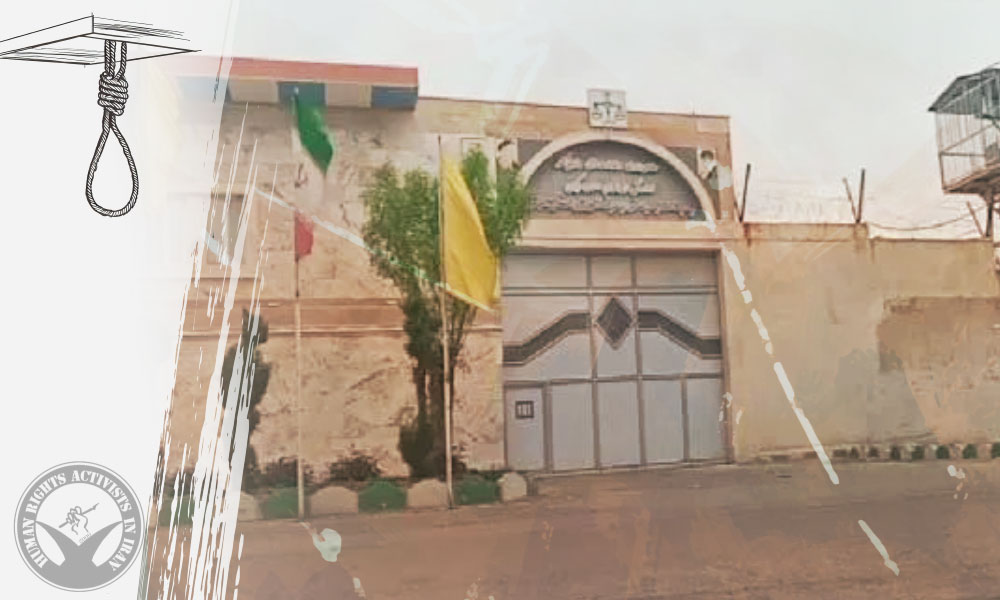
Ghezel Hesar Prison in Karaj: 17 Political Prisoners Remain in Solitary Confinement

HRANA – At least 17 political prisoners are being held in solitary confinement for the fifth consecutive day in Ghezel Hesar Prison in Karaj.

According to HRANA, these individuals continue to be held in solitary cells inside units 1 and 3 of Ghezel Hesar Prison: Sepehr Emamjomeh, Loqman Aminpour, Meysam Dehbanzadeh, Abolhassan Montazer, Ali Moezzi, Khosrow Rahnama, Hamzeh Savari, Asadollah Hadi, Reza Salmanzadeh, Reza Mohammad Hosseini, Mostafa Ramezani, Salaheddin Ziaei, Arsham Rezaei, Akbar Bagheri, Zartosht Ahmadi Ragheb, Ahmadreza Haeri, and Mohammad Shafiei.

On Saturday, July 26, a special unit of prison guards, accompanied by agents from the Ministry of Intelligence, raided the ward housing political prisoners in Ghezel Hesar Prison. During the operation, phone lines in the ward were cut, several inmates were reportedly beaten, and a number of political prisoners were forcibly transferred to solitary confinement.

In response, some of the affected prisoners have launched a hunger strike to protest what they describe as “systematic violence by security forces against political prisoners in Unit 4.” Their complete disconnection from families and external sources has severely limited access to information about their current conditions. HRANA continues to investigate and gather further details.

This violent crackdown appears to be an attempt to suppress resistance by prisoners opposing the transfer of political prisoner Saeed Masouri to Zahedan Prison, and the implementation of death sentences against political prisoners Behrooz Ehsani Eslamlou and Mehdi Hasani.

Prolonged solitary confinement—especially without access to communication, legal counsel, medical care, or visitation—is considered a form of psychological torture and violates the principles of the International Covenant on Civil and Political Rights and the “Nelson Mandela Rules” regarding the treatment of prisoners.

Subscribe to Our Newsletter

Now is definitely not the time to stop reading!

Afghan National Ehsan Hosseini Arrested in Qom

HRANA – Ehsan Hosseini, an Afghan national residing in Qom, was arrested by security forces at his private residence on Tuesday, July 29.

According to HRANA, citing Emtedad, the arrest took place at Mr. Hosseini’s home, where agents confiscated his cellphone and electronic devices. Mr. Hosseini, identified in the report as a social activist, has reportedly collaborated in the past with academic and civil institutions working on migrant rights in Iran.

As of the time of this report, the reasons for his arrest and his whereabouts remain unknown.

Prisoner Executed in Dizelabad Prison in Kermanshah

HRANA– At dawn yesterday, Tuesday, July 29, a prisoner previously sentenced to death on murder charges was executed in Dizelabad Prison in Kermanshah.

HRANA has identified the individual as Navid Rostami, a Kermanshah native, who was hanged at dawn yesterday. He had been arrested approximately six years ago on murder charges and later sentenced to death by the Criminal Court.

As of the time of this report, prison authorities and responsible institutions have not officially announced the execution.

In 2024, according to 812 reports compiled by HRANA, the Iranian regime executed 930 individuals in its prisons—marking the highest number of executions in the past 12 years. Despite the scale of these executions, prison officials and other relevant authorities publicly acknowledged only 6% of them, highlighting the regime’s lack of transparency and accountability.

Confiscation of Property from 22 Baha’i Citizens in Isfahan

HRANA – Iranian authorities have intensified security and economic pressure on the Baha’i community by issuing judicial rulings to confiscate the property of 22 Baha’i citizens in Isfahan. Officials delivered these orders—citing Article 49 of the Constitution—without following standard legal procedures or registering them in the judiciary’s electronic system (Sana).

One of the Baha’i citizens affected, speaking to HRANA on condition of anonymity due to security concerns, stated: “At this point, property has been frozen for most, if not all, of those targeted, and they have effectively been placed under a transaction ban. Any assets or property in their name can no longer be sold or transferred. However, final rulings on permanent confiscation have not yet been issued.”

According to this source, the process is unfolding in complete secrecy and involves blatant violations of the accused individuals’ rights—including denial of access to legal representation, removal of case files from the judiciary’s Sana system, and the creation of two parallel legal cases for each individual: one criminal case (typically heard in Branch 11 of the Criminal Court) and another in courts handling cases under Article 49, aimed at confiscating property.

Another informed source noted that although some of the individuals had previously been arrested and had their belongings seized during security raids, a separate and now formal property confiscation process has been initiated—one that could result in significantly greater harm to families both legally and financially.

He added: “This goes far beyond temporary detention or the seizure of personal items. Full asset freezes and transfer bans are being enforced in cases that are not even officially registered in the judiciary’s database, leaving lawyers unable to intervene.”

HRANA has previously documented similar patterns of persecution against Baha’is in other provinces, including Mazandaran and Khorasan Razavi. Article 49 of Iran’s Constitution authorizes the government to confiscate assets acquired through illegitimate means. However, in recent years, this article has increasingly been used as a structural tool to target religious and political minorities and confiscate their assets.

Due to fears that the confiscation process may accelerate, many Baha’i citizens have declined to have their names made public. Nevertheless, HRANA has verified the identities and details of those involved in these cases.

The Baha’i International Community has previously expressed grave concern over the increasing confiscation of Baha’i-owned property in Iran, a campaign reportedly orchestrated and directed by the “Executive Headquarters of Imam’s Order” (Setad).

Prisoner Executed in Public in Damghan

HRANA – At dawn today, Wednesday, July 30, 2025, a man convicted of murdering a four-year-old child in Damghan was executed in public.

According to HRANA, citing Tasnim News Agency, the execution took place in Semnan Province at dawn today, Wednesday, July 30. Mohammad Sadegh Akbari, Chief Justice of Semnan Province, announced the news, stating: “Following the report of the murder of a child on January 14, 2025, judicial proceedings began.”

Akbari added that the defendant was sentenced to death after the completion of legal procedures and the Supreme Court’s confirmation of the verdict. The sentence was carried out in public this morning.

Back in May, this judicial official had stated that the defendant had been sentenced to death for the premeditated murder of a child, and to 12 years in prison for the attempted murder of nine others.

On January 14, 2025, during a family gathering, the man fatally stabbed the child of one of his wife’s relatives due to family disputes. He also attempted to kill other guests by sedating them with sleeping pills and opening the gas valves in the house. The 25-year-old suspect was arrested and taken into custody a few hours after the incident.

The report does not disclose further details, including the identity of the prisoner or the precise location of the execution.

Teacher Forough Khosravi Arrested by IRGC Intelligence

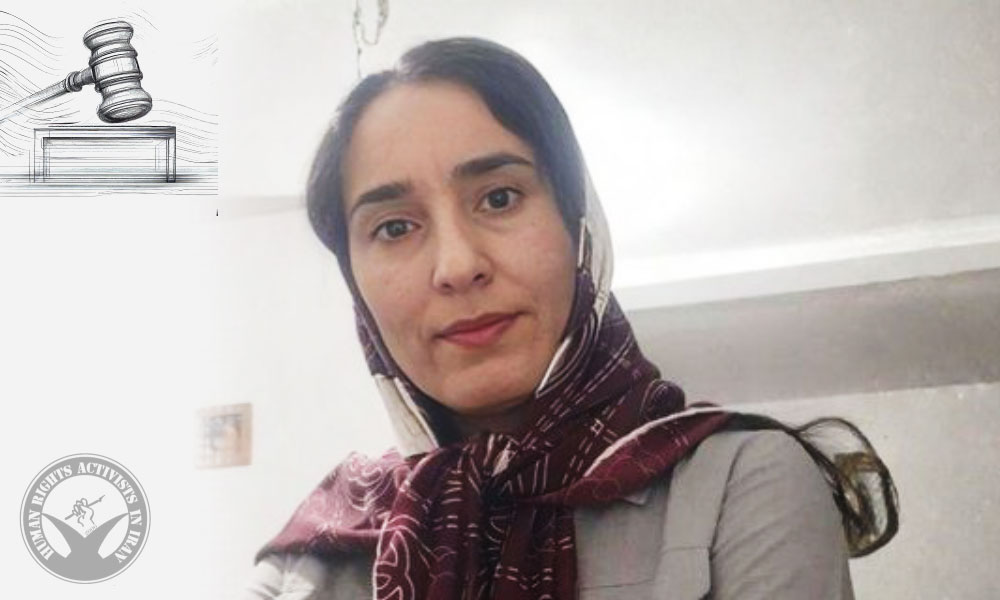
HRANA – Forough Khosravi, an elementary school teacher and resident of Behbahan, was arrested on Tuesday, July 29, 2025, by agents of the Islamic Revolutionary Guard Corps (IRGC) Intelligence.

A source familiar with her situation told HRANA: “On Tuesday morning, Ms. Khosravi received a phone call from an unknown number, instructing her to appear at the courthouse by noon. She declined to comply, citing the absence of an official summons. A few hours later, around 2:30 PM, IRGC Intelligence agents arrived with an arrest warrant, detained her, and transferred her to an undisclosed location.”

As of the time of this report, the reasons for her arrest and the charges brought against her remain unclear.

This arrest follows a previous incident on June 19, when six IRGC Intelligence agents — including two women — entered Ms. Khosravi’s home without presenting a judicial warrant. During the raid, they created a climate of intimidation while conducting a search, and confiscated several personal belongings, including her cellphone. Ms. Khosravi’s daughter, who was home at the time, was reportedly deeply traumatized by the experience.

Subsequently, Ms. Khosravi filed a formal complaint against the agents. However, in what has been described as a one-sided decision in favor of the security apparatus, Judge Ruhollah Farzadnasab of Branch 2 in Behbahan dismissed the case, issuing an order not to pursue prosecution.

Forough Khosravi holds a doctorate in education and works as an elementary school teacher. She was previously expelled from Payam Noor University in Bandar Imam in the aftermath of the 2009 protests.