Four Prisoners Executed in Arak, Zanjan, and Birjand Prisons

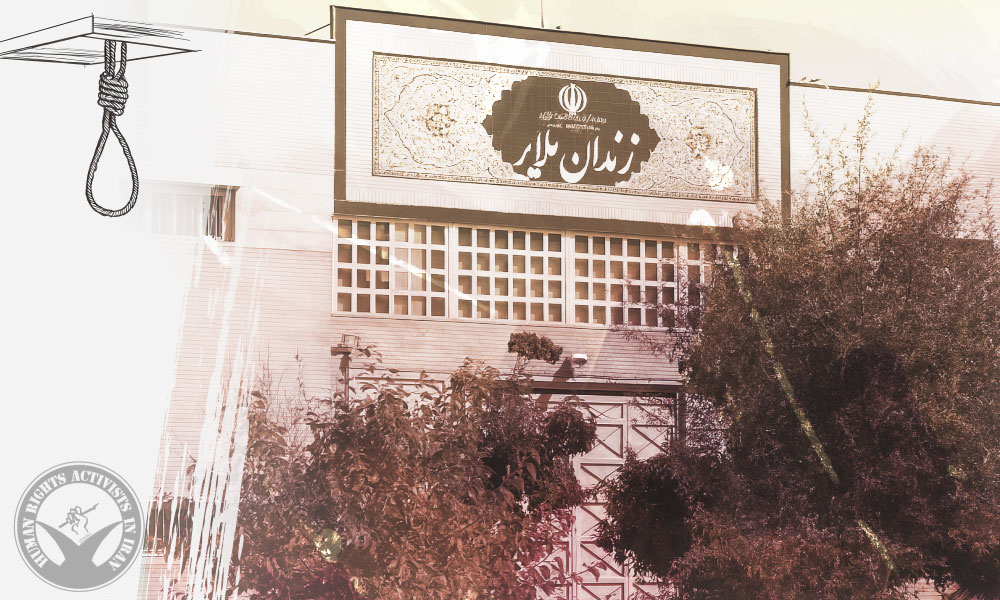
HRANA – Today, July 29, two Afghan nationals who had previously been sentenced to death for murder were executed in Birjand Prison. In recent days, two other prisoners were also hanged in the prisons of Zanjan and Arak.

At dawn on Saturday, July 26, a prisoner named Abolfazl Shakeri was executed in Zanjan Prison. According to information received by HRANA, on Sunday, July 27, Hossein Akbari, 50 years old, was executed in Arak Prison. Akbari had been arrested three years ago on charges related to drug offenses and was subsequently sentenced to death by the Revolutionary Court.

Finally, today, Tuesday, the death sentences of two Afghan nationals previously convicted of murder were carried out in Birjand Prison. HRANA has identified one of the two as Nazir Mohammad. Further details, including the identity of the second individual, are under investigation.

As of the time of this report, the executions have not been officially announced by prison authorities or relevant institutions.

In 2024, according to 812 reports compiled by HRANA, the Iranian regime executed 930 individuals in its prisons—marking the highest number of executions in the past 12 years. Despite the scale of these executions, prison officials and other relevant authorities publicly acknowledged only 6% of them, highlighting the regime’s lack of transparency and accountability.

Ongoing Legal Uncertainty for Amin Ahmadi, 15 Days After Arrest by Intelligence Agents in Izeh

HRANA – Amin Ahmadi, a resident of Izeh County, has been held in detention for 15 days following his arrest by agents of the Ministry of Intelligence. He remains in a state of legal uncertainty in Sheiban Prison in Ahvaz.

Based on information obtained by HRANA, Amin Ahmadi was arrested on July 15, 2025, by Ministry of Intelligence agents at his home in Izeh. In recent days, he was transferred to the quarantine ward of Sheiban Prison in Ahvaz and remains there in legal limbo.

A source close to Mr. Ahmadi’s family confirmed the news to HRANA, stating that agents confiscated several of his personal belongings during the home search following his arrest. The source added that Mr. Ahmadi’s family visited judicial and security offices yesterday to inquire about his situation but were met with silence and indifference from the authorities.

Amin Ahmadi is a resident of Izeh. His case is currently under investigation in Branch 2 of the Prosecutor’s Office of the Public and Revolutionary Court in the county.

As of the time of this report, no information is available regarding the charges against him or the reasons for his arrest.

Death of Three Environmental Activists in Abidar Mountain Fire

HRANA – Amid efforts to contain a massive wildfire in the Abidar Mountain area of Sanandaj, three environmental activists—Hamid Moradi, Khabat Amini, and Chiako Yousefinejad—lost their lives. In response to the tragedy, the governor of Kurdistan Province declared two days of public mourning.

The funeral ceremony for the victims was held with a large turnout of citizens and grieving families.

According to HRANA, the news agency of Human Rights Activists in Iran, around noon on July 24, a widespread fire broke out on the slopes of Abidar Mountain. During the firefighting operation, seven volunteer responders became trapped in a ring of flames in a steep valley.

Hamid Moradi, a lawyer and director of the “Shaneye Nozhin Kurdistan” association, died from 95% burns. Chiako Yousefinejad and Khabat Amini, also environmental activists, were hospitalized with severe burns and passed away after several days. Mohsen Hosseinpanahi remains hospitalized, while the other volunteers sustained minor injuries and were treated.

The incident once again highlights inadequate infrastructure, lack of equipment, insufficient training, and the negligence of responsible agencies in dealing with environmental crises. Reports indicate that none of the volunteers had fire-resistant clothing or safety gear and were relying solely on personal resources.

According to local environmental activists, the municipality had taken no prior steps to create firebreaks or prevent the spread of the blaze, and equipment promised by the Natural Resources Office never reached the volunteers. Despite repeated warnings from environmental advocates, recurring wildfires in the Abidar region—many of which are suspected to be intentional—are not properly investigated by law enforcement or the judiciary.

This tragedy also underscores the longstanding issue of the lack of official recognition and legal protections for environmental casualties. Individuals like Hamid Moradi, despite their sacrifice, are labeled merely as “dedicated servants” rather than “martyrs,” depriving their families of compensation, pensions, and legal support.

According to a report by Ham-Mihan newspaper, at least 20 environmental activists have died in recent years while combating forest fires in the Zagros Mountains. The cases of many victims—including Alborz Zarei, Esmaeil Karimi, and Mokhtar Khandan—remain unresolved and are passed between various government bodies.

Environmental organizations in Kurdistan report that nearly 99% of fires in the province’s rangelands are deliberately set, with many linked to land grabbing and military violations in border areas. Nevertheless, the government has failed to implement effective measures in prevention, training, or support for local volunteers.

The tragic incident in Abidar not only took the lives of three individuals devoted to nature but also reflects a broader pattern of neglected environmental policy and chronic institutional apathy in Iran. Until support policies, insurance structures, localized training, and state accountability are strengthened, such disasters will not only recur but may become normalized and go unanswered.

Two Prisoners Executed in Dastgerd Prison, Isfahan

HRANA– At dawn on Sunday, July 27, the death sentences of two prisoners previously convicted of murder were carried out in Dastgerd Prison in Isfahan.

The identities of the two individuals have been confirmed by HRANA as Alireza Mir-Foroughi, 46 years old and a resident of Isfahan, and Saleh Hatami, a resident of Khuzestan.

According to information received by HRANA, Alireza Mir-Foroughi had been arrested on murder charges and later sentenced to death by the Criminal Court. Mr. Hatami was also arrested four years ago on similar charges and sentenced to death.

As of the time of this report, the executions have not been officially announced by prison authorities or relevant institutions.

According to HRANA’s statistics, in 2024, 61 inmates were hanged in Dastgerd Prison in Isfahan — a 74% increase compared to the previous year. This sharp rise reflects a disturbing escalation in executions at this facility.

Identity Confirmed: One of Two Detained American-Jewish Citizens in Iran Identified as Yehuda Hekmati

HRANA – Amid a growing wave of summonses, arrests, and security pressure targeting Iran’s Jewish community, HRANA has confirmed the identity of one of the two American-Jewish citizens recently detained in Iran. The individual, Yehuda Hekmati, is over 70 years old and works in the jewelry and precious stones trade. His arrest is reportedly linked to a visit he made to Israel seven years ago.

According to HRANA, the news agency of Human Rights Activists in Iran, Hekmati is one of two American-Jewish citizens whose arrests were first reported by Israel’s Channel 11. The detentions came amid rising tensions between Iran and Israel following a 12-day conflict. The second detainee, an Iranian-American from Los Angeles, has reportedly been released on bail, while Mr. Hekmati remains in custody. Both men are believed to have traveled to Iran to visit relatives.

A source familiar with the case confirmed efforts to secure their release, telling Hebrew-language media: “These two Americans were in the wrong place at the wrong time.”

In recent weeks, at least 35 members of Iran’s Jewish community in Tehran and Shiraz have reportedly been summoned and interrogated by security agencies. These interrogations have focused mainly on their familial ties with relatives in Israel and included warnings against any phone or online contact with people outside the country.

In a related case, student activist Motahareh Goonehi (Gounei), who was recently released from the Ministry of Intelligence’s detention facility, mentioned a woman named Lida, whom she identified as a Jewish citizen. However, it remains unclear whether this individual is among the recently detained or connected to another security-related case.

Under Iranian law passed in 2011, travel to Israel by Iranian citizens can result in two to five years in prison and several years of passport suspension. This law has increasingly affected Iranian Jews with familial connections in Israel.

Despite the Iranian government’s official narrative about protecting the rights of religious minorities, including Jews, recent developments point to an unprecedented rise in security pressure on this community. Human rights experts warn that such actions could constitute “discrimination based on religion and ethnicity” and violate Iran’s international obligations.

Subscribe to Our Newsletter

Now is definitely not the time to stop reading!

Ghezel Hesar: Assault, Solitary Confinement, Exile, and Execution of Political Prisoners

HRANA – On the morning of July 27, more than 100 special forces officers from Ghezel Hesar Prison in Karaj, accompanied by Ministry of Intelligence agents, stormed the ward housing political prisoners. Dozens of inmates were beaten, phone lines were cut, and several prisoners were violently dragged in groups to solitary confinement. The raid was carried out to break resistance against two key actions: the forcible transfer of political prisoner Saeed Masouri to Zahedan Prison and the execution of fellow political prisoners Behrooz Ehsani Eslamlou and Mehdi Hasani.

According to HRANA, the news agency of Human Rights Activists in Iran, the assault occurred in Unit 4 of Ghezel Hesar. Sources estimate that around 100 special forces personnel took part. Prisoners were beaten, insulted, handcuffed, shackled, and hooded with sacks before being transferred to solitary cells. The operation was ordered by Warden Allahkaram Azizi and his deputies, Hassan Ghobadi and Esmaeil Farajnejad. Other officials involved included Hossein Kamarei, head of prison security, as well as security personnel Rahim Fayzi, Ahmad Shirazi, and Mohammad Sabzehmakan.

A source familiar with the prisoners’ situation, who spoke to HRANA on condition of anonymity, stated: “Since yesterday morning, phone access for this ward has been completely cut off, and inmates have been unable to contact their families.”

Reports indicate the raid was a prelude to two key actions: the execution of political prisoners Behrooz Ehsani Eslamlou and Mehdi Hasani, who had been sentenced to death for the charge of baghi (armed rebellion), and the forced transfer of Saeed Masouri, a political prisoner serving a life sentence, to Zahedan Prison. According to available information, Ehsani Eslamlou and Hasani were not granted a final visit with their families.

The father of one prisoner sent to solitary confinement told HRANA earlier today: “I and several other families stood outside the prison today trying to get information, but officials ignored us and refused to provide any answers. Where is my son? Why should he be subjected to such violent treatment by prison officers?”

As of the time of this report, the exact number of prisoners transferred to solitary confinement and the condition of those injured remain unknown.

These recent developments in Ghezel Hesar Prison—including the violent raid, severed communication with families, and secret executions—have raised serious concerns about the violation of prisoners’ rights, the lack of transparency in judicial proceedings, and the intensifying security pressure on political detainees.

Two Prisoners Executed in Minab Prison

HRANA – At dawn today, July 28, the death sentences of two prisoners previously convicted on drug-related charges were carried out in Minab Prison.

Haal Vsh has identified the individuals as Isa Narouyi (Naderi), 35 years old, from the village of Karahmat in Fanuj County, and Amir Ghanbari, 26 years old, a father of two, from Delgan — both in Sistan and Baluchestan Province.

According to the report, Mr. Narouyi was arrested in 2020, and Amir Ghanbari around six years ago, in separate cases involving drug-related offenses. Both were sentenced to death by the Revolutionary Court and were transferred to solitary confinement on Saturday, July 26, for the implementation of their sentences. Their families had their final visits with them on Sunday evening.

As of the time this report was compiled, the executions had not been officially announced by prison authorities or responsible institutions.

According to HRANA reports, in 2024, only 6% of executions were announced by official bodies or domestic media outlets. Over the past five years, 77% of executions have gone unreported—commonly referred to as secret executions. In some of these cases, the lack of transparency is so severe that the death-row prisoners are denied even the chance for a final visit with their families.

Four Prisoners Executed in Ghezel Hesar Prison

HRANA – On July 27, alongside the executions of political prisoners Behrooz Ehsani Eslamlou and Mehdi Hasani in Ghezel Hesar Prison in Karaj, two other inmates previously sentenced to death for murder were also executed.

HRANA has identified these two hanged prisoners as Saeed Kashani and Naser Nazari Tehrani.

According to information received by HRANA, Kashani and Nazari Tehrani had both been arrested on murder charges and sentenced to death by judicial authorities.

As of the time this report was compiled, the executions of these two individuals had not been officially announced by prison authorities or relevant institutions.

According to HRANA’s statistics, Ghezel Hesar Prison in Karaj carried out the highest number of executions among all Iranian prisons, with 150 inmates hanged. This figure has nearly doubled compared to the previous year — a deeply alarming increase that underscores the escalating use of capital punishment in Iran.

Arrest and Incommunicado Detention of Pouya Ahmadi in Tehran

HRANA– Pouya Ahmadi, a resident of Tehran, has been held in detention for six days following his arrest by security forces, with no information available regarding his fate or whereabouts.

A source close to the family confirmed to HRANA that on July 22, 2025, security forces violently arrested Mr. Ahmadi at his home in Tehran and transferred him to an undisclosed location. During the arrest, agents searched the home and confiscated several personal belongings, including his phone, computer, printer, and identification documents.

The source added that Ahmadi’s family has received no information about his location or condition, which has caused them significant concern.

As of the time of this report, the reasons for his arrest and the charges against him remain unknown.

Arbitrary arrests, transferring detainees to undisclosed locations, and leaving families in the dark about the fate of their loved ones are routine practices of the Iranian regime’s security agencies, such as the Ministry of Intelligence and the IRGC Intelligence Unit. This pattern of behavior stands in clear violation of the United Nations Standard Minimum Rules for the Treatment of Prisoners, known as the Nelson Mandela Rules.

Naser Hemmati Sentenced to over 5 Years in Prison

HRANA – Naser Hemmati, a resident of Abdanan, has been sentenced in absentia to more than five years in prison by Branch 1 of the Revolutionary Court in Ilam.

According to HRANA, quoting Kurdpa, the verdict was recently delivered to Mr. Hemmati, sentencing him to five years, three months, and two days in prison. The charges leading to his conviction include “supporting and legitimizing Israel,” “insulting the Supreme Leader,” and “communication with a Telegram channel.”

Mr. Hemmati only learned of the case details when summoned to receive a copy of the verdict.

He was previously arrested in December 2023 after being summoned by Branch 1 of the Public and Revolutionary Prosecutor’s Office in Abdanan and was later released on bail of one billion tomans. The charges brought against him at that time included “sabb al-nabi (insulting the Prophet of Islam),” “propaganda against the regime,” “insulting the Supreme Leader,” “spreading falsehoods online,” and “supporting and legitimizing the Zionist regime.”

Mr. Hemmati has a history of previous arrests and convictions related to his activism.