Open Letter: Atena Daemi Lauds the Emotional Labor of Iranian Mothers

Human Rights Activist News Agency (HRANA) – Atena Daemi, a civil rights activist imprisoned since October 21, 2014, has written an open letter to her mother marking her fourth year of incarceration.

In the note, Daemi describes the difficulties endured by her family — particularly her mother — who she characterizes as one of her most important sources of strength in recent years.

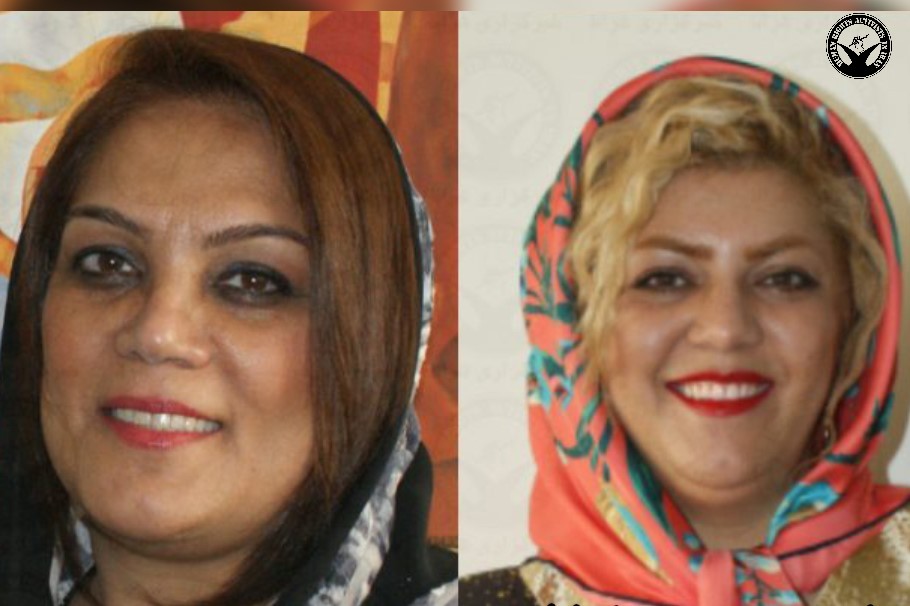
With fellow political prisoners Maryam Akbari Monfared and Golrokh Iraee, Daemi was punished October 3rd with a three-week ban on family visits, per verbal orders from the Women’s Warden at Evin. All three were told the ban served to punish them for refusing an unlawful interrogation this past September.

HRANA has translated the full text of Daemi’s letter below:

Four years ago to this day, I was on my way to work on a cold autumn morning. You had gone to buy fresh bread for us. I was running late, so I didn’t get to see you before dad and I left the house. Before we could reach the end of the alley, they blocked our way, arrested me, put me in another car, and returned to the house with dad, all 11 of them. I don’t know how you reacted when you saw them. After an hour, they brought me back home. I was shocked to see you. I was shocked by your screams at the agents.

“Go on and take my daughter too. You took all of these young people – and how far did that get you? You know what? Go ahead and kill my daughter too. You killed Sattar Beheshti [a blogger who died in prison in 2012] and all those other young people. And what came of it?”

They threatened to detain you too, and you shot back, “Take me! You’ve outdone yourselves putting mothers behind bars and bereaving them.”

I thought you would be scared, but you weren’t; I thought you would blame and reproach me, but you didn’t. In our own language, you told me to go– that this would be the first night I would spend away from home, but that you were still behind me, still with me, and that one day no child would be separated from their mother. That lifted a weight off my shoulders; it felt as though you had given me wings. I went, but you never left me for a moment; we were bonded more than ever, together, united.

I remember your face that day in the Revolutionary Court when I was sentenced to 14 years in prison. Giddily and sarcastically, you quipped, “14 years is nothing– we expected the death penalty!” I know you felt a quiver of fear, but you didn’t show it. Sixteen months later, I returned home and you were in good spirits, though you knew I wouldn’t be staying long. They came back for me nine months later. You weren’t in Tehran then. I called you to let you know they were taking me. You told me to put you on speakerphone so that they could hear you. You were screaming “What do you want from our children? What have they done? What did they ever ask of you? The day will come when us mothers will hold you accountable…”

After I went, they opened cases against your other two daughters, convicting them. You laughed and said that we should ask them to set up a family suite in the prison that would house us all!

I went on hunger strike. I will not forget the concern in your eyes, but your words, filled with hope and promise, only made me more steadfast. Your daughters were acquitted, and I stayed. They filed new cases and lawsuits against me, one after the other. Then, they dragged me to Gharchak Prison, beating me and insulting me. That following Thursday I called home. You were happy to hear my voice and asked how the prison administrators had come to be so charitable on a Thursday [the beginning of the weekend in Iran].

I laughed and said, “I’m calling you from Gharchak Prison.” You replied that it was only right that I see the women held in Gharchak as well. “Let’s see how far they want to go!” you said.

When I contacted you a few days later, you did not answer. I was told that you went to the Prosecutor’s office to see about my case. The more time passed without any news from you, the more worried I became. You finally replied after 7 p.m. and told me that they had detained you along with Hanieh [my sister]. You told me how they beat you both and shocked you with stun guns. My body trembled at that thought.

You told me they shocked your leg when you refused to get into their car. You said it didn’t hurt, that it felt like stinging nettles. I was trembling with anger, but you were laughing and said that you didn’t back down and gave them a piece of your mind.

My phone rights and visits were cut.

Then came your little girl’s wedding day– my sister Hanieh was getting married…

They did not let me go on furlough to come to the wedding. You came to visit me in Gharchak. Hanieh was restless but you calmed her down, telling her not to cry but to laugh and be joyous so that the authorities wouldn’t get the idea that their tactics can break [me]. I remember that you reminded her that Fariba Kamalabadi [Baha’i prisoner of conscience] hadn’t been granted furlough to attend her own daughter’s wedding. You asked me to distribute sweets to my cell and ward mates to celebrate my sister’s wedding inside the prison. What a memorable night that was!

I was returned to Evin Prison. Then we heard news of the execution of Zanyar, Loghman, and Ramin. You went on a hunger strike, wore black, and came to visit me in tears. They had harassed me that day, but the three of us just held hands and sang a song for our fallen brothers. Again, they cut me off from family visits.

Mother, would you look at how pathetic and short-sighted they are? When Zanyar Moradi hadn’t seen his mother in nine years when he was killed, and they think they’re going to break me by withholding my visiting rights for a while? The pain of mothers never ends. If they think they can reform us, silence us, or make us remorseful with such childish measures, they are sorely mistaken. We won’t be disciplined; rather, we will carry on with more resolve than before.

It has been three weeks since we last saw each other. You’ve gone to visit with Ramin’s mother, Zanyar and Loghman’s families, and the family of Sharif, who died in the fire[Kurdish activist who died fighting wildfires in western Iran]. You visited Narges [Mohammadi] and the family of Homa [Soltanpour]. While we haven’t seen each other, you have embraced the pains and sorrows of fellow mothers.

Send my regards to all the mourning and bereaved mothers of Iran and tell them I shall call for justice for them as long as I live!

Atena Daemi
October 21, 2019
Evin Prison

___________________________________________________________________________

After her arrest on October 21, 2014, Atena Daemi spent 86 days in solitary confinement before being transferred to the Women’s Ward of Evin prison. In May 2015, Judge Moghiseh of Revolutionary Court Branch 28 sentenced her to 14 years’ imprisonment on charges of assembly and collusion against national security, propaganda against the regime, and insulting the supreme leader. She was released February 2017 on 5.5 billion IRR [approximately $140,000 USD] bail. Her sentence was then reduced to seven years on appeal. She was detained November 26, 2016 to serve her sentence, which since been reduced to five years.

Bail Release of Syndicate Chairman Arrested Amid Teacher Strikes

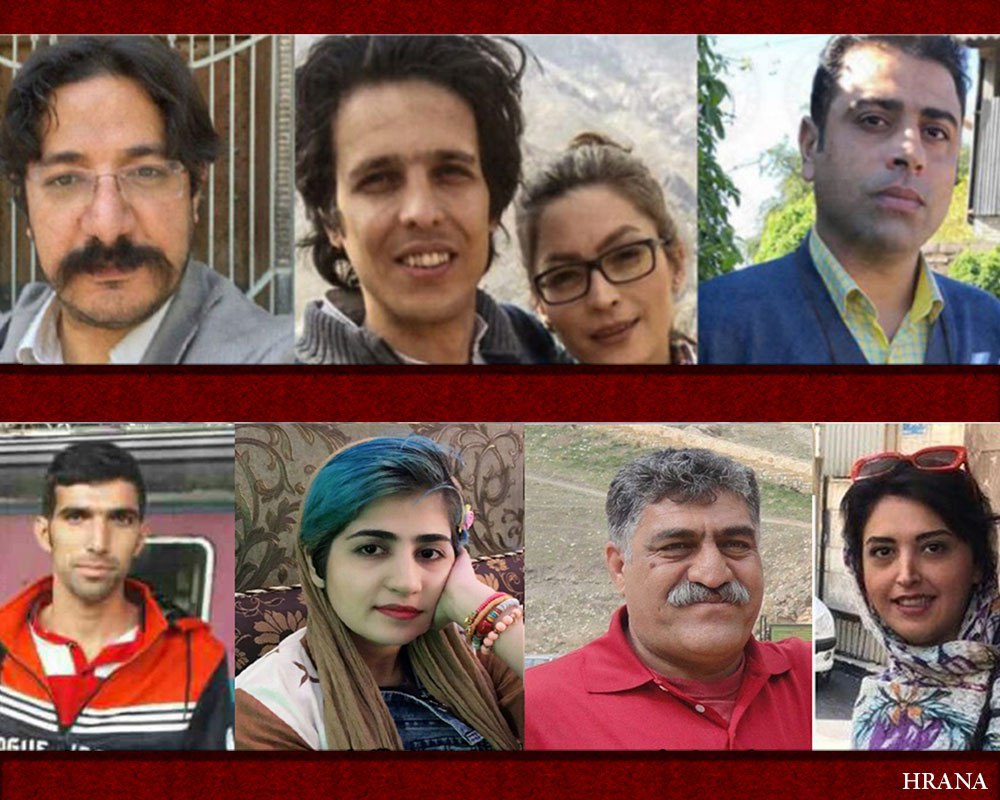
Human Rights Activists News Agency (HRANA)- Mohammadreza Ramezanzadeh, Chairman of the Coordinating Council of Teachers Syndicates in Iran (CCTSI), was released today, October 23, 2018, on a bail of 100 million tomans [approximately $7,000 USD] pending trial.

Ramezandzadeh was arrested October 14th in the northeastern city of Bojnourd, amid two-day-long general strikes of Iran’s teaching community. CCTSI had called for the strike to protest the low compensation grade of teachers.

Strikers also demanded the release of their still-imprisoned colleagues, including Mohammad Habibi, Esmaeil Abdi, and Mahmoud Beheshti Langroudi.

Activist Leila Mir-Ghaffari Gets Suspended Prison Sentence for Pointing at Picture

Human Rights Activist News Agency (HRANA) – On October 6th, Judge Mashallah Ahmadzadeh of Tehran Revolutionary Court Branch 26 sentenced civil rights activist Leila Mir-Ghaffari to a two-year prison sentence, suspended over three years, for having pointed to a picture on the wall.

Mir-Ghaffari’s attorney Mohammad Hossein Aghasi explained to HRANA that her conviction of “insulting the supreme leader” hinged on a single moment: when she voiced criticism of foreign aid to Lebanon and Syria whilst pointing a “finger of blame” to a picture of the Supreme Leader Ali Khamenei, whose image overlooks the entrance to almost every public building in Iran.

Mir-Ghaffari was initially detained on October 2nd for defending the “Girls of Revolution Street,” a movement that gained international attention through photographs of its defenders de-veiling in public places in protest of mandatory head coverings. Morality court ordered her to pay a fine of 32 million IRR [approximately $250 USD], and she was released on bail the next day.

On June 13, 2018, HRANA reported on a summons from the Tehran Appeals Court to review the sentencing of a number of civil activists, including Mir-Ghaffari, who had been issued 91 days’ imprisonment and 74 lashes each. Judge Farshid Dehghani presided over their preliminary trial on February 9, 2016, in Tehran Criminal Court No. 2, Branch 1060.

In November 2016, Mir-Ghaffari was arrested with 17 others for staging a peaceful gathering across from Evin Prison. Authorities sent the women protestors to Gharchak Prison and the men to Evin. Charged with “disrupting the public peace,” they were eventually released on bail of 500 million IRR [approximately $4000 USD]. Her co-arrestees were Reza Makeian (Malak), Hashem Zaynali, Simin Aivazadeh, Ehsan Khaybar, Abdulazim Arouji, Mohsen Haseli, Mohsen Shojaie, Azam Najafi, Parvin Soleymani, Sharmin Yamani, Sala Saie, Arshiya Rahmati, Massoud Hamidi, Ali Babaie, Esmaeil Hosseini, Farideh Tousi, and Zahra Moddareszadeh.

Tyranny on Prisoners of Conscience at Rajai Shahr

Human Rights Activists News Agency (HRANA)- This past August, Rajai Shahr Prison authorities ordered the transfer of political prisoners to Ward 10, where prisoners’ already-tight rations on climate control, fresh air, and nutrition have reportedly been cut even slimmer.

It is a running suspicion that prison authorities seek to dismantle the political ward, breaking down these prisoners’ spirits so that they will be more amenable to being dispersed among different wards.

Ward 10 currently houses 18 prisoners charged with political and security-related crimes. Four more political prisoners are being held in lateral sections. Of these 22, seven are in need of medical care.

A cold chill is already creeping through the walls of the hillside prison, boding the incoming flu season from which political prisoners stand unprotected, a close source told HRANA. “The need for heating equipment is felt all across the prison, but on [Prison Head] Gholamreza Ziayi’s orders, the political prisoners can’t have access to heaters. While prisoners pay for heaters out of their own pockets, the director has forbidden their delivery or use in the political ward.” Prison authorities have reportedly even gone as far as banning heaters in common areas that political prisoners might flock to for refuge, i.e. the prison library, gym, or store.

A letter underlining the dire need for climate control addressed to Ziyai from a previous prosecution assistant responsible for overseeing prison affairs, did nothing to change his mind, the source said.

Political prisoners got the brunt of the opposite heat extreme this past summer when they were denied access to any form of a cooling system. While their repeated requests managed to obtain three refrigerators for the ward, Ziyai underlined that they would have access to more equipment and amenities if they requested to be transferred to different wards.

Political detainees have thus far held fast to regulations requiring prisoners charged with different offenses to be housed in separate wards. Their resistance against integrating with prisoners accused of petty theft, drug-related crimes, or violent offenses has contributed to continued daily frictions between authorities and their cohort.

Meanwhile, the assessment of food provided to these political prisoners is even more scathing than the Rajai Shahr usual. Sources say that prisoners eat vegetarian by default, limited to plain rice with soy or lentils at lunchtime. Though the dinner menu promises to be more substantial — bean or lentil stew, or Ash [a thick Iranian soup] — sources say that the dishes hardly live up to their names, and prisoners in the cohort are rarely, if ever, served produce.

Deprivation of fresh air is also being leveraged against them, sources say. The regular 2-to-5:30 recreation period previously enjoyed by political prisoners in mixed groups has been eliminated entirely since their transfer to Ward 10. “Fresh airtime has been denied [to them] on direct orders from Ziayi, despite the fact that the recreation area is empty between 10 a.m. and 2 p.m.”, an anonymous source said.

Warden and Internal Director Vali Ali Mohammadi has abdicated from addressing prisoners’ complaints, stating that he defers to the authority of Ziayi and his secretary/chauffeur. “In other words,” a source said, “the slightest request, like for food or stationary, has to pass by Ziayi and his secretary.”

Though seasoned in-group attrition tactics, authorities at Rajai Shahr have not shied away from more targeted brutality to get their point across. Multiple sources have reported aggressive body searches, harassment and verbal abuse of prisoners’ families, and the placement of arbitrary, extreme restrictions to wear down individual inmates. In one such instance, Supervising Prosecution Assistant Rostami placed a long-term prohibition on visits between Hassan Sadeghi and his imprisoned wife; in another, medical attention to the bone cancer and infected surgery site of Arash Sadeghi were repeatedly postponed and denied. Deprivations like Sadeghi’s may become more widespread: two weeks ago, an official prison order came into effect, invalidating all approved transfers of ailing prisoners to [outside] medical facilities.

The respective situations of a number of Rajai Shahr prisoners of conscience are compiled in the lists below

1. Majid Assadi, accused of assembly and collusion [against national security]. Arrested in 2016, sentenced to 6 years. Anticipated release date: 2021. Has been incarcerated for two years without furlough.

2. Afshin Baimani, accused of Moharebeh [enmity against God] through cooperation with the MEK. Arrested in 2000, sentenced to life. Currently in 18th year of incarceration without furlough.

3. Mohammad Banazadeh Amirkhizi, accused of being a MEK sympathizer, and of assembly and collusion against the regime. Arrested on 2016, sentenced to 11 years. Anticipated release date: 2027. Has been incarcerated for two years without furlough.

4. Ebrahim Firouzi, accused of assembly and collusion and propaganda against the regime. Arrested in 2013, sentenced to 7 years. Anticipated release date: 2019. Currently in 5th year of incarceration without furlough.

5. Abolghassem Fouladvand, accused of Moharebeh through supporting the MEK. Arrested in 2013, sentenced to 15 years. Anticipated release date: 2028. Currently in 5th year of incarceration without furlough.

6. Gol Mohammad Jonbeshi, accused of cooperation with the Taliban. Arrested in 2016, sentenced to 3 years. Anticipated release date: 2019. Currently in 2nd year of incarceration without furlough.

7. Latif Hassani, accused of forming an illegal group to act against national security. Arrested in 2012, sentenced to 8 years. Anticipated release date: 2020.

8. Saeed Massouri, accused of Moharebeh through membership in the MEK. Arrested in 2000, sentenced to life. Currently in 2nd year of incarceration without furlough.

9. Mohammad Ali (Pirouz) Mansouri, accused of Moharebeh through support of the MEK. Arrested on 2007, sentenced to 22 years. Anticipated release date: 2028. Currently in 11th year of incarceration without furlough.

10. Asghar Pashayi, accused of espionage. Arrested in 2008, sentenced to 10 years. Anticipated release date: 2018. Release pending his payment of a fine. Currently in 10th year of incarceration without furlough.

11. Farhang Pourmansouri, accused of hijacking a plane. Arrested in 2000, sentenced to life. Currently in 18th year of incarceration without furlough.

12. Shahram Pourmansouri, accused of hijacking a plane. Arrested in 2000, sentenced to life. Currently in 18th year of incarceration without furlough.

13. Houshang Rezaei, accused of Moharabeh through membership in Komele [Kurdish opposition group]. Arrested in 2010, sentenced to death. Currently in 8th year of incarceration without furlough.

14. Arash Sadeghi, accused of propaganda against the regime, assembly and collusion, insulting the supreme leader, and disseminating lies. Arrested in 2016, sentenced to 11.5 years. Anticipated release date: 2027. Currently in 2nd year of incarceration without furlough.

15. Hassan Sadeghi, accused of Moharebeh through cooperation with the MEK. Arrested in 2013, sentenced to 11.5 years. Anticipated release date: 2028. Currently in 5th year of incarceration without furlough.

16. Hamzeh Savari, accused of moharebeh and acting against national security. Arrested in 2005, sentenced to life. Currently in 13th year of incarceration without furlough.

17. Payam Shakiba, accused of assembly and collusion against national security and propaganda against the regime. Arrested in 2016, sentenced to 11 years. Anticipated release date: 2027. Currently in 2nd year of incarceration without furlough.

18. Saeed Shirzad, accused of assembly and collusion against national security, damaging prison property, and disrupting prison order. Arrested in 2014, sentenced to 6.5 years. Anticipated release date: 2020. Currently in 4th year of incarceration without furlough.

Baha’is incarcerated in Ward 11:

1. Vahed Kholousi, accused of assembly and collusion against national security, Baha’i membership, activism, and proselytizing, propaganda against the regime, and activism in defense of Baha’i student rights. Arrested in 2015, sentenced to 5 years. Anticipated release date: 2020. Currently in 3rd year of incarceration without furlough.

2. Afshin Seyyed Ahmad, accused of assembly and collusion and propaganda against the regime. Arrested in 2016, sentenced to 3 years. Anticipated release date: 2019. Currently in 2nd year of incarceration without furlough.

3. Farhad Fahandoj, accused of Baha’i proselytizing and involvement in Baha’i associations. Arrested in 2012, sentenced to 10 years. Anticipated release date: 2022. Currently in 6th year of incarceration without furlough.

4. Afif Naimi, accused of assembly and collusion, blasphemy, and propaganda against the regime. Arrested in 2008, sentenced to 10 years. Anticipated release date: 2018.

Ailing prisoners deprived of medical care:

1. Majid Assadi: gastrointestinal disease, duodenal ulcers
2. Shahram Pourmansouri: herniated disc, syringomyelia requiring immediate surgery (per doctor)
3. Mohammad Banazadeh Amir Khizi: joint pain
4. Hassan Sadeghi: joint pain
5. Aboulghassem Fouldadvand: arterial plaque requiring hospitalization (per doctor)
6. Arash Sadeghi: chondrosarcoma, surgical site infection in the right arm
7. Saeed Shirzad: herniated disk, lower back spasm

Open Letter: Kurdish Citizen Fears for Imprisoned Brother’s Life

Human Rights Activist News Agency (HRANA) – On August 7th, Iranian state-sponsored television broadcast footage of what appeared to be a confession: two prisoners can be heard owning up to their part in an armed attack on the military base of Saqqez. One of these two men, Houshmand Alipour, is the subject of an open letter written by his brother Hejar, who sees this footage as a sham excuse to end his brother’s life.
Hejar has written in his brother’s defense before, asking human rights organizations in a recent open letter to address Iranian authorities’ restrictions on Alipour and his co-defendant’s visitations, extra-prison communications, and access to legal defense. Alipour, a Sardasht native, was detained August 3rd of this year alongside the prisoner seen beside him in the video, Mohammad Ostadghader. On charges of membership in Kurdish opposition parties, he has been confined to the Sanandaj Intelligence Office in circumstances increasingly dire.
A close source stated earlier this month that Alipour was being bounced between interrogation, intelligence detention, and Saqqez prosecution court, without the presence of a defense attorney and to the great confusion of his family. HRANA previously reported on authorities’ hindrance of Alipour’s defense proceedings as his October 4th investigation date drew near, only to be postponed.
In a prior statement, Amnesty International expressed concerns about Alipour and Ostadghader’s detention, particularly over their purported confession tapes. “The pair were held in an unknown location without access to their families or lawyers […],” the statement read. “The nature of the accusations against them and their forced televised ‘confessions’ may be a precursor to charges that incur the death penalty.”
Amnesty also detailed the plight of Ostadghader, who — as of the date of their statement — was denied medical since sustaining a gunshot wound at the time of his arrest.
The full text of Hejar’s second plea for his brother is below, translated into English by HRANA:
“Houshmand Alipour and Mohammad Ostadghader have thus far spent around three months in custody of the Islamic Republic. They are subjected to a variety of physical and psychological tortures. Their lives are at stake. Houshmand is a man 25 years young whose life is being squandered by the oppression of the Islamic Republic and its abuses of our family.
I want to narrate a part of Houshmand’s life here, for everyone to read. Houshmand was born in November of 1993 in Sardasht. He has a twin sister. He was born to a big family. Although there were ten of us children, our parents worked hard to make sure we wanted for nothing. Our father worked day and night, in the heat of the summer and the cold of the winter, all to provide for us.
The family Houshmand was born into is no stranger to oppression and injustice. Our father, Mostafa Allipour, is one of the better-known activists of the Sardasht region. Advocating to free the people and to better their lives bought him persecution from the Islamic Republic, which trailed him through the years with prison time and fines. My father always said, “Because we wanted fortune for all, much misfortune befell us [….]. The regime gave our family no respite.” Our mother, Ameneh Mowludian, bears the sufferings of the continued threats and pressures imposed on our family by the Islamic Republic. Our paternal uncle, Hossein Alipour, was executed in 1983 by the Islamic Republic. Our father’s paternal uncle Molla Ali Bijavi was executed in 1985 by Islamic Republic operatives, and the mercenaries of the Baʿthist regime in Iraqi Kurdistan.
Bearing witness to the insults and disdain that the government has always borne towards his family, Houshmand was haunted by anger and hatred. No matter how how hard he tried, he could never find peace.
In 2009, when he was only sixteen, he was arrested during a celebratory feast in Sardasht. Of his arrest, he said:
“Officers of the Islamic Republic attacked us with tear gas, batons, and pepper spray. I fell to the ground where they beat me and placed me under arrest. In their car, they tied my hands behind my back, blindfolded me, and transported me to the Intelligence Office. There they beat me savagely, insulted me, and spit obscenities at me. During the beatings and while I was blindfolded, they took my fingerprint as a ‘signature’ on documents, the contents of which I was wholly unaware. They forcibly extracted confessions in there.”
Houshmand is sentenced to four years’ imprisonment and 75 lashes. As a minor he spent time in the Juvenile detention center of Urmia before being transferred to the Juvenile Ward (1A). This is where he passed the days of his sentence and endured floggings.
After his release from prison, Houshmand Alipour was repeatedly summoned by the Ministry of Intelligence in connection to his family members’ politics. He eventually decided to flee to Iraq. He spent about four years in Iraqi Kurdistan, and even participated in the Kurdish war against ISIS, and incurred a few injuries in the process. A while later, following in the footsteps of his family members, he travelled to Turkey to seek asylum. His case file was registered at the UN Refugee office in Turkey. Upon his return to Iraq, where he went about working […] in the city of Baneh, Iranian Kurdistan, he was arrested alongside Mohammad Ostadghader.
The Islamic Republic pummeled and stifled the dreams of a young man, and we cannot stand by as they try to take his life. For this reason, I entreat all freedom-lovers and human rights organizations to do all in their power to rise up and save Houshmand’s life, to bring him back into the loving arms of his parents, sisters, and brothers.
Hejar Alipour,
20 October 2018”

Subscribe to Our Newsletter

Now is definitely not the time to stop reading!

Fed-up Teachers Confront Rouhani by Post

Human Rights Activists News Agency (HRANA)- The Iranian Teachers’ Organization has written a letter to Iranian President Hassan Rouhani to underline a number of the contentions that pushed teachers to strike in recent weeks.

The full text of their letter is below, translated into English by HRANA:

Dear Mr. Rouhani, President of Iran,

Teachers and school staff have been among the most vocal advocates of your administration, which has adopted a rhetoric of moderation and prudence. In your promise they have invested their hopes and labor, entrusting the helm of this country to you. Yet the educational system and its institutions have tumbled low on your list of priorities. Should this trend carry on, hope alone will not be viable.

How long?
How long will we be able to argue with peaceful, dignified means — through democratic and civic activism — that education is critical to the balanced and comprehensive advancement of our country?

How long must we emphasize that education is not second to a safe and healthy Iran, but rather its prerequisite?

How long must we belabor the fact written into the Educational Outlook, that the replacement of low-quality products with top-of-the-line imports is impossible in the realm of our country’s human resources?

How long are we doomed to argue patiently, host conferences, and author articles about teachers who, feeling that their very livelihoods are at stake, will no longer be able to educate our country’s children with ingenuity and sound minds?

How long must we remind you of the impact that the honorable work of teachers has on our workforce and families? How long will we have to shout about the systems in advanced countries, that have wisely grounded their progress and development in education, and ensured that their teachers are held in the same esteem as government ministers, security, and diplomats?

Don’t you know?
Don’t you know that many of our colleagues live under the poverty line?
Don’t you know that uncurbed inflation and price hikes have afflicted teachers’ lives and significantly diminished their purchasing power?
Have you any idea of the insurmountable challenge facing principals directing schools with this dwindling per capita funding?

What we know
We know that the government’s revenue has increased from the rise in oil sales and currency exchange rates.

We know that the government’s income has grown from taxes like the Value-added tax (VAT) that have been tacked onto the high cost of living.

We know that the law allows for salary and other benefit increases under extenuating circumstances.

If you are unaware of the problems and the solutions, woe are we; if you are aware but cannot, or will not do anything about them, woe to you.

It appears you believe everything is as it should be: teachers articulating their predicament with patience and humility, the exemplars of civic demonstration.

Yet we are certain that recent events, widespread protests, and teachers’ lowered thresholds of tolerance could spell ongoing protests and turmoil for our education system.

We pray that you take this warning seriously, and in coordination with parliament and the Ministry of Education will pass the necessary orders to find radical structural solutions to the host of issues flooding our education system, in order to prevent further damage to our beloved country.

Iranian Teachers’ Organization
October 19, 2018

*

The general teachers’ strikes that took place on October 14th and 15th across many provinces in Iran were the follow-up to a call to action from teachers’ associations protesting low wages, and for the release of imprisoned teachers like Mohammad Habibi, Esmaeil Abdi, and Mahmoud Beheshti Langeroudi.

Ardabil Prisoner Hanged to Death

Human Rights Activist News Agency (HRANA) – Twenty-seven-year-old Meysam Saber, a prisoner in the Health Ward of Ardabil Prison, was executed in the early morning hours of Sunday, October 21, 2018.

Saber had been detained on murder charges since 2013. He was reportedly transferred to solitary confinement on the eve of his execution.

Saber was the subject of a HRANA report on prisoner abuse last year when he was chained to the bars of the Quarantine Ward for 24 straight hours for complaining about mistreatment by prison guards.

By carrying out Saber’s hanging in silence, authorities — particularly the Judiciary — demonstrate a continued pattern of obfuscation on the topic of prisoner sentencing and executions, in spite of their responsibilities of informing the public.

According to Amnesty International’s annual report, Iran ranks first in the world in executions per capita. On the World Day against the Death Penalty (October 10th), the Center of Statistics at Human Rights Activists in Iran (HRAI) published its annual report, indicating that at least 256 citizens were executed in Iran between October 10, 2017, and October 9, 2018, 15 of which were public hangings. Sixty-eight percent of executions, referred to as “secret executions,” are not announced by the state or Judiciary.

Urmia Prisoners of Conscience End Weeklong Hunger Strike

Human Rights Activist News Agency (HRANA) – A mass hunger strike of Urmia Central prisoners of conscience ended on its fifth day after prison authorities engaged to addressing prisoner complaints of rampant abuse.

Strikes were underway as of October 16th, when prisoners launched a protest against a violent raid of the Political Ward (Ward 12) by special forces that left a number of prisoners wounded.

Divided between Ward 12 and the Youth Ward’s prisoners of conscience, protesters declared that the restoration of their legal rights would put an end to the strike.

In a recently-issued statement, strikers asked inmates’ families to appear at the front gate of Urmia Central on October 21st to demand justice for those inside. The statement impelled the head of the prison to invite groups of strikers for a sit-down in the prosecutor’s’ office– an invitation they declined, a close source said.

During the hunger strike, at least one prisoner, Habib Amini, was sent to the prison clinic for treatment following a decline in his health.

Below is a translation of the aforementioned statement. Its signatories asked to remain anonymous. :

“Pursuant to the hunger strike of political prisoners and prisoners of conscience at Urmia Central Prison that began October 16, 2018, the families of these and other prisoners are asked to appear before the Central Prison of Urmia on Sunday, October 21st to demand restoration of the legal and Shari’a-granted rights of their children, in a show of support for their legal and judicial demands.

This protest is a declaration of dissent with the extraordinary oppression and discrimination faced by prisoners and their families in this city. In a state of material and psychological insecurity, prisoners here live under surmounting pressures. We hope that officials have the compassion to reduce this targeted oppression.

Finally, we ask that all sensible minds be moved by this news, and react with the same power they displayed over the three recently executed Kurdish political prisoners and the missile offensive on Kurdistan.”

*

The Ward-12 raid occurred on the evening of October 15th, when political prisoners came to the defense of one of their comrades who had been physically assaulted for arguing with prison personnel. In response to their objections, authorities and special forces, numbering more than 50 and armed with with batons, tasers, and tear gas, stormed the political ward and laid into the inmates there. That same night, authorities assaulted and injured a number of prisoners of conscience in the Youth Ward.

Kamal Hassan Ramazan, Ahmad Tamooie, Osman Mostafapour, and Touraj Esmaili were among the first prisoners beaten in response to their objections of a group assault on their wardmate Hamid Rahimi. Personnel identified only as “Eskandar” and “Rezaie” reportedly commandeered additional Urmia prisoners to deal blows to the four men, breaking bones and teeth, and cutting one of them with a sharp object.

Ramezan, Tamoo’i, Mostafapoor, and two more Ward-12 bystanders, Hassan Rastegari and Kamran Darvishi, were among those injured in the onslaught that followed. The latter two were transferred to solitary confinement; Rastegari has since been returned to Ward 12. “Hassan Rastegari was badly bruised all over,” the source said, adding that prison authorities then sicced fellow prisoners on political detainees for a second time.

Urmia Central Prison authorities have a history of ruling my corporal punishment. On October 8, 2018, prisoner Morteza Zohrali’s right arm was broken in a beating by prison officials; On September 23rd, Youth Ward inmate Javad “Arash” Shirzad was sent to an outside hospital for treatment of a concussion sustained at the hands of “Bayramzadeh,” the prison’s internal director; in July, Saeed Seyed Abbasi was beaten and sent to solitary confinement without treatment of his injuries, all for arriving late to the prison yard for recreation time; and in May, according to HRANA reports, prisoner Saeed Nouri, a former IRGC lieutenant, was beaten by two personnel in the internal director’s office.

Reports indicate that political prisoners and other prisoners of conscience are more vulnerable than others to the gamut of inmate abuses. HRANA previously reported on a September 18th raid on Ward 12 by special forces, where guards pilfered and destroyed the prisoners’ personal belongings, including food they had purchased themselves.

Zahedan Prisoner Attempts Pill Overdose

Human Rights Activists News Agency (HRANA)- On the morning of October 20, 2018, Zahedan prisoner Saeed Baravi, 26, attempted a pill overdose after authorities refused to address alleged mistreatment of his family by Zahedan personnel.

An unconscious Baravi was transferred to the prison clinic after ingesting the pills.

An informed source told HRANA that Baravi’s family had been met with verbal aggression when they pressed the supervising judge for an update on his request for furlough.

“The judge’s secretary Mr. Nouri insulted the family and had them removed from the office,” the source said. “Mr. Baravi then met with Mr. Khosravi, the Zahedan prison director, to deliver a letter objecting to the secretary’s conduct.”

Baravi has been serving a 15-year sentence on drug-related charges since 2016.

Multiple inmate suicides have been attributed to Zahedan prison’s oppressive and unhygienic living conditions, not least of which include patterns of abuse and neglect by prison authorities. Anguished by authorities’ continued neglect of his case, death-row prisoner Saeed Saberi completed suicide by pill overdose in mid-August of this year when he saw his name removed from a list of prisoners scheduled for a sit-down with the prison prosecutor. On August 5th, 42-year-old Mansour Mohammad Zehi, also on death row, took his own life by swallowing razor blades, having claimed that prison personnel had confiscated his dieh, or “blood money” [a price set by families of murder victims by which some defendants can buy their way out of a death sentence]. In May, HRANA reported on the suicide of Mehdi Kouhkan, who had reportedly been distressed by a transfer order to the quarantine section.

Zahedan Prison is located on the southeastern border city of Zahedan.

In Solidarity with Fellow Gonabadi Dervish Prisoners, Reza Sigarchi Forgoes Food, Medicine

Human Rights Activists News Agency (HRANA) – In an act of protest, Reza Sigarchi, a Great Tehran Penitentiary prisoner of conscience and member of the * Gonabadi Dervish religious minority, announced Saturday, October 20th that he will be abstaining from both food and medicine.

Sigarchi’s strike is a demonstration of support for his fellow downtrodden Dervishes, according to Majzooban Noor, a website covering Dervish community news. He will reportedly not eat or ingest medicine until the following demands are met: lift the house arrest order on Dervish leader Noor Ali Tabandeh; release female Dervish prisoners; reunite separated Dervish prisoners into the same Ward; return Abbas Dehghan to Great Tehran Penitentiary.

Sigarchi, who suffers from heart disease, was hospitalized last week in Imam Khomeini Hospital where he underwent an angiography.

Five other Dervish prisoners in Great Tehran Penitentiary — Salehodin Moradi, Mojtaba Biranvand, Mohammad Reza Darvishi, Saeed Soltanpour, and Ali Mohammad Shahi — have been on hunger strike since a violent raid on their sit-in by prison guards on August 29th.

Hunger-striking Dervish Abbas Dehghan still hasn’t eaten since September 2nd. Dehghan reportedly spent one hour in Great Tehran Penitentiary post-trial before being transferred to Ward 2A of Evin Prison, under IRGC jurisdiction, where he has remained since.

All of the aforementioned prisoners were arrested amid the “Golestan Haftom” incident in February 2018, where Iranian police and plainclothes members of the IRGC’s Basij faction confronted hundreds of Gonabadi Dervishes who had rallied outside the home of their spiritual leader Noor Ali Tabandeh. The Dervish demonstrators sought to prevent the possible detainment of Tabandeh, who has reportedly been placed under extended house arrest by Iranian authorities.

Hundreds of Dervishes were beaten, wounded, and arrested during the Golestan Haftom incident. A similar attack occurred on January 24th after an intervention from security forces on the same street, heightening the sense of fear within the Dervish community.

Though Iranian judicial authorities estimate that around 300 people have been arrested in connection with Golestan Haftom, HRANA has thus far published the names of 324 arrestees and estimates that the actual number is considerably higher.

* There are various divisions among Dervishes in Iran. In this report, the term “Dervish” refers to Nematollahi Gonabadis, who declare themselves as followers of Twelver Shi’ism, Iran’s official state religion.