At Least Two Prisoners Were Prepared for Execution in Urmia Prison

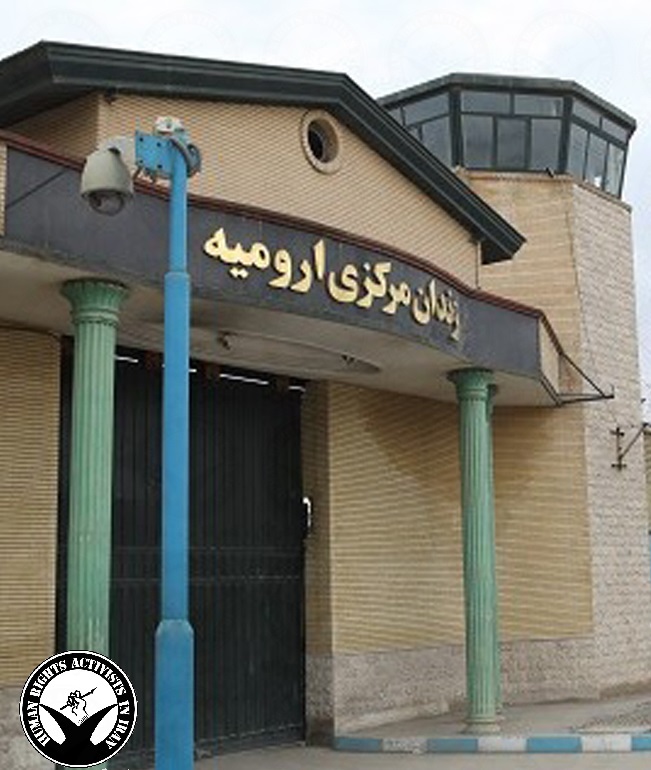
On November 11, 2019, at least two prisoners of Urmia Prison were transferred to solidarity confinement cells to get prepared for execution. They were sentenced to death earlier due to their murder felonies. One of them was identified as Mehdi Mostafazadeh. If they fail to get the victims’ family’s consent, they will be executed in few days.

According to the international organizations, Iran ranks first in the world in executions per capita. From October 10, 2018, to October 8, 2019, the Iranian authorities issued death penalty sentence to 134 individuals and have already carried out 242 executions including 16 public executions.  At least five of the executed were juvenile offenders who were under the age of 18 at the time of committing the crime. Secret executions of prisoners reported by the independent sources and the human rights association indicate that 72% of executions are carried out in secret or without any public notice.

A Prisoner Died in Custody Due to the Prison Medical Malpractice

On November 10, 2019, a prisoner died in Urmia Prison due to lack of medical treatment and negligence of the prison authorities. He was in prison since 2015 on the charge of murder. Maran Khamoui was a prisoner of the public ward 15 of Urmia Prison. According to a close source, he was sick for a week, but prison authorities rejected his transfer to the hospital, and he was only treated with pain killers. On November 10, he was transferred to the health wad because of his deteriorating health condition. He was still waiting to be transferred to the hospital when he died on 9 pm.

Death in custody due to similar causes is precedent but state prisons and the Security and Corrective Measures Organization’s authorities did not take any action on it.

Three People were Sentenced to Death and Lashes in Tehran and Isfahan

Iranian authorities sentenced three prisoners to death and lashes on the charge of drug felony and sexual assault. Two prisoners were sentenced to death in Najafabad Prison in Isfahan in the past few days. 33-year-old Majid Rezaipour, and 37-year-old Afshin Rezaipour, are in prison for drug felony. Moreover, according to Khorasan newspaper, a 25-year-old man was sentenced to death and lashes in Tehran. He assaulted six women while presenting himself as a taxi driver.

It should be noted that media inside Iran use “assault” when referencing to rape and various sexual harassment cases.

According to the international organizations, Iran ranks first in the world in executions per capita. From October 10, 2018, to October 8, 2019, the Iranian authorities issued death penalty sentence to 134 individuals and have already carried out 242 executions including 16 public executions.  At least five of the executed were juvenile offenders who were under the age of 18 at the time of committing the crime. Secret executions of prisoners reported by the independent sources and the human rights association indicate that 72% of executions are carried out in secret or without any public notice.

Four Prisoners Were Executed in Tabriz, Shiraz, Ardabil, and Borujerd

At least four prisoners were executed in Tabriz, Shiraz, Ardabil, and Borujerd. On November 4, 2019, a prisoner was executed in Adel Abad Prison in Shiraz. Hossein Asgari was arrested in 2016 and had been imprisoned on the charge of murder. In addition, on November 5, 2019, a prisoner was executed in Tabriz Prison. 30-year-old Mohammad Doosti was arrested in Maragheh five years ago and was sentenced to death on the charge of murder. The same day, a prisoner was executed in Ardabil Central Prison. He was sentenced to death earlier on the charge of murder on August 15, 2017. The 39-year-old prisoner confessed to murder and stated that the motive of the incident revolves around a personal conflict case.

Finally, in the morning of November 7, 2019, another prisoner was executed in Borujerd Central Prison. Karam Sadeghi was sentenced to death on the charge of murder. He had been in prison since 2015.

The news of Mohammad Doosti, Karam Sadeghi, and Hossein Asgari’s executions has not been published by the Iranian media yet.

According to the international organizations, Iran ranks first in the world in executions per capita. From October 10, 2018, to October 8, 2019, the Iranian authorities issued death penalty sentence to 134 individuals and have already carried out 242 executions including 16 public executions.  At least five of the executed were juvenile offenders who were under the age of 18 at the time of committing the crime. Secret executions of prisoners reported by the independent sources and the human rights association indicate that 72% of executions are carried out in secret or without any public notice.

13 Workers of Kut-e Abdollah Municipality Were Arrested

On October 20, 2019, the mayor of Kut-e Abdollah, Navab Hajian Saeidi, confirmed the arrest of 13 city workers. He claimed that the arrestees were encouraging other city workers to cease work to put the municipality under pressure so the contractor filed a lawsuit against them. The mayor added that the workers’ unpaid wages of August was paid recently, and these workers demanded direct employment by the municipality due to the increasing rate of unemployment. On the other hand, one of the city workers of Kut-e Abdollah reported in June 2019 that they have requested their unpaid wages several times from the municipality without receiving any response. According to this worker, their salary is inadequate for their living expenses and they do not receive it on time.

The city workers of Kut-e Abdollah had protested several times in front of the Khuzestan governor’s building during May-June 2019. The city park workers have refused to work since May 28, 2019 demanding their unpaid wages.

Kut-e Abdollah is a city and capital of Karun County, Khuzestan Province. On 23 January 2013, Kut-e Abdollah village was merged with the villages of Khazami, Darvishabad, Shariati-ye Yek, Kut-e Navaser, Kuy-e Montazeri, Gavmishabad, Gondamakar and Hadiabad and created a city.

Subscribe to Our Newsletter

Now is definitely not the time to stop reading!

Three Baha’is Were Arrested in Shiraz

On October 21, 2019, three Baha’i citizens were arrested in Shiraz while their houses and several other Baha’i houses were searched and their personal belongings such as laptops, cell phones, and computers were confiscated. Farzan Masoumi, Kiana Shoaei, and Soroush Abadi were arrested by the Intelligence Department officers and were transferred to an undisclosed location. The identities of the other Baha’i citizens whose houses were searched are still unknown.

Baha’i citizens of Iran are systematically deprived of religious freedoms, while according to Article 18 of the Universal Declaration of Human Rights and Article 18 of the International Covenant on Civil and Political Rights, all people are entitled to freedom of religion, belief, and changes thereof, as well as the right to express and practice those beliefs as individuals or collectives, in public or in private. Though unofficial sources estimate the Baha’i population of Iran at more than 300,000, Iran’s Constitution officially recognizes only Islam, Christianity, Judaism, and Zoroastrianism, and does not acknowledge the Baha’i faith as an official religion. As a result, the rights of Baha’is in Iran are systematically violated.

Appeals Court Upheld Alieh Motalebzadeh’s Sentence

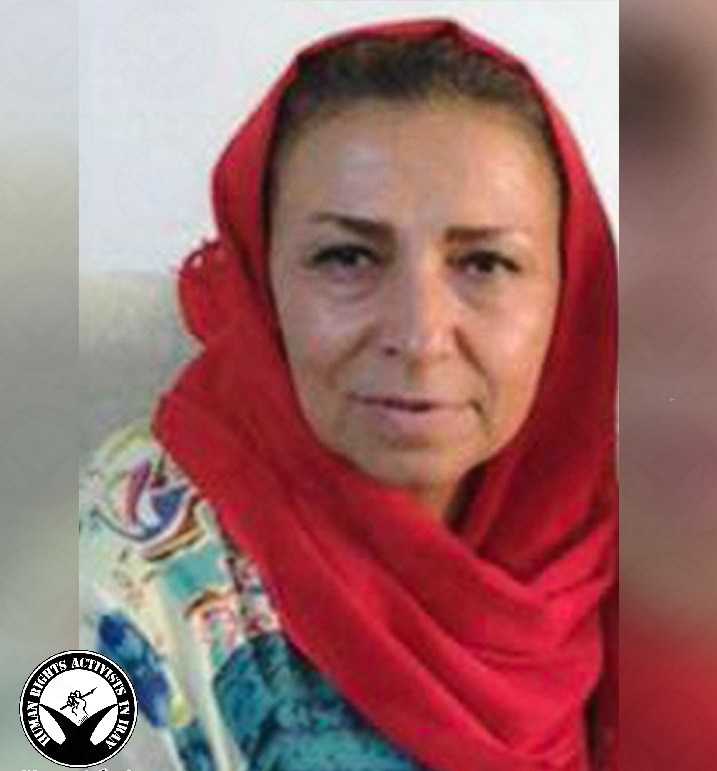
On October 14, 2019, the Branch 36 of Tehran’s appeals court upheld Alieh Motalebzadeh’s sentence of three years imprisonment. In 2016, Alieh Motalebzadeh, women’s rights activist, was sentenced to three years in prison by a  preliminary court. According to the Article 134 of Iran’s Islamic Penal Code, the charge with the highest penalty will be considered; this means that she should serve two years in prison.

She was summoned to Evin Prison by a text message stating that she should show up in the next five days to start serving her time. She was sentenced to three years in prison in 2016 for the charges of “assembly and collision” and “propaganda against the state”.

Alieh Motalebzadeh was arrested on November 24, 2016 and was transferred to Evin Prison’s ward 209. On December 19, 2016, she was temporarily released on a 300-million-Toman (approx. 27 thousand dollars) bail after 25 days in prison. Motalebzadeh was a member of the“One Million Signatures for the Repeal of Discriminatory Laws” campaign and had been arrested multiple times.

Atefeh Rangriz Went on Hunger Strike

On October 16, 2019, Atefeh Rangriz, a political prisoner of Qarchak Prison, went on hunger strike.

Her trial was on August 5, 2019 and was led by judge Moghiseh who set a bail of two billion Tomans (approx. 180 thousand dollars)  for her temporary release, but she could not afford it and was returned to prison. On August 31 she was sentenced to 11 years and six months in prison and 74 lashes by the Branch 28 of Tehran’s Revolutionary Court.

She was arrested along with several others in the protests of the International Labor Day in front of the parliament in Tehran on May 1, 2019. A few of the protesters were released but Neda Naji, Atefeh Rangriz, and Marzieh Amiri are still in prison.

Nahid Khodajoo Was Sentenced to Six Years in Prison

On October 14, 2019, Nahid Khodajoo was sentenced to a 6-year prison term and 74 lashes by the Branch 26 of the Revolutionary Court. Based on the Article 134 of Iran’s Islamic Penal Code, the charge with the highest penalty will be considered; this means that she should serve five years in prison.

Nahid Khodajoo is a member of the board of directors of the Free Union of Iranian Workers. She was arrested along with several others during the protest gathering on the International Labor Day on May 1, 2019, in front of the parliament in Tehran. She was released on bail on June 3, 2019.

Her trial was on August 1, 2019 at the Branch 2 of the Revolutionary Court and her final hearing was on August 10 at the Branch 4 of the Evin Prosecution Court. Her lawyer, Manijeh Mohammadi  was present at her final hearing. In the incitement against her, she was sentenced to five years imprisonment on the charge of “assembly and collusion against national security” and one-year imprisonment on the charge of “disturbing public order”. According to the Article 134 of Iran’s Islamic Penal Code, the charge with the highest penalty will be considered; this means that she should serve five years in prison for the charge of “assembly and collusion against national security”.

Appeals Court upholds Kiumars Marzban’s Sentence of 23-year and 9 Months Prison Term

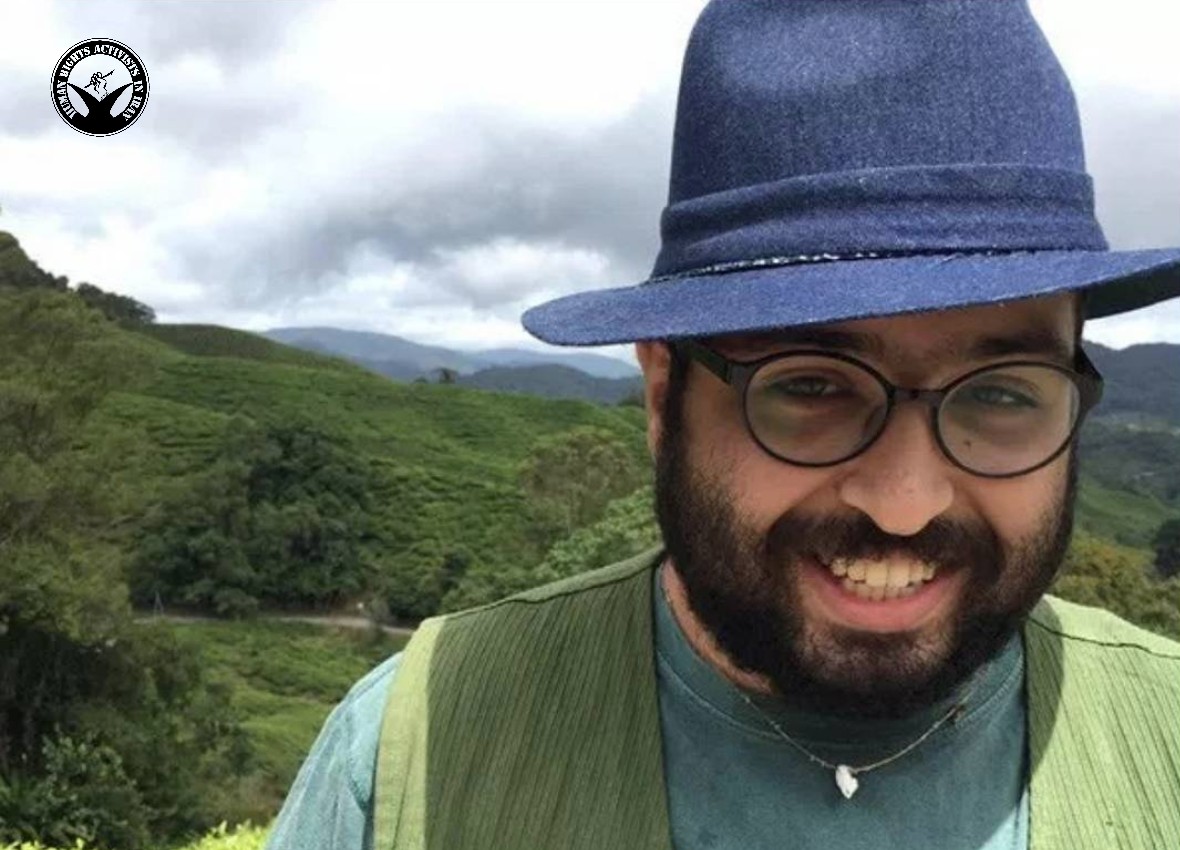
On October 13, 2019, appeals court upheld Kiumars Marzban’s sentence of 23 years and nine months imprisonment. On August 24, 2019, Kiumars Marzban, a detained 26-year-old writer and satirist, was sentenced to 23 years and nine months in prison by the preliminary court in Tehran. Based on the Article 134 of Iran’s Islamic Penal Code, the charge with the highest penalty will be considered; this means that Kiumars Marzban should serve 11 years in prison.

His lawyer, Mohammad Hossein Aghasi, confirmed the appeals court’s verdict and added that the appeals court hearing was convened without Marzban or his lawyer presence and without hearing his defense. Aghasi said: “We did not receive any response to our appeal statement. For instance, he was charged with “cooperating with a hostile state” while even Iranian authorities consider the organization that he wrote for as a nonprofit organization.”

Kiumars Marzban began his career making short films. He directed eight short film between 2005-2009. He left Iran in 2010 and while living in Malaysia, he hosted a comedy podcast called “Sangtab Radio”. He published few books such as short stories titled “kham bodam, pokhteh shodam, balk eh pasandideh shodam” (I was Raw, I Became Ripe and Pleasant) and “aziz jan” (My Dear).

Kioomars Marzban returned to Iran in 2017. On August 26, 2018, Islamic Revolutionary Guards Corps officers raided Marzban’s residence, arrested him, and confiscated his several personal items included laptop and cellphone. He is a prisoner at Evin Prison for a year now. His trial was scheduled for March 3, 2020 but it was held in late July 2019 at the Branch 15 of the Revolutionary Court. He was sentenced to 11 years imprisonment for “cooperating with a hostile state”, seven years and six months in prison for blasphemy, a year and half imprisonment for “propaganda against the state”, three years in prison for “insulting the Supreme Leader and the Founder of the Revolution”, and nine months imprisonment for “insulting authorities”.