Three Baha’i Citizens Arrested in Isfahan

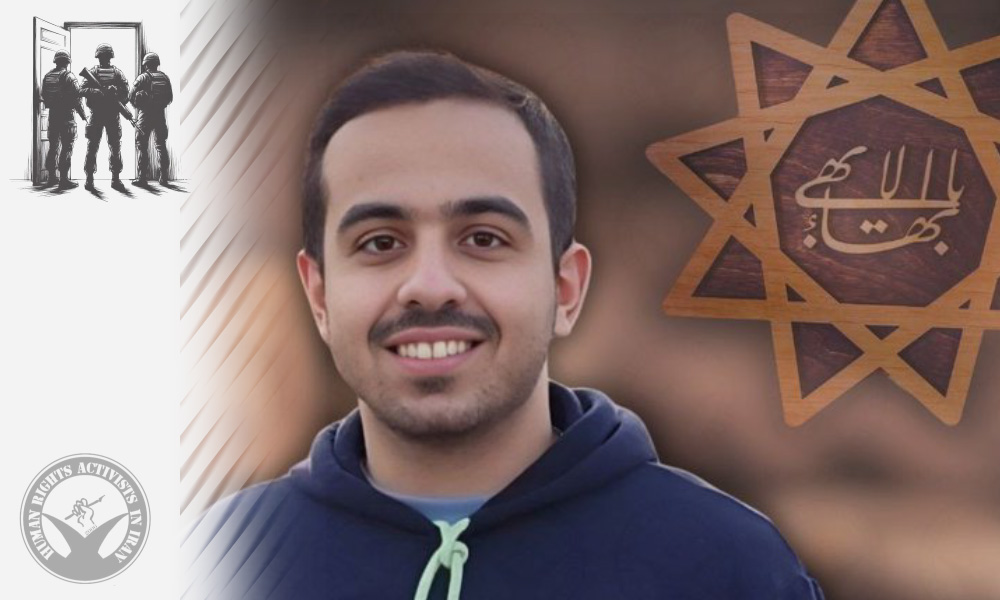
On Saturday, November 2, security forces arrested three Baha’i citizens—Rashid Dehghani, Pedram Dehghani, and Parsa Dehghani—in the city of Tiran, Isfahan, and transferred them to an undisclosed location, according to Radio Farda. Rashid and Pedram are residents of Tehran, while Parsa resides in Karaj.

The three had traveled to Tiran in Isfahan to attend a Baha’i religious celebration, during which security forces detained them along with eight other Baha’i attendees. While the eight others have since been released, there is still no information on the whereabouts or condition of Rashid, Pedram, and Parsa Dehghani.

Baha’is are subjected to violations of their religious rights, comprising 82% of reports on infringements against religious minorities, according to HRA’s 2023 annual report.

The Baha’i faith is not recognized as a legitimate religion by Iranian authorities, leading to systematic and longstanding violations of the rights of Baha’is in the country. This includes the denial of their fundamental right to practice their religion, which constitutes a clear breach of both Article 18 of the Universal Declaration of Human Rights and Article 18 of the International Covenant on Civil and Political Rights. The United Nations covenant holds that every person has the right to freedom of religion, freedom of converting religion, as well as freedom of expression, individually or collectively; openly or secretly.

Behrad Azargan, Baha’i Musician, Sentenced to 11 Years in Prison

Behrad Azargan, a Baha’i musician residing in Tehran, has been sentenced by the Revolutionary Court of Tehran to 11 years in prison, in addition to the confiscation of his seized belongings.

According to HRANA, the news agency of Human Rights Activists in Iran, Branch 15 of the Tehran Revolutionary Court, presided over by Judge Salavati, sentenced Azargan to five years in prison for “engaging in educational or promotional activities against Sharia of Islam” through affiliation with a sect or similar group, four years for “membership in anti-regime groups,” and two years for “spreading false information.” Additionally, the court ordered the confiscation of items seized from his home and imposed a two-year ban on his use of social media and travel abroad.

The court session addressing Azargan’s case was held on October 6.

Azargan’s home was raided on July 3 by security agents, who seized several personal items, including his phone and laptop.

He was subsequently detained on August 4 after appearing at the Third Branch of the Security Prosecutor’s Office to defend himself against charges of anti-regime propaganda. He was later released on bail from Evin Prison.

Death Sentences of Four Sunni Prisoners Finalized, Case Referred for Execution

The death sentences of four Sunni prisoners—Eido Shahbakhsh, Abdolghani Shahbakhsh, Abdolrahim Ghanbarzehi Gorgij (Rahim Mirbaloch), and Soleiman Shahbakhsh—have been confirmed by Branch 32 of the Supreme Court and referred to Branch 1 of the Tehran Security Prosecutor’s Office for execution. They are currently held in Ghezel Hesar Prison in Karaj.

On February 4, 2024, Judge Mohammadreza Amuzad Khalili of Branch 28 of the Tehran Revolutionary Court sentenced these men to death, accusing them of armed rebellion through membership in opposition groups and armed uprising against the regime. Their death sentences were later upheld by the Supreme Court following their appeal.

HRANA’s investigation into their case reveals significant rights violations during their imprisonment. The prisoners faced extreme pressure from security agencies, including denial of legal representation, prolonged solitary confinement, physical and psychological torture, and deprivation of basic rights such as family visits and phone calls.

Since 2012, following the initial arrests of Eido and Abdolghani Shahbakhsh, court hearings have been irregular. Despite initial acquittals by the Zahedan Revolutionary Court, objections by security agencies led to the re-arrest of the defendants in 2016 and continued prosecution.

A source close to Abdolrahim Ghanbarzehi’s family told HRANA that he was subjected to severe physical and psychological pressure during solitary confinement and was coerced into making confessions while in the IRGC’s Salman Detention Center in Zahedan, in violation of Article 38 of Iran’s Constitution and international anti-torture conventions.

A key issue in this case has been the frequent transfer of case files between courts in Zahedan and Tehran, causing delays and uncertainty for the defendants. Despite multiple requests for regular hearings and proper defense, initial acquittals were overturned due to pressure from security agencies, leading to their eventual death sentences.

With the Supreme Court now confirming their death sentences, the case has entered a critical phase, with the execution possibly imminent. The families of the prisoners maintain their innocence and argue that the judicial process has been fraught with serious human rights violations.

Baha’is in Kerman: Paridokht Shojaei Summoned to Serve Prison Sentence, Four Others Acquitted

Paridokht Shojaei Baghini, a Baha’i citizen from Kerman, has been summoned to the Kerman Prison Enforcement Branch to serve her two-year and one-month prison sentence. Meanwhile, four other Baha’i citizens—Foad Shaker Arkani, Shahram Fallah, Yekta Fallah, and Behnam Pour-Ahmari—who were tried alongside her, have been acquitted by the Court of Appeals.

According to information received by HRANA, Ms. Shojaei was contacted via phone and instructed to report to the prison authorities to begin serving her sentence. A Baha’i resident of Kerman, familiar with the case, confirmed the news, stating: “Yekta Fallah, Foad Shaker Arkani, Behnam Pour-Ahmari, and Shahram Fallah were acquitted during the appeals process. Only Ms. Shojaei was sentenced to imprisonment and social restrictions, and she has been repeatedly summoned in recent days to begin serving her time.”

The five Baha’i citizens were initially arrested in July 2023 at the residence of Shahram Fallah. During the arrest, security officers searched Mr. Fallah’s home and the vehicles of his guests, confiscating personal items, including their mobile phones. Foad Shaker Arkani and Behnam Pour-Ahmari were released later that month, while Shahram Fallah, Yekta Fallah, and Paridokht Shojaei were released on bail in early August.

The first court hearing in their case took place on February 3, 2024, followed by a second hearing in early April 2024, where the defendants were sentenced to fines and social restrictions. However, in an unclear legal process, the court’s ruling against Ms. Shojaei was overturned, and she was subsequently informed in absentia of her revised sentence: two years and one month in prison, along with a five-year ban on social rights. This sentence was later upheld by the Court of Appeals after she filed an appeal.

Two Baha’i Women in Babol Sentenced to 10 Years in Prison and Social Restrictions

Suzan Eid Mohammadzadegan and Niusha Badiei Sabet, two Baha’i citizens, have been sentenced to a total of 10 years in prison, along with additional social restrictions, by Branch 1 of the Babol Revolutionary Court.

In the court’s ruling, delivered to the defendants today, each was sentenced to five years in prison, with time served during pre-trial detention considered. Additionally, both women have been banned from all educational and training activities for 18 months. They were convicted of “engaging in educational or promotional activities contrary to the sacred Sharia of Islam.”

Eid Mohammadzadegan and Badiei Sabet were arrested on August 15, 2023, at Mohammadzadegan’s residence in Babol by security forces, who did not present a judicial warrant. The two were eventually released on bail on September 11, 2023, from Babol Prison.

Mohammad Sadegh Akbari, head of the judiciary in Mazandaran Province, had previously justified the closure of two schools and ten educational and sports centers in Babol by claiming these institutions were promoting the Baha’i faith. He also mentioned the arrest of two individuals, describing them as “prominent Baha’i instructors in Iran.”

However, a reliable source refuted these claims, telling HRANA, “Only four kindergartens were involved, at most. No religious promotion occurred in these centers; the focus was solely on children’s education, with parents present at all times.”

Niusha Badiei Sabet, 39, a psychologist, translator, and resident of Tehran, has faced previous arrests and judicial encounters due to her faith.

Subscribe to Our Newsletter

Now is definitely not the time to stop reading!

Baha’i Citizen Faraz Razavian Sentenced to Prison and Other Penalties

Faraz Razavian, a Baha’i citizen, has been sentenced by the Rasht Revolutionary Court to two years and one day in prison, along with a fine and social restrictions.

According to the verdict from Branch 3 of the Rasht Revolutionary Court, Razavian has been sentenced to two years and one day of imprisonment, a fine of 80 million Tomans (approximately $1,500), and five years of deprivation of social rights.

A source close to Razavian’s family confirmed to HRANA that he had not been previously arrested or interrogated. The source explained that during a recent trial for Razavian’s mother, Mojgan Samimi, at the same court, Faraz Razavian was unexpectedly named as a defendant. Both Razavian and his mother were sentenced for engaging in educational activities and promoting the Baha’i faith. After Razavian’s lawyer requested a separate hearing, the court convened again but reissued the same sentence.

Baha’is are subjected to violations of their religious rights, comprising 82% of reports on infringements against religious minorities, according to HRA’s 2023 annual report.

The Baha’i faith is not recognized as a legitimate religion by Iranian authorities, leading to systematic and longstanding violations of the rights of Baha’is in the country. This includes the denial of their fundamental right to practice their religion, which constitutes a clear breach of both Article 18 of the Universal Declaration of Human Rights and Article 18 of the International Covenant on Civil and Political Rights. The United Nations covenant holds that every person has the right to freedom of religion, freedom of converting religion, as well as freedom of expression, individually or collectively; openly or secretly.

Baha’i Citizen Ataollah Zafar Returns to Evin Prison After Six-Month Suspension

Ataollah Zafar, an 80-year-old Baha’i citizen, returned to Evin Prison yesterday to serve the remainder of his two-year sentence, following a six-month suspension of his prison term.

According to HRANA, Mr. Zafar was taken back to Evin Prison on Wednesday, October 2, to complete his sentence after the temporary halt.

Zafar was first arrested by security forces on May 1, 2022. Shortly after his arrest, he was transferred from The Ministry of Intelligence’s detention facility (Ward 209 of Evin Prison) to the prison’s general ward.

In July 2023, Branch 26 of the Tehran Revolutionary Court, under Judge Iman Afshari, sentenced Zafar to five years in prison for “membership in illegal groups aimed at disrupting national security.” The sentence was later reduced to two years by Branch 36 of the Tehran Court of Appeals.

Zafar has a history of previous arrests and convictions. He was released on bail from Evin Prison on October 29, 2022, after his sentence was suspended. In March 2023, his case was closed as part of a pardon.

The Baha’i faith is not recognized as a legitimate religion by Iranian authorities, leading to systematic and longstanding violations of the rights of Baha’is in the country. This includes the denial of their fundamental right to practice their religion, which constitutes a clear breach of both Article 18 of the Universal Declaration of Human Rights and Article 18 of the International Covenant on Civil and Political Rights. The United Nations covenant holds that every person has the right to freedom of religion, freedom of converting religion, as well as freedom of expression, individually or collectively; openly or secretly.

Mahboob Habibi, a Baha’i Citizen from Shiraz, Arrested and Charged

On Saturday, September 28, Mahboob Habibi, a Baha’i citizen residing in Shiraz, was arrested by security forces and transferred to the Ministry of Intelligence’s detention facility in the city, known as House No 100.

A source close to Habibi’s family confirmed to HRANA: “Mahboob Habibi was arrested in the presence of his two-year-old child by security forces and transferred to the Ministry of Intelligence’s detention facility in Shiraz.”

The following day, on Sunday, September 29, Habibi was formally charged during an interrogation at the Public and Revolutionary Prosecutor’s Office with accusations including “propaganda against the regime.”

Mahboob Habibi and his wife, Negar Misaghian, have previously been arrested and faced legal action due to their religious beliefs and activities.

Retrial of 15 Baha’i Women in Isfahan Revolutionary Court on Charges of Educational and Promotional Activities Against Islamic Law

Fifteen Baha’i citizens from Baharestan, Isfahan, have once again been tried in the First Branch of the Revolutionary Court of Isfahan. Previously, this case had been returned from the Isfahan Court of Appeals to the Revolutionary Court for correction of deficiencies.

The retrial session took place today, Wednesday, September 25, 2024, in the First Branch of the Isfahan Revolutionary Court. Those on trial include Mojgan Pourshafe Ardestani, Nasrin Khademi Qahfarrokh, Azita Rezvani-Khah, Sholeh Ashouri, Mojdeh Bahamin, Bashra Motahar, Sara Shakib, Samira Shakib, Roya Azad Khosh, Nooshin Hemmat, Shurangiz Bahamin, Sanaz Rasteh, Maryam Khorsandi, Farkhandeh Rezvan Pay, and Firoozeh Rastinejad, all of whom are Baha’i citizens residing in Isfahan. They are facing charges of “educational/promotional activities against Islamic law.”

This case was initially sent to the Court of Appeals after a verdict was issued in the First Branch of the Revolutionary Court a few weeks ago. However, the Court of Appeals identified flaws and returned the case to the Revolutionary Court for corrections.

In late May 2024, these fifteen Baha’i women were sentenced by the same branch to five years of imprisonment, paying a fine, five years of deprivation from social services, and a two-year travel ban, all for the same charges of “educational/promotional activities against Islamic law.”

Among these individuals, Roya Azad Khosh, Azita Rezvani-Khah, Sara Shakib, Sanaz Rasteh, Sholeh Ashouri, Shurangiz Bahamin, Firoozeh Rastinejad, Maryam Khorsandi, Mojgan Pourshafe, Nasrin Khademi, and Nooshin Hemmat were arrested in 2021 and later released on bail.

Additionally, the homes of Bahamin, Rezvan Pay, Motahhar, and Samira Shakib had previously been searched by security forces.

Baha’is are subjected to violations of their religious rights, comprising 82% of reports on infringements against religious minorities, according to HRA’s 2023 annual report.

The Baha’i faith is not recognized as a legitimate religion by Iranian authorities, leading to systematic and longstanding violations of the rights of Baha’is in the country. This includes the denial of their fundamental right to practice their religion, which constitutes a clear breach of both Article 18 of the Universal Declaration of Human Rights and Article 18 of the International Covenant on Civil and Political Rights. The United Nations covenant holds that every person has the right to freedom of religion, freedom of converting religion, as well as freedom of expression, individually or collectively; openly or secretly.


Baha’is Shahin Mavaddat and Soodabeh Mahdinzhad Arrested in Gorgan

On Monday, September 23, 2024, Baháʼí couple Shahin Mavaddat and Soodabeh Mahdinzhad, residents of Gorgan, were arrested by security forces at their home and taken to an undisclosed location. The agents also conducted a thorough search of their residence, seizing multiple electronic devices and religious books.

A source close to the family confirmed to HRANA: “On Monday, 10 Ministry of Intelligence agents arrived at the home of Shahin Mavaddat and Soodabeh Mahdinzhad with a search and arrest warrant. They detained the couple following a two-hour search, during which they confiscated mobile phones, personal electronic devices, Baháʼí religious texts, and the home’s CCTV system.”

The source added that security forces also examined the electronic devices of other family members. During the entire search, the agents recorded the events using three cameras.

As of now, no information has been released regarding the reasons for their arrest or their current whereabouts.

Soodabeh Mahdinzhad has a prior history of arrest and sentencing due to her religious beliefs.

Baha’is are subjected to violations of their religious rights, comprising 82% of reports on infringements against religious minorities, according to HRA’s 2023 annual report.

The Baha’i faith is not recognized as a legitimate religion by Iranian authorities, leading to systematic and longstanding violations of the rights of Baha’is in the country. This includes the denial of their fundamental right to practice their religion, which constitutes a clear breach of both Article 18 of the Universal Declaration of Human Rights and Article 18 of the International Covenant on Civil and Political Rights. The United Nations covenant holds that every person has the right to freedom of religion, freedom of converting religion, as well as freedom of expression, individually or collectively; openly or secretly.