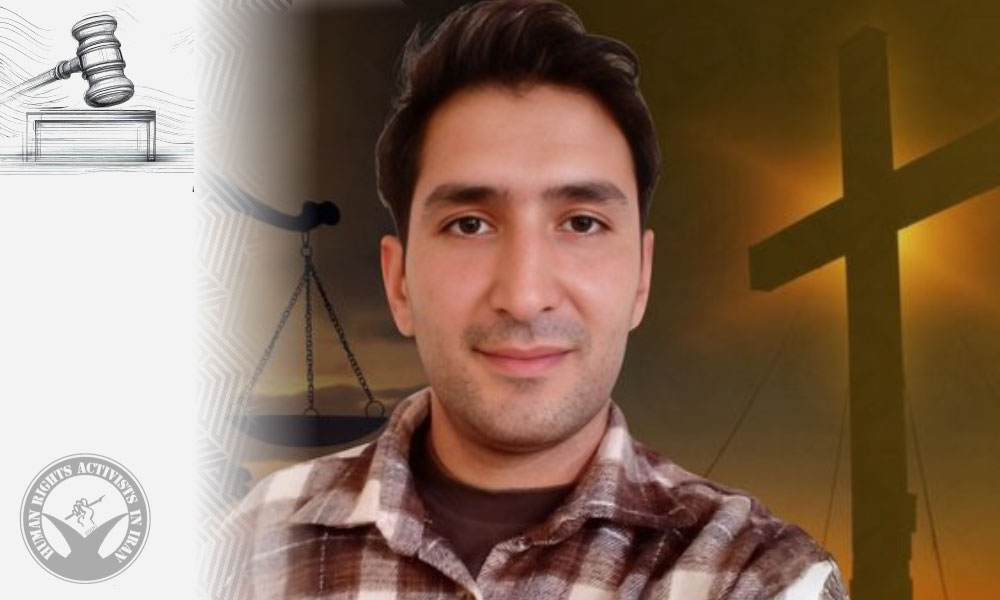
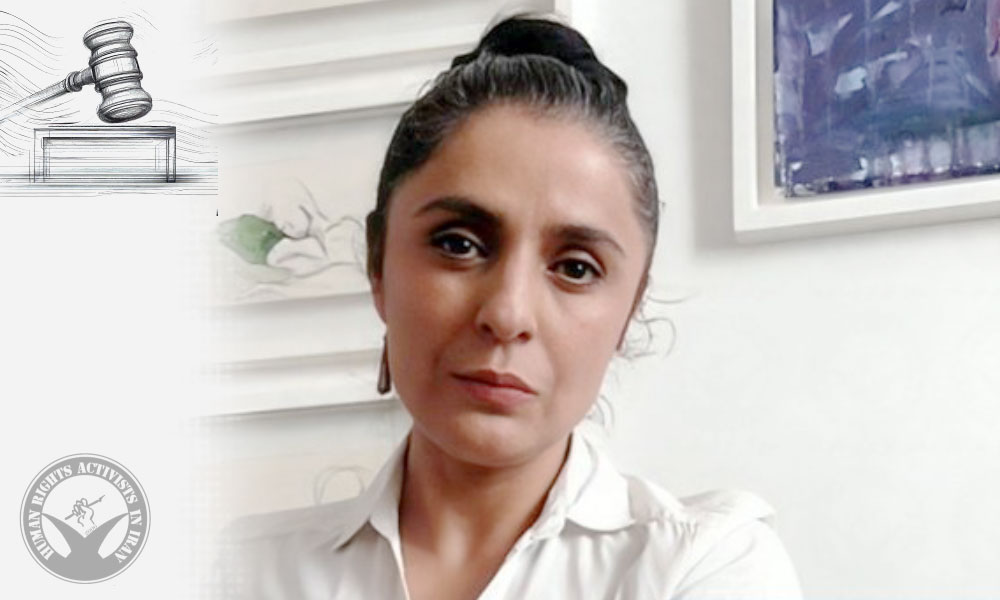
Afshin Haghighat, a Baha’i Citizen, Arrested

HRANA – On October 14, Afshin Haghighat, a Baha’i citizen residing in Shiraz, was arrested by security forces in the city and transferred to an undisclosed location. At the same time, his home was searched by agents, who confiscated several digital devices and religious books belonging to Mr. Haghighat and his family.

A source close to Haghighat’s family confirmed the arrest to HRANA, stating:
“On Tuesday, security agents came to the home of this Baha’i citizen in Shiraz and arrested him. His residence was simultaneously searched, and during the search, a number of digital devices and religious books belonging to him and his family were confiscated.”

As of this report, no information is available regarding the reasons for the arrest, his place of detention, or the charges brought against this Baha’i citizen.

Over the past decade, the Iranian Bahá’í community has been disproportionately targeted by Iran’s security forces and judiciary, more than any other minority group. In the past three years, an average of 72 percent of the reports on religious rights violations collected by HRANA have documented the Iranian regime’s repression of the Bahá’í community.

Baha’i Citizen Fardin Bengaleh Arrested

HRANA – On Tuesday, October 14, Fardin Bengaleh, a Baha’i citizen residing in Shiraz, was arrested by security forces and taken to an undisclosed location.

According to a report received by HRANA, Mr. Bengaleh was arrested in Shiraz by security forces on Tuesday, October 14. So far, no information has been obtained regarding the reasons for his arrest, the location of his detention, or the charges brought against him.

Fardin Bengaleh is a Baha’i citizen living in Shiraz.

Over the past decade, the Iranian Bahá’í community has been disproportionately targeted by Iran’s security forces and judiciary, more than any other minority group. In the past three years, an average of 72 percent of the reports on religious rights violations collected by HRANA have documented the Iranian regime’s repression of the Bahá’í community.

Baha’i Citizen Sonia Toudiee Arrested in Babol

HRANA – On Sunday, October 12, Sonia Toudiee, a Baha’i citizen residing in Babol, was arrested by security forces and taken to an undisclosed location.

Based on information obtained by HRANA, Ms. Toudiee was detained on the evening of Sunday, October 12, in Babol County. At the time of her arrest, security agents searched her residence, seizing a number of her personal belongings.

As of this report’s publication, the reasons for her arrest, her current whereabouts, and the charges against her remain unknown.

Previously, on May 17, 2025, Ms. Toudiee’s home was searched by security forces.

Sonia Toudiee is a Baha’i citizen residing in Babol, Mazandaran Province.

Over the past decade, the Iranian Bahá’í community has been disproportionately targeted by Iran’s security forces and judiciary—more than any other minority group. In the past three years, an average of 72 percent of the reports on religious rights violations collected by HRANA have documented the Iranian regime’s repression of the Bahá’í community.

Appeals Court: Baha’i Citizen Maryam Zabihi Sentenced to Imprisonment

HRANA – The prison sentence of Maryam Zabihi, a Baha’i citizen residing in Qaemshahr, has been reduced by the Mazandaran Province Court of Appeals to three months and one day. She had initially been sentenced to ten months in prison by a lower court.

According to Hyrkani news, Ms. Zabihi’s ten-month prison sentence was reduced to three months and one day by the Mazandaran Province Court of Appeals in late September.

The initial verdict against Ms. Zabihi was issued by Branch 104 of the Qaemshahr Criminal Court (Category Two) on the charge of “educational activities contrary to and disruptive of the sacred Islamic law.”

The charge reportedly stemmed from holding university examination sessions for students of the Baha’i Institute for Higher Education (BIHE) at her private residence. It is worth noting that, since Baha’is are denied access to higher education in Iran, this unofficial university was established by members of the Baha’i community to provide Baha’i students with access to higher education.

On Monday, February 12, 2024, security agents searched Maryam Zabihi’s home, seizing all electronic devices, textbooks, laptops, and tablets belonging to five Baha’i youths who were present at the time.

Over the past decade, the Iranian Bahá’í community has been disproportionately targeted by Iran’s security forces and judiciary—more than any other minority group. In the past three years, an average of 72 percent of the reports on religious rights violations collected by HRANA have documented the Iranian regime’s repression of the Bahá’í community.

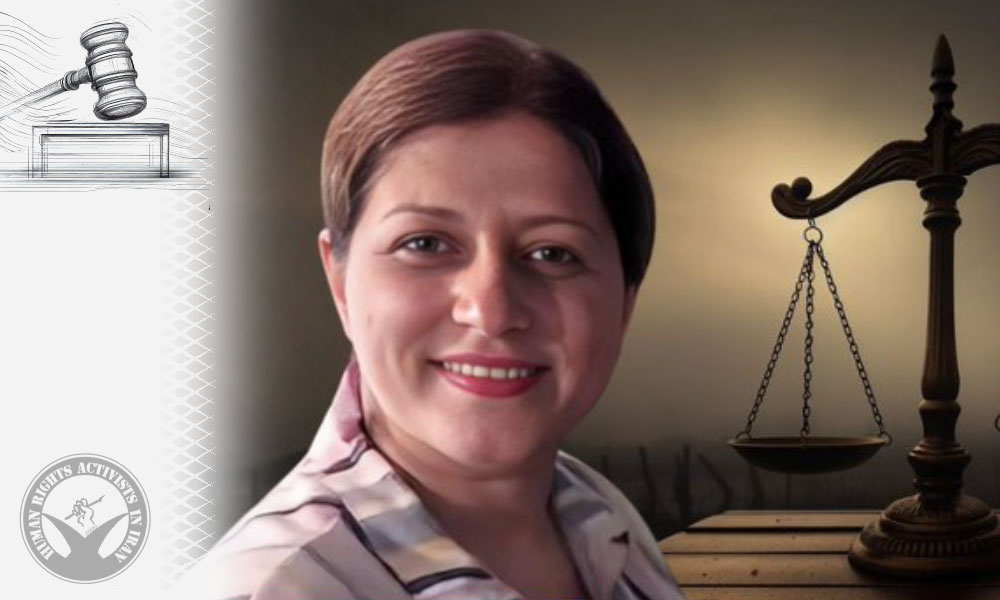
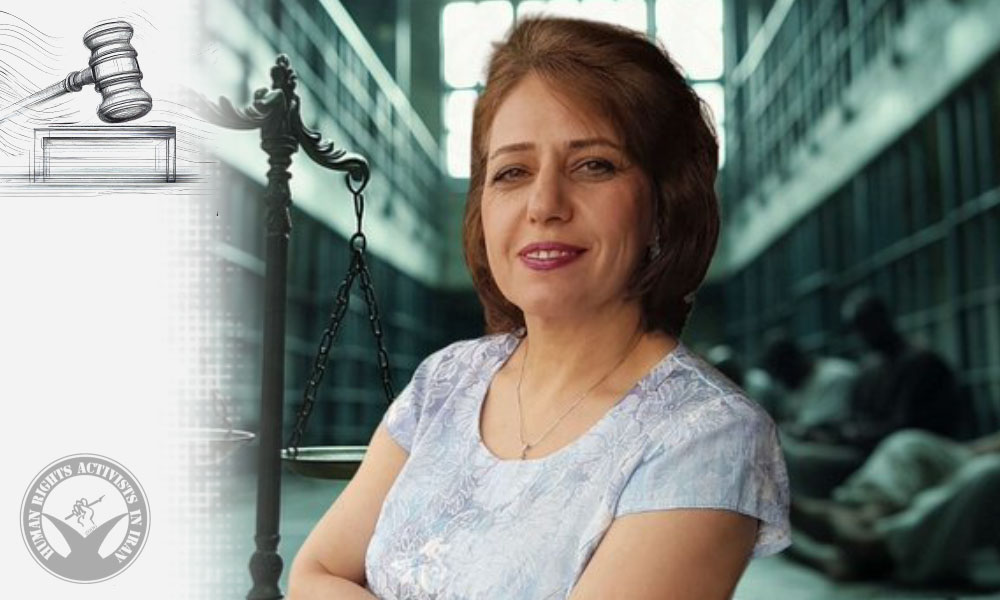
Nahid Behroozi, a Baha’i Citizen, Sentenced to Five Years in Prison

HRANA – Nahid Behroozi (Forouhari), a Baha’i citizen residing in Karaj, has been sentenced to five years in prison and additional penalties by Branch 4 of the Karaj Revolutionary Court.

According to the verdict, which was recently issued and officially communicated to her on Monday, October 6, 2025 (14 Mehr 1403), Ms. Behroozi was sentenced to five years of imprisonment under Article 500 (repeated) of the Islamic Penal Code for “educational or proselytizing activities deemed deviant and contrary to or disruptive of the sacred religion of Islam.”

In addition to the prison term, the court imposed complementary punishments, including ten years’ deprivation of social rights and the confiscation of her seized belongings—such as electronic devices and religious books.

Ms. Behroozi was arrested on July 29, 2024, by agents of the Fardis branch of the Ministry of Intelligence while on a street in Karaj. Following her arrest, security agents searched her home. After completing interrogation at The Ministry of Intelligence’s detention facility, she was transferred to Kachouei Prison on August 15, 2024. She was released from Kachouei Prison on October 1, 2024, upon posting bail.

Subscribe to Our Newsletter

Now is definitely not the time to stop reading!

Appeal Court Upholds 25-Year Prison Sentence for Baha’i Citizen Rouya Sabet

HRANA – The 25-year prison sentence of Rouya Sabet, a Baha’i citizen residing in Shiraz, has been upheld in full by Branch 37 of the Fars Province Court of Appeals.

The ruling, issued on September 23 by the appellate court, has since been officially communicated to Ms. Sabet. According to the verdict, she received 10 years in prison for each of the charges of “collaboration and communication with Israeli nationals and institutions” and “forming and running a group with the intent to act against national security.” She was also sentenced to five years in prison for “religious propaganda activity contrary to the Sharia of Islam.”

As complementary punishments, Ms. Sabet was handed a two-year travel ban (including passport cancellation), five years’ deprivation of social rights, and a ban on online activity.

The verdict is final. Under Article 134 of the Islamic Penal Code, the heaviest sentence, 10 years of imprisonment, will be enforceable.

On May 28, 2024, Branch 1 of the Shiraz Revolutionary Court had initially sentenced Ms. Sabet to 25 years in prison along with additional penalties on the same charges.

Rouya Sabet, a Baha’i citizen residing in the United Arab Emirates, was summoned and arrested by the IRGC Intelligence Organization in Shiraz on February 15, 2024, while visiting the city. She was released approximately five months later from Adelabad Prison in Shiraz after posting bail.

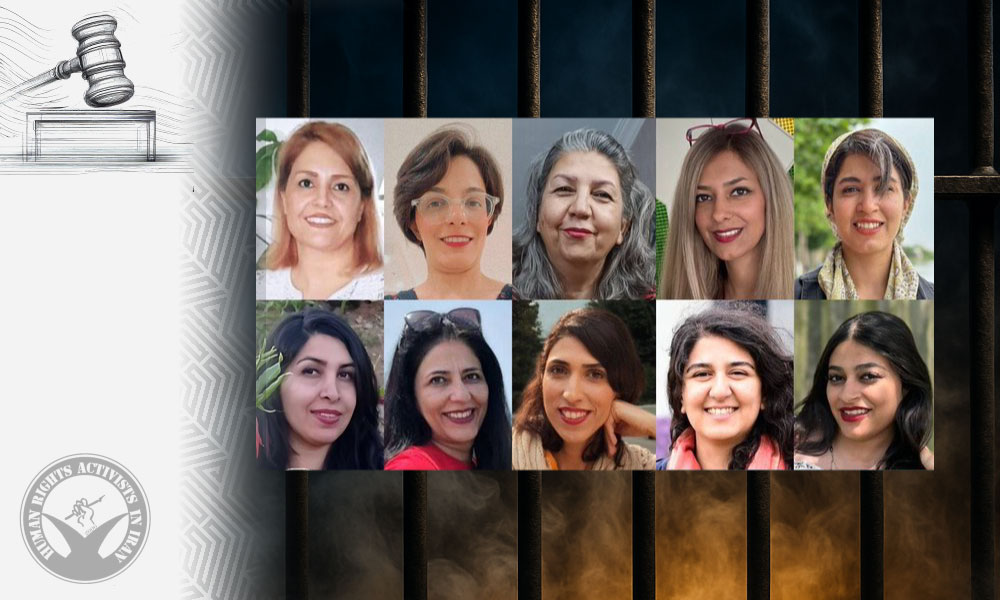
Appeals Court Upholds 90-Year Combined Prison Sentence for 10 Baha’i Women in Isfahan

HRANA – The convictions of Negin Khademi, Yeganeh Agahi, Yeganeh Roohbakhsh, Neda Badakhsh, Mojgan Shahrezaei, Shana Shoughifar, Arezoo Sobhanian, Parastoo Hakim, Bahareh Lotfi, and Neda Emadi, ten Baha’i women living in Isfahan, have been upheld in full by Branch 47 of the Isfahan Court of Appeals.

According to HRANA, the news agency of Human Rights Activists in Iran, the women were initially sentenced by the Isfahan Revolutionary Court to a combined 90 years in prison, along with fines and complementary punishments, which have now been confirmed on appeal.

The ruling, issued on September 28, 2025, was delivered to their defense attorney. According to the verdict, the women were convicted of “propaganda against the Islamic Republic” and “participation in deviant promotional and educational activities contrary to Islamic law.” These charges were based on activities such as organizing English, art, music, and yoga classes, and nature trips for children and teenagers, including both Iranian and Afghan participants.

Collectively, they were sentenced to 90 years in prison, 900 million tomans in fines, confiscation of property in favor of the state, and two-year bans on travel abroad and use of social media. Parts of the prison terms and fines were suspended.

A source close to the families told HRANA: “The appeals court session was held without prior notice and in the absence of the defendants. The verdict was issued in absentia and only communicated to their lawyer. The court labeled the case as ‘security-related and confidential.’”

In the initial trial held in October 2024, Yeganeh Agahi, Yeganeh Roohbakhsh, and Negin Khademi each received 10 years in prison and 100 million tomans in fines, with one-third of the sentences suspended. Neda Badakhsh, Mojgan Shahrezaei, Shana Shoughifar, Parastoo Hakim, and Arezoo Sobhanian received similar sentences, with half of the imprisonment and fines suspended.

Neda Emadi and Bahareh Lotfi were each sentenced to five years in prison and 50 million tomans in fines, with four years of the prison term and half of the fine suspended.

As complementary punishments, all ten women were sentenced to the confiscation of seized belongings—including phones, laptops, digital devices, foreign currency, gold, and jewelry – two-year travel bans, and two-year bans on using social media.

The ten Baha’i women were arrested on October 23, 2023, by security forces in Isfahan and released on bail within two months from Dolatabad Prison. During detention, they reportedly endured psychological torture and threats of physical torture.

Yeganeh Agahi had previously been arrested before this case. Yeganeh Roohbakhsh, who was 19 years old at the time of her arrest, is the daughter of Arezoo Sobhanian, another defendant in the case.

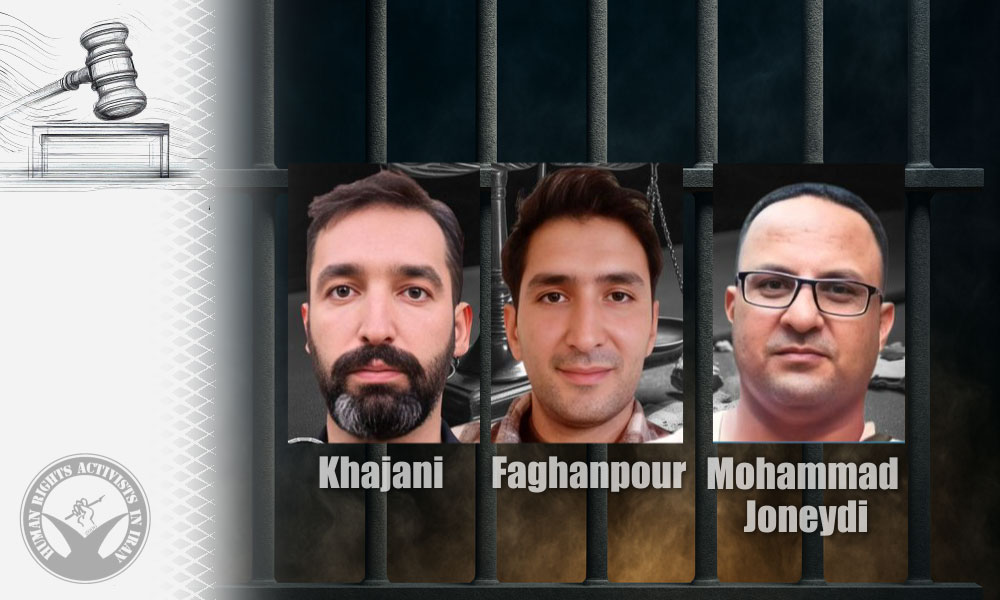
Court of Appeals: Five Christian Converts Sentenced to 41 Years and 10 Months in Prison

HRANA – The convictions of five Christian converts, including Hesamoddin (Yahya) Mohammad Joneydi, Morteza (Kalvin) Faghanpour Sasi, and Abolfazl (Benjamin) Ahmadzadeh Khajani, were upheld by Branch 36 of the Tehran Court of Appeals. These converts had previously been sentenced by Branch 1 of the Revolutionary Court of Varamin to a total of 41 years and 10 months in prison.

Based on a ruling issued by Branch 36 of the Tehran Court of Appeals on September 17 and recently delivered to the defendants, Hesamoddin (Yahya) Mohammad Jonidi, Abolfazl (Benjamin) Ahmadzadeh Khajani, and two other Christian converts who requested anonymity, were each sentenced to eight years and one month in prison. Morteza (Kalvin) Faghanpour Sassi received a sentence of eight years and eleven months in prison.

The breakdown of Morteza (Kalvin) Faghanpour Sasi’s sentence is as follows: seven years and six months in prison for “deviant educational and proselytizing activities contrary to and disruptive of Islamic Sharia law in connection with contacts abroad”, seven months for “propaganda against the regime”, and 17 months for “insulting the Supreme Leader.”

Meanwhile, Hesamoddin (Yahya) Mohammad Jonidi, Abolfazl (Benjamin) Ahmadzadeh Khajani, and the two unnamed Christian converts were each sentenced to seven years and six months in prison on the charge of “deviant educational and proselytizing activities contrary to and disruptive of Islamic Sharia law in connection with contacts abroad”, plus seven months in prison for “propaganda against the regime.”

The initial ruling against them had been issued on July 16 by Branch 1 of the Revolutionary Court of Varamin, presided over by Judge Ashkan Ramesh.

According to information obtained by HRANA, the charges were based on accusations such as the illegal distribution of Christian books, participation in several online universities abroad for studies and training in evangelism and Christian teachings, and the publication of a caricature of the Supreme Leader of the Islamic Republic on social media.

It should be noted that another part of the case, concerning the charge of “insulting the sacred,” has been referred to Branch 104 of the Criminal Court Two of Varamin, presided over by Judge Mohammad Hossein Esmail Morineh. A hearing on this charge is scheduled for October 7.

Faghanpour , a Christian convert from Varamin, was arrested by security forces on June 13 and transferred to Evin Prison. Following his arrest, agents searched his home and confiscated books, religious images, and his mobile phone. He was later released temporarily after posting two salary slips as bail.

Hesamoddin (Yahya) Mohammad Jonidi, 45 years old, was arrested by security forces in November 2024 and taken to Ward 209 of Evin Prison. He was eventually released after posting bail of 1.5 billion tomans.

Morteza Faghanpour, Christian Convert, Sentenced to 8 Years and 11 Months in Prison

HRANA – Morteza Faghanpour Sasi, a Christian convert from Varamin, has been sentenced by Branch 1 of the city’s Revolutionary Court to eight years and eleven months in prison.

The verdict, issued on July 16 by Judge Ashkan Ramesh, includes seven years and six months in prison on the charge of “educational and promotional activities deemed deviant and contrary to Islamic Sharia, in connection with foreign countries.” He was also given an additional 17 months for insulting the Supreme Leader. Following his appeal, the case has been referred to Branch 36 of the Tehran Court of Appeals, presided over by Judge Ahmad Zargar.

A source close to the Faghanpour family told HRANA: “Evidence presented against him included the alleged illegal distribution of Christian literature, enrollment in several online foreign universities to study evangelism, and publishing a caricature of the Supreme Leader on social media.”

HRANA has also learned that a separate part of his case, concerning the charge of insulting sacred beliefs, has been referred to Branch 104 of the Criminal Court II in Varamin, presided over by Judge Mohammad Hossein Esmail Morineh. The trial on this charge is scheduled for October 7.

Morteza (Calvin) Faghanpour Sasi, son of Abbas, was arrested on June 14 by security forces and transferred to Evin Prison. After his arrest, agents searched his residence and confiscated books, religious images, and his mobile phone.

He spent one month under interrogation in Ward 240 of Evin Prison, followed by 20 days in Ward 209. Unable to post bail, he remained for four months in Ward 8 before being temporarily released after providing two salary slips.

It should be noted that HRANA recently reported on the sentencing of Hesamoddin (Yahya) Mohammad Joneydi, another Christian convert from Varamin and a co-defendant in this case, who received eight years and one month in prison.

Paria Marandiz, Baha’i Citizen, Sentenced to 3 Years in Prison and Additional Punishment

HRANA – Paria Marandiz, a Baha’i citizen, has been sentenced by Branch 23 of the Tehran Revolutionary Court to three years in prison along with a two-year ban on using social media. Part of her sentence has been suspended.

According to information obtained by HRANA, Ms. Marandiz was convicted on charges of “propaganda against the Islamic Republic of Iran during the 12-day war” and “propaganda in support of the Israeli regime.” In addition to the prison term, the court imposed a two-year prohibition on her online activity.

Based on Article 134 of the Islamic Penal Code, the most severe charge—propaganda in support of the Israeli regime—will be enforced, meaning she must serve two years in prison. The remaining 18 months of her sentence have been suspended for five years.

Her trial was held on September 22 at Branch 23 of the Tehran Revolutionary Court. Earlier, on August 16, she was interrogated at Branch 3 of the Public and Revolutionary Prosecutor’s Office of District 33 in Tehran. She was subsequently released on bail set at 3.5 billion tomans.

Marandiz had previously been summoned by the Ministry of Intelligence on June 20, July 1, and July 13, during which she was interrogated for several hours on each occasion.

On June 17, security forces briefly detained her. At the time of her arrest, her home was searched, and agents confiscated personal belongings belonging to her and her family, including books, religious photographs, laptops, and mobile phones.

Over the past decade, the Iranian Bahá’í community has been disproportionately targeted by Iran’s security forces and judiciary—more than any other minority group. In the past three years, an average of 72 percent of the reports on religious rights violations collected by HRANA have documented the Iranian regime’s repression of the Bahá’í community.