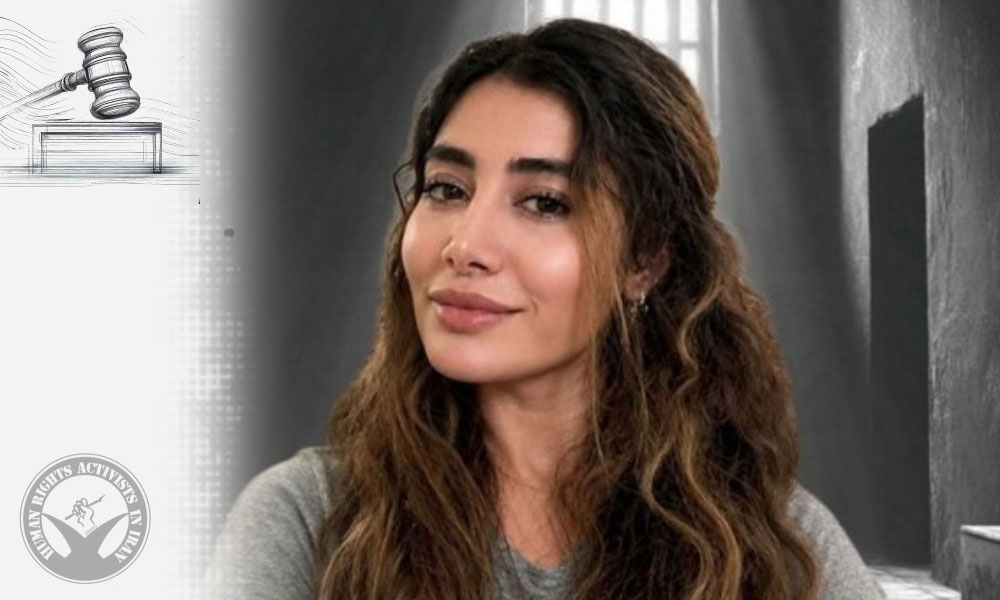
Homayra Sharifi Transferred to Hospital After Suicide Attempt in Evin Prison

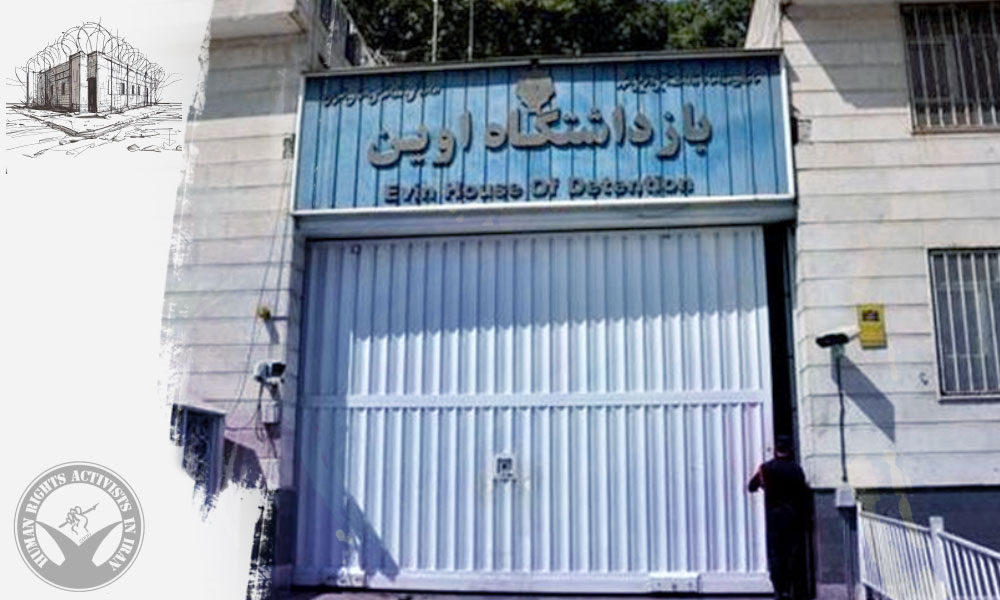
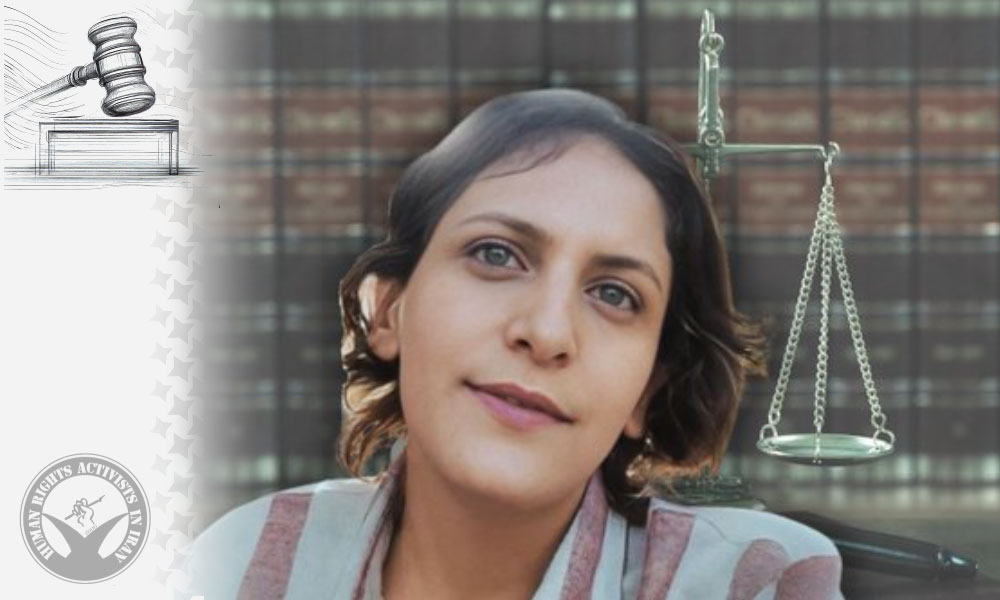
HRANA – Homayra Sharifi, one of the individuals arrested during the 2026 nationwide protests and currently imprisoned in Evin Prison, was transferred to a hospital on the evening of Friday, July 10, 2026, after attempting suicide. She remains under medical treatment. The Afghan national has previously attempted suicide multiple times in prison, yet no effective action has been taken to address her condition.

Based on information received by HRANA, Homayra Sharifi attempted suicide on the evening of Friday, July 10, 2026, by drinking a corrosive cleaning liquid. After her condition rapidly deteriorated, she was first transferred to Loghman Hospital and later to Taleghani Hospital, where she continues to receive treatment.

An informed source told HRANA: “Other prisoners found her in the ward corridor while she was vomiting blood and a black-colored liquid. She was extremely frightened. Since her arrest, she has attempted suicide more than five times in prison.”

The source added: “Before her arrest, Homayra Sharifi worked at a restaurant. She has no political affiliation and does not have a clear understanding of the current circumstances. She has effectively become a victim of having no support or anyone to advocate for her.”

In June of this year, Ms. Sharifi, an Afghan national, was formally notified of her five-year prison sentence while in Evin Prison. She suffers from a skin condition and severe psychological distress. Nevertheless, she has not received adequate medical or mental health care.

Homayra Sharifi, 19, was arrested during the 2026 nationwide protests and transferred to Qarchak Prison in Varamin. On February 16, 2026, she was transferred from Qarchak Prison to Evin Prison, where she has remained ever since.

HRANA’s investigation into the charges brought against this prisoner and the judicial authority that issued her sentence is ongoing.

Overcrowding Sparks Protests in Evin Prison’s Women’s Ward

HRANA – The transfer of approximately 60 female prisoners from Qarchak Prison in Varamin to Evin Prison has sparked protests among inmates over the management of Evin Prison. The transfer took place despite the women’s ward already suffering from overcrowding and a lack of adequate space. The protests escalated into a tense situation after prison guards intervened and threatened the prisoners.

According to HRANA, Evin Prison’s women’s ward experienced unrest and protests following the arrival of new prisoners and the resulting overcrowding.

On Sunday, July 12, between 2:30 p.m. and 4:00 p.m., approximately 60 women convicted of financial offenses were transferred from Qarchak Prison in Varamin to Evin Prison. According to information received by HRANA, 49 of them had been admitted to the women’s ward by the time this report was prepared, while the remaining prisoners were being held in quarantine. The transfer occurred despite the women’s ward already facing severe shortages of space and overcrowding. In response to the worsening conditions, prisoners in the ward protested the increased congestion and deteriorating living conditions. Following the protest, prison guards entered the ward and threatened the women prisoners, including by warning that “prisoners sentenced to death would be separated from the other inmates.”

A knowledgeable source told HRANA that Mahsa (Masoumeh) Nouri, an inmate in the ward, was transferred to solitary confinement as a disciplinary measure after protesting the situation.

So far, promises made by prison officials to address the issue have yielded no results.

It should be noted that Evin Prison’s women’s ward currently holds approximately 60 political and security prisoners, along with two children, and had already been struggling with insufficient space before the recent transfers. The arrival of dozens of additional prisoners has heightened concerns over worsening overcrowding, reduced living space per inmate, and the further deterioration of prisoners’ living conditions.

Prison overcrowding has long been a chronic problem in Iran’s prisons. Holding inmates beyond a facility’s capacity not only reduces the standard living space available to prisoners but also restricts access to healthcare, sanitary services, welfare facilities, and adequate living conditions, while increasing the physical and psychological pressures associated with imprisonment. Ensuring prisons operate within their standard capacity and providing conditions consistent with human dignity are among the requirements emphasized by international human rights standards governing the treatment of individuals during detention and imprisonment.

Homeyra Sharifi Sentenced to Five Years in Prison; Denied Medical Care in Evin Prison

HRANA – Homeyra Sharifi, one of those arrested during the January 2026 protests and currently imprisoned in Evin Prison, has been sentenced to five years in prison. The Afghan national is reportedly suffering from both physical and psychological health problems and has been denied adequate medical care.

The five-year prison sentence was recently communicated to Ms. Sharifi while she was being held in Evin Prison. According to information received by HRANA, she suffers from a skin disease and is experiencing serious psychological distress. Despite her condition, she has not received adequate medical or mental health care.

A source familiar with her situation told HRANA:

“Homeyra Sharifi does not possess identity documents. Since her transfer to Evin Prison, she has attempted suicide twice, the most recent incident occurring last week. After fellow prisoners expressed concern, she was sent for a single counseling session, but no effective follow-up care was provided afterward.”

Homeyra Sharifi was arrested during the nationwide January protests and transferred to Qarchak Prison in Varamin. On February 16, 2026, she was transferred from Qarchak Prison to Evin Prison, where she has remained ever since.

HRANA’s investigation into the charges brought against Ms. Sharifi and the authority that issued the sentence is ongoing.

Two Sisters of Executed Political Prisoner Arrested After Seeking Brother’s Body

HRANA – Akram and Azam Daneshvar-Kar, sisters of Akbar Daneshvar-Kar, an executed political prisoner, have been in detention for two weeks after being arrested by security forces and transferred to Qarchak Prison in Varamin.

Based on information received by HRANA, Akram and Azam Daneshvar-Kar, sisters of Akbar Daneshvar-Kar, the executed political prisoner, were arrested on April 18, 2026, after repeatedly approaching Ghezel Hesar Prison, the forensic organization, and judicial authorities to retrieve their brother’s body. They were subsequently transferred to Qarchak Prison in Varamin.
The charges brought against Akram Daneshvar-Kar, 54, and Azam Daneshvar-Kar include “assembly and collusion against internal security” and “disrupting public order.”

Akbar Daneshvar-Kar, along with five other political prisoners, was re-sentenced to death in December 2025 by Branch 26 of the Tehran Revolutionary Court, presided over by Judge Iman Afshari. Their death sentences had previously been overturned by the Supreme Court in July 2025, and their case was referred to a parallel court branch. His execution was ultimately carried out on March 30, 2026, at Ghezel Hesar Prison.

Execution of Six Prisoners in Various Prisons

HRANA – This report covers the execution of six prisoners in recent days on charges related to drug offenses and murder.

On October 25, a prisoner named Jamal Zare, a resident of Khorramabad, was executed in Bam Prison. According to information obtained by HRANA, Mr. Zare had previously been arrested on drug-related charges and later sentenced to death by the Revolutionary Court.

On October 27, a prisoner named Hamid Babaei was hanged in Sanandaj Prison. Based on HRANA’s information, Mr. Babaei had previously been arrested on a murder charge and sentenced to death by the Criminal Court.

On Sunday, November 2, another prisoner named Ashkan Mirali was executed in Dezful Prison. Mr. Mirali had also been arrested on a murder charge and later sentenced to death by the Criminal Court.

Yesterday, Monday, November 3, the death sentences of two prisoners convicted on drug-related charges were carried out in Adelabad Prison in Shiraz. HRANA has confirmed the identity of one of these prisoners as Mehran Hosseini.

Finally, HRANA has learned that yesterday, another prisoner named Yousef Khani, a resident of Varamin, who had also been sentenced to death on drug-related charges, was executed in Semnan Prison.

As of the time of this report, the executions of these prisoners have not been announced by prison authorities or official judicial sources.

In October alone, a total of 258 people were executed in Iran, a figure unprecedented since the beginning of this year.

Subscribe to Our Newsletter

Now is definitely not the time to stop reading!

Elham Salehi Sentenced to Prison and Additional Punishments

HRANA – Elham Salehi, a civil activist currently held in Qarchak Prison in Varamin, has been sentenced by Branch 23 of the Tehran Revolutionary Court to one year in prison and a two-year ban on social media activity.

The ruling, handed down by Branch 23 of the Tehran Revolutionary Court, was delivered to Ms. Salehi today. Under the verdict, she has been sentenced to one year of discretionary imprisonment, and as a complementary punishment, she is prohibited from engaging in social media activity for two years.

A source close to her family confirmed the news to HRANA, stating: “The verdict was served to Ms. Salehi this morning after she appeared before the mentioned judicial branch.”

Her trial session was held on Sunday, September 28, 2025. The charges brought against her included “propaganda against the regime,” “spreading false information,” and “appearing in public without hijab.”

The civil activist was transferred to Qarchak Prison on August 26, 2025, after being arrested in early August at her home in Tehran by security forces.

Elham Salehi, a 37-year-old civil activist based in Tehran, has previously faced judicial proceedings over her activism.

Court of Appeals: Five Christian Converts Sentenced to 41 Years and 10 Months in Prison

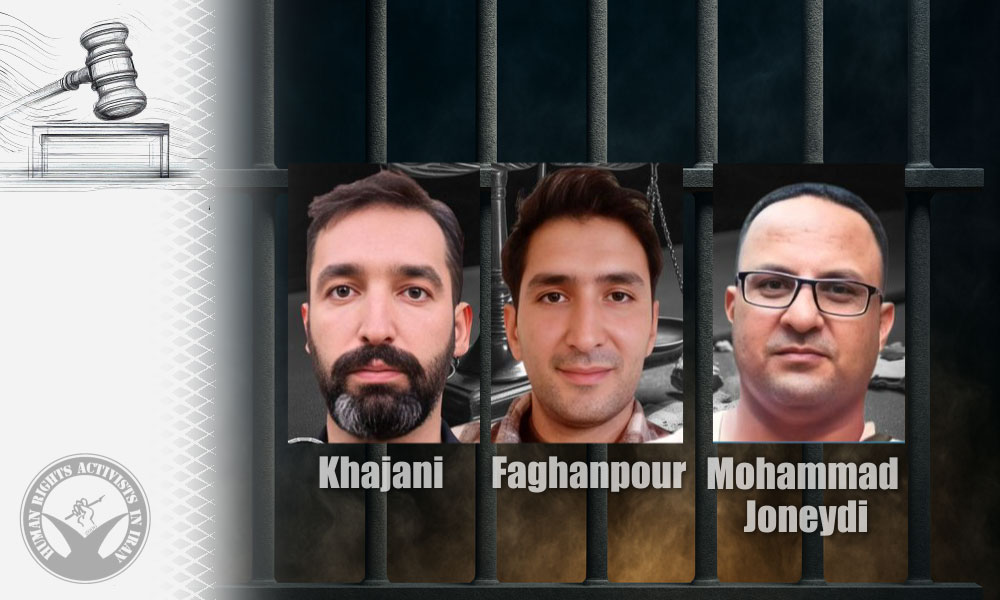
HRANA – The convictions of five Christian converts, including Hesamoddin (Yahya) Mohammad Joneydi, Morteza (Kalvin) Faghanpour Sasi, and Abolfazl (Benjamin) Ahmadzadeh Khajani, were upheld by Branch 36 of the Tehran Court of Appeals. These converts had previously been sentenced by Branch 1 of the Revolutionary Court of Varamin to a total of 41 years and 10 months in prison.

Based on a ruling issued by Branch 36 of the Tehran Court of Appeals on September 17 and recently delivered to the defendants, Hesamoddin (Yahya) Mohammad Jonidi, Abolfazl (Benjamin) Ahmadzadeh Khajani, and two other Christian converts who requested anonymity, were each sentenced to eight years and one month in prison. Morteza (Kalvin) Faghanpour Sassi received a sentence of eight years and eleven months in prison.

The breakdown of Morteza (Kalvin) Faghanpour Sasi’s sentence is as follows: seven years and six months in prison for “deviant educational and proselytizing activities contrary to and disruptive of Islamic Sharia law in connection with contacts abroad”, seven months for “propaganda against the regime”, and 17 months for “insulting the Supreme Leader.”

Meanwhile, Hesamoddin (Yahya) Mohammad Jonidi, Abolfazl (Benjamin) Ahmadzadeh Khajani, and the two unnamed Christian converts were each sentenced to seven years and six months in prison on the charge of “deviant educational and proselytizing activities contrary to and disruptive of Islamic Sharia law in connection with contacts abroad”, plus seven months in prison for “propaganda against the regime.”

The initial ruling against them had been issued on July 16 by Branch 1 of the Revolutionary Court of Varamin, presided over by Judge Ashkan Ramesh.

According to information obtained by HRANA, the charges were based on accusations such as the illegal distribution of Christian books, participation in several online universities abroad for studies and training in evangelism and Christian teachings, and the publication of a caricature of the Supreme Leader of the Islamic Republic on social media.

It should be noted that another part of the case, concerning the charge of “insulting the sacred,” has been referred to Branch 104 of the Criminal Court Two of Varamin, presided over by Judge Mohammad Hossein Esmail Morineh. A hearing on this charge is scheduled for October 7.

Faghanpour , a Christian convert from Varamin, was arrested by security forces on June 13 and transferred to Evin Prison. Following his arrest, agents searched his home and confiscated books, religious images, and his mobile phone. He was later released temporarily after posting two salary slips as bail.

Hesamoddin (Yahya) Mohammad Jonidi, 45 years old, was arrested by security forces in November 2024 and taken to Ward 209 of Evin Prison. He was eventually released after posting bail of 1.5 billion tomans.

Morteza Faghanpour, Christian Convert, Sentenced to 8 Years and 11 Months in Prison

HRANA – Morteza Faghanpour Sasi, a Christian convert from Varamin, has been sentenced by Branch 1 of the city’s Revolutionary Court to eight years and eleven months in prison.

The verdict, issued on July 16 by Judge Ashkan Ramesh, includes seven years and six months in prison on the charge of “educational and promotional activities deemed deviant and contrary to Islamic Sharia, in connection with foreign countries.” He was also given an additional 17 months for insulting the Supreme Leader. Following his appeal, the case has been referred to Branch 36 of the Tehran Court of Appeals, presided over by Judge Ahmad Zargar.

A source close to the Faghanpour family told HRANA: “Evidence presented against him included the alleged illegal distribution of Christian literature, enrollment in several online foreign universities to study evangelism, and publishing a caricature of the Supreme Leader on social media.”

HRANA has also learned that a separate part of his case, concerning the charge of insulting sacred beliefs, has been referred to Branch 104 of the Criminal Court II in Varamin, presided over by Judge Mohammad Hossein Esmail Morineh. The trial on this charge is scheduled for October 7.

Morteza (Calvin) Faghanpour Sasi, son of Abbas, was arrested on June 14 by security forces and transferred to Evin Prison. After his arrest, agents searched his residence and confiscated books, religious images, and his mobile phone.

He spent one month under interrogation in Ward 240 of Evin Prison, followed by 20 days in Ward 209. Unable to post bail, he remained for four months in Ward 8 before being temporarily released after providing two salary slips.

It should be noted that HRANA recently reported on the sentencing of Hesamoddin (Yahya) Mohammad Joneydi, another Christian convert from Varamin and a co-defendant in this case, who received eight years and one month in prison.

Qarchak Varamin Prison: Repeated Deaths Caused by Lack of Medical Care and Treatment Facilities

HRANA – Repeated Deaths in Qarchak Varamin Prison Amid Medical Neglect and Lack of Treatment Facilities

Systematic violations of prisoners’ rights in Qarchak Varamin Prison, particularly the denial of medical care, continue to result in fatalities. Inadequate access to health services and delays in transferring prisoners to hospitals remain among the most critical issues, repeatedly leading to preventable deaths.

In the most recent case, Somayeh Rashidi, a political detainee, died yesterday after prison doctors misdiagnosed her condition and failed to transfer her to a hospital in time. On Tuesday, September 16, she was eventually taken to Mofatteh Hospital in Varamin after her health deteriorated. By then, her level of consciousness was critically low, and doctors described her condition as beyond recovery.

Less than a week earlier, on Friday, September 19, Jamileh Azizi, a prisoner convicted of financial charges, also died following medical neglect. She was taken to the prison infirmary with symptoms of a heart attack. Despite clear warning signs, doctors dismissed her condition and sent her back to her ward, where she soon died in Moshar 2.

Today, HRANA also confirmed the death of Sudabeh Asadi, another prisoner held on financial charges, further underscoring the lethal consequences of medical deprivation in this facility.

A former staff member of Qarchak told HRANA:

“One of the prison’s most serious problems is poor medical care. The infirmary doesn’t even have a blood pressure monitor. Oxygen tanks are often empty, the ECG machine is broken, and no defibrillator is available. Transfers to hospitals face complicated procedures and are frequently blocked.”

He continued:

“Medical diagnoses are often incorrect, and prisoners are regularly accused of faking illness. Medicine is in short supply—sometimes a single bottle of syrup is given to all prisoners with a common cold. Because of overcrowding, each prisoner is allowed only one infirmary visit per month. Even basic equipment such as stretchers and wheelchairs is missing, severely limiting urgent care.”

A prisoner recently told family members about the behavior of medical staff:

“When we go to the infirmary, not only are we not properly examined, but we’re insulted with comments like, ‘You’re not dead yet,’ ‘Why do you keep coming here?’ and ‘I wish you’d die sooner.’”

According to HRANA’s information, several political prisoners—including Raheleh Rahemipour, Parvin Mirasan, Maryam Akbari Monfared, Marziyeh Farsi, and Shiva Esmaeili—suffer from multiple health problems. The number of non-political prisoners facing similar conditions remains unknown, though investigations are ongoing.

Qarchak Varamin Prison holds at least 1,000 inmates. A former employee told HRANA:

“The prison has at least 11 wards. Political prisoners are held in quarantine, financial prisoners and sick detainees in Moshar 2, and foreign nationals are housed among other prisoners depending on their charges.”

Additional concerns include frequent power and water outages, lack of cooling systems that contribute to widespread skin diseases, broken bathroom facilities that force inmates to queue for long periods, and failed ventilation that worsens already poor hygiene.

Food quality is another major issue. A relative of one inmate explained:

“Meals for prisoners convicted of general crimes are both smaller and of lower quality than those for others. If chicken is on the menu, they only get a few shredded scraps floating in broth—no real pieces of chicken in the stew.”

Following Israeli strikes on Evin Prison, HRANA reported the large-scale transfer of female political prisoners from Evin to Qarchak. Since then, those placed in Ward 11 (formerly the quarantine ward) have faced severe overcrowding, lack of ventilation, shortages of essential items, and discriminatory treatment by officials—conditions that families continue to raise concerns about, but which remain unresolved.

Following Delay in Hospital Transfer; Somayeh Rashidi Dies

HRANA- Somayeh Rashidi, a detained citizen, died in hospital on the morning of Thursday, September 25, after prison officials delayed her transfer to medical facilities and failed to provide adequate medical care.

On September 16, her health sharply deteriorated, and she suffered a severe seizure. In a state of severely reduced consciousness, she was transferred from Qarchak Prison in Varamin to Mofatteh Hospital, where she later passed away.

A source close to her family told HRANA:
“Ms. Rashidi had long complained of health problems, but prison officials, despite her repeated visits to the infirmary, refused to take her condition seriously. On some occasions, they even accused her of faking illness. She was only given psychiatric and sedative medications, which further worsened her health. On September 15, she suffered a severe seizure and was taken to Mofatteh Hospital with a consciousness level of five. According to hospital doctors, the delay in her transfer was the primary cause of her irreversible deterioration.”

The Judiciary’s media center, while confirming her death, claimed that upon entering prison, Ms. Rashidi disclosed an addiction to synthetic drugs as well as a history of psychiatric disorders and seizures. Mizan News Agency further alleged that she had been prescribed and received all necessary medications by prison doctors.

The Judiciary also stated that during her detention, Ms. Rashidi was examined eight times by a general practitioner, six times by psychiatric and internal medicine specialists, and was twice referred to forensic authorities for psychological evaluation.

However, information obtained by HRANA indicates that her condition steadily declined throughout detention, and that the medical care provided was inadequate and, at times, substandard. Her family had previously expressed concern over her health, but their warnings went unheeded.

Instead of addressing the circumstances of her death, Judiciary-affiliated outlets focused their reporting on her alleged background, claiming links to the People’s Mojahedin Organization of Iran (MEK) and past arrests on similar accusations. They further alleged involvement in sabotage activities, while failing to acknowledge the delays in her transfer to hospital, the medical neglect she endured, or the state’s legal responsibility for her health and safety in custody. Publishing such claims posthumously, without verifiable evidence, raises concerns that officials are attempting to deflect accountability for her death.

Ms. Rashidi was arrested on April 25 of this year for writing slogans in the Javadieh neighborhood of Tehran. After two days in custody at the 15 Khordad Police Investigation Center, she was transferred to the women’s ward of Evin Prison. Following the Israeli attack on Evin Prison, she and dozens of other women were relocated to Qarchak Women’s Prison in Varamin.

Throughout her detention, Ms. Rashidi struggled with ongoing medical issues and lack of adequate care. A source close to her family told HRANA:
“Somayeh Rashidi had a history of psychiatric disorders that appeared periodically. These episodes caused loss of concentration and impaired movement, at times leaving her unable to walk or manage daily tasks without the help of fellow prisoners.”

Somayeh Rashidi was born in 1983 and lived in Tehran.