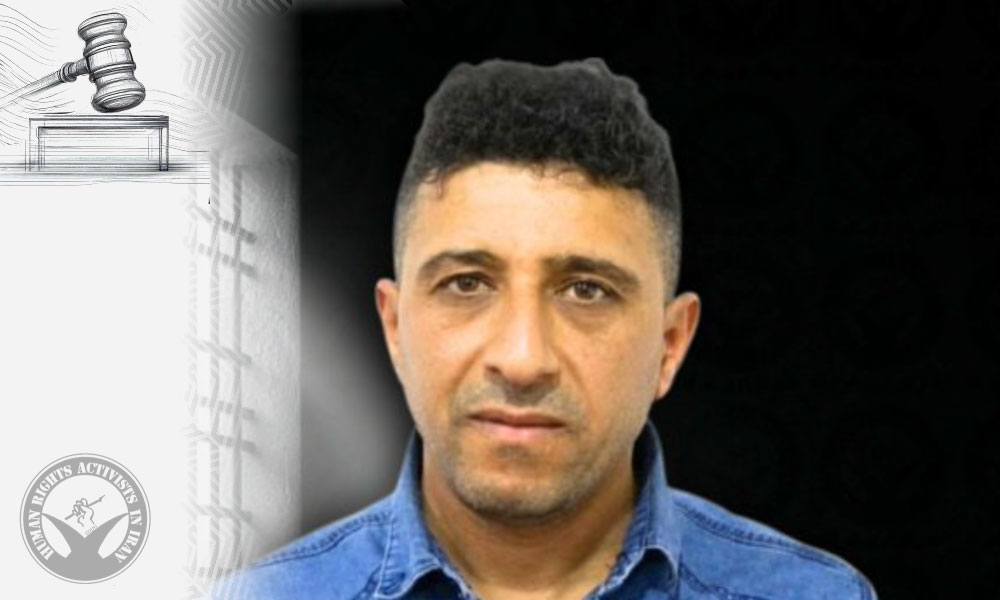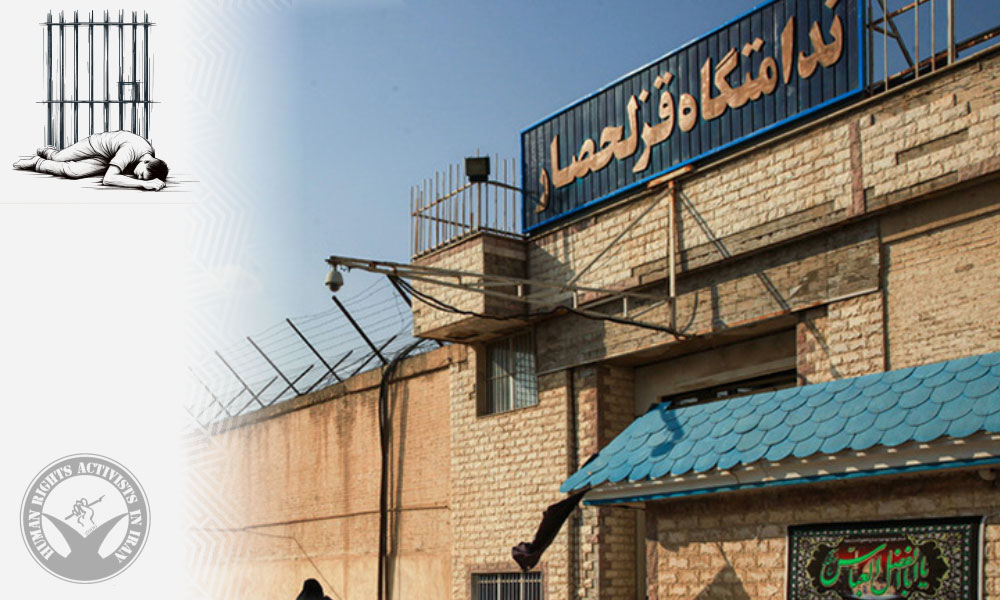
HRANA – Following the acceptance of a request to consolidate sentences, the Gilan Province Court of Appeals revoked the previous convictions of Vadood Asadi, an Azerbaijani-Turk activist imprisoned in Evin Prison, and sentenced him in a new ruling to eight years and one month in prison. He had previously been sentenced to a total of six years and three months of imprisonment in two separate cases.
According to HRANA, after accepting the request for sentence consolidation, Branch 11 of the Gilan Province Court of Appeals, presided over by Mohammad Sadegh Iran-Aghideh and Esmaeil Rostami Taromsari, annulled Mr. Asadi’s previous sentences and issued a new verdict.
Under this ruling, Mr. Asadi was sentenced to:
• Six years and one month in prison on charges of “assembly and collusion against national security”;
• Eight months in prison for “propaganda against the regime in favor of anti-regime and opposition groups”;
• Sixteen months in prison for “insulting the Supreme Leader”.
Additionally, a hearing concerning charges brought against Mr. Asadi in a case opened against him during his imprisonment was held on April 25, 2026. Mr. Asadi, along with Morteza Parvin, Taher Naghavi, Mahmoud Ojaghlou, and three other defendants in the case, refused to attend the court session.
In March 2026, an interrogation session for Taher Naghavi, a lawyer, and imprisoned Azerbaijani-Turk activists Morteza Parvin-Joda, Vadood Asadi, Ayaz Seifkhah, Karam Mardaneh, and Araz Aman was held via videoconference. During the session, investigator Nasser Jalayi formally charged the prisoners with propaganda against the regime. Their hunger strike, publication of protest statements, and support for the nationwide protests of December 2025 were cited as the reasons for opening the case.
In May 2025, Vadood Asadi, an Azerbaijani-Turk activist, was sentenced by Branch 11 of the Gilan Province Court of Appeals to a total of five years and six months in prison on charges of propaganda against the regime, membership in anti-regime groups, and insulting the Supreme Leader.
Earlier, in late October 2024, in a separate case, Branch 15 of the Tehran Revolutionary Court, presided over by Judge Abolghasem Salavati, sentenced Mr. Asadi to four years of discretionary imprisonment on charges of assembly and collusion with the intent to disrupt national security. This prison sentence was later covered by an amnesty and reduced to one year of imprisonment. After he accepted the verdict, one-fourth of his remaining sentence was further reduced, and he was ultimately sentenced to nine months in prison.