
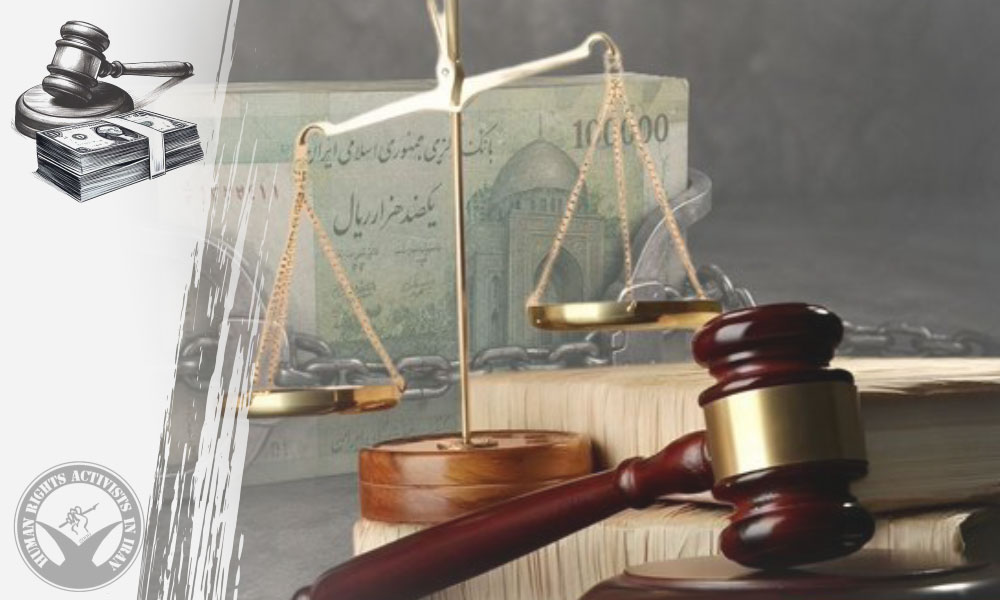
Iranian Judiciary Seizes Assets of More Than 200 People Over Alleged Cooperation with the Enemy

HRANA – The spokesperson for Iran’s judiciary announced that more than 200 assets belonging to individuals accused of “collaborating with the enemy” and acting against national security have been identified and seized.

According to HRANA, citing ISNA, the judiciary spokesperson stated that the judicial system is vigorously pursuing the identification and seizure of assets belonging to individuals whom he described as having “betrayed the homeland.”

Asghar Jahangir said that more than 200 assets linked to these individuals have so far been identified and confiscated. He stated: “The judiciary’s approach to confiscating the assets of those who betray their homeland and, by providing intelligence to the enemy, seek to impose war on our society is intended to serve as a deterrent.”

Jahangir further added that efforts to identify and seize additional assets belonging to the targeted individuals are ongoing and will continue until a final outcome is achieved.

The judiciary spokesperson did not provide details regarding the identities of those affected, the legal basis for the asset seizures, the number of cases involved, or the status of judicial proceedings against them.

Following the start of military attacks on Iran, Gholamhossein Mohseni Ejei, the head of the judiciary, announced that judicial orders had been issued to confiscate and seize assets connected to what he described as “elements collaborating with the enemy inside and outside the country.” He also threatened such individuals with execution, stating: “One of the prescribed punishments in such cases is execution, and following investigations, one of the legal punishments will be applied to those concerned.”

After the judiciary issued this directive, the “Saham” smart financial inquiry system was launched. Through this system, prosecutor’s offices and courts across the country can quickly and electronically identify citizens’ assets and property and take the necessary steps to seize them.

The judiciary has not disclosed further information about the implementation of these measures or the safeguards available to those whose assets have been targeted.


3,121 Prosecuted, 2,406 Held Under Iran’s Espionage Law

HRANA – The spokesperson for Iran’s judiciary announced that 3,121 individuals across the country have been subjected to legal prosecution on charges including “operational actions in favor of Israel, security-related offenses, collaboration with Israel, media and propaganda activities benefiting Israel, and possession or trade of communication equipment, including Starlink.” According to him, 2,406 of these individuals have been arrested and remain in detention.

According to HRANA, citing ILNA, the judiciary spokesperson provided details regarding judicial measures taken under the framework of the “Law on Intensifying Punishment for Espionage and Collaboration with Israel.”

Asghar Jahangir stated: “In this regard, a total of 3,121 individuals have come under judicial prosecution. Of these, 2,406 have been arrested and remain in detention. So far, 1,000 indictments have been issued against these individuals.”

He added that these citizens were identified and arrested by the IRGC Intelligence Organization, the Ministry of Intelligence, and the Law Enforcement Command (FARAJA). He further explained: “Twenty percent of these individuals are being prosecuted for operational actions in favor of Israel, while 22% face charges related to security, economic, military, and financial activities. Approximately 7% have been charged with collaboration and assistance to Israel, 43% with cooperation in political, cultural, media, and propaganda activities benefiting Israel, and 7% with possession or buying and selling electronic equipment, including Starlink.”

Jahangir also referred to judicial measures aimed at identifying and seizing the assets of individuals he described as “affiliated with the enemy.” He said that the assets of hundreds of such individuals have so far been identified and confiscated. According to him, these assets will be formally expropriated following judicial proceedings and the issuance of court rulings.

Earlier, Judiciary Chief Gholamhossein Mohseni Ejei announced the issuance of judicial orders to seize the assets of individuals described as “collaborators with the enemy” and warned that such individuals could face the death penalty. Subsequently, an online system for checking citizens’ assets was launched, enabling judicial authorities to identify and seize property. Since then, numerous reports have been published regarding the confiscation of assets belonging to a number of citizens.

Pardon and Sentence Reduction Granted to 115 Security Prisoners

HRANA – The spokesperson for Iran’s Judiciary announced that the Supreme Leader has agreed to the conditional pardon and sentence reduction of 115 individuals convicted on security-related charges. According to the spokesperson, this process will continue until late December, when the final number of pardoned individuals will be officially announced.

According to HRANA, quoting IRIB (Islamic Republic of Iran Broadcasting), the Judiciary’s spokesperson provided details regarding the number of prisoners granted conditional pardon and sentence reductions.

On Tuesday, October 28, Asghar Jahangir stated that Ali Khamenei, the Supreme Leader, had so far approved the conditional pardon and commutation of sentences for 115 security prisoners on the occasion of the birth anniversaries of the Prophet of Islam and the sixth Shia Imam.

Mr. Jahangir added that this process will continue until the end of December, when the final figures will be made public. He also promised that with the inclusion of additional cases, a greater number of security prisoners will benefit from this pardon.

Earlier, in September 2025, state media reported that the Supreme Leader had approved the Judiciary Chief’s proposal for the pardon and reduction of sentences for certain convicts. Official news agencies clarified that this pardon only applies to prisoners in so-called “security” cases whose sentences were issued at least five years ago and who have not engaged in any “anti-security” activities or statements during that time. Furthermore, the person’s sentence must not yet have been fully executed, a condition that effectively excludes many political and ideological prisoners.

In addition, a wide range of offenses, including “security-related crimes,” espionage, and collaboration with hostile states,” were explicitly excluded from eligibility for the pardon.

20 Arrested on Espionage Charges in Connection with 12-Day Israel-Iran War

HRANA – The Judiciary spokesperson has announced the arrest of 20 people across several provinces, accusing them of spying for Israel during the recent 12-day war with Iran. He said the cases are currently under investigation, with results to be announced once inquiries are complete.

Quoting ISNA, HRANA reports that Asghar Jahangir stated the detainees face charges of espionage and collaboration with Mossad, alleging their activities were connected to the 12-day Israel-Iran conflict.

Citing an earlier statement from the Ministry of Intelligence, Jahangir noted that the cases remain under review by interrogators. That statement had also reported the summons and arrest of 98 citizens over media-related activities.

Jahangir added that some individuals detained before the conflict allegedly confessed to missions tied to the war, while charges against others were altered or dropped. “A person may be arrested on suspicion of espionage, but later, during the investigation, the charges may be dismissed,” he said.

Describing espionage cases as “complex and sensitive,” Jahangir claimed they must be handled carefully and with respect for the rights of the accused.

Although combating espionage is not considered a human rights violation, the Iranian government’s longstanding record of using such charges against political opponents means these claims—especially in the absence of clear details or transparent judicial proceedings—are widely met with skepticism.

Six Months On, No Word From Detained British Couple in Iran

HRANA – Joe Bennet, the son of Craig and Lindsay Foreman, the British couple arrested in Iran about six months ago on espionage charges, has voiced concern over his parents’ situation, saying they have had no contact with him since their detention.

According to HRANA, quoting BBC Persian, Bennet said he learned of his parents’ arrest roughly six months ago and has not heard their voices since. He added that, based on what he has been told, his father and mother are being held “in a three-by-three-metre cell.”

In late February, Judiciary spokesperson Asghar Jahangir stated that the couple had been arrested by Islamic Revolutionary Guard Corps (IRGC) intelligence agents and were accused of “espionage.” The family rejects the allegation.

On February 13, 2025, the Public and Revolutionary Prosecutor’s Office of Kerman Province announced in a statement that Hugo Shorter, the British ambassador to Iran, met with the two security detainees at the prosecutor’s office in the provincial capital.

The 52-year-old couple were detained in Kerman about six months ago. They had entered Iran on a round-the-world motorcycle trip and intended to travel on to Pakistan after a few days.

Iranian authorities have arrested numerous foreign nationals in recent years on charges such as espionage or cooperating with hostile states. While some have been released after prolonged negotiations, human-rights organizations and several Western governments accuse Tehran of using these detentions as political leverage—an accusation Iranian officials consistently deny.

Subscribe to Our Newsletter

Now is definitely not the time to stop reading!

Iran Sentences Three to Death on Alleged Espionage and Assassination Equipment Charges

According to Mizan, the judiciary’s news agency, three individuals have been sentenced to death on charges of “espionage.”

Judiciary Spokesperson Asghar Jahangir reported that eight individuals were initially arrested in West Azerbaijan Province in connection with the case. Out of these, three were brought to trial and sentenced to death on espionage charges.

Jahangir further alleged that these individuals used alcohol smuggling as a cover to transport “assassination equipment” meant for Mohsen Fakhrizadeh Mahabadi, the former Deputy Defense Minister and a senior figure in Iran’s nuclear program. Fakhrizadeh was killed on November 27, 2020, in an attack involving a car explosion and gunfire exchange between his security team and assailants.

The defendants’ case is currently under appeal, and Jahangir indicated that a separate case is also underway regarding other individuals allegedly linked to Fakhrizadeh’s assassination. However, he provided no additional details.

Though espionage prosecution is generally outside the scope of human rights concerns, Iran’s history of leveraging such charges as political tools often raises skepticism about the legitimacy of these accusations.