Revolutionary Court in Kerman Sentences Three Baha’i Citizens to Eight Years in Prison Each

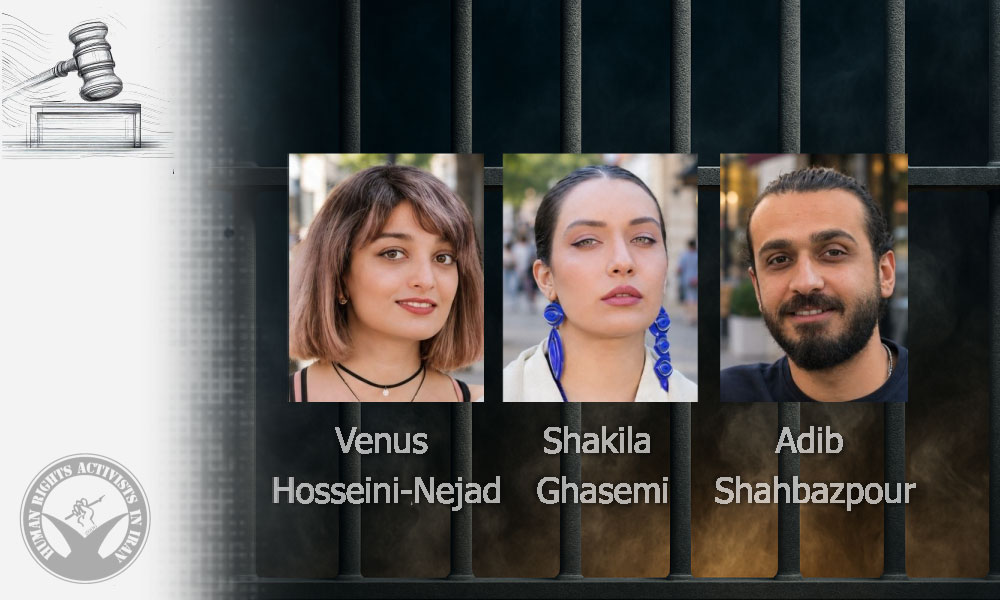
HRANA – Venus Hosseini-Nejad, Shakila Ghasemi, and Adib Shahbazpour, three Baha’i citizens residing in Kerman, have each been sentenced to eight years in prison by Branch 5 of the Revolutionary Court of Kerman.

According to HRANA, citing IranWire, Venus Hosseini-Nejad, Shakila Ghasemi, and Adib Shahbazpour have been sentenced to a combined 24 years in prison.

According to the report, on October 31, 2026, Branch 5 of the Revolutionary Court of Kerman issued verdicts against these Baha’i citizens on charges including “membership in a group,” “assembly and collusion,” and “propaganda against the regime.” Under the rulings, Venus Hosseini-Nejad, Shakila Ghasemi, and Adib Shahbazpour were each sentenced to eight years in prison.

In connection with the same case, two other Baha’i citizens, and , have also been sentenced to a combined total of more than 24 years in prison.

was released from Kerman Prison on bail on August 15, 2026. She had previously been by security forces at her residence in Kerman on February 2, 2026.

was arrested by security forces on January 18, 2026, in connection with nationwide protests, while was arrested on January 15 of the same year. Both were subsequently released on bail.

Over the past decade, the Baha’i community in Iran has been subjected to more security and judicial actions than any other religious minority. An examination of HRA’s annual reports indicates that, over the past year, an average of 62.41% of reported religious minority rights violations involved violations of the rights of Baha’i citizens.
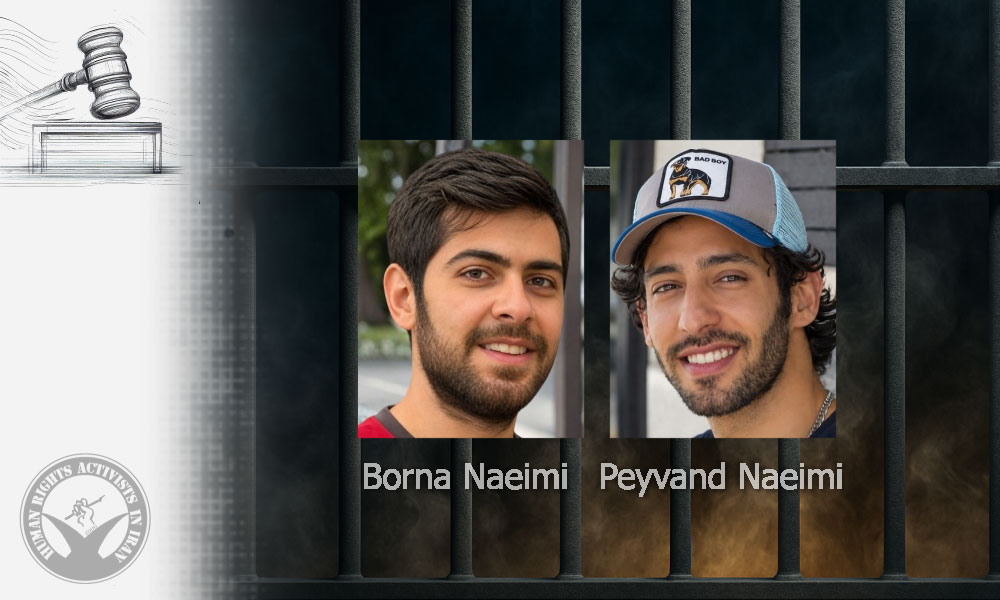
Peyvand and Borna Naeimi, Two Baha’i Citizens, Sentenced to a Combined Prison Term of More Than 20 Years

HRANA – Peyvand and Borna Naeimi, two Baha’i citizens held in Kerman Prison, have been sentenced to prison by Branch 5 of the Kerman Revolutionary Court. According to the verdicts, Peyvand Naeimi was sentenced to 12 years, six months, and one day in prison, while Borna Naeimi received an eight-year prison sentence.

According to HRANA, citing IranWire, Peyvand Naeimi and Borna Naeimi have been sentenced to a combined prison term of more than 20 years.

The report states that Branch 5 of the Kerman Revolutionary Court issued the sentences against the two Baha’i citizens, who are cousins. Under the verdicts, Peyvand Naeimi was sentenced to 12 years, six months, and one day in prison, while Borna Naeimi was sentenced to eight years.

No precise information is currently available regarding the charges that led to the prison sentences against these two citizens.

Previously, a source familiar with the situation of the two Baha’i citizens told HRANA that Peyvand Naeimi’s court hearing had been scheduled for September 18, 2026. Borna Naeimi was also tried via video conference by the Kerman Revolutionary Court on May 25, 2026, on charges including “acting against national security and forming a group with the intention of overthrowing the government.”

Peyvand Naeimi was arrested by security forces at his workplace on January 8, 2026, and transferred to Kerman Prison. He was held in solitary confinement at the prison and subjected to mock execution and torture in an effort to extract forced confessions. In response, the Baha’i International Community issued a statement expressing concern over his fate.

On February 1, 2026, a video showing Peyvand Naeimi’s forced confessions was broadcast on state television. The circumstances under which the video was recorded remain unclear. On February 26, he was also transferred to an Islamic Revolutionary Guard Corps (IRGC) detention facility before being returned to Kerman Prison.

Borna Naeimi, a 29-year-old Baha’i citizen, father of a three-year-old child, and resident of Kerman, is Peyvand Naeimi’s cousin. He was arrested by IRGC intelligence agents on March 1, 2026.

Similarly, the Baha’i International Community expressed concern over his fate in a statement, reporting that Borna Naeimi had been subjected to mock executions on two occasions in an effort to extract forced confessions.

Over the past decade, the Baha’i community in Iran has been subjected to security and judicial crackdowns more than any other religious minority. A review of HRA’s annual reports shows that, over the past year, an average of 62.41% of reports concerning religious minorities documented violations of the rights of Baha’i citizens.
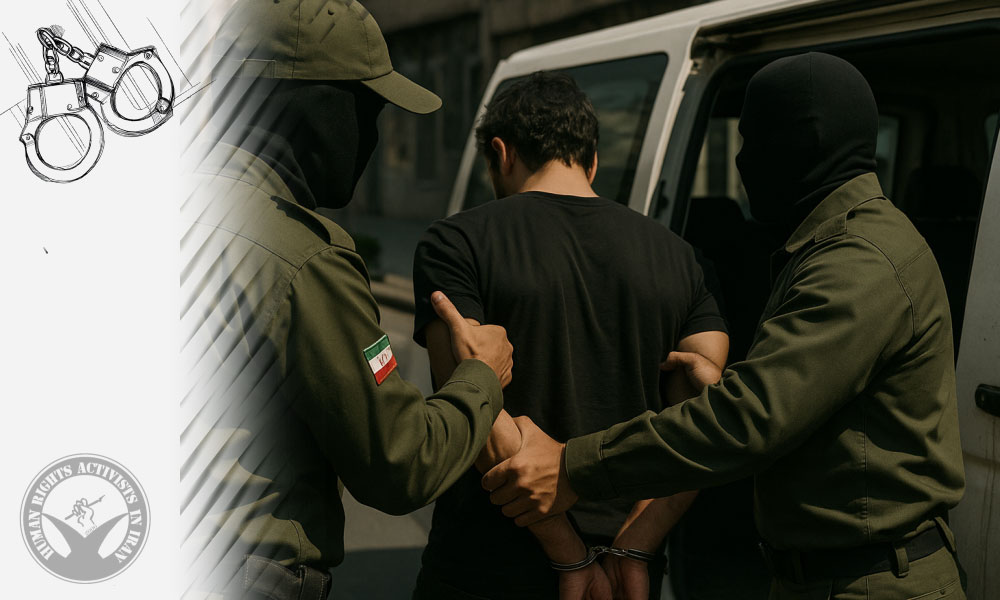
Denied Medical Care: A Report on the Latest Situation of Teacher Hadi Jalali in Jiroft Prison

HRANA – Hadi Jalali, a teacher residing in Kerman and a political prisoner held in Jiroft Prison, has been denied access to his prescribed medications and adequate medical care despite suffering from mental health conditions.

According to HRANA, Hadi Jalali remains deprived of access to his medications and appropriate medical treatment.

An informed source close to Jalali’s family told HRANA: “Mr. Jalali, who is serving his prison sentence in Jiroft Prison, has been denied access to his medications despite suffering from mental health conditions.”

The source added: “He is being held in a ward designated for prisoners convicted of ordinary criminal offenses, in violation of the principle of separation of prisoners based on the nature of their offenses. He is also forced to sleep on the floor due to the lack of a bed and has been deprived of basic prison facilities.”

Jalali was transferred to Jiroft Prison in August 2026 to begin serving his prison sentence.

On June 9, 2026, Branch 7 of the Kerman Province Court of Appeals upheld the teacher’s conviction in full. He had previously been sentenced by the lower court to two years and seven months in prison on the charge of “disrupting national security.” His trial was held on February 11, 2025, before Branch 1 of the Revolutionary Court in Kerman.

The allegations cited as grounds for the charge against the teacher included “exchanging information with individuals linked to Israel” and “media and propaganda activities.”

Hadi Jalali, a teacher residing in Kerman, was arrested by security forces in August 2024 and was released after approximately one month upon posting bail of one billion tomans.

He had also been briefly detained on two separate occasions in April and May 2024.

Several Citizens Arrested in Kerman Province on Security-Related Charges

HRANA – The Prosecutor General and Revolutionary Prosecutor of Kerman Province’s capital announced the arrest of members of a group by IRGC Intelligence agents on security-related charges, including propaganda activities.

According to HRANA, citing ISNA, several citizens have been arrested by security forces in Kerman Province.

On Thursday, October 15, the Prosecutor General and Revolutionary Prosecutor of Kerman announced that these citizens had been arrested by IRGC Intelligence agents. He claimed that the detainees were members of a group affiliated with opponents of the government.

Elaborating on the allegations against these individuals, Mehdi Bakhshi stated: “Through organized connections, members of this group were pursuing activities deemed to be against national security, including setting fire to buildings and engaging in propaganda activities aimed at advancing the objectives of counterrevolutionary groups.”

The report provided no further details, including the identities or number of those arrested, the exact dates of their arrests, or their current whereabouts.

Ali-Sina Mostafavi Executed in Kerman

HRANA – Today, October 14, 2026, the Judiciary’s Media Center announced the execution of Ali-Sina Mostafavi, a prisoner accused of moharebeh (enmity against God), in Kerman. His death sentence was carried out after being upheld by the Supreme Court.

According to HRANA, citing Mizan News Agency, the death sentence of Ali-Sina Mostafavi was carried out in Kerman.

The Judiciary’s Media Center claimed that on March 24, 2026, Mostafavi opened fire in Azadi Square in Kerman, injuring a civilian and a young girl. According to the same source, he also fired shots at conscript soldiers and passing vehicles on April 21, 2026, and on two occasions fired toward the Kerman–Mahan Highway Police.

The center described Mostafavi as a “monarchist” and stated that he had participated in the protests of January 2026, during which he allegedly sent videos and photographs to media outlets based outside Iran. It further claimed that during the war, he filmed locations struck by projectiles and provided the footage to these outlets.

According to the report, following Mostafavi’s identification and arrest, security personnel searched his hiding place and discovered firearms, ammunition, and Molotov cocktails.

The charges brought against him included “moharebeh with the intent to spread fear and terror, attempted murder, intentionally causing bodily harm through gunfire, brandishing a firearm, manufacturing and possessing explosives, and drawing a weapon with the intent to threaten people’s lives and intimidate them.” Contact with foreign-based media outlets was also among the allegations raised in his case.

According to Mizan, the court issued the death sentence based on evidence in the case file, field investigations, reports from judicial officers, and confessions attributed to the defendant. The report also claimed that the trial was held in the presence of his lawyer.

Ultimately, following the rejection of his appeal and the Supreme Court’s confirmation of the verdict, Ali-Sina Mostafavi’s death sentence was carried out.

The published report did not provide information regarding the exact date of his arrest, the court branch that handled his case, the date of the initial verdict, or details of the judicial proceedings. It also remains unclear to what extent Mostafavi had access to a lawyer of his own choosing during his detention and trial.

Subscribe to Our Newsletter

Now is definitely not the time to stop reading!

Two Prisoners Executed in Kerman Prison on Drug-Related Charges

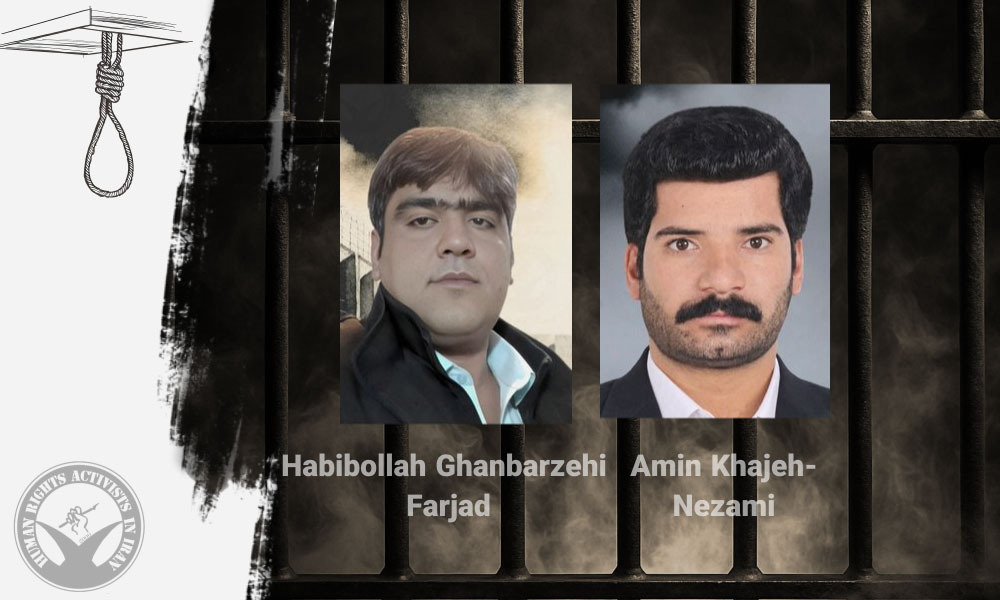
HRANA – At dawn today, two prisoners who had previously been sentenced to death on drug-related charges were executed in Kerman Prison.

According to HRANA, citing Haal Vsh, a prisoner was executed at dawn on Monday, October 12, 2026, in Kerman Prison. He has been identified as Amin Khajeh-Nezami, 33, son of Mehdi, the father of three children, from Rigan County.

According to the report, Mr. Khajeh-Nezami was arrested in Kerman in 2022 on drug-related charges and subsequently sentenced to death by the Revolutionary Court of Kerman.

The Balochistan Human Rights Documentation Network identified the second prisoner as Habibollah Ghanbarzehi Farjad, 38, a married father from Zahedan.

According to the report, Mr. Ghanbarzahi Farjad was arrested in Kerman in November 2023 on drug-related charges and subsequently sentenced to death by judicial authorities. He worked as a driver and had denied the charges against him.

His family visited Kerman Prison on the evening of yesterday, for a final meeting with him. Mai Sato, the United Nations Special Rapporteur on the situation of human rights in Iran, had previously expressed concern over the possibility of Habibollah Ghanbarzehi Farjad’s execution.

At the time of this report, the executions had not been officially announced by prison authorities or other relevant institutions.

Between October 10, 2025, and October 8, 2026, HRANA documented at least 2,003 executions across Iran, based on 1,857 reports, representing an increase of approximately 29% compared to the previous reporting period. During the same period, HRANA also documented 230 death sentences. For more detailed statistics and analysis of executions in Iran, read HRANA’s latest comprehensive report.

Teacher Hadi Jalali Sentenced to Prison

HRANA – The conviction of Hadi Jalali, a teacher residing in Kerman, has been upheld in full by Branch 7 of the Kerman Province Court of Appeals. He had previously been sentenced to two years and seven months in prison by the Revolutionary Court.

According to a report by HRANA, citing the Coordinating Council of Iranian Teachers’ Trade Associations, Hadi Jalali has been sentenced to imprisonment.

According to a ruling issued by Branch Seven of the Kerman Province Court of Appeals on June 9, 2026, Mr. Jalali was sentenced to two years and seven months in prison on the charge of disrupting the country’s security.

The report states that the appellate court’s decision was issued only eight days after the case was referred to the court, without holding a defense hearing and without giving him an opportunity to present explanations.

The hearing on the charges against Hadi Jalali was held on February 11, 2025, in Branch One of the Revolutionary Court of Kerman. In the initial proceedings, the court sentenced him to the same term of imprisonment.

“Exchanging information with individuals linked to Israel and engaging in media and propaganda activities” were cited as examples of the charges brought against this teacher.

In September 2024, Mr. Jalali was formally charged by Branch Five of the Public and Revolutionary Prosecutor’s Office in Kerman, and the indictment in his case was issued in November of the same year.

Hadi Jalali, a teacher residing in Kerman, was arrested by security forces in August 2024 and was released after approximately one month upon posting bail of one billion tomans.

He had also been briefly detained on two separate occasions in April and May 2024.

Appeals Court Upholds Prison Sentences of British Detainees Lindsay and Craig Foreman

HRANA – The prison sentences of Craig Foreman and Lindsay Foreman, two British citizens currently held in Evin Prison, have been upheld in full by the Court of Appeals. The couple had previously been sentenced to 10 years in prison each by Branch 15 of the Tehran Revolutionary Court on charges of “espionage.”

According to HRANA, citing BBC News, the Court of Appeals has upheld without modification the prison sentences imposed on Lindsay and Craig Foreman, a British couple imprisoned in Iran.

According to the report, the couple was not permitted to attend the appeals hearing. Following the confirmation of their sentences, their case has been referred to the Supreme Court.

In February 2026, Branch 15 of the Tehran Revolutionary Court, presided over by Judge Abolghasem Salavati, sentenced the couple to 10 years in prison each on charges of “espionage.”

According to the couple, “Despite appearing in court, no evidence was presented, and we were given no opportunity to defend ourselves.”

In May 2026, the couple launched a hunger strike to protest their detention conditions and the suspension of telephone contact with their family. As the strike has continued, Lindsay Foreman has reportedly experienced deteriorating health conditions, including weight loss, low blood sugar, and fluctuations in blood pressure.

Craig and Lindsay Foreman, who had entered Iran as part of a motorcycle journey around the world, were arrested by the IRGC Intelligence Organization in Kerman in December 2024. Judicial authorities had accused them of “espionage,” alleging that they collected information in several provinces under the guise of tourism and research activities.

The British ambassador to Iran at the time also met with the two defendants at the Kerman Prosecutor’s Office in February of that year.

In recent years, Iranian authorities have arrested several foreign nationals on charges such as espionage or cooperation with hostile governments. Some detainees have later been released following political negotiations. Human rights organizations and several Western governments have accused Iran of using such arrests as a means of political leverage, allegations that Iranian authorities have consistently denied.

British Couple Craig and Lindsay Foreman Go on Hunger Strike in Evin Prison

HRANA – Craig and Lindsay Foreman, two British citizens imprisoned in Evin Prison, have gone on strike in protest against their detention conditions and the suspension of their ability to make phone calls to their family.

According to BBC, a British couple imprisoned in Evin Prison has launched a hunger strike. The report states that Craig Foreman has been on hunger strike for approximately 12 days. Meanwhile, his 53-year-old wife, Lindsay Foreman, had temporarily suspended her strike after being promised contact with her family, but has since resumed it.

Before phone contact was cut off, the couple said in a conversation from inside Evin Prison that they would likely remain in detention for “a long time.” In this regard, Craig Foreman stated: “We are innocent people. We have committed no offence.”

Joe Bennett, the couple’s son, described the situation as “medical emergency in the making” and warned that their lives are at risk. He called for immediate action by the British government. Foreign Office Minister Hamish Falconer described the two as “innocent tourists” and called their case “an injustice.”

According to the report, in response to the continued detention of the two British citizens, a group of motorcyclists in Britain plans to hold a protest rally marking the 500th day of the couple’s detention. Supporters of the pair, including members of parliament, also intend to submit a petition to the Prime Minister’s Office calling for urgent action to secure their release.

In February 2026, Craig and Lindsay Foreman were each sentenced to 10 years in prison by Branch 15 of the Tehran Revolutionary Court, presided over by Judge Abolghasem Salavati, on charges of “espionage”, allegations they denied.

The British couple had been arrested in January 2025 during a motorcycle trip to Iran by intelligence forces affiliated with the Islamic Revolutionary Guard Corps in the city of Kerman.

At Least 32 People Arrested on Security-Related Charges in Several Provinces

HRANA  – The IRGC Intelligence Organization has announced the arrest of at least 32 individuals in the provinces of Qazvin, Kerman, and Chaharmahal and Bakhtiari. The agency stated that the charges against these individuals include “espionage, links to anti-regime groups, terrorist activities, and sabotage.”

According to a report by Mehr News Agency, the IRGC Intelligence Organization announced the identification and arrest of several citizens in multiple provinces across the country.

According to the report, in Qazvin Province, two citizens were arrested on accusations described as “spying for the Zionist regime.” Authorities in the province also announced the dismantling of a network distributing military-grade weapons and the seizure of quantities of arms and ammunition. Another section of the report claimed that 1,400 tons of petrochemical raw materials allegedly stockpiled with the aim of “disrupting the market” had been discovered.

The report further stated that in Kerman Province, eight individuals were arrested as “main agents of terrorist activities.” Allegations against them include “shooting at a vehicle carrying security forces, attacking law enforcement officers, setting fire to the Sirjan Governor’s Office, spying for Israel, and maintaining ties with anti-regime groups.”

In addition, the IRGC Intelligence Organization in Chaharmahal and Bakhtiari Province announced the identification and arrest of 22 individuals as part of several networks allegedly linked to anti-regime groups. The report claimed that these individuals, through contact with “foreign-based coordinators,” were seeking to “procure weapons, create insecurity, and carry out sabotage operations.”

The report did not provide any information regarding the identities of those arrested, the timing and manner of their arrests, or the locations where they are being held.

In recent weeks, authorities have reported numerous arrests across several Iranian provinces on similar security-related charges. In many cases, security agencies have accused detainees of “espionage” or ties to foreign-based media outlets and opposition groups without providing supporting evidence or detailed information. The absence of transparency surrounding these arrests and subsequent legal proceedings has fueled concerns over the status and treatment of those detained.