Urmia Prisoners of Conscience End Weeklong Hunger Strike

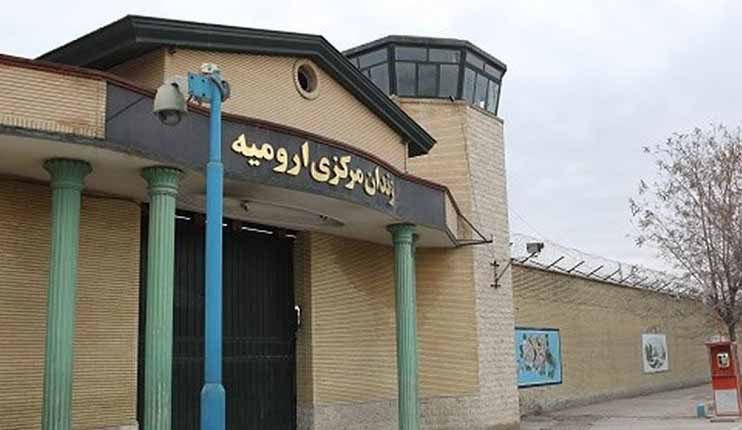
Human Rights Activist News Agency (HRANA) – A mass hunger strike of Urmia Central prisoners of conscience ended on its fifth day after prison authorities engaged to addressing prisoner complaints of rampant abuse.

Strikes were underway as of October 16th, when prisoners launched a protest against a violent raid of the Political Ward (Ward 12) by special forces that left a number of prisoners wounded.

Divided between Ward 12 and the Youth Ward’s prisoners of conscience, protesters declared that the restoration of their legal rights would put an end to the strike.

In a recently-issued statement, strikers asked inmates’ families to appear at the front gate of Urmia Central on October 21st to demand justice for those inside. The statement impelled the head of the prison to invite groups of strikers for a sit-down in the prosecutor’s’ office– an invitation they declined, a close source said.

During the hunger strike, at least one prisoner, Habib Amini, was sent to the prison clinic for treatment following a decline in his health.

Below is a translation of the aforementioned statement. Its signatories asked to remain anonymous. :

“Pursuant to the hunger strike of political prisoners and prisoners of conscience at Urmia Central Prison that began October 16, 2018, the families of these and other prisoners are asked to appear before the Central Prison of Urmia on Sunday, October 21st to demand restoration of the legal and Shari’a-granted rights of their children, in a show of support for their legal and judicial demands.

This protest is a declaration of dissent with the extraordinary oppression and discrimination faced by prisoners and their families in this city. In a state of material and psychological insecurity, prisoners here live under surmounting pressures. We hope that officials have the compassion to reduce this targeted oppression.

Finally, we ask that all sensible minds be moved by this news, and react with the same power they displayed over the three recently executed Kurdish political prisoners and the missile offensive on Kurdistan.”

*

The Ward-12 raid occurred on the evening of October 15th, when political prisoners came to the defense of one of their comrades who had been physically assaulted for arguing with prison personnel. In response to their objections, authorities and special forces, numbering more than 50 and armed with with batons, tasers, and tear gas, stormed the political ward and laid into the inmates there. That same night, authorities assaulted and injured a number of prisoners of conscience in the Youth Ward.

Kamal Hassan Ramazan, Ahmad Tamooie, Osman Mostafapour, and Touraj Esmaili were among the first prisoners beaten in response to their objections of a group assault on their wardmate Hamid Rahimi. Personnel identified only as “Eskandar” and “Rezaie” reportedly commandeered additional Urmia prisoners to deal blows to the four men, breaking bones and teeth, and cutting one of them with a sharp object.

Ramezan, Tamoo’i, Mostafapoor, and two more Ward-12 bystanders, Hassan Rastegari and Kamran Darvishi, were among those injured in the onslaught that followed. The latter two were transferred to solitary confinement; Rastegari has since been returned to Ward 12. “Hassan Rastegari was badly bruised all over,” the source said, adding that prison authorities then sicced fellow prisoners on political detainees for a second time.

Urmia Central Prison authorities have a history of ruling my corporal punishment. On October 8, 2018, prisoner Morteza Zohrali’s right arm was broken in a beating by prison officials; On September 23rd, Youth Ward inmate Javad “Arash” Shirzad was sent to an outside hospital for treatment of a concussion sustained at the hands of “Bayramzadeh,” the prison’s internal director; in July, Saeed Seyed Abbasi was beaten and sent to solitary confinement without treatment of his injuries, all for arriving late to the prison yard for recreation time; and in May, according to HRANA reports, prisoner Saeed Nouri, a former IRGC lieutenant, was beaten by two personnel in the internal director’s office.

Reports indicate that political prisoners and other prisoners of conscience are more vulnerable than others to the gamut of inmate abuses. HRANA previously reported on a September 18th raid on Ward 12 by special forces, where guards pilfered and destroyed the prisoners’ personal belongings, including food they had purchased themselves.

In Solidarity with Fellow Gonabadi Dervish Prisoners, Reza Sigarchi Forgoes Food, Medicine

Human Rights Activists News Agency (HRANA) – In an act of protest, Reza Sigarchi, a Great Tehran Penitentiary prisoner of conscience and member of the * Gonabadi Dervish religious minority, announced Saturday, October 20th that he will be abstaining from both food and medicine.

Sigarchi’s strike is a demonstration of support for his fellow downtrodden Dervishes, according to Majzooban Noor, a website covering Dervish community news. He will reportedly not eat or ingest medicine until the following demands are met: lift the house arrest order on Dervish leader Noor Ali Tabandeh; release female Dervish prisoners; reunite separated Dervish prisoners into the same Ward; return Abbas Dehghan to Great Tehran Penitentiary.

Sigarchi, who suffers from heart disease, was hospitalized last week in Imam Khomeini Hospital where he underwent an angiography.

Five other Dervish prisoners in Great Tehran Penitentiary — Salehodin Moradi, Mojtaba Biranvand, Mohammad Reza Darvishi, Saeed Soltanpour, and Ali Mohammad Shahi — have been on hunger strike since a violent raid on their sit-in by prison guards on August 29th.

Hunger-striking Dervish Abbas Dehghan still hasn’t eaten since September 2nd. Dehghan reportedly spent one hour in Great Tehran Penitentiary post-trial before being transferred to Ward 2A of Evin Prison, under IRGC jurisdiction, where he has remained since.

All of the aforementioned prisoners were arrested amid the “Golestan Haftom” incident in February 2018, where Iranian police and plainclothes members of the IRGC’s Basij faction confronted hundreds of Gonabadi Dervishes who had rallied outside the home of their spiritual leader Noor Ali Tabandeh. The Dervish demonstrators sought to prevent the possible detainment of Tabandeh, who has reportedly been placed under extended house arrest by Iranian authorities.

Hundreds of Dervishes were beaten, wounded, and arrested during the Golestan Haftom incident. A similar attack occurred on January 24th after an intervention from security forces on the same street, heightening the sense of fear within the Dervish community.

Though Iranian judicial authorities estimate that around 300 people have been arrested in connection with Golestan Haftom, HRANA has thus far published the names of 324 arrestees and estimates that the actual number is considerably higher.

* There are various divisions among Dervishes in Iran. In this report, the term “Dervish” refers to Nematollahi Gonabadis, who declare themselves as followers of Twelver Shi’ism, Iran’s official state religion.

Open Letter: Reza Khandan Echoes Public Support of an Ailing Farhad Meysami

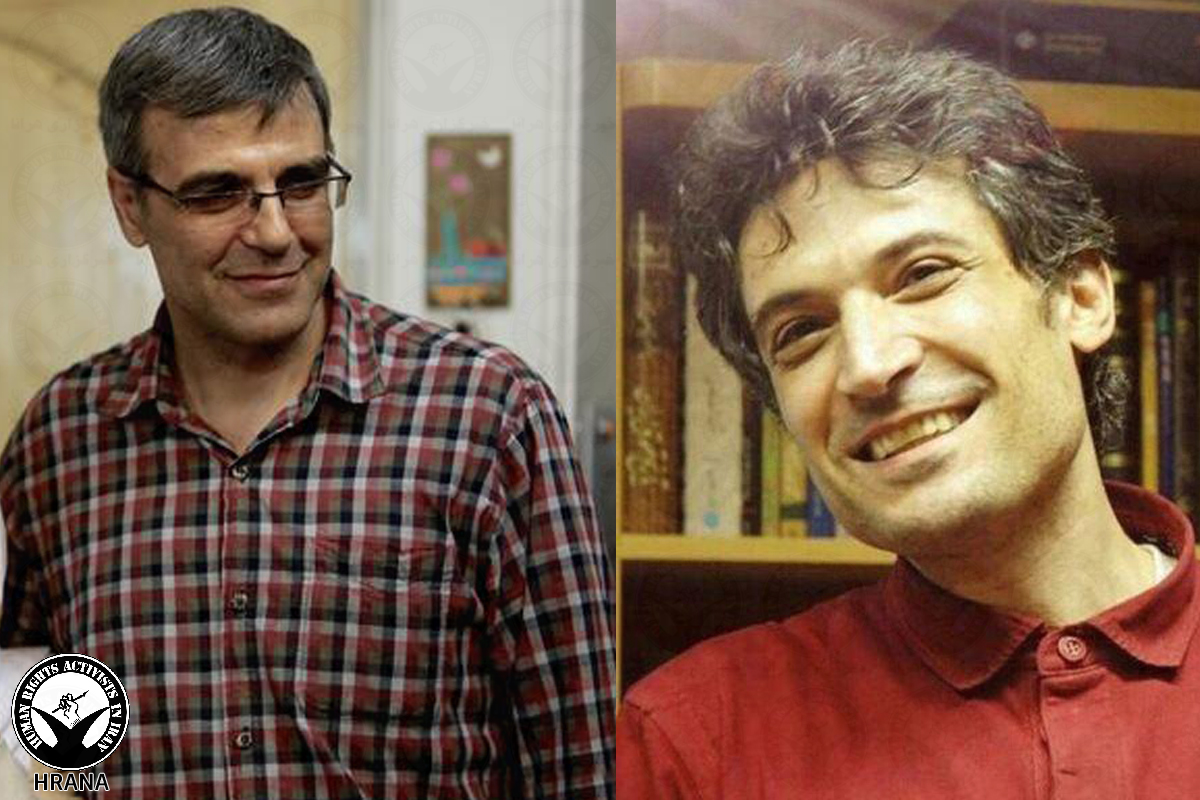
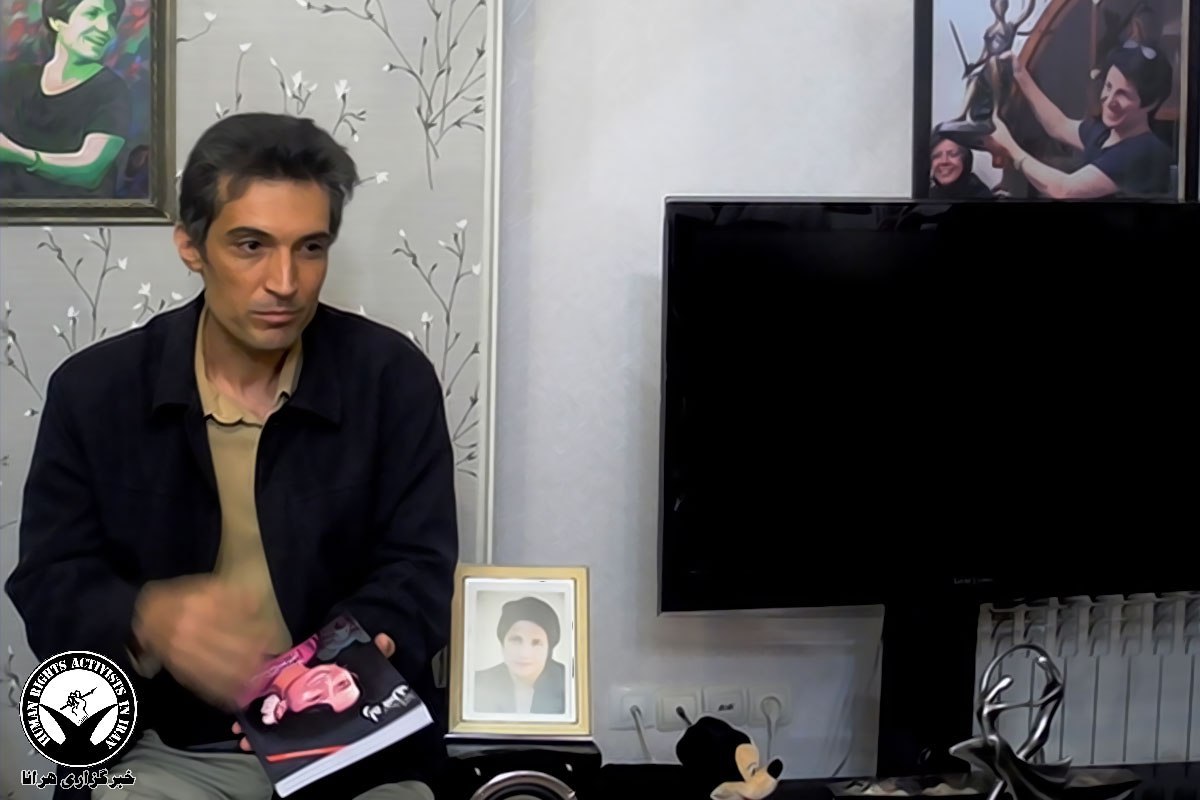
Human Rights Activists News Agency (HRANA)- Imprisoned civil rights activist Reza Khandan has published a letter calling attention to fellow activist Farhad Meysami’s mistreatment by prison authorities, who are reportedly unmoved by the steep decline of Meysami’s health since he declared hunger strike on August 1st.

Since forcibly taking Meysami to the prison clinic on September 26th, prison authorities have kept him in quarantine-like conditions, restricting all of his contacts with the outside. In protest of his arrest, as well as authorities’ refusal to appoint the lawyer of his choice, Meysami has already been on hunger strike for more than 75 days.

Medical doctors, publishers, bookshop owners, and university graduates numbering 1400 in all have published an open letter raising their own concerns over Meysami’s condition and pleading for his immediate release. The voices of two teachers incarcerated at Evin also got behind what has become a burgeoning public campaign for, at the very least, Meysami’s transfer to an outside medical facility.

The full text of Khandan’s letter, translated into English by HRANA, is below:

Dear Compatriots,

Fellow human rights activists,

It has been 75 days since Dr. Farhad Mesyami started his difficult and worrisome hunger strike. Three weeks ago, he was forcibly transferred to the prison clinic from the general ward. Reportedly on orders from the prosecutor’s office, and with the cooperation of the clinic’s director, prison officials have repurposed the clinic into a security detention unit where patient spaces can be used as solitary confinement cells.

Currently, Farhad Meysami is being held in one of those rooms under tight security controls. In his frail state he has reportedly been subjected to inhumane treatment whereby, against his will and without the presence of family or a lawyer, he was strapped to a bed and given injections.

In these instances, we must hold accountable not only judiciary authorities but also the Ministry of Health and the President himself, who has sworn to protect the rights of the people.

Moreover, we must advocate that medical professionals be held accountable, those who have in an unprofessional and unprincipled manner taken action against the will of the patient, heeding any and all orders [from authorities], however unethical they may be.

Farhad Meysami’s health and life is at risk now more than ever, and it is urgent he is transferred to a hospital outside the prison for medical care.

Reza Khandan, October 14, 2018, Ward 4 of Evin Prison

****

Reza Khandan Khandan was arrested in his home by security forces on September 4, 2018, before being charged in Branch 7 of the Evin Prosecutor’s Interrogation office. He was summoned to Branch 15 of the Revolutionary Court on October 5th but refused to attend as an act of protest against the unlawfully late subpoena.

Maltreatment Results in Hunger Strike of 56 Urmia Prisoners

Human Rights Activists News Agency (HRANA)- Fifty-six youth and political prisoners declared the launch of a hunger strike on October 17th in defense of their ward mates, many of whom were recently victims of vicious assaults by authorities.

The strikers hail from Ward 12, designated for political prisoners, and the youth ward.

On October 15th, more than 50 special agents attacked Ward 12, breaking prisoners’ bones and teeth. Later the same day, Urmia guards enlisted common-criminal prisoners to wage an assault on 8 prisoners of conscience from the youth ward.

HRANA is in the process of confirming the names of the striking prisoners.

Open Letter: Hundreds of Doctors and Publishers Plead for the Release of Farhad Meysami

Human Rights Activists News Agency (HRANA) – Hundreds of medical doctors, publishers, bookshop owners, and university graduates wrote an open letter September 28th to raise their concerns about Farhad Meysami, a civil rights activist detained in Evin Prison who is in dire medical condition on this 57th day of his hunger strike. The letter pleads for Meysami’s release.

Meysami started his hunger strike one day after his July 31st arrest, in protest to authorities’ refusal to appoint the attorney of his choice.

He was taken to the prison clinic by violent force on September 26th, raising suspicions with close sources that authorities are deliberately isolating him from contacts with the outside.

Previously, Mahmoud Beheshti Langroudi and Esmaeil Abdi, two teachers imprisoned in Evin, asked for Meysami’s transfer to a hospital in their own open letter to judicial authorities.

The most recent open letter, representing the will of 1,400 doctors, publishers, bookshop owners, and university graduates, reflects the same concern for Meysami’s well-being.

“We know Dr. Farhmad Meysami’s character, disposition, and reputation of accountability, and we believe that he doesn’t belong in prison,” the letter says.

Meysami is noted in the letter as founder and manager of Andisheh Sazan, a publishing house in Iran.

“Meysami raised his criticisms in peaceful and non-violent ways,” the letter goes on. “Some of us don’t necessarily agree with him, but we don’t think this is a way to treat any dissident in this country, let alone a doctor and a publisher.”

The letter specifically implores the support of Culture Minister Abbas Salehi, Health Minister Hassan Ghazizade Hashemi, Parliamentary Health Committee Head Hosseinali Shahriari and Parliamentary Culture Committee Head Ahmad Mazani.

Their letter concludes with a verse from the Qur’an: “He who gives life to anyone has given life to all.”

Subscribe to Our Newsletter

Now is definitely not the time to stop reading!

Mahin-Taj Ahmadpour Ends Hunger Strike after 16 Days

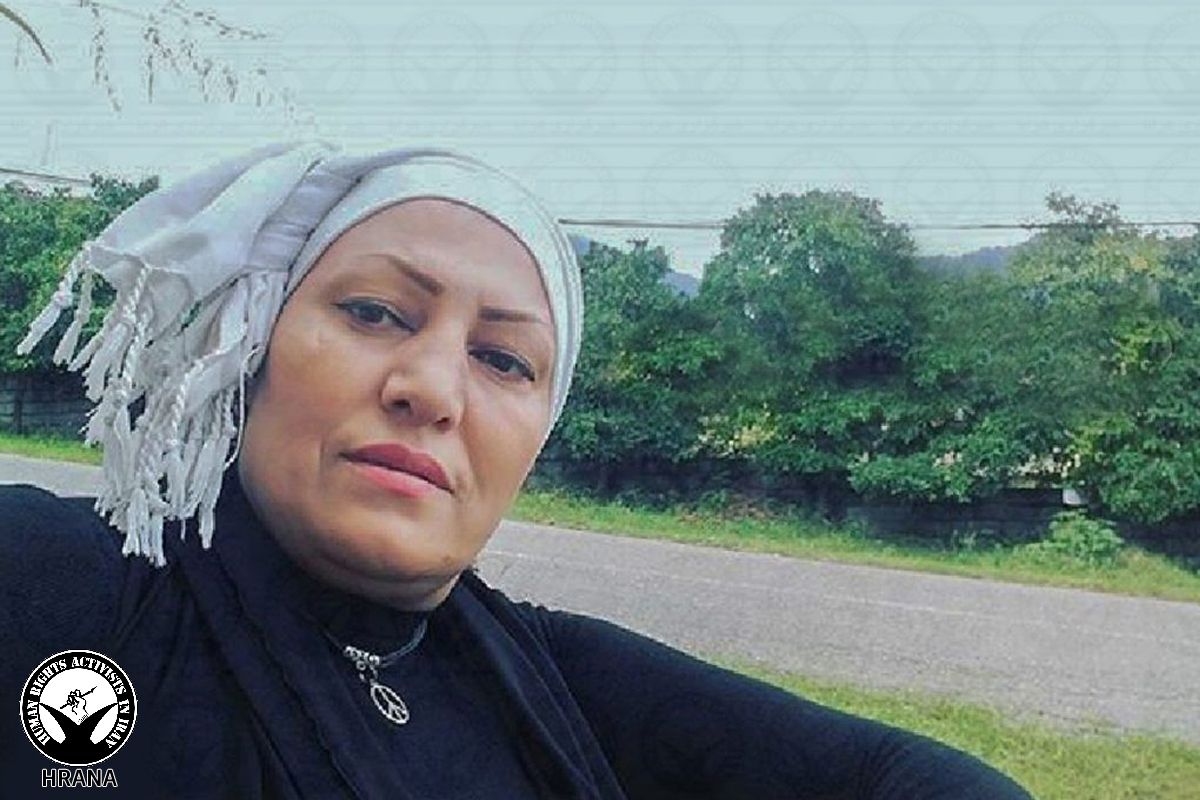
Human Rights Activists News Agency (HRANA) – On Tuesday, September 25, 2018, political prisoner Mahin-Taj Ahmadpour agreed to end her 16-day hunger strike in exchange for verbal commitments from prison authorities to meet her demands for medical treatment.

Authorities at Nashtaroud Prison of Tonekabon, where Ahmadpour is being held, had previously dismissed her requests for more adequate anemia treatment. A source close to Ahmadpour told HRANA that the authorities have now pivoted, making promises to approve a hospital transfer and medication deliveries from her family. “In addition, they asked her to put in a request for conditional release, and promised to facilitate the processing of the request.”

Ahmadpour had lost 8 pounds by the 10th day of her strike when HRANA reported on prison authorities’ failure to address her deteriorating physical health.

Sentenced to 10 months in prison for her participation in the January protests, Ahmadpour began starving herself September 10th to protest her restricted access to resources, such as medical care and the telephone, and to revolt against prison authorities who reportedly threatened to open new charges against her as a form of coercion or harassment.

Per her treatment plan for anemia, Ahmadpour should receive seven units of blood every month. An informed source told HRANA that monthly blood infusions were also recommended for her as a preventative measure against leukemia. In the face of her diagnosis and supporting medical documentation, however, prison authorities had until now denied Ahmadpour’s requests for outside medication and refused to clear her for a medical transfer.

Mahin-Taj Ahmadpour is a 46-year-old resident of Tonekabon. A peddler by trade, she was arrested along with 14 other residents during widespread rallies that took place in January 2018 across Iran, known as the January Protests. The Revolutionary Court of Tonekabon sentenced eight of these arrestees to 28 months’ imprisonment, divided among the defendants. Branch 101 of Criminal Court No. 2 of Tonekabon, presided over by Judge Ebrahimi, also sentenced six of the arrestees to 24 collective months of prison time.

Ahmadpour was first sentenced May 2, 2018, in Branch 101 of Tonekabon Criminal Court No. 2 to serve a six-month prison sentence on a charge of “disrupting the public peace through participation in an illegal gathering.” On August 11, 2018, Tonekabon’s Revolutionary Court compounded the sentence with four months’ imprisonment for “propaganda against the regime.” As evidence against her, the court cited a combination of law enforcement reports and images and video taken during the January protests in Tonekabon.

Two Teachers Imprisoned at Evin Pen Statement of Support for Farhad Meysami

Human Rights Activists News Agency (HRANA) – Mahmoud Beheshti Langroudi and Esmail Abdi, two teachers imprisoned at Evin, have demanded in a letter to Judicial authorities that their ward mate Farhad Meysami–who is now in the 54th day of his hunger strike–be transferred to an outside treatment facility to avert an impending health crisis.

Meysami has dropped 30 pounds since he started starving himself on August 1st to protest both his detention and authorities’ refusal to appoint the lawyer of his choosing. In addition to his 18-year history of ulcerative colitis, Meysami experienced a steep drop in blood pressure on Saturday, September 8th, prompting the prison doctor to recommend more aggressive treatment. Notwithstanding the doctor’s orders, prison authorities refuse to clear his transfer to a different facility for treatment.

In a letter, Langroudi and Abdi, two imprisoned teachers held with Meysami in Ward 8 of Evin Prison, urge authorities to approve Meysami’s transfer to a medical treatment facility, to “prevent a possible calamity from occurring.”

The full text of their letter, translated into English by HRANA, is below:

“In the name of the God of wisdom and life,

Fifty days have passed since Dr. Farhad Meysami, civil activist and political prisoner, declared his hunger strike. His strike was a response to unjust legal proceedings, and authorities’ hindrance of his effective defense by refusing him the right to choose an attorney. He is now in a critically weakened condition. It is said that the doctors at Evin Prison insisted he be hospitalized, yet judicial authorities refuse to issue the order to have him transferred to a prison more materially equipped to treat him.

Because this civil activist suffers from ulcerative colitis and has lost 30 pounds over the course of his hunger strike, his blood pressure, pulse, and other vital signs have dipped into gravely abnormal ranges. As of last week he stopped accepting intravenous treatment, leaving us more concerned than ever that a calamitous outcome might be imminent.

We, the undersigned, thus put on guard the relevant judicial authorities, that they express their agreement to transfer Dr. Meysami to a proper hospital without delay, to prevent a possible calamity from occurring.

His ward-mates, Mahmoud Beheshti Langroudi and Esmail Abdi”

53 Days into Solidarity Hunger Strike, Ailing Civil Rights Activist Farhad Meysami Stands His Ground

Human Rights Activists News Agency (HRANA)- In protest of the imprisonment of his comrade Reza Khandan, civil Rights Activist Farhad Meysami has now been starving himself for 53 consecutive days.

In a visit to the Evin Prison clinic September 22nd, according to a close source, doctors noted Meysami’s 42-pound weight loss and steep drop in blood pressure and urged him to be admitted to the clinic. Meysami refused, persistent in his requests to be transferred to an outside hospital.

Shortly thereafter, prison authorities, including the prison director, came to visit Meysami, who reiterated to them the sole condition in which he will end his hunger strike: the dropping of all charges against Reza Khandan.

Farhad Meysami was arrested in his personal study on July 31st. He was originally charged with “gathering and collusion aimed at disrupting national security,”; “propaganda against the regime”; and “insulting hijab, a necessary and sacred element of Islam.”

On September 3rd, however, Branch 7 of the Evin prosecutor’s interrogation department claimed that charges have since changed, with the last one replaced with “spreading corruption and prostitution.”

Human Rights Watch and Amnesty International have both asked for Meysami’s release.

Charges Evolve against Hunger Striking Civil Rights Activist

Human Rights Activists News Agency (HRANA) – Farhad Meysami, a civil rights activist who has been held in Evin Prison since July 31st and declared a hunger strike the next day, now faces a new charge: “Assembly and collusion to disturb national security.”

Meysami, who has lost a significant amount of weight and suffers from low blood pressure, announced that he will resort to a liquid-only hunger strike. He explained his strike was a protest of the arrest of Reza Khandan, husband of imprisoned human rights lawyer Nasrin Sotoudeh, earlier this week, as well as the authorities’ interrogation and home searches of civil rights activists Mohammed Reza Farhadpour and Zhila Karamzadeh Makvandi.

A source close to Meysami told HRANA that “despite visits from officials who attempted to persuade him to end the strike, such as the Assistant Prosecutor, the prison ward director, the prosecutor’s representative, and Director General of the detention centre Mr. Chahrmahali, Meysami is determined to continue. He will only be ingesting his colitis medication, as he has been doing for past 18 years.”

The source added that Meysami “would only end his hunger strike if Reza Khandan is unconditionally released.”

The same source indicated that Meysami, who is being held in Ward 209 of Evin Prison, was taken to Branch 7 of Evin Court on September 3, 2018, where he learned the charges and evidence against him had evolved. Court officials announced that day that he was being charged with “Assembly and collusion to disturb national security,” for– according to the investigator–a campaign Meysami was organizing with Nasrin Sotoudeh and Iranians living abroad. Other charges included “Propaganda against the regime,” brought in relation to a speech Meysami gave at Isfahan University and articles he had published. Meysami also faces the charge of “Propagation of corruption and decadence,” a charge thought to stem from his possession of a pin-back button that reads “I protest mandatory veiling.”

HRANA previously reported on Meysami’s arrest and interrogation ordeal. His interrogators have referred to him as a “Teacher of Civil Disobedience.”

Offended by Irancell, Sunni political prisoners go on hunger strike

HRANA News Agency – Following a message broadcast by Irancell, the Sunni community in Iran was deeply offended, and 160 Sunni political prisoners went on hunger strike in Rajai-Shahr Prison.  The hunger strike began on Saturday, July 20, and will last for two days.
Continue reading “Offended by Irancell, Sunni political prisoners go on hunger strike”