“Ekbatan Town” Case in the Revolutionary Court; 4 Defendants Sentenced to Death and 4 Others to Prison

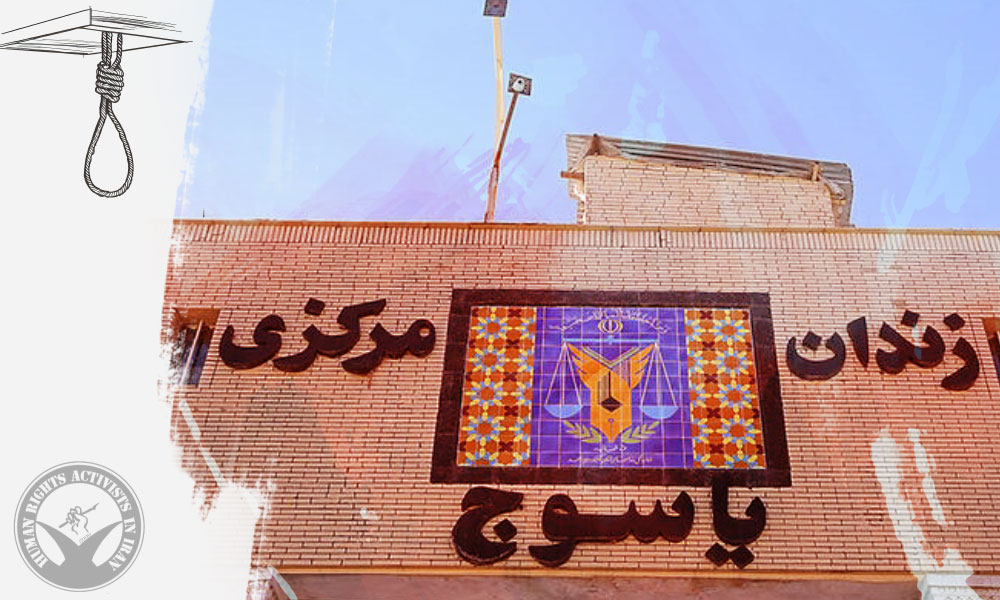
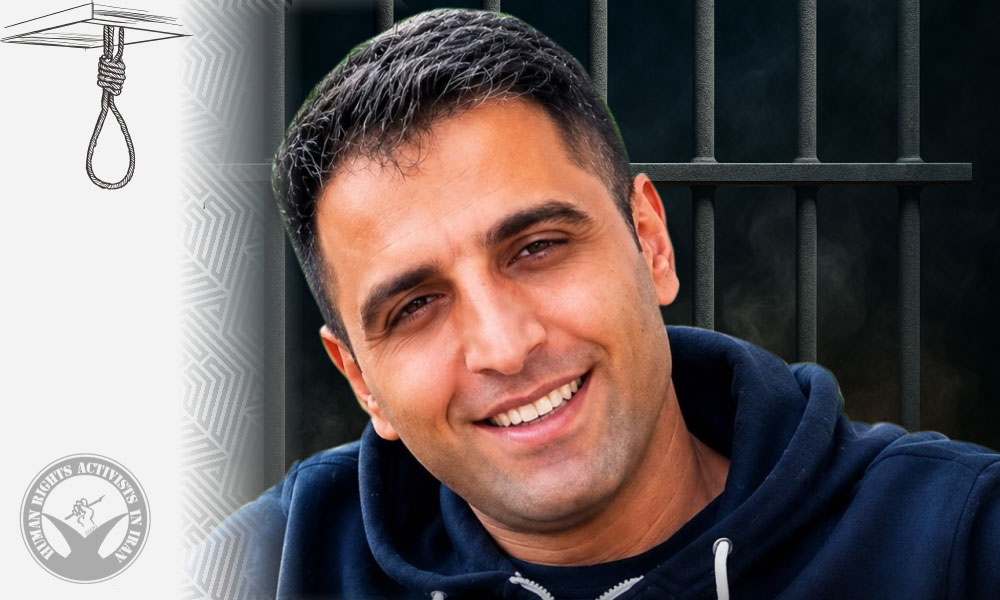
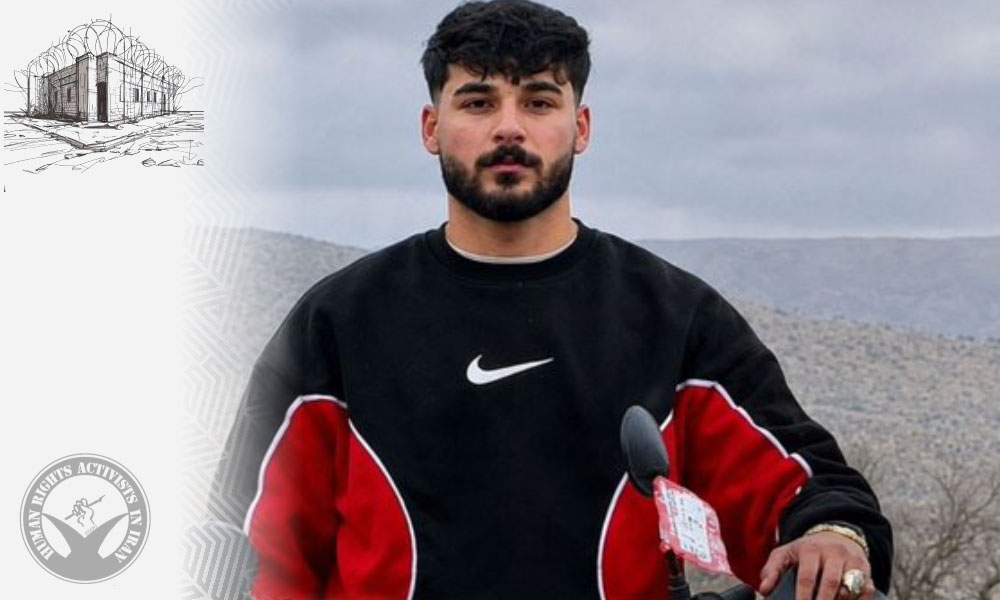
HRANA – Milad Armoun, Navid Najaran, Mehdi Imani, and Seyed Mohammad-Mehdi Hosseini, defendants in the so-called “Ekbatan Town” case and detainees from the 2022 nationwide protests, were sentenced to death by the Tehran Revolutionary Court on charges of “enmity against God” (moharebeh). Amir Mohammad Khosh-Eghbal, Alireza Bormarz Pournak, Alireza Kafaei, and Hossein Nemati, other defendants in the case, were each sentenced to seven years in prison along with additional punishments. Another part of this case had previously been reviewed in criminal court and recently resulted in prison sentences and the payment of blood money (diyeh) for some of the defendants.

According to HRANA, eight defendants in the Ekbatan case were sentenced by the Revolutionary Court. Based on a ruling issued by Branch 15 of the Tehran Revolutionary Court, presided over by Judge Abolghasem Salavati, Milad Armoun, Navid Najaran, Mehdi Imani, and Seyed Mohammadmehdi Hosseini were sentenced to death on charges of “enmity against God” (moharebeh). In addition, Amir Mohammad Khosh-Eghbal, Alireza Bormarz Pournak, Alireza Kafaei, and Hossein Nemati were each sentenced to five years in prison on charges of “assembly and collusion against national security”, two years for “propaganda against the regime,” a two-year ban on online activities, and a two-year residency ban from Tehran and Alborz provinces.

A source familiar with the case told HRANA that the verdict was verbally communicated to the defendants yesterday without the presence or prior notification of their lawyers. According to the source, the ruling has still not been officially served to the defense attorneys, effectively depriving them of the opportunity to file appeals.

Background:

At the beginning of November 2022, during the nationwide protests and following the killing of a Basij force member named Arman Aliverdi in Ekbatan Township, at least 50 young residents of Ekbatan Township were arrested by security and law enforcement forces. Indictments were ultimately issued against 14 of them.

The case was reportedly divided into two sections. One section was referred to Branch 15 of Tehran Revolutionary Court, presided over by Judge Abolqasem Salavati, and the other to Branch 13 of Tehran Criminal Court One. So far, no verdict has been issued for those defendants whose cases in the Revolutionary Court involve security-related charges and moharebeh.”

In May 2023, the spokesperson for Iran’s Judiciary announced that three defendants in the “murder of Arman Aliverdi” case had been charged with “enmity against God (moharebeh) through the use of cold weapons and acting against national security.” According to the indictment, these individuals were charged with “moharebeh,” “participation in intentional murder,” and “disrupting public order and peace.”

In late October 2023, after four court sessions were held, the court did not return the case to the prosecutor’s office for further investigation. Instead, Branch 13 of Tehran Criminal Court One intervened to conduct supplementary investigations, expedite proceedings, and determine the defendants’ status. Another part of the case was referred to Branch 15 of Tehran Revolutionary Court.

Further, Four of the defendants , Nemati, Barmarz Pournak, Kafaei, and Khosh-Eghbal, were released from Ghezel Hesar Prison on bail in February 2024.

The case involving Milad Armoun, Seyed Mohammad Mehdi Hosseini, Mehdi Imani, and Navid Najjaran, designated as confidential, had been returned in late April 2024 from Branch 13 of Tehran Province Criminal Court One to Branch 4 of the Prosecutor’s Office for Criminal Affairs in Tehran’s District 27 to address deficiencies in the case. In early September that year, after the deficiencies were addressed, the case was referred back to Branch 13 of Tehran Criminal Court One and Branch 15 of Tehran Revolutionary Court, presided over by Judge Abolqasem Salavati.

In November 2024, these individuals had each been sentenced to death by Branch 13 of Tehran Criminal Court. In September 2025, the Supreme Court overturned the death sentences and referred the case back to Branch 13 for retrial. Ultimately, on December 3 of that year, a new hearing was held in the same branch.

Following the overturning of the death sentences of six defendants in this case by the Supreme Court and the retrial in a parallel branch, new verdicts were recently issued by Branch 13 of Tehran Province Criminal Court One. According to the ruling, Milad Armoun, Alireza Kafaei, and Amir Mohammad Khosh-Eghbal were each sentenced to pay an equal share of the full blood money for one person and to serve five years in prison on charges of participation in intentional murder. Meanwhile, Alireza Barmarz Pournak, Hossein Nemati, and Navid Najaran, the three other defendants in the case, were acquitted of participation in intentional murder due to the lack of evidence showing they had inflicted blows on a specific part of Arman Aliverdi’s body.

Ilam: Arshia Gheysar Beigi Faces Charges of “Enmity Against God” and “Corruption on Earth”

HRANA – Arshia Gheysar Beigi, a resident of Sarableh in Ilam Province, was violently arrested by security forces on May 5, 2026. He is now facing charges of “moharebeh” (enmity against God) and “corruption on earth.”

Based on information received by HRANA, on May 6, 2026, the Public and Revolutionary Prosecutor’s Office of Chardavol County charged him with “moharebeh” and “corruption on earth” and extended his detention order for two months. Allegations including “armed intimidation, purchasing and possessing weapons, and illegal shooting” were cited in the detention order.

A source familiar with the case told HRANA that following his arrest, Gheysar Beigi was subjected to intense pressure, and the confessions attributed to him were allegedly obtained under coercive conditions. According to the source, he is currently being held in a security detention facility, where interrogations are ongoing in solitary confinement, without access to adequate medical care.

The informed source added that since his arrest, Mr. Gheysar Beigi has been denied access to a lawyer and family visits. The severity of the beatings during his arrest reportedly resulted in fractures to his jaw, nose, and teeth, yet he has not received effective medical treatment despite his condition.

The report notes that these allegations have been raised despite existing reports regarding this citizen’s physical condition and detention circumstances, which indicate the use of violence during arrest and interrogation. This has cast serious doubt on the validity and credibility of the confessions attributed to him. Furthermore, although the detention order mentions a ten-day right to appeal, his lack of access to legal counsel and continued solitary confinement have made the practical use of this right unclear.

Arshia Gheysar Beigi was violently arrested on Tuesday, May 5, 2026, after security forces entered his home without presenting a judicial warrant.

January Protests: Erfan Kiani Executed

HRANA – The death sentence of Erfan Kiani, one of those arrested during the January 2026 protests in Isfahan, was carried out early this morning. During the judicial process, he had been charged with offenses including moharebeh (enmity against God).

According to Mizan News Agency, the charges against this protester included “moharebeh through drawing a cold weapon (machete) with the intent to intimidate the public,” “creating insecurity,” “inciting individuals to violent actions,” and “participation in the destruction of public property.”

The published report lists examples of these accusations, including participation in protest gatherings, destruction of public and private property, arson, throwing stones and Molotov cocktails at security forces, blocking streets, and carrying a cold weapon. It is also claimed that he had a leadership role among a group of protesters.

According to the Judiciary, following his arrest during the January 2026 protests, he was sentenced to death by the Isfahan Revolutionary Court. After an appeal, the ruling was upheld by the Supreme Court and was carried out at dawn on Saturday, April 25, 2026.

No further details have been released regarding the circumstances of his arrest, whether he had effective access to legal counsel during different stages of the proceedings, the conditions of his detention prior to execution, or the exact location where the sentence was carried out.

It should be noted that following the outbreak of military conflict between the United States–Israel and Iran, which began on February 27, 2026, the implementation of death sentences in Iran has entered a new and concerning phase, one marked by a strong focus on prisoners with political and security-related charges and a noticeable acceleration in executions.

According to HRA’s Annual Report, in 2025 at least 2,063 citizens, including 61 women and 2 juvenile offenders, were executed. Of these, the sentences of 11 individuals were carried out in public. During the same period, 172 other individuals were sentenced to death.

Political Prisoner Sultanali Shirzadi Fakhr Executed

HRANA – The judiciary announced the execution of Sultanali (Sultan-Ali) Shirzadi Fakhr, a political prisoner, stating that he had been sentenced to death on charges including “membership in the Mojahedin-e Khalq Organization, collaboration with Israel, and enmity against God (Moharebeh).”

According to Mizan News Agency, the death sentence of Sultanali Shirzadi Fakhr was implemented at dawn on Thursday, April 23, after completing legal proceedings and being confirmed by the Supreme Court.

According to the claims of this institution, the charges against him included “membership in the Mojahedin-e Khalq Organization, cooperation with Israel’s intelligence service, and moharebeh.”

Mizan News Agency has claimed that he joined the group in the 1980s after leaving the country and, following military training, participated in operations including “Forough Javidan” and “Chelcheragh.” It was also stated that in recent years, after residing abroad, he entered Iran under the cover of a family visit on a mission allegedly linked to foreign intelligence bodies and was arrested upon arrival.

The location where the execution was carried out has not been announced by the judiciary’s media center or other official authorities.

It is worth noting that following the outbreak of military conflict between the United States–Israel and Iran, which began on February 28, 2026, the execution of prisoners with political-security charges has accelerated.

According to HRA’s Annual Report, in 2025 at least 2,063 citizens, including 61 women and 2 juvenile offenders, were executed. Of these, the sentences of 11 individuals were carried out in public. During the same period, 172 other individuals were sentenced to death.

More Than 60 Security Cases Opened in East Azerbaijan; 10 Involve Espionage Charges

HRANA – The prosecutor of East Azerbaijan Province’s central district announced that 60 judicial cases have been opened over security-related issues, adding that 10 of them involve alleged espionage charges.

According to HRANA, citing Tasnim, since the beginning of the recent war, more than 60 security cases have been opened in East Azerbaijan Province. The prosecutor of the central district of East Azerbaijan Province stated that 10 of these cases include espionage charges.

Hussein Mohammadzadeh Almalou added: “The punishments determined for some of the defendants in these cases are at the level of moharebeh (enmity against God), and indictments for some of them have already been issued.”

He noted that the relevant rulings will be carried out after confirmation by the Supreme Court. Mohammadzadeh Almalou also said that the judicial system has remained continuously active during this period, adding that the province’s prosecutor’s offices have continued operating without interruption.

No further information has been released in this report regarding the details of the cases, the identities of the defendants, or the progress of their legal proceedings.

It should be noted that the U.S. and Israeli military attacks on Iran began on February 28, 2026, and on April 8, 2026, a two-week ceasefire between the parties was announced. Since the start of these attacks, HRANA has been documenting and recording related incidents across different parts of the country on a daily basis.

Subscribe to Our Newsletter

Now is definitely not the time to stop reading!

Supreme Court Upholds Death Sentence of Political Prisoner Reza Abdali

HRANA – The death sentence and prison term of Reza Abdali, a political prisoner held in Sheiban Prison in Ahvaz, have been upheld by Iran’s Supreme Court, the country’s highest judicial authority.

Abdali had previously been sentenced to death and 15 years in prison by the Ahvaz Revolutionary Court on the charge of “enmity against God” (moharebeh).

According to information obtained by HRANA, the Supreme Court recently confirmed and notified Abdali’s verdict. He had been convicted in June-July 2025 by one of the branches of the Ahvaz Revolutionary Court on charges of moharebeh, with “connection with the Mojahedin-e Khalq Organization (MEK)” cited as an instance of the accusation.

Reza Abdali, aged 35 and a resident of Ahvaz, is currently held in Ward 8 of Sheiban Prison.

He was arrested in February 2025 (Bahman 1403) by security forces, and after interrogation, was transferred to Sheiban Prison. During his detention, he has been denied access to a lawyer of his choice.

Monthly Report – October 2025: Human Rights Situation in Iran

HRANA – This report reviews documented cases of human rights violations in Iran in October 2025, based on statistics compiled by HRANA, the news agency of Human Rights Activists in Iran. An unprecedented surge in executions, with 258 people executed this month, along with a new wave of arrests and home searches targeting Baha’is in Iran, and an increase in the arrest of children by security forces, were among the most significant human rights violations reported during this period.

Executions

In October, the Iranian regime executed 258 people, marking the highest number of executions since the beginning of this year. Among them, 220 were men and 7 were women.

Due to secret executions and the lack of reporting by state institutions and domestic media, the gender of 29 executed prisoners remains unknown.

Additionally, 10 of those executed were Afghan nationals, and two were juvenile offenders.

124 of the executed prisoners had been convicted of murder, and 122 on drug-related charges. Three individuals were executed on non-political “corruption on earth” (efsad-e fel-arz) charges, and one on the same charge with political grounds. Another significant point is the execution of six individuals on security-related charges, such as espionage. Also, one executed prisoner was convicted of rape.

During the same month, Iran’s judiciary also issued 11 new death sentences, including one for political activist Zahra Shahbaz Tabari, a 67-year-old woman, who was sentenced to death for alleged collaboration with anti-regime groups. Of the ten remaining individuals sentenced to death, seven were convicted of murder and three of enmity against God (moharebeh). Additionally, one individual was sentenced to public execution.

Prisoners’ Rights

In October, 16 political or religious prisoners were denied medical care. The most notable case was that of Motaleb Ahmadian, a political prisoner held in Evin Prison, who was deprived of medical treatment despite reporting in a recent letter that his pain and physical condition had worsened. In another case, delays in providing medical care led to the death of a non-political prisoner in Iranshahr Prison.

During this month, 103 prisoners went on hunger strike, the most significant being a six-day strike by inmates of Ghezel Hesar Prison in protest against the surge in executions.

HRANA also documented 49 cases of legal uncertainty for prisoners and detainees during October, along with 34 cases of punitive solitary confinement, two cases of prolonged solitary detention, and 30 instances in which families were denied information about the whereabouts or conditions of their detained relatives by security or judicial authorities.

Additionally, three cases of prisoner beatings and three forced confessions were reported. HRANA also recorded one case of suicide involving a female prisoner during October.

Kolbars and Fuel Carriers

In the past month, ten citizens were killed and six others injured as a result of indiscriminate shootings by military forces. These shootings claimed the lives of three kolbars (border porters) and injured one. Among fuel carriers (Sukhtbar), three were killed and four wounded. Additionally, one Kolbar in Baneh was injured by a landmine explosion.

Freedom of Thought and Expression

In the past month, Iran’s security apparatus arrested 55 individuals for expressing their opinions or exercising free speech. In this context, 25 people were summoned by security organizations, including six journalists from the Ham-Mihan newspaper, who were called in by the IRGC Intelligence Organization.

The homes of ten citizens were searched by security forces, the most notable case being the search of journalist Marzieh Rasouli’s home in Tehran.

In a clear violation of citizens’ freedom of expression, Iran’s judiciary sentenced 36 individuals to a total of 2,988 months in prison. Notable among these were Behfar Lalezari, sentenced to five years, and Shahin Zoghi Tabar, sentenced to ten years in prison.

In addition to prison terms, five people were sentenced to travel bans.
During the month, three prison sentences were carried out, eight court hearings were held, and nine individuals were subjected to social deprivations.

Additionally, citizens held eight protest gatherings, while one protest was prevented from taking place.

Workers’ Rights

In October, HRANA recorded 92 labor protests and 12 labor strikes across Iran. For participating in these protests, three workers from the Haft-Tappeh Sugarcane Company were summoned by the authorities.

According to HRANA’s reports, 45 workers lost their lives and 135 others were injured in workplace incidents resulting from non-compliance with occupational safety standards.

Trade associations and unions also held 102 protest gatherings and one strike by nurses, marking an increase compared to previous months.

In connection with these events, four individuals were arrested by security forces, and three others were summoned to court.

Additionally, 64 businesses were sealed for reasons such as “non-compliance with Islamic codes of conduct,” the most notable case being the closure of 16 establishments in Ahvaz.

Women’s Rights

In October, the murder of five women was reported. The most notable case was the killing of Zahra Ghaemi, a member of the Women’s Studies Group at the University of Tehran, who was murdered by her husband.

Children’s Rights

Regarding the rights and conditions of children in Iran, four cases of child arrests by security forces were reported.

HRANA also documented the arrest of children’s rights activist Hossein Mirbahari, and the closure of his organization, the Society for the Defense of the Rights of Working and Street Children, by security forces.

Additionally, the deaths of three children were reported as a result of neglect and official negligence. The deaths of three child laborers and the injury of five others were also reported.

Five other children were subjected to physical violence and corporal punishment, including the death of a 14-year-old student who suffered cardiac arrest after being forced to run as punishment.

The Iranian regime also executed two juvenile offenders, including Ali Aghajari, who was arrested five years ago at the age of 17 following a group altercation over farmland that resulted in one person’s death.

Additionally, the suicide of a 12-year-old child was reported in Shiraz.

After 20 Years in Prison, Ali Halafi Granted Medical Furlough

HRANA – After 20 years in prison and years of being denied adequate medical care, political prisoner Ali Halafi was granted a seven-day medical furlough today from Sheiban Prison in Ahvaz, after posting bail.

According to HRANA, political prisoner Ali Halafi was temporarily released from Sheiban Prison in Ahvaz for medical treatment after serving two decades behind bars. Halafi suffers from gastrointestinal and pulmonary diseases, bleeding hemorrhoids, and knee problems, and has long been deprived of proper medical care. His temporary medical leave was granted upon posting bail of 51 billion rials for a period of seven days.

He was arrested in 2005 in connection with the “Ahvaz Salman Farsi Street explosion” case. Although he was not among the main defendants, he was convicted of “enmity against God (moharebeh)” and sentenced to 30 years in prison, a verdict later upheld on appeal.

Halafi had previously been transferred among several prisons, including Karun Prison in Ahvaz, Gonabad Prison, Masjed Soleiman Prison, and Sheiban Prison in Ahvaz. Due to his deteriorating health, he has now been granted a short-term release from custody.

Ali Halafi, approximately 59, is the father of three daughters and one son. HRANA has previously published a detailed report on his imprisonment conditions and case.

Saman Mohammadi Khiyareh Executed

HRANA – On Saturday morning, Mizan News Agency, announced the execution of Saman Mohammadi Khiyareh, a political prisoner from Sanandaj. Mr. Mohammadi Khiyareh had previously been sentenced to death by Branch 15 of the Tehran Revolutionary Court.

The Judiciary’s Media Center stated that the sentence was carried out this morning, Saturday, October 4, 2025, after being upheld by the Supreme Court. In its report, the Judiciary accused Saman Mohammadi of “enmity against God (moharebeh) through membership in terrorist and Takfiri groups, carrying out armed operations, and planning and directing the assassination of Mamousta Sheikh al-Islam.”

The Judiciary further accused him of “armed robbery of a jewelry shop in Hamedan, stealing a private vehicle and killing its driver, shooting at civilians, and attacking a police station at the Sheikhan intersection in Sanandaj, which resulted in the death of a soldier.”

Saman Mohammadi Khiyareh, approximately 34 years old and a native of Sanandaj, was arrested in February 2010 on charges of moharebeh (enmity against God). A few months later, he was sentenced to death by Branch 15 of the Tehran Revolutionary Court, presided over by Judge Abolghasem Salavati. However, due to insufficient evidence, the Supreme Court’s Branch 41 overturned the verdict and sent the case to another branch for retrial. The new court sentenced him instead to 15 years in prison on charges of membership in anti-regime groups.

Nevertheless, in an opaque process and under pressure from security agencies – the complainants in the case – this ruling was overturned, and he was once again sentenced to death on the same charges.

A source close to the prisoner’s family previously told HRANA: “During detention, Saman Mohammadi was subjected to physical and psychological torture and forced to confess to charges including the killing of a military officer and another individual during the 2009 protests. However, he denied these confessions at every stage of interrogation and trial.”

According to HRANA’s statistics, Ghezel Hesar Prison in Karaj carried out the highest number of executions among all Iranian prisons, with 150 inmates hanged. This figure has nearly doubled compared to the previous year – a deeply alarming increase that underscores the escalating use of capital punishment in Iran.

Two Decades Behind Bars, Prisoner Profiles – No. 10: Yahya Naseri

HRANA – Numerous political and religious prisoners in Iran have spent more than two decades in detention. To ensure their stories are not lost amid the constant churn of daily news, HRANA publishes a series of reports dedicated to them. Each report reviews the prisoner’s case history, prison conditions, access to basic rights, and urgent needs.

In this installment, HRANA, the news agency of Human Rights Activists in Iran, reviews the latest situation of Yahya Naseri after two decades in prison.


Prisoner Profile

• Name: Yahya Naseri

• Year of Arrest: 2005

• Charges: “Acting against national security, moharebeh (enmity against God), and efsad fel-arz (spreading corruption on earth)”

• Initial Sentence: Life imprisonment

• Current Sentence: Life imprisonment

• Detention Locations: After sentencing, Mr. Naseri was held in Karun Prison, Ahvaz, before being transferred to Ward 5 of Sheiban Prison, Ahvaz, where he remains detained without respect for the principle of separation of crimes.

• Leave/Access: In recent years, no furlough has been granted; his access to family and legal counsel has been reported as limited.

• Current Status: Still serving a long-term sentence, despite legal reforms that could provide opportunities for retrial or sentence reduction.

Case Background and Judicial Process

On October 2, 2005, Mr. Naseri was arrested by security forces in connection with the so-called “Salman Farsi Street bombing in Ahvaz.” Shortly afterward, Branch 1 of the Ahvaz Revolutionary Court sentenced him to life imprisonment on charges of “acting against national security, moharebeh, and efsad fel-arz.”

This life sentence placed him among prisoners with indefinite incarceration, a situation that effectively extends for many years and severely limits access to mechanisms for sentence review.

Key Aspects of the Case:

• Severe Security Charges: The charge of moharebeh is among the most serious in Iran’s political-security cases, usually carrying broad judicial and executive consequences.

• Continued Imprisonment Despite Legal Changes: Although legal reforms have introduced options for retrial, sentence reduction, or parole in some cases, Mr. Naseri remains imprisoned.

Detention Conditions and Transfers

Throughout his imprisonment, Mr. Naseri has been held in Karun and Sheiban prisons in Ahvaz. After receiving his sentence, he was kept in Karun Prison, later transferred to Ward 5 of Sheiban Prison, where he has remained to this day, again without separation of crimes.

Observations on Conditions:

• Frequent Transfers: Moves between wards and prisons can disrupt access to family, legal counsel, and healthcare.

• Exposure to Violence: Reports indicate verbal and physical abuse against him. In February 2019, Mr. Naseri went on hunger strike to protest the lack of separation of crimes and increased pressure from prison officials. Following this protest, he was denied family visits and phone calls. In April 2024, he was reportedly beaten by Sheiban Prison guards in Ward 5. Later that December, he was threatened with solitary confinement or exile to remote prisons after protesting poor conditions, denial of medical care, and the transfer of violent offenders into his ward.

• Denial of Medical Care: Over more than two decades, despite suffering from heart disease and hemorrhoids, prison authorities have repeatedly obstructed his transfer to hospitals and access to specialized treatment. Denial of medical care is a serious violation of the fundamental right to health and, in many cases, constitutes inhumane treatment used as a means of added pressure on prisoners.

Access to Family, Lawyer, and Furlough

In recent years, Mr. Naseri has not received furlough. Reports indicate his access to both family and legal counsel is restricted. These limitations not only have psychological and social impacts but also undermine his right to effective defense and to pursue retrial mechanisms.

Potential Legal Pathways (General Recommendations)

1. Retrial: Review of new evidence or substantial procedural/material errors in the verdict.

2. Sentence reduction or commutation, if legal grounds are available.

3. Conditional release or suspension of sentence: Assessment of criteria such as time served, good behavior, and health condition.

4. Addressing violations during imprisonment: denial of healthcare, exposure to violence, deprivation of visits, and lack of legal access.

5. Independent documentation and international advocacy, should domestic remedies remain blocked.

Timeline Summary

• 2005: Arrest; charges of “acting against national security, moharebeh, and efsad fel-arz.”

• Initial Sentence: Life imprisonment.

• Post-sentencing: Held in Karun Prison, Ahvaz.

• April 2024: Reported beating by Sheiban Prison guards (Ward 5).

• Recent years: No furlough, denial of proper medical care, restricted family and legal access.

• Current Status: Still imprisoned despite legal reforms that could allow for case review.

Conclusion and Importance of Review

Despite legislative changes enabling retrial, sentence reduction, or release for those convicted of moharebeh, Mr. Naseri remains in prison. His case exemplifies the plight of long-term political-security prisoners in Iran, underlining the urgent need for legal review and the application of both domestic and international mechanisms to reduce sentences or secure release.

Immediate Needs

Regular, unrestricted access to lawyer and family.

Independent medical evaluation in light of past beatings and long-term health conditions.

Review of eligibility for retrial or other legal measures to reduce/terminate imprisonment.

Enforcement of prison regulations regarding visitation, furlough, and communication.

Access to adequate healthcare and treatment.


About This Series

This report is part of the “More than Two Decades Behind Bars” series, which aims to continuously document long-term imprisonment cases and remind the public of the collective responsibility to ensure they are seen and their conditions are pursued.