Identities of 16 Defendants in the “Shohada Square of Isfahan” Case Confirmed; Legal Uncertainty Continues in Isfahan Prisons

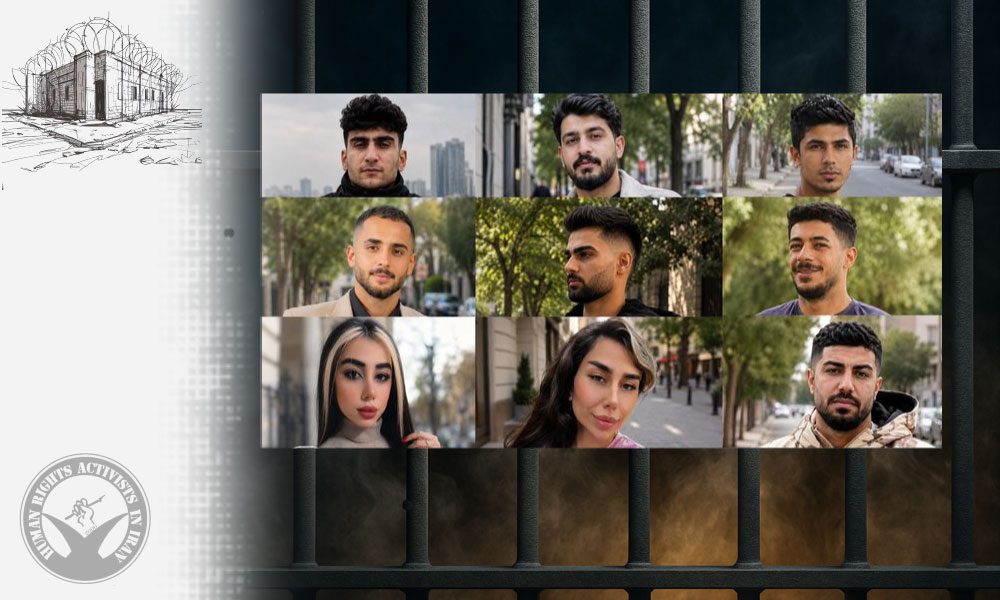
HRANA has confirmed the identities of 16 defendants in the case known as the “Shohada Square of Isfahan” case. The individuals, who were arrested in connection with the January 2026 protests, face charges including “enmity against God (moharebeh)” and other national security-related offenses. They remain in legal limbo in Dastgerd and Dolatabad prisons in Isfahan.

According to HRANA, 16 individuals arrested during the 2026 protests in Isfahan remain in detention.

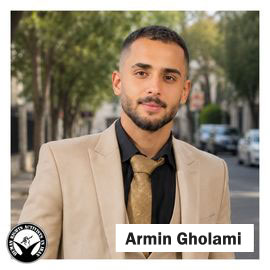
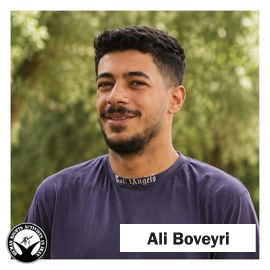
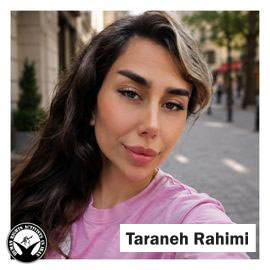
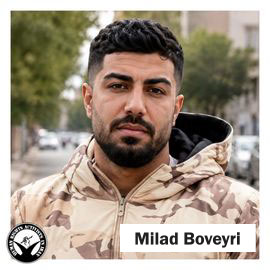
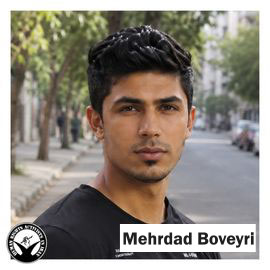
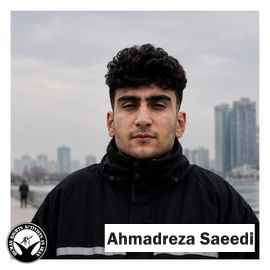
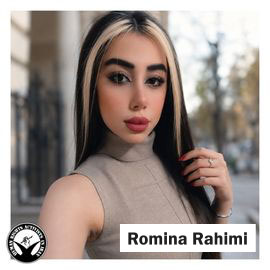
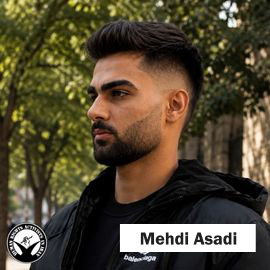
HRANA has identified the defendants as Armin Gholami, Sajjad Abedi Shapourabadi, Parsa Jafari, Mehdi Jafari, Ahmadreza Saeedi, Navid Elyasi, Abolfazl Dadgostar, Mehdi Mansouri, Hamed Mehralian, Mehdi Asadi, Setayesh Saedi, three brothers, Milad Boveyri (35), Mehrdad Boveyri (32), and Ali Boveyri (28), and 20-year-old twin sisters Taraneh Rahimi and Romina Rahimi. The female defendants are currently being held in Dolatabad Prison, while the male defendants are detained in Dastgerd Prison in Isfahan.

A source familiar with the detainees’ situation confirmed to HRANA:

“Most of these individuals spent time in solitary confinement after their arrests. Many of them had experienced significant weight loss by the time they were transferred out of solitary confinement. They are now permitted to make phone calls and receive family visits.”

According to information received by HRANA, the defendants were tried in July 2026 before Judges Morteza Barati and Mohammadreza Tavakkoli on charges including “enmity against God (moharebeh) through carrying bladed weapons,” “destruction of public property constituting moharebeh,” “assembly and collusion against national security,” and “propaganda against the regime.” No verdict has yet been issued.

Based on HRANA’s documentation, two of the defendants are additionally charged with “complicity in moharebeh” and “complicity in the destruction of public property,” while Setayesh Saedi is charged solely with “assembly and collusion.”

The three Boveyri brothers, Milad, Mehrdad, and Ali, were arrested at 4:00 a.m. on January 24, 2026, when security forces raided their home in Isfahan. Following their arrests, the family’s two shoe stores were sealed by the authorities. Taraneh and Romina Rahimi, the twin sisters charged in the same case, were also arrested in February 2026.

HRANA had previously reported on the case involving these 16 detainees, which has become known as the “Shohada Square of Isfahan” case. Several of the defendants are charged with moharebeh. Their trial was held inside Dastgerd Prison in Isfahan. Defense lawyers reportedly did not receive full access to the case files before the hearing, and one defendant told the judges in court that he had been subjected to torture during interrogation.

According to information obtained by HRANA, the case is also marked by uncertainties regarding the basis for several of the charges. During the events at Shohada Square in Isfahan, two people were killed, one identified as a member of the Islamic Revolutionary Guard Corps (IRGC) and the other as a homeless civilian. However, the indictment against the defendants contains no specific murder charges related to either death. Instead, the proceedings have focused on charges including moharebeh, complicity in moharebeh, destruction of public property, assembly and collusion, and propaganda against the regime.

A source familiar with the proceedings told HRANA that no evidence was presented during the trial specifically demonstrating the defendants’ involvement in the deaths of the two individuals.
 

Background on the January 2026 Protests

It should be noted that protests and strikes by shopkeepers and bazaar merchants began in Tehran on Sunday, December 28, 2025, and within two days spread beyond markets and commercial centers. With the participation of students, citizens, and various social groups, these protests became one of the largest protest movements of recent years. Following the crackdown by security and law enforcement forces, thousands were killed or injured, and tens of thousands were arrested or summoned by security agencies. For more information, readers may refer to HRANA’s comprehensive report titled “Crimson Winter,” documenting the first fifty days following the outbreak of Iran’s nationwide protests.

Public Execution of Two Inmates in Fuladshahr for Police Officer’s Murder

On July 13, 2023, two inmates were executed publicly for killing a police officer in Fuladshahr, located in the Isfahan province, as reported by Fars News Agency.

The condemned individuals, identified as Mohammad Ghaedi, aged 38, and Sadegh Mahmoodi Baram, aged 25, were found guilty of fatally shooting Police Officer Ehsan Nasiri during a group altercation that occurred between October and November 2021.

The death sentences were initially handed down by the Isfahan Revolutionary Court and Criminal Court, under the jurisdiction of Judge Morteza Barati. Subsequently, the Supreme Court confirmed the verdict, leading to the implementation of the public execution.

In 2022, the Department of Statistics and Publication of Human Rights Activists in Iran registered 457 reports related to the death penalty. This included 92 death sentences, including the conviction of 6 people to public execution and 565 execution sentences were carried out, 2 of which have been carried out in public. Based on the announced identifications of some of the executed individuals, 501 were male and 11 were female. In addition, 5 juvenile offenders were executed in 2022, meaning they were under the age of 18 at the time they committed the crime.


Protest Singer Toomaj Salehi Sentenced to Six Years and Three Months, Faces Harsh Restrictions

Toomaj Salehi, a prominent protest singer, has been handed a sentence of six years and three months by the Isfahan Revolutionary Court. In addition to the prison term, he has been subjected to a ban on leaving the country, producing music, and singing for a period of two years. Furthermore, he has been mandated to attend orientation classes as part of his sentencing.

According to HRANA, the news agency of Human Rights Activists, quoting Shargh Newspaper, rapper Toomaj Salehi was sentenced to imprisonment and additional punishments.

Today, July 10, Salehi was relocated from solitary confinement to the public ward in Dastgerd Prison, Isfahan.

Salehi’s lawyer, Roza Etemad Ansari, confirmed the verdict issued by Judge Morteza Barati, who presided over the case. Etemadi clarified that Salehi was found guilty of “spreading corruption on earth,” while being acquitted of the charges of “insulting the former and current Supreme Leader of Iran” and “association with adversary countries.”

A reliable source earlier revealed that Salehi sustained injuries to his right foot and eye as a result of beatings during the interrogation. He continues to suffer from these injuries.

In late October 2022, Salehi was arrested by security forces. Official media claimed that he was apprehended while attempting to leave the country illegally, a claim refuted by individuals close to Salehi.

The protest singer has a previous conviction in a separate legal case. On January 12, 2022, he was sentenced to a six-month prison term and fined. The imprisonment was suspended for one year.

Background on the 2022 Nationwide Protests

The arrest of Mahsa Amini by Tehran Morality Police for her improper hejab and her suspicious death on September 16 sparked protests sweeping across Iran. Protesters came to the streets with the central slogan “Women, Life, Freedom” in protest against the performance, laws and structure of the regime. During the nationwide protests, thousands of people, including journalists, artists, lawyers, teachers, students and civil rights activists, were arrested.


Trial Begins for Hip-Hop Singer Toomaj Salehi at Isfahan Revolutionary Court

The Isfahan Revolutionary Court’s Branch 1 commenced the court session for the charges against Toomaj Salehi on July 2, 2023.

Presided over by Judge Morteza Barati, the court proceedings included the presence of Salehi’s attorney, Amir Raisian, who represented his client.

According to Raisian, who spoke to Shargh Newspaper, Salehi has been charged with “spreading corruption on earth,” “propaganda against the regime,” “inciting people to wage war,” and “insulting the Supreme Leader of Iran.”

A reliable source earlier revealed that Salehi sustained injuries to his right foot and eye as a result of beatings during the interrogation. He continues to suffer from these injuries.

In late October 2022, Salehi was arrested by security forces. Official media claimed that he was apprehended while attempting to leave the country illegally, a claim refuted by individuals close to Salehi.

The protest singer has a previous conviction in a separate legal case. On January 12, 2022, he was sentenced to a six-month prison term and fined. The imprisonment was suspended for one year.