Ongoing Detention: Baha’i Citizen Keyhan Maghsoudi Remains in Limbo

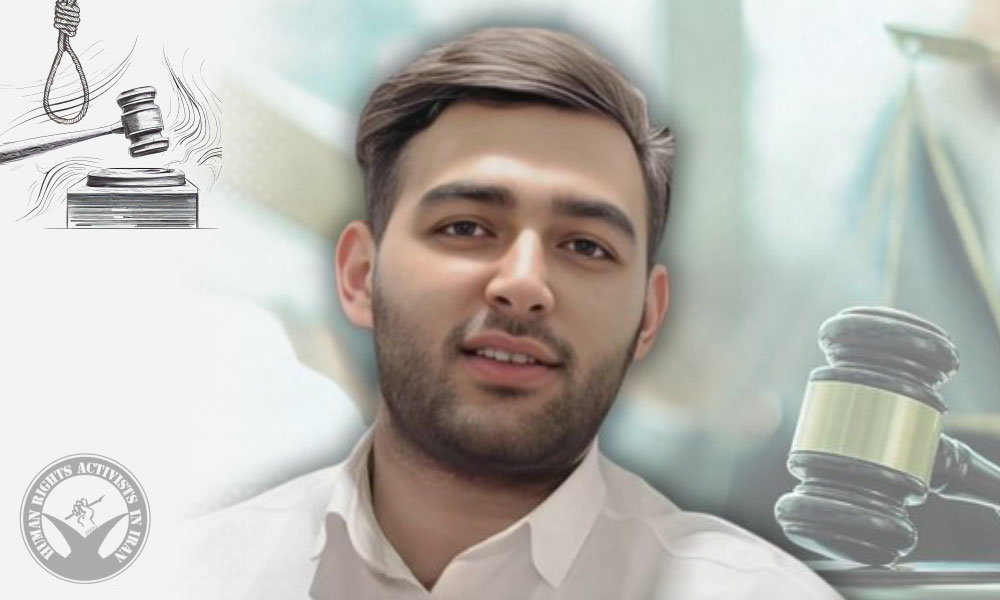
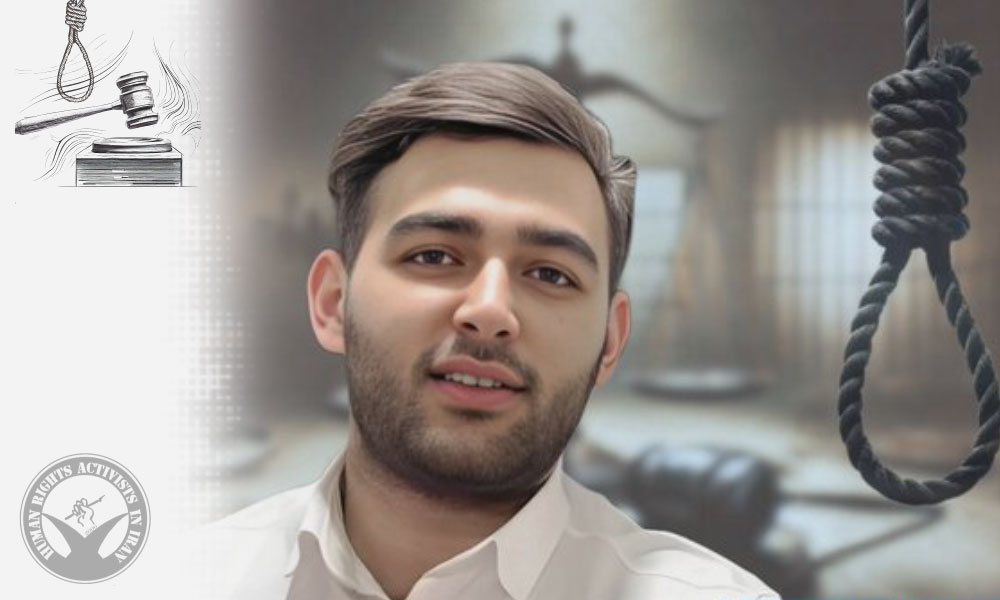
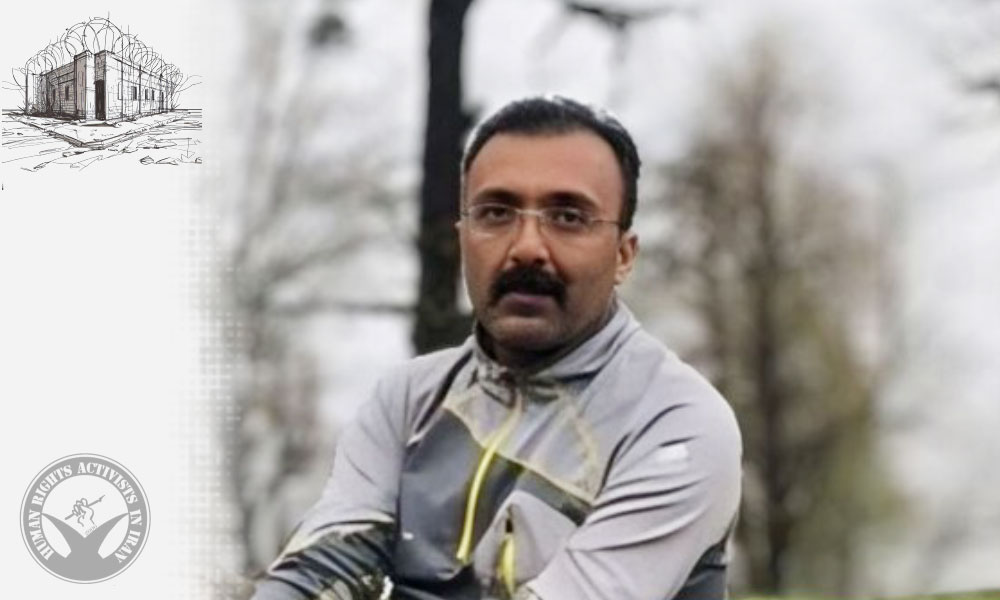
HRANA – Baha’i citizen Keyhan Maghsoudi, a resident of Urmia, remains in limbo 85 days after his arrest, currently held in one of the Islamic Revolutionary Guard Corps’ (IRGC) detention facilities in the city.

A source close to his family told HRANA: “Mr. Maghsoudi has been held in detention for 85 days without clarity about his case. He was initially kept in a security detention center in Urmia. On September 4, he was transferred to Urmia Prison, but two days later was returned to an IRGC detention facility for further interrogation. Since his arrest, his family has only been allowed two brief visits, and he continues to be denied access to legal counsel.”

Mr. Maghsoudi was arrested on Friday, June 20, 2025, during the 12-day Iran-Israel war, by security forces at his workplace. Following his arrest, he was transferred between Urmia’s security detention centers and Urmia Prison multiple times. About a month after his arrest, security forces also confiscated his personal vehicle.

As of the time of this report, the reasons for his arrest and the charges against him remain unknown.

Keyhan Maghsoudi, 49, is unmarried and works as a photographer and filmmaker in Urmia. A nature enthusiast, he has collaborated on numerous cinema and television projects.

Over the past decade, the Iranian Bahá’í community has been disproportionately targeted by Iran’s security forces and judiciary—more than any other minority group. In the past three years, an average of 72 percent of the reports on religious rights violations collected by HRANA have documented the Iranian regime’s repression of the Bahá’í community.

Supreme Court Annuls Death Sentence of Shahin Vasaf; Retrial Results in 10-Year Term

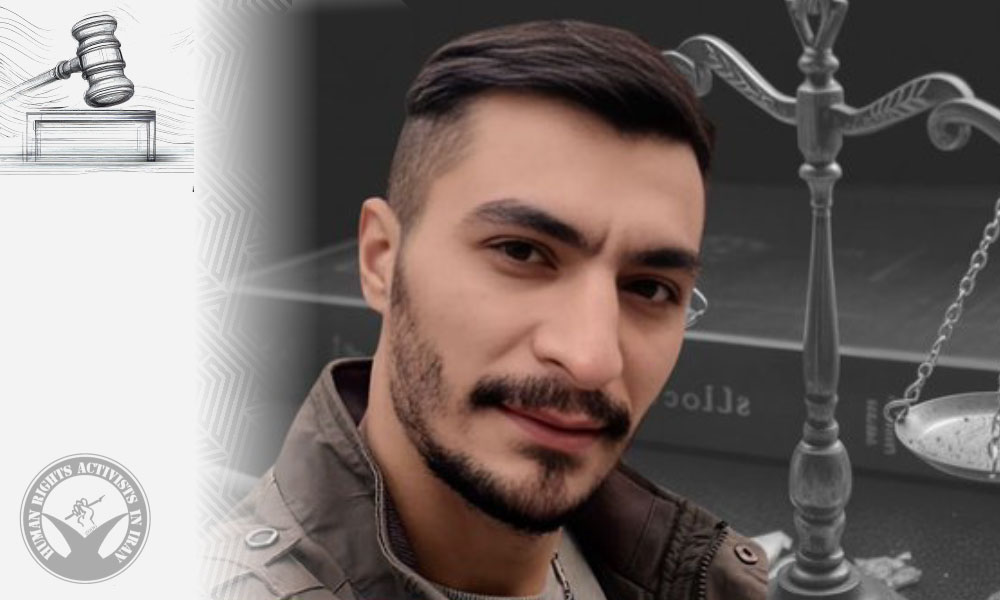
HRANA – Following the annulment of political prisoner Shahin Vasaf’s death sentence by the Supreme Court and the referral of his case to a parallel branch, he has now been sentenced to 10 years in prison by Branch 1 of the Urmia Revolutionary Court.

According to information obtained by HRANA, the Supreme Court had previously overturned Mr. Vasaf’s death sentence. In August of this year, his retrial was held before Branch 1 of the Urmia Revolutionary Court as the designated parallel branch. Two days ago, the court issued its verdict, sentencing him to 10 years in prison.

Mr. Vasaf was first arrested by security forces in September 2022. Following his interrogation at The Ministry of Intelligence’s detention facility in Urmia, he was transferred to Urmia Prison.

In late 2023, Branch 3 of the Urmia Revolutionary Court had sentenced him to death on the charge of “espionage for Israel.”

Shahin Vasaf, 29, is a native of Salmas and a resident of Urmia.

Three Prisoners Executed in Urmia Prison

HRANA – on Sunday, August 31, the death sentences of three prisoners previously convicted of murder in separate cases were carried out in Urmia Prison.

According to HRANA, the three prisoners executed at dawn on Sunday have been identified as Javad Ali, Rahman Javan, and Morteza Zichi, all residents of Urmia.

Based on information received by HRANA, these individuals had been arrested on murder charges in separate cases and later sentenced to death by criminal courts.

On Saturday, August 30, the three prisoners were transferred to solitary confinement in preparation for their executions. Another prisoner was also moved to solitary for execution but was returned to the general ward after the victim’s family granted consent and forgave him.

As of the time of this report, the executions of these three prisoners have not been announced by prison officials or relevant authorities.

In 2024, according to 812 reports compiled by HRANA, the Iranian regime executed 930 individuals in its prisons—marking the highest number of executions in the past 12 years. Despite the scale of these executions, prison officials and other relevant authorities publicly acknowledged only 6% of them, highlighting the regime’s lack of transparency and accountability.

Amputation Sentences Carried Out for Three Inmates in Urmia Prison

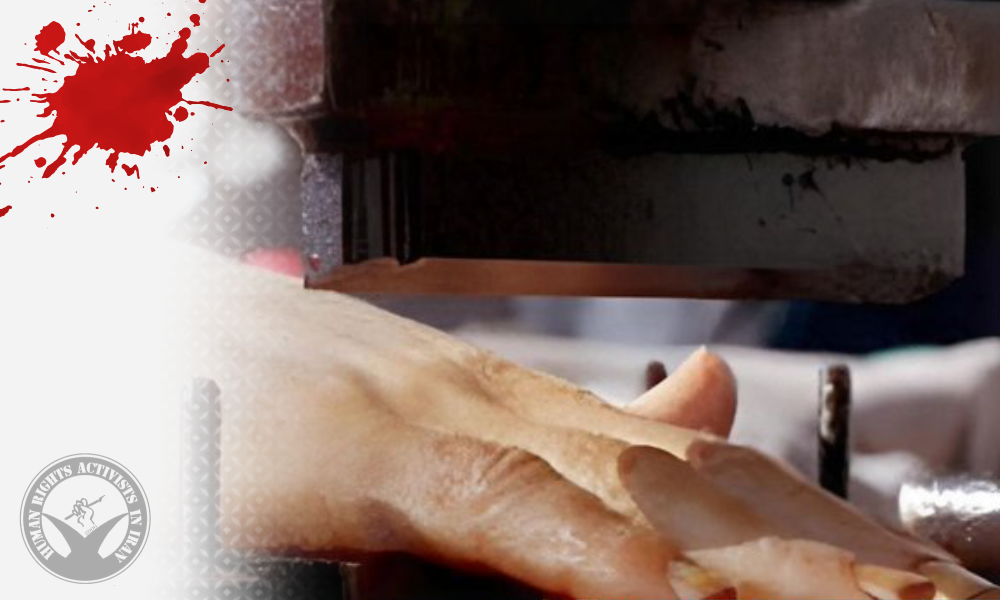
HRANA– In the early hours of Thursday, July 31, the amputation sentences of three prisoners convicted of theft were carried out in Urmia Prison. Hadi Rostami, Mehdi Sharafian, and Mehdi Shahivand had the fingers of their right hands amputated. Following the implementation of the sentences, the three were transferred to a hospital and returned to prison several hours later.

According to information received by HRANA, a disturbance broke out last night in Urmia Prison. Following the incident, prison guards transferred Hadi Rostami, Mehdi Sharafian, and Mehdi Shahivand to solitary confinement. Ultimately, around 1:00 a.m. on Thursday, July 31, the amputation sentences were carried out inside the prison.

A source familiar with the case, who spoke to HRANA on condition of anonymity for security reasons, said: “Mr. Rostami, Sharafian, and Shahivand were transferred to a hospital after the amputations were carried out. They were returned to prison several hours later.”

Hadi Rostami, 39, Mehdi Sharafian, 42, and Mehdi Shahivand, 29, were arrested in 2015 by police detectives in Urmia. The three were prosecuted in a joint case related to theft charges.

On November 19, 2019, they were sentenced by Branch 1 of the Juvenile Criminal Court to the amputation of four fingers on their right hands, in a way that the thumb and palm would remain intact. They were also ordered to return the stolen property. This sentence was upheld by Branch 13 of the Supreme Court on May 10, 2020.

The International Covenant on Civil and Political Rights (ICCPR) strictly prohibits inhumane and degrading punishments such as flogging and amputation. However, in 2024, HRANA documented at least three cases where flogging sentences were carried out, totaling 106 lashes. Additionally, at least 131 individuals were sentenced to a combined 9,957 lashes by the Iranian judiciary.

Prisoner Executed in Urmia Prison for Drug Offenses

HRANA News Agency – On Monday, June 2, the execution of a prisoner previously sentenced to death on drug-related charges was carried out in Urmia Prison.

According to HRANA, the news agency of Human Rights Activists in Iran, the prisoner has been identified as Naser Nabizadeh, a resident of Urmia.

Based on information received by HRANA, Nabizadeh was arrested five years ago on drug-related charges and later sentenced to death by the Revolutionary Court.

As of the time of this report, prison authorities and responsible institutions have not officially announced the execution.

In 2024, according to 812 reports compiled by HRANA, the Iranian regime executed 930 individuals in its prisons—marking the highest number of executions in the past 12 years. Despite the scale of these executions, prison officials and other relevant authorities publicly acknowledged only 6% of them, highlighting the regime’s lack of transparency and accountability.

Subscribe to Our Newsletter

Now is definitely not the time to stop reading!

Supreme Court Rejects Second Retrial Request for Hatem Ozdemir

HRANA News Agency – The Supreme Court has rejected a second request for retrial filed on behalf of Hatem Ozdemir, a Turkish national and political prisoner sentenced to death and currently held in Urmia Prison.

This marks the second time Iran’s highest judicial authority has denied a retrial for Ozdemir. His initial request was rejected in March 2025. Earlier, in September 2024, the Supreme Court had upheld his death sentence.

Ozdemir was arrested by security forces in Maku in early summer 2019. After two months, he was transferred to the political ward of Urmia Prison. On September 18 of that year, he was moved to the Ministry of Intelligence’s detention facility in Urmia, and shortly thereafter returned to Urmia Central Prison.

In late winter 2022, Branch 1 of the Revolutionary Court in Khoy sentenced Ozdemir to death on charges of baghi (armed rebellion). The ruling was officially delivered to him on March 15, 2022. The Supreme Court later overturned this verdict and referred the case to an equivalent court for reconsideration.

Following a new trial, Branch 3 of the Urmia Revolutionary Court, presided over by Judge Najafzadeh, reissued a death sentence against Ozdemir in May 2024—this time on charges of moharebeh (enmity against God).

Political Prisoner Hamid Hosseinnezhad Heydaranlou Executed

HRANA News Agency – Hamid Hosseinnezhad Heydaranlou, a political prisoner from Chaldoran, was executed secretly without his family’s knowledge. Judicial authorities summoned his family to the Public and Revolutionary Prosecutor’s Office in Urmia, where they informed them that his execution had been carried out after he was transferred to Tehran.

According to HRANA, citing Fars News Agency, Hamid Hosseinnezhad Heydaranlou, a political prisoner, has been executed.

Last night, his family was summoned to the Public and Revolutionary Prosecutor’s Office in Urmia and informed that his execution had been carried out following his transfer to Tehran. They gathered in front of Urmia Prison, demanding the return of their son’s body.

Kurdpa News Agency reported that, hours after the official announcement of the execution, the family still has no information about the exact time and location of the execution, and they have not yet received his body.

Over the past week, the family and close relatives of this political prisoner repeatedly gathered in front of Urmia Prison and the Urmia Judiciary, demanding clarification of his situation and the halt of his death sentence.

In the early hours of Saturday, April 19, Fars News Agency, affiliated with security institutions, published a video of the prisoner’s forced confessions, attempting to accuse him of “baghi” (armed rebellion). In the video — recorded under unknown circumstances — Mr. Hosseinnezhad is seen participating in a staged reenactment of an alleged “armed operation at the Chaldoran border.”

Mr. Hosseinnezhad Heydaranlou, who had recently been moved to solitary confinement in Urmia Prison, was transferred to an unknown location on April 17.

His death sentence had been previously upheld by Branch 9 of the Supreme Court and officially communicated to him at Urmia Prison on March 26, 2025.

In late July 2024, he had been sentenced to death by Branch 1 of the Urmia Revolutionary Court on the charge of “baghi” through alleged membership in an opposition group. Throughout all stages of his trial, he was denied access to legal counsel.

A source close to his family had earlier told HRANA:
“Mr. Hosseinnezhad Heydaranlou rejected all charges during his trial and stated that on the day of the alleged clash, he was traveling to Turkey with his family.”

This political prisoner had been arrested on April 13, 2023, at the Chaldoran border by border guards. After several hours of interrogation at the Border Guards’ detention center, he was transferred to the Ministry of Intelligence’s detention facility in Urmia, where he endured 11 months and 10 days of physical and psychological torture aimed at extracting forced confessions about participation in an armed clash between border guards and members of an opposition party.

Hamid Hosseinnezhad Heydaranlou, born in 1985, was the father of three children and had been working as a border tradesman in Chaldoran in recent years to provide for his family.

Transfer to Solitary Confinement Raises Growing Concerns Over the Imminent Execution of Political Prisoner Hamid Hosseinnezhad Heydaranlou

HRANA News Agency – Hamid Hosseinnezhad Heydaranlou, a political prisoner sentenced to death and held in Urmia Prison, has been transferred to solitary confinement. Given his death sentence, the transfer has heightened concerns among his family and close ones.

A source close to the prisoner’s family confirmed the news to HRANA, stating: “The transfer of this death row prisoner has increased the family’s and his relatives’ concerns about his situation.”

The political prisoner’s death sentence was recently upheld by Branch 9 of the Supreme Court and was officially communicated to him in Urmia Prison on March 26, 2025.

Mr. Hosseinnezhad was sentenced to death in July 2024 by Branch 1 of the Urmia Revolutionary Court, presided over by Judge Najafzadeh. He was convicted of baghi for alleged membership in an opposition party. After he appealed the ruling, the case was referred to the Supreme Court.

He was arrested on April 13, 2023, by border guards near Chaldoran. After several hours of interrogation, he was transferred to The Ministry of Intelligence’s detention facility in Urmia. There, he was subjected to psychological and physical torture for 11 months and 10 days to force a confession. He was made to sign pre-written statements.

During his detention at The Ministry of Intelligence’s detention facility, he was only allowed two brief phone calls with his family and was denied access to legal counsel and in-person visits. Due to opposition from the Ministry of Intelligence, he was also denied a chosen lawyer during trial. The court dismissed his defense and sentenced him to death for baghi.

In court, Mr. Hosseinnezhad denied all charges. Kurdpa reported that the Ministry of Intelligence accused him of collaborating with an opposition party without presenting any evidence. The agency claimed he held a grudge against border forces because his brother-in-law, Mostafa Nouri, had been killed by them in 2015. Based on this, he was accused of involvement in an armed clash. Judge Najafzadeh issued the death sentence in a brief hearing, solely based on “the judge’s intuition.”

Hamid Hosseinnezhad Heydaranlou, aged around 40, is a father of three. He is currently being held in Ward 2 of Urmia Prison.

Death Sentence of Political Prisoner Hamid Hosseinnezhad Upheld by Supreme Court

HRANA News Agency – The death sentence of Hamid Hosseinnezhad Heydaranlou, a political prisoner held in Urmia Prison, has been upheld by the Supreme Court of Iran. He had previously been sentenced to death by the Urmia Revolutionary Court on the charge of baghi (armed rebellion).

According to HRANA, quoting Kurdpa, the Supreme Court’s Branch 9 confirmed the death sentence, which was officially communicated to him on March 26, 2025, in Urmia Prison.

Mr. Hosseinnezhad was sentenced to death in July 2024 by Branch 1 of the Urmia Revolutionary Court, presided over by Judge Najafzadeh. He was convicted of baghi for alleged membership in an opposition party. After he appealed the ruling, the case was referred to the Supreme Court.

He was arrested on April 13, 2023, by border guards near Chaldoran. After several hours of interrogation, he was transferred to The Ministry of Intelligence’s detention facility in Urmia. There, he was subjected to psychological and physical torture for 11 months and 10 days to force a confession. He was made to sign pre-written statements.

During his detention at The Ministry of Intelligence’s detention facility, he was only allowed two brief phone calls with his family and was denied access to legal counsel and in-person visits. Due to opposition from the Ministry of Intelligence, he was also denied a chosen lawyer during trial. The court dismissed his defense and sentenced him to death for baghi.

In court, Mr. Hosseinnezhad denied all charges. Kurdpa reported that the Ministry of Intelligence accused him of collaborating with an opposition party without presenting any evidence. The agency claimed he held a grudge against border forces because his brother-in-law, Mostafa Nouri, had been killed by them in 2015. Based on this, he was accused of involvement in an armed clash. Judge Najafzadeh issued the death sentence in a brief hearing, solely based on “the judge’s intuition.”

Hamid Hosseinnezhad Heydaranlou, aged around 40, is a father of three. He is currently being held in Ward 2 of Urmia Prison.

Four Prisoners, Including Two Women, Executed in Urmia Prison

HRANA News Agency – On March 16, the death sentences of four prisoners, including two women, were carried out in Urmia Prison. These individuals had previously been convicted of murder in separate cases.

According to HRANA, the news agency of Human Rights Activists in Iran, the executed prisoners have been identified as Arshad Farzadband, Hamed Faraji, his wife Mojgan Azarpisheh, and Kosar Baghernejad.

Based on information obtained by HRANA, Kosar Baghernejad was arrested in 2021 on charges of killing her husband, who was also her cousin. She was later sentenced to death by a criminal court. Arshad Farzadband and Hamed Faraji were also convicted of murder and received death sentences.

Mojgan Azarpisheh and her husband, Hamed Faraji, were arrested in December 2019 for allegedly killing an Iraqi citizen and were subsequently sentenced to execution.

The four prisoners were transferred to solitary confinement the day before their executions.

As of the time of this report, prison authorities and relevant institutions have not publicly confirmed these executions.