Baha’is in Yazd Face Widespread Raids, Interrogations, and Prison Sentences

HRANA – From March to October 2026, dozens of Baha’i citizens in Yazd faced security and judicial actions, including home searches, confiscation of personal belongings, summonses for interrogation, and judicial prosecution. During this period, a gathering attended by approximately 50 people was dispersed, 18 summonses for interrogation were reported, and three citizens were sentenced to prison. Additionally, one citizen was transferred to prison to serve a sentence. During these operations, agents confiscated mobile phones and other personal belongings belonging to citizens, their guests, and family members, some of which have yet to be returned. This report examines the details of these incidents.

According to HRANA, between March 28 and October 15, 2026, security and judicial actions against Baha’i citizens in Yazd extended beyond those facing legal proceedings, affecting participants in private gatherings, guests, and family members. During this period, security agents searched numerous homes and confiscated mobile phones, electronic devices, books, photographs, and religious items associated with the Baha’i Faith. In one case, agents also seized a citizen’s private vehicle.

A review of the incidents indicates that Shahrivar (23 August–September 22) saw the highest number of security-related actions. During that month, six residential homes were searched, and six citizens were summoned to the Ministry of Intelligence for interrogation. In Mehr (23 September–October 15, 2026), four residential homes and a farm were also searched. One of these operations took place on the tenth anniversary of the murder of a Baha’i citizen and involved approximately 40 security agents.


Type of ActionRecorded Figures
Total Recorded IncidentsApproximately 34
Searches of Premises11
Dispersal of Private Gathering1 gathering, approximately 50 attendees
Summonses for Interrogation18
Prison Sentences Issued3 individuals
Enforcement of Prison Sentences1 individual
Total Prison Sentences Imposed20 years, 1 month, and 20 days


Of the 11 recorded searches, 10 involved residential homes, while one involved a farm belonging to a Baha’i family. The approximately 18 reported summonses included around 12 in Tir (22 June–22 July) and six in Shahrivar . These figures do not necessarily indicate that 18 different individuals were summoned. Similarly, the total of approximately 34 incidents represents the combined number of actions listed in the table, rather than the number of individuals affected or separate operations carried out by security agents.

Dispersal of a Private Gathering and Summonses of Participants

The first incident in this series of security actions was reported on March 28, 2026. On that day, approximately 50 Baha’i citizens in Yazd had gathered to share ash, a traditional Iranian soup, in keeping with a local custom. Agents from the Ministry of Intelligence arrived at the location, dispersed the gathering, and confiscated the attendees’ mobile phones.

According to information received, the agents did not present a judicial warrant when confiscating the phones. Although most attendees approached the relevant legal authorities to recover their belongings, the phones have yet to be returned to their owners.

In Tir, approximately 12 participants in the gathering were summoned to the Ministry of Intelligence for interrogation. No information is available regarding the official reasons for these summonses or any potential charges brought against them.

Searches of Baha’i Citizens’ Homes and Confiscation of Personal Belongings

In Shahrivar, security agents searched six residential homes belonging to Baha’i citizens in Yazd. During these operations, they confiscated not only the homeowners’ belongings but also the mobile phones of their guests.

On August 26, security agents searched the home of Shahrokh Nasiri. During the operation, they confiscated the mobile phones of six guests present at his home.

On September 2 and 3, six Baha’i citizens were summoned to the Ministry of Intelligence in Yazd for interrogation. No further information is available regarding the reasons for their summonses or the outcomes of their interrogations.

On September 12, security agents searched the homes of three Baha’i citizens. During these operations, mobile phones and books found in the homes were confiscated. The identities of these three citizens have not yet been established.

One day later, on September 13, the home of Majid Ghaneh was searched. Agents confiscated mobile phones, a laptop, books, photographs, and items associated with the Baha’i Faith. They also seized his personal vehicle.

Approximately eight guests were present at the home during the search, and their mobile phones were also confiscated. One of the guests, Parnia Basiri, who did not have a mobile phone with her, was taken by the agents to her own residence.

After entering her home, the agents searched the premises and confiscated all mobile phones belonging to her family members, along with items associated with the Baha’i Faith.

These incidents demonstrate that the security operations were not limited to the homeowners. At two private gatherings, the mobile phones of approximately 14 guests were confiscated, and in one instance, a guest’s home was also searched.

Searches of a Family’s Homes on the Anniversary of Their Father’s Murder

In Mehr, security operations continued with searches of four residential homes and a farm. Three of these homes belonged to members of the family of Farhang Amiri, a Baha’i citizen who was murdered in Yazd.

On September 27, 2026, coinciding with the tenth anniversary of Farhang Amiri’s murder, approximately 40 security agents arrived at his family’s home.

According to information received, the agents conducted a prolonged search of the residence and confiscated mobile phones, personal belongings, and items associated with the Baha’i Faith.

That same evening, the home of Payam Amiri, Farhang Amiri’s son, as well as the home of his daughter Neda Amiri and son-in-law Maziar Mottahed, were searched. Agents also confiscated a number of their personal belongings.

According to information received, the psychological distress caused by the agents’ presence and the search of the home led to a deterioration in Ms. Amiri’s health, requiring her to be taken to an emergency medical facility.

An informed source told HRANA that the agents had visited the family members’ homes under the assumption that they had organized a ceremony to commemorate the anniversary of Farhang Amiri’s murder.

Four days later, on October 1, security agents arrived at a farm belonging to the Amiri family. After searching the property, they confiscated mobile phones and several items found on the premises.

Farhang Amiri, a 63-year-old Baha’i citizen, was stabbed to death outside his home in Yazd on September 26, 2016. Following their arrest, the two suspects in the case stated that his religious beliefs had motivated the murder.

Ten years after the incident, members of the Amiri family faced searches of their homes and confiscation of their personal belongings on the anniversary of their father’s murder.

Subsequently, on October 15, security agents arrived at the home of Soheil Rouhanifard, another Baha’i citizen residing in Yazd. After searching his home, they confiscated a number of his personal belongings.

Prison Sentences Issued and Enforced Against Baha’i Citizens

In addition to home searches and the confiscation of personal belongings, three Baha’i citizens in Yazd have been sentenced to prison, while another citizen has been transferred to prison to serve a sentence.

Flora Samadani and Ahmad Naeimi, a Baha’i couple residing in Yazd, were sentenced by Branch 1 of the Yazd Revolutionary Court to a combined total of three years, six months, and two days in prison.

According to a verdict issued on October 12, Flora Samadani was sentenced to three years and one day in prison on charges of “deviant propaganda activities contrary to the sacred law of Islam through the promotion of the Baha’i Faith.” Her husband was also sentenced to six months and one day in prison for aiding and abetting the same offense.

Ms. Samadani had previously been arrested on May 3 and released on bail on June 20. Ahmad Naeimi was also arrested on June 13 and released on bail on July 4.

In a separate case, Moein Mohammadi-Dehj, a 39-year-old Baha’i citizen, was sentenced in August by Branch 1 of the Yazd Revolutionary Court to a total of 16 years, seven months, and 18 days of discretionary imprisonment. He was also sentenced to a 10-year deprivation of social rights and a permanent ban from employment in government and public services.

Under Article 134 of the Islamic Penal Code, the most severe sentence of 12 years, six months, and one day in prison will be enforceable against him.

Additionally, Iman Rashidi, a Baha’i citizen residing in Yazd, was summoned to prison on August 23 to begin serving his sentence. After reporting to the judicial authorities, he was arrested and transferred to prison.

Mr. Rashidi had previously served a prison sentence and was released from Yazd Prison in February 2018 after completing his earlier sentence.

Confiscation of Personal Belongings and Failure to Return Seized Property

The confiscation of mobile phones and personal belongings has been a recurring practice in security operations targeting Baha’i citizens in Yazd.

During the gathering in Farvardin (21 Match-20 April, 2026), the mobile phones of approximately 50 people were confiscated. In Shahrivar, the mobile phones of approximately 14 guests at two separate homes were also seized. In other incidents, agents confiscated electronic devices, books, photographs, items associated with the Baha’i Faith, and a private vehicle.

According to information received, despite repeated visits and follow-up efforts by some citizens with the relevant legal authorities, a significant portion of the confiscated property has yet to be returned to its owners. Furthermore, no clear information is available regarding the legal grounds for retaining these belongings or when they might be returned.

The prolonged confiscation of mobile phones and electronic devices can disrupt family communications, professional activities, and citizens’ access to essential information and services, particularly in cases where the communication devices of all members of a household have been seized.

Over the past decade, the Baha’i community in Iran has been subjected to more security and judicial actions than any other religious minority. An examination of annual reports published by HRA’s Department of Statistics and Publications indicates that, during the past year, an average of 62.41% of reports concerning religious minorities involved violations of the civil rights of Baha’is.

Baha’i Citizen Sentenced to More Than 16 Years in Prison

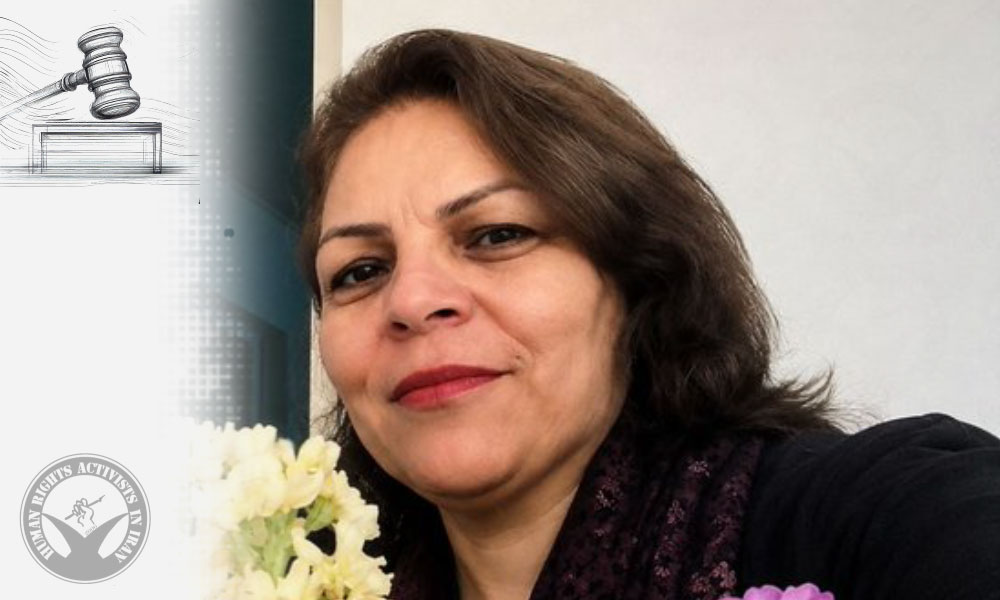
HRANA – Moein Mohammadi-Dehaj, a Baha’i resident of Yazd, has been sentenced by Branch 1 of the Yazd Revolutionary Court to 16 years, 7 months and 18 days of discretionary imprisonment, 10 years of deprivation of social rights, and permanent dismissal from government and public service.

According to HRANA, Moein Mohammadi-Dehaj, a Baha’i citizen, has been sentenced to imprisonment and additional punishments.

According to a ruling issued by Branch 1 of the Yazd Revolutionary Court and formally communicated to Mr. Mohammadi-Dehaj, he was sentenced to a total of 16 years, 7 months and 18 days in prison. In addition, as supplementary punishments, he was sentenced to 10 years of deprivation of social rights and permanent dismissal from government and public service. Under Article 134 of the Islamic Penal Code, which governs the aggregation of sentences, only the harshest sentence, 12 years, 6 months and 1 day of imprisonment, will be enforceable.

According to the details of the verdict, Mr. Mohammadi-Dehaj received:

• Seven months and 16 days of discretionary imprisonment on the charge of “propaganda against the regime,” pursuant to Article 500 of the Islamic Penal Code;

• Three years, 6 months and 1 day of discretionary imprisonment, along with 10 years of deprivation of social rights, on the charge of “deviant propaganda contrary to the sacred law of Islam through the promotion of the Baha’i faith,” pursuant to Article 500 bis of the Islamic Penal Code;

• Twelve years, 6 months and 1 day of discretionary imprisonment and permanent dismissal from government and public service on the charge of “media and propaganda activities against national security,” pursuant to Article 4 of the Law on Intensifying the Punishment for Espionage and Collaboration with Israel and Hostile States Against National Security and Interests.

According to information received by HRANA, the convictions related to the charges of “propaganda against the regime” and “deviant propaganda contrary to the sacred law of Islam” may be appealed within 20 days of notification. The conviction for “media and propaganda activities against national security” may be challenged through an appeal before the Supreme Court within 10 days.

Mr. Mohammadi-Dehaj was arrested by security forces at his home in Yazd on January 5, 2026, during which several personal belongings belonging to him and his family were confiscated. He was subsequently released from prison on March 17, 2026, after posting bail of 50 billion rials (five billion tomans).

Moein Mohammadi-Dehaj is a 39-year-old Baha’i resident of Yazd who has previously faced arrest and conviction.

Over the past decade, Iran’s Baha’i community has been subjected to more security and judicial repression than any other religious minority in the country. According to HRA annual reports, an average of 62.41% of all reported violations of the rights of religious minorities during the past year involved members of the Baha’i community.

Baha’i Citizen Mitra Bandi Amirabadi Sentenced to Prison

HRANA – Mitra Bandi Amirabadi, a Baha’i resident of Yazd, has been sentenced by the Revolutionary Court of Yazd to five years of discretionary imprisonment and a 10-year deprivation of social rights. Three years of the prison sentence have been suspended for a period of three years.

According to HRANA, Mitra Bandi Amirabadi has been sentenced to prison. Under a ruling issued by Branch 1 of the Revolutionary Court of Yazd, this Baha’i citizen was convicted on the charge of “deviant propaganda activity contrary to the sacred law of Islam through the promotion of the Baha’i faith,” under Article 500 bis of the Islamic Penal Code. She was sentenced to five years of discretionary imprisonment and a 10-year deprivation of social rights. Three years of her prison sentence have been suspended for a period of three years.

If the verdict is upheld on appeal, Ms. Bandi Amirabadi will be required to serve two years of discretionary imprisonment.

On June 17, 2025, security forces searched the home of this Baha’i citizen. The search was carried out around midnight, and officers confiscated a number of electronic devices, personal belongings, and several religious books.

Mitra Bandi Amirabadi, a Baha’i resident of Yazd, has previously been arrested and convicted because of her religious beliefs.

Woman and Several Others Arrested After Semi-Nude Appearance in Yazd

HRANA – The Public Relations Office of the Public and Revolutionary Prosecutor’s Office in Yazd has announced the arrest of a woman who appeared semi-nude in the city, along with several individuals involved in recording and publishing a video of her, accusing them of what it described as “violating social norms.”

According to HRANA, citing IRIB News, several citizens, including a woman, have been arrested in Yazd.

The Public Relations Office of the Public and Revolutionary Prosecutor’s Office in Yazd claimed that following the circulation of a video showing a semi-nude woman in Yazd’s Ghadir Park, where she allegedly engaged in “norm-breaking” behavior, the prosecutor’s office launched a special investigation into the case.

According to the authorities, following legal procedures and under a judicial order, the woman and several individuals who had recorded and shared the video were identified and arrested.

The report did not provide further details, including the identities of those arrested, the exact number of detainees, or where they are being held.

Ilya Bakhshaei Remains Imprisoned in Evin as Five-Year Sentence Stands

HRANA – Ilya Bakhshaei, a student at the University of Yazd and one of those arrested during the January 2026 protests, is currently serving his prison sentence in Evin Prison. He was sentenced to five years in prison by the Tehran Revolutionary Court at the trial stage, and the verdict was upheld in full on appeal.

A source close to the family, confirming the matter to HRANA, said: “Mr. Bakhshaei, who is being held in Evin Prison, recently submitted a request for judicial review of his case to the Supreme Court.”

According to information received by HRANA, the University of Yazd student was sentenced at the trial stage by the Revolutionary Court to five years in prison on charges of assembly and collusion to act against national security. The verdict was later upheld in its entirety by Branch 21 of the Tehran Province Court of Appeals.

Ilya Bakhshaei, a sports sciences student at the University of Yazd, was arrested in January 2026 in connection with the nationwide protests.

Subscribe to Our Newsletter

Now is definitely not the time to stop reading!

Eight Prisoners Executed in Yazd Prison

HRANA – Yesterday, June 17, 2026, the death sentences of eight prisoners convicted on non-political charges were carried out in Yazd Prison.

According to Rasank, two of those executed have been identified as Omar Shahbakhsh, approximately 24 years old and a native of Zahedan, and Ghafour Shahbakhsh, approximately 25 years old, married and the father of one child, also from Zahedan.

The two prisoners had been arrested several years ago in Yazd in a joint case involving drug-related offenses and were subsequently sentenced to death by the Revolutionary Court of the city.

Additionally, Haalvsh reported the execution of six other prisoners in the same prison on non-political charges. The report did not provide their identities or details regarding their cases.

As of the time of writing, the executions have not been officially announced by prison authorities or the relevant government institutions.

According to HRA’s Annual Report, in 2025 at least 2,063 citizens, including 61 women and 2 juvenile offenders, were executed. Of these, the sentences of 11 individuals were carried out in public. During the same period, 172 other individuals were sentenced to death.

Baha’i Citizen Ahmad Naeimi Arrested

HRANA – On Saturday, June 13, Ahmad Naeimi, a Baha’i resident of Yazd, was arrested after appearing before Branch 6 of the Investigation Office of the Yazd Prosecutor’s Office.

Based on information received by HRANA, Mr. Naeimi was detained on June 13, after appearing before Branch 6 of the Investigation Office of the Yazd Prosecutor’s Office.

A source close to the family confirmed the news to HRANA, stating: “Mr. Naeimi is facing a new legal case. In this case, he and his wife, Flora Samadani, are co-defendants. The Prosecutor’s Office also opposed his release on bail.”

Mr. Naeimi had previously been summoned to the Prosecutor’s Office to provide certain explanations. As of the time of this report, no information is available regarding his place of detention.

Ahmad Naeimi has previously faced arrest and judicial harassment due to his religious beliefs and faith. His wife, Flora Samadani, was arrested by security forces in Yazd on May 3, 2026, and transferred to Yazd Prison.

Over the past decade, the Baha’i community in Iran has been subjected to more security and judicial persecution than any other religious minority. An examination of the annual reports published by HRA indicates that during the past calendar year, an average of 62.41% of all reported violations of the rights of religious minorities involved violations of the rights of Baha’i citizens.

Baha’i Citizen Flora Samadani Arrested in Yazd

HRANA – Flora Samadani, a Baha’i citizen, was arrested on Sunday, May 3, by security forces in Yazd. Three days after her arrest, there is still no precise information available regarding her fate.

According to HRANA, the continued detention and uncertainty surrounding Flora Samadani has now entered its third day. Based on information received by HRANA, this Baha’i citizen was detained by security forces in Yazd on Sunday, May 3, and no information about her condition or whereabouts has been made available since. The lack of information about her situation has increased concerns among her family.

As of the time of this report, no details have been obtained regarding the reasons for her arrest or the charges brought against her.

Flora Samadani is a Baha’i resident of Yazd and the wife of Ahmad Naeimi. Mr. Naeimi has previously been arrested and faced judicial actions due to his religious beliefs.

Over the past decade, the Baha’i community in Iran has been subjected to more security and judicial pressures than any other religious minority. A review of annual reports by the Statistics, Publications, and Works Center of the Human Rights Activists in Iran indicates that over the past year, an average of 62.41% of reports concerning religious minorities were related to violations of the rights of Baha’is.

Three Christian Citizens Arrested in Yazd

HRANA – The prosecutor of Yazd announced the arrest of three Christian citizens in the province on charges described as “forming a house church group and promoting Christianity.”

According to Fars News Agency, the public and revolutionary prosecutor of Yazd Province referred to these individuals as “key members of a Christian proselytizing network” and stated that they were arrested by security forces.

Mehdi Hassanpour further claimed that these citizens “established connections with Christian missionary organizations and entities linked to Israel, and subsequently formed a group in the form of a house church. They encouraged several family members and friends, both in person and online, to convert to Christianity.” He also alleged that some individuals connected to the case had insulted religious sanctities and “prayed for Israel’s victory.”

The report does not provide further details, including the identities of those arrested or their place of detention.

These actions against Christian converts in Iran occur despite Article 18 of the Universal Declaration of Human Rights and Article 18 of the International Covenant on Civil and Political Rights, both of which affirm every individual’s right to freedom of religion, including the right to change one’s religion and to express it individually or collectively, publicly or privately.

Graduate Student Arman Hajmohammadi Arrested in Yazd

HRANA – Arman Hajmohammadi, a master’s student in civil engineering at Sharif University of Technology, has been arrested in recent days by security forces in Yazd. There is still no information about his whereabouts.

According to  Amir Kabir Newsletter, the student was detained in recent days at his residence in Yazd by security forces. Despite the passage of time, no information has yet been obtained regarding his place of detention.

As of the time of this report, no information has been obtained about the reasons for his arrest or the charges brought against him.

Arman Hajmohammadi is a master’s student in civil engineering at Sharif University of Technology.

It should be noted that military attacks by the United States and Israel on Iran began on February 28, 2026. Since the start of these attacks, HRANA has been documenting and recording related events across various parts of the country on a daily basis. For more information, you can refer to HRANA’s detailed report on the twenty-eighth day of these conflicts, which was published last night.