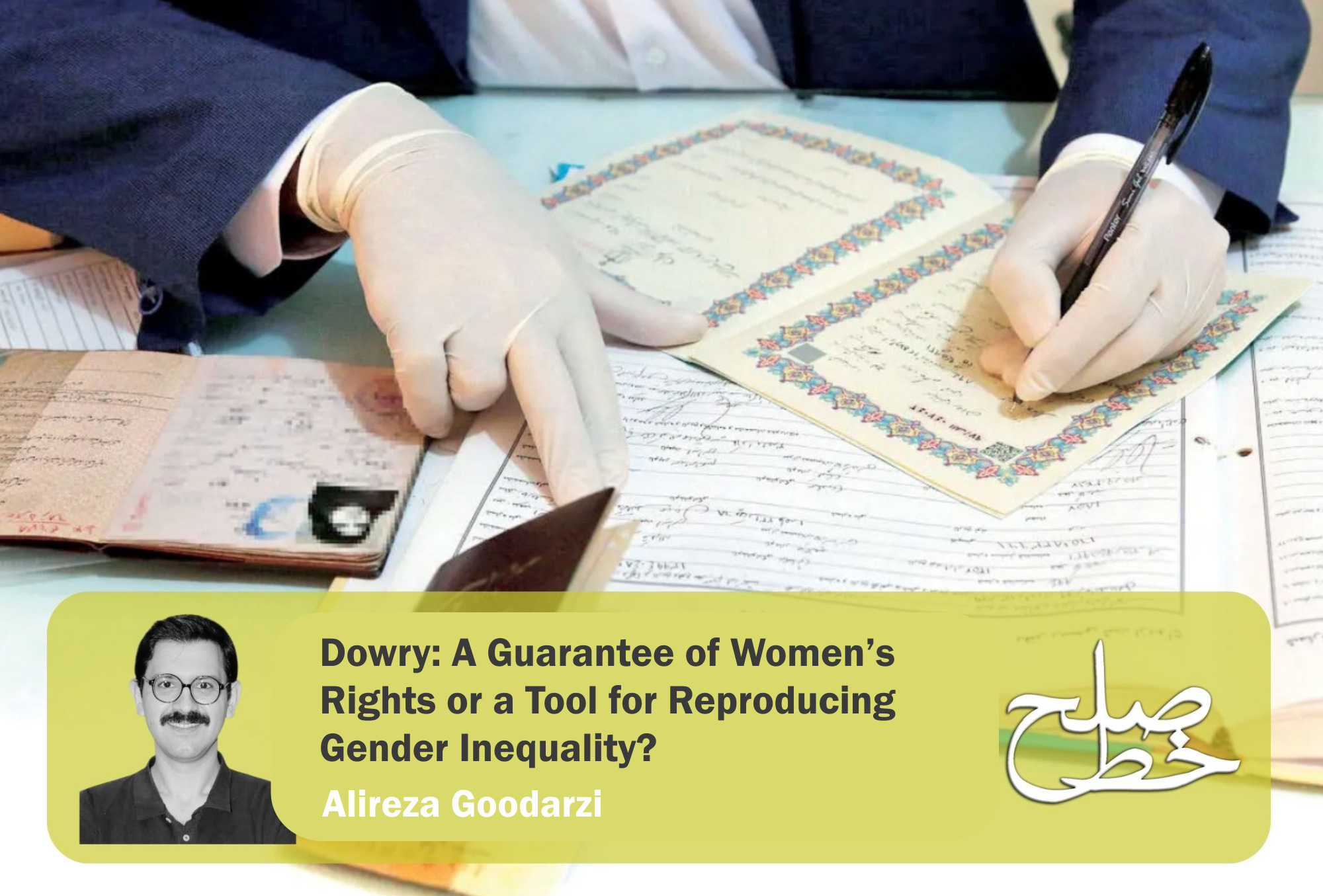
Dowry: A Guarantee of Women’s Rights or a Tool for Reproducing Gender Inequality?/ Alireza Goodarzi

Dowry (Mahr) can be understood within the broader context of tradition: it has come down to us from a distant past and represents a period that may not necessarily align with the needs of our present. I put forth this claim on the basis of questions that have been persistently asked within our society for many years. Every few years, Iranian lawmakers make minor—or sometimes even major—adjustments to Dowry regulations in an attempt to, as the writer Mohammad Ghaed once said about mechanics, “tweak it just enough to make it fit” into today’s society. But today’s Iran is not a brand-new, high-tech vehicle. If we consider Dowry as akin to a cartwheel due to its historical background, no type of automobile can run on it. Contemporary Iranian society is a mixture of cartwheels and automobiles. A cartwheel might have been useful a century ago, but beyond that, it lacks clear utility.

From the days when our grandmothers were breaking ice in the courtyard pools to today, when women are active participants in society—despite all the glass ceilings—even in the most conservative sectors, the world of Iranian women has changed. It is now rare for women to have five or six children and devote themselves entirely to the minutiae of household work. Those who still live such lives are often on the margins of society, voiceless, and untouched by the waves of change. Yet, policymakers frequently attempt—through propaganda or even official policy—to nudge the rest of society closer to this marginalized model. This apparent regression may not be ideal for society, but it clearly illustrates the gap between the cartwheel and the automobile.

For a woman who has spent her entire life in the kitchen and by the water basin, dowry could serve as a safety net, ensuring that if the man of the house ever decided to “discard” her, she would not be left destitute and could claim some share of what had been built under the name of “family.” Such a woman, who worked without official hours or wages to keep the household running, could find partial compensation in the form of dowry. This function may still exist in certain segments of society. To be honest, I don’t personally know anyone in such circumstances and perhaps cannot accurately convey their experiences, but I do know that even in traditional contexts, pursuing such a path is not without hardship and is not necessarily just.

Consider a woman from an upper-class family marrying someone of lesser status. The mehr al-mithl—the Dowry deemed appropriate by societal norms—is higher for her than it would be for a woman from a lower-class background. It’s as if cooking, cleaning, and bearing children in a household entitles a woman from an upper class to a higher sum. Dowry is only one example of such class-based distinctions. Bride price, maintenance, housing, and “suitable” employment fall into this same category, though they go beyond the scope of this discussion. In any case, while dowry may not ensure justice at the societal level, it might still offer a degree of financial security to an individual woman facing an uncertain future. From this angle, for those whose voices are not represented here, dowry might still serve a function.

However, as a legal construct—which is presumed to govern all members of society—it appears unlikely to solve any major issues for a significant portion of the population. It’s clear that a woman who works for pay outside the home contributes directly to the family economy; she brings money into the household and, based on cultural expectations, may still bear the larger burden of domestic work. Such a woman might also live independently in her own home, financially unbound to her father or husband. If we look at her through the same lens as in the past, it either results in overprotection (which creates its own set of problems) or simply fails to align with the rhythm of her life. The goal here is not to assign value between a woman who stays at home and lacks economic independence and one who earns an income. The issue is that the solution envisioned by lawmakers to secure the livelihood of one woman cannot be “tweaked” to fit the life of the other.

There are still segments of society that insist dowry is a tool for protecting women. Perhaps that’s true for some, but certainly not for all. The lawmaker, by leaning on its religious legitimacy, only introduces minor adjustments to dowry laws—and ultimately, these changes fail to resolve the societal issues at hand. Some parts of society have not yet grasped their position in the current moment: they insist their daughters obtain higher education, not to secure independent economic lives, but so that their dowry value will increase. Reality changes, and sometimes our mindset fails to keep pace with that change. This rigidity of thought ensnares lawmakers, beneficiaries of the previous system, and those who are simply accustomed to it and find adapting to new realities difficult. In any case, one thing I am sure of: if our mindset regarding women and the economy that governs their lives changes, these traditions—whether legally sanctioned or not—will inevitably evolve.


written by Alireza Goodarzi
Originally published in Khat-e Solh (Peace Mark) monthly magazine on April 21, 2025.

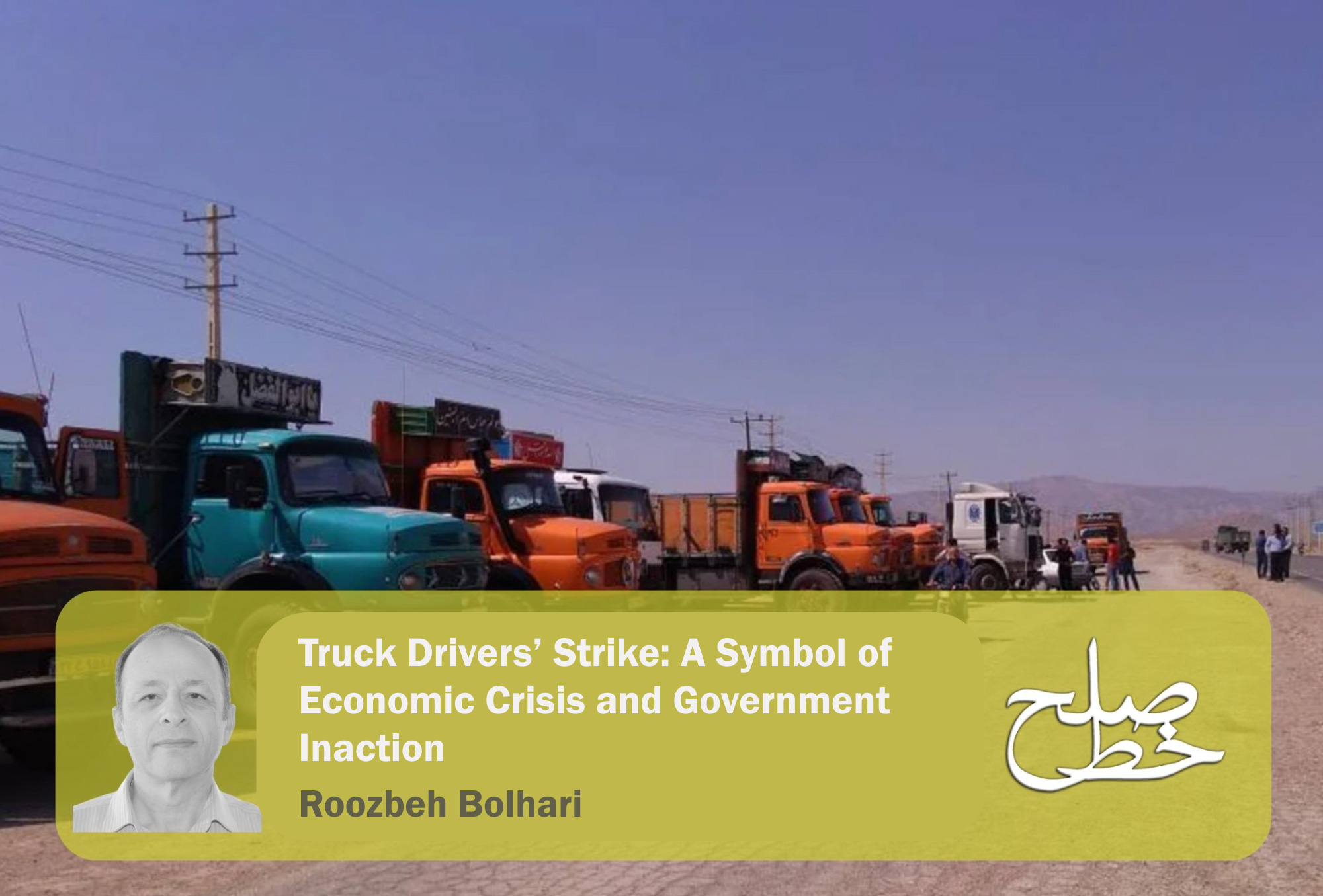
Truck Drivers’ Strike: A Symbol of Economic Crisis and Government Inaction/ Roozbeh Bolhari

For several days, a very large number of cities across Iran witnessed a truck drivers’ strike—an action that began on the first of Khordad (May 22, 2025) and, due to its scale and its reflection on social media and in public opinion, forced officials of the Islamic Republic to respond.

Truck drivers protested a wide range of issues, including the introduction of a three-tiered diesel pricing system, rising insurance costs, increases in the price of tires and spare parts, and the delayed payment of freight charges.

While, according to the National Truck Drivers Association, the strikers had 50 demands, government officials stated they would only address three or four of them.

Meanwhile, the significance of the truck drivers’ strike—which, according to some reports, spanned more than 150 cities—placed it at the forefront of labor protests, not only in recent years, but over the past several decades. Although truck drivers had gone on strike previously in 2018, that protest lacked the current level of scope and organization.

The Government’s Response to the Strike and the Striking Truck Drivers

The truck drivers’ strike is one of the clearest signs of the state’s inability to effectively manage economic and social crises. Many truck drivers, due to rising costs and reduced income, have found themselves in dire financial situations—conditions that have affected not only their livelihoods but also the country’s supply and distribution chains.

As the strike expanded day by day and garnered significant public support, the government—like in previous instances—resorted to a combination of “carrot and stick” policies.

Simultaneously, officials began offering promises to end the strike, such as halting the implementation of the three-tiered diesel pricing policy and offering discounts in the insurance sector. These promises were made even though it was clear that the government had no intention of abandoning its two new policies and was merely trying to buy time in order to implement them later.

It was also announced that transportation fees would be paid on a regular basis.

Overall, it must be noted that in response to strikes in various regions, the government has made promises to improve conditions for the strikers—only some of which have been fulfilled.

On the other hand, law enforcement, intelligence, and judicial bodies arrested dozens of individuals in relation to the strike. These arrests were mostly carried out under the pretext of “disrupting the transportation network.” Prior to that, the government launched a media campaign to create the impression that the strike had caused disruptions in the provision of basic necessities to the public and had halted the delivery of agricultural products.

In this context, the repressive aspect of the response became more prominent. This is rooted in the government’s concern that the continuation and expansion of the strike could lead to a full-scale halt in the transport and distribution of goods, which in turn could fuel public dissatisfaction and ignite broader social crises.

At the same time, the strike had the potential to serve as a catalyst for workers and other wage earners—especially given that, in recent years, independent workers’ and retirees’ associations have repeatedly emphasized the need for wage earners to take to the streets to claim their rights.

For this reason, the government did not want to see the truck drivers’ strike become a model for other labor and social groups. The experience of the decades following the establishment of the Islamic Republic in Iran has shown that the government is deeply concerned about the spread of labor protests.

In the case of the truck drivers’ strike, it seems that this large-scale labor protest ended temporarily—through promises, some official measures, and the arrest of dozens of participants. However, the failure to fulfill promises and the government’s temporary approach to the truck drivers’ problems could lead to further dissatisfaction and renewed protests.

At the same time, based on past experience, it must be remembered that the government’s punitive and repressive tactics have only short-term effects and have failed to prevent renewed protests at factories and industrial units across Iran.

In this regard, the truck drivers’ strike should be viewed as a warning signal to the government, revealing the urgent need for serious reforms in the economic and social policies implemented by the Islamic Republic. But the government has shown that—despite its slogans and even its own constitution and legislated laws—it is not committed to resolving the livelihood problems of tens of millions of Iranians. This failure, in the end, may lead to broader and more extensive labor protests in the near future.


Originally published in Khat-e Solh (Peace Mark) monthly magazine on April 21, 2025.

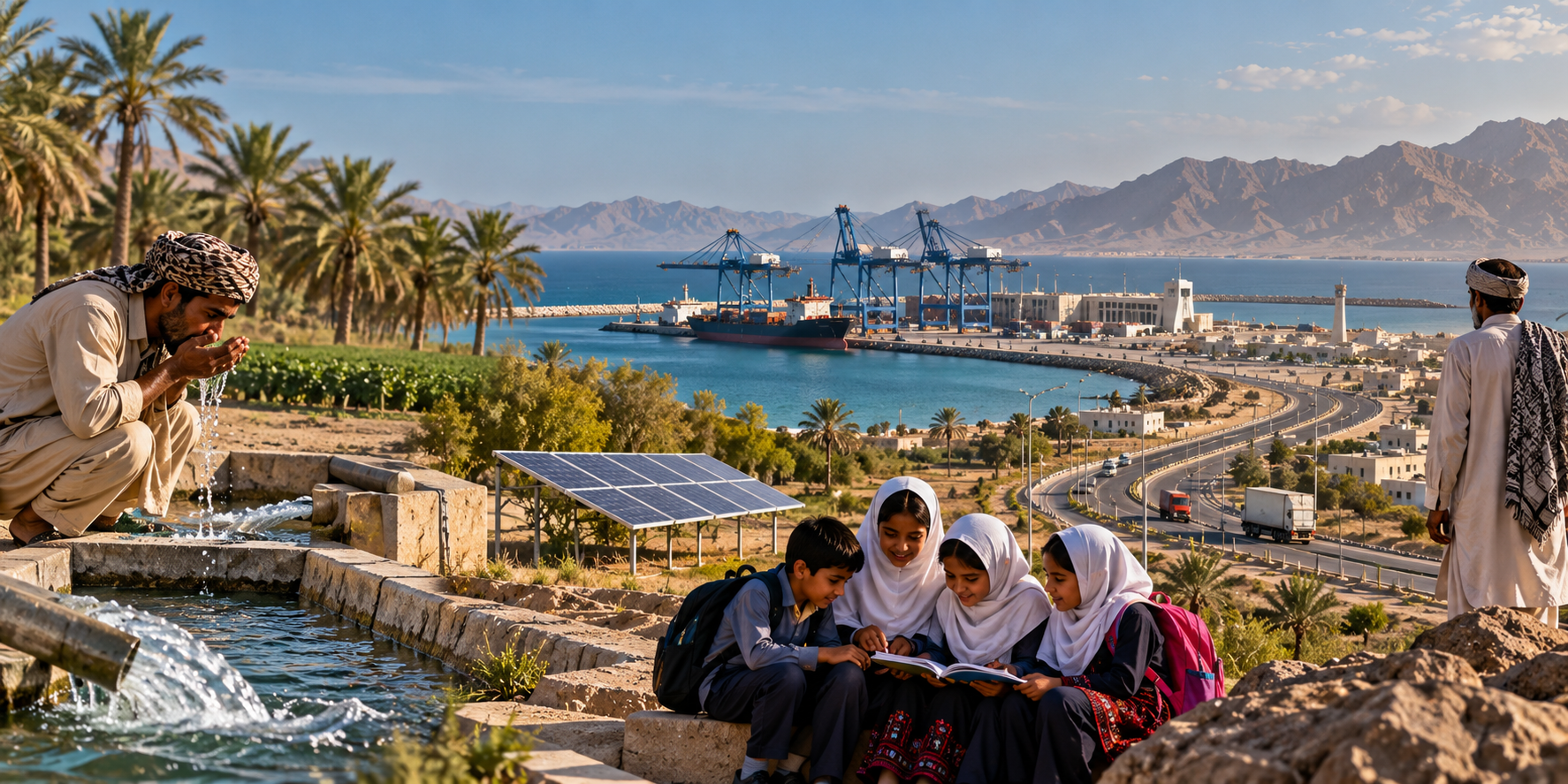
Why Sustainable Development in Sistan and Baluchestan Is a Security Policy

Sistan and Baluchestan is often discussed in Iran primarily through the language of borders, militancy, trafficking and security operations. Yet many of the province’s most persistent security challenges are intertwined with a different set of problems: water scarcity, weak infrastructure, limited employment opportunities, environmental degradation and unequal access to public services. Sustainable development cannot eliminate violence or organized crime on its own, but reducing these structural vulnerabilities can strengthen community resilience, expand lawful livelihoods and ultimately contribute to a more durable form of security.

Iran’s southeastern province of Sistan and Baluchestan occupies one of the country’s most strategically sensitive locations. It borders both Afghanistan and Pakistan, includes Iran’s principal oceanic port at Chabahar, and lies along routes connecting Central Asia and Afghanistan to the Arabian Sea.

It is also a province in which security concerns have remained persistent.

Militant organizations have repeatedly carried out attacks against Iranian security personnel. In April 2024, coordinated attacks in Chabahar and Rask attributed by Iranian authorities to Jaish al-Adl resulted in the deaths of security personnel and militants. Reuters described the province as a longstanding center of both militant activity and narcotics trafficking.

These threats are real. But viewing Sistan and Baluchestan exclusively through a security lens risks overlooking conditions that can make insecurity more difficult to address.

Research on Iran’s peripheral provinces has described what scholars call a “security-development nexus”: regions perceived as insecure receive intensified security attention, while insufficient development contributes to grievances and marginalization that can themselves deepen instability. A 2024 study in Iranian Studies argued that Sistan and Baluchestan has historically remained among Iran’s least-developed regions despite improvements in absolute living standards, with persistent deficits in income, employment, education, health and housing relative to more central provinces.

The consequence can become circular.

Underdevelopment increases vulnerability. Vulnerability strengthens informal and illicit economies. Insecurity then encourages authorities to prioritize policing and military control over social investment. Communities consequently experience the state more prominently through security institutions than through schools, hospitals, employment programs or reliable public services.

Breaking that cycle requires treating development itself as part of security policy.

Security Begins With Basic Services

In Sistan and Baluchestan, perhaps no issue illustrates the connection between human security and national security more clearly than water.

UNDP describes the province as suffering from severe water stress after decades of drought intensified by climate change. Limited access to clean water and inefficient agricultural practices have undermined livelihoods and community resilience.

The consequences are tangible.

Following severe flooding in southeastern Sistan and Baluchestan in 2024, UNICEF documented communities in which clean-water access was already unreliable before the disaster. Residents described repeated interruptions in tap water and health problems associated with contaminated water. UNICEF subsequently deployed solar-powered water-disinfection systems capable of providing safe drinking water to approximately 200,000 people and expanded water-quality testing capacity.

Infrastructure of this kind is normally classified as development or humanitarian assistance. But it also has security implications.

When rural communities have reliable water, sanitation, healthcare and electricity, displacement pressures decrease. Agricultural livelihoods become more sustainable. Household income becomes more predictable. Communities have greater incentives to remain economically connected to formal institutions rather than seek survival through informal cross-border activity.

UNDP has explicitly linked water scarcity in the province with rural-to-urban migration and weakening livelihoods. Its Chabahar-area program, involving more than $2.6 million in investment, was designed to improve access to drinking water and water-efficient agriculture for approximately 50,000 residents across five villages.

This is the logic of preventative security: addressing vulnerabilities before they become sources of displacement, conflict or criminal exploitation.

Livelihoods Matter at the Border

Border communities frequently live in economic environments very different from those of major metropolitan centers.

Where formal employment is scarce but international borders are nearby, smuggling can become a livelihood rather than simply an organized criminal enterprise.

Historical research by the United Nations Office on Drugs and Crime illustrates the scale of this challenge. A UNODC study of Shirabad, near Zahedan, found significant local dependence on informal cross-border trade and logistical support for drug-trafficking networks. The research is old and should not be treated as a current measurement of the province, but it illustrates a longstanding structural problem: when formal employment alternatives are weak, illicit economies can become embedded in community survival strategies.

This distinction matters for policy.

A state can increase patrols, build barriers and intensify law enforcement. These measures may disrupt trafficking networks. But if individuals still lack viable alternatives for earning income, the economic incentive to participate in illicit trade remains.

UNODC itself now incorporates “Alternative Development and Sustainable Livelihoods” into its 2023–2026 cooperation program with Iran, alongside border management and illicit-trafficking prevention. The approach reflects an internationally recognized principle in drug-control policy: reducing illegal economies requires not only enforcement but also credible lawful sources of income.

For Sistan and Baluchestan, this could mean expanding small and medium-sized enterprises, agricultural processing, fisheries, renewable energy, logistics, handicrafts and regulated border commerce.

The objective is not to reward illegal activity. It is to reduce the economic environment in which criminal networks can recruit labor cheaply and consistently.

Chabahar: Turning Geography Into Opportunity

The province’s geography is often described as a source of vulnerability. It can also be an economic advantage.

Chabahar provides Iran with direct access to the Gulf of Oman and serves as an increasingly important trade corridor for Afghanistan and regional commerce. Afghan traders have increasingly used routes through Iran and Chabahar as alternatives to Pakistan, particularly during repeated disruptions at Pakistan’s border crossings.

In principle, increased trade can generate employment in transportation, logistics, warehousing, customs services, food processing, maintenance and other sectors.

But the local security benefits depend on how development occurs.

Large infrastructure projects do not necessarily improve local stability if surrounding communities see investment passing through their region without creating jobs or improving public services.

Sustainable development therefore requires local inclusion.

Young people from the province need realistic access to jobs created by port expansion and regional trade. Local businesses need access to procurement opportunities. Roads connecting rural communities should improve alongside international transit corridors. Vocational programs should train residents for jobs actually being created in logistics, maritime services, construction and renewable energy.

Development that appears geographically located in Sistan and Baluchestan but economically disconnected from its population will have a much weaker security effect.

Climate Change Is Also a Security Issue

Environmental degradation presents another long-term challenge.

The Hamoun wetlands in northern Sistan and Baluchestan have been severely affected by water scarcity and climate pressures. UNDP warns that wetland degradation has damaged rural livelihoods, intensified sand and dust storms and contributed to displacement and poverty.

These effects create what security researchers increasingly describe as “threat multipliers.”

Climate change does not directly cause militancy or crime. But it can worsen existing vulnerabilities.

When agriculture becomes impossible, families lose income. When communities are displaced, social networks fragment. When young people see no future in their home region, migration and informal economic activity become more attractive. Competition over increasingly scarce resources can also aggravate local tensions.

Environmental restoration, climate-smart agriculture and efficient irrigation therefore belong within any serious long-term security strategy for the province.

Recent research on climate-smart agriculture in the Sistan Plain similarly emphasizes that adoption depends not merely on technology but also on access to infrastructure, financial services, extension support and trust in institutions.

That last factor—trust—is especially important.

Development and Trust in the State

Security ultimately depends on more than the physical capacity of security forces.

It also depends on whether residents regard state institutions as legitimate, accessible and responsive.

In a province where communities have experienced longstanding economic marginalization and a heavy security presence, development can alter how residents interact with the state.

A functioning health clinic produces a different relationship between citizen and government than a checkpoint.

A reliable school produces a different relationship than a detention facility.

A transparent local employment program produces a different relationship than dependence on informal intermediaries or illicit networks.

This does not mean infrastructure spending automatically produces political trust. Poorly designed projects, corruption, discrimination or exclusion from decision-making can have the opposite effect.

Development must therefore be participatory.

Local communities should have a meaningful role in determining priorities. Municipal authorities, educators, business owners, civil society groups, tribal and community leaders, women and young people should be incorporated into planning rather than treated simply as recipients of decisions made elsewhere.

The process matters as much as the project.

Education as Long-Term Security Infrastructure

The same logic applies to education.

UNICEF reported in August 2026 that programs improving water, sanitation and health conditions in schools in Sistan and Baluchestan and Khorasan Razavi had reached more than 72,000 students. The organization also noted that many schools in southern provinces continue to face infrastructure deficiencies, including electricity interruptions.

Improving schools may appear far removed from counterterrorism or border security.

Over the long term, it is not.

Education expands the number of lawful economic options available to young people. It strengthens labor mobility, entrepreneurship and access to higher-skilled employment. It also increases the ability of communities to participate in public institutions.

Where young people have few prospects, armed groups, smuggling networks and criminal organizations have a larger pool of economically vulnerable individuals from which to recruit.

No serious analysis should imply that poverty automatically produces extremism. Most people experiencing poverty never join violent organizations. Militancy has ideological, political, regional and organizational causes that cannot be explained by economic conditions alone.

But deprivation can increase vulnerability to recruitment, especially when combined with political grievances, exclusion and weak institutions.

Education therefore represents security investment measured over decades rather than months.

Beyond a Militarized Definition of Security

None of this eliminates the need for conventional security measures.

Iran faces genuine cross-border challenges in the southeast, including armed organizations, drug trafficking and migrant-smuggling networks. States have a legitimate interest in protecting civilians, policing borders and preventing violent attacks, provided those measures comply with domestic and international legal obligations.

The problem arises when security becomes almost exclusively coercive.

A security strategy centered principally on checkpoints, arrests, border fortifications and military deployments may suppress certain threats without changing the conditions from which new instability emerges.

Sustainable security requires several layers simultaneously: effective law enforcement, accountable institutions, economic opportunity, environmental resilience, education, healthcare and public participation.

The experience of Sistan and Baluchestan illustrates why these categories cannot easily be separated.

Water infrastructure affects agriculture.

Agriculture affects employment.

Employment influences migration and participation in informal economies.

Education determines access to formal employment.

Economic inclusion affects institutional trust.

Trust influences cooperation between communities and authorities.

And that cooperation, in turn, directly affects the effectiveness of security policy.

Security Through Inclusion

Sistan and Baluchestan should therefore not be viewed merely as a vulnerable frontier requiring permanent containment.

It is also a region with considerable economic and human potential: access to international maritime routes, renewable-energy resources, agriculture, fisheries, cross-border commerce and a young population.

The question is whether these assets can generate broadly shared development.

If economic opportunities remain concentrated, infrastructure bypasses local communities, water insecurity continues and residents experience government primarily through coercive institutions, security challenges are likely to remain difficult and expensive to manage.

If, however, development increases access to water, education, healthcare and employment; creates legitimate alternatives to informal economies; strengthens local participation; and narrows the development gap between the province and the rest of the country, the effects will extend beyond economic indicators.

Communities with functioning institutions and credible economic opportunities are more resilient to criminal networks, environmental shocks, displacement and political violence.

That is why sustainable development in Sistan and Baluchestan should not be treated as something that comes after security has been achieved.

Properly designed, it is part of how lasting security is built.

By: Keyvan Rafiee

Report Offers Blueprint for Holding IRGC Accountable for HRVs and International Crimes

April 9, 2025 – HRA’s latest report published today presents a detailed roadmap for accountability for members of Iran’s Islamic Revolutionary Guard Corps (IRGC) and alleged involvement in serious human rights violations and international crimes both inside Iran and around the world.

Accountability Pathways: A Practitioner’s Guide to Addressing Alleged Serious Human Rights Violations and International Crimes Committed by the IRGC in Iran and Abroad


This publication, prepared by HRA with the legal support of UpRights, is part of the Pasdaran Documentation Project (PDP), an HRA initiative dedicated to mapping the IRGC from inception to the present day alongside addressing violations and international crimes perpetrated by its members.

The guide spans over 20 judicial and quasi-judicial pathways for accountability, offering practitioners concrete guidance on available mechanisms to seek justice for serious human rights violations and international crimes attributed to the IRGC both within Iran and abroad.

The IRGC has played a central role in the systematic suppression of political dissidents, activists, and journalists within Iran, as well as in the abduction and extrajudicial targeting of perceived regime enemies beyond Iran’s borders. The IRGC’s involvement in armed conflicts, particularly in Syria and Iraq, has also led to allegations of grave international crimes. Despite these extensive allegations, Iran’s legal system lacks independence, rendering domestic accountability mechanisms ineffective. The Iranian judiciary remains complicit in widespread human rights abuses, making external avenues for justice essential.

This guide is designed to equip civil society actors, victims, and legal practitioners with practical tools to navigate the complex landscape of accountability mechanisms. It systematically outlines the feasibility, strengths, and limitations of various pathways, categorized into:

  • Domestic judicial mechanisms in third states, including universal jurisdiction and extraterritorial prosecutions;
  • International tribunals, such as the International Criminal Court and the International Court of Justice;
  • United Nations mechanisms, including special procedures and treaty bodies;
  • Targeted sanctions regimes, such as Magnitsky-style sanctions against human rights violators;
  • Truth-seeking initiatives and other transitional justice approaches.
  • And more

The publication also draws on 12 incidents that were analyzed under international law as part of the Pasdaran Documentation Project by UpRights and HRA.

These incidents and their associated analyses and alleged perpetrators, provide critical insights into patterns of violations and the modus operandi of the IRGC. These incidents’ full details and legal implications can be accessed at iranpdp.org.

Given Iran’s non-cooperation with international accountability mechanisms and its rejection of key human rights instruments, practitioners must employ a strategic approach. The guide underscores the importance of combining judicial and non-judicial pathways, leveraging international pressure, and ensuring victim-centered approaches throughout.

Ultimately, Accountability Pathways aims to facilitate informed, coordinated, and effective efforts to hold perpetrators accountable while centering the needs and rights of victims in the pursuit of justice.

“This isn’t about theory — it’s about action. When impunity prevails, we need practical options. This guide arms practitioners with concrete tools to start the conversation on how we can move, strategically and creatively, toward justice. It’s a call to coordinate, to act, and to make clear that accountability is possible — even when states refuse to deliver it. It comes alongside a body of extensive work to uncover an intentionally veiled institution — one designed to shield decision makers and key perpetrators from public scrutiny and consequence. Together, both work in coordination to offer an opportunity to discuss new, timely, and creative paths forward.” Skylar Thompsin, Deputy Director, HRA.

Looking Ahead

The publication arrives at a moment of heightened international scrutiny of Iran’s human rights record. In recent weeks, the mandate of the  UN Fact-Finding Mission on Iran has been renewed as it has identified crimes against humanity in many ways linked to the IRGC’s suppression of the 2022 protests and beyond. 

Despite these developments, the report cautions that accountability will require sustained effort and international coordination. It urges states, international bodies, and civil society actors to work collaboratively, pool resources, and support  action across all feasible fronts.

Download the full report, “Accountability Pathways,” in PDF

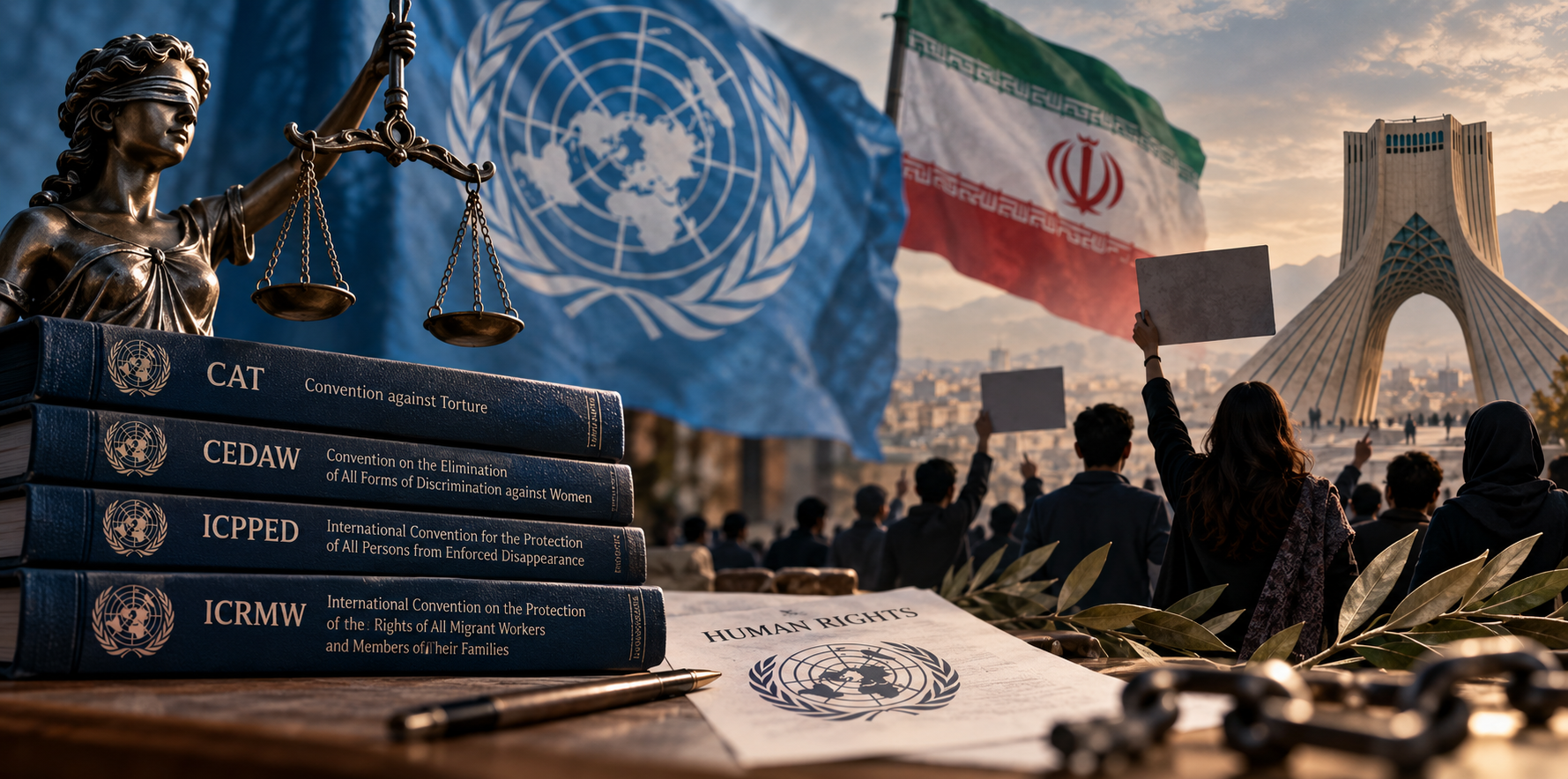
The Human Rights Treaties Iran Has Yet to Join—and Why Ratification Matters

Iran is already bound by several of the foundational treaties of the international human rights system, including the International Covenant on Civil and Political Rights and the International Covenant on Economic, Social and Cultural Rights. Yet it remains outside several other major human rights conventions dealing with torture, discrimination against women, enforced disappearance and migrant workers. It has also declined to join a number of optional protocols that would permit individual complaints or create stronger international monitoring mechanisms. Ratification would not, by itself, transform Iran’s human rights situation. But it could expand legal protections, create new accountability mechanisms and provide Iranian civil society with additional tools for demanding compliance with internationally recognized standards.

Iran’s relationship with the international human rights system is more complicated than the claim that the country simply refuses international human rights law.

Iran is already a party to several of the United Nations’ core human rights treaties. It ratified the International Covenant on Civil and Political Rights (ICCPR) in 1975 and the International Covenant on Economic, Social and Cultural Rights (ICESCR) the same year. It is also a party to the International Convention on the Elimination of All Forms of Racial Discrimination, the Convention on the Rights of the Child and the Convention on the Rights of Persons with Disabilities.

These obligations remain legally binding on Iran.

At the same time, however, Iran has remained outside several major treaties that address areas in which serious human rights concerns have repeatedly been documented.

According to the United Nations Treaty Body Database, Iran has not joined the Convention against Torture and Other Cruel, Inhuman or Degrading Treatment or Punishment (CAT); the Convention on the Elimination of All Forms of Discrimination against Women (CEDAW); the International Convention for the Protection of All Persons from Enforced Disappearance (ICPPED); or the International Convention on the Protection of the Rights of All Migrant Workers and Members of Their Families (ICRMW).

It has also remained outside several optional protocols that would strengthen international scrutiny of its human rights obligations.

These omissions matter.

The Convention Against Torture

Perhaps the most consequential gap is Iran’s failure to become a party to the Convention against Torture.

CAT requires states to criminalize torture, investigate credible allegations, prosecute or extradite alleged perpetrators under specified circumstances, prevent other forms of cruel or degrading treatment and exclude statements obtained through torture from legal proceedings.

Iran is already prohibited from using torture under other legal obligations. Article 7 of the ICCPR, to which Iran is a party, prohibits torture and cruel, inhuman or degrading treatment. Iran’s own Constitution also contains protections against torture for extracting confessions or information.

Joining CAT would nevertheless create a substantially more detailed legal framework.

Iran would be required to periodically report to the UN Committee against Torture and respond to questions about its laws, detention practices and implementation of the Convention. Depending on the declarations and protocols accepted, additional mechanisms could become available.

Iran has also not joined the Optional Protocol to CAT, known as OPCAT. OPCAT establishes a preventive system based on regular visits to places of detention through both international and national mechanisms. The UN describes its system as one based on regular visits to locations where people are deprived of liberty.

For a country in which allegations concerning treatment in detention frequently form part of human rights reporting, an independent preventive inspection system could be particularly significant.

The potential benefit would not simply be retrospective accountability after torture occurs. The central philosophy of OPCAT is prevention.

CEDAW and Women’s Equality

Iran is also not a party to the Convention on the Elimination of All Forms of Discrimination against Women.

CEDAW is one of the most widely accepted international human rights treaties and establishes obligations covering equality before the law, political participation, education, employment, healthcare, family relations and discrimination affecting women in other areas of public and private life.

The official UN treaty database lists no signature or ratification by Iran.

Iran’s relationship with CEDAW has long been politically and legally contested domestically, particularly over questions concerning compatibility between provisions of the Convention and interpretations of Islamic law.

Those debates do not necessarily make accession impossible.

States frequently enter reservations when joining international treaties, although reservations that are incompatible with the object and purpose of a convention may be challenged. Accession can also become a process through which domestic authorities systematically identify areas where national law diverges from international standards.

The practical significance of CEDAW would be substantial.

Ratification would require periodic scrutiny of Iranian legislation and practice concerning subjects such as discrimination in employment, political representation, marriage and family law, access to public life and protection against gender-based discrimination.

The Convention would also provide lawyers, academics and civil society organizations with a more precise international legal framework against which domestic law could be evaluated.

Iran has likewise not accepted the Optional Protocol to CEDAW, which creates an individual communications procedure and an inquiry mechanism in certain circumstances.

Enforced Disappearance

Iran has also not joined the International Convention for the Protection of All Persons from Enforced Disappearance.

The Convention defines and prohibits enforced disappearance and requires states to criminalize the practice, investigate disappearances and protect victims and relatives.

Its importance goes beyond cases in which a person permanently disappears.

Under international law, enforced disappearance can occur when state agents—or persons acting with state authorization, support or acquiescence—deprive someone of liberty and then refuse to acknowledge the deprivation of liberty or conceal the person’s fate or whereabouts, placing that individual outside the protection of law.

This means that certain forms of secret or unacknowledged detention may fall within the Convention even where a detainee later reappears.

Iran has neither signed nor ratified the Convention according to the UN treaty database.

Accession would establish more detailed duties concerning detention records, investigation, access to information and the rights of relatives. It would also place implementation under the scrutiny of the Committee on Enforced Disappearances.

The Convention contains particularly important mechanisms for urgent situations. Its treaty body can, under applicable procedures, consider urgent requests concerning disappeared persons and monitor implementation by states parties.

For families attempting to determine where detained relatives are being held, international legal recognition of the right to know the truth about a person’s fate and whereabouts can be especially significant.

Migrant Workers

Iran has also not joined the International Convention on the Protection of the Rights of All Migrant Workers and Members of Their Families.

This absence receives less public attention than CAT or CEDAW, but it has substantial relevance to Iran.

Iran has for decades hosted large populations of migrants and refugees, particularly from Afghanistan. At the same time, many Iranian nationals live and work abroad.

The Migrant Workers Convention establishes protections concerning basic rights, due process, working conditions, family unity and treatment of migrant workers, while distinguishing in some areas between documented and undocumented migration.

The UN treaty database records no Iranian ratification or accession to the Convention.

Accession could require a more systematic review of Iranian labor, immigration and administrative practices affecting migrants while also reinforcing the principle that Iranian migrant workers abroad should receive internationally recognized protections.

The Missing Right of Individual Complaint

There is another, less visible gap in Iran’s treaty commitments.

Iran is a party to the ICCPR, but it has not joined the First Optional Protocol to the Covenant.

That distinction is important.

The ICCPR establishes rights including freedom of expression, peaceful assembly, freedom of religion, fair trial guarantees and protection against arbitrary detention.

The First Optional Protocol creates a mechanism through which individuals who claim that a state party violated their Covenant rights may, after satisfying admissibility requirements such as exhaustion of available domestic remedies, submit communications to the UN Human Rights Committee.

Because Iran has not accepted the Protocol, individuals under Iranian jurisdiction cannot use that procedure to bring complaints against Iran before the Committee.

Iran has similarly not joined the Optional Protocol to the ICESCR, the Optional Protocol to the Convention on the Rights of Persons with Disabilities or the communications procedure under the Convention on the Rights of the Child.

Accepting these procedures would not create an international appeals court capable of automatically overturning Iranian judgments. Treaty-body decisions are different from judgments of a national court.

But individual communications produce authoritative interpretations of treaty obligations, establish a documented international record and can create sustained pressure for remedies and legal reform.

The Death Penalty Protocol

Iran has also not joined the Second Optional Protocol to the ICCPR, which is specifically aimed at abolition of the death penalty.

This is politically and legally distinct from the other treaties because accession would require a fundamental change in Iran’s approach to capital punishment.

Iran remains a retentionist state and continues to impose the death penalty for numerous offenses. Consequently, accession to the Second Optional Protocol would involve not merely stronger monitoring but a commitment to abolition, subject to the limited reservation permitted by the Protocol concerning certain wartime military crimes.

For that reason, it represents one of the most far-reaching potential treaty commitments available to Iran.

Ratification Is Not the Same as Implementation

Civil society advocacy for treaty accession should nevertheless avoid presenting ratification as an end in itself.

Governments can ratify treaties and violate them.

Iran’s existing obligations under the ICCPR demonstrate the point. Formal membership in a convention does not automatically prevent arbitrary detention, restrictions on expression or unfair trials.

What ratification does is alter the legal architecture surrounding those violations.

A new treaty can require periodic government reports, produce examinations by independent experts, generate authoritative recommendations, establish international complaint procedures and require domestic legislation to be reviewed against more detailed standards.

It also changes the vocabulary available to domestic actors.

A lawyer arguing against torture after CAT accession would no longer rely only on general constitutional guarantees and Article 7 of the ICCPR. Specific obligations concerning investigation, prosecution, evidence obtained through torture and prevention would become relevant.

Likewise, CEDAW would provide a structured legal framework through which discriminatory legislation could be evaluated provision by provision.

Ratification therefore matters most when it is combined with implementation, domestic legislation and access to monitoring mechanisms.

What Role Can Civil Society Play?

Treaty accession ultimately requires decisions by state institutions, but civil society can contribute to the process through lawful public participation, legal analysis and international human rights mechanisms.

One avenue is the Universal Periodic Review.

During Iran’s UPR cycles, other UN member states have repeatedly recommended accession to treaties including CAT, CEDAW, ICPPED and the Migrant Workers Convention. Recommendations concerning Iran’s outstanding treaty commitments therefore already exist within an established UN process.

Civil society organizations can submit information to the UPR, track recommendations across review cycles and document the government’s responses.

A second avenue is domestic legal analysis.

Instead of discussing treaty accession only as a political slogan, universities, bar associations, women’s organizations, labor groups and other professional bodies can examine individual provisions and identify precisely what legislative changes accession would require.

This can make the debate more concrete.

Which provisions of Iranian criminal law would require amendment before or after CAT accession? What legislation would conflict with CEDAW? What institutional safeguards would be needed to comply with ICPPED?

These are questions capable of legal analysis rather than ideological positioning.

Parliament also has an important institutional role in treaty ratification. UN guidance on CEDAW specifically identifies parliamentarians, civil society organizations, academics, journalists and other stakeholders as actors commonly involved in national debates over ratification.

Civil society can additionally produce Persian-language treaty materials, comparative studies of implementation in other Muslim-majority states, legal commentaries and assessments of possible reservations. Such work can improve the quality of public debate regardless of the position ultimately taken by state institutions.

Building a Treaty-Based Human Rights Infrastructure

Another useful approach is to distinguish accession to a convention from acceptance of its strongest monitoring mechanisms.

These can occur in stages.

Joining CAT, for example, is one decision. Joining OPCAT and permitting a system of preventive detention visits is another. Becoming party to the ICCPR has already occurred; accepting its individual complaints mechanism would require the First Optional Protocol.

A step-by-step approach makes it possible to identify precisely what each commitment would change.

Civil society organizations can also maintain a public “ratification map” showing which treaties Iran has accepted, which remain outstanding, which optional protocols have not been joined and which individual complaint procedures remain unavailable.

This kind of monitoring can transform an abstract discussion into measurable commitments.

What Would Iran Gain?

Treaty accession is sometimes discussed only as an obligation imposed on states.

There are also potential institutional benefits.

Joining major conventions could strengthen Iran’s claim that its domestic legal system is capable of engaging with universal human rights standards rather than remaining outside substantial parts of the treaty system.

It could create structured channels of communication between Iranian institutions and international experts.

It could encourage clearer statutory definitions of prohibited conduct, stronger detention safeguards, improved data collection and more regular examination of discriminatory laws.

It could also provide civil society and victims with additional mechanisms that do not currently exist.

None of these outcomes would occur automatically.

A government can submit incomplete reports. Treaty-body recommendations can remain unimplemented. Domestic courts may fail to invoke international obligations. Reservations can weaken the practical effect of accession.

But absence from a treaty guarantees that many of these mechanisms will not apply at all.

From Ratification to Accountability

The long-term objective should therefore be broader than collecting additional ratifications.

Iran already belongs to enough major human rights treaties to demonstrate the difference between formal commitment and implementation.

The more meaningful objective is a system in which international commitments translate into domestic law, independent oversight, effective remedies and enforceable rights.

Accession to CAT could strengthen the legal architecture against torture.

CEDAW could establish a comprehensive framework for examining discrimination against women.

ICPPED could create stronger obligations concerning secret detention and disappeared persons.

The Migrant Workers Convention could strengthen protections for one of the most vulnerable populations living and working in Iran.

Optional protocols could give individuals access to international procedures currently unavailable to them.

And the Second Optional Protocol to the ICCPR would represent a commitment to abolishing capital punishment.

These instruments would not resolve Iran’s human rights problems by themselves.

But international human rights law develops incrementally. Each treaty creates obligations. Each reporting cycle creates a record. Each monitoring procedure creates another avenue for scrutiny. Each domestic implementing law can create another legal protection.

For Iranian civil society, the significance of treaty ratification therefore lies not in the symbolic act of adding Iran’s name to another international document.

Its real value lies in turning broad human rights principles into additional legal obligations, institutions and mechanisms through which the state can be asked to account for whether those rights are actually respected.

By: Keyvan Rafiee

Subscribe to Our Newsletter

Now is definitely not the time to stop reading!

It is Time that Iran be Held Accountable 

HRANA – Last month the world turned its attention to Iran for its seemingly arbitrary transfer of a detained British-Australian academic. Kylie Moore-Gilbert, who was detained in September 2018 and is serving a ten-year sentence, was moved from the notorious Evin Prison to an unspecified location. When Human Rights Activists News Agency (HRANA) released the report, nearly every major media publication across the globe once again jumped to denounce her detention. Widespread speculation as to Moore-Gilbert’s whereabouts ensued. 

As a human rights professional who focuses on Iran, it was gratifying to see such a swift and appropriate response. However, what about the countless grave and horrific human rights violations that happen every day in this country? Violations that are so numerous that they have become seemingly rote. 

In the week following Moore-Gilbert’s transfer, peaceful protestors outside Iran’s Ministry of Petroleum were violently attacked by Regime Security Forces. In the month of October, at least 130 Iranians were arrested for activities related to their political or ideological beliefs; 83 of which involved the detention of individuals participating in peaceful gatherings related to the ongoing Armenian-Azerbaijani conflict. 

Iran carried out 19 hangings in the month of October alone, sentencing an additional 8 to that same fate throughout the month.

At least 12 members of the Baháʼí religious minority were barred from entering university based solely on their religious beliefs. One man received 80 lashes for converting to Christianity; a thief was sentenced to having his hand amputated.

Iranian courts tried more than 70 political cases which resulted in convictions that totaled 295 years in prison and 2,590 lashes.  A cleric was summoned to court for suggesting there was no problem with women riding a bicycle, an activity for which all women in the country are banned. Two women, sentenced to 33 months each for writing a letter requesting the resignation of the Supreme Leader, were summoned by authorities to begin serving their time. A teacher was sentenced to 45 lashes for drawing a cartoon.

This list is by no means exhaustive. 

These violations are not a secret. HRANA, the very source that initially reported on Moore-Gilbert’s move, reported and continues to report on the numerous human rights violations happening daily in Iran against Iranians, as well as dual and foreign nationals. There remains little to no response.

Detained British-Australian academic Kylie Moore-Gilbert

Why is this? 

I do not have the answer to that question, but I do know the differences these cases bear. The violations listed above are against Iranian citizens; Moore-Gilbert is a foreigner. Her case is, therefore, more appealing to the press it garners a more widespread response – and outcry. 


I’m reminded of a quote from Howard Bakerville, a young American who famously became a martyr of Iran’s Constitutional Revolution; he once said, “The only difference between me and these people is my place of birth, and that is not a big difference.” Today I fear there are times, unacceptably so, that this is the difference between life and death, between respect for rights and deprivation thereof. Will the world only shine the light on Iran when a Westerner is tangled in its web? Under international human rights law, States have a duty to respect, protect, and fulfill the rights of those within their jurisdiction. It’s time that Iran be held accountable to its own citizens just as it is to those dual and foreign nationals that find themselves trapped within the confines of a state where deprivation of fundamental human rights continues to be the norm. 


Moore-Gilbert has since been returned to Evin Prison. Her return, much like her move, was documented extensively. The reason for her move remains unknown.


Skylar Thompson

Skylar Thompson is a Senior Advocacy Coordinator with Human Rights Activists in Iran (HRAI). For inquiries please contact email: [email protected]


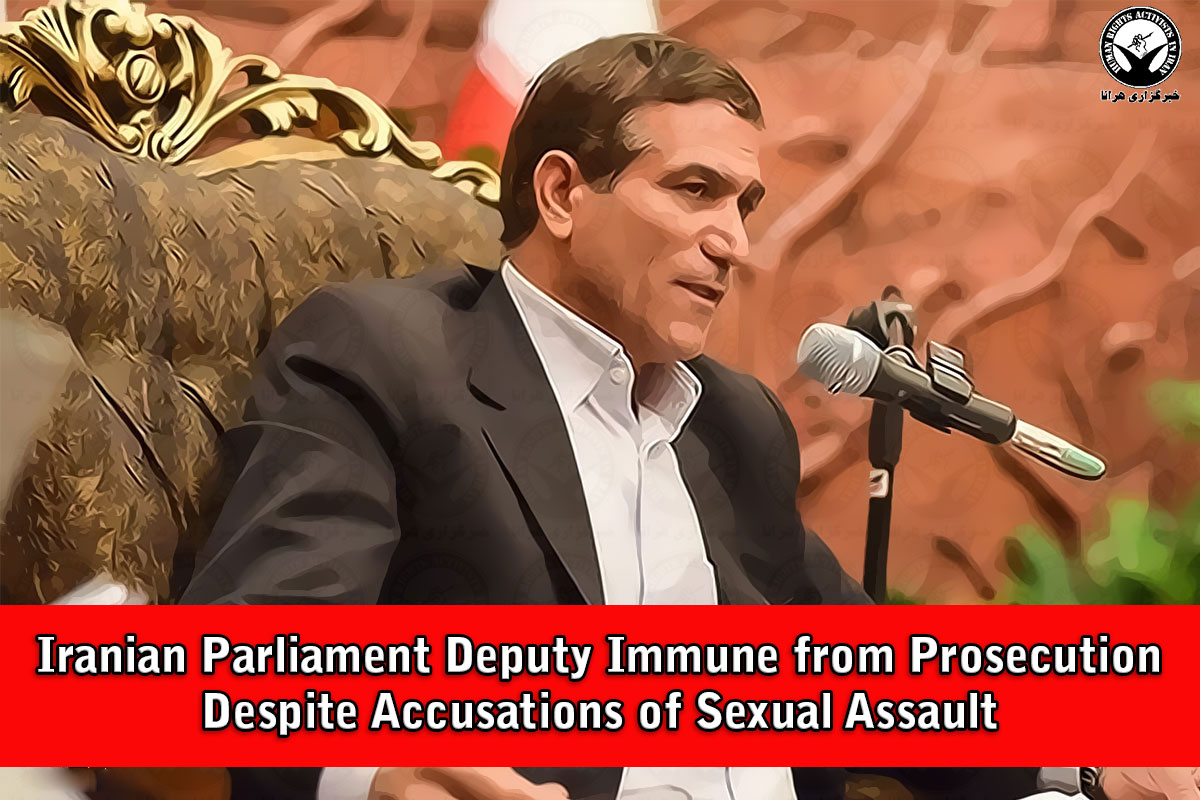
Iranian Parliament Deputy Immune from Prosecution Despite Accusations of Sexual Assault

Human Rights Activists News Agency (HRANA) – Based on evidence, documents and testimonials HRANA has obtained from reliable sources, there are at least two new allegations of multiple counts of sexual harassment and assault against Salman Khodadadi, a current Member of Iran’s Parliament and the Chair of the Parliament’s Social Committee. Mr. Khodadadi was previously accused of sexual harassment and assault and was detained on the charge of raping his secretary and a visitor to his office. Mr. Khodadadi held the position of MP and was a member of the Parliament’s National Security Committee and Health Committee from 1996 to 2012. However, in 2012, Iran’s Ministry of Interior barred Mr. Khodadadi from running for Parliament. The Guardian Council reversed the ban in 2016 and allowed him to return as a member of Parliament the same year. In 2014, while Mr. Khodadadi was barred from the Parliament, he was appointed an adviser to Iran’s Foreign Minister, Javad Zarif.  

A 28-year-old woman who has asked to be identified as “Z.N.” broke her silence to HRANA. She claims to be a victim of Mr. Khodadadi and that he abused his position of power. Ms. Z.N. claims Mr. Khodadadi sexually assaulted and harassed her for four years. She tells HRANA that she knew Mr. Khodadadi through her father who was Mr. Khodadadi’s colleague in the Islamic Revolutionary Guard Corps (IRGC). After her father’s death, Ms. Z.N. says she was searching for a job due to her mother’s illness and their difficult financial situation.

“One day, I went to the Governor’s office to seek help. I was informed that Mr. Khodadadi would be coming there to listen to the people’s problems. Mr. Khodadadi received my letter and told me to contact him. When I did, he said that he would help me gain a position with the Audit Court.”  

According to Ms. Z.N., she followed up with that promise and Mr. Khodadadi invited her to Tehran. Ms. Z.N. says she went with her mother on her first visit but they left without receiving any results. Ms. Z.N. says Mr. Khodadadi contacted her again and advised her to return to Tehran but alone this time. Once in Tehran, Ms. Z.N. allegedly attempted to track Mr. Khodadadi down until she was finally instructed to meet him at his office.

“Once in his office, he locked the door and raped me. He warned me to not tell anyone. I will never forget that day. It was as though the whole world came crashing down on me. My muscles were locked up and I felt paralyzed. He told me I had to leave immediately because a few of his colleagues were coming to see him. I asked him whether his intention was just to rape me, instead of helping me and my family. He replied that he wanted to help and have sex with me too. I left his office and headed to the train station to return home. On the way back, all kinds of thoughts crossed my mind and I even contemplated suicide, but because of my family and their situation, I decided to keep silent…He contacted me after the incident under different pretexts and managed to get me to come to his residential home in Tabriz where he raped me again.”

“After a long period of intimidation and enticement by Mr. Khodadadi, I finally called him to tell him that I didn’t want the job anymore. I told him to leave me alone or else I would file a complaint against him. He replied that I could not do a damn thing to him and hung up the phone on me. After a while he called me back and said that he likes me and wants to talk to me. I did not accept and didn’t go see him. He was even sending me threatening messages that if I didn’t go see him, he would hurt me. I still did not go, and out of fear for my life, I constantly moved residences.”

Ms. Z.N. claims that Mr. Khodadadi had more than one victim. “Some time later, I was with friends when I heard from one of them that Mr. Khodadadi had promised her a job as well and then raped her. This friend wanted to commit suicide on several occasions. That is when I understood that I was not the only victim, but none of the victims are prepared to file a complaint out of fear for their lives.”

“I waited for some time so that he would stop his harassment, but to no avail. I finally called him and begged him to leave me alone or I would tell everyone about what happened. He replied that if I say anything he would have me killed. I was very afraid. I took a train to Tehran and decided to go to the committee responsible for the supervision of MPs. I did not know how to access this committee so I went to the Parliament’ security and told them. First, they did not listen to me until I threatened to go to the Guardian Council. Finally, they accepted to consider my story but said that I would need to provide proof. I told them that I have voice and SMS messages containing threats.”

Mr. Khodadadi allegedly contacted Ms. Z.N. several times after the complaint was filed and said that if she did not withdraw her complaint that he would harm her.

“I told him that I will go through with my complaint because it was my right. He contacted me several more times and told me to visit him to resolve the problem. Again, he promised me a job and pledged to make everything right if I withdraw my complaint. I refused…Since April 2018, when I filed my complaint, I have contacted the Parliament’s security department multiple times, but each time they tell me that they need more time to investigate.”  

HRANA has obtained a copy of the documents in Ms. Z.N.’s case, including the threatening remarks made by Mr. Khodadadi. HRANA will consider releasing the documents publicly, but will first consider the victim’s safety and the progress made with the legal proceedings.

Salman Khodadadi’s Background:

Salman Khodadadi was born in 1962 and was recruited by the Islamic Republic’s security apparatus in his youth. During the 1980s purge of political dissidents he was working in the East Azerbaijan Intelligence office. He made an unsuccessful run for Parliament in the early 1990s but was appointed as Director of Ardabil’s Intelligence Bureau and later as the IRGC commander in Malekan.

In the sixth Parliament (2000-2004), Mr. Khodadadi was a member of the Parliament’s Health Committee, despite having no background in that field. Toward the end of his third term in Parliament, he was summoned to court on charges of moral corruption and engaging in illicit relationships, after two women pressed charges against him. He was released on bail. Since he had been elected for a fourth term to the Parliament and was sworn in as a Parliament Deputy, his case was closed.

When two women MPs raised objections regarding Mr. Khodadadi’s credentials, his case was sent to the Parliament for further investigation. Although some of the people of Malekan had gathered in front of the Parliament demanding Khodadai’s ousting, the Parliament voted to approve his credentials and allowed him to serve his term. Mr. Khodadadi refused to comment on his case citing ongoing investigation and his reluctance to provide material for enemies and foreign media.

In the parliamentary election that followed, Mr. Khodadadi was barred from running. However, due to his membership in the 1990s in the National Security Committee, he had a close relationship with Hassan Rouhani, the current President of Iran, and other current members of Mr. Rouhani’s cabinet. Mr. Khodadadi supported Mr. Rouhani in the 2013 Presidential election and was being considered for the position of Governor of Bushehr (Iranian southern province). Mr. Rouhani later changed his mind and Mr. Khodadadi was appointed an advisor to Javad Zarif.

In the most recent parliamentary elections, Mr. Khodadadi was once again barred from running for Parliament by the Supervisory Council (operated by the Executive Branch), but the Guardian Council lobbied on his behalf and he was elected one more time.  Mr. Khodadadi had the support of the “Omid List”, a list of candidates aligned with Mr. Rouhani. Once in Parliament, Mr. Khodadadi became the Chair of the Parliament’s Social Committee.

When he first began to serve in the Parliament, Salman Khodadadi was a management studies student. During his many terms in the Parliament, he received a Master’s degree in Political Science and a PhD in International Relations.

Civil Society Institutions, Society’s Need and Todays Necessity

Peace Line Monthly / Hossein Raeesi – Certainly complexity of social relations and diversity of social and individual needs for long has strengthen the necessity for a society, that would not be able to fulfill all its needs, pass all its barriers and problems and earn the public trust, without the existence of the civil society institutes. Continue reading “Civil Society Institutions, Society’s Need and Todays Necessity”

A Glance at The Beginning Days of HRAI’s Activism

Peace Line Monthly / Behrouz Sadegh Khanjani – I met Keyvan Rafiee for the first time in the winter of 2007, in ward 209 of Evin Prison. A young person who was trying to play his part in improving human right in Iran. I remember he was transferred from solitary confinement to our prison cell, and he was holding a few meaningful painting; all of Keyvan’s Painting showed concern for human rights.

Behrouz Sadegh Khanjani

Despite all the dangers of the time, Keyvan Rafiee was trying let the outside world hear the voices of the Political Prisoners. At the time social media’s were not as widespread as today, and those like Keyvan with the little they had tried to let the world hear the voice of the political prisoners so that they would not be forgotten. As I mentioned before, due to the lack of the existence of a widespread social media, quite often political, civil and human right activist would have been imprisoned and nobody would have known. Those years, many were completely forgotten and faced a bitter fate. I believe this is why Keyvan and his friends thought of establishing Human Right Activists in Iran (HRAI). An organization that has become the neutral voice of numerous groups and various spectrums of people. This organization has fought against numerous executions by the Islamic Republic of Iran, which have terrified the global society. HRAI regularly publishes the cruelty endured by various political and ideological groups, and reflects the suppression and pressure on the civil society and its activists in Iran. Continue reading “A Glance at The Beginning Days of HRAI’s Activism”

Baluchistan and HRANA in Three Glances

Peace Line Monthly / Habibollah Sarbazi – First Glance: Baluch People are deprived of a TV or Radio that would voice their issues. Islamic Republic media have boycotted Baluchistan’s news, and what is being broadcasted of Baluch people has an untrue show like quality. Overall the Islamic republic state TV and Radio programs that are about the violation of human rights of the Baluch people, are not true to the existing reality of these people and they are literally “Blackwashing” and “Lies”. In other hand the lack of independent domestic websites, newspapers, magazines, weeklies or even monthlies that could freely voice the reality of this province which is known as the “most disadvantaged” and the “most security atmosphere” of Iranian provinces, has contributed to the problems.  The weakness of the civic society has also substantially increased these issues; all together they have killed the sparkles of hope among people who are carrying the weight of enormous oppressions and deprivations on their backs. Continue reading “Baluchistan and HRANA in Three Glances”