Women’s Rights Activist Atefeh Rangriz Sentenced to Over Seven Years in Prison and Additional Penalties

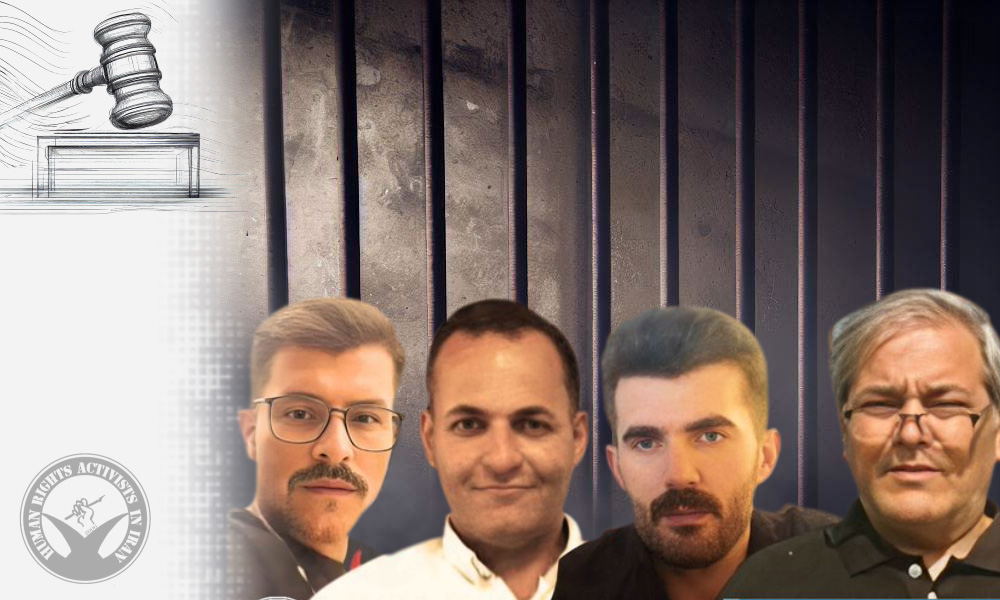
Women’s rights activist Atefeh Rangriz has been sentenced by the Damghan Revolutionary Court to seven years and seven months of imprisonment and a two-year ban from online activities. Rangriz, currently on medical leave from Shahroud Prison, had been serving a separate sentence related to her activism.

Her lawyer, Hossein Taj, revealed: “While her medical leave for a CT angiography was denied an extension, the Revolutionary Court of Damghan issued its verdict. Atefeh Rangriz was sentenced to seven years in prison for creating a Telegram group and seven months for propaganda against the regime. Additionally, she has been prohibited from engaging in online activities for two years.”

Rangriz was temporarily released on medical leave on November 6, 2023, due to deteriorating health conditions.

Her latest arrest occurred on September 10, 2023, when security forces detained her in Damghan. She was subsequently released on bail on October 21, 2023. This new sentence relates to an earlier case in which the Shahroud Revolutionary Court convicted her of “collaboration and membership in groups opposing the regime,” sentencing her to two years, seven months, and 16 days in prison. She also received an additional seven months and 16 days for “propaganda against the regime.” Rangriz began serving this earlier sentence on June 30, 2024, in Shahroud Prison.

Rangriz has faced multiple arrests and convictions over the years due to her advocacy work.
Revolutionary Court Sentences Student Activist Leila Hosseinzadeh to Prison

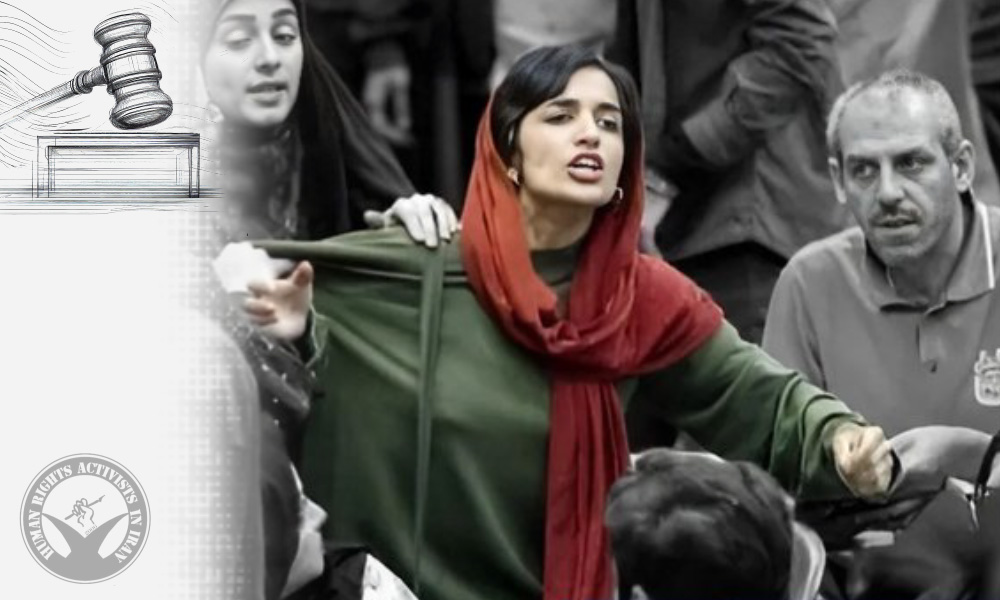
Leila Hosseinzadeh, a student activist, has been sentenced in absentia to prison by Branch 26 of Tehran’s Revolutionary Court, presided over by Judge Iman Afshari. The charges stem from her appearing unveiled at the University of Tehran during her thesis defense.

According to HRANA, the news agency of Human Rights Activists in Iran, Hosseinzadeh was convicted on charges of appearing in public without a hijab and “propaganda against the regime.” In a personal statement, she revealed that she was sentenced without prior notice and is unaware of the details. She added, “I have no expectations of appeal or any legal process. I’ll wait for the case to be referred to the enforcement office.”
Hosseinzadeh has faced several legal cases over the years. Most recently, a forensic medical commission confirmed her permanent inability to endure incarceration. As a result, her remaining five-year prison sentence from a 2019 case was converted to a fine of 100 million tomans, which she paid to conclude the case.
Leila Hosseinzadeh was first arrested during the 2017–2018 Iranian protests, detained for 16 days, and released on bail. On June 24, 2019, Branch 36 of Tehran’s Court of Appeals sentenced her to 30 months in prison for “assembly and collusion against national security” and an additional year for “propaganda against the regime,” along with a two-year travel ban. Charges included attending a birthday gathering for Mohammad Sharifi Moghadam, a Gonabadi Dervish imprisoned near Sharif University, and singing protest songs.

On July 28, 2019, she began serving her sentence but was released early due to a judicial directive.

In a separate case, Hosseinzadeh was sentenced in February 2021 to five years in prison and a two-year ban from online activities for “assembly and collusion with intent to act against national security” by Branch 28 of Tehran’s Revolutionary Court. The sentence was upheld by Branch 36 of the Appeals Court in December 2021.

She was arrested again on August 20, 2022, after being beaten by security forces outside her home. She was released on bail from Evin Prison on January 9, 2023.

Political Prisoners Mehran Hassan Zadeh and Hamid Abdollah Zadeh Sentenced to Death

Mehran Hassan Zadeh and Hamid Abdollah Zadeh, political prisoners detained in Urmia Prison, have been sentenced to death in separate cases by Branch 2 of the Revolutionary Court in Urmia.

According to HRANA, the news agency of Human Rights Activists in Iran, Mehran Hassan Zadeh was convicted on charges of baghi (armed rebellion), while Hamid Abdollah Zadeh was sentenced to death on suspicion of membership in an opposition party.

A source close to their cases confirmed to HRANA: “In Mehran’s case, the authorities accused him of involvement in the killing of a Basij member, which led to the baghi charge and the issuance of a death sentence. He was notified of the verdict a month ago. Regarding Hamid Abdollah Zadeh, his death sentence was issued two months ago.”

Mehran Hassan Zadeh, a resident of Oshnavieh, was initially arrested during the 2022 nationwide protests. After a period in detention, he was released on bail. In a separate part of his case, Branch 101 of the Oshnavieh Criminal Court sentenced him to nine months in prison on charges of “assembly and collusion against national security.” He was subsequently re-arrested and transferred to Urmia Prison.

Hamid Abdollah Zadeh, a resident of Urmia, was arrested by security forces in the fall of 2022 and has remained in Urmia Prison since his detention.

Both individuals are currently held in the political ward of Urmia Prison.

Fereydoun Soltani Arrested in Takab

Today, November 22, 2024, Fereydoun Soltani was arrested by agents of the Ministry of Intelligence in the city of Takab, West Azerbaijan province, and transferred to an undisclosed location.

A source close to Soltani’s family confirmed the news to HRANA, stating: “Mr. Soltani was arrested today following his summons to the Ministry of Intelligence office in Takab and has been transferred to an unknown location.”

As of this report, no information has been disclosed about the reasons for his arrest or the charges against him.

Fereydoun Soltani, a native of Takab, resides in Tehran.

Abolfazl Abri and Hashem Amini Arrested in Mashhad

On November 21, 2024, Abolfazl Abri and Hashem Amini, residents of Mashhad, were arrested after visiting a police station to retrieve belongings confiscated during a prior detention. They were subsequently transferred to The Ministry of Intelligence’s detention facility in Mashhad.

According to HRANA, the news agency of Human Rights Activists in Iran, the two citizens had previously been detained on November 19, 2024, while attending a ceremony at Mashhad’s Behesht Reza Cemetery. The ceremony marked the second anniversary of the death of Amir Javad Asadi, a victim of the 2022 nationwide protests. Police officers from the Torq station arrested them at the event, seizing their vehicle and personal belongings. Both were released after several hours of detention.

However, on November 21, they were summoned to the police station under the pretext of reclaiming their confiscated items. Upon their arrival, they were arrested again and transferred to a detention facility.

A source close to one of the detainees’ families informed HRANA that Abri and Amini were beaten by officers during their arrest.

At the time of this report, no details have been disclosed about the reasons for their detention or the charges they may face.

Amir Javad Asadi, 36, was arrested during the nationwide protests of 2022. He died in custody, with reports from BBC Persian indicating that his death was caused by torture while detained.

Subscribe to Our Newsletter

Now is definitely not the time to stop reading!

Three Prisoners Executed in Hamedan Prison for Drug-Related Charges

On November 21, three prisoners who had previously been sentenced to death for drug-related charges were executed in Hamedan Prison.

According to HRANA, the news agency of Human Rights Activists in Iran, the identities of the prisoners hanged at dawn on Thursday, November 21, 2024, have been confirmed as Arslan Habibi, Jabbar Keyfari, and Amir-Hossein Rostami.

HRANA’s information indicates that the three prisoners had been arrested on drug-related charges and subsequently sentenced to death by the judiciary.

As of the time of this report, the executions have not been officially announced by prison authorities or responsible institutions.

The reports from the Department of Statistics and Publication of Human Rights Activists for the year 2023 reveal a concerning prevalence of executions for drug offenses in Iran, constituting 56.4% of the total executions. For a comprehensive examination of the details and statistics surrounding the executions in Iran, refer to HRANA’s report.

Behrad Azargan, Baha’i Artist, Sentenced to 7 Years in Prison on Appeal

Behrad Azargan, a Baha’i musician residing in Tehran, has had his prison sentence reduced to seven years by Branch 36 of the Court of Appeals in Tehran Province. He had previously been sentenced at the primary trial to 11 years in prison, confiscation of seized belongings, a two-year ban on online activities, and a travel ban.

Under the ruling delivered by Branch 36 and conveyed to Mr. Azargan, he was sentenced to five years in prison for “engaging in educational or promotional activities deemed deviant to Islamic Sharia under the guise of sects, groups, or similar entities” and two years for “spreading falsehoods.”

Previously, Branch 15 of the Revolutionary Court in Tehran, presided over by Judge Salavati, had sentenced him to five years for the above-mentioned charge, four years for “membership in anti-regime groups,” and two years for “spreading falsehoods.” The court also ordered that items seized during the raid on his home be confiscated for the state. Furthermore, Azargan was banned for two years from online activities and from leaving the country.

On July 2, 2024, Azargan’s home in Tehran was searched by security agents, who confiscated personal belongings, including his phone and laptop.

On August 3, he was arrested after appearing before the Third Branch of the Prosecutor’s Office for Security for questioning regarding charges of “propaganda against the regime.” He was later released from Evin Prison on bail.

Baha’is are subjected to violations of their religious rights, comprising 82% of reports on infringements against religious minorities, according to HRA’s 2023 annual report.

The Baha’i faith is not recognized as a legitimate religion by Iranian authorities, leading to systematic and longstanding violations of the rights of Baha’is in the country. This includes the denial of their fundamental right to practice their religion, which constitutes a clear breach of both Article 18 of the Universal Declaration of Human Rights and Article 18 of the International Covenant on Civil and Political Rights. The United Nations covenant holds that every person has the right to freedom of religion, freedom of converting religion, as well as freedom of expression, individually or collectively; openly or secretly.

Two Prisoners Executed in Gonbad-e Kavus Prison

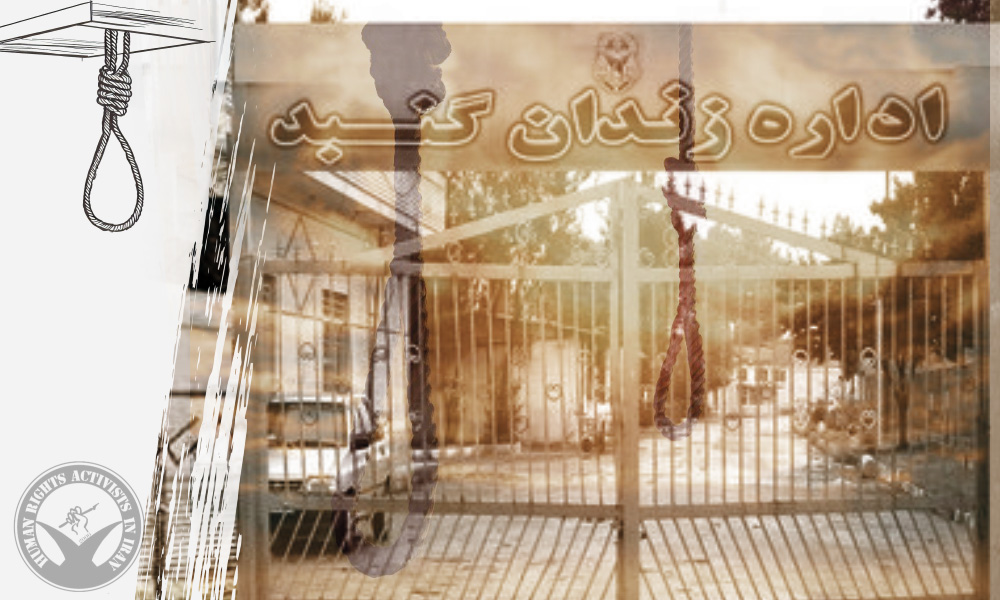
At dawn on Tuesday, November 19, the death sentences of two prisoners previously convicted of murder were carried out in Gonbad-e Kavus Prison.

According to HRANA, the news agency of the Human Rights Activists in Iran, the identities of the prisoners executed on the morning of Tuesday were confirmed as Safa Hosseini from Gorgan and Soleiman Vaziri.

Both individuals had been arrested on murder charges and subsequently sentenced to death by judicial authorities.

As of the time of this report, the executions have not been publicly announced by prison officials or the responsible institutions.

According to the Department of Statistics and Publication of Human Rights Activists in Iran, in 2023, at least 767 citizens, including 21 women and 2 juvenile offenders, were executed. Of these, the executions of 7 individuals were carried out in public. Additionally, during this period, 172 others were sentenced to death, with 5 of them sentenced to public execution. It is worth noting that during the same period, the initial death sentences of 49 other individuals were also upheld by the Supreme Court.

Mahmoud Mehrabi Acquitted of “Corruption on Earth” Charges

Mahmoud Mehrabi, a political prisoner held in Dastgerd Prison in Isfahan, has been acquitted by the Revolutionary Court of Isfahan of the charge of “corruption on earth,” which had previously led to a death sentence against him.

Earlier, his death sentence was overturned by the Supreme Court following an appeal and referred back to a parallel branch of the Revolutionary Court in Isfahan for a retrial.

Babak Farsani, Mehrabi’s lawyer, shared the news, stating: “My client, Mahmoud Mehrabi, was acquitted of the charge of corruption on earth by the verdict issued by the parallel branch of the Revolutionary Court of Isfahan. As per the ruling, the examination of other charges against him has been referred to the Criminal Court II and the Revolutionary Court in Mobarakeh County.”

In October this year, Mehrabi’s death sentence was annulled by the Supreme Court, which ordered a retrial in the parallel branch of the Revolutionary Court in Isfahan.

In May, Branch 5 of the Revolutionary Court in Isfahan had sentenced Mehrabi to death for “corruption on earth,” citing “the extensive dissemination of false information” on his Instagram account as a primary offense.

Mehrabi was first arrested by security forces in Isfahan on February 1, 2023. He was released on bail from Dastgerd Prison on March 16, 2023, but was re-arrested at his home in Isfahan only hours after his release, and subsequently returned to the same prison.

In September 2023, the Public and Revolutionary Prosecutor’s Office in Mobarakeh County indicted Mehrabi on several charges, including “corruption on earth through spreading false information, anti-regime propaganda on social media, inciting military and police forces to disobey orders and surrender online, inciting violence and unrest to disrupt security, and insulting the Supreme Leader and Ruhollah Khomeini on social media.”

In January 2024, Mehrabi faced additional charges, including “publishing criminal content in the media and insulting religious figures and sacred entities.”

Mahmood Mehrabi, 35, a resident of Isfahan, worked as an electrical engineer prior to his arrest.

Appeals Court Upholds Sentences for Four Defendants in Evin Prison Fire Case

The Tehran Provincial Appeals Court has upheld the sentences of Loqman Aminpour, Meysam Dehbanzadeh, Majid Roshannejad, and Reza Salmanzadeh, four defendants in the so-called Evin Prison fire case. Previously, Branch 1148 of the Tehran Criminal Court sentenced the group to a total of 33 years in prison and 518 lashes.

According to HRANA, the news agency of Human Rights Activists in Iran, the sentences were confirmed by the Appeals Court without a proper review of the case.

The original verdicts were issued on June 19, 2024, a day after the trial presided over by Judge Jabbar Javadi Rami. Aminpour, Dehbanzadeh, and Roshannejad were each sentenced to six years in prison and 74 lashes for “destruction of property,” an additional 16 months and 74 lashes for “disrupting prison order,” and another 16 months for “disobedience and resisting prison officials.” Salmanzadeh received five years in prison and 74 lashes for “destruction of property,” one year for “disrupting prison order,” and one year for “disobedience and resisting prison officials.”

A source close to one of the families told HRANA: “Despite objections filed by the defendants, neither they nor their lawyers were notified about the appeals process. The defense submissions prepared by their lawyers were ignored, and the sentences were upheld without any review in the Appeals Court.”

In addition to these four individuals, 36 other defendants in the Evin Prison fire case have also received prison sentences. HRANA is investigating the status of their appeals.

The prisoners are currently serving sentences from unrelated cases in the Greater Tehran and Ghezel Hesar prisons.

Following the fire on the night of Saturday, October 15, 2022, at Evin Prison, a case was opened against these prisoners based on a complaint from the Prisons Organization.

On the night of October 15, 2022, after tensions rose in Evin Prison, fire was seen above the prison, and sounds of gunfire and explosions were heard. Despite officials claiming to have controlled the fire and clashes, gunfire continued for several hours. As a result, several prisoners were injured and killed, and some were transferred out of the prison.