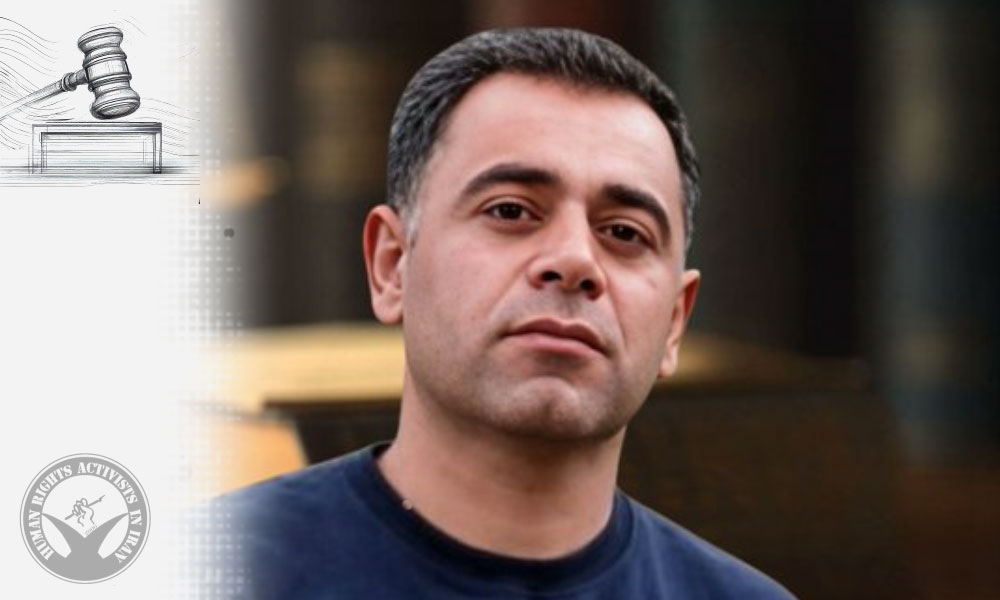
Nationwide Protests: Keyumars Vaezi Sentenced to 5 Years in Prison by the Revolutionary Court

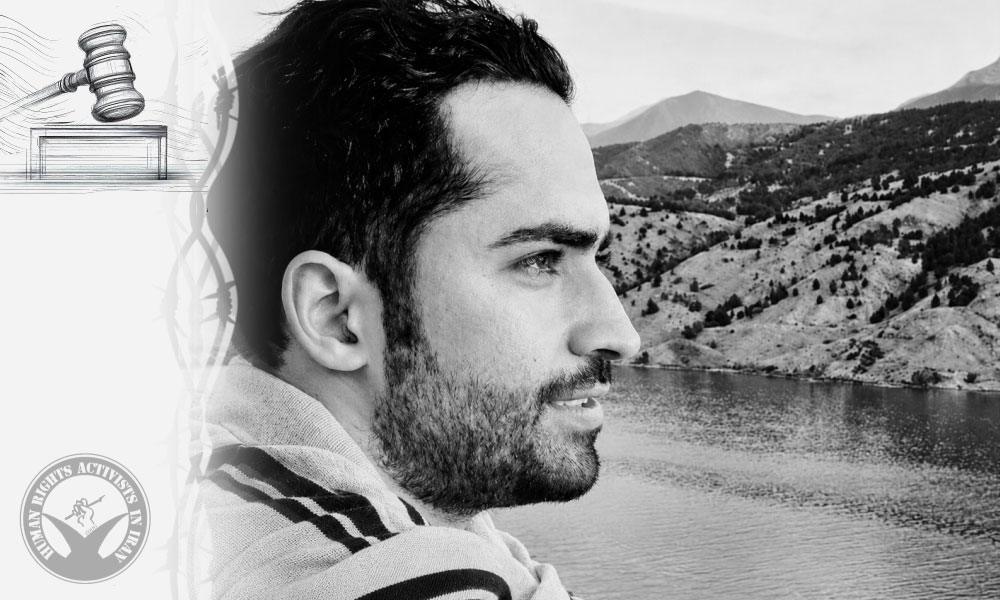
HRANA – Keyumars Vaezi, a teacher residing in Songhor, who had been arrested in connection with recent protests, has been sentenced to five years in prison by the Revolutionary Court of this county.

According to the Coordinating Council of Iranian Teachers’ Trade Associations, the Revolutionary Court of Songhor, presided over by Judge Sadegh Tari Vardi, sentenced Vaezi to four years in prison on the charge of “assembly and collusion against national security,” and one year of discretionary imprisonment on the charge of “propaganda against the regime.”

Mr. Vaezi was arrested on January 5 by intelligence forces of the Islamic Revolutionary Guard Corps (IRGC) and was subsequently transferred to Dizel Abad Prison in Kermanshah. He was later released on bail.

Keyumars Vaezi, a retired teacher and labor activist residing in Songhor, has previously also faced arrest and conviction.

It is worth noting that gatherings and strikes by shopkeepers and bazaar merchants began on Sunday, December 28, in Tehran, and after two days expanded beyond markets and commercial centers. With the participation of students, citizens, and various social groups, the protests became one of the largest waves of demonstrations in recent years. Following the crackdown on the protests by law enforcement and security forces, thousands of people were killed or injured, and tens of thousands were arrested or summoned by security institutions. For more information, readers can refer to HRANA’s comprehensive report titled “Crimson Winter,” which documents the first fifty days after the start of Iran’s nationwide protests.

The Fourth Day of the U.S.–Israel War on Iran: Strikes Continue in Western Regions of the Country

HRANA – In the last 24 hours, and as of March 3, 2026, at 17:00 ET, HRANA has recorded at least 104 attacks across 85 incidents in 19 provinces, resulting in a total of 31 casualties (killed and injured, both civilian and military). According to aggregated data since the outbreak of the conflict on February 28, the total number of reported civilian deaths has reached 1,097, including 181 children under the age of ten. An additional 880 reported deaths are currently under review for verification and classification. The number of reported civilian injuries since February 28 has reached 5,402, including 100 children.

Based on information verified today, HRANA has recorded 15 civilians killed and 1 civilian injured, as well as 12 military personnel killed. During the last 24-hour period, 10 cases (deaths and injuries) remain under review for verification and classification, including assessment of whether individuals were civilians or military personnel.

In addition, in the last 24 hours, 34 objects were reported as hit. These include a range of sites and infrastructure, including several military bases, two medical centers, and one residential area. The nature of these objects, whether under special protected status, civilian, military, or dual use, remains under review, and classifications may be revised as further information becomes available. The number of recorded targets includes both those that were directly struck and those that sustained damage as a result of nearby attacks or collateral impacts.

Aggregated data since the beginning of the conflict on 28 February 2026: The total number of reported civilian deaths stands at 1097, including 181 children under 18, with 880 reported deaths currently and under review pending verification and classification. Reported civilian injuries since 28 February 2026 stand at 5402, including 100 children.

This report provides a preliminary analysis of incidents documented within the last 24 hours. All figures and classifications contained herein are based on information available at the time of publication. As verification efforts continue and additional information becomes available, casualty figures, classifications of individuals as civilian or military, and the categorization of damaged objects may be updated.

HRANA applies a verification methodology that relies on cross-checking field reports, local sources, medical and emergency contacts, and available open source material. In cases where information cannot yet be conclusively verified, incidents or casualties are classified as undetermined and remain under active review. The dynamic nature of the situation, access constraints, and communication disruptions may affect the completeness of current data.

1. Overview of Incidents in the Last 24 Hours

In the last 24 hours, incidents were reported across multiple provinces, reflecting a geographically dispersed pattern of hostilities. The documented incidents include airstrikes and missile attacks, primarily involving cruise missiles.

Preliminary analysis indicates that Tehran Province, accounting for 38 percent of the attacks, continues to be targeted more than any other part of the country. Unlike previous days, when Kurdistan and Ilam provinces ranked second and third in terms of the number of attacks, today Kermanshah and Isfahan provinces held those positions, accounting for 9 percent and 8 percent of the attacks respectively. Kurdistan, with a 7 percent share, continues to experience a significant and sustained portion of the air and missile strikes.

• Allah Akbar Garrison in Tehran

• A military headquarters affiliated with the Mohammad Rasoul Allah Corps in Kermanshah

• The Army’s 328th Infantry Brigade garrison in Marivan

• Shahid Yazdani Garrison in Najafabad

• Imam Hossein University in Tehran

For a number of the above-listed objects, the precise nature of the target, whether civilian, military, or dual use, remains under review. Verification efforts are ongoing to determine the status and function of each object at the time of the reported strike. As further information becomes available, classifications may be revised in subsequent updates.

Facilities Protected Under International Humanitarian Law:

Under international humanitarian law, medical facilities, educational institutions, humanitarian facilities, religious sites, and emergency service centers are among the many objects that maintain special protected status and are afforded special protection.

As of the past 24 hours, HRANA documents reported damage to the following facilities protected by IHL. The information below reflects preliminary findings and remains subject to verification. This list is not exhaustive; those listed are illustrative.

• Shohada Hospital in Sarpol-e Zahab

• A field hospital in Salas-e Babajani

• The Criminal Investigation Department in Marivan

• Nuclear facilities in Natanz

• The Dezful Radio building in Dezful

3. Civilian Casualties

All casualty figures presented below are based on information available at the time of publication. The classification of individuals as civilian, military, or undetermined is preliminary and subject to change as further verification is conducted. Where sufficient corroboration is not yet available, cases remain under review and may be reclassified in subsequent updates.

In the last 24 hours, 15 civilians were reported killed, and one civilian were reported injured across 19 provinces. Among them, 2 children were killed.

The highest number of civilian casualties was documented in Tehran province, followed by Isfahan Province.

4. Military Casualties

During the same reporting period, 12 military personnel were reported killed. This figure for military casualties is limited exclusively to those reported in connection with attacks on military or paramilitary bases. Where possible, organizational affiliation and operational context are being assessed; however, not all details have been independently verified.

In certain incidents, individuals were killed in proximity to military objectives, but their formal status has not yet been conclusively established. These cases remain under review, and classification may be revised if credible information indicates a different status.

5. Unverified Casualties

As of publication, 52 casualties remain under active review and are currently classified as undetermined.

The classification may remain pending for the following reasons:

• Lack of identifying documentation

• Conflicting reports from sources

• Insufficient information regarding affiliation or role at the time of death or injury

• Ongoing efforts to verify open-source reports through the HRANA network

6. Undetermined Casualties

As of the time of publication, 10 casualties (deaths and injuries) remain classified as undetermined. This includes cases where HRANA has not yet been able to confirm whether the individual was a civilian or military personnel, or where age status (including potential child casualties) has not been conclusively verified.

A Note on HRANA Methodology

The information contained in this report is compiled through HRANA’s established documentation network. Data is collected from a combination of field reports, local contacts, medical and emergency sources, civil society networks, and open source materials, including publicly available images, videos, and official statements where relevant. Each reported incident is logged and assessed through an internal review process before publication.

Given the evolving nature of hostilities, information is gathered on a rolling basis and reflects the status of documentation at the time of publication.

The figures presented in this report may not reflect the full scope of harm. Ongoing hostilities, damage to infrastructure, communication disruptions, restricted access to affected areas, and security risks for sources may limit the ability to document incidents comprehensively.

Delays in medical reporting, difficulties in confirming identities, and restricted access to certain provinces may result in temporary undercounting. As access improves or additional evidence emerges, casualty figures and incident classifications may be revised accordingly.

HRANA remains committed to transparency, methodological rigor, and the continual updating of its findings as new verified information becomes available.

Humanitarian Obligations

Human Rights Activists in Iran today issued a statement condemning the ongoing conflict between the United States–Israel and Iran, warning of rising casualties and ongoing assessments. HRA described attacks on medical centers and critical infrastructure as serious violations of international humanitarian law and called for an immediate halt to attacks, the protection of civilians, and the full restoration of internet access in Iran.

The Third Day of the U.S.–Israel War on Iran: Rising Casualties and Intensified Strikes in Tehran and Western Provinces

HRANA – In the last 24 hours, and as of March 2, 2026, at 17:00 ET, HRANA recorded at least 56 incidents across 13 provinces, resulting in 101 total casualties (killed and injured, civilian and military). All figures and classifications in this report are preliminary and may be updated as additional information becomes available and verification efforts continue.

Based on information verified today, HRANA has recorded 85 civilians killed and 5 total civilians injured, as well as 11 military personnel killed. During the last 24-hour period, 579 cases (deaths and injuries) remain under review for verification and classification, including assessment of whether individuals were civilians or military personnel.

In addition, in the last 24 hours, 28 objects were reported as hit. These include a range of locations and infrastructure, such as several military bases, two residential areas, and Shahid Bahonar Pier in Bandar Abbas. The nature of these objects, whether under special protected status, civilian, military, or dual use, remains under review, and classifications may be revised as further information becomes available. The list of 28 recorded targets are included in this report and reflect both objects reportedly directly targeted and those documented as damaged due to nearby strikes or collateral effects.

Aggregated data since the beginning of the conflict on 28 February 2026: The total number of reported civilian deaths stands at 742, including 176 children under 18, with 624 reported deaths currently and under review pending verification and classification. Reported civilian injuries since 28 February 2026 stand at 971, including 115 children.

This report provides a preliminary analysis of incidents documented within the last 24 hours. All figures and classifications contained herein are based on information available at the time of publication. As verification efforts continue and additional information becomes available, casualty figures, classifications of individuals as civilian or military, and the categorization of damaged objects may be updated.

HRANA applies a verification methodology that relies on cross-checking field reports, local sources, medical and emergency contacts, and available open source material. In cases where information cannot yet be conclusively verified, incidents or casualties are classified as undetermined and remain under active review. The dynamic nature of the situation, access constraints, and communication disruptions may affect the completeness of current data.

1. Overview of Incidents in the Last 24 Hours

In the last 24 hours, incidents were reported across multiple provinces, reflecting a geographically dispersed pattern of hostilities. Documented incidents include airstrikes and missile attacks.

Preliminary analysis indicates that Tehran Province, accounting for 56% of the attacks, continues to be targeted more than any other part of the country. Unlike previous days, when West Azerbaijan and East Azerbaijan provinces ranked second and third in terms of the number of attacks, today Kurdistan and Hormozgan provinces hold those positions, with shares of 8% and 7%, respectively.

US-Iran war map Day 3

2 List of Objects Reported Hit

In the last 24 hours, the following objects were reported as hit. Please note that this list includes not only objects reportedly directly targeted, but also those documented as damaged as a result of nearby strikes or blast effects. This list is not exhaustive; the items listed are illustrative.

• The Law Enforcement Command Headquarters of Kurdistan, located in Sanandaj

• The Kurdistan Border Guard Command Center, located in Sanandaj

• The 8th Tactical Air Base (Islamic Republic of Iran Air Force) in Isfahan was targeted

• The Army’s Self-Sufficiency Jihad Base in Tehran was targeted

For a number of the above-listed objects, the precise nature of the target, whether civilian, military, or dual use, remains under review. Verification efforts are ongoing to determine the status and function of each object at the time of the reported strike. As further information becomes available, classifications may be revised in subsequent updates.

Facilities Protected Under International Humanitarian Law:

Under international humanitarian law, medical facilities, educational institutions, humanitarian facilities, religious sites, and emergency service centers are among the many objects that maintain special protected status and are afforded special protection.

As of the past 24 hours, HRANA documents reported damage to the following facilities protected by IHL. The information below reflects preliminary findings and remains subject to verification. This list is not exhaustive; those listed are illustrative.

• A mosque in Mehrshahr, Karaj, was targeted

• A residential building on Shariati Street in Tehran was targeted

• The governor’s office in Rey was targeted

• Shahid Bahonar Pier in Bandar Abbas was targeted

• A residential complex on Sepahbod Qarani Street in Tehran was targeted

3. Civilian Casualties

All casualty figures presented below are based on information available at the time of publication. The classification of individuals as civilian, military, or undetermined is preliminary and subject to change as further verification is conducted. Where sufficient corroboration is not yet available, cases remain under review and may be reclassified in subsequent updates.

In the last 24 hours, 85 civilians were reported killed, and 5 civilians were reported injured across 13 provinces. Among them, 1 children were killed.

The highest number of civilian casualties was documented in the city of Ilam, Ilam Province, followed by Kurdistan Province.

In Tehran, a particularly severe incident occurred when an airstrike damaged the Iranshahr Street Emergency building and several adjacent buildings. These incidents continue to be reviewed as additional documentation becomes available.

4. Military Casualties

During the same reporting period, 11 military personnel were reported killed. This figure for military casualties is limited exclusively to those reported in connection with attacks on military or paramilitary bases. Where possible, organizational affiliation and operational context are being assessed; however, not all details have been independently verified.

In certain incidents, individuals were killed in proximity to military objectives, but their formal status has not yet been conclusively established. These cases remain under review, and classification may be revised if credible information indicates a different status.

5. Unverified Casualties

As of publication, 52 casualties remain under active review and are currently classified as undetermined.

Classification may remain pending due to:

• Lack of identifying documentation

• Conflicting reports from sources

• Insufficient information regarding affiliation or role at the time of death or injury

• Ongoing efforts to verify open-source reports through the HRANA network

Several incidents and casualties documented in this reporting period remain under review due to incomplete or conflicting information. These cases are recorded but are not yet fully verified or cannot yet be reliably classified, and may be updated as additional corroboration becomes available.

6. Undetermined Casualties

As of the time of publication, 579 casualties (deaths and injuries) remain classified as undetermined. This includes cases where HRANA has not yet been able to confirm whether the individual was a civilian or military personnel, or where age status (including potential child casualties) has not been conclusively verified.

A Note on HRANA Methodology

The information contained in this report is compiled through HRANA’s established documentation network. Data is collected from a combination of field reports, local contacts, medical and emergency sources, civil society networks, and open source materials, including publicly available images, videos, and official statements where relevant. Each reported incident is logged and assessed through an internal review process before publication.

Given the evolving nature of hostilities, information is gathered on a rolling basis and reflects the status of documentation at the time of publication.

The figures presented in this report may not reflect the full scope of harm. Ongoing hostilities, damage to infrastructure, communication disruptions, restricted access to affected areas, and security risks for sources may limit the ability to document incidents comprehensively.

Delays in medical reporting, difficulties in confirming identities, and restricted access to certain provinces may result in temporary undercounting. As access improves or additional evidence emerges, casualty figures and incident classifications may be revised accordingly.

HRANA remains committed to transparency, methodological rigor, and the continual updating of its findings as new verified information becomes available.

Humanitarian Obligations

HRA reiterates that all parties to the conflict are bound by international humanitarian law and must at all times distinguish between civilians and combatants, and between civilian objects and military objectives. Attacks directed against civilians or civilian objects, as well as indiscriminate attacks, are prohibited. All parties are required to take all feasible precautions to minimize civilian harm and to protect facilities afforded special protection, including medical units, schools, humanitarian facilities, religious sites, and objects indispensable to the survival of the civilian population.

HRA further underscores the obligation under human rights law of the Islamic Republic of Iran to ensure access to information. Authorities must refrain from imposing internet shutdowns, communication disruptions, or other restrictions that impede the flow of information, obstruct documentation efforts, or prevent families from obtaining information about the fate and whereabouts of their relatives. Transparency and access to information are essential for civilian protection and the effective delivery of humanitarian assistance.

As seen in the documentation in this report, armed conflict brings profound destruction and suffering to civilians and deepens humanitarian crises. HRA calls for an immediate cessation of hostilities and a renewed commitment to a peaceful resolution grounded in international law. The continued loss of civilian life, including that of children, underscores the urgent need to prioritize the protection of human life above all else.

The protection of civilians and the safeguarding of fundamental rights, including access to information, are binding legal obligations. The pursuit of peace remains essential to preventing further harm.

Borna Naeimi, a Baha’i Citizen, Arrested in Kerman

HRANA – Borna Naeimi, a Baha’i citizen residing in Kerman, was arrested yesterday by security forces and taken to an undisclosed location.

Based on information received by HRANA, Mr. Naeimi was arrested on Sunday, March 1, 2026, by security forces who used violence at his workplace during the arrest. As of the time of this report, no information is available regarding his whereabouts or the charges brought against him.

Borna Naeimi, a 29-year-old Baha’i citizen, is the father of a three-year-old child and a resident of Kerman. He is a relative of Peyvand Naeimi, who had previously been transferred to Kerman Prison after being arrested and subjected to the publication of forced confessions.

Over the past decade, the Baha’i community in Iran has been subjected to security and judicial measures more than any other religious minority. HRA’s annual report reveals that over the past year, on average, 62.41% of reports concerning religious minorities were related to violations of the civil rights of Baha’is.

The Second Day of the U.S.–Israel and Iran War: Rising Civilian Casualties

HRANA – On March 1, 2026, based on recorded data, at least 72 incidents were reported across 20 provinces. Tehran ranked first with 37 incidents (51%). The composition of the attacks included 39 missile strikes (54%), 32 incidents with unspecified methods (44%), and one airstrike. At the same time, the targeting of at least 30 sites or facilities in 12 provinces was recorded, including 15 military-security targets, 7 civilian infrastructure sites, 5 medical centers or emergency bases, 2 residential homes, and one school.

Over the past 24 hours the crisis stemming from the U.S. and Israeli attack on Iran entered a new phase. The scope of attacks expanded across the country, and based on daily data, at least 72 incidents were recorded in 20 provinces. Attacks on Tehran increased markedly. Political developments as well, including the confirmation of Ayatollah Ali Khamenei’s death and the circulation of conflicting reports regarding the fate of Mahmoud Ahmadinejad, further deepened the atmosphere of uncertainty and tension within the public sphere.

In terms of human casualties, reports indicate a rising number of child victims following the attack on a school that was targeted the previous day, an incident that, due to the nature of the site and the profile of the victims, has become one of the most sensitive aspects of the crisis. In the same context, multiple reports also emerged today about damage to Gandhi Hospital in Tehran and the evacuation of patients, including children.

Meanwhile, the continued severe disruption and near-total internet shutdown, which independent reports have described as “close to a nationwide blackout”, has effectively hindered the flow of information, on-the-ground verification, and citizens’ access to safety information, increasing the time gap between the occurrence of incidents and the documentation of their details.


Overview of the Attacks and Pattern of Incidents

Based on recorded data from developments on March 1, at least 72 incidents were reported and documented across 20 provinces in Iran. In terms of geographic spread, method of attack, and timing, these incidents point to the continuation of coordinated and simultaneous waves of strikes. (For comparison, at least 60 incidents had been recorded on February 28.)

In terms of geographic distribution, Tehran Province ranks first with 37 incidents, accounting for more than half of all recorded incidents today (approximately 51%). It is followed by East Azerbaijan and West Azerbaijan provinces, each with 4 incidents. The provinces of Alborz, Sistan and Baluchestan, and Zanjan each recorded 3 incidents, while Lorestan, Kurdistan, Kermanshah, and Khuzestan each recorded 2 incidents. In addition, several other provinces each registered a single incident, confirming the broad geographic scope of today’s attacks.

Regarding the type of attack, today’s data shows that missile strikes continue to account for the largest share, although their proportion has decreased compared to the previous day:

▪ Missile attacks: 39 cases (approximately 54%)
▪ Method of attack unspecified: 32 cases (approximately 44%)
▪ Airstrike: 1 case (approximately 1%)

This shift is significant because while missile strikes were far more dominant the previous day, today there has been a noticeable increase in incidents for which the method of execution has not yet been definitively determined.

Regarding the weapons used, the data show that in 47 incidents cruise missiles were employed (approximately 65%), while in 25 incidents the weapon/method remained unspecified (approximately 35%). Notably, in today’s data no drone incidents were recorded as a distinct category, and a significant portion of the uncertainty appears to be reflected under the label “unspecified method.”

In terms of timing, incidents were concentrated in two primary time windows:

▪ 10:00–14:00: 36 incidents (approximately 50%)
▪ 21:00–22:00: 20 incidents (approximately 28%)

In addition, a smaller cluster occurred between 18:00 and 20:00 (13 incidents, approximately 18%). This pattern may be consistent with attacks carried out in multiple phases, although it should be noted that the “time of registration” does not always precisely correspond to the “time of occurrence.”

Regarding the nature of the targets, a significant portion of incidents still requires further clarification; however, today’s breakdown is clearer than in previous reports:

▪ Unspecified targets: 34 cases (approximately 47%)
▪ Military targets: 22 cases (approximately 31%)
▪ Civilian objects: 9 cases (approximately 13%)
▪ Dual-use objects: 7 cases (approximately 10%)

In the assessment of damage, more than half of the recorded incidents were classified as causing severe damage:

▪ Severe: 41 cases (approximately 57%)
▪ Unspecified: 30 cases (approximately 42%)
▪ Minor: 1 case

Across all incidents recorded today, no instances of prior warning before the attacks were documented, and no specific cases of displacement were reported. In terms of verification status, 70 incidents (approximately 97%) are categorized as “confirmed,” while 2 incidents remain under “initial confirmation.”

This preliminary overview indicates that on March 1 there was an increase both in the number of incidents and in their provincial spread, while the geographic concentration of attacks shifted markedly toward Tehran. More detailed information regarding the nature of the targets, humanitarian consequences, and the extent of damage, particularly in incidents categorized under “unspecified method”, will become clearer in subsequent reports as verification processes are completed.

Civilian Casualties and Preliminary Assessment

Based on recorded reports concerning developments on March 1, and after removing duplicate or overlapping entries, at least 6 civilians have been killed and 4 civilians injured as of the time of writing, a total of at least 10 civilian casualties directly attributed to today’s incidents.

In terms of geographic distribution, the highest number of recorded fatalities today relates to Tehran Province. Reports indicate 6 deaths in Tehran, including one worker killed following an attack on a workshop in the Shariati Street area, as well as a separate report of 5 people killed in Tehran’s District 12 (further details regarding the identities of the victims and the specifics of this case remain limited).

The recorded cases of injured civilians pertain to West Azerbaijan, Hamadan, and East Azerbaijan provinces: 2 individuals were injured in Urmia following the targeting of an educational center, and 2 others were injured in Hamadan and Sarab, both reported in connection with attacks on emergency bases that resulted in injuries to healthcare personnel. This pattern indicates that, alongside urban areas, public service and emergency facilities are also among the affected sites.

In addition to the above cases, for which the date and location are specified, one further death has been recorded within the past 24 hours for which the exact date and geographic coordinates remain unclear, with the report referring only to a “fatality in airstrikes.” Due to the lack of sufficient detail, this case has been kept separate from today’s geographic summary.

At the same time, it should be noted that part of the information registered over the past 24 hours pertains to February 28 and is retained in this daily report solely for record-keeping purposes. Given the ongoing restrictions on information flow, the figures may increase and further details may emerge, particularly in cases initially recorded with limited information, in subsequent updates.

Military Casualties and Preliminary Assessment

Based on recorded data from March 1, and after consolidating reports to avoid double counting, the minimum distinguishable estimate indicates that at least 6 military-security personnel were killed today. Additionally, reports also point to a number of injured personnel; however, in some cases the exact figures and the breakdown between killed and wounded have not yet been consistently established.

In terms of geographic distribution, the reported military casualties today were primarily recorded in West Azerbaijan, Kermanshah, Isfahan, and Ilam provinces, with a notable concentration in the northwest of the country and several significant incidents in western Iran.

The most prominent focal point of today’s casualties is Urmia, where reports indicate the killing of four Law Enforcement Command (FARAJA) members, including two colonels. The announced names are: Seyyed Qassem Razavi (Colonel), Ourj-Ali Dorosti (Colonel), Yaser Mikaeili (Second Lieutenant), and Mohammad Reza Norouzi (conscript soldier). The simultaneous loss of multiple ranked police officers in a single city signals a significant blow to the internal security structure in this axis.

In Kermanshah, at least one report indicates fatalities following an attack on a Basij base in the Ta’avon Township. In Ravansar, reports also point to an attack on an IRGC headquarters; in this location, at least one death has been clearly recorded, and several injuries have been reported, although the exact number has not been specified.

In Kashan (Isfahan Province), an official report announced the killing of at least 12 IRGC members in airstrikes. Due to the aggregate nature of this figure and the absence of a detailed list of names in the initial data, it has not been incorporated into the “minimum distinguishable estimate.” Nevertheless, from a reporting perspective, it represents one of the most significant figures published today.

In Mehran (Ilam Province), reports indicate heavy casualties following an attack on a border regiment headquarters. Some accounts refer to the killing of 21 individuals (including both career personnel and conscript soldiers), while other reports mention additional injuries. Given discrepancies in the initial reporting, a definitive and disaggregated summary of the number of wounded is withheld at this stage to avoid statistical inaccuracies.

Overall, according to the reports received, FARAJA and IRGC forces have sustained the highest number of casualties. As field details are completed and the breakdown of casualties in aggregated reports becomes clearer, a more precise picture of the final number of those killed and injured is expected to be presented in subsequent updates.

Subscribe to Our Newsletter

Now is definitely not the time to stop reading!

The First Day of the U.S.–Israel and Iran War: Initial Report on the Scope of Attacks and Their Human Consequences

HRANA – Following military attacks by the joint United States and Israel against Iran on February 28, 2026, preliminary data collected from field sources and published reports presents a picture of a large-scale, multi-wave operation: at least 59 incidents recorded across 18 provinces; a minimum estimated 333 civilian casualties; confirmed military casualties; damage to infrastructure and educational centers; severe, multi-phase internet disruptions; and a wave of legal, political, and humanitarian reactions both inside and outside Iran are among the developments.

This report offers a preliminary, data-driven account of the dimensions of the February 28, 2026 attacks on Iran, an image that reflects the crisis at multiple levels: the operational pattern of the strikes, the human cost, damage to infrastructure, communication disruptions, and international and domestic responses.

For now, efforts are being made to provide a conservative estimate of the figures so that, with the subsequent collection of additional data, the numbers can be brought closer to reality. In cases where there was a possibility of overlap or double counting, hasty aggregation has been avoided, and the data has been assessed based on distinguishable and more reliable cases. Accordingly, this text should be regarded as the first coherent snapshot of an evolving situation, one that will become more precise in subsequent sections of the report as verification processes are completed and field details become clearer.

Overview of the Attacks and the Initial Pattern of Incidents

Based on preliminary data collected from today’s attacks, at least 59 incidents have been recorded across 18 provinces in Iran. In terms of type of attack, geographic distribution, and timing, these incidents present a picture of a large-scale, multi-wave operation.

Approximately 73 percent of the recorded incidents were related to missile strikes. They were followed by cases with unspecified methods of attack (around 17 percent) and drone strikes (over 10 percent). Regarding the weapons used, preliminary data indicate that the majority of the recorded attacks were carried out using cruise missiles.

Geographically, Tehran recorded the highest number of incidents, followed by East Azerbaijan and West Azerbaijan provinces. Additionally, several incidents were reported in the provinces of Bushehr, Fars, Hormozgan, Sistan and Baluchestan, Khuzestan, and Alborz, reflecting the broad geographic scope of the attacks across different regions of the country.

An analysis of the recorded times indicates that more than half of the incidents occurred within a concentrated window during the morning hours, with approximately 56 percent taking place between 9:00 and 9:30 a.m. (Tehran time). A second wave is also observed around 7:00 p.m. This temporal concentration may indicate that the attacks were carried out in multiple phases, although in some cases the recorded time of the incident may not exactly correspond to the precise time of occurrence.

At present, a large portion of the attack targets and their nature remain unspecified. Nearly 70 percent of the targets have been categorized as “unspecified,” while approximately 19 percent have been identified as military targets and close to 12 percent as civilian targets. This pattern indicates that the verification process and legal classification of the targets are still ongoing and may change as further information becomes available.

Additionally, among the recorded incidents, no cases of prior warning before the attack have been documented.

A significant portion of the incidents are in the “confirmed” verification category; however, in many cases the final assessment of the extent of damage has not yet been completed, and some of the damage remains classified as “unspecified.”

This picture suggests that today’s attacks were carried out on a wide scale, both in terms of geographic scope and the volume of recorded incidents. Nevertheless, details regarding the nature of the targets, the extent of damage, and human casualties will be clarified with greater precision in subsequent reports as the verification process is completed.

Civilian Casualties

Following a review and refinement of the initial civilian casualty data, and after removing overlapping aggregate figures as well as excluding ambiguous cases, the minimum reliable estimate in this section indicates that at least 133 civilians have been killed and 200 civilians injured so far; that is, a total of at least 333 civilian casualties in cases that have been recorded individually and with specific figures.

This estimate represents a minimum figure. In several instances, the occurrence of harm has been documented, but the exact number of injured has not been specified and therefore has not been included in the final tally. In other words, the actual number of civilian casualties is likely higher than this figure.

In addition to this case-based estimate, a nationwide aggregated statistic released as of 8:45 p.m. reported 201 deaths and 747 injured. However, due to the possibility of overlap with provincial and local reports, as well as differences in the scope of coverage, this aggregated figure has not been incorporated into the case-based total in this section, in order to avoid double counting.

In terms of geographic distribution, the highest explicitly recorded figures in this section relate to Hormozgan and Fars provinces. In Hormozgan, reports from one incident in Minab and another in Bandar Jask indicate significant casualties. In Lamerd (Fars Province), recorded figures report civilians killed and injured in a sports hall and a residential area. Additionally, cases of civilian injuries have been documented in Tehran, Qazvin, and Khuzestan.

Regarding the types of locations affected, preliminary data show that schools and spaces associated with children and students are among the sites damaged, a matter of particular humanitarian and legal concern. In some cases, damage has also been reported in urban areas and other civilian locations, including residential neighborhoods and workplaces.

In one provincial report, figures for those killed and injured were received; however, the report explicitly stated that it was unclear whether the individuals were civilians or military personnel. For this reason, these cases have not been included in the final estimate of this section. Likewise, in several other entries, phrases such as “a number of injured” or “an unspecified number” were used, which at this stage prevents their conversion into precise figures.

Demographic information about the victims also remains incomplete. Although in some cases reference has been made to child victims or injured students, in many records a precise breakdown by age, gender, and the proportion of children to adults has not yet been provided.

Overall, the findings from this section so far indicate significant civilian casualties across several provinces, alongside the natural information gaps typical of the initial stage of documentation, gaps that, with the completion of field reports and more detailed data classification, may lead to a more precise assessment of the human dimensions of the attacks.

Military Casualties

Based on preliminary data collected regarding military casualties, and after removing overlapping aggregate figures as well as excluding cases that remain under independent review, the minimum reliable estimate in this section indicates that at least 8 military personnel have been killed and 2 injured so far; that is, a total of at least 10 cases of military fatalities and injuries recorded separately and in a clearly distinguishable manner.

This estimate is a minimum and conservative figure. The reason is that some initial reports were released in general terms and without precise numbers (for example, using phrases such as “a number killed and injured”), while others are still undergoing independent review and confirmation. In order to prevent double counting or unintended inflation of figures, these cases have not been included in the main total of this section.

Separate reports have also indicated the deaths of several senior military-defense figures; however, in the current dataset these cases remain classified as “under review.” Should they be independently confirmed, the total number of recorded military fatalities may surpass the present minimum estimate.

In terms of geographic distribution, the cases recorded in this section are primarily concentrated in Tehran; Sistan and Baluchestan (including Konarak and Chabahar); and West Azerbaijan (including Shahin Dezh). This pattern indicates that the documented military casualties are not confined to a single region, but have been reported in several operationally significant locations across the country.

Among the recorded cases, both identified individuals and cases without publicly disclosed identities are present. Some entries have been documented individually and with full names, while others have been recorded without personal identification but linked to a specific incident. Given that these unnamed cases are connected to distinct incidents and differing statuses (killed/injured), they have been retained as independent cases in the minimum estimate.

In terms of verification status, the picture in this section is mixed: some cases have been registered as confirmed, while others remain at the level of initial confirmation. This indicates that although the occurrence of military casualties in several locations appears reliable, the final details regarding the precise number, the full identities of the victims, and the distribution of personnel across different military branches are still being completed.

Overall, the preliminary data in this section indicate that today’s attacks have resulted not only in civilian casualties but also in significant military losses. However, in this area, due to security considerations, restrictions on information release, and the publication of general and non-numerical reports, the process of finalizing definitive figures may involve further delays.

Damage to Infrastructure and Facilities

Following a review and refinement of the preliminary data, at this stage at least 14 distinct targets have been recorded across 7 provinces. This estimate is based on cases that could be separately identified and avoids double counting a single target within one incident.

According to these data, the majority of the recorded targets consist of military bases and facilities. Of the total recorded targets, 9 cases (approximately 64 percent) fall into the category of military targets. In addition, 3 cases involve civilian infrastructure or dual-use facilities (around 21 percent), and 2 cases involve educational centers/schools (approximately 14 percent). This pattern indicates that although the primary focus of the recorded attacks was on military targets, damage to infrastructure and civilian centers is also clearly reflected in the preliminary data.

In terms of geographic distribution, the highest number of recorded targets appears in Hormozgan and Sistan and Baluchestan (3 cases each). They are followed by Tehran, Kurdistan, and Fars (2 cases each), and then Markazi and Yazd (1 case each). This distribution shows that damage to facilities was not confined to a single geographic axis, but was reported in the south, southeast, west, and central regions of the country as well.

Among the recorded civilian targets, or targets with both military and civilian applications, are Mehrabad Airport, an industrial town, as well as schools and a children’s sports hall.  From a humanitarian and legal perspective, the documentation of damage to educational centers and child-related spaces is of particular importance, as these categories of targets may play a significant role in subsequent assessments of the attacks’ impact on the civilian population.

Information obtained regarding the targeted infrastructure after the attacks indicates that three facilities were taken out of operation (rendered non-operational), while one has been reported to remain operational. No information is currently available regarding the status of the other targets beyond these four cases. Notably, the non-operational cases recorded at this stage primarily relate to children’s educational centers.

In terms of verification, 12 targets have been registered as confirmed and 2 as initially confirmed. In some cases, visual evidence (video) is also available alongside news reports, which may be important for further review and field verification.

Nevertheless, the data in this section are still incomplete. In most cases, no estimate has been recorded of the number of people affected by damage to infrastructure, and therefore at this stage it is not possible to provide a reliable numerical summary of the scope of indirect human impacts (such as disruptions to transportation, education, or public services). Environmental impacts have also in most records either been reported as “no effect” or remain in need of further assessment.

Overall, the preliminary picture in this section indicates that today’s attacks, in addition to military targets, have also caused damage to infrastructure and certain civilian and educational centers. As the data are completed and the operational status of targets becomes clearer, a more precise assessment of the severity of the damage, service-related consequences, and the extent of impact on the civilian population is expected to become available.

Internet and Communication Disruptions and Their Impact on the Flow of Information

Based on data collected regarding the state of communications, at least three distinct entries documenting nationwide internet disruption were recorded on the day of the attacks. These entries should not be interpreted as three separate incidents, but rather as successive stages of a single national disruption. For this reason, a simple aggregation of these cases as “three independent shutdowns” has been avoided in order to maintain a picture closer to reality.

The data indicate that within a short time frame, the disruption escalated from a noticeable reduction in access to a severe collapse in national connectivity. In the first entry, the level of internet connectivity in Iran had dropped to approximately 54 percent of normal levels—reflecting widespread disruption, though not a complete shutdown, in parts of the country.

Only about 23 minutes later, in the subsequent entry, national connectivity reportedly fell to around 4 percent of normal levels—a dramatic decline effectively indicating that a large portion of public internet access across the country had become inoperable. The short interval between these two entries suggests a rapid intensification of the disruption during the early hours of the crisis.

In a later entry reported in the final hours of the day, it was stated that the country had been offline for 12 hours following the imposition of a nationwide internet shutdown. Taken together with the previous two data points, this presents a multi-stage pattern: reduced access, severe collapse of connectivity, and prolonged nationwide offline status.

In terms of geographic scope, all three recorded entries indicate a national-level disruption, not limited to any specific province or city. This characteristic heightens the significance of this section, as during military attacks, a nationwide internet disruption is not merely a technical issue; it directly affects the flow of information, the ability to conduct field verification, citizens’ access to safety information, and communication among families.

From a documentation perspective, this situation carries important implications: the lower the level of connectivity, the more difficult it becomes to record and transmit field evidence (including images, videos, and local reports), and the greater the time gap between the occurrence of an incident and its registration or publication. For this reason, it is expected that some data regarding casualties and damages may enter the documentation and verification cycle only in the hours and days ahead, as disruptions are partially lifted.

Overall, the preliminary picture in this section indicates that alongside the attacks, Iran experienced severe and multi-phase internet disruption, one that likely affected the quality of access to information, the speed of informal relief efforts, and the independent documentation process. As data are completed and the timing of disruptions is aligned with other recorded incidents, a more precise assessment can be made of the relationship between the timing of the attacks and the pattern of communication shutdowns.

Reactions and Statements; The Dominance of Legal and Humanitarian Concerns Alongside Domestic Security Warnings

Based on statements recorded on February 28, at least eight positions were issued by international bodies, government officials, political parties, and one cultural figure regarding the U.S. and Israeli military attacks on Iran. These positions have largely focused on three main issues: concern for the safety of civilians, emphasis on international legal standards, and the necessity of de-escalation.

Among these statements, a significant share comes from international institutions and actors engaged in human rights and humanitarian law. The UN Special Rapporteur on the situation of human rights in Iran described the attacks as a violation of the UN Charter and lacking authorization from the Security Council. Volker Türk, the United Nations High Commissioner for Human Rights, also condemned the military strikes and subsequent retaliatory attacks, expressing concern for the safety of civilians. At the same time, the President of the International Committee of the Red Cross called for immediate respect for the laws of war, echoing similar humanitarian concerns.

At the state level, reactions have likewise centered primarily on humanitarian concerns and the need for de-escalation. The Ministry of Foreign Affairs of Turkey issued a statement expressing deep concern for civilian lives. The Prime Minister of Spain also condemned the U.S. and Israeli military attack and emphasized the urgent need to reduce tensions in the region. This pattern suggests that even in positions that did not enter into detailed legal analysis, concern over the expansion of the crisis and its humanitarian consequences has been the central theme.

Inside Iran, a distinct official response has also been recorded. The Prosecutor’s Office issued a warning addressing individuals who, according to the statement, engage in “spreading fear, rumor-mongering, or threatening citizens’ security” in cyberspace or other arenas. This stance indicates that alongside the military and humanitarian dimensions of the crisis, domestic authorities have focused on controlling narratives, managing the public sphere, and countering what they describe as rumors.

News outlets close to security institutions also warned potential domestic critics, stating that “checkpoint units across the country have been armed and have received legal authorization to open fire.”

Overall, the preliminary picture of reactions suggests that the positions expressed at this stage have largely revolved around concern over the humanitarian and legal consequences of the attacks, while within Iran, a security-oriented approach toward information control and narrative management has simultaneously become more pronounced. As developments continue and further positions are issued by governments and international bodies, the main lines of political alignment and division regarding these attacks will likely become clearer.

Iranian Authorities Report Dozens of Students Killed in Missile Strike on Minab

HRANA – The Political, Security, and Social Deputy Governor of Hormozgan Province announced that following missile attacks by the Israeli army on Iranian territory, a girls’ elementary school named “Shajareh Tayyebeh” was targeted.

According to HRANA, citing IRIB, the “Shajareh Tayyebeh” elementary school in Minab County was struck by a missile attack.

In this regard, the Political, Security, and Social Deputy Governor of Hormozgan Province stated: “In today’s attacks by the Israeli army on Minab County, a girls’ elementary school was directly targeted, and so far five students have lost their lives.”

However, later the spokesperson for the Ministry of Education announced that the death toll had risen to 53, with 63 others injured.

Ahmad Nafisi added: “During the morning shift at this school, which was directly targeted, 170 students were present. Debris removal and rescue operations for the students of this school are currently underway.”

Shot in the Heart: New Details Emerge on the Killing of 18-Year-Old Arian Nabati in Mashhad

HRANA – Arian Nabati, an 18-year-old resident of Mashhad, lost his life while attending a memorial ceremony marking the 40th day after the deaths of victims of the nationwide protests in the city. Although some media outlets close to security institutions have denied that he was killed during the protests, a source close to his family shared new details about his death in an interview with HRANA. According to this report, Arian was shot in the side, head, and heart.

A person close to the family told HRANA that the Nabati family has been under pressure from security institutions. As a result, his father denied in a phone interview with a media outlet inside Iran that his son had been killed by gunfire during the nationwide protests in Mashhad.

The informed source went on to describe the incident, stating: “On February 17, Arian went with two friends on a motorcycle to attend the 40th-day memorial ceremony for those killed in the protests in Mashhad. According to individuals present at the scene, when security forces arrived, they fled the ceremony. During a subsequent pursuit by security forces near one of the hospitals in Mashhad, Arian was shot, causing his motorcycle to overturn. In those circumstances, his friends fled the scene.”

According to the source, two days after the incident, Arian’s family was summoned to the hospital by phone, where they were confronted with their son’s lifeless body.

The source added that at first, the family was not allowed to see the body, which was placed in a black bag. They were told to leave and that burial arrangements would be handled. However, after insisting, the family was eventually permitted to see their son’s body.

Based on the source’s statements, Arian had been shot in the side, head, and heart and died due to the severity of his injuries. His family was also warned that they were not permitted to hold a public ceremony. Ultimately, his funeral was held under restrictive conditions without broad public announcement.

Arian Nabati (Noghondar), was born on May 19, 2007, in Mashhad.

Journalist Abdolnaser Mohaymeni Arrested in Gorgan

HRANA – On Thursday, February 26, Abdolnaser Mohaymeni, a journalist in Gorgan, was arrested.

According to HRANA News Agency, citing Didban Iran, Mr. Mohaymeni was arrested at his home in Gorgan on the evening of Thursday, February 26, 2026.

The report does not mention the arresting authority, the reasons for his arrest, or his place of detention.

Abdolnaser Mohaymeni, a journalist, English language teacher, and former member of the Gorgan City Council, has previously faced arrest and judicial action due to his activities.

Nationwide Protests: Arman Shahpouri-Khou Sentenced to Two Years in Prison and Additional Penalties

HRANA – Arman Shahpouri-Khou, a teacher arrested during recent nationwide protests, has been sentenced by Branch One of the Ahvaz Revolutionary Court to two years in prison, a two-year travel ban, and one year of mandatory presence at the Headquarters for the Promotion of Virtue and Prevention of Vice.

Hossein Ali Hatami, Mr. Shahpouri-Khou’s defense attorney, told HRANA: “On February 15, my client was sentenced by Branch One of the Ahvaz Revolutionary Court on the charge of widespread disruption of public order and security to two years in prison, a two-year ban on leaving the country, and one year of mandatory attendance at the Headquarters for the Promotion of Virtue and Prevention of Vice in Izeh County.”

Arman Shahpouri-Khou was arrested on Tuesday, December 30, during the nationwide protests in Izeh and was transferred to Sheiban Prison in Ahvaz. He was later released from the prison on January 11 after posting bail of two billion tomans.

Arman Shahpouri-Khou is a teacher residing in Izeh County.