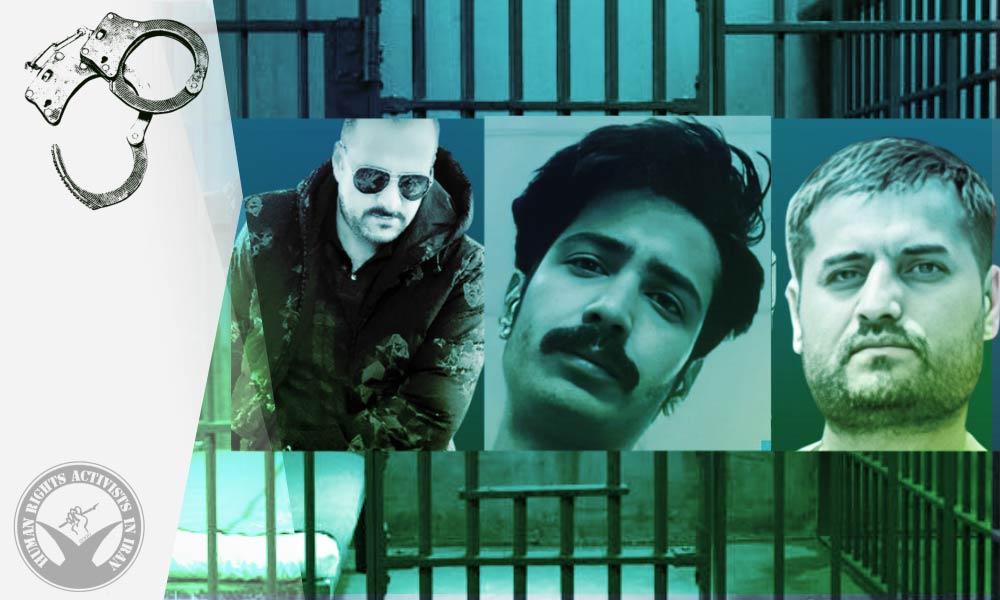
Five Individuals Arrested in Mashhad, Tehran and Rasht

In the new wave of mass arrests following the nationwide protests, security forces arrested five individuals in Mashhad, Tehran and Rasht.

These individuals have been identified as Adel Talebi and Zia Amiri in Tehran, Mehdi Shaki in Mashhad, Abed Tavancheh and his wife Laleh Mohammadi in Rasht.

Since the outbreak of nationwide protests, thousands of people, including journalists, teachers, students and civil rights activists, have been arrested. It is estimated that the number of arrests has climbed above 5500.

Baha’i Citizen Aida Rasti Arrested 13 Days after Release from Prison

On September 28, 2022, security forces arrested Baha’i citizen Aida Rasti at her house and took her to Ward 209 of Evin Prison. During the arrest, the agents searched her home and confiscated some of her personal belongings.

According to HRANA, the news agency of Human Rights Activists, on September 28, 2022, Baha’is citizen Aida Rasti was arrested by security forces.

An informed source close to her family told HRANA that she was arrested again just 13 days after release from prison. According to this source, Rasti has been denied access to her lawyer and family visitation. The judicial and prison officials have unanswered her family’s frequent enquire.

The reason for this arrest and the charges are still unknown.

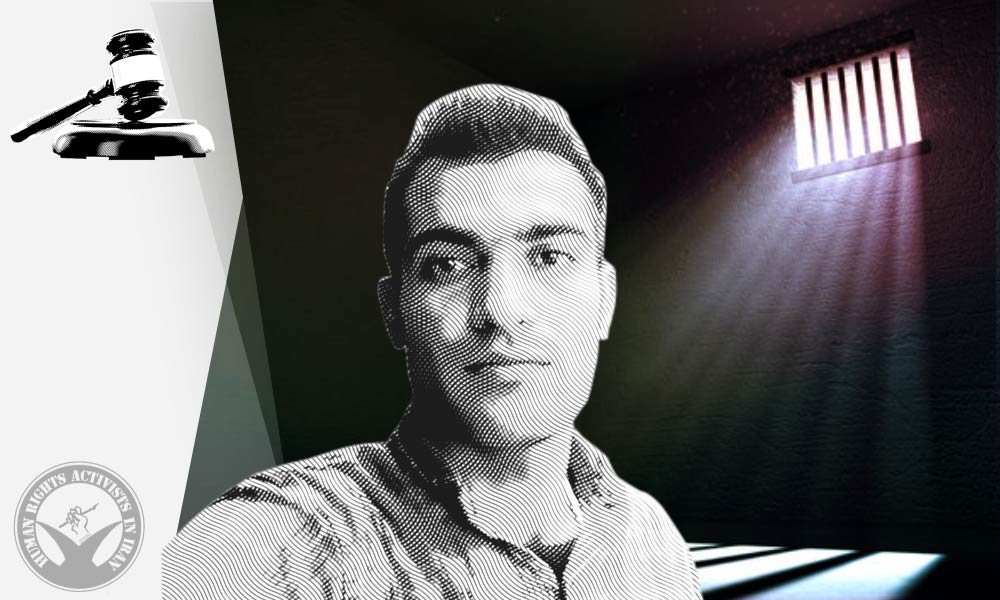
Iranian Singer Shervin Hajipour Indicted by Sari Prosecutor’s Office

Shervin Hajipour was indicted by the Prosecutor’s Office of Sari, Mazandaran Province. He has also been banned from leaving the country for six months. Hajipour was arrested for his song “Baraye” (“For..”) which has become the anthem of the nationwide protests after the death of Mahsa Amini

According to HRANA, the news agency of Human Rights Activists, singer Shervin Hajipour was indicted by Sari Prosecutor’s Office.

His lawyer Majid Kaweh informed the public on social media that Hajipour has been charged with “propaganda against the regime” and “instigating the violence.”
 
On October 4, 2022, Hajipour was released on a 100-million-tomans bail.


59 Human Rights Organizations Call for Abolition of Death Penalty for All Offences

On October 10, the 20th anniversary of the World Day Against the Death Penalty, Human Rights Activists in Iran and 58 other human rights organizations issued a joint statement to draw attention to gender bias and discrimination against women and LGBTQIA+, which can negatively impact the judicial process. They also called for the abolition of the death penalty for all offenses.

The following is the full text of this statement:

20TH WORLD DAY AGAINST THE DEATH PENALTY

On this 20th anniversary of the World Day Against the Death Penalty dedicated to the link between torture and the use of the death penalty and in continuation of the 2021 World Day Against the Death Penalty dedicated to women facing capital punishment, sentenced to death, executed, pardoned or charged with a capital crime and found not guilty, the members of the World Coalition and allies of women and LGBTQIA+ individuals sentenced to death take this opportunity to:

  • Draw attention to gender bias in the use of torture in the judicial process leading to the imposition of the death penalty. Women and LGBTQIA+ individuals are particularly at risk to abuse, including physical, sexual, and psychological torture. In addition, women victims of gender-based violence, who are over-represented on death row, are at risk of making false confessions when subjected to coercive investigative methods, especially those carried out by men.
  • Emphasize that violence against women and LGBTQIA+ individuals in detention – including gender and sexual abuse and harassment, inappropriate touching during searches, rape, and sexual coercion – can rise to the level of torture or cruel, inhuman, or degrading treatment or punishment, in violation of the International Covenant on Civil and Political Rights (ICCPR) and the Convention Against Torture (CAT), among others.
  • Accentuate that women and LGBTQIA+ individuals have specific needs, including sexual and reproductive health care, medical and mental health care, harm reduction services for those using drugs, and protection from gender-based violence, among others. These needs are not systematically considered and covered in prisons, which can turn detention into torture.
  • Stress that in many countries, particularly those with the mandatory death penalty, women and LGBTQIA+ individuals may be sentenced to death without considering their experiences of gender-based violence, among their other vulnerability aspects, prior to incarceration.

More broadly, the members of the World Coalition and allies of women and LGBTQIA+ individuals sentenced to death and at risk of being sentenced to death wish to use this 20th anniversary to:

  • Emphasize that, as done by the Special Rapporteur on extrajudicial, summary or arbitrary executions in its 2022 report, the death penalty as currently practiced can be considered as torture.
  • Call attention to the intersectional discrimination and inequalities that women and LGBTQIA+ individuals face, as these can negatively impact the judicial process leading to the death penalty. Pervasive gender biases in criminal legal systems influence: the investigation, through gender bias by law enforcement; the trial, where marginalized women and LGBTQIA+ individuals tend to be denied fair trial; and at the sentencing stage, where mitigating circumstances that might benefit women and LGBTQIA+ individuals sentenced to death are not considered.
  • Recall that, in violation of international human right law and standards, 12 countries continue to criminalize consensual same-sex relations, imposing the death penalty upon conviction.
  • Address the recognition of the intersectional dimension of discrimination. An analysis of the profiles of women sentenced to death reveals that most are from ethnic and racial minorities, are non-literate, and live with intellectual or psychological disabilities, often as a result of the gender-based violence they have suffered. Gender-based discrimination does not operate in isolation but is compounded by other forms of discrimination, including discrimination based on age, race, ethnicity, nationality, sexual orientation, gender identity and expression, sex characteristics, economic status, and disability, among others.
  • Make visible the lack of accurate and up-to-date data on the number and status of women and LGBTQIA+ individuals sentenced to death, executed, or whose death sentences have been commuted or pardoned.

We recommend that governments in countries that still retain the death penalty:

  1. Abolish the death penalty for all offences, regardless of gender, sexual orientation, gender identity and expression, and sex characteristics;
  2. Establish a moratorium on executions with a view to abolishing the death penalty, as called for by the UN General Assembly in its resolutions calling for a moratorium on the use of the death penalty;
  3. Pending full abolition, we call on governments to:
    1. Eliminate the death penalty for offences that do not meet the threshold of  “most serious crimes” under international law and standards including same-sex relationships and drug offences;
    2. Repeal provisions that allow for the mandatory imposition of the death penalty, which does not allow judges to consider the circumstances of the offence for the defendant at sentencing;
    3. Commute the sentences of women sentenced to death for killing close family members who perpetrated gender-based violence against them and for women sentenced to death for drug trafficking and other offenses that do not involve the loss of human life;
    4. Acknowledge the compounding forms of violence and discrimination experienced by girls, women and LGBTQIA+ individuals – including gender-based violence, early and forced marriage;
    5. Review laws, criminal procedures, and judicial practices and implement policies and legislative reforms to protect women and LGBTQIA+ individuals from violence and discrimination;
    6. Ensure that the criminal legal system takes full account of any mitigating factors linked to women’s and LGBTQIA+ individuals’ backgrounds, including evidence of prior abuse as well as psycho-social and intellectual disabilities;
    7. Ensure publicly available disaggregated data on people sentenced to death, their profile, age, gender, the courts that have pronounced the judgements charges and places of detention;
    8. Prevent the disproportionate detention and prosecution of women for “moral and sexual” crimes and of people for their sexual orientation and decriminalize such offenses;
    9. Promote the training of all those involved in the investigation, legal defense, prosecution, trial, adjudication and conviction of crimes involving women on gender-based discrimination and violence, pathways to crime, and gender-sensitive mitigations;
    10. Ensure that all those facing the death penalty have access to free and effective legal representation by counsel with experience representing individuals charged with capital offences and who are trained to recognize and bring forward mitigating factors, including those linked to gender-based discrimination and violence;
    11. Develop and implement programs to prevent gender-based violence and discrimination, and to promote the human rights of women, girls and LGBTQIA individuals+;
    12. Guarantee access to consular assistance for foreign women charged with death-eligible offenses, as required by the Vienna Convention on Consular Relations;
    13. In accordance with the Bangkok Rules and the Mandela Rules, adopt gender-sensitive policies regarding the detention of women, ensuring their safety and security before trial, during admission to prison, and while incarcerated.

Signatory organizations:


  1. ACAT Germany
  2. AdvocAid
  3. The Advocates for Human Rights
  4. American Constitution Society
  5. Anti-Death Penalty Asia Network (ADPAN)
  6. Association pour les Droits Humains au Kurdistan d’Iran-Genève (KMMK-G)
  7. Avocats sans frontières France
  8. Capital Punishment Justice Project
  9. Center for Constitutional Rights
  10. Coalition Tunisienne Contre la Peine de mort
  11. Colegio de Abogados y Abogadas de Puerto Rico
  12. Cornell Center on the Death Penalty Worldwide
  13. The Death Penalty Project
  14. Droit et Paix
  15. Ensemble Contre la Peine de Mort
  16. Federal Association of Vietnamese Refugees in the Federal Republic of Germany
  17. Fédération internationale pour les droits humains (FIDH)
  18. Fédération internationale des ACAT (FIACAT)
  19. Forum Marocain pour la Vérité et la Justice
  20. Gender Violence Clinic – University of Maryland Carey School of Law
  21. German Coalition to Abolish the Death Penalt
  22. Global Alliance Against Traffic in Women
  23. Greater Caribbean for Life
  24. Harm Reduction International
  25. Human Rights Activists in Iran
  26. Human Rights and Legal Profession Project Assistant
  27. International Commission of Jurist
  28. Institute for Criminal Justice Reform
  29. Institute for the Rule of Law of the International Association of Lawyers
  30. IraQueer
  31. Italian Federation for Human Rights
  32. Japan Innocence and Death Penalty Information Center
  33. Kenya Human Rights Commission
  34. Lawyers Collective India
  35. Lembaga Bantuan Hukum Masyarakat
  36. Ligue des droits de l’Homme (LDH)
  37. Madrid Bar Association
  38. MASUM & PACTI
  39. Mouvement contre le racisme et pour l’amitié entre les peuples (MRAP)
  40. Parliamentarians for Global Action (PGA)
  41. Pax Christi Uvira
  42. Penal Reform International
  43. Persatuan Sahabat Wanita Selangor
  44. Red para la Abolición de la Pena de Muerte y las Penas Crueles
  45. Resilient Women’s Organization
  46. Planète Réfugiés-Droits de l’Homme
  47. The Rights Practice
  48. Sandigan Kuwait
  49. The Sentencing Project
  50. Society for Human Rights and Development Organisation (SHRDO)
  51. Taiwan Alliance to End the Death Penalty (TAEDP)
  52. Terre des Femmes e.V.
  53. The Texas After Violence Project
  54. Union Chrétienne pour le Progrès et la Défense des Droits de l’Homme
  55. The William Gomes Podcast
  56. Witness to Innocence
  57. Women Beyond Walls
  58. The Women and Harm Reduction International
  59. World Coalition Against the Death Penalty


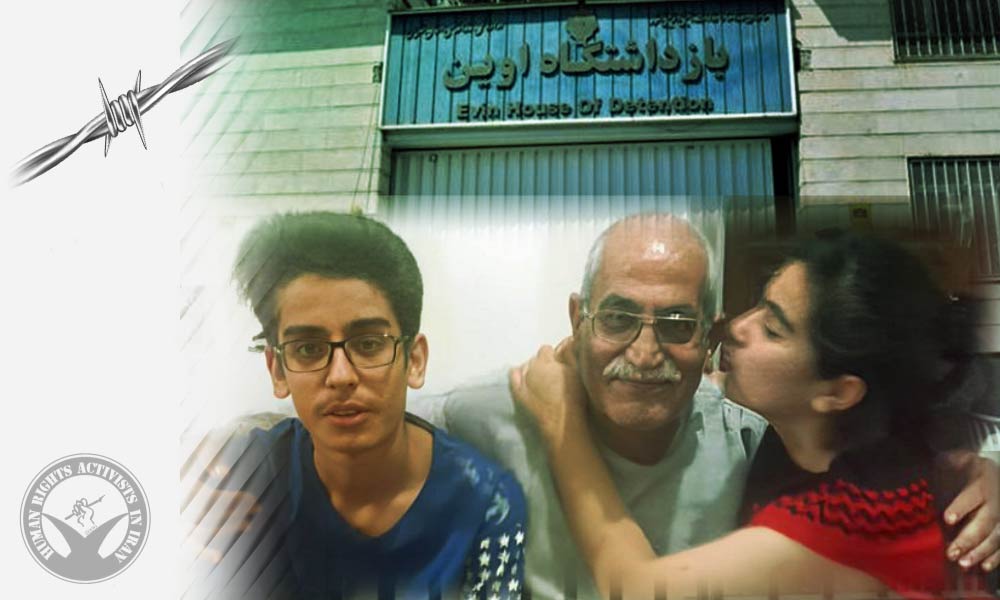
Teachers Eskandar Lotfi and Masoud Nikkhah Arrested

On October 8, 2022, security forces arrested Lotfi and Masoud Nikkhah, the members of the Teachers’ Trade Association of Mariwan and one day later transferred them from Mariwan to Evin Prison in Tehran.

These teachers union activists were arrested at their houses in Mariwan.

On May 1, 2022, Lotfi and Nikkhah were also arrested by security forces and then released on bail on August 20.

The reason for these arrests and the charges are still unknown.

Subscribe to Our Newsletter

Now is definitely not the time to stop reading!

Latest Statistics on Iranian Protests: Over 200 Killed

HRANA, the news agency of Human Rights Activists, has identified 200 people who were killed during the recent nationwide protests. Of this list, 31 have been verified independently by HRANA. Women are 7% of the victims. Shockingly, 29% of the victims are under the age of 18.

Also, 20 police and security forces have been killed.

The map below shows the geographical distribution of the victims across the country.

Since the outbreak of nationwide protests, thousands of people, including journalists, teachers, students and civil rights activists, have been arrested.  It is estimated that the number of arrests has climbed above 5500.
 
So far, HRANA has identified 563 citizens and 123 students who were arrested since the beginning of the protests.
 
Also, HRANA has obtained 57 mass arrests by the police during the protests.


Nationwide Protests Continue into Fourth Week

The nationwide protests after the death of Mahsa Amini continued on October 8 and 9, 2022. People in the streets and university students marched and chanted slogans against the regime. In many cities, traders and shopkeepers went on a general strike and closed their shops. People’s access to the global internet is still restricted.  Hacktivists increased their cyberattacks against their regime.

On Saturday, October 8, people took to the streets and demonstrated in several cities, including Tehran, Sanandaj, Aak, Isfahan, Karaj, Mashhad, Hamedan and Javanrud.

Moreover, the students gathered and protested on at least 17 universities campus. The students chanted slogans against the regime, such as “We will fight, We will take Iran back,” “Student! Shout out for your rights,” “Death to the dictator,” and “They took Nika and gave back her body” (referring to Nika Shakarami, a teenage girl who was killed by the security forces during the protest).”

In Tehran, Mashhad and Sanandaj, bloody street clashes erupted between the protestors and the police. In some videos, sounds of gunshots are heard.

In several cities, including Tehran, Shiraz, Marivan, Bukan, Sanandaj and Saqqez, traders and shopkeepers went on strike and closed their shops in protest.

Iran-State TV broadcasted more coerced confessions extracted from people arrested during the protest.

So far, thousands of protestors have been arrested, and the number is increasing daily. On Saturday alone, HRANA identified 26 arrests.

HRANA has identified more than 200 people killed during the protests. HRANA, the news agency of Human Rights Activists, is still working on fact-checking and reviewing the reports independently.

Below is the compilation of the videos from the protests on Saturday, October 8.

World Day Against the Death Penalty: Annual Report on Execution in Iran 2021-2022

Human Rights Activists News Agency (HRANA)- On the World Day against the Death Penalty, the Center of Statistics of Human Rights Activists in Iran (HRA) has published its annual report in an effort to sensitize the public about the death penalty situation in Iran, particularly thousands of death-row convicts awaiting their looming executions.

HRA’s Statistics Center relies on the work of HRANA reporters, as well as a network of independent and verifiable sources. It also incorporates the judicial authorities’ announcements or confirmations of prisoner executions on media, and as such, is exposed to a margin of error representing efforts by the Iranian authorities to omit, conceal, or restrict the collection of such data.

Between October 10, 2021, and October 7, 2022, at least 528 convicts were executed by hanging in Iran, rising to 98% compared to the same period last year. Of these executions, one was carried out in public. Many of the defendants were denied a fair trial and due process.

Click here to download report in PDF format

HRANA obtained 439 reports regarding executions and death penalty in Iran during this period. The identified executed individuals, include 20 women and 6 juvenile offenders under the age of 18 at the time of alleged crime. Compared to the last period, the execution of female offenders has raised 55%.

According to the reports obtained by HRANA, over this period, Iranian authorities sentenced at least 89 defendants to death penalty, including at least 5 women, and 7 public executions.  Issuing death sentence decreased by 1% compared to the last year.

As the chart below shows a breakdown of executions by capital offense: 50.38% were charged with murder, 41.29% with drug and narcotic offenses, 3.03% with rape, 1.70% with non-political armed robbery/offenses classified as “corruption on earth,” and 0.38% with political or security-related offenses. Moreover, 0.38% were convicted of security charges (spying, terror, and bombing), 0.38% were convicted of armed robbery, and 2.46% of charges are unknown.

The pie chart below displays execution numbers by the province in which they took place. According to this chart, the Sistan and Baluchestan Province had the highest number of executions at 16%. Alborz (where three overcrowded prisons are located) and Fars Provinces come second and third, with 16.48% and 11.93%, respectively.

The chart below depicts the distribution of executions’ information sources. The chart indicates that 70% of HRANA-confirmed executions were not announced by the official Iranian sources. Undisclosed executions are referred to as “secret” executions.


The chart above shows the execution numbers by gender.

The pie chart below displays execution numbers by the prison where the executions were carried out. The Rajai-Shahr Prison officials have carried out the highest number of executions with 14.42%. Zahedan Prison ranks second with 12,33% executions.

The chart below displays percentage of executions carried out in public Vs. the number of executions that were carried out in prison. According to statistics, 0.19% of the executions in Iran were carried out in public.

***

Click here to download the report in PDF format.

For further inquiries please contact Skylar Thompson, Senior Advocacy Coordinator Human Rights Activists in Iran (HRA) at [email protected]

Women’s Rights Activist Bahar Aslani Arrested

On September 26, 2022, security forces arrested Bahar Aslani, photographer and women’s rights activist, at her house in Tehran and transferred her to Ward 209 of Evin Prison. She is currently hospitalized in the prison infirmary due to asthma.

According to HRANA, the news agency of Human Rights Activists, on September 26, 2022, women’s rights activist Bahar Aslani was arrested in Tehran.

Aslani has faced another arrest on a prior occasion. On March 8, 2018, she was arrested before the Labour office in Tehran during a gathering to celebrate International Women’s Day. She was released after a few days.


162 Feminist and Human Rights Organizations: We Stand in Solidarity with Iranian Women and Protesters

Human Rights Activists in Iran and 161 feminist and human rights organizations issued a statement expressing their solidarity with Iranian women and their resistance against mandatory hijab and other restricted laws imposed by the Iranian regime.

They also urged other international human rights organizations and regional groups to show their solidarity with Iranian women and protesters in any way possible.

The following is the full text of the statement:

We Stand in Solidarity with Iranian Women and Protesters

We, the undersigned feminist and human rights organizations, stand in solidarity with the courageous women in Iran who have taken to the streets to peacefully protest the death in custody of Mahsa Amini and to demand their bodily rights.

We also express our profound sympathy to the families of the incredible Iranian protesters who have lost their lives to the ongoing brutal police crackdown in response to peaceful demonstrations. We urge all feminists and women human rights defenders, and their organizations in different countries and particularly in the MENA region, to stand in solidarity with Iranian women and amplify their voices through all means possible, especially now that Iran’s government has severely limited internet access across the country.

The weeks have witnessed unprecedented scenes of protesting in Iran. For the past four decades, the Iranian government has violently imposed mandatory hijab and other laws to limit women’s social and economic participation in society and force them out of the public space. Despite violent crackdowns against women who have consistently and peacefully expressed demands for change, we are now witness to the Kurdish motto of “Women, Life, Freedom!” being chanted by Iranians across the country.

Protests broke out in Iran following the September 16 death of Mahsa (Zhina) Amini, a 22-year-old woman, in police custody three days after she was arrested by “morality” police for allegedly wearing her headscarf loosely. Mahsa was on a family trip to Tehran, but within a few hours of going out with her brother, she was in a coma in a hospital bed due to sustained brain injury and never recovered. Despite threats by intelligence forces for a quick burial in silence, Mahsa’s family refused to succumb and took her body to Saqqez, her hometown. Women at her funeral took off their headscarves and widespread protests in Kurdistan province were ignited. This collective mourning of a life lost so soon and so unjustly, escalated into countrywide protests with women at the forefront of every demonstration.

In recent months, Iran’s government has ramped up arbitrary arrests and judicial harassment of civil society activists, especially women’s movement activists, in a blatant attempt to silence those who speak up against systematic discrimination and repression. At the same time, we have witnessed increased violence from the so-called “morality” police patrols toward women. The case of Sepideh Rashnou from July of this year was a vivid example of these often violent encounters. Sepideh was arrested soon after her verbal argument on a bus with a mandatory hijab enforcer went viral. Sepideh was violently arrested, kept in solitary confinement for weeks, and released after she had to make a forced televised confession where she clearly had a bruised face and was in poor health.

Iran’s recent protests are referred to as a feminist revolution. Young, fearless women in the streets are taking off their headscarves and setting them on fire right in front of massive line-ups of riot police forces and demanding freedom. These protests have now gone beyond all divides, and men in large numbers are supporting these fierce women. Even in small cities with more traditional beliefs, everyone is chanting “Women, Life, Freedom!”

Many women are sharing videos of themselves cutting their hair to protest Mahsa’s killing. Several women Iranian artists and celebrities forced to comply with mandatory hijab have joined the movement by posting videos in which they take off their hijab despite the repercussions that this might have on their careers. Celebrities and athletes are among others who are supporting Iran’s first-ever feminist revolution by stepping down from their sports teams or supporting protestors in interviews.

As the protests continue, the government has escalated its massive crackdown, and scores of women human rights defenders, journalists, students, human rights lawyers, and ordinary protestors have been arrested. Based on recent reports from human rights groups, over 100 protesters have been killed by security forces. The government has also imposed another internet blackout to block people’s access to social networks and messaging apps to suppress the protests. This is similar to the pattern used in the 2019 uprisings, which blocked communication in social networks and messaging apps to stop people from sharing images from protests and images of the violent and bloody police crackdowns. However, the voices of women and feminist groups are amplified by their sisters and peers in many countries. They have stood in solidarity by organizing protests and publishing videos supporting the movement in Iran.

We, the undersigned, stand in solidarity with Iranian women who are protesting the unjust killing of Mahsa Amini and who are demanding democracy as well as rights to bodily autonomy and fundamental freedoms all over Iran. Furthermore, we urge our feminist sisters in international organizations and regional groups to show their solidarity in any way possible.

Our Demands and Recommendations:

    • We urge the UN Human Rights Council to condemn the violent actions of the Iranian government against women and hold them accountable for the suppression and killing of protesters.
    • We urge UN member states to to support calls for a UN led investigative mechanism on Iran through the adoption of a resolution during an urgent session of the ongoing 51st regular session of Human Rights Council.
    • We urge the UN Working Group on Discrimination against Women and Girls, the Special Rapporteur on Elimination of Violence against Women, the Special Rapporteur on Human Rights Defenders, the Special Rapporteur on Peaceful Assembly, and other UN mandate holders to investigate and report on the systematic violation of the rights of Iranian women and protesters by the Islamic Republic of Iran.
    • The UN and member states should work with the government of Turkey and the Kurdistan Regional Government to ease border crossing restrictions for those rights defenders fleeing to safety and should work to ensure the safety of HRDs in these countries.  Governments and the UN should facilitate and expedite refugee status and the repatriation processes of Iranian HRDs, and especially WHRDs, in neighboring countries who are at risk of extrajudicial retaliation by Iranian authorities.
    • We urge the governments of countries with diplomatic ties to Iran, especially Global South and non-aligned states, to summon the ambassadors of the Islamic Republic of Iran and express their concerns over the killings of protesters, the violence being used against protesters, and the widespread arrests of human rights defenders, journalists, student activists and political activists.
    • Donors should consider expanding urgent support funding for human rights defenders, especially women human rights defenders facing threat and risk, including fellowship and respite opportunities that are more flexible and easy to access.
    • We ask international and regional human rights organizations to take a stance on the recent events in Iran, to follow up on the situation of those detained, press for their release, and demand that Iranian authorities ensure their safety and health while in detention.
    • We ask the international and regionally focused journalist associations and unions to condemn the arrests and arbitrary detention of Iranian journalists in recent days, especially the female journalists who have been at the forefront of reporting on recent developments.
    • We ask feminist groups and organizations to continue supporting Iranian women and their demands for rights and bodily autonomy through protests, peaceful gatherings, statements, production of artwork, and through other means.


  1. Abdorrahman Boroumand Center for Human Rights in Iran, US
  2. Advancing Knowledge in Democracy and Law Initiative, Malaysia/Southeast Asia
  3. Afghanistan Women Protesters, Afghanistan
  4. Aliansi Perempuan Bangkit / Emergence Women Alliance Indonesia
  5. All Women’s Action Society (AWAM), Malaysia
  6. Arab Digital Expression Foundation, Egypt – Regional Mandate
  7. Arab Watch Coalition, MENA Region
  8. Article 19, Global
  9. Artistic Freedom Initiative, United States
  10. Arts for Women Indonesia, Indonesia
  11. Asfari Institute for Civil Society and Citizenship, MENA Region
  12. Asociación Ciudadana ACCEDER, Costa Rica
  13. Association el-Karama, Tunisia
  14. Association for Monitoring Gender Equality, Turkey
  15. Association of Women Lawyers Sel & FT, Malaysia
  16. Association Suisse pour les Droits des Femmes, Switzerland
  17. Association Tunisienne des Femmes Démocrates , Tunisie
  18. Assocition d Environnement et Developpement Durable , Tunisie
  19. AWID (Association for Women’s Rights in Development), Global
  20. Balance Promoción para el Desarrollo y Juventud, Mexico
  21. Banglar Manabadhikar Suraksha Mancha (MASUM), India-South Asia
  22. BMMA, India
  23. Cairo Foundation for Development and Law, Egypt
  24. Cairo Institute for Human Rights Studies (CIHRS), MENA Region
  25. Canadian Council of Muslim Women (CCMW), Canada
  26. CCMW Niagara Chapter, Canada
  27. Center for Egyptian Women’s Legal Assistance, Egypt
  28. Center for Human Rights in Iran, United States
  29. Center for Human Rights Studies, University of Surabaya (CHRS Ubaya), Indonesia
  30. Center for Reproductive Rights, Global
  31. Centre for Feminist Foreign Policy, Germany
  32. Centre for Independent Journalism (CIJ), Malaysia
  33. Channel Foundation, United States
  34. CIVICUS, Global
  35. Coalition for Sexual & Bodily Rights in Muslim Societies (CSBR), Indonesia
  36. Congregation of Our Lady of Charity of the Good Shepherd, Global
  37. Congregation of Our Lady of Charity of the Good Shepherd, Canada
  38. Congregation of Our Lady of Charity of the Good Shepherd, U.S. Provinces, United States
  39. Congrgacion Del Buen Pastor , Chile
  40. CREA, Global
  41. Culture Action Europe, Europe
  42. Daraj Media , Lebanon
  43. Democracy for the Arab World Now (DAWN), MENA Region
  44. Demokratik Emekliler Sendikası (DEM-SEN) , Turkey
  45. Deutscher Frauenring e.v, Germany
  46. Dorothy Njemanze Foundation (DNF), Nigeria
  47. Ecumenical Community for Contemplative Engagement
  48. Equality Fund, Global
  49. Equality Watch Women’s Group – Eşitlik İzleme Kadın Grubu (EŞİTİZ), Turkey
  50. ERA – LGBTI Equal Rights Association for Western Balkans and Turkey
  51. Erktolia, Turkey
  52. Fe-Male Feminist Collective, Lebanon
  53. FEDERA, Poland
  54. FEMENA, MENA Region
  55. Femmes et Droits Humains, Mali
  56. FIDH-MENA, MENA Region
  57. Forum Tunisien pour ls Droits Economiques et Sociaux , Tunisie
  58. Foundation Innovation Social Development, Sri Lanka
  59. Free Women Writers, Afghanistan, USA
  60. Fund for Congolese Women, Democratic Republic of Congo
  61. Fundacion Justicia y Genero, Latin America
  62. GAMCOTRAP, Gambia
  63. Gender and Democracy Centre, Indonesia
  64. Gerakan Perempuan Peduli Indonesia [Indonesian Women Awareness Movement], Indonesia
  65. Good Shepherd International Foundation, Italy
  66. Good Shepherd Mission Hub, Malaysia
  67. GreeneWorks, United States
  68. Hawaa Organization for Relief and Development, Iraq
  69. Human Rights Activists (in Iran), United States
  70. Human Rights Sentinel, MENA Region
  71. Human Rights Watch, Global
  72. IFEX, Global
  73. Indonesian Legal Aid Association for Women (APIK), Indonesian
  74. Inkyfada/Alkhatt, Tunisie
  75. Institute of the Third Space, Indonesia
  76. International Alliance of Women (IAW), Global
  77. International Federation for Human Rights (FIDH), in the framework of the Observatory for the Protection of Human Rights Defenders, Global
  78. International Women’s Rights Action Watch Asia Pacific (IWRAW AP), Malaysia
  79. Intersection Association for Rights and Freedoms, Tunisia
  80. Iraqi Women Network, Iraq
  81. IRIS Women Watch, Turkey
  82. Isha Lisha- Haifa Feminist Center, Haifa
  83. Islamic Development and Relief Agency, South Sudan
  84. Jamaity, Tunisia
  85. Jeunes femmes pour la démocratie , Marocco
  86. Jurnal Sang Pemula, Malaysia
  87. Justice for Iran, Iran-UK
  88. Kaos GL, Turkey
  89. Kawaakibi Foundation, Norway
  90. KEDV, Turkey
  91. Khalil Sakakini Cultural Centrem, Palestine
  92. Kirmizi Biber Dernegi, Turkey
  93. KPI-LJSP Cabang Jember , Indonesia
  94. Kun Organization, Libya
  95. League for the Defence of Human Rights in Iran (LDDHI), Iran-France
  96. Legal Dignity, Malaysia
  97. MADRE, Global
  98. MAJU, Malaysia
  99. Manushya Foundation, Southeast Asia
  100. Marta Abrantes Mendes, Marta Abrantes Mendes
  101. MenEngage Global Alliance, Global
  102. Mesoamerican Initiative of Women Human Rights Defenders, Mesoamerica
  103. Miaan Group, United States
  104. Musawah, Malaysia
  105. Muslims for Progressive Values, United States
  106. Mwatana for Human Rights, Yemen
  107. National Advocacy Center of the Sisters of the Good Shepherd, United States
  108. National Observatory to Defend the Civility of the State, Tunisia
  109. No Peace Without Justice, Global
  110. No Sanctions on Iran, United States
  111. Noor, MENA Region
  112. Open Society Foundations, Global
  113. Organisation Contre la Torture en Tunisie , Tunisia
  114. PASS Foundation- Peace for Sustainable Societies, Yemen
  115. Passon Legal Organization, Afghanistan
  116. Peace Track Initiative, Yemen-Canada
  117. Persatuan Sahabat Wanita Selangor, Malaysia
  118. Persatuan Warisan Wibawa , Malaysia
  119. Political Well-Being, Turkey
  120. Programme Against Custodial Torture and Impunity (PACTI), India
  121. Project on Middle East Democracy (POMED), MENA Region
  122. Quincy Institute for Responsible Statecraft, United States
  123. Realizing Sexual and Reproductive Justice (RESURJ), Global South
  124. Réseau National des Jeunes Filles et Femmes Rurales du Mali ( RENAJFFERM), Mali
  125. Rosa Women’s Association, Turkey
  126. Rumpun Indonesia, Indonesia
  127. Saiamak Pourzand Foundation, Iran-US
  128. Sana’a Center for Strategic Studies, Yemen
  129. Secularism Is A Women’s Issue, Global
  130. Sekolah Damai Indonesia (SEKODI) Bandung, Indonesia
  131. Sisters in Islam (SIS), Malaysia
  132. Sisters of the Good Shepherd-New York/Toronto Province, United States
  133. Sisters of the Good Shepherd, New Zealand, Australia
  134. Society for the Improvement of Rural People, Nigeria
  135. Society for the Promotion of Human Rights (Proham) , Malaysia
  136. Sonke Gender Justice, South Africa
  137. Southern and Eastern Trade Information and Negotiations Institute, Uganda
  138. Sukaar Welfare Organization, Pakistan
  139. Suluh Perempuan Indonesia , Indonesia
  140. The Asian-Pacific Resource and Research Centre for Women (ARROW), Asia-Pacific
  141. The Association for Struggle Against Sexual Violence, Turkey
  142. The Awakening – A Member of Men Engage Alliance Pakistan, Pakistan
  143. The Freedom Initiative, United States
  144. The Gulf Centre for Human Rights (GCHR), MENA Region
  145. The Kvinna till Kvinna Foundation , Global
  146. The Munathara Initiative, MENA Region
  147. Turkish Council of Women, Turkey
  148. United for Iran, Iran-US
  149. Urgent Action Fund for Women’s Human Rights, United States
  150. Väter Aktiv, Italy
  151. Vigilance for Democracy and the Civic State, Tunisia
  152. Virtual Activism, United States
  153. WHRD MENA Coalition, MENA Region
  154. Women for Human Rights, Single Women Group (WHR), Nepal
  155. Women for Women’s Human Rights (WWHR) – New Ways, Turkey
  156. Women’s Rights Center, Montenegro
  157. Women’s March Malaysia, Malaysia
  158. Women’s Council Denmark, Denmark
  159. World Organisation Against Torture (OMCT), in the framework of the     Observatory for the Protection of Human Rights Defenders, Global
  160. Yayasan Penghapusan Kekerasan Terhadap Perempuan “Mitra Perempuan” [The Foundation For Elimination of Violence Against Women “Mitra Perempuan”], Indonesia
  161. Yayasan Perlindungan Insani Indonesia, Indonesia
  162. Yemen Future for Media and Culture Development, Yemen